Ep 19: What the Constitution Means to Us (Feat: Heidi Schreck)

Podcast
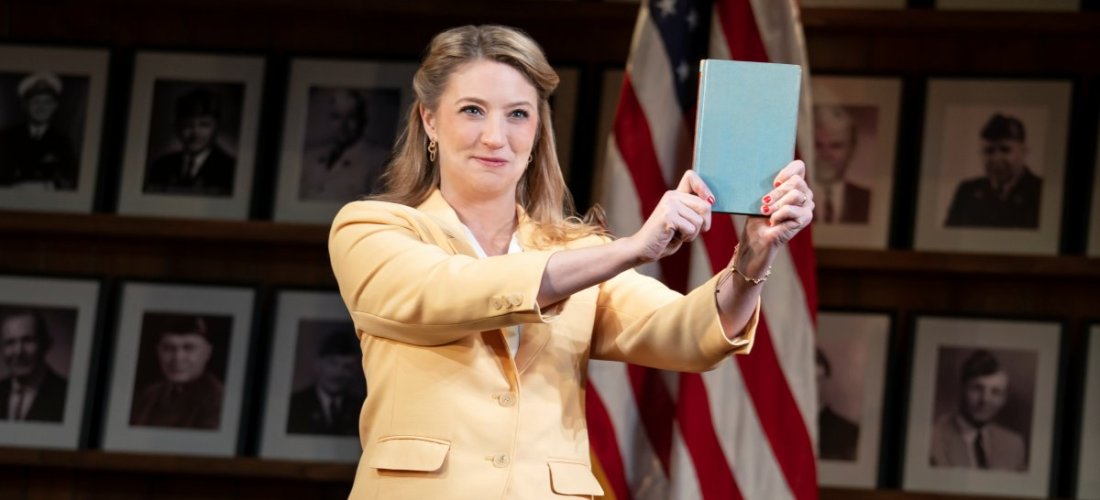
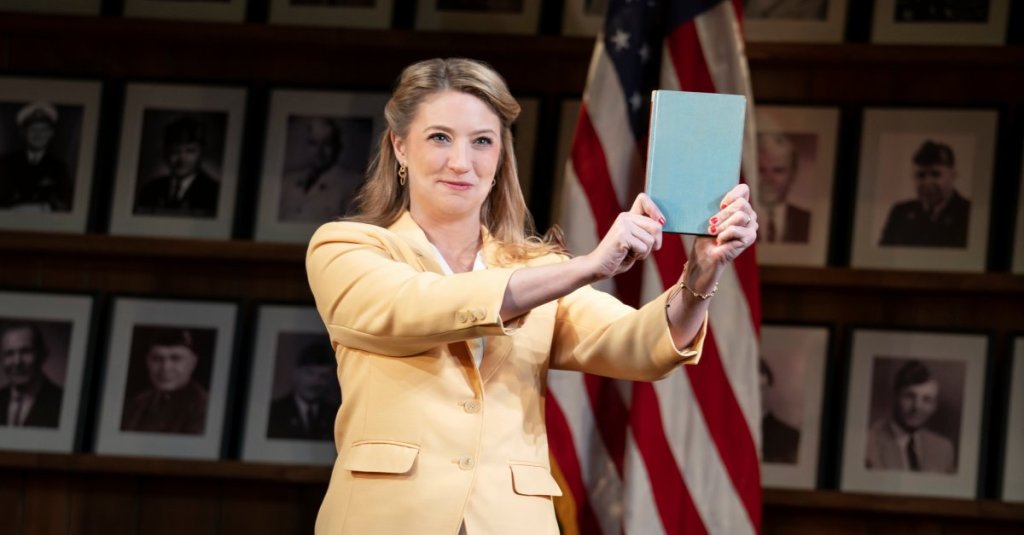
Heidi Schreck in “What the Constitution Means to Me.” (Photo: Joan Marcus)

Every week, culture critics Diep Tran and Jose Solís bring a POC perspective to the performing arts with their Token Theatre Friends podcast and video series. The show can be found on SpotifyiTunesStitcher, and YouTube. You can listen to episodes from the previous version of the podcast here but to get new episodes, you will need to resubscribe to our new podcast feed (look for the all-red logo). The TTF theme song is composed by Sean Mason (with vocals by Angela Ramos). The video animation is created by Brad Ogden, with logos by Jason Simon.

This week, Diep delivers a rant about the Tony Award nominations, and why it all feels anti-climactic.

This week the Friends welcome one of their favorite people: Heidi Schreck. Schreck was a Pulitzer Prize finalist for her play What the Constitution Means to Me, which ran on Broadway in 2019. Now that play has been filmed and will be released on Amazon Prime Video on Oct. 16. Schreck drops by to talk about the current state of our democracy, becoming a new mom (of twins!), and why it’s so hard to film theater.

Here are links to the things mentioned in this episode:

The episode transcript is below.

Diep:
Hello, everyone, this is Diep Tran your Token Theatre Friend and cohost of this podcast. My cohost Jose Solís could not make it for the recording of this introduction, but you’ll hear him later. In our interview with playwright and actor Heidi Schreck, whose Broadway. Tony nominated Pulitzer finalist play What the Constitution Means to Me is dropping on October 16 on Amazon Prime. We’ll have that interview for you shortly. I am left to my own devices this week to record an intro for all of you. And I happen to be recording this intro after the announcement of the Tony nominations. If you’re a frequent listener on this podcast, you will know of mine and Jose’s very very ambivalent feeling about the fact that there’s going to be a Tony Award this year and it will likely be happening in December, which is six months overdue.

I have to admit that after the official news from the Broadway League that Broadway will not be reopening until May 2021 of next year, my ambivalence about to the Tony Awards has only grown. And let’s be honest here, considering that Dr. Anthony Fauci has specifically said even if a vaccine passes its final testing phase this month, and begins distribution in November and December, the American population at large will not get a vaccine until summer 2021. And theater cannot resume until there is a vaccine. So saying May 2021, just pushing this date back, again, it seems real optimistic and rightly, unrealistic, and setting everyone up to just have more false hope. So on the one hand, I am glad there was a Tony Award this year because that means that the productions that opened from summer 2019 to January 2020, those productions will have recognition.

On the other hand, I still stand by my statement that it is ridiculous, to have nominations, and even moreso it is ridiculous to announce the nominations when there is no set date for the Tony Awards themselves. And here is an example of how ridiculous it all is. This year, there is only one actor that the Tony voters found eligible for Best Leading Actor in a Musical and that’s Aaron Tveit for Moulin Rouge. Even though there were the musicals that open this season that had leading actors, I’m looking at you The Lightning Thief, which was notably snubbed at this year’s Tony nominations, it did not even get Best Original Score. What did get a Best Original Score nominations? A bunch of incidental music from plays, because that background music was just so much better than the music that a bunch of teenagers loved. I cannot surmise to say why The Lightning Thief got snubbed so much. But what I can say is it just highlights the ridiculousness of this entire proceeding, and just highlights the fact that to even have nominations, like what is the point of having them right now? There are no press junkets to do, there are no parties to go to.

Maybe a rare upside to having nominations this year is that people won’t be able to campaign and try to get a Tony Award via being incredibly visible in the media. That might be a positive thing that happens. For me what these nominations, or in certain cases, lack of enough nominees to fill a category is it just shows us how truncated the season is. And it also just shows us how little it really own means in the end. When you haven’t been working in half a year, and your rent is about to come due. And you don’t know if you’re going to make your rent, or you’ll know if you’re going to be able to stay in your house, and you don’t know if you’re going to be able to continue to work in the industry and you’re going to lose your health insurance soon. Because Actors’ Equity’s Health Fund, which is partially funded by Broadway producers, and its fate is partially decided by Broadway producers, those same producers decided that actors now need to work more in order to qualify for health insurance, even though it’s a pandemic and they cannot work. And so considering the state of the world, as it is, what is the point of all this? What is the point of nominations? Why can’t you just give the people who deserve awards awards and stop pretending like this is normal. And by you, I mean, Broadway League, producers, people who care about the Tony Awards, who cover the Tony Awards—thinks these things matter. 215,000 people are dead, nothing matters except staying alive and making sure that there is an a city and an industry for all these out of work artists and artisans to go back to.

Whooo! And I know the Emmys recently happened and the American Music Awards and other things like that. And so you’re probably wondering, Diep, why are the Tony so offensive to you but all these other award shows are not? And I will tell you why. It is because for those other industries, they’re already starting to creep back up a little bit. Yes, is not 100%. But musicians can make music at home. They have been making music at home. TV writers have been able to write scripts, TV actors are starting to go back to work. They have to take a test at least two times a week but they are still able to work. Want to know who is not working? Theater people. And to think that theater people right now care about a shiny gold statue, it’s just shows how out of touch the people facilitating these awards are, and just shows how out of touch those who occupy the top echelon of the theater and Broadway industry are. To close my rant, which I did not realize was going to be that long of a rant—and I will be writing more about this on TokenTheatreFriends.com, don’t you worry, I have feelings about this, which have only intensified ever since the Broadway League announced that it was pushing back the date of Broadway’s reopening until May 2021. When we all know may 2021 is a very now a very optimistic projection. Because Dr. Anthony Fauci told us it was an optimistic projection. I would just like to close my rant by quoting Karen Olivo who is the Lead Actress in a Musical nominee where she said, “I hope that the spotlight on the Tony Awards will illuminate the fact that arts workers everywhere, not just on Broadway are struggling. By all means, let’s celebrate the work of all these artisans. But let us also seek the government-mandated financial assistance that will ensure we exist beyond this global pandemic.” If the Tony Award can do anything right now, it is not to give out shiny gold statues, it is to raise awareness that these artists are out of work, they need money, otherwise they will not survive. Otherwise, they will leave the industry. Otherwise, this industry, the theatre industry, will not survive. And so I hope when, and probably, if the Tonys happen, I hope that we all talk less about what people are wearing and what they look like. And more about what their lives are actually like right now, Let’s peel away all of the glitz and the illusion. And let’s really just be real with each other. I was struck in our last episode by Eva Noblezada, who’s a two time Tony nominee. And she was very candid when she talked about how one reason she missed performing was because she missed getting a paycheck every week, and how she’s been doing all she can to get money out of rich white people. And I didn’t get a chance to ask her about those comments. But I do think that for a sizable amount of artists, showing up and smiling and receiving gold statue is not on top of their list of priorities. I think a lot of people are just trying to survive, especially if their name is Danny Burstein. And they got COVID-19 from acting in Moulin Rouge.

I will say a category that I was really happy with this year, that I am usually not that happy with, was the category for Best Play, which featured five plays. And a majority of them are written by women and people of color. One of the plays is Slave Play by Jeremy O. Harris, which at 12 Tony nominations is the most nominations ever for a new play. If there’s any plus with this truncated season, it’s that Slave Play got the recognition that it so rightly deserved, and that the category was diverse, which is very rare for Tony nominations in general. And if Jeremy O. Harris wins the Tony for best play, he will be only the second Black playwright to have won a best play Tony. Sit with that for a second. And yes, the other black playwright is August Wilson. So I will be watching the Tonys this year because it will give me something to tweet about. And I really hope the Tony Awards will see this as an opportunity to advocate for government funding, a bailout for the arts. If they can bail, bail out airlines, they can bail out the performing arts. All right. Well, that is my top of show rant. I miss Jose already. I think it would have been better if he was able to be here to make this rant with me. And now for our guest who is Heidi Shrek the playwright and actor in What the Constitution Means to Me. A really moving, wonderful show which examines the Constitution as a living document and how it has continually failed generations of women and people of color. And it’s also really funny and moving and I cried multiple times when I’ve watched it multiple times. And I am so happy that those of you who did not get to see it on Broadway will now get to see it via Amazon Prime. Also just a note before you listen to this episode. Heidi Schreck starred in the show with Mike Iveson, Thursday Williams and Rosdely Ciprian who we all mentioned by first names in the course of his interview, so that’s who they are, FYI. And now let’s go to the interview. And I hope you enjoy.

Jose:
Finally welcome to Token Theatre Friends, Heidi Schreck. We’re so excited to have you. I think we mentioned Constitution every episode basically. Right?

Diep:
I don’t think it’s every episode, but it feels like we talk about pretty frequently because of reasons.

Jose:
Yeah, yeah. I’m so excited that this is gonna drop on Amazon Prime Video. And I was really curious, because I want to hear you talk a little bit about you know, you wrote the show, you starred in the show. But now you’ve had two different directors kind of like take care of material and do something with it. And obviously, Oliver Butler’s work on Broadway and Off Broadway was amazing. But I want to hear you talk about, did you discover any, did you have any insight about your own show that you yourself wrote? Based on Oliver’s and now Marielle Heller’s vision for the Prime Video version? Was there anything that you were like, oh, wow, I wrote that.

Heidi Schreck:
First of all, they’re both brilliant directors. So I feel incredibly lucky. And Mari, you know, really sort of respected everything. You know that Oliver and I had spent many years creating the show together. So she really sort of respected and listened to what we have made together. And I think tried to translate that to film but in a, in some ways, a very simple way so that you could have the experience of what it was like to sit in the audience, but in like a really good seat. I think you and I were talking about this, maybe a seat that flies around, so you could see the balcony sometimes, and you’d be really close. It was so interesting. She made many choices, which I love, but the biggest thing was she lit the audience while I performed, which was horrifying while I was performing, because I was not used to seeing people’s faces. And of course, all I could see from my vantage point was people hating, like the one old man who was so pissed off that his wife brought him. And that’s who I zeroed in on. And I just became more and more self-conscious and angry as the show went on. I was so grateful in retrospect that she had done that, because when we were in editing, and I started, you know, I watched two versions of the show, a matinee and evening performances, and I just watched the audience the whole time, and it was really moving. Like I could feel how people responded when I was on stage. And I could certainly feel, depending on what was going on in the news, and some nights were more emotional than others, but to actually have close ups of people listening and connecting with the stories and going through their own—well, what it felt like is watching people sort of go through their own history and their own stories. That was very moving. I feel like the most experimental version of this film would just be to play the audience for the whole two hours!

Diep:
Was it intentional to have most of the audience reaction shots be of women and younger women. It was a lot of crying, which I really appreciate cuz I was also crying, at home.

Heidi Schreck:
I gave a lot of notes to pull back on the crying. I was like, it’s too much crying, it’s too much crying. But I think it was intentional also. The truth is, I mean, look, in many ways, it was a typical Broadway audience, and that it was often older, very white. But it did get, especially as the play went on, more and more young people started coming to the show, more and more women. So I think that the audience shots reflects that. And then also, yeah, those are the people who were the most exciting to watch, because you could watch them connecting with the show, processing, thinking about it. So I think they were just the most interesting people to watch probably, as opposed to like, you know, the occasional man who’d be like. [folds arms, disgruntled]

Jose:
I feel that in many ways, the film adaptation, the capture—what’s the official, what are we calling it? What do we call these?

Heidi Schreck:
It’s a great thing, right? I feel like it’s an important question now because hopefully there’ll be more and more of it, right? Since we can’t gather in theaters right now. I think we’re calling it a film. And sometimes we call it a live capture.

Jose:
Okay, so I’ll go with film. Because it sounds very pretty.

Heidi Schreck:
More high-brow.

Jose:
I felt like it wasn’t until it was a film that I was like, “Oh, wow. This is like marrying Marielle Heller’s Diary of a Teenage Girl and Mr. Rogers [A Beautiful Day in the Neighborhood]. And thinking about Mr. Rogers made me realize that I’ve always wanted to know, how you ended up deciding on the costume before the show, which I feel has become, in many ways, so iconic. I was trying to find something to like, match my button. And I was like, well, this shirt has yellow. It’s from the Woodstock Film Festival also. So it’s like, I’ll go with that. But I was like, how did you decide on it? What’s the official color? Also the jacket, and how do you decide on that? And then the white shirt underneath?

Heidi Schreck:
That’s such a good question. So Michael Krass is our costume designer, and his amazing associate Zoë Allen. And the first thing we tried was to dress me up like I was from the ’80s, you know, to wear like the electric blue power suit with the big shoulder pads that I wore, and like do the hair. But it was so extreme. You know what I mean? That it felt like, I don’t know, I just wanted it to be simpler. It felt like a different show. Somehow it didn’t set you up for what the show was going to become. So I was like, is there a way to like sort of nod to it? Maybe in the blazer, but then I can just wear the jeans and like combat boots I wear every day? Also, I felt like it was nice to wear combat boots. It felt like it connected me to the men on the stage. Also, I’ve been reading this book, which I’ve read many times now called Trauma and Recovery—sort of talking about the connection between the PTSD that military personnel deal with and the PTSD that victims of gender and sexual violence experienced, connecting those two things and talking about those as symptoms of an inherently violent culture. So it felt, something felt good about wearing the combat boots. So Michael Krass went to the Buffalo Exchange in the East Village. And he brought back a bunch of blazers and there was this J. Crew yellow blazer that was too short in the arms. And he was like, I think this color looks good on you. And I was like, Okay, I look a little silly. But that seems okay. I looked silly when I was doing the debates. And he decided he liked the color on me, but also the fact that it’s a traditional, like an activist color. Like if you look at AOC’s posters and things, it has a long history in activism. I think probably…I want to say like, starting with Farmworkers Movements, but I’m not exactly sure. And I should know. But anyway, it felt like the right color for the spirit of what we were doing. And now sometimes I’m like, I can’t believe I had to wear that freaking blazer for three years! I’m so tired of that blazer!

Diep:
Oh my god. So if we want to dress up as Heidi Schreck, we just need to go J.Crew.

Heidi Schreck:
Eventually that fell apart, because it was from Buffalo Exchange.

Diep:
Yeah, yeah, of course.

Heidi Schreck:
I went to Broadway and they made me a special Broadway blazer, which is exciting.

Diep:
Multiple versions of it. You don’t get multiple versions of a thing off Broadway. Okay, since you were the executive producer on the Constitution film. And we’re all having these conversations about, how do we stream theater? Why can’t we stream theater? Is it because it’s too expensive? Is it because no one wants to finance it? Oh, what are the answers? Heidi, do you have the answers?

Heidi Schreck:
Yes. Those are the answers. It’s very expensive to film. It was um, I mean, I think there’s no reason I can’t be upfront. It cost us almost $2 million to film, we filmed two performances and then did some pickup shots, we shot some footage that we didn’t end up using. So that was part of the reason. You know, it’s just expensive to shoot in a Broadway house, because of union rules, which I 100% support. And then, of course, the camera equipment, the huge number of people you need to pull off the shoot—it all adds up really quickly. We made it with Big Beach Films—I was one of the producers, the Broadway producers, and then Big Beach, and we made it on spec. We didn’t sell it beforehand. I mean, we suspected that someone would want to buy it, we were very happy when Hamilton sold, we knew it wasn’t going to sell for many millions of dollars. But we thought at least maybe now it will sell. And so we took it out and a couple places were interested. Several places said we don’t do filmed theater, our audience doesn’t like that, doesn’t want to watch it, which is fair enough. And then we ended up, Amazon ended up coming to us with the best offer. But the truth is, and this might be different if you had a big star in the play, I guess these kinds of things, as far as I can tell, sell for what a variety show or a comedy special would sell for, which isn’t a lot of money. So it’s hard, it costs a lot of money to make and it doesn’t necessarily sell for a lot of money. Obviously, I think there are ways to hopefully change that, I think you could find ways to make it more cheaply, perhaps while still paying everyone a good amount. And then maybe if it becomes more popular, I mean, Hamilton certainly certainly demonstrated that people want to watch this, hopefully my show will, American Utopia. Maybe as the streaming services see that people do care about this material, maybe they’ll be willing to pay a little more for it. We just were hoping to break even and we did break even with a small profit.

Diep:
Do you get more money if more of us watch it?

Heidi Schreck:
No. But I do think more if more of us watch it, they’ll be more interested in putting more theater on the service. So I do think that’s the incentive for watching it. I mean, aside from, I’d love for you to watch it.

Jose:
I think of it almost like there’s like this really great Brené Brown special that’s like streaming somewhere. And also it’s like that, meets A Few Good Men. One really good women. You’ve spoken before about how you wish that someday your play will be a relic. I’m always very happy to see you, we’re always very happy to talk to you. Like I’m so happy to see Constitution all the time. But it’s like we keep meeting every time the country and democracy are on the brink of collapse, and I kind of feel like you’re like Captain Planet, and people are like, let’s summon Heidi Schreck, and then you show up.

Heidi Schreck:
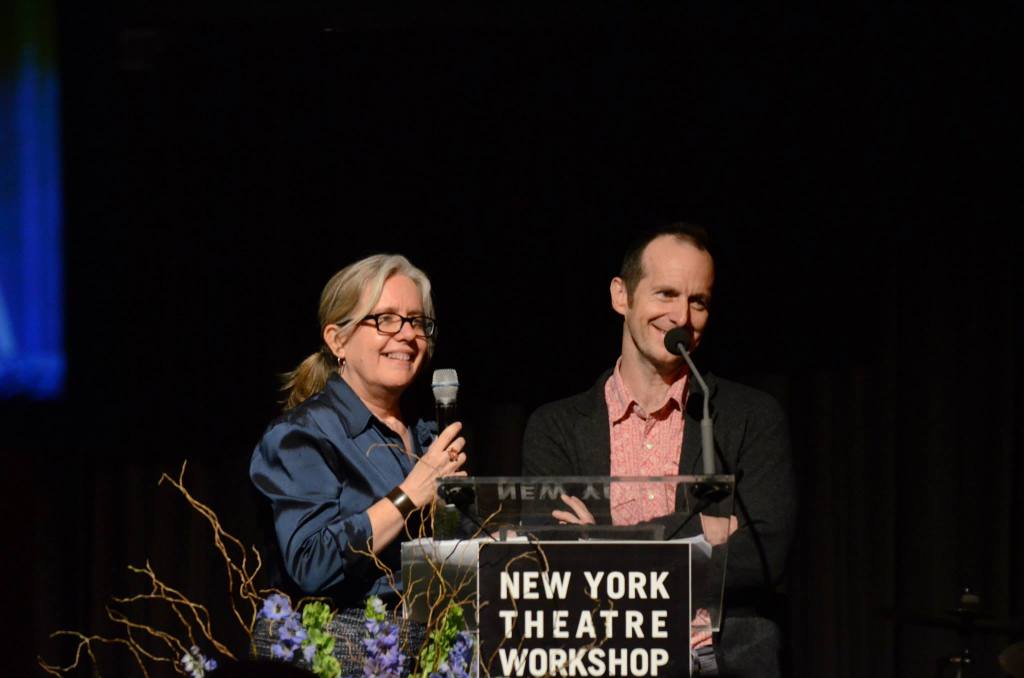
I’m definitely not an icon of democracy. I mean, it’s so interesting, because the last time we talked, we did a live talk back at New York Theatre Workshop, and that was right around the Brett Kavanaugh hearings. So here we are, again, as we install yet another…. Well, I think actually, Mayor Pete [Buttigieg], put it really beautifully, another judicial activist on the court. I think they’re the ones putting judicial activists on the court. People, you know, who are going to rule in a way that actually doesn’t reflect what the majority of this country wants or feels is right. I’m sure like both of you, like, I find it really challenging to get up and keep going every day and also sometimes I feel paralyzed, like what do I do as a citizen to try? Like what are my obligations? How can I try to move this country forward with the rest of the people who want to move it forward in a humane and better way. I’m being lit right now by my sad lamp, that really helps, I do a half hour of my sad lamp every day. And then just sort of try to keep going, but I guess the thing I find most, I mean, look, we’re in a terrifying moment. One thing that I gained a little grain of hope from is I do feel like the statistics show that what the majority of the country wants is not what this conservative minority wants, like most people support marriage equality, most people do not want Roe v. Wade overturned. Most people think that police violence is a problem and that Black lives matter. Most people are not anti-immigrant, if you look at the actual statistics. So I think the real problem is actually a structural problem. And I think that the the Republicans have taken advantage of these structural flaws in our system to assert the will of a minority that doesn’t want what the people want. And of course, in my opinion and yours, doesn’t want what’s best for the country. I don’t know how that gets solved. I mean, obviously, there are a lot of people who have been working on this for a long time, a lot of activists, in terms of protecting voting rights, and, you know, reforming the prison system and thinking about the court. Do we need a different process for, for how the court works? Like the Constitution doesn’t say anything about how many people need to be on it. You don’t even have to be a lawyer. Do we need to reform this court so that it reflects the will of the people?

Diep:
We’ll find that out in three to six months. I was telling someone about how, he was also tired and just want fast forward to November 3. And I’m just like, this is not book, we can’t just flip through the end. Like we just need to power through this. But speaking of powering through, can I ask you about the babies?

Heidi Schreck:
Sure. Yes. I’d love for you to ask me about the babies. So the babies mean I haven’t slept in a long time, they also give me a tremendous energy I have to say. I mean, first of all, they’re totally delightful. They’re almost six months. They’re little girls, they have very distinct personalities. They’re talking all the time, not in words, but babbling all the time. And they’re really fat. They’re very fun to squeeze. [laughs] I really like holding their thighs. And kissing them and smelling them is as good as my sad lamb. So they give me a lot of energy to keep going. I gave birth to them in a harrowing moment.

Diep:
But Kip [Fagan, Heidi’s husband] was there, right? Like, oh, you weren’t alone.

Heidi Schreck:
Yeah, definitely. Kip did so much. In fact, I was also working right up until I gave birth. So he was like, he got all their clothes, he figured out all the the stuff we needed, the breast pump, all of that kind of like he, he sort of learned everything about how to take care of babies. If it hadn’t been for him, I would have had no idea what to do. And then they were in, they had to be in the NICU for a little while. And so he and I stayed in this little hospital room, he couldn’t leave because he wouldn’t be able to come back because of COVID. And he just really took care of all of us. So I’m really thankful. Good male energy.

Jose:
And speaking of babies, I was so moved the other day when I saw a picture of baby Rosdely. She wasn’t a baby but it looked like baby Rosdely. And when you were doing the show at the Wild Project, and, you know, apologies for this, like metaphysical kind of question, but you’ve been granted, you know—as a theater maker, you’ve been granted an opportunity that so many filmmakers have. You can see almost the passage of time, because now you have this captured version of your show. Can you talk a little bit about that? Is it surreal to be like, oh, wow, they were babies and now they’re in college?

Heidi Schreck:
Yeah, that part is one of the best things about this whole experience. I think, we’ve all become such a family. And, you know, I didn’t have kids when I started doing it. And Rosdely was 12 when I met her, and really, she and her mom sort of took me into their family. So I felt like I got to have a niece or a kind of surrogate daughter, and spend so much time watching her grow up. We’re part of each other’s families. And that’s really beautiful. We also have some footage, we did shoot some footage in February when I was pregnant, and she was 15. And she looks like a grown woman.

I hope maybe someday we’ll post that debate because you can really feel the passage of time. I’m hugely pregnant, and she looks like a grown woman. And it’s pretty thrilling. And then Thursday is, you know, in college now, sorry, in her second year of college. And that’s great, too. And we’re working together, like I’m doing some research for a book I’m writing. And so I hired her to do some research with me, and we’re writing an article together for Medium. So it’s fun to get to, like, grow up with these amazing young women, or watch and participate in them growing up.

Diep:
And just to expand on Jose’s question. Actually, you weren’t a mom before, when you wrote the show, and now you’re a mom, and you get to actually watch yourself do it, which is not something that a lot of people get. And so did that open up new aspects of it for you? And if you did it again, would would it be like even deeper this time around?

Heidi Schreck:
Hmm, I guess I answer is yes. And no, I do. I mean, it’s funny because I do, and because I had a chance to do some of it while pregnant, there were certain things that felt more emotional to me. But that may have just been horrible hormones. Although certainly thinking of like, you know, my great-great grandmother, and then my own children, like thinking of the lineage of that, and it kind of like, igniting a feeling in me of like, wanting to do whatever I can to, to make their life better than mine. The way my mom made sure, my life was better than hers, and so on. That feeling comes up a lot, and sometimes a little bit of rage, like honestly, sometimes rage that they’re actually being born into this moment when it feels like the pull backwards is so ferocious. That pisses me off. But the truth is, I also felt all those things, just spending time with Rosdely and Thursday, you know, I felt that thing just being in the presence of these young people. So there’s certainly a different texture to the feeling because it’s my children that I’m raising. But I felt those feelings for them, too. I felt rage for them. And I felt like I wanted to fight for them. Honestly, that was one of the reasons I sort of decided against using any of the pregnant footage in the film, like there was a version where we’re going to weave things together. And I kind of felt like, you know, this isn’t—part of the thing the play does is open up into a bigger story. And I think that’s really important. So I think if it becomes about me wanting to fight for my own, you know, the beings that came out of my body, it’s a great story. But it’s not large enough. Whereas I feel like, like young people who aren’t related to me, are just as important as my own children. I want to feel like the show is addressing that. And not just my own story.

Jose:
In the show, you say that the Constitution is a living document, right? And in many ways, so it’s a play, I would thing. So I’m curious, like, when did you know that Constitution was ready? Or do you plan to add extra like amendments to the Constitution as the years go by?

Heidi Schreck:
I mean, I never feel like it’s ready. And I’m constantly, there’s a book version coming out, and I’m constantly revising. It was one of the most terrible things about making the movie was that I had to freeze it in time, which I hate doing. Certainly, if I ever perform it again, I will keep you know, updating the debate, obviously. But you know, there’s also little places, as you probably know now in the play, where I can kind of bring in whatever’s happening that day, and I would absolutely continue to do that. I also discovered, which I guess I should have known but because the play is going on to such a wider audience, I discovered that there are thousands of people on Facebook furious at me for calling the Constitution a living document.

The trailer went up. The trailer which is pretty, like it’s much more harmless than the show itself. Yet all of these conservatives came calling me like an idiot and stupid and a moron and a Communist and evil, just from the part where I called the Constitution a living document. I told my husband like, what are they going to do when they find out I had an abortion? Calling it a living document is enough to attract this sort of hatred. And he was like, “Oh, they’re not gonna watch your movie.” [laughs] Me laughing aside I am bracing myself for that aspect of it. The theater attracts largely an audience who thinks the way I do. And it’s going to be really interesting when the play’s out there for so many people who disagree with me, especially in this moment, and I’m just trying to get ready a little bit.

Jose:
Maybe they’ll learn a lesson. And maybe you’ll change hearts and minds. Heidi, thank you so much for joining us, would you like to invite our viewers and our listeners to watch What the Constitution Means to Me on Prime Video and to buy the book when it comes on and everything you want them to do? And tell them to vote? Because they are going to listen to you.

Heidi Schreck:
Yes, absolutely. Please, please watch What the Constitution Means to Me. It is available this Friday on Amazon Prime, I believe you can either watch it for free by getting a temporary membership. Or you can buy it, I think for a few dollars, which is better than a theater. I’m going to make sure that’s true. But I think you can. And the script should be coming out shortly through TCG. So please, if you’re interested that will be available. And it’s also a great way to support TCG right now, Theatre Communications Group. And please, please, vote. I will see you there. I’m going on the first day, and I don’t wait in mind. I’ll see you at the voting booth.

Diep:
That’s right. You heard Heidi, go vote. And if you have voted, make sure to persuade the people in your life to vote. If we all want a coherent, cohesive and effective federal response to the pandemic, that actually helps all of us, no matter where we live, then we need to vote in Joe Biden and Kamala Harris, and we need to flip the Senate so that it is a majority Democrat, who actually believes in wearing masks and who won’t put other people in danger because of their pride. Sorry, not sorry that I am so partisan. And now is the time of the episode where Jose would be talking about why you all should should support this show on Patreon. But today, I’m also doing that. Token Theatre Friends is a podcast and video series and web publication, we create content across those three platforms. And right now, it is just me and Jose creating the show and writing and we would love some help so that we can do this more instead of in between all of our freelance gigs. And so for as little as $1 a month you can support token theater friends on Patreon, and DMS whenever you want. And as a Patreon supporter, we will also give you a shout out in every episode, and this week’s Patreon shout out goes to Nicole who recently created a virtual theatre company called the Masked Collective. They have a new play festival next weekend, October 23 and 24th. And the play festival will be livestreamed on Facebook and will be available for a week after. Nicole says, “We’re not charging for admission but encouraged people to donate to our Venmo instead @Masked-Collective, as that’s how we’ll be paying the artists involved. So check it out. Break a leg Nicole, and you can find links to the Masked Collective play festival on our website, as well as links to the things that we talked about. Thank you all for listening and we’ll see you next week.

Ep 18: ‘The Boys in the Band’ and ‘Yellow Rose’ (Feat: Lea Salonga and Eva Noblezada)

Podcast
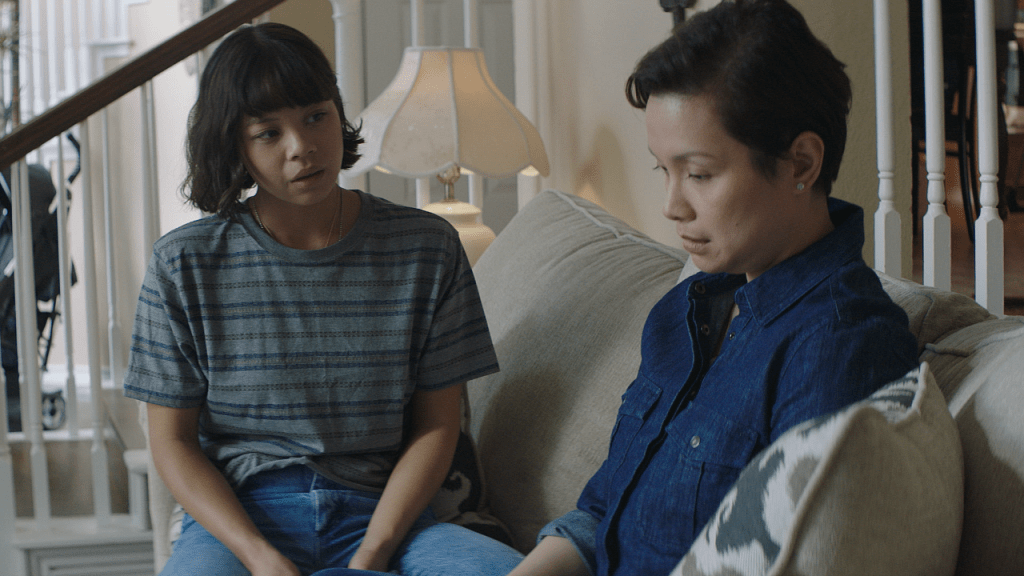
Eva Noblezada and Lea Salonga in “Yellow Rose.” (Photo: August Thurmer)

Every week, culture critics Diep Tran and Jose Solís bring a POC perspective to the performing arts with their Token Theatre Friends podcast and video series. The show can be found on SpotifyiTunesStitcher, and YouTube. You can listen to episodes from the previous version of the podcast here but to get new episodes, you will need to resubscribe to our new podcast feed (look for the all-red logo).

On this week’s episode, the Friends react to the Lincoln Project’s ad that compares the president to Evita. It’s called Covita. It’s pretty terrifying. Then they review two shows-turned-movies/TV. The first is Ryan Murphy’s film version of The Boys in the Band, the 1968 play by Mart Crowley, which chronicles the lives of gay men living in New York City pre-Stonewall. It’s on Netflix. Then they talk about The Goes Wrong Show, which is based on The Play That Goes Wrong by Mischief Theatre, which ran on Broadway 2017 to 2019. The show on Amazon Prime 

This week’s guests are Eva Noblezada (Hadestown) and Tony winner Lea Salonga (Miss Saigon, Once on This Island). Eva is starring in Yellow Rose, a new film about an undocumented teenager whose mother is taken away by ICE. Lea plays her aunt. The two actors talk about their love of video games, how they’re both actually a bit introverted, and how they’re making money during quarantine.

Here are links to the things mentioned in this episode:

The episode transcript is below.

Diep:
Hi, this is Diep Tran.

Jose:
And I’m Jose Solís.

Diep:
And we’re your Token Theatre Friends, people who love theater so much that I’m not entirely sure if I’m okay with political pundits using Evita memes.

Jose:
I mean especially not when it’s that person.

Diep:
Yeah, yeah Yeah. How did you feel about the Lincoln Project Trump Evita ad?

Jose:
Well, I mean, it was like clearly what he was going for. Cuz remember, like, it is so disturbing. We’re living in the apocalypse. It’s like dystopia. It’s like the end of everything at once. Because it’s just one of his favorite musicals. You know that right? So I’m like, girl, is this what you have been going for all this time? I mean, with like, the really like, yeah. But also like the blonde. Do you think he went blonde for Evita? I’m like, come on. So I don’t know how I feel about that. Because I love Evita so much. And although Eva Peron herself, you know, I have problems, issues with—Eva Peron, what she meant in terms of like, you know, like, being friends with Fascists, and I love that. I love Evita. And there’s nothing about this administration about this man that I’m ever going to love. So I still don’t know how I feel about anything.

Diep:
Yeah, he’s never going to be a gay icon.

Jose:
Fuck no. I don’t know like, grabbed all of us and like brainwashed us and torture us and like forced us to like love him or something like that—gross. I don’t know. But no, no.

Diep:
Oh my god. Do you think like in 50 years, someone’s going to do an a Evita revival. And it’s going to be Trump’s set?

Jose:
Eww.

Diep:
Because I feel like someone’s going to try if we’re all still alive.

Jose:
Oh, I mean, Melania as Juan Peron. God no. And what like Claudia Conway is gonna be Che? No, please, God. Save me, rescue me from the future. I don’t I don’t. I don’t. I don’t want it. I don’t want that timeline. No.

Diep:
I feel like anything related to the Trump administration, 2020—like I don’t want to see any media about that until I’m dead.

Jose:
There’s a Showtime or Starz so whatever show that’s already happening. That’s like so gross. You’ve seen that right?

Diep:
No, I did see the the the Michael Cohen show. No, it wasn’t Michael, or Jeff Bridges is playing. No, no, no. Jeff Bridges is playing, oh my god, oh my god. The FBI agent. Her emails. Her emails.

Jose:
No mom. Jeff Daniels is playing Comey.

Diep:
Okay, yes. Okay.

Jose:
You’re like, a white Jeff.

Diep:
Yeah, one of the white Jeffs who is middle age.

Jose:
The only reason why I’m what I even consider like maybe like watching that was because I love Holly Hunter and she plays Sally Yates. But I’m like, Nope, I cannot, I cannot get this. So like it’s already happening. So the Evita Trump-ita thing is gonna be happening at some point.

Diep:
Well, I look forward to seeing your version.

Jose:
My version. God, I know. That’s just—

Diep:
Yeah, I tweeted it. And someone was like, “Did Jose write this?”

Jose:
Yeah, no.

Diep:
Like, wow, his brand is strong.

Jose:
I don’t know. Like, we should stop talking about this man. When he was like out and I saw him like doing all his like, you know, like crazy nonsense in the balcony, the first thing that I immediately thought was like, “dexamethasone me from my head to my toes.” Cuz that motherfucker was rainbow high, right? Didn’t you hear steroids make you? Yeah. He was high AF. And I mean, imagine, I kind of felt like good for him that he was so high.

Diep:
Except that he started—Ccan you do a parody about all the tweeting? Oh, yeah, that was a rainbow high.

Jose:
Yeah, I was like, you go girl. People should not be in control of the nuclear codes if they are gonna be like rainbow high like that, right?

Diep:
I need you to hook up with Randy Rainbow and just, and do that. That actually fit the rhyme scheme and I am so proud of you,

Jose:
Randy Rainbow high? Okay, let’s talk about shows before we give more attention to this man.

Diep:
Okay, well, what shows are we talking about today?

Jose:
We saw two film and TV versions of shows that we know. We’re going to be talking about The Boys in the Band, which is on Netflix. And then we saw the Prime video series The Goes Wrong Show which is a version of *The Play That Goes Wrong. But instead it’s like tiny episodes, and it’s very funny. So shall we start with *The Boys*?

Diep:
Yes. Let’s talk about The Boys.

Jose:
Ugh! That’s that’s my review.

Diep:
I’ve never seen it. And then I watched it and I’m like, Oh my God. I am so excited to talk to Jose about this because I know he’s going to have opinions about Robin de Jesús. Give me all of your opinions.

Jose:
I have a really soft spot for Robin and I was very glad—didn’t he get like Tony nominated for the Broadway version?

Diep:
Mm hmm.

Jose:
He was in fact that I don’t know. I don’t like when—it’s not his fault, obviously—but I don’t like what white writers and white directors, asked BIPOC performers to do almost like parodies of, you know, themselves. Not themselves the person but what they think the person represents. We saw it in that show whose name I won’t say cuz like, I don’t want to get death threats anymore, but it was exactly that where you grab like a Latinx character, Latino character and just ask them to like amp it up to like Sofia Vergara. Just for the sake of allowing the white audience to like, oh, he must be Latino, right? Because there’s no other reason. And I do, like, Robin de Jesús a lot. I think he did what he was asked to do, and he did it well. But it’s very troubling that it’s such a cliche-written character in a play that basically—well in a film adaptation of a play that basically glorifies the suffering of white gay men, and how they are the only population that matters when we’re talking about LGBTQI people. So I fucking hated this thing.

Diep:
Thank you for watching it for me. The Boys in the Band the film is based on The Boys in the Band the play, which was a 1968 play by Marc Crowley who actually died earlier this year, not from COVID. He just was old.

Jose:
[laughs] I love that.

Diep:
And it was revolutionary for its time because it was one of the first mainstream portrayals of gay men and the double lives that they lead. And I believe it kind of fell out of favor with the LGBT community around the ’70s and ’80s, with Stonewall. And then it got back into favor very recently with the 2018 Broadway revival. And then Ryan Murphy saw the Broadway revival, and he produced it for Netflix. I was watching it. And it’s set in late ’60s, early ’70s. You would know it’s a period piece. When I was watching it out, I was like two minds about I was like, Okay, I could see how these portrayals of these men at the time was, was new. Like it was talking very candidly about how torturous it feels to not be your authentic self. And at the same time, I was just also wondering, why am I watching this in 2020? What, is there anything that this play is telling me right now?

Jose:
That Ryan Murphy has compromised on Netflix? Otherwise, why are they letting him do all these things? It must be the only reason, right?

Diep:
There’s nothing about this that is relevant right now, you think?

Jose:
I mean, do you think anything’s relevant?

Diep:
I don’t know. I’m not I’m not. I’m not part of the—

Jose:
No, but I mean, but you’re like it. You’re like an informed, smart, audience member who knows actual gay people, gay men specifically in real life. This is not how, right? I mean, see, I’m not even making sense. I sound like Will from Will and Grace right now, just like uhhh….

Diep:
I could see that part about, because you and I have always talked about how the gay community’s really cruel to each other in terms of—just the unrealistic body image expectations and just the machismo of it all. And so maybe that could be an angle. I don’t know.

Jose:
You know, what I think is an angle, how it’s white, gay men, in like their 40s and 50s, which is the average age of like the cast in this right? They insist on calling themselves boys. And I’m like, you stopped being boys like three decades ago. That’s the only thing that I was like, This is relevant. For men, the actors in this production and this film version are really handsome men, right? Why do they all look like—remember that marionette? That creepy marionette from like the 50s? What was the thing like Charlie something? They all looked really like plastic. And I don’t like to comment on the appearance of actors. But don’t they all look like they have too much makeup on? They look like they have too much Facetune on. And that’s probably because they’re like playing really, really young men when none of the men in you know, none of the actors are of that age anymore. So it’s very strange. It was almost a perverse like Sunset Boulevard kind of production for me. Like I saw Ryan Murphy wanting to preserve this piece that’s no longer relevant and—what’s the thing where you preserve things?

Diep:
Amber?

Jose:
Yes, from Jurassic Park, it’s kind of like that. It’s wanting to preserve this piece that’s no longer relevant. Like even, I don’t know, make it even like, look terrible, and like, look like it’s been polished too much. I was like Zachary Quinto, you have not been 30 for like 100 years, like who are you kidding?

Diep:
Yeah, it’s around the 32nd birthday of one of the characters played by Zachary Quinto, who they say is ugly. But then you’re just like it’s Zachary Quinto, that is not believable. Even if you put a really bad wig on him.

Jose:
Yes, we have seen his abs and he’s 43. So he stopped being 32 even a decade ago.

Diep:
It’s so nice. You rarely see men playing younger.

Jose:
Well, I know right? White gay men love commenting on the looks of female actors. I guess we’re allowed to say how terrible everyone looked in this. Except for Robin. Robin look gorgeous.

Diep:
Yeah, Robin, and oh, my God, who is the Black actor?

Jose:
I forgot his name. It’s so white. Let me see.

Diep:
It’s so white.

Jose:
Boys in the Band….

Diep:
I don’t actually understand why the title is that. They’re not in a band. They’re not getting the band back together. They’ve been in contact.

Jose:
It’s Michael Benjamin Washington.

Diep:
Michael Benjamin Washington Oh, yes. Yes. Yes. Fires in the Mirror.

Jose:
Oh, yeah.

Diep:
Which was a better showcase of his talent than whatever the heck he was not able to do in Boys in the Band, because he was like the other BiPOC character, of which there was just one in like a 10 member cast, just off to the sidelines, just supporting the white people and all their fuckery.

Jose:
I mean, that’s exactly what this play is. And what the movie is, and it’s not even like a well-made movie.

Diep:
Like, it’s just the play.

Jose:
Yeah, but it was it me, but nothing about it, that none of the performances were modulated for a camera. They were all like acting like they’re all freaking Norma Desmond, larger than life. And like that guy from the Big Bang Theory, Jim Parsons. I was like, holy shit.

Diep:
I think the reason actually, that he didn’t feel like it was well made for the screen was because Joe Mantello directed it. And he directed the Broadway revival. And he’s a fine director, there’s some very stylish shots. Like the shots of Zachary Quinto coming up the stairs, and you see the rings on his hand, I was very into that. I love little detailed shots. Did you notice, why do they use a fish eye lens so much, like that little fish eye lens, it made their faces look gigantic.

Jose:
And they also looked like they were made out of plastic. I think it was like that thing where Ryan Murphy was like, “Boys, we have Netflix money.” So they’re like, let’s use every lens. And let’s try to do everything. Let’s try to do everything we can with this. I really like Joe Mantello. And this is like me being just, exaggerating things. But I feel like Ryan Murphy is one of those creatives right now who gets control over everything, even if he’s not necessarily directing the shows that he said, if it’s a Ryan Murphy production, you sense him hovering over everything. You know, it kind of fits into the Ryan Murphy universe where like, everything’s like too much, a little bit too much, right? And I fear that maybe he had too much of a say in what Joe Mantello wanted to do. Because like the performances, you know, those performances kind of work on stage, but they definitely don’t work in film any more. Unless it’s silent film.

Diep:
Maybe if it’s camp, they’re so close to getting over to the other side of it.

Jose:
The film itself is so lacking in self awareness of what it is as a film. Didn’t you get the sense when this thing ended, when they wrapped production, they were like, oh, we’re going to change the world. And we’re going to change the people from the South, where they see how amazing gays are. And I’m like, No, no, no, no, no, no, no, this film is like, empty. It’s like so shallow. And it’s not a good movie. So I don’t even know what to say.

Diep:
I feel like the characters aren’t really characters because when it was written, it was very much like, I want to offer you a panorama of what the experience is like, which means nobody is well-developed, aside from maybe Jim Parson’s character, and you still can’t figure out why he’s so pissed off all the time, and why they’re all friends with him. It’s like, I love my friends, but even if they insulted me that much in one evening, like no, no. Especially if I was like the only person of color in the room like and just got punched to like know, like, why would you stay there?

Jose:
Have you ever been to Julia’s?

Diep:
No. What is that?

Jose:
It’s one of like the classic gay bars in the West Village. It’s like a block from Stonewall. It’s one of the iconic bars one of the iconic gay bars in New York. And the movie kind of feels like Julia’s because Julia’s is basically attended by gay men, mostly white gay men, who were around during Stonewall. So the amount of bitchery and camp, but also humor that’s what Julia’s feels like. But there is sense of humor and it’s not mean. And Boys in the band all the characters are just mean, why are they friends?

Diep:
Why are they friends? At the end Zachary Quinto was like, “I’ll call you tomorrow” to Jim Parson’s character that said something about friendship, about how strong these friendships are because they need to be strong. But at the same time, it doesn’t give you an excuse to just be mean to each other for no reason.

Jose:
No, I think it’s like one of the most pervasive cliches that exists when it comes to gay men. And it’s that they’re supposed to be mean to each other. And also, by default, be mean to other people, which is something that white gay men continue to perpetuate. Like I said before, you know, like, if you go to like fashion blogs and stuff like that, like men are always talking about women’s faces. And I’m like, motherfucker, have you looked at yourself in a mirror recently? This feels like a relic already, this movie. I don’t know. There’s much more interesting things to watch on Netflix that are queer.

Diep:
Yes, recommendations. Jose give people the recommendations.

Jose:
Just don’t watch this. Watch anything but this.

Diep:
Pose is great. Ryan Murphy may have created it. But Janet Mock is the showrunner. So Pose great.

Jose:
I mean, go, Janet. Let’s move on. I don’t want to talk about Ryan Murphy anymore.

Diep:
All right, we’re gonna have to when The Prom comes out,

Jose:
The only reason for that is Meryl [Streep], and Nicole [Kidman]. So yes, I’ll put myself through that.

Diep:
Okay, our next show is is The Goes Wrong Show that’s made by the same production, the same British production company as the people who made The Play That Goes Wrong, which was on Broadway for like, a couple years. And then it moved off Broadway. And it’s basically a slapstick evening at the theater, where a bunch of actors trying to put on a show and you know, things go awry. Set pieces fall, people fall off set pieces. Lines get flubbed, props don’t work. It’s not deep, you know, it’s not profound, you just got to go and laugh and feel better about your life. And for actors, you know, who go through so much when they’re making shows. And The Goes Wrong Show. It’s 10 30-minute episodes on Amazon Prime. And Jose and I watched two and they do the same thing, but within different plays within 30 minute time period. The conceit is the same: they try to do a show and it doesn’t go that well. And it’s funny. Turn off your brain. Just turn off your brain. Just don’t expect anything. I feel like it does get a little bit old. So it’s not bingeable thing. You know, if you need something to cleanse your brain at the end of the day, this is a fun 30 minutes to spend.

Jose:
You saw it on Broadway, right?

Diep:
Yeah, I did.

Jose:
Did you enjoy it on Broadway?

Diep:
Yeah. I mean, I really enjoyed when big set pieces fall. That’s really fun.

Jose:
You were like neutral chaos.

Diep:
Exactly. Smash it all!

Jose:
So you just said that this thing isn’t bingeable. I watched every episode. I love the show so much. Like I love it. Like I had to like ration it by the end because oh no, I’m almost done with all them. I couldn’t stop. I’ve watched like, my stomach hurt from laughing. I sent myself a little edible every time before I had to watch it. And then during one of the episodes, I was eating cereal also because like Cinnamon Toast Crunch came up with like, a churro version. And it’s like, my favorite thing in the world right now. So I filled a bowl with those and like some oatmilk. And I almost choked. I’m not kidding, I almost choked. Those laughing so much so hard from watching it. I thought it was absolutely genius. And I couldn’t stop. Because it’s like, I love the fact that it’s a series yes. And it’s self-contained episodes. But in the actual show, it’s like so meta because it’s like actors playing actors playing characters. So the actors as characters, you kind of become familiar because they each have their thing. You know, there’s this woman who’s always like, looking at the camera, you know, like at the audience, and like throwing those like, come hither looks. There’s this guy who I love so much, who’s like, he lives for the applause, like go Lady Gaga. And like whenever like someone like cheers. He does the same thing over and over and over again. And I find it so endearing. And there’s just like really hot like prop guy who’s always like, just like, oh—

Diep:
Splashing water or like accidentally hitting people.

Jose:
It reminded me a lot of like Benny Hill and like Monty Python. I just found it so delicious. It was so refreshing. And like you said at the beginning, it really made me miss live theater because it’s one of those, the show will go on kind of thing. Oh my god, which episodes that you watch.

Diep:
Oh, I watched the first and second episode.

Jose:
So it was the, was it the one about like the Nazis and the one about—

Diep:
“The Lodge”

Jose:
[laughs] Oh my god, you need to go watch. I mean, maybe you don’t need to. I don’t know if your dad, because it felt like a very dad show to me. It’s such a dad show. Like I told my father, you need to watch this right now. You need to watch or have your dad watch the law show, like the jury episode, and also one called “90 Degrees,” which is supposed to be set in this like, you know, like Southern. So it’s like the Brits doing an American Southern accent. It’s called “90 Degrees.” Yeah. And it’s supposed to be this like, wet, moist, Southern drama about like a dad dying. It’s like very Tennessee Williams. But it’s like just to give you an idea of the kind of humor that they’re going for here. At the beginning of the show in like a, “I’m Laura Linney. And this is PBS Masterpiece.” The director comes out and tells the audience, “we’re about to see a play. And this is what the play is about.” But he also lets people know that something went wrong, even before the plays started. And in the case of “90 Degrees,” for instance, he tells people that the set designers read the name of the show, and assume that the sets were supposed to be built at 90 degrees. And it’s incredible, like, yeah, you need to, like get stoned or something, or like, get a few drinks or whatever. But this is like such a balm. I love that so much.

Diep:
For me, I had the same feeling as when I watched the Broadway show, which is: how they do that. Especially because this version, there’s like 10 different sets that just all, that all look different and and have a different aesthetic. And they all fall apart in different ways. And I’m just like, oh my god, so much money was put into this because it is much easier to do a show that goes right, than a show that goes wrong.

Jose:
I know, right? Because it’s also like such a testament to the fact that this is, they’re directing chaos. One of the reasons I think, why I found this show so bingeable and so addictive was because we are living in chaos right now. But no one is directing it. Like we have no idea what the fuck is going to happen with this pandemic. You know, the nuclear codes were given to a mad person. No one’s in control. So the fact that I was watching chaos that was controlled, and that was directed by someone, and that was done with care and appreciation for the craft of theater of filmmaking and television actually gave me such relief. I was like, I wish the people who are directing the show, were directing the world right now.

Diep:
Oh my god, would you want to see them do a version of this presidency?

Jose:
God no, go fuck that presidency. I do however, want to see them do a version of Evita.

Diep:
And she falls off the balcony.

Jose:
And play over.

Diep:
I know. I’ve always wanted to ask them like, I feel like it must be so meticulously timed. How do you know when something actually goes wrong? Because in live theater, something always goes wrong.

Jose:
I guess for them if something went wrong would be something actually going right, right? I mean like a set not falling apart. Oh my god you need to watch “90 Degrees” because like there’s a dog and it’s like [laughs]. It’s like robot dog on a skateboard. It is amazing. It’s amazing.

Diep:
So much money, the Brits give their masterpiece theater so much money, would like to see the same here.

Jose:
Yeah, because it was also a celebration of like, what a live audience does to theater, which is it felt like theater to me, because the audience was reacting. And I always love to hear you know, in the laugh tracks like, with the live audience, I always love to hear the one person who laughs louder than everyone else because they just can’t help it. And there’s like plenty of those at this show. I loved it so much.

Diep:
Yeah, it’s like chaotic SNL.

Jose:
Yes, yes. But actually funny. SNL hasn’t been funny for years.

Diep:
Yeah, yeah. SNL is not consistent This is actually pretty consistently funny because it’s camp, it’s pratfalls, it’s really cool optical illusions that you don’t realize are optical illusions until the things fall apart. You’re like, Oh my god, how do they design that set? Like I was just trying to figure out mentally how this is all happening.

Jose:
And also like me wondering like, how are the actors not breaking? I would die.

Diep:
Yes. Such professionals. Do you remember our interview with Harriet D. Foy? And she was talking about how she would love to do The Play That Goes Wrong.

Jose:
Yes, oh my god!

Diep:
Someone call her, call her to do this show!

Jose:
Or can you imagine like a P Valley episode that goes wrong? Just stay away from the poles girls.

Diep:
Don’t do acrobatics on the pole. They’re not stable.

Jose:
It’s like so funny cuz like I was watching, I remember this one time that I I interviewed Isabelle Huppert. I always want to ask actors this question, I always forget to ask and I was like, What do you do when you need to like sneeze or yawn? So Isabelle Huppert was telling me that the adrenaline usually prevents you from that, cuz you’re so in the moment that you can’t help it. But then she was playing, I think, Mary Queen of Scots or something in Paris last year. And she sneezed when the curtain went up and someone in the front row went like, bless you. You know I love when shows go well, but it’s such a testament to why I miss theater so much, live theater so much and like being there so much, that that whole thing of be in community and laughing with someone, and multiplying that with like lots of people, made me wish that we were in pre-March times more than—

Diep:
You can try to be an audience on SNL, they’re paying them now.

Jose:
Oh god, no. I want to laugh, I don’t want to go on SNL.

Diep:
You might see Jim Carrey play Joe Biden. All right. Well, if you want to watch The Goes Wrong Show, it is now available on Amazon Prime, get high, get drunk, binge it. Yeah, have a laugh. And who did we interview today?

Jose:
Our guests today are Eva Noblezada and Lea Salonga, who are starring in the new film, Yellow Rose, which is about a Filipino-American young woman played by Eva, who finds out her mom is undocumented. And when her mom is sent to prison, because this is how this country works, she must find a way to survive and thrive. And she also happens to be very talented in terms of becoming a country musician. So we’ve talked to Eva and Lea. Oh my god, like I love them both so much. We talked to Eva and Lea about a bunch of stuff, including the movie, obviously, and video games and what they have been up to during quarantine. Yeah, so let’s go to that interview. Lea Salonga, Eva Noblezada, thank you so much for for joining us. I was so excited when I saw that the two of you were in Yellow Rose, mostly because I had a very nerdy question to ask you. When I’ve interviewed you separately, I’m obsessed with the fact that you play video games together and that you’re like both huge video game nerds. I mean, can we start talking about that? Like, have you been playing a bunch of video games in quarantine?

Eva Noblezada:
I will say I’ve never actually had the opportunity to play with you. Like actually, like, I have a controller, you have a controller. We’re having a great time, wine’s open. I never had that. That actually sounds a lot of fun. But no, I haven’t been playing much in quarantine just because I’ve been trying to do everything I can to stay sane and to make take money from people who have a lot of it.

Lea Salonga:
Good plan. Good plan. Thank you. I’m in quarantine. What have I played. I’ve played a little bit of Assassin’s Creed Odyssey, which is incredible. I’ve played Kingdom Hearts, which is really cute. It’s like playing Final Fantasy with Disney characters. And then there’s Final Fantasy Seven, which is a remake of a previous Final Fantasy game. But because the technology has advanced so far, since the original Final Fantasy Seven was produced, stuff has changed, the story arc pretty much remains the same. But now all the bells and whistles are just jacked up. And there are a few more additional elements to it that take advantage of the tech. And it’s just breathtakingly beautiful and quite addictive. I remember just sitting on the couch in my den playing this. And I look to my left and I see the sun coming up. I’m like, yep, I’ve been here a while. Yeah, it gets you get really obsessed really, really fast. And the characters are actually very fully developed. The voice acting is fantastic. I can’t really find anything wrong with it, except it takes a lot to get past the very first boss. It’s difficult. But the cool thing about it is that you learn the hard way exactly which buttons to push in order to get your desired result. So yeah, so they make it tough, but they make it tough for good reason. And so I’m not angry at the game. So now I’m waiting for the next “Assassin’s Creed*. The next one to come out which is *Valhalla* and I think it’s supposed to be really violent and bloody because we’re talking Vikings now. Oh, yeah. England. So it’s like isn’t there like a series called like Vikings on the History Channel?

Eva Noblezada:
Yeah, there’s a Vikings one and like another like, like more Starz, Showtime-y one.

Diep:
Yeah, I think Starz.

Lea Salonga:
Yeah. So I remember seeing maybe one or two episodes of Vikings and thinking, if Valhalla is going to be anything like that, this is gonna rock so hard, goodbye sleep. That’s not going to happen. So, yeah, my Thanksgiving is going to be very very happy.

Eva Noblezada:
Is this on PS4? What console are you playing?

Lea Salonga:
A PS4 and Xbox.

Jose:
I probably shouldn’t have started asking about video games because I thought there were gonna be like amazing stories about the two of you playing on set while you were in between—

Eva Noblezada:
We had 18 days to shoot!

Lea Salonga:
I tend to be anti social when it comes to video games. I mean, there are people who like to play Overwatch or Pub G and socialize and play with their friends. My daughter does that. I’m kind of antisocial with video games. I don’t like interacting with actual human beings. I’m an introvert. You know, I jokingly say, because I hate people. I mean, I don’t in real life. But when I’m playing a game, I’d like to just focus on my solitude and isolation and just go through this adventure on my own.

Eva Noblezada:
But it requires focus and not everyone one understands it. Sometimes they’ll be like, Oh, my God, look at this meme. And I’m like, shut up. I like people ish. I don’t like company.

Lea Salonga:
[laughs] Well, maybe it depends on the company.

Eva Noblezada:
The only company I’ve had for the past seven months is Reeve [Carney]. He hasn’t gotten tired of me yet.

Lea Salonga:
Like he would.

Eva Noblezada:
He probably is. Yeah, that’d be cool. I have to download GTA and Tomb Raider, because I’m playing Call of Duty. The last time I played it was like four months ago, because I got really stressed out like, I need to hit a Nazi. I got really stressed but I need to download two of the games. And I kind of want to get Guitar Hero just ’cause I’m feeling crazy. I just know that I’ll buy the guitar. I’ll have one really fun night. And then I’ll see the guitar and get very annoyed because I live with an actual musician. And the fact that I’m playing that kind of guitar and having like it in a corner.

Lea Salonga:
It’ll be hilarious. Because I know some guitar players that have played Guitar Hero, and they’ve said it’s actually harder playing Guitar Hero than the actual guitar.

Diep:
Make Reeve Carney play Guitar Hero.

Lea Salonga:
That actually would be something. That would be online content, I would want to watch. I just want to see how he’s able to negotiate that.

Eva Noblezada:
That would actually be very funny. We should probably try that. We’ll have it be a surprise.

Diep:
Oh my god, I’m it comforts me so much to hear both of you say that you’re introverts because I’m the same way where I tell what I tell people. I’m a journalist. And I’m also an introvert. They’re very surprised, because my job is talking to people. But I actually don’t like being around actual people in my real life, which makes quarantine a really great experience for me.

Lea Salonga:
I know. It seems it seems like a very wrong thing to say. And you know, my quarantine experience has actually been quite invigorating, and educational and lovely and quiet and restful. And there are a lot of people who can’t relate to how I’m dealing with it. I’m like, it’s okay. Everybody will have their own quarantine experience, everybody’s going to have, everybody’s going to have their own takeaway from this. Some people are going to thrive in isolation. My daughter is the same as me. And she’s doing online schooling. And she’s happy because she gets to distance herself from teenage drama. So she’s like, um, I like this. I like this. I like being in my room and doing schooling this way. Like, yeah, you’re definitely my child. Yeah, you’re definitely my kids. She loves video games. She loves to sing. She loves musical theater. A lot of kids her age are listening to pop music. I listen to more pop music than she does. She’s gonna log on to like Broadway HD or whatever and watch An American in Paris. Yeah, really happy with stuff like that. That’s what she likes. And She Loves Me. Those two are like, constant repeat for her. So I’m like, I’m not gonna tell you not to watch musical theater. That would be hypocritical. You know, but yeah, it’s like no one should ever discount or poopoo anybody else’s quarantine experience only because it’s unique to you and how you respond to it. It’s how you respond to it. I mean, I do love my friends, but I’m perfectly happy entertaining myself at home. Um, yeah, I’m like this anyway, even without a pandemic, so it’s all good.

Eva Noblezada:
Yeah, that’s nice.

Jose:
One of the biggest, one of the saddest things, for me this during this whole time has been the fact that I will get to see both of you on the big screen, because you’re both luminous in, in the film. And I was hoping you could talk a little bit about, you know, like, Lea you’re in a few scenes, but you leave such a—you’re so powerful. And I was like, I would love to hear you talk about how you built that relationship that we see in the film, because like, I could imagine, Lea, your character’s backstory, I was like, I want to know, how she got to be how she was.

Lea Salonga:
That’s the nice thing about something where the backstory is not so defined. But because I have relatives like that, I didn’t have to do a whole lot of research to figure out. Which is a great thing and a not-so-great thing, you know, as far as members of my family are concerned. It’s nice for people to be able to look at her and just try to imagine and fill in the blanks on their own as to what her story might have been. And how did she get to America? How did she get married to this person? How did she wind up in this situation, where she does have some affluence, and being able to find herself in a position where she was actually able to help somebody. I won’t spoil the rest of it. I mean, there is that. But yeah, she’s not exactly the most likable person. And it’s nice to be able to play against what people might expect, of me. Because I tend to be the one that people tend to like in a show or whatever. So it’s nice to actually be somebody that no one knows how they’re going to feel about her at whatever point. It was also really helpful that my scenes were shot at the very beginning of the process of making this film. Only because I mean, our characters, even mine, aren’t exactly, you know, chummy with one another. And if we had actually filmed it much later, in the process, I think it would have been much more difficult to kind of backpedal into a place where there is tension and there is an obvious emotional separation between the two.

Diep:
Yeah, that makes sense. Now, I love what you’re saying about playing against tiype because even when I saw you on screen, I was thinking, oh my god, Lea Salonga, she she’s gonna save her and it’s gonna be okay. And then it, isn’t.

Lea Salonga:
[laughs] Sike! Like, that’s not gonna happen.

Diep:
But I’m actually really curious about like, because the two of you play Filipino-Americans so rarely on stage or on screen. And the movie talks so much about, especially with an interaction between the two of you, about class within the community, the Filipino-American community about, like the division between undocumented and those who are citizens. And so were you hoping to, like create conversation within the community around these issues, especially right now?

Lea Salonga:
So much of so much credit for that goes to Diane [Paragas], because she was one of the ones that wrote the film. And if conversations start coming up as a result of watching this, if people see what’s happening, and find themselves relating to the people and the situations, then I guess all of us as a collective part, you know, and part of this movie will have done something good. But i think i think any Filipino-American will have been witness to that kind of classism within the community.

Jose:
Eva, there have been two moments during quarantine where you have completely like blown my mind. And the first one was, Holy fuck, where was that incredible rendition of “The Man That Got Away”? At the Night of a Thousdan Judys. That was incredible. It was like an opera almost in like four minutes because like you acted the entire song, without like, you know, like leaving their shot. And I was like, I cannot wait to see you direct a film or something at some point. And the other moment was when I was like, I love the poster for the film so much and you shot the picture in your home.

Eva Noblezada:
So they’re like go to Brooklyn to a photographer. I was like absolutely not. I was like I barely left my house. What makes you think I’m gonna go and go sit in the studio and have somebody I don’t know shoot a picture. But yeah, it was kind of funny, because they sent me like, well first off, I don’t know if I should besaying this I think it’s very funny. I was blonde and did obviously do not have a fringe right now. So all of that crap is totally edited. And also they sent me like budget version of the costume and like, in the film, my final scene shirt’s a beautiful silk like Western shirt with like a silk red tie and like a really nice hat. They sent me like, it was like cloth, it was like craft material for clothing. And thankfully, my partner had bought me the guitar in the film for Christmas, you know, because he’s perfect. And so I have that. That was like the only bit of authenticity I had. I mean, I was wearing fuzzy socks in the shoot for Pete’s sake, but he was literally shot an iPhone, edited bangs, like edited hair color. It was just kind of like exactly what you’d expect for a quarantine photoshoot. So yeah, that was kind of crazy that we were able to do that.

Jose:
That’s pretty cool. Cuz like I’m curious. You know, like, I again, like I was like, even like you’re a natural born director and apparently also natural born photographer. So like, what are some skills that you have picked up in quarantine that you finally like, Oh, I never thought that I was going to be doing this in my whole life.

Eva Noblezada:
Pole dancing. I’m very good at that. I’m extremely good at that. I’m talking to myself a lot more just because like I am 30% introvert, 70% I wouldn’t say extrovert. I think there’s a middle ground. I can’t think of the—

Lea Salonga:
Ambivert, is that the one?

Eva Noblezada:
I think so. Yes, I have. I get major social anxiety. So in fact, now that I’ve been quarantined, if I were to go back to a setting with people, I would freak out. I would not, I don’t handle this well. And I don’t have my doctor anymore to give you beta blockers. Trying to make sure that I don’t go into situations like that. Um, but yeah, I would say pole dancing. I’ve been reading a lot. I’m reading a book, two books right now, one called Braiding Sweetgrass. I just want to get, like, take a juicy bite into the mysterious world of, the dark side of capitalism. I’m going into that direction with my mind right now. I know that FBI agents watching right now and I was reading your job, but also like, What the hell’s going on with this country? I’m also reading. I’m reading a book called Braiding Sweetgrass and a book called The Blood of Government: Race, Empire, the United States, & the Philippines. Just because I think this is a perfect time for me to start understanding, quite literally the history, both political and historical for America, and also for the Philippines. Just because, you know, I might I think that’s important for me to learn. But other than that, I don’t know. I’m not actually picking up skills. I just am trying to literally be sane. My partner loves it. He can work all day and be happy. I I actually miss my friends. I don’t have any friends in New York. But all my friends are in London. I go a little crazy at times. But I think that’s, I just ride the wave.

Diep:
Yeah, the way I’ve been trying to tell myself during this time is the way I feel today isn’t going to be the way I feel an hour from now or tomorrow, and you just just gotta feel your feelings.

Eva Noblezada:
Oh, yeah, I have also been painting. Like I’m actually not horrible at it. And I just finished a 30-by-40 inch canvas, which is the biggest one I’ve done so far. So I have to go back down to Blick, I love saying that in a Filipino accent, it’s an art material store in New York City. I have to go back and I want to see if I can get a bigger one. Yeah, it’s fun.

Diep:
You have more room in your apartment than I thought, wow.

Eva Noblezada:
Well, no. My actual apartment is being, my friend is staying there right now. So like, I have to keep everything in like a tiny corner here because he has a lot of stuff.

Diep:
Did you get any guitar playing tips from Reeves during the process for—

Eva Noblezada:
No, I didn’t know him then. We’re not together then, the universe was like, please just wait. No, I didn’t. I didn’t get any tips from anybody. I literally went back in. And it sounded like shit. To be honest with you. Like the first day of filming. We did a scene where I have to play the guitar for Diane’s daughter who plays Lea’s daughter in the film. And that was terrifying. Like I haven’t played guitar in front of anybody in literally eight years. And then you tell me to play in front of a child and keep her entertained? That’s kind of like, kind of like cuz you know that she’s gonna be like, that’s horrible. I don’t know, because she’s very outspoken that little girl and I love her very much, but she would easily be like, why are you doing this? But yeah, I was very bad.

Jose:
I’m really curious, you know, fingers crossed, someday we’ll all be able to gather and go see a show again. And I wonder when the time comes for theaters to reopen all over the world, are you looking forward more to being in a show or to seeing a show?

Eva Noblezada:
I want to be a part of experiencing live performance again. But I am not at all excited to do eight shows a week, I am excited to continue to receive a weekly paycheck. Because New York rent’s expensive and no one cares about the arts. So this is why I literally said to my agent, I was like, hey, if there any like rich white people who need to do like live video concerts, or like socially distance concerts, please let me know. Because your girl needs to pay her rent.

Lea Salonga:
What I want, what I want to do, ah, once we’re able to both, I think I get a thrill out of being in the audience and kind of just getting lost in a show or a concert performance. But it’s also so much fun to perform. I miss performing. I haven’t performed on stage since March of this year. I did two nights in Dubai at the beginning of March, came home, and started hoarding groceries because the lockdowns were going to happen a few days later. So, yeah, so yeah. Thankfully, I mean, there have been some charity gigs. There have been some fundraisers. And now I’m doing corporate gigs from home, which is nice. Which means that, yeah, I do, I get a paycheck. And I’m thankful, I’m really, really, really thankful that we can do that. The experience isn’t quite the same as being in a room, whichever side of you know, of that orchestra pit you’re on—whether you’re in the audience or on stage, there’s nothing like being in a room and sharing a heartbeat with however many people in an audience. And that’s just something so unique and special. Yeah, I miss singing with musicians, just miss the adrenaline rush of, you know, of that downbeat of an overture, and then stepping out and feeling ironically, that so many eyes are on you, but it still feels like the safest place to be. Yeah, I miss that. Because right now, singing in my living room, into my iPhone, I mean, it’s nice. But it’s not the most ideal situation, but I’m grateful that I can sing at all, and be able to still entertain people.

Eva Noblezada:
Virtual concerts are weird. I’ve done four, three of them at Birdland. And it’s just so weird, because you’re just like, you have a set for like 15 minutes, and I’m with my pianist. So I’ve been doing this for like, three, four years, our cabaret show together. And you sing and then you’re so used to like, making conversation with the audience or like, making a joke, them laughing and then, you know, it just feels more natural. But now it’s just weird. And I watched back the first one I did. I was just like, the first time I did the end of the song, I was like, I was like, wow, this is fucking awkward. I’ll say thank you so much for your applause, thank you. I could see, I’m trying to navigate like, how to, like what to do. It’s very strange

Lea Salonga:
It’s hard. But here’s the thing. I have watched a couple of online concerts. And they know that their people are applauding for them. Because I’m in my pajamas. I’ve got my laptop, like, on my bed and cross-legged. I’m watching. And I’m cheering like crazy, like a crazy person, by myself. So I think knowing that that is what the response is going to be. And I mean, they’re not going to tune into you if they’re not going to respond or know that. Or if they’re like, nah, that’s not even going to be my cup of tea, they won’t even bother. But if there’s a viewer that tunes in to watch you, I think you can trust that there is going to be a definite reaction and some sort of connection. So yeah, so yeah, me on my bed knowing, I’m going [cheering], clapping and I’m screaming. And even though I’m by myself, knowing that that’s exactly how I’m going to react when I see an artist that I love. So when it’s my turn to be to shoot myself and do an online thing, if there’s somebody tuning in, I have to trust that that’s what the audience is going to do. So knowing that, it’s comforting, knowing that that’s what’s going to happen.

Eva Noblezada:
Yeah, that’s nice. It’s a nice thought.

Diep:
I do miss clapping for people, though. Just to as audience member, I just want to show my apprecation. I wish they turn on the Zoom screens, I think at the end of those. And just be like, oh, here are the people who are just watching you. Here’s some applause.

Lea Salonga:
I did a thing that did that, exactly that! So you could actually, like turn on your microphones and clap. And then it felt incredible. Because it was a lot of people, so yeah. So if they could do that at the end of every concert or every streaming experience that you do, then that might actually help. Because then you have an idea of just, who’s out there and how appreciative they are, which then makes the artists appreciate the process even more, it doesn’t feel like you’re performing in a vacuum.

Jose:
Would you like to invite our viewers and our listeners to watch Yellow Rose on October 9, and plug anything and everything you have going on from here until you know the end of the year?

Eva Noblezada:
I have a podcast, this is what you’ve mean correct. Using plug. Okay. I have a podcast called “The Amarillo Project.” It’s on Apple podcasts and Spotify. Season two, our theme of season two will be announced in a week. And also I’m on socials, I’m on Instagram under Eva Maria and Twitter, Eva Noblezada. Other than that, I have nothing going on. We’re very close to Christmas, you guys. And it’s the time of year where the line between the living and the dead is the thinnest, so please stop playing with quiji board. That’s not funny, you really gonna get possessed. Gotta stop doing that.

Lea Salonga:
To everybody watching, please come and see our film, Yellow Rose, we open on October the 9th, please go to GoldOpen.com. And there should be links and a lot of buttons to lead you to how you can buy tickets. And you can even buy private screenings for larger groups. Please go check it out. There should be a list of theaters there where the film is going to show. We’re trying to get the movie to be number one, on its opening weekend, and I’m keeping my fingers crossed for it. Other than that, I bake a lot of bread. I bake a lot of sourdough and I’m extremely proud of it. One of my friends who went to culinary school, I gave him like a couple of loaves to try and he was like, This reminded me of something in San Francisco. It was a huge compliment. So I’m very, very pleased. And so I just been baking for my friends. And it’s just been really therapeutic. So that’s my quarantine skill. And I’ve been flexing it quite a bit. And I’m yeah, just getting through this quarantine sane, I have rabbit holes, I have my bread. Got my family. I’m good.

Eva Noblezada:
Surviving is thriving.

Diep:
Oh, Lea, I have a question for you. When’s your Broadway’s Best Great Performances? Oh, November 27. And that’s going to be on PBS stations all over the country. That was my second engagement at the Sydney Opera House. We’re with the Sydney Symphony. My brother, Gerard Salonga is our conductor. And that was just such a good time. There’s so much musical theater and also a lot of pop music. And I try my hand at singing some golden-age stuff that’s normally not in my voice. But it’s like, what the hell, let’s just do it. And yeah, just a lot of fun. And I’m hoping that people tune in to PBS on the 27th. That’s Black Friday, I believe the day after Thanksgiving.

Jose:
Thank you both so much for joining us. It’s always such a pleasure to see, but like you made me feel like it was back in the pre-pandemic days. And congratulations on the film. It’s beautiful. And you’re both great. Yeah. And I hope to see you again very soon.

Eva Noblezada:
Thank you guys so much for having us.

Jose:
Thanks, everybody. Have you interviewed Lea before?

Diep:
Yes. I interviewed her when she did Allegiance.

Jose:
Oh, was it for AT?

Diep:
Yeah, yeah.

Jose:
That’s pretty cool. I don’t think I read it. I’ll go find it. You should link to that.

Diep:
Well, it was about like how white musical theater people are really obsessed with Asians and they don’t know how to write Asians correctly. But it was a step in the right direction. I am looking forward to more though, like the K-Pop musical.

Jose:
One of my favorite things about Lea is that, have you seen her in concert?

Diep:
Yes, I have.

Jose:
She does like pop covers and I mean like listening to Lea Salonga do Coldplay is like the highlight of musical theater, gay-loving, you know, life.

Diep:
Yeah, yeah, I know. I know. And Lea has been doing so much in Manila. Like she did a Fun Home and she does Sweeney Todd, and I’m just like, Broadway producers. Why are you Lea Salonga away from us? She’s doing all this cool shit and you could have her do cool shit over here. Why you be so racist?

Jose:
Yeah. Can you imagine Lea Salonga’s version of Days and Days? Like I would—

Diep:
I just start crying. Or Lea Salonga being a crazy Mrs. Lovett. I want more chaotic Lea Salonga. I feel like she doesn’t get to do that enough, like she says. That would be good for me.

Jose:
Yeah, she’s always very wholesome. But now we know she bakes, so she would make it perfect. Mrs. Lovett in in the States. Thank you, Eva and Lea. Yellow rose is out on October 9. And it has original songs. Can you imagine like if Eva had to perform at that Zoom Oscars next year?

Diep:
She’d kill it because her home videos are shot very well. But would like to see Eva again in person?

Jose:
Yeah, me too.

Diep:
I do appreciate it, because this is her first film. And now people can see how good she is. You know, just like her face is so expressive. And I don’t think I’ve ever really appreciated before because I’m always seeing her like 10 feet away.

Jose:
Oh, yeah, she’s astonishing. Like her voice is like critical but like her face was like, wow. And you should also go check out the episode that we recorded a few years ago with Eva when she was doing shows at the Green Room 42 in New York City.

Diep:
Our old interview with Eva we actually interviewed her before she was cast in Hadestown, but she could not tell us she was cast in Hadestown. And we didn’t talk about Hadestown because we ran out of time. But next time either part three, we will get there, we will get there we will talk about Reeve Carney. And if you enjoy this episode, we invite you to support us on Patreon, Jose and I edit and produce all of these ourselves and it would be of great help to us to have some support in our project. If you become a Patreon supporter, you get a lot of goodies like our newsletter, and extra bonus Q&A, like our Josh Groban Q&A, we had him singing a little bit for us, which all of our Patreon Patrons could see. So if you want all of that, then we invite you to be a Patreon subscriber for as little as $1 a month. And we also shout out our Patreon Patrons every episode. So this week’s shout out is to Luisa Lyons who is working on a database of stage musicals that have been vaguely filmed and publicly shared. So visit filmedlivemusicals.com and there’s a podcast. We love all theater podcasts, and we love online theater. So thank you, Luisa, for this invaluable database. Thank you.

Jose:
Become a patron. Join our friend zone. We have some goodies coming up and we love you for your support. And this is what, the 17th episode so far right? Holy fuck.

Diep:
I know, quarantine goes fast.

Jose:
Three more episodes and we can drink!

Diep:
Like we haven’t already been drinking.

Jose:
Thank you and stay tuned next week. Because oh my God, we know who we’re talking to next week, and we’re finally doing it. Can you believe that we’ve never had her here before?

Diep:
No I can’t because I feel like I talk to her and about her everyday, all the time. Yeah, yeah. Especially now. We need her now more than ever.

Jose:
Oh, that’s a great t-shirt. You’re gonna have to stay tuned to find out who we’re talking to next week. And until then,

Diep:
bye bye.

Ep 17: The Brujx of Theater (Feat. Luis Alfaro and Alexis Scheer)

Podcast

Alexis Scheer and Luis Alfaro

Every week, culture critics Diep Tran and Jose Solís bring a POC perspective to the performing arts with their Token Theatre Friends podcast and video series. The show can be found on SpotifyiTunesStitcher, and YouTube. You can listen to episodes from the previous version of the podcast here but to get new episodes, you will need to resubscribe to our new podcast feed (look for the all-red logo).

This week the Friends experienced two shows. One was an immersive play for one person for Portaleza by David Israel Reynoso/Optika Moderna, presented by La Jolla Playhouse. The prompt is: Send a message to a person in your life who has died. It’s supernatural and kind of sci-fi. Then they review something more high-budget but also similarly technical: Romantics Anonymous, a new musical from Emma Rice, Christopher Dimond, and Michael Kooman. It was live-streamed straight from London’s Old Vic Theatre and it was fully staged! The musical is about two socially awkward chocolate makers who fall in love. What do the Brits know that we don’t about beating COVID and getting theater back?

This week’s guests are playwrights Luis Alfaro (Mojada, Oedipus El Rey) and Alexis Scheer (Our Dear Dead Drug Lord), in honor of Hispanic Heritage Month. The two playwrights talk about theater as alchemy and magic, and how to find your voice as a writer, even when that voice is weirder than everyone around you.

Here are links to the things discussed this episode.

  • Portaleza by David Israel Reynoso/Optika Moderna, presented by La Jolla Playhouse
  • Romantics Anonymous, a new musical from Emma Rice, Christopher Dimond, and Michael Kooman
  • This Los Angeles Times piece about Luis Alfaro and Mojada, his riff on Medea.
  • This Q&A with Alexis Scheer about the weekly book club she’s hosting with SpeakEasy Stage Company.
  • You can read Alfaro’s plays in a new anthology called: The Greek Trilogy of Luis Alfaro: Electricidad; Oedipus El Rey; Mojada.
  • This week’s Patreon shoutout: Diana Burbano, who’s gathering monologues for a Zoom reading series she’s producing called Breath of Fire, with Latina Theater Ensemble in collaboration with Protest Play Project. If you’re a Latinx writer, you can submit your original monologues here.

The transcript for this episode is below.

Diep:
Did you watch the debates?

Jose:
God no. I cannot deal with it. Not right now.

Diep:
I was in a bad place because my parents were watching it on the living room TV and Vietnamese because there was live translation. And, like live dubbing, like Vietnamese dubbing of their voices. And my niece, my nephew are watching in the dining room in English.

Jose:
Why didn’t you put headphones on just go somewhere else? Does he sound does he sound less horrible in Vietnamese?

Diep:
Yes, yeah.

Jose:
Cuz his voice, his actual voice is just like, it just gives me like a migraine. It’s terrible. It’s a match. Like someone who sounds like him?

Diep:
No, no, it was just one guy translating all three of them: him, Biden, and Wallace. Chris Wallace. Yeah. And he just got so frustrated and was like, “Guys, I’m sorry. I can’t translate right now because they keep interrupting each other.”

Jose:
Well, yeah, that sounds like a nightmare. Like why are they letting a bunch of old white men decide everyone’s future?

Diep:
Why did they not let a woman moderate? I feel like any woman who’s not Megyn Kelly could shut Trump down really quickly.

Jose:
Get a black woman to yell at him. Get that professor from the town hall from a few weeks ago. Remember? Who was like, stop, sir. I’m gonna fucking ask my question. And you’re gonna shut up you motherfucker. Because like that motherfucker needs to shut up, someone needs to tell him to shut up. Yeah.

Diep:
Biden told him to shut up.

Jose:
Did he call him a motherfucker though?

Diep:
He called him a clown.

Jose:
That’s very bold for Biden, I guess.

Diep:
I know, I think he fought well. Especially cuz because he has a stutter. And it’s really hard to.

Jose:
He’s also smart. He also has a brain. It’s just like, so ridiculous that I don’t even know. Let’s just do this. Otherwise, my hair’s just gonna turn gray.

Diep:
Hi, this is Diep Tran

Jose:
I’m Jose Solis.

Diep:
And we’re your Token Theatre Friends, people who love theater so much that I figured out how to live cast from my iPad to a big screen TV. And I’m very proud of myself, because then I got to watch theater on an actual TV.

Jose:
Without an Apple TV?

Diep:
Yeah.

Jose:
That sounds fancy.

Diep:
I recommend getting an Apple TV.

Jose:
Oh, I mean, I have one. Yeah.

Diep:
Do you know how to do that?

Jose:
How to send stuff from my computer or my phone or my iPad to the Apple TV? Yeah, that’s how I’ve been watching all my stuff. I thought you meant without an Apple TV.

Diep:
No with an Apple TV. Sorry. My parents have an Apple TV. I don’t have an Apple TV because I don’t really watch TV in my house.

Jose:
I have an old one, do you want it? Like, it’s just like, in my drawer.

Diep:
Really, you’ll give me an Apple TV?

Jose:
I mean, yeah, if you want it like, I have an old one. I bought a new one. So if you want to, like we can arrange that after.

Diep:
Great. I’ll make you cookies.

Jose:
Okay, no worries. I mean, you’re like in California, for a month.

Diep:
And what did we watch this week that we had to cast on a giant TV, Jose?

Jose:
Well, actually only one of the shows we had to cast on an Apple TV or something. It was Romantics Anonymous by Kneehigh productions at the Old Vic. And the other show we actually had to experience in a little cardboard box and that was Portaleza from the La Jolla Playhouse.

Diep:
And we also have an interview for you this week with two people. Jose organize this because in case you don’t know it is Latinx Heritage Month?

Jose:
Hispanic Heritage Month but Latinx sounds better. Viva los tacos and viva los Latinos, and viva, I don’t know, Latina America. Yay, everyone. You’re in California, that’s like the land of Hispanic heritage in the US, right?

Diep:
Oh, yes. We have the best tacos, don’t come for me Texas.

Jose:
It’s true. I mean, yeah, they can’t. Texas also always vote Republican. So they cannot compete in more than one way. And to celebrate that we are going to talk, well we actually talked to two of the most prominent Latinx playwrights working right now. Alexis Scheer, who you know from Our Dear Dead Drug Lord and Luis Alfaro, who you will know recently from Mojada. But he does a lot of Greek adaptations. His Electricidad was really, really, really wonderful.

Diep:
And it’s also an intergenerational conversation because Luis Alfaro, who is like a Latinx-Chicano playwriting legend. He’s been around for years and knows about the struggle for representation. And Alexis, she just came out with her breakout play and it ran in New York for three months, which that never happens for women of color.

Jose:
So let’s get started with Portaleza by David Israel Reynoso and Optika Moderna. It’s a show. Well, it’s more of an experience. It’s being produced by the Jolla Playhouse who I think are, you know, out of all like the pandemic theatre companies, the whole year are doing extraordinary work, like extraordinary, like I want to talk about all their shows, like I even saw their kids show about wizards and even that was fun. But anyway, Portaleza is an experience that you actually get a thing in the mail, like you get an envelope with some instructions, and some really cool, like beautifully designed gadgets that you have to put together. And once you put together that, it’s a viewer kind of thing. It’s so hard to, like, try to like describe this show. Without giving, you know, I don’t even know what I’m saying right now. The purpose of the show is that you’re supposed to send a message to someone who’s no longer here. And then using your phone and using the gadgets that they sent you, you’re able to make that message, reach the heavens or reach, you know, wherever it is that the message is supposed to go. And then you get feedback from it. So it’s a show that really requires you to be very present because you have to do a lot of things, right? It’s a lot of work that the show asks from you. I mean, not like coal mining, or like doing anything like really difficult, but you have to put things together, then you have to text and you have to email and experience that. You cannot be. Although you’ll need your phone, you can’t be on your phone, like doing something else. Like you cannot be like on Hinge or Grinder or watching YouTube videos, right?

Diep:
I’m gonna say something that sounds really bitchy. But I will explain myself. It was kind of the same way I felt about watching Romantics Anonymous, which was the process of getting ready and anticipating the event was much more interesting than the actual event.

Jose:
Oh really, you felt that about, I mean, with Romantics I kind of agree. But you felt the same thing about Portaleza.

Diep:
I just felt like I was watching a 20 minute music video but through a kaleidoscope so the colors are really cool.

Jose:
I mean, the colors were really cool. And like they had that really fancy like aluminum foil kind of thing that makes you feel—you know, what I love about this and the kaleidoscope kind of thing is that, I miss going to the movies so much. And the idea of sitting somewhere in the dark and watching something like that Portaleza reminded me of that, you know, I felt isolated. My favorite times to go to the movies is like super early in the morning when there’s almost no one there. And I’ll like pick a movie that I know no one else wants to go see. So some, like, European flick. And I’ll go see it at the AMC on 42nd Street. And I know there’s gonna be no one there because like, Who wants to go see like a fucking Belgian movie at 10 in the morning on a Tuesday, right? So I get to experience that alone. And that’s what Portaleza felt like to me. I felt, you know, even though like I was looking at my phone, through like a little like cardboard visor. The screen felt huge. To me, it felt very immersive. I kind of felt like it was an IMAX experience. You didn’t feel that, like at all?

Diep:
I did. I liked the creation of it, like the way it was presented. I just didn’t find the videos themselves to be that illuminating.

Jose:
Oh, yeah. I don’t know. Like one of my favorite things to experience right now is to see how creative people have to get given that it’s a pandemic.

Diep:
The thing I most liked about this experience was just the, like I was saying, the build up to it because there was some you had to like, send in a question that you had to ask of the person who is no longer here. So I sent a question to my grandmother who died 10 years ago. And actually this room that I’m sitting in right now, I’m sitting in the room where she died. And I sent in a question asking her like, what happens after you die? And I had to send that in and then they sent me a text back saying like they received it. And so the interactive element, kind of like when went to the murder mystery experience, like I’m really enjoying these interactions we’re having with artists. But I felt like when it came time to have the actual experience with the view finder, I found myself missing all the build up.

Jose:
Like underwhelmed.

Diep:
Yes, I was very underwhelmed. It was a good music video, though.

Jose:
Yeah, it was really good. It was beautiful. Yeah, I totally get what you’re saying. I was so excited about seeing the end, like I’m a sucker for anything that’s, you know, art involving like, spiritual experiences and all that. Give that to me. That’s my catnip. And yeah, I know. So I really enjoyed it. Like I really enjoyed that part. I agree with you like the video I had fun with it. I guess it was not that memorable, though the part where there’s like kids was pretty cute. And also the part where there’s like women floating like in the, you know, in the universe or whatever, that was also kind of cute. But then I feel like that picks up again,when we actually get the message, right, when we actually get an answer. And then when we have to open the envelope and all that stuff, that show won me over in that part, because there’s something else that you had to do after the music video. Which also like, it makes me think The Matrix totally like ruin the idea of like, spiritual sci-fi forever, right? Because like, it felt very Matrix inspired. And I’m like, come on, filmmakers give us something that’s not like green things falling and like, you know, like, electro music. Give us a new idea of what digital heaven might look like.

Diep:
Yeah, it was a lot of mixed iconography. And I don’t really know how I felt about it. Like it started off with very technical like The Matrix and that and then it went to a very—

Jose:
Enya place?

Diep:
It went to a very Enya place and then went into space.

Jose:
None of which were the good place for you apparently.

Diep:
Space was the good place for me. I could have stayed there the entire time.

Jose:
Space was incredible. Maybe like it means that we, should we join the president’s space force?

Diep:
Yes. If the aliens come right now, I will go with that. Yes, please.

Jose:
If you’re an alien, why would you want to take a human being after seeing what we’ve done to our planet? I’d be like, nope. We don’t need you on Jupiter.

Diep:
Yeah, I think that’s why they haven’t come because we know they’re out there. I saw that video of that spaceship that NASA leaked. It was very official.

Jose:
Oh the one with the jets?

Diep:
Yeah, we’re too low for them. You know, like, we’re ants in comparison. They don’t care.

Jose:
Or they like, flew by and they look at what we were doing. They’re like girl bye.

Diep:
Yeah, exactly. Exactly. Like, I don’t know her.

Jose:
Yeah. So if there’s an alien, they say to us, who wants to be like, get in loser we’re going shopping. Please come take us.

Diep:
Do you have any other thoughts on?

Jose:
No, not really, I really enjoyed the process of it. Like I love the art. I’m with you on the video part, but I did love it. It was a really beautiful experience overall for me cuz it got me away from screens by also making me look at a screen. And I don’t know, I was just very excited. Like it made me think about how beautiful it is to get postcards. Have you been getting postcards from people? Not the voting postcards.

Diep:
I’ve been getting postcards and letters from people.

Jose:
Yeah, it’s kind of like that, right? Like reclaiming getting something from someone in the mail. Except in this case, it’s a message from our dead grandmas because I also did my grandma.

Diep:
Oh, did she also live a really long time?

Jose:
I mean, I don’t think any grandma lives enough time for their grandkids. Like, but yes, she had a really good life.

Diep:
That’s why I picked my grandma cuz I really wish like she was alive when I became an actual adult and could appreciate her. Yeah, it just made me wistful. But what I really like about Portaleza and what La Jolla Playhouse is doing is they’re taking something that they have been doing, which is immersive, you know, experiences, usually they do it outdoors. And they’re picking out a way to bring it to people’s homes. Like we literally got a package in the mail with these instructions, and it felt very personal. So I really appreciate that, them trying to figure out how to create a personal experience when we’re all stuck in our homes.

Jose:
And the visor’s pretty cute. The art is very cute. It’s kind of like Guillermo de Toro inspired.

Diep:
Yeah, I’m keeping it. Maybe you could like make that into your quiji board. It’s very, it’s very mythical.

Jose:
I don’t want any ghosts in my apartment.

Diep:
Talk to your grandma. She misses you!

Jose:
I don’t want to talk to my grandma. But if she can send me messages from Portaleza. I love many people who are no longer here, but as much as I love all of you, I don’t want you to show up in my house. Okay, thank you.

Diep:
All right. So if you want to talk to your dead grandma, you can still experience Portaleza, go to LaJollaPlayhouse.org. And tickets are available until October 31. And you can do it whenever you want. Okay, the next show we’re going to talk about is from the Kneehigh Theatre Company, their newest show called Romantics Anonymous. It was streamed live from the Old Vic in London. Kneehigh is a British theatre company. They’ve done works in the States before. They did Brief Encounter and their stuff has toured like around the world and to the U.S., like I’ve seen three of their shows in America. I’ve always really enjoyed them. They’re very whimsical and a lot of music, very optimistic shows, you can take your family to it, you’ll have a good time, which is what I kind of got from this newest show they did, which is called Romantics Anonymous, which is based on a 2010 French film about two socially awkward, maybe mentally ill chocolatiers, who fall in love and have to figure out how to deal with that. And what I really I really appreciate is the Brits showing us Americans how to do theater right now, because this was a full production. Like, I’m pretty sure they isolate the actors and the crew. And they just performed for like, three cameras. And there was just physical contact. And it felt like, you know, watching a met live broadcast or watching a National Theater live broadcast. And somehow Britain has figured out how to do this, and we have not, and it just, even if the show was not that good, which it was not. It just made me really miss the live experience, and watching on a gigantic screen in my parents living room. I felt like I was back in the theater. And that was really nice. Especially because there are technical snafus. And so we started an hour an hour late. And it was really enjoyable because the director kept looking at us the entire time saying, Hey, sorry, you know, live theater, what can you do? Which was so endearing. Like I missed that. I missed a snafu. Like I missed the fuck up.

Jose:
Yes. I love the part. I mean, I’m sorry, to the Kneehigh people. BecauseuYeah, like the show itself was like, all right. I mean, also, like, I want them to do Brief Encounter. But anyway, it was so cool, because like when things started going south, and they had to stop their show, they were like, sorry, there’s like some tech issues. And there was like a siren outside. And it reminded me of times, and I’m sorry that I sound so excited about this, I felt like a fucking sociopath. But it reminded me of this one time when I was a Tuck Everlasting, and they had to stop the show, because someone fainted. So like the ambulance arrived, and all that, and that was so exciting. I mean, the person survived. So I’m not like making light of someone who died or something like that. But it was bad. It was like, just so cool. You know, like, it felt like being alive. It felt like seeing something that was happening in front of you. And then they paused it. And like, you know, for me, I was more excited to see how the actors were like, in the background, like, what do we do? And they’re like, go cuz we have to stop everything. And then when the actors came back and received their positions to restart the show, those moments for me were more exciting than anything else in the show.

Diep:
Do you think our standards have decreased? Because we’ve been stuck inside?

Jose:
I don’t think so. But also, I mean, in our defense, this show was kind of like, you know, Chocolate meets Amelie meets Ratatouille, the movie itself is not that great, either. So like, you know, like, maybe just find better movies to adapt into musicals. It was very twee, and very predictable. So, you know, the acting was fantastic, though, and all of that. But the music itself was just like, do you remember a single song from it?

Diep:
No, the music felt very incidental and very unnecessary.

Jose:
Yeah. I agree. You know, it was very, like, I just remember, like, there was like, a recurring theme that they kept using and then going back to it. Maybe we’re just becoming like, more jaded. Or cynical, which I don’t think we weren’t before. But maybe that’s what we’re becoming in quarantine, because I noticed, like, a lot of people on social media were like, head over heels about the show. And I’m like, huh? I usually love romantic musical but I was so bored by the music in this.

Diep:
Yeah, hey, I’m single right now. Like, I could use some romance and magic in my life. And this just didn’t do it for me. And I think it was because I thought she was too good for him. And she was trying too hard. And that offended my feminist sensibilities. And I am okay with that.

Jose:
Isn’t that always the case. Like the female protagonists. It’s always too good for the man always.

Diep:
But he’s always like, really good looking or sad or charming. As an audience member, like, you get it. You don’t like Richard Gere. But you’d still go into the hotel room, you know?

Jose:
Well, yeah. I mean, I remember when the actor in the show showed up, because remember, he played like multiple characters, right? And I was like, I thought he had big dick energy, so I’ll go with that.

Diep:
Oh, okay. Well, I guess he’s more your type than my type.

Also quarantine, maybe my standards have lower when it comes to men. Not theater!

It’s made mine higher than ever because I don’t want to touch anybody! I mean, that’s reliable. Like they don’t want to touch each other. I don’t want to touch other people. Like that feels like a quarantine romance to me. For you, who has struggled with his mental health, how did you feel about how this piece portrayed mental health because I felt like it portrayed it as something like whimsical and adorable.

Jose:
Well, that’s the way that mental health is usually portrayed. There’s nothing whimsical or adorable about anxiety or depression. So don’t listen to the show. It was very like Amelie, you know, like, if you if you look back, do you like Amelie?

Diep:
I enjoy Amelie. Yeah, right. But I enjoy it despite the fact that it’s problematic.

Jose:
It is very problematic in terms of like, she clearly has some sort of like, you know, something, right? And the movie treats it at this like lovely. It treats it at this like manic pixie dream girl kind of thing where it’s like, no, like, clearly there’s something wrong with her. I mean, not wrong in like a bad way. But you know, like she has, she must have some condition right? Some sort of illness, some sort of mental illness, some sort of mental disorder. Cuz she’s, she’s like a freaking stalker.

Diep:
Yeah, she’s a stalker. She’s socially awkward.

Jose:
But also that she has like severe anxiety. So like, yeah, there’s, believe me there’s nothing cute, there’s nothing sweet or nothing whimsical about anxiety. So I don’t know. I wish art would stop treating mental issues like there’s some like cute thing that you can overcome it when the right men with big dick energy shows up. That’s not how it happens.

Diep:
Do you think it’s a French thing? Since it was made, Romantics Anonymous and Amelie are French films?

Jose:
Well, I mean, the manic pixie dream girl thing it’s like also, maybe that’s where the American stole it from because it feels very French. Even I don’t know, like, did you ever watch that Little Voice movie, that British movie with Ewan McGregor? Like, it’s always you know, always like the shy female protagonist with some sort of like secret, or some sort of thing always, becomes the object of someone else’s affection. I don’t know. It’s this like really strange combination of like, fetishizing and romanticizing mental illness. Marrying that with like, the need men have to like want to protect and to save women. So it seems like very gross savior complex meets social anxiety, which, in fact, would make you think that these male protagonists are fucking perverts because like, leave the women with the mental illness alone, right?

Diep:
Yeah, like, don’t use them in order to get laid.

Jose:
Yes, that’s like, no, that’s like very, very wrong. Don’t do it. So I kind of, I mean, this show, also does that right?

Diep:
Yeah, well, a woman created it. So that’s the most interesting thing about it. I think maybe it’s sometimes like, sometimes when you grow up with these kind of stories and these kind of romantic tropes, like you can’t help but feel sentimental about them. And this is like a very sentimental, romantic piece that I don’t really think, thinks that it’s about mental illness. I think that piece of things is just about like, regular people who have social anxiety, which isn’t a real mental illness in the world of the play.

Jose:
I wonder if we would have enjoyed this show more if Kneehigh had sent us chocolate like the Portaleza.

Diep:
How’s that for an immersive experience?

Jose:
Everything’s improved by chocolate. Like, I feel like having chocolate has made me forgive some really shitty shows. It’s true.

Diep:
Or whenever there’s food involved, for me, really. Oklahoma!, like I was won over, not by the chili, but that helped. The free food helped. Yeah, I’m looking forward to like more of these live broadcasts, especially because it was only $26 to stream it. And Jose and I are also going to be watching a live broadcast of Six the musical soon, and that was only $15. And if, after quarantine, we can all figure out how to do this in America. Like there’s this money that you all are just leaving on the table and access, the technology is already there. Like why why was, why, why? Why? Why has this not been done here? Just they

Jose:
They probably are thinking about the idea that they have to sell individual tickets, which is kind of what like Disney did, you know trying to like overcome—fucking capitalism. They kind of wanted to overcome by charging like extra money for Mulan instead of just like giving it to the people who already had Disney+, or trying to sell tickets. And I was gonna ask you that, I mean, I live by myself and I was completely alone when I was watching the Romantics Anonymous, like, Did anyone in your parents house in California join you?

Diep:
Yeah, but my dad joined me for a little bit.

Jose:
And then he was like, fuck this, this is boring.

Diep:
Yeah, that’s basically what he said.

Jose:
Go dad. But yeah, you know, like you said $26. So technically, if you’re being like a capitalist and like a producer and stuff, probably producers were thinking like, how are you going to let two people watch your show for $26 and that kind of mentality. It’s what has American theater right now, you know, not try to do this thing about live performance because they don’t think—they don’t want to give people joy, they just want to sell as many tickets as possible, which is bullshit.

Diep:
We’ve been talking it about on the show, like the American theater is a capitalistic structure, but it thinks it’s socialist, and they think it’s humanist.

Jose:
LOL. Yeah.

Diep:
The amount of people, Broadway producers and especially who I’ve heard say, I don’t do it for the money, I do it because I love theater. And I think there’s something magical about bringing people in the room together.

Jose:
LOL to that. I don’t know. I don’t know, math. But what’s the tiny number that you can put in it and it multiplies it? Square? I don’t know what that means. Like lol times a lot is basically what I want to say.

Diep:
To the nth degree.

Jose:
Yeah. Yes.

Diep:
Well, from some news I got, we’re not going back until next September at least. So people got to figure it out. But the Brits, you know, I’m going to be continuing to keep my eye on that overseas programming. Because if you want to see people kissing right now on stage, that’s where—

Jose:
Oh my god that’s true! And also like your favorite Andrew Lloyd Webber. I mean, he’s not your favorite, but he might bring back your favorite show, Phantom [of the Opera].

Diep:
Yes. Did you hear about the drive-in theater in my neighborhood in Queens that I’m missing right now because I’m in California. But they’re doing like a drive-in screening of Phantom of the Opera with live performances.

Jose:
No one has cars. No one I know has a frickin car. So that’s like, also bullshit. I was wondering the other day, like, Can I Lyft to like a drive-in like, can Lyft give us like discounts if we’re gonna sit through a show or something like that? Because I don’t have a car. You don’t have a car, like no one I know has a car. Who’s gonna drive us to these places?

Diep:
Someone needs to like figure out like, individual bubble or tent situation.

Jose:
Yeah, that’s a really good idea. I’ll just have to build like, what’s that thing that kids do like boxcars?

Diep:
Yeah. But I so I recently went to the beach before I left for California. I went to the beach, and I ordered a $30 beach tent off of Amazon. So it protected me and my friend from the sun and from other people.

Jose:
Oh, that’s awesome. And you can peer through the little windows, right?

Diep:
Exactly. Any other thoughts before we get to our guests?

Jose:
Now I want chocolate. So let’s get to our guests. Next up, we talked to Alexis Scheer and Luis Alfaro, two of the most prominent Latinx playwrights working in theater right now. And like Diep said earlier, it was a multi-generation spanning thing of beauty. And I had a fabulous time. And I hope all of you enjoy it. So let’s go check out the interview. Alexis Scheer and Luis Alfaro, thank you so much for joining us and, bienvenidos.

Luis Alfaro:
Bienvenidos! Hello!

Jose:
I’m so thrilled because I really wanted to celebrate Hispanic Heritage Month with the two of you because you are in many ways, you know, I don’t even know how to like start talking about it. Cuz it’s like, you represent generations of Latinx people in the United States who have been doing art, you have been creating art. And I just love the two of you so much and your work, that I was like, I can’t imagine, like a better duo to have to celebrate what makes being Latinx special and so incredible. So can I start with that as a question? Can we brag about why it’s so amazing to be Latinx?

Alexis Scheer:
We have good food. I’ll start there. I feel like I keep writing food into all of my plays. Just to have food around the theater. And if I like trick everyone like oh there are empanadas in this play, then we have to have empanadas in the rehearsal halls. So we have good food. I’ll start there.

Luis Alfaro:
i’ve you know, I was thinking about this the other day, I guess I was thinking a little bit different. I was thinking we have outsider status, right? We have good history. We have good hard history. And in a way when you’re a playwright or a writer or an artist, you are always pushing up against something. And as a Chicano, you know, I always feel like Wow, I’ve been pushing up against something the last, you know, 25-30 years, and it’s our history, right? It’s a kind internalized history, but also our real history that exists in this country. So there’s something joyful also about, not not being in the center right now, because the center is like corroded and and poisonous, you know? So you’re always kind of pushing against something. And that feels right. For a playwright. I like the tension that I’m in right now.

Diep:
Well, I mean, first of all, I just want to congratulate the two of you for the amazing receptions to both of your plays before we all got shut down. Like, Alexis for how long Our Dear Dead Drug Lord ran, I don’t think any of us thought that a play about a bunch of teenage girls, and Pablo Escobar would do that. And Luis, Mojada played all around the country. And you continue to just re-invent what makes classics timeless. And I feel so blessed to like, be able to cover the field while the two of you are in it. Like how much do you know of each other’s work? Because I just, I feel like Latinx, playwrights don’t get enough credit for how creative the diaspora is, with the form, and how inventive it is.

Luis Alfaro:
I think it’s seven years ago, maybe even longer. Now I’m thinking about the Latino Theater Commons, and how that started. And then meeting Alexis at her play, right? Right after your play, you went up on stage for that conversation. And it’s so intense, because you generally that, you know, don’t meet the family that way. But it was really exciting to hear her play. And then the artists, you know, shows up and there’s a conversation, and it was so beautiful. So I would say, you know, we’re not that small of a community, but we live like one. I think we know so many people in common. And also we know what the community, where it’s at. Do you feel that way Alexis?

Alexis Scheer:
Yeah, totally. And, you know, I got to see Mojada when I was at Oregon Shakespeare Festival. And, you know, and getting to meet you in real life was like, Oh, great. One of the veterans. Um, and, and I do feel like it’s, it’s big, and it’s small. And so we all kind of know each other. And I feel like we’re all responding to kind of our ancestors and the people who could like, I respond to [Maria Irene] Fornes and her work. And I feel like a lot of us, you know, we’re all kind of stacked on each other’s shoulders and building on top of each other’s legacies.

Luis Alfaro:
Yeah, definitely. And, you know, it’s Fornes and [Luis] Valdez in a way, right? Valdez on the West Coast, and then Fornes on the East Coast. Fornes was my mentor. And so I am deeply, deeply immersed in a community that also feels very much about Irene, you know, and so, I would say that that’s really been very powerful. Because on the West Coast, sometimes there’s a kind of aesthetic, tha is very traditional. And then you come to the East Coast, and you see something very different. But you know, I think about this a lot in terms of every community. These last few years, I wrote Facebook notes, like 1,000 word Facebook entries, you know, and one of them was about Asian-American women, this generation of playwrights, and how it’s not really recognized as a movement, like who has, it hasn’t been like, really, really illuminated, illustrated. And it kills me because within that community, you see the variances of writing, right? And so I’m thinking right now, as I’m looking at Alexis, this beautiful face, I’m thinking like, the writing is so different. We’re writing differently. But our sensibilities are very, very much in line. Maybe with our politics, but also with our, I don’t even know what the word is, our taste, you know, or our regional—because you’re very, very much of your region, don’t you think, Alexis? I mean, I kind of feel the Boston in you.

Alexis Scheer:
Yeah, well, I mean, it’s so funny. I’ve been in Boston in the last 10 years, but I always claimed Miami as my home because I was born and raised there. And I’m finding that, you know, the Latinx diaspora is huge, and everyone comes from a different place. And Latin people aren’t a monolith. And there’s so much culture and differences in culture and language. And when you talk about Latinx theatre, you actually talk about a lot of different backgrounds, nationalities, politics, I mean, my mom is Colombian so I feel like Pablo Escobar is a part of my family mythology weirdly. And so that’s a thing that I have to like deal with in my work. But I was raised in Miami amongst Cuban exiles, so and I saw a lot of that theater so I feel very in tune to that experience and then I go to the theater and I learn about, you know, Mexican culture and the Chicano culture. So I love that it’s everywhere. It’s not one thing. It’s just a rich diaspora.

Luis Alfaro:
There’s something very powerful in how we keep shifting and changing, you know? And I think lately because of our pandemic, maybe the only thing we really can count on is change, and how we change. And change is essential. I don’t know if you’re all feeling this, but I’m feeling like, I’m making art and I also have to make politic, right? I have to change the community I’m in. And this is the moment. A little fissure has happened, right? And how do I take advantage of that moment to change something? Because I don’t think it’ll come again, for a long time.

Alexis Scheer:
And I’ve been asking myself questions. We always ask: oh, why this play, why now? And now I feel like I’m asking, I’m working on this like, micro commission that we’re aiming towards launching in January, around Inauguration Day. And the question I’m asking myself now is, what do we need? What are we going to need and trying to anticipate our sensitivities? And in trying to imagine, like, all sorts of scenarios and trying to create like, Okay, what, but really fundamentally, what is my purpose as an artist? And what can theatre do, especially like in new media like this? There’s something a lot richer and a lot, I feel like higher reaching than just like, we’re telling a story. It’s like, Oh, no, we’re we’re acting, we’re trying to enact change, and harness power. I don’t know, well, that’s the witchcraft. *laughs* I’m like, just trying to like have everyone cast a big spell. There’s performance in that, which is why, I mean, I love all of that. Kind of, the marriage of spirituality with performance, I feel like is a big thing in my work.

Jose:
I want to talk about that so much, because like, I do think if the two of you as the ultimate, you know, brujos and brujas. And I mean that, you know, as a total compliment, because you know, even though your work is in terms of style and what you’re doing is very different. What I love about your work so much is that you’re reclaiming brujas. And in many ways I get, you know, for every theater company that does The Crucible somewhere, they need to be doing one of your plays, also, because your work is the opposite of The Crucible, where you’re reclaiming brujas, as women dancing with the devil. And in this case, the devil being knowledge. And the devil being women becoming women, because they’re using their gifts, to be in contact with nature, to be in contact with human beings and to be in contact with themselves. It is the opposite of The Crucible, like, you don’t fear that. Like you want your brujas to be dancing in the forest, to be dancing in the trees, and to be levitating, and to be using their power. So I would just love to hear both of you talking about brujas.

Alexis Scheer:
It’s what my necklace says, it says brujas.

Luis Alfaro:
Maybe I’ll start by saying that Alexis, that last image in your play of the dance is so profound. It’s so real and so beautifully upsetting and exciting, because it is a new form of like, release, right? And I love the way it gets introduced in the play, and you see it form. And then you see it full out. I just say that was, that was ritual, that was like church, you’re calling on the spirits definitely. Even in a reading, right? It’s such a profound moment, to know that a play has to live in its physical life too. And that it gets, it gets animated by the body. And it becomes a calling, right? A trance. I love the trance of it.

Alexis Scheer:
Yeah, there’s the act of conjuring and I love thinking about theater in terms of alchemy, and the alchemy of live performance and how just the act of going to theater is ritual in itself. I love identifying as a witch, it freaks people out. We should reclaim this because I think at the very root of it, it it’s self possession. What is witchcraft? It is the act of self possession. It’s about connecting to the inner divine, the goddess, which is always what I’ve tried to do in my work, but also just like in my life, because we live in a patriarchal society where I’m thinking about The Crucible, which you know, guess who wrote it. I love like one ingredient of theater that maybe doesn’t really exist in a book is like the act of like, Oh, we could actually make something. If we all came into it and believed, like there’s a suspension of disbelief, and we can all just like allow for something to be possible and allow an impossible truth to be possible. This is getting very heady. But I just I love magic. And I love that in the theater, we can just have some girls around a fire and they can actually have power. It feels tangible and it feels accessible in a way that it doesn’t feel in real life.

Luis Alfaro:
It’s beautiful. I was thinking as you were talking about, I did a play maybe about five or six years ago with Campo Santo, one of my favorite companies in San Francisco. Sean San Jose, he’s extraordinary. And I was raised in Pentecostal apostolic religion, very hallelujah church, right? And so I have a whole segment in there. That’s about 10 minutes of speaking in tongues. And if you’ve ever heard it, it’s really like conjuring of a spirit, right? And he did. Like he really studied the Pentecostal religion. And his research was: he went up and down Highway 99, in the Central Valley of California and went to all these Pentecostal churches. So by the time he actually did the performance, there was 10 minutes, very uncomfortable moment of him being in the spirit. And you know the stage directions were: he levitates. There’s some lady in the audience. afterwards she says, “He levitated, right? He levitated. He did, right?” And I was like, yeah. Maybe he did. I think the conjuring does that, right? And that’s kind of one of the beautiful things about theater is if we believed that the magic can happen, it’s going to happen. Right? We have to believe we’re making magic, we are bringing those elements into the room for sure.

Alexis Scheer:
The reading I’ve done about when all these covens start to really make themselves like seen and known it is in these moments of political oppression. And it’s just a way of manifesting power and showing your power. We’re definitely living in that right now.

Luis Alfaro:
I love the word manifesting because it’s, you know, in Mexico, when I was in Mexico City, somebody said, va se y da la manifestación, right? And I was like, What? The manifestation, well, yes! And that’s not what I thought it was going to be. The manifestation is a political protest, right? He calls it the protest. They call it manifestación, right? And I thought, Wow, this is so beautiful, we’re gonna manifest something in the zocalo, and we’re going to make something happen. And I love it that that language kind of lends itself to brujeria, right? To the spirits.

Diep:
I feel like you were talking about artists as political activists, as citizens before it became cool, because prior to this moment that we’re in, it seems like artists were seen primarily as just entertainers, like, you cannot be political. And during this moment, for the two of you, since you can’t do your art in the traditional way, how have you been working on those two things, like being the artist and being a citizen?

Luis Alfaro:
Well, I have never been busier politically, I have to say, you know, this summer, I know, maybe most of you know that I was part of the Victory Gardens [Theater] action. And it was a very painful, very painful process that we helped put together with a number of people, right, extraordinary people. But having our seven writers, the resident writers all quit together was the beginning of really challenging the theater, and really getting to the transparency they needed to do and that was really hard. It was hard to lead. It was hard to then create actions and work with the board. And one of the things I’m so proud of is: I’m working with a lot of theaters right now. It’s one thing to call the theaters out, it’s another thing to help them get right. Unless we want them to completely die. So one of the things I’ve been doing was the Victory Gardens thing led me to CTG, Center Theatre Group in Los Angeles, and Dominique Morisseau and Daniel Alexander Jones and Culture Clash—and a few of us are part of what we’re calling the Artists Collective. They asked us to come in in this moment to help them. How do we organize again, right? And we said very clearly, it’s not about the moment, it’s about the future, we’re going to help you figure out what you’re going to be because this moment is already happening. It’s already in process. But how do we help you move forward? So I teach in the academy, right? I’m at USC, an $8 billion school, where only 2% of our tenured faculty are Black, and only 3% are Latino. So how do you make change happen from within and enforce it? And do it nicely, and do it in a system that almost feels impossible to change? And this is the thing about being an artist, I think we’re creative beings who use our minds in different ways. So every institution that I’m going to is figuring out how to creatively treat it like a collaboration, a community collaboration. I have to bring the people with me. So the first thing I did at CTG was I’m going to amplify a lot of emerging artists. Now we’re like, oh, well, we’re really only interested in you. No, that’s not the way I work. I come with the whole community. So are you cool about that? So I’m mentoring two female, dramaturgs, 19 and 20 years old. And then we have about 20 artists that we’ve done these little micro commissions with, we’re doing stuff for the website. So like, in a way, you just have to open a door. And I’m just calling it amplify, that’s all I’m doing is just amplify. And there’s process. And so process is trying to create transparency in that building. So I’m doing these interviews, where I bring all the people on staff, and I asked them very nicely about their jobs, and about how they see the future. And then I kindly go into the numbers of people in the company that are BIPOC, which are, yeah, and then you start to really pick away at something, amplify and process. I gotta simplify it for them. And for me and for my community. And then I got to just keep pushing people through. And I think that’s really been the process for me. And, you know, I was arrested so much when I was young for civil disobedience. Sixteen arrests! Oh my god. I used to have a felon for one, I can never run for president right? I can’t do any of that. But yeah. How do you how do you make this more sophisticated? How do you strike and be more effective? Right? So it’s been a summer of making art, but also making politic in a way that’s smarter. And I’m really happy about that. How do we do that?

Diep:
I hope CTG is paying you really well for that.

Luis Alfaro:
CTG is paying. And that is like, you know, really great, because part of it was, yeah, we’re all broke. I’m lucky because I teach. So I took half my money immediately and just put it out into the community. But taking half your money and putting out to community, this is a great way of saying, listen, here’s a $500 commission, I don’t want the rights. I don’t want it. I just wanted to let you know, you’re a great writer, let’s do it. And I did a year in the community in East LA with community writers. And we wrote plays and I said the deal is we got to write plays, and we got to inundate our theaters with plays. We got to write good work. So you know, if I could, I would do the Fornes thing. And I just haven’t been able to find a place where somebody wants the Fornes thing to happen again, in that way. But I think it’s eventual that that’s what we have to do in the community, is create the space for the writers to make the work and to demand something of the work, right? To be generous in our criticism. And to think about, you know, that word that is so hard: quality. What is quality writing? What is the craft of writing? What is point of view? What is passion? Like, look at me, argh! That means something right now, this is the moment when it means something. I feel like everybody has passion, and everybody has point of view. But where’s craft and technique? And how do we get that as community? How are we sharing it with one another? So you know, one of the joys of meeting Alexis was in the Carnival, the new works festival put together by the LTC, and that was an amazing experience, because you could say: Here are seven to 10 plays, and then a whole list of other plays that are available to be produced that should be produced. That demand to be seen. That speak to the moment we’re in.

Jose:
Speaking about manifestaciones and community. Alexis what you’re doing with your, I call it the magical book club. I forget what the official name is. But you know, I was I was there when—First of all, can you tell us a little bit about the book club? I was there on Thursday. But what you’re doing is, right now that people can’t gather in, you know, at the theater, you’re giving them a different kind of theater in a way. Because they’re reading plates and people don’t really read plays. And like you’re inviting them to imagine, I think, and to conjure also. So tell us a little bit about that.

Alexis Scheer:
Sure. So Speakeasy Stage is a company, a regional company in Boston. So it’s a play discussion club, run like a book club. And they invited me to moderate a series on Latinx plays and basically gave me four weeks and said, “What do you want to share with our community, and you know, your community?” And so we started off with Melinda Lopez, Sonia Flew. And last week we read Mojada and Luis got to join us. This wee, they’re all reading Drug Lord, which will be really fun. And I feel like it’s like when the book club turns on me. *laughs* They’ve been like such a wonderful and generous and curious group. I am so pleased with it. And then we close off the series with Eliana Pipes and her play Dream Hou$e. But it’s been, I got invited to do this. And I’m like, do I know how to do this? I’ve never moderated a thing. This is like a talkback, but like, we’re all just reading a play. And I’m on the playwright on most weeks. But it’s just been a blast just to talk about the language and the craft and what’s actually on the page. And then all the playwrights have been able to join us and you know, talk about what’s like, outside the margins of the page and everything that went into it. I’ve just had so much fun talking about plays. Back to what Louise was saying to about this moment of creating, but also like, making change. First of all, I want to meet the dramaturgs that you’re mentoring. I feel like there needs to be like a Tinder for dramaturgs and playwrights, because I just I don’t know how to meet them. How do you talk to them? What do you say, to send an emoji? I just want to know more. Anyway, but, you know, institutions and opening these doors, looking at the institutions I’m affiliated with and deciding, like, okay, what’s important to me. And as an alumni of Boston University, I’m working with my MFA program that I graduated from, which was a wonderful program that I feel like nobody knows about. It was fully funded by the university. And I just want to like kick the doors open. I want everybody to know about this program. And I want the program itself to, you know, commit to taking in people who write plays that don’t always fit, I think, what we have decided, as a white society, what a play is. And it’s like, when you’re, you’re seeing all these submissions, how do you allow for variance in craft and form and kinds of storytelling. Those have been have been really like fun doors to kick down. So I’ve been doing that.

Diep:
Oh, my God, I want to hear more about kicking down doors formally, because, I just want this story about this group that’s trying to revamp the canon because you know, what we consider the canon was dictated by a bunch of white men who loved other white men. This isn’t like a give people advice question. It’s more like a—a lot of playwrights I’ve talked to who are of color, they always have a struggle when they’re trying something new. And they’re not readily embraced by, you know, the mainstream establishment of, you know: critics, artistic directors, producers, because they’re not writing within, like, the formal systems that we are all taught is what is good playwriting. And I feel like that’s why Maria Irene Fornes was never quite appreciated when she was still alive by the mainstream, because of those restrictions. And now we’re all actually appreciate her the way she should be appreciated. What are your thoughts on just like, staying courageous and like, going with your own instincts and ignoring like what other people are telling you what, what constitutes a good play?

Alexis Scheer:
I love reading plays, and I love reading kind of everything, not just plays but reading poetry and screenplays. I read a lot of nonfiction. And I read a lot of comic books. And I feel like all of that ends up in, in my work. And I feel like reading makes me a stronger writer, you just have to keep writing and you have to hone your craft. And you only do that by actually doing it. And so like, I’m always going to be team grad school, anytime somebody is like, “Should I go to grad school?” If they’re paying you, go. Because you learn about yourself as a writer. And I really believe in revision and you learn in revision. And you learn from listening to your community responding to your work. And I feel like the more comfortable you get with it, and the more you can, like, throw your ego to the side and just allow for like play, right? Because we’re writing plays, we’re not writing works. It’s a play and the more confidence you build, and at some point, I think you tap into, like, what you’re doing and who you are and why you write. And I think when I tapped into, like my intention as a writer, and why I’m here and why I am a storyteller and why I am a creator. That was when the floodgates opened for me and I was like, Oh, I can write! I know how to do this and some people aren’t going to get it and that’s okay. And I don’t think that there’s like good art and bad art. I feel like there’s art for everyone and the more critics we get who look like me and look like you, the better we all are. And the people who, you know, are shaping the conversation about the art. I so love what you guys do. I’m such a fan, oh my God. That was word vomit.

Luis Alfaro:
Well, I was gonna say that early on, I think it helped that I started as a poet for like, 10 years. And then I was in performance art for a really long time. So really, that was the bulk of my career was really performing going around the country and then kind of going around the world. And you know, with Guillermo Gómez-Peña and people like that. So it was very, the avant garde. But I remember the first play I got produced was at the Goodman Theater. I was talking about this the other day in the class. There was a guy named Michael Maggio, who was a very important man in Chicago. Well used to, he worked at the Goodman. He was a great director. And after the first preview, which was deadly, deadly, like half the audience walked out. And we were doing this across from, I remember, Death of a Salesman with Brian Dennehy and they were doing great. My production was like, crap, right? And I remember we were outside. And he said, “The problem is, I think it’s an Irene problem.” He said, “The Latinos want you to write something Latino. And the white people want you to write something Latino. And you’re resisting them. I don’t know why. But I think that if you decide not to, you’re going to have a lonely path for a while and you should be okay with that.” And so I kind of thought about it. And I was wedged in between John Leguizamo’s Marble Mouth, that was premiering at the time. And I just thought, huh, okay, there’s a kind of lonely journey, it’s gonna happen. So my first, like, five productions were in Black, or Asian-American companies. So the Latinos took a long time to catch up. Not just because of the avante garde but because I was queer. So we were dealing with that, right? Like out people. I’d go to a company and they’d say, Well, you know, the community is not ready yet. And so I think now, it set, a wonderful precedent to say that, you know, you have to follow a path. And sometimes it’s a lonely path, right? And people catch up. I think of it as people catching up. People catch up to you, and your ideas, right? If you’re an artist, you’re always in the avant garde. So you’re always thinking in the new. And so our job is to not worry so much about that audience, right? I leave that to the theater to do. So when I finally came around to being loved by Latinos. I was really suspicious of them. Because it was also like, hmm, where were you guys when I was really broke in the 1980s? But I get it, I get that we all evolve. We all change. And I had to change. If I was going to work in American regional theater, I had to change. You know, one of my first bosses was Oskar Eustis. Before Public [Theater] before Trinity Rep. When he was in LA. And he was one of those guys who was like, yeah, this one’s really weird. This little play of yours is really weird, like, nobody’s gonna do it. But I think that was a good thing to know, it was good to have people telling you what was acceptable at the time and what was not. So I think a lot about that. I think a lot about the 10 years that I spent going around the US in really small theatre companies. So I was in Boston for a year. And I worked at the Boston Center for the Arts at a company called Theater Offensive.

Alexis Scheer:
Yeah, they’re still around!

Luis Alfaro:
And I lived, I live right above the Dunkin Donuts on First and Mass Ave. And, you know, with the leather daddy and the head librarian for the city. I mean, it was crazy. But you know, I have a kind of a story from every city, because that was the lonely 10 years where like, you know, out of the kindness of people letting you stay at their places, and lots of beautiful theaters like that, Theater Offensive, who were like, “We have no money. But come. Do your plays.” Those lonely years were the years of the muscle, right? Those were the years of like, Okay, I’m getting clear about how to do this. Like, I love how you said: Once you figured it out, you knew you were a writer, you could do this. Yeah, I was getting clear about how to make the work. And that’s really, really important. And that’s something you want to give to that next generation. You know, the clarity.

Alexis Scheer:
Yeah. And I also feel like, because you know, I came to theater as an actor, and I was a child actor, and I went to school for musical theater, and I still act. I mean, obviously, not right now. Nobody is acting on stage. Why I started writing plays was because I wanted to play meaty roles. I always talk about I was 16 at a big performing arts high school in Miami, and I was doing like Harper from Angels in America. Why did anybody let me do that? But I wanted to, like, do some serious theater and you know, those roles weren’t there for young women, especially not like Latinas. That just was unheard of. And so I started writing mostly as like self preservation, to get myself work and that was kind of part of my high school’s big ethos was, you should be self sufficient and create your own work. And all of my mentors were doing that and producing and acting in their own plays. I think that’s always been my favorite part about writing plays. Like I just get to work with all my friends. And, you know, the more young women I write roles for, the more young women who get cast and that’s always so exciting. And what I love about Drug Lord, it has been so fun to see all of the people who reach out to me and want to do this for their showcase. Or I’m working on this in class. And it’s like, Oh, right! This is who is like keeping these works alive. It’s the actors who love to perform it. And so that’s like, one of my favorite parts. And then it really, like, connects me to—on the days where I’m like, ah, why do I do this? It’s like, Oh, yeah, yeah. So when you open like the monologue book, at Barnes and Noble, there are some choices, and you have options.

Luis Alfaro:
Don’t you think actors are great writers, too.

Alexis Scheer:
Yes! Yes. There’s something about like—and I think this was like a big moment for everything clicking in my brain where I like, stopped trying to compartmentalize my selves, all of those disparate things. Eventually, I’m like, oh, right, because I know how to like, act in a play and produce a play, I kind of know what a play should do. So I can actually just write that! It took a while, but I got there.

Jose:
You were talking about alchemy earlier. And there’s nothing for me, you know, when I go see a show, or when I’ve experienced a work that a writer has made happen. It’s almost like reverse alchemy for me, and seeing the trick and the magic happen. And then I’m lucky enough that because of people like you and other playwrights, there’s an entire library for those spells have been saved in a way. And we could go and learn and try to make them happen again. So if I don’t sound like a bruja movie or something again, what is the most magical moment for you as theater makers, as brujos, as writers? When you see, you know, your spells, like happen? Like you see your words transform into literal gold?

Alexis Scheer:
It’s so overwhelming. *laughs* In the best way, in the best way. I mean, it’s scary because it’s like, I had moments in Drug Lord rehearsal and in tech, and then in previews. And then even like the show, I’d like leave for a few months—because we were open for a few months, that’s crazy. And I would come back and kind of face my own power. Oh, I wrote this thing! And there’s stuff happening and everyone is involved. And everyone is now complicit in this. I conjured it, I manifested this. Ahh, it’s scary, in a good way. Excited and scared.

Diep:
Yeah. It’s like your characters.

Alexis Scheer:
Yes, exactly!

Luis Alfaro:
I think, for me, it’s probably first read, you know, that moment of transference when it leaves you, it leaves your body. That’s always such an interesting moment. I work a lot with Chay Yew, the director, and I love working with him so much because he’s a playwright. So there’s a poet sitting with you, another writer next to you, right? And we’ve worked very much, not like director, writer. But we work like two writers together in the room, that’s really the way we work. But there’s always that moment, you know, like, Chay’s not gonna like cop to this because he hates this, any sentimentality. But there’s always a moment, at first read where somebody does something where they get the play in some way, they get something. And then I squeeze Chay’s hand! *laughs* And he’s like, stop it! It’s this beautiful moment, where you’re like, this is not mine anymore. My child is leaving me. Now it’s going to be interpreted or translated or channeled, right? In some way. It’s not mine anymore. And it’s a feeling of relief, it feels like time to change, it’s time to move, right?

Alexis Scheer:
There’s something about too, once a play is open, that’s when I start trying to figure out why I wrote the play and what it’s saying. When I start writing, none of that is really fully formed. And so it’s trying to play, catch up or like rewind. And it’s that moments in rehearsal: usually it’s always an actor who so beautifully articulates what you’ve done, and what you’re doing and what you’re saying, in a way that you’ve never articulated for yourself. And so it’s like meeting yourself. Again, meeting, it’s the meeting yourself, which I find is like, magic, magic.

Jose:
Thank you for that. And now plug everything you have going on. Luis, your play and the Virgen de Guadalupe cover is so stunning. Did you have to like fight to get that?

Luis Alfaro:
No, it was all a woman named Rosa Andújar, seemingly the only Latina in London. But she was the one who pitched the book, edited the book. And the company Methuen was about to shut down for the pandemic. And she said, “If I can get this all everything in within the month, will you still publish?” And they said, “Yeah.” She did it all. I mean, she was extraordinary. So I give all praise to her. I’m doing a kind of interesting thing. The Getty Museum, Getty Villa and Center Theatre Group. One of the reasons why I’m working there is, we are recording all three of the Greeks live in LA, and these new COVID filming guidelines with the filmmaker. And they’ll go up on on YouTube. So I’m super, super excited about that. And I wrote a new play about seminaries. And it’s kind of my pandemic play, you know. And so it’s all about a some actual seminary in the Central Valley, California, where there was closed down by the church and one of the priests hung himself. Because he had never been out in the world. He had been cloistered most of his life. So it’s all about what happens, you know, in isolation, and writing about isolation has been interesting.

Jose:
You’re speaking my love language right now, like, ghosts, and priests and trauma. Oh, my God, I can’t wait

Alexis Scheer:
And you can join me at Speakeasy Stage, join my book club, and we’ll read some plays. Um, and what else am I doing? I’m voting. Go vote. Go vote early, please.

Jose:
I love it so much, Alexis. And Luis. It’s always a pleasure. And I hope you keep manifesting magic into this world because we need it for decades and decades and decades. Good. So thank you so much for joining.

Diep:
What I really loved about the conversation that we had was Luis and I were in California. And you and Alexis were on the East Coast. But through the magic of technology, we could all be together, something that we couldn’t do in the live version of this show.

Jose:
Yeah, that’s something to be grateful for, right? Like I mean, we can talk to people all over the world right now. That’s kind of fun. But you have tacos, so you win.

Diep:
Yes.

Jose:
Yeah. You and Luis, when he was in Koreatown. And like they probably have like you fusion tacos over there, right?

Diep:
Yeah, they they have Korean Mexican fusion, where you can put like bulgogi or kalbi in a taco. It’s delicious.

Jose:
Oh, God. Okay, stop it. My mouth is watering.

Diep:
It’s the brainchild of this Korean American whose name I forget, but he runs a taco truck called Kogi, which eventually turned into a storefront. But back in college, we would chase the Kogi truck around Los Angeles because it parked a different place every night. So you go on the website and you look for where the Kogi truck was parked, and you would chase it.

Jose:
So it’s kind of like the ice cream truck. But with tacos. Fuck, I want that.

Diep:
It could come in your neighborhood any night.

Jose:
Not in New York. I want to get this truck. I don’t want Mr. Softee. I want Mr. taco.

Diep:
That’s the fun thing about Los Angeles. Everyone has a car, we just go chasing our food. Do want to tell our Patreon why they should be supporting this podcast?

Jose:
Well, so first of all, so you can get better tacos than I can because you’re in California right now. But no, all jokes aside, we do this because we love theater. And we want to remind people that theater is alive. It’s not paused, it’s not sleeping. It’s definitely not dead. It’s alive. There’s so many people like creating incredible work right now. And we keep getting prompts from all of you listeners and viewers on Twitter, and social media telling us that you want us to cover more things. And we would love to do that. But we don’t have jobs. We’re both technically very unemployed right now. We don’t have like a steady income. And we want to be able to do this more often. And we want to be able to do this without worrying about how we’re going to pay for our rent. So if you can become a contributor and patron, there’ll be a dream. Also, at some point, we would be able to commission more pieces, we will be able to do more of the things that you love us for. And also we want to hear from you. And we’re building a community also, like, all of are our friends. And friends help each other.

Diep:
Yeah. And if you become a patron on Patreon, you can DM us whenever you want. And we respond.

Jose:
Yes we do. We’re not parents, we know how to use social media.

Diep:
Oh, and if you become a Patreon Patreon. Every week we give a shout out to what our patrons are working on. So this week’s shout out is to Diana Burbano, who is gathering monologues for this zoom play reading series called Breath of Fire from Latina theatre Ensemble in collaboration with Protests Play Project, and they’re putting out a call for writers. So we’ll have a link to the submission for those monologues and information about the play project and performances on our website.

Jose:
Sounds really awesome. Good for you, Diana, and thank you for being a friend.

Diep:
Yep. And if you like the things that we talked about, visit our website TokenTheatreFriends.com. We write stuff, and we have bonus content on there. And anything else you wanna say to people?

Jose:
Stay safe wear a mask. And if you’re in California have all the tacos from me and if you’re in New York, cry with me cuz we don’t have good tacos.

Diep:
Yeah, yep. Speaking of which, my mom telling me I need to go eat lunch now. So bye.

Jose:
Enjoy your food. Bye

Ep 16: Songs of Hope (Feat: Josh Groban)

Podcast
Josh Groban. Photo: Andrew Eccles

Every week, culture critics Diep Tran and Jose Solís bring a POC perspective to the performing arts with their Token Theatre Friends podcast and video series. The show can be found on SpotifyiTunesStitcher, and YouTube. You can listen to episodes from the previous version of the podcast here but to get new episodes, you will need to resubscribe to our new podcast feed (look for the all-red logo).

On this week’s episode, the Friends talked to musician and actor Josh Groban (Natasha, Pierre & The Great Comet of 1812), who is about to release a new album called Harmony in November. But before that happens, he’s doing a series of live virtual concerts, where he will be performing new songs and taking requests from his back catalogue. The first of those concerts on Oct. 3 will be Broadway themed so get your show-tune requests ready now! Groban called in to talk about creating music and finding faith during the pandemic.

Here are links to the things they talked about this week:

  • The Bail Project
  • Romantics Anonymous by Emma Rice, Christopher Dimond, and Michael Kooman—presented at the Old Vic.
  • Josh Groban’s newest song: “Your Face.”
  • A classic Groban song: “You Raise Me Up.”
  • A very prescient Groban song, written by the late Adam Schlesinger: “End of the Movie.”
  • Info about Groban’s next livestream concerts
  • This week’s Patreon shoutout: Mike Sablone, whose company the Warehouse Theatre in Greenville, S.C., are doing a Zoom piece called Objectivity. It’s a Zoom seminar run by a “famous” decluttering expert that doesn’t go as planned. It’s part seminar, part interactive show, and part musical. It runs Sept. 30-Oct. 17. Break a leg, Mike!

The episode transcript is below:

Diep:
Hi, everyone, this is Diep Tran your Token Theatre Friend. I’m really sorry, the podcast is late this week. And Jose could not make it because he and I could not find a time to record together. I’m still in California at my parents house. Jose was in Baltimore. And I also had a freelance gig this week that had me working eight straight hours a day. Next week, we should be getting back to our regular schedule. But before I turn it over to the interview Jose and I did last week, with the very talented Josh Groban, pause for reaction, I wanted to give you all a quick look into what’s going on in my mind this week, and what I’m thinking about and what I hope you can take away from the news.

First of all, my heart goes out to Breonna Taylor’s family, and everyone who is protesting the decision that let the three police officers who murdered her while she was in her apartment, it did not prosecute them. And she has not received the justice that she deserved. And, and I cannot say that decision was surprising, but it was disappointing nevertheless. So I would like to remind everyone who is listening to donate to the Bail Project, in order to help everyone who is protesting on the ground and risking their lives right now. Even if you feel like you are not doing enough, I don’t really think anyone is doing enough right now. But if you are able to do what you can, then every little bit helps the cause. And I truly believe it.

And I also wanted to take this moment to talk about what Josh Groban is going to talk about a little bit later, which is gratitude and trying to be grateful for some of the, I wouldn’t say blessings or positive things, but some of the things that we’re able to do right now, during this time that we would not be able to do otherwise such as protesting. And for me personally, I have been able to spend the most time with my family in California that I’ve ever had in years. I’m going to be on the West Coast for more than a month actually. And I’ve been able to reconnect with my aunt who I haven’t seen in 20 years because she is stuck in America for the foreseeable future, because there are no flights from America to Vietnam right now because we are a shithole country. But she and I have been able to reconnect and she tells me that I look like my grandmother who I have never met, on my dad’s side. And I’ve also been able to sing Hamilton with my nieces and nephews, they are obsessed with Hamilton. They’ve seen it three times in the past two weeks. And I’ve been able to partake in that joy with them, and discovering that they love musical theater. So I’m really happy that we get to have these sing alongs together which would not be happening if this was just a normal environment.

And before I turn it over to our interview, I also wanted to let you all know that in next week’s podcast Jose and I will be talking about to Romantics Anonymous, which is a new play created by British director Emma Rice of Kneehigh Theatre Company and it will be broadcasted live from the Old Vic in London and it will be live broadcasted until September 26th. And it’ll be available on demand until September 28. So if you want to watch that with us, go online and buy our tickets. The link to that will be available in this episode description.

And considering this week that the Metropolitan Opera announced that they will be canceling all live performances until fall 2021. I think it is overdue now for producers to figure out an alternative way of presenting work, or if they cannot present work, an alternative mission for their organization. This Off-Off Broadway theatre company that I love in New York City called Soho Rep has now pivoted to supporting artists. And they’ve recently named 18 artist who will be joining their staff full time and will be getting a salary until next summer. If a company is not pivoting right now to alternative modes of production, or to additional ways of supporting artists, it’s both bad business sense, and they are going to make themselves irrelevant and probably threaten the livelihood of the company as it is. No company can just shut down and hope that theatre will come back within the next four months, they need to be figuring out a way to still create and support.

And on a final note, I want to encourage all of you who love live performance and want it to come back as soon as possible. Now is not the time to be apolitical, we cannot afford to be our livelihoods, the state of our planet, it depends on it. So I encourage all of you to do what you can to get out the vote to encourage people in your own lives to vote to continue fighting so that Joe Biden and Kamala Harris can get elected, and that the Democrats can retake control of the Senate. So we can actually have a federal response that resemble South Korea, where they had a national response, and now theaters can be open there. That could be us if we had a president that actually gave a shit. So this is not the time to be apolitical or think the arts are somehow separate from everything that’s happening. Obviously, it is not. Do what you can to get as many people to vote as you can, to give them the right information to fight misinformation.

And by electing the right people to positions of power in this country, we’ll actually get somewhere with everything that we’ve been fighting for the last four years, the last half a century, which is universal health care, racial justice, police reform, arts, funding, all those things that we want, and we think are unattainable. They are attainable with the right people. So do not sit back. Do what you can to keep fighting and to get the people around you to vote. I know this is a theater podcast, and I did not expect to get in front of this microphone and start talking about all of these things. I guess I’m really just feeling a lot right now. I’m sure that you all are too. But I hope that you all are having a okay week considering and finding some joy wherever you can. And I think this next part of the show will give you a lot of joy because our guest for this episode is the multi-talented—doesn’t have a Tony yet, but he will get there—Josh Groban who has a new album Harmony coming out in November. And he’s doing three concerts in quarantine. And one of them, on October 3, will be a Broadway-themed concert. So all of you who loved hearing him or seeing him and the Broadway musical Natasha, Pierre & the Great Comet of 1812, rejoice. And for those of you who are new to this podcast, and are here because of Josh Groban. Welcome. I hope you like it. And I hope that you come back. Josh talks to me and Jose about how he started these quarantine concerts in his bathroom and how he’s learning to make them better and how he’s now taking requests from audiences live during his concerts. So let’s go to that interview.

Jose:
Josh Groban. Thank you so much for joining us. I have a very important question to ask. I was looking at my Great Comet book before talking to you and I was hooked. It is really really fantastic. And I was like, hold on, is this you pre pandemic, and is this you after the epidemic. Although you look fabulous.

Josh Groban:
I think I know which picture? Yep, that does it. Yeah, that is—could not be more accurate Jose. Yes, yes. But I will say though, that in the second picture, even though I do have a half empty bottle of wine, there’s some great, great reading going on. I gotta say there’s some amazing reading and writing going on. Yeah, it’s been a time I think for for all of us. But I think the thing for all of us in the artistic community is that we’re, in some ways, I’ve never been more connected with my creative friends and family, because, you know, we’re all just checking in on each other constantly, and finding ways to send each other what we’re working on and invite each other to each other’s Zooms whether they’re creative, or friendly, or just a drink on a Friday night. I do hope that that part, when we return back to some semblance of normal in the future, is the appreciation of what we had, who we have, around us. And kind of taking things back to the idea of just like, we’re just gonna be there for each other and support each other. That can get lost sometimes when you’re, when you just got nothing but a fast treadmill of things you’re trying to accomplish and places to be and people to see. I think that that’s one silver lining amongst a bog of awfulness. So yes, those pictures are accurate, and you just made me miss my Great Comet family and not miss having an accordion and a fur coat on every night. I got a little warm, but everything else.

Diep:
Well, at least you didn’t have to be the ones climbing those stairs, because I’ve talked to some cast members and they still complaining about their knees.

Josh Groban:
Truly they are. We had such a treacherous jungle gym of a set. That was really fun. I mean, like, you know, our first tech rehearsals were like, we get to play on this every night? But that honeymoon was over after like performance 72 or something, you know, when you have clarinetists you know, high-kicking through the balconies. Yeah, our PT was put to hard work during that show. And a lot of stuff. My character, thankfully, was not supposed to move well, so there wasn’t wasn’t a lot of high kicking I had to do. There was one drunken high kick where I actually fell into the pit one night, because I was supposed to be belligerent. The audience just kind of bought it, like wow he’s method. I did the stagedoor that night, everybody was just like, “How do you do that every night? That was amazing.” I’m like, thank you. Thank you. I know.

Diep:
I know. Like I’m a real actor.

Josh Groban:
Oh, man, look, Ben Platt is crying his eyes out next door, but I am falling on the drumset. I am bruised to hell right now. Give me the Tony.

Diep:
Better luck next time, right?

Josh Groban:
Well, I only fell once. If I fell more, you know, I’ve learned my lesson.

Jose:
You have a new album coming out, you’re going to be doing a series of concerts. And your first concert is going to be Broadway songs. And I wonder if you know, going back to that book with Pierre, what is it like to put together a setlist of your favorite Broadway tunes, because there’s like a billion, like a zillion.

Josh Groban:
It’s, it’s hard because there are just so many from so many eras of musical theater, so many eras of your own life where you were inspired by by musical theater. When I think about, you know, being a child in the ’80s and kind of the the explosion of the grand, you know, just format-changing musicals in that time period. To now when you have so many forward-thinking and genre-breaking plays and musicals—some of them now virtual. I mean, like we’re in a whole new territory of expression in the theater, inclusiveness, everything is shifted so much, how do you choose all the songs? How do you choose all the eras. And so that’s, that’s the thing that kind of, can be the most, you know, debilitating when thinking about songs, you can just be stuck, because there’s just too many to choose from. But I do have a little bit of a template with it, with the Broadway album Stages that I did, because I went through a lot of that hard part. Doing that album I chose, when I made that album, to just focus on the songs that I grew up with, so focus on the stuff that, you know, that really introduced me to the world of theater when I was a student. And so to do a live stream like this, there’s songs from that.

And then we open up the comments and we say, what do you want to hear? You know, to the Broadway fans. The incredible thing about doing a show, like Great Comet, was that it was able to introduce my fans, who only knew me from the music I’ve made in the past, to this extraordinary world, and especially to a show that was so interesting and creatively good for Broadway, with Dave Malloy’s score and this incredible cast. And so I got a lot of my fans to now follow me into the Broadway universe and I made fans that only then knew me from doing the Broadway show that hadn’t previously listened to my other stuff. So a show like this, in some ways, is the most important to me, because it gives me a chance to honor that world. It’s meant so much to me my whole life and to do it virtually, which means that people from all over the world can listen to it and hopefully be you know, invigorated by it. If they’re a fan of my stuff, and we’ll learn about these songs or if they’re a fan of that world and they get to listen to it from Argentina, wherever, France, so we had 63 countries that tuned in on the last one. So it’s an exciting time to do a show like this, when we all miss Broadway so very much.

Diep:
Right. And I feel like with the live stream, you’re like, you’re mimicking the experience of seeing someone live and you know, like, it can’t be replicated again. And since you’ve been doing this at the pandemic, what have you learned? What’s the key to performing via Zoom? Especially music, like music has been like a tougher nut to crack?

Josh Groban:
Yeah, definitely. Um, so to the first point, I mean, that’s one of the reasons why I wanted to do it live live, because I think a lot of people are, you know, they’re pre-taping. And they’re pre taping in extraordinary locations, you know, but it’s still the same as if you were to go buy a DVD of a concert from wherever. And we really wanted this to have as much of the communal aspect of being in person as possible. So when we fade up, that’s happening, you know, and I’m getting a feed in real time on my iPad, of people commenting and tuning in. And we might change a song because somebody says it on line, there might be cracked notes, there might be better notes than I’ve ever sung in my life.

The amazing thing that comes from the live performance, we wanted to do that with this, we wanted this to be a way for people around the world, we’re doing them earlier in the day, Pacific time, so people from around the world can tune in, to come together. And it is weird, not having applause at the end of the songs. But to read the comments after the fact. And to see so many people have a moment of escape, and to be able to connect in that way, just meant everything to me. And I was able to perform for more people than I would ever perform for in a single concert. But the sound issue is a big one, because I started doing these kind of in my bedroom. And I was just kind of singing into my laptop. As a joke, I went into the shower and started singing, fully clothed, and the acoustics were incredible. And so people were like sing more songs in the shower. And so I wound up doing these shower songs. And it just like, I just kind of said to myself, like oh my God, we are really DIY right now. And at some point, we have to transition into, how do we exist in this new normal, where I get to hire my band and crew. And I get to really kind of give myself and give the fans the quality that they have come to expect because this is going to be a minute and so the place that we’re recording this—it was not recorded, it’s live, but the place that we’re going to be filming it live, it’s got top of the line, state of the art, sound equipment, visual equipment, streaming equipment. So we tested this in June and it just went off without a hitch, got a huge wooden cutting board that I’m knocking on right now. That was important to us that if we’re going to start doing these, that when people decide to get a virtual ticket to this, that they’re going to get something very, very high quality.

Jose:
I love that, like I wish people would applaud when I’m singing in the shower, but my neighbors usually say, shut up.

Josh Groban:
You know, as long as you sound great to you, that’s the thing about the shower,is that as long as you are just in it, you know, doesn’t matter if anybody’s listening,

Jose:
I’m gonna use that, you know, I’m going to show this to my mom and everything and be like, Well, you know, you can’t shut me up anymore, Mom. I have a serious question. So I’m gonna stop laughing. Um, you know, we’re recording this a few days after 9/11. And I think about you. Okay, that sounds strange. I think about your song, “You Raise Me Up” around this time, because it was a time, you know, I hadn’t moved to New York yet. And I was living outside the States. And I remember your song, becoming an anthem for what was happening and seeing people literally—you know, the soul of the country, and also the soul of the world, in many ways—rise up again. And I wonder for you, you know, I cannot believe that it’s been so long since that. And I wonder, almost two decades after that, you haven’t aged a bit nor has your song. In fact, it’s appropriate for what we’re going through right now all over the world. It’s one of the anthems of humanity, I would say of the, you know, the time that we’ve been alive. And I wonder what’s it like for you? You recorded it so long ago, and it feels so freakin important and so iconic?

Josh Groban:
Well, first of all, I appreciate you saying that means a lot to me. So often, we record you know, I’m in a little studio and you you put songs out there and you hope that people will connect. And stories like yours remind me why songs like that, why making music, why continuing to sing, especially songs of hope, I think are so important because they are timeless. And the amazing thing about a song like that is that you know, I was so young when I recorded it, and I feel this way about a lot of the songs I recorded at that age: I enjoy actually singing them more now than I did then because I’ve lived since then, like I was kind of like thinking to myself, whether it’s that song or another song. There were a lot of songs back then, where like I got the broad stroke of why it was important. There’s only so much you can, you can tap into, if you haven’t, like walked it yet and been through it and, and experienced it. So, to go back and sing songs like that today, um, where I’ve witnessed the country changing in so many ways, where I’ve been through so many experiences where we’ve had to be there for each other in ways we had never expected. Where togetherness and defeating, you know, other-ism and fear and anxiety more than ever is so important. It feels so wonderful to have a song that can be so universal like that. And to uplift people.

I think songs of hope, songs of thanks, songs of gratitude. They never die, there’s always, you know, in good times, and bad, gonna be great reasons to have those songs in our lives and to have those songs as the soundtrack, to help us get through the hard moments and to celebrate the good moments. And so as somebody who has a couple of songs like that in my catalogue, it never gets old. For me, it never gets old for me to hear a story like that and never gets old for me to go out and sing it and see all the iPhones in the air, you know, it’s a great feeling and, and so, to that point, on a broader scale, having music just in general right now has been so mentally life saving for me. It’s been such an amazing thing to be able to create, I feel very fortunate to be able to create, to be able to be a fan and listen, and to be able to have fans to listen to what I do. I’m very, very grateful. So thank you for that.

Diep:
“You Raise Me Up” is like a very optimistic song. So when Adam Schlesinger died like earlier this year from COVID-19. And he was such an amazing songwriter, and incredible, and I loved Crazy Ex-Girlfriend, like I rewatch it pretty regularly. And as soon as I heard the news that he had passed, I put on, “The End of the Movie,” the song that you sang at the end of one of the really dark episodes of the show. Because for me, it’s one part morose, but one part actually like quite, quite like funny. It’s an oddly uplifting experience. And so like, how have you been? Have you been going through like your old catalogue to kind of remind yourself of what gave you hope before this.

Josh Groban:
First of all, Adam was was just such a brilliant, brilliant songwriter. And he was so exceptional in “Crazy Ex-Girlfriend,” as a writer, because he was able to do that thing that is that is deceptively one of the hardest things to possibly do, which is to write something with humorous overtones, that that underneath the surface, are actually full of so many incredible truths and are actually very, very poignant. And so to be able to make somebody laugh and really listen at the same time, is was one of his greatest gifts, and he’s going to be so, so missed, and I was so proud to have sung a song of his with Rachel Bloom. And yeah, I mean, I’ve been going back. Part of the fun of these live streams and getting requests from people is that you go back and you start kind of rehearsing and listening to and singing songs that you hadn’t really thought of. I’m not my own biggest fan, like that’s for other people. You know, once I’ve released something into the world, you know, it’s for them. And so when you get asked to do songs that are kind of deeper in your catalogue, stuff you haven’t listened to or assumed you were going to do anytime soon again. And you get a note from buddy saying, from somebody saying, this song meant a lot to me. Or this song, the message of the song is changed for me because of X, Y, and Z. That’s the kind of back and forth that is making these so fun. Because, you know, when you go out and you do a mega tour, if you’ve got your tour and your trucks and your buses, and you’re just, you’re basically a traveling circus. You can make some changes every night. But every one of those changes has a light cue and a sound cue and 50 people that need to know what you’re going to do. And so to do these, where we’re much lighter on our feet, and we can switch it up and we can take requests and we can decide, you know what, I’m going to tell the story, and the story leading me to a song I never thought I do. And we’re just going to do it. That’s really fun for me. And so I think for me going back into the catalogue, sure I’ll listen to that stuff. And I’ll find new meanings and all kinds of things. But as somebody who mostly gets the most meaning from my songs by performing them for people, that’s where it’s been the most fun for me is to get those requests. Yeah.

Diep:
Okay, I’ll request “The End of the Movie” next time.

Josh Groban:
Yeah, it’s a great, I might have to do it. I might have to do it on Broadway night.

Diep:
Yeah, because it’s like how life is like, it seems it’s meaningless. Sometimes it can seem meaningless. Sometimes I feel like that’s the mood of this.

Josh Groban:
Life doesn’t make narrative sense.

Jose:
Well, I was gonna be like the weird one here and be like, I have never felt more hopeful for so many of the reasons that you’re actually mentioning right now. They’re like, people all over the world get to see your work, you know, people who weren’t able to see on Broadway, for instance, get to see you sing Broadway songs. Can you talk about the other side of that, about the things that are actually giving you hope right now? The things that are, you know, the theater that you’ve seen maybe on Zoom? Or if you’re an Animal Crossing person like me, the Animal Crossing theater? Yes.

Josh Groban:
Right. We’ll visit each other’s islands soon. Yes.

Jose:
Yes. Yeah. Can you talk a little bit about that, what’s making you excited about, you know, things that are from this new world, so to speak, that you wish we could carry into the old world when we go back to it at some point?

Josh Groban:
Absolutely. I think that one of the things that and I kind of touched upon it earlier, but but the fact that I wrote a song that I released, I’m going to be putting it on the new album called “Your Face.” And it was simply inspired by the fact that all of the stuff that we rely on, all the stuff that we get to say we’re doing that we have, that we’re looking forward to—we’ve been taken down to just, who we are, how we connect as human beings, face to face through a very, very difficult time. Which can show the true character of a lot of people. And the thing that’s given me that hope is that the true character of the vast majority of the people that I’ve come in contact with, when I’m not on Twitter, because Twitter is just a…yeah, um.

But when I walk around New York, when I’m in the artistic community, it’s good. We want to help each other, we want to learn how we can best help each other. We want to grow, there’s always going to be ways in which we need to shine a light on and be passionately angry about the things that aren’t right, and the people that don’t have good intentions. But where I find hope is in the humanity that I’ve seen, where people do want to make change for good, people do want to find out how to grow from this. And just simply the thing that I’d like to have stayed the same from all this is remembering how important those simple things are. I have never been more grateful for my family, the people that I have in my life: my friends, my girlfriend, any pet that I meet on the street, I don’t care if it’s mine or not, like the fact that now when I have a conversation, it’s not 30 seconds, like I will keep that person for an hour. Because I want to know more, there’s so much that is is bringing us back to, I think, why we’re here to begin with, from this. And that’s not discounting the extraordinary tragedy that this has been, or the the deep sadness and trauma that this has been for everybody.

But through the trauma, and through the tragedies, if we can come out of this with more appreciation and gratitude for those simple things, why we create, why we love, why we make friends, why we take a walk in the park, and continue with that simple gratitude, I’d consider that a silver lining in all this. That’s what I hope to take from all of this. Because I think as we all are guilty of doing it, we get lost in our own egos ,we get lost in our own looking over the hedge: What am I doing? What am I not doing? Who’s doing that with whatever? We all are guilty of scrolling through Instagram and thinking about stuff that is not important. And it’s a good time to take stock in what’s important. And so I’ll hold onto that. I’ll hold onto that, hopefully, because we all need reminding. But music helps us with that, too. I’ve been doing a lot of thinking about that question, too. I mean, I may not have the most eloquent answer to that question. Because I think a lot of that, that internal conversation questions about like, how do you move forward? How do you continue? How do you grow? A lot of it is internal. I think a lot of us are kind of swimming in our own thoughts about how we, how we handle this in ways that sometimes you can’t neatly express verbally, because there is a lot of time to think, there is a lot of time for that.

But it’s also given me a greater connection to the idea of faith, it’s given me a greater idea idea of connection, of being able to not control and being okay with that. And that doesn’t mean it has to necessarily be within the confines of any specific religion. Just the idea that it’s okay to let go. And I think if it’s a spiritual thing, if it’s a religious thing, that being comfortable with the hope of faith is something that in our cynical world, a lot of people, especially my generation, sometimes kind of look at with a side eye. And so that’s been something that’s been—and I’ve expressed it in some of the newer music that I’ve been singing lately—but um, that has been something that I’ve been having an amazing time speaking with people of faith in every religion, right now. Talking to them about what brought them, talking to them about what it means to them to have that, in times like this. As somebody who was raised with different faiths. And as somebody who’s always considered myself, you know, atheist—but somewhat agnostic about what it’s all about, and being okay with wondering what it’s all about—the idea that we can let go, the idea that we can have gratitude and have faith, without necessarily having to have it defined, has been very, very comforting to me in these times. And something that I also hope to continue with me throughout.

Jose:
It’s really beautiful. Thank you for sharing that I actually call this the time of surrender. And surrender is usually the word that we associate with giving up. I’m in Brooklyn, trapped in my apartment since March. And around the time that usually I would be going to a show or like kind of subway to go into, you know, to the city for a show. Now I’m home. And now I get to see those beautiful sunsets every single day. It makes me feel like very Madonna, like a prayer. I’m down on my knees and how can you not surrender to such beauty? That otherwise I wouldn’t be able to appreciate. So thank you for sharing that. Totally. Beautiful.

Josh Groban:
Thank you guys. Great chatting with you.

Diep:
Thank you all for listening to our interview with Josh Groban. Jose will be back next week. And this is a time of the episode where one of us will tell you about our Patreon and why you should be come a patron. Token Theatre Friends, is a labor of love for me and Jose. We love theater so much that we are doing a theater podcast during a pandemic when there is no live theater. But not only do we have a podcast, we also put the videos of every episode up on YouTube so you can watch all that. And we also have a website TokenTheaterFriends.com where we publish reviews and interviews and features, featuring cool people who are not despairing during this time. They are doing something and they are giving us hope. And we are grateful for that. And we want to feature that. And so if you love what we do, I hope you consider becoming a Patreon supporter. For as little as $1 a month you’ll help support the Token Theatre Friends and our work. We’re 100% reader funded and so you supporting us means that we can keep doing this project even though there’s no live theater. But as long as you all enjoy it, we’ll keep doing it. And this week, our Patreon shout out is to our patron Mike Sablone who is doing an online project called Objectivity at the Warehouse Theater in Greenville, South Carolina, or as he said, quote, “or really everywhere.” It’s a Zoom seminar run by a famous de-cluttering expert that doesn’t go as planned. It’s part seminar, part interactive show and part musical, Mike said. They open September 30 and they run for three weeks. He also said that it’s been thrilling to just work on something new and theatrical after six months of inactivity. We are thrilled for you, Mike, congratulations on the show and we are so excited for you. If Marie Kondo-ing your life is something you want to do, then be sure to check out Objectivity, the link to it and all of the things that we talked about on this podcast will be available on TokenTheatreFriends.com. Have a good week, everyone. Do what you can and I hope you find some joy in life this week. Thank you. Bye.

Ep 15: What the Hell Is a Republic, Anyway? (Feat: Lisa Peterson and Denis O’Hare)

Podcast
Lisa Peterson and Denis O’Hare (Image courtesy of New York Theatre Workshop)

Every week, culture critics Diep Tran and Jose Solís bring a POC perspective to the performing arts with their Token Theatre Friends podcast and video series. The show can be found on SpotifyiTunesStitcher, and YouTube. You can listen to episodes from the previous version of the podcast here but to get new episodes, you will need to resubscribe to our new podcast feed (look for the all-red logo).

This week, the Friends talk about two shows. First they discuss Murder at River Crossing Book Club from Live In Theatre Company, which is an interactive murder mystery where the audience get to interrogate witnesses and try to figure out, who killed the richest woman in town? It’s real-life Clue! Then the Friends discuss this year’s Miscast, MCC Theater’s annual gala, where actors perform songs from shows they would never be cast in. Whose performance did the Friends love most? Find out!

This week’s guests are actor Denis O’Hare (True Blood, American Horror Story) and director Lisa Peterson (The Waves, Light Shining in Buckinghamshire). The two are longtime friends who collaborated on the award-winning An Iliad and The Good Book. They’ve figured out to still collaborate with an ocean between them and the newest fruits of their partnership is the new virtual experience: What the Hell Is a Republic Anyway? Beginning live on Sept 22, and going until after the election, Peterson and O’Hare will explore the parallels between the fall of Rome and America today.

Here are links to the things mentioned in the episode:

The episode transcript is below.

Diep:
Hi, this is Diep Tran.

Jose:
I’m Jose Solis.

Diep:
And we’re your token theatre friends, people who love theater so much that I am currently in California where it is a literal dumpster fire. And you know what? I’m still watching theater. How are you doing, Jose? How’s New York?

Jose:
Not a Fury Road. Fortunately, Miss Furiosa

Diep:
I’m just gonna shave my head and go punish some men. You know, that is a mood.

Jose:
I approve that. You don’t need to shave your head for that. But l like otherwise like you can’t defend stuff if you have a bald head.

Diep:
But yeah, I can’t pull it off as as as good as Charlize did. You know like she could really pull off any hair cut.

Jose:
I mean, she was a supermodel before she was an actor. So there we go.

Diep:
Yeah, I’d follow her into the apocalypse.

Jose:
I’d follow at some party but that we were just talking about something else.

Diep:
Okay, I guess Charlize is not a gay icon. Uh, so this week… Oh, this week, what are we talking about?

Jose:
First we’re gonna be talking about an interactive zoom show called Murder at River Crossing Book Club by Live In Theatre Company NYC. And then we’re going to be talking about MCC’s zoom version of miscast.

Diep:
And our guests today are Denis O’Hare and Lisa Peterson, who you may know from their work on an Illiad, which got produced all around the country because it shows how you know, human beings don’t learn. It’s like we’re animals and we just don’t learn and they are back doing a new play where you can also interact with them virtually. What Is a Republic Anyway?, and it will be produced by New York Theatre Workshop. So we talked to them about the state of our democracy. How are you feeling about the state of our Democracy, Jose?

Jose:
Well considering I’m not American citizen, we’re fucked. Everywhere we’re all fucked. Every democracy, all democracies over the world, we’re fucked.

Diep:
Metaphorical dumpster fire.

Jose:
Oh, yeah. Some literal also probably. I mean, I don’t just republicans taking care of, you know, the Senate and like the anyway, the capital I mean, any way. Enough with Republicans, let’s talking about some fun stuff instead.

Diep:
Murder!

Jose:
Yes, I think more fun than what republicans are doing to the country. Right. We went on zoom and we took part in something called Murder at River Crossing Book Club, which if you have ever been in a book club, most book clubs end up becoming like murder cases at some point. So you know, those kind of thing. So this show takes place over zoom. And before you arrive, you’re invited to wear like your best Southern attire. I fucking put a scarf on and a jacket like and I regret it. So it’s like sweating so much. But anyway, that’s not the point of it. They look

Diep:
You looked so cute though. Until you took it off. But I really appreciated the attention to detail.

Jose:
It was so hot, and I was having like anyway, I was having like a little like sangria. I was trying to be like in the zone in the mood and be like my best like Blanche DuBois without the insanity kind of thing going on. But anyway, we get together and zoom and we find out that this woman, Ursula had been murdered. And we have to figure out who did it. Audience members from all over the country cuz you were in California already by then, right.

Diep:
Yeah.

Jose:
Yeah. So audience members from all over the country are playing the reporters who arrived at the site where all this happened. And we have to interrogate all the witnesses. So it’s kind of like a pretty cool game of clue where you figure out exactly what happened. And the show ends when after you’ve interrogated everyone, you have to put together a pitch of sorts and a headline to discuss what’s the theory you could come up with. And when we were going through this, and we were, we were asked to pitch and to give a headline, I was like, I’m being asked to work during a show. Awesome. What is this life?

Diep:
Yeah, when I tell us we’re playing journalists, I’m just like, oh shit.

Jose:
I know. Like, who would you have wanted to play instead? Like, would you have wanted to play like a rich widow?

Diep:
Yes, I wanna play someone that is not me. Because literally, they told us, oh, you’re gonna have to interview people and interrogate them and take notes. I’m just like, oh my god, I’m just gonna overdo this. And you know what I did? pages of notes that I took, and then at one point one of the actors was like, do you have a question? I’m like, Yes, I just need to write this thing down first, because I know it was quiet most of time because I was just trying to record the information so that I could figure out like the best theory about what happened and solve this mystery. And especially because you’re in one of those mini zoom rooms when you’re interrogating people with answers. And so there’s really no room to just like sit back and not do anything.

Jose:
But the experience to me was how few people apparently have read Gone with the Wind, which is the book that we’re supposed to be reading in the book club within the play. And I was being like an ultra like literature nerd. And being like, I love this book so much. It’s one of my favorite books. And I’m like, I’m gonna try to see if the answer to the mystery is inside the book. It wasn’t. I think it was just like a random choice that they picked for the fake book club. But anyway, so

Diep:
It was southerners you know, it’s like it’s a southern town with like, a dark secret and so they pick Gone with the Wind, as their book.

Jose:
But remember, it was a foreigner who picked it

Diep:
Wait, I thought it was the lady who got murdered. I thought she picked it.

Jose:
Didn’t the teacher pick it? Remember? Okay, now we’re just spoiling to show.

Diep:
Okay, okay, let’s not go there. The interesting thing about what Jose was talking about about like, how At the end, we as a group picked Jose to be the one to pitch the article and make the headline because he came up with like a theory that was actually half right. And it picked up on something that I didn’t pick up while I was, you know, furiously taking notes. So my question for you, Jose, how much soaps do you watch? And did do you think that helped you in figuring out the details of this, you know, tawdry mystery.

Jose:
I don’t watch any soaps, but I always meant to be a spy. So I’m good at like, detecting, like those things that escaped other people. So I was like, yep, this happened. And I was right. However, I cannot believe and this is not a spoiler because like you will figure out unless you like, excellent in the show. I cannot believe that a fashion item was the thing that I couldn’t see where a lot of the answers were. So I was like, I’m very disappointed myself like Miranda Priestly would be like, that’s all right now. But did you have fun?

Diep:
I have a lot of fun. I think when it comes to things that make you really interact and this is one of those shows where you have to be present for it as an audience member and it really depends on like your state of mind when when you come into it if you’re open to that, and I really don’t think this show is like good for anyone who who wants to be a wallflower.

Jose:
No, and more people should read gone with the wind, because issues that it talked about aside it’s just like a really great piece of literature. Any way it felt like the closest I felt at a show to feeling like a journalist if that makes sense like it encompass so beautifully what it is like to be a journalist and it reminded me of why I love being a journalist and why I love storytelling and why I love tawdry you know murder mysteries and why people should not do scenes from the books they’re are reading in the book club because it never ends well. And also why people should have more champagne in their person at all times although, you won’t get what I’m talking about, unless you see the show, which I hope you do, because I was so excited when they said that they do the show for private zooms also, and I’m like if you’re really bored, and you’re really tired of seeing your friends in sweatpants, or shirtless as most of my gay friends show up at our zooms, which is not as fun as it sounds, get these people and like do like a fun little party with your friends all over like with your family and try to solve a murder mystery to cover. Like, I love the component that it was, you know, like you had to be very present, which is something that I haven’t felt, in a lot of the shows that are that we’ve seen during the pandemic. Where like you had to be there. You had to be paying attention. You’re not supposed to be on your phone. I did leave for a little second because like I was getting too hot and I had to take all my clothes off so but other than that I was here. I was like, I crank the volume up and I was like, I want to hear everything the witnesses have to say right now. Cuz I’m fucking cracking this murder. Like it’s the last thing I do during the pandemic.

Diep:
Yeah, if you are task oriented, this is a show for you. What I really liked is, and this is like a technical thing, I really like how the actors you know, they’re able to like stay in character and take any of the really random questions people were asking them. And what I really liked was, I didn’t do as much questioning because you know, everyone else was very spirited. But I noticed a couple times the actors actually like called me out to ask me if I had anything to say or to interact with me like I really like like how they made sure like everyone had their moment as an audience member.

Jose:
Yeah, and I also love, obviously we’re not going to talk about the audience members every side with out of respect, cuz we don’t know them, though one of them was so cute. Anyway. It was so interesting as a sociological experiment. You know what What I’m talking about right? Anyway.

Diep:
Yes, yeah.

Jose:
Yeah. Hi if you’re watching. This so interesting as a sociological experiment because it made me think a lot about 12 Angry Men and how like when you’re in a group trying to solve something together, this like structure always shows up. And there was one member in our audience who took on like the Charles Laughton kind of like, I’m the leader of the pack, kind of thing. And he was so freaking adorable. He kept calling everyone Mr. and Miss, as if we were actually in the south. And I don’t know, I just loved him so much. Like, I wish I could, you know, say his name, but I don’t remember and also like, I respect my audience members. He was so adorable. Like, sir, you have a career as a character somewhere.

Diep:
Like I literally thought he was a plant initially or like someone from the artistic team, but then but then I was like, wait, you’re getting way too into this for someone who works there. So he must love murder mysteries. He must be be really good at clue he must get really involved during board games. I commend you sir for just your spirit, though maybe let other people talk sometimes. You know, give other people space.

Jose:
And I did love maybe I mean probably because I had too much sangria when I when we did that, but I loved how you mentioned clue also and like the little squares and stuff like it made me think of clue but also one of my favorite games when I was growing up: Guess Who.

Diep:
Thing is like I never really played clue growing up. So it’s like I only really know about it from like pop culture.

Jose:
Yes, same. I mean, we’re both nerds. But clearly we’re not board game nerds.

Diep:
No, I kind of hate board games actually.

Jose:
Even monopoly?

Diep:
Yeah, it’s all fake money doesn’t matter. Nothing matters.

Jose:
But it has some cute things. I mean, fuck the money part. Like it was like fuck real estate but I like it had the little cute pieces.

Diep:
Yeah little cards. Yeah, Yeah, Yeah, I know.

Jose:
I always got the little dog and the little car.

Diep:
Like you’re just into games for aesthetics.

Jose:
Sold, sold, sold sold. And this game of murder mystery was actually very, very cute. So I’m like, I was very into it.

Diep:
Mm hmm. Like Jose if anything ever happens to me, I’m gonna like leave it no be like call Jose, he’ll figure it out.

Jose:
I’ll try my best. I mean, I’m not gonna knock on wood and I hope that note never comes. But uh, I’ll try my merger at river crossing book club has an open run and they’re actually encouraging people to hire them, you know, for a party for a cocktail hour for some girl fashion, merger time, fun, whatever that means. But yeah, it’s fun.

Diep:
I listened to a podcast yesterday and they said that the way to get through this moment and keep your relationships is to have novelty, create new experiences however you can. So this could be a way for you to strengthen your relationship with your friends.

Jose:
I thought you had just turned the murder river crossing into, like roleplay for couples, which I’m like, this is not our sex podcast yet. But if it were, yes, it would be fun right to be to be Yeah. Roleplay at murder at river crossing, book club. I encourage that.

Diep:
You put some spice into your sexual relationship.

Jose:
And then you can zoom in like different rooms in your apartment. Well, I’m not gonna give you all that roleplay ideas for free, you’re gonna have subscribe to our upcoming sex podcast for that. So let’s move on to our next show.

Diep:
We’re not doing a sex podcast unless you all actually want us to do a sex podcast. I mean, neither of us is having sex right now, so.

Jose:
That’s why we have plants and bread.

Diep:
Yeah, instead of boys I have carbs now.

Jose:
Don’t you have like fancy trees over there?

Diep:
Oh, yeah. Yeah. Did you see my dragon fruit?

Jose:
I mean, it’s technically your parents’ dragon fruit.

Diep:
Yeah, my parents. I don’t eat it.

Jose:
You don’t eat it.

Diep:
No, I don’t actually like dragon fruit.

Jose:
So you have like the thing and you don’t want it like literally this is the case of the grass is always greener.

Diep:
Would you like me to ship you some?

Jose:
Dragon fruit? I mean are you even allowed to ship anything like produce right now with the world falling apart.

Diep:
Oh it’s true though there have been reports of like people’s like food and stuff brought in because it’s not getting to the destination because US has stopped funding the post office maybe not.

Jose:
Send me like dried dragon fruit or whatever that is or seeds so I can plant my own dragon fruit. No probably seeds are a bad idea. Anyway, let’s do our next show.

Diep:
All right. So MCC theater, which is an off Broadway theater and Manhattan every year for their annual gala, they do a show called Miscast with a bunch of Broadway stars who sing songs from shows that they will never get to sing on stage because they’re not the right character type for it. So it’s a lot of men singing songs originally written by women. My personal favorite was that time, Kelly O’Hara saying a Billy Flynn song From Chicago, and it was very hot. You can watch it on YouTube. It may have turned Jose straight for five minutes.

Jose:
Made me Gayer

Diep:
Oh after that I tweeted about how I would join her all-female mafia, and she’d liked it.

Jose:
Some lipstick lesbians gonna rule the world someday.

Diep:
And this year, MCC theater did a virtual version of miscast where anyone could tune in to watch and donate money and a lot of people did. It was really fun to actually watch it in its entirety instead of watching it on YouTube in small videos, because I’ve actually never been to a miscast gala because I’m not cool enough to be invited to one. Have you been to one?

Jose:
God no. I’m not rich enough. I’m not cool enough. Like no, like this is the closest that I’ll ever be to one. But Kelly O’Hara wasn’t there. So whatever.

Diep:
Norbert Leo Butz was there.

Jose:
And he mentioned her. So I was like oh my god, does this mean that she’s gonna show up but nope. So Norbert, I don’t like you right now.

Diep:
Like never tease Kelly O’Hara to Jose.

Jose:
Never.

Diep:
It’s interesting the way they did this because it was different from the other theater variety shows. A lot of people shot like music videos almost to where they lip synced to them singing the song. Ingrid Michaelson sang a song and I’m pretty sure it was lip synced. It sounded like it was lip synced. Rob Maclaurin saying Mrs. Lovett song from the worst place in London from Sweeney Todd and that was definitely lip sync because he was like, banging with a rolling pin and eating cat food and generally chaotic energy that I was really entertained by.

Jose:
Robbie fairchilds performance obviously cuz he was like jumping like he was. What’s his cat name again? Munklestruck. Munkustrap.

Diep:
Munkustrap, yeah.

Jose:
Munkustrap. I’m gonna start to calling him Munku jockstrap. Because holy crap is that cat very gay and I love him for it ever since he played a gay cat I’ve been like strangely attracted to him and he kind of brought the gay cat thing back for this one cuz he was dancing all over his apartment. He does have a very small kitchen which I’m like, makes me kind of good for living in Brooklyn cuz I have a huge kitchen, so.

Diep:
Mm hmm. Relatable you know, Broadway stars. They also have you know, window AC units.

Jose:
I forgot what I was saying cuz I was thinking about Robbie jumping and like twirling on his rooftop and I was so scared for him but yeah, like he was obviously lip sync’d.

Diep:
Mm hmm.

Jose:
Which was cool because I mean, like, if they’re not gonna give us like the live thing, they might as well give us a little bit of like some flair. And you know, seeing some choreography for instance, like that was kind of fun.

Diep:
Yeah, I kind of wish it was more like what Robert Fairchild and Rob McClure did which was you know, film gave us know many music video, though, because a lot of it was people just getting directly to a camera, not live. But I understand that it’s one of those things. Some people have resources and experience doing that other people don’t. So it’s really dependent on performers. You know, I hope as we go through this experience, maybe they’ll bring in more directors to help direct these actors on how to you know, really make great at home music videos or at home performances. I think we’re past performing in the bathroom.

Jose:
Right, right, right. But at the same time, I’m also like, you know, if you need to perform in the bathroom is a fucking horrible tense for everyone. So please perform in the bathroom. Like, I appreciate that you’re singing to us. So do your thing. But if you can drill it a bit of extra magic, like it is very, very encouraged. Who is your favorite?

Diep:
Oh my god, Rob McClure, which is surprising because I’m usually not about him at all.

Jose:
Why not? He’s so cute.

Diep:
Yeah, but he hasn’t been in anything I actually like.

Jose:
Well, that was a chaplain. Did you see chaplain?

Diep:
No.

Jose:
But I love him though. My favorite I think one of the things about Miscast and I always find very funny is that I end up seeing these people who are miscast, and they’re perfect for the role. Who doesn’t want Katrina fucking Lent to play Tevya? Right.

Diep:
I also want Adrian Warren as Hello Dolly now, we weren’t thinking it but then she said and sang the song and I’m like, Oh my god, you only like 20 years off. If Barbara can do it at 27 you can do it now.

Jose:
Do it. Yeah, go for it. Who doesn’t want Kelli also as Billy Flynn. And who doesn’t want Norbert as Mary Magdalene. I have never been more attracted to someone singing tomorrow as I was to Joshua Henry, with his guitar in front of his posters, singing that song and I was like, Am I supposed to be turned on by song about an orphan?

Diep:
So he should put on the red wig?

Jose:
No, no, no, no, I don’t have like an Annie fetish. Like No, I’m just talking about the marriage of the song with someone who I think is really talented and hot, anyway. To make my point better, when Leslie Odom Jr. and his wife, Nicolette Robinson sang the human heart from once on this island. I want Leslie Odom Jr. to play Erzulie at some point now I was like this is perfect. That voice it was like perfect he can totally play a goddess of like things as long as there are other roles that are usually played by men women can take so he can get to play Erzulie at some point.

Diep:
Yeah, what you were saying about Josh Henry, I think is really key to like enjoying miscast, which was enjoying the fact that these performers because it’s so different from the original tension of the song they imbue the song with like new meaning and new interpretation because we’ve never heard tomorrow from Annie saying, acoustically with the guitar and down to earth and very bare bones. It sounded like a Bonnie Bear song.

Jose:
Yeah, played by a very hot man and a very hot man rarely sings tomorrow. But also, you know, like, sometimes it’s the opposite. It’s like the song shows up with the performer and you’re like, yeah, this totally fits like I can see what’s happening. Like when Isaac Powell sang on my own, and I was like, You have such Eponine energy Isaac Powell, but I, but I’m like, yeah, this is like, you know, this is good. It’s a good song and good performance. And I’m like, you totally have Eponine energy. Which maybe I should do my rendition of I dream the dream now that I have Fontine’s haircut right now.

Diep:
Mm hmm. Yeah, you pulled a Anne Hathaway, or Britney Spears in your bathroom.

Jose:
Well, give me the Oscar. Oh, I’ll do it.

Diep:
But I really want to commend the MCC team for it was edited by 18 people in five different states and all these performers like all around the country or the world now. So it was really, it was really great for them to put this event together for us knowing how much people love it. And to like show people that Oh, you don’t Have to do your gala or your event or your theater look at the same way that it had been done before. Like you can try something new and I saw in the comments like so many people want them to do that next year they want it live cast, they stumbled onto an opportunity to like put MCC’s message out to more people.

Jose:
And potentially make more money. Theaters isn’t supposed to open until the fall of 2021 so we’re gonna be getting zoom galas for a very long time.

Diep:
And the great thing about zoom galas is a celebrity doesn’t you have to fly them in to perform they can do it anywhere so that’s potentially cheaper than renting out a gigantic venue with tables and shit.

Jose:
Do we have anything else to say about Miscast?

Diep:
Oh yeah, I just want to say though producers can you all please just try to coordinate better your events because on the same night miscast happened, at the same time, there was a Princess Bride Zoom reading reunion that was a fundraiser for the Wisconsin democrats and so I missed Mandy Patinkin doing Inigo Montoya again because I was busy watching Miscast which you know no regrets but I missed out on something.

Jose:
More importantly I thought you were gonna say the same thing that I was missing because of miscast and it was Verses with Miss Patti Labelle and Miss freaking Gladys Knight and I was flipping channels whatever that means nowadays like basically you know from my iPad to my TV and because of Miss cuz I ended up missing Gladys Knight singing Midnight Train to Georgia which is why I’m going to give you my rendition of Midnight Train to Georgia now as part of my miscast. Should I? know I shouldn’t, maybe you should do your Inigo Montoya. And then I can do my Midnight Train to Georgia.

Diep:
I’m gonna get like angry emails if I try to do an accent.

Jose:
I mean, just say something from the Princess Bride so I can get to sing a few notes.

Diep:
Okay, as you wish.

Jose:
Okay, that was like really wonderful Bravo. This is our miscast by the way. And now he’s leaving leaving on the midnight train to Georgia leaving on a midnight train to Georgia I’d rather live in his world, than live without him in mine. Miscast this was our gala give us some money. Speaking about people that are in different parts of the world. We went to London via zoom to talk to Denis O’Hare and Lisa Pearson who was in New York to talk about their new project for New York theater worship. So let’s go check out that interview.

Diep:
Hi, Dennis.

Denis O’Hare
Hi, there. How are you?

Jose:
Good. How are you?

Denis O’Hare
Alright.

Diep:
You’re quarantining in London, right?

Denis O’Hare
I am, exactly. This is my lovely pad. It’s very nice. Where are you guys?

Jose:
Brooklyn.

Diep:
New York, Queens.

Denis O’Hare
Nice.

Diep:
Are you ever coming back?

Denis O’Hare
No.

Jose:
Hi, Lisa. Good morning.

Lisa Peterson:
Hi, you guys.

Diep:
Hi, Lisa.

Lisa Peterson:
Hi, Diep. Hello.

Diep:
Hi, Lisa, where are you right now?

Lisa Peterson:
I am up on 181st street with Rachel Hauck who says hello to you.

Diep:
Oh! Oh my god, I have no idea you all live together.

Lisa Peterson:
We’ve been together for 23 years.

Diep:
Oh, wow. I really do not follow people’s personal lives. Yeah, but my greetings to Rachel.

Lisa Peterson:
I will.

Denis O’Hare
You guys have Manhattan, Queens and Brooklyn, is Staten Island showing up? And the Bronx?

Jose:
Someone might drop into our apartments like never know. So why do An Iliad now during epidemic and how is it changing from previous versions that you’ve done of it?

Lisa Peterson:
Well, this actually is it is connected in a in a distant way with An Iliad but it’s it’s a whole new thing. An Iliad obviously is the piece that we made starting in about 2005 About the Trojan it was an adaptation of Homer’s Iliad and really a response to the fact that the US had invaded Iraq. So it was really very much about war. We still perform people do that play around the country. And then and we actually tour our version with Denis playing the poet around the world. We’ve had this really fun side hustle, I guess, for six years now, we’ve been on the touring circuit with Emilia and we’ve gone to some really great places, including we’ve played it in Cairo, we’ve played it in Shanghai, and we had been working on a companion piece, a solo for a woman to do that was called song of Rome, and kind of picked up the story, the classical story from the end of the Trojan War, but was and and and followed Aeneas, you know, route back westward until he sort of founds Rome and with air quotes around it, and but really that this companion piece was a chance for us to start talking about Empire and government and the way that human beings organized themselves because we, we started thinking about how, like five years ago, Denis? That that’s what we wanted to be thinking about, you know.

Denis O’Hare
And the funny thing is, is that that play has been moving forward. But then incidentally, Jim Nicola became interested in pulling out of that play a section called What the Hell is Republic Anyway, which deals only with the republic part of Rome, and not the monarchy and not the Empire and not the fall of Rome. So now we’ve become the play. In this weird way. Lisa and I are the major protagonists in a play, kind of about writing a play and about collaboration, but about where we are in this moment. And of course, the play keeps changing because in the middle of it, the pandemic happens, so we moved it to zoom and then Black Lives Matter happened. And we were like, Oh my God. We have to respond to this. And now the election is happening. Oh my God, we have to respond to that. And we keep responding in real time to these real crisises in our democracy.

Jose:
So where are we at this moment, then?

Lisa Peterson:
Let’s see today, we’ve discovered that Trump is encouraging his voters to vote twice.

Denis O’Hare
And he lied about acknowledging that he lied about the pandemic, and he knew it was bad, and he’d lied. And you know, as a friend of mine pointed out, his mother died in a nursing home in April. And had they known and had he been honest, and had he had a plan, she would be alive today. Her death is directly on his doorstep, which is incredible that this man has done this. So where we’re at, in a weird way, is where we’re at with our play, we’re looking at Rome, and how republican Rome slowly fell apart. And we’re on that road.

Diep:
So are you optimistic about November. How are you feeling?

Lisa Peterson:
I’m scared. Yeah, I I wish I could be. I’ve had moments of optimism, though I have some reservations. I’m mostly I’m excited particularly about Kamala Harris. I was actually I’m from California, so I

Diep:
Me too.

Lisa Peterson:
know that she’s–you are? Oh, yeah.

Diep:
Yeah.

Lisa Peterson:
What part?

Diep:
Oh, Southern Orange County. I’m actually flying out tomorrow.

Lisa Peterson:
Oh my gosh. Okay, I’m from I’m from Santa Cruz. In Northern California.

Diep:
Oh my god. Hopefully they’re okay from the

Lisa Peterson:
The fires are incredibly scary.

Diep:
Woo, okay. This is..

Lisa Peterson:
I know. But anyway, I was. I’ve been I you know, she she’s a tough ass. I’m inspired by her and I actually when she was running for president, she was kind of my top pick for a while. So like I got it. I got hopeful when she was chosen as the as the vice presidential nominee and I actually think she would make a great president so I can see it. I look at her and I go, Oh my gosh, this might be our future. But I don’t know, you know, I know we shouldn’t listen to the polls. But he’s basically even. How can that be? So I am pretty nervous about the election.

Denis O’Hare
Well, that’s that’s the continuing I think, in French, you say casse tête, which means to break the head, it’s literally banging your head against the against the wall in French. It’s baffling to me, that there can be anybody in our country who still believes that that man is capable of being in that office, even if you like his style, and you kind of hate the Democrats. Honestly, that man is not capable of running the country. He’s running into the ground and anybody who believes he is, then we were in a lot more trouble than I thought. That’s why I’m not optimistic. Because even if Biden wins, we still have that 40% of those people who would have voted for that man, and they’re still in our country, and they still carry guns, and they still show up at rallies. And they will still support regressive policies, and they will still protest against protesters. That’s what I find unfathomable. We have people who are protesting police brutality. And we have people protesting the protest. What are you protesting? What are you protesting? When you are against Black lives matter? What are you against? I don’t get it.

Lisa Peterson:
They’re against Black people.

Denis O’Hare
Well, it seems obvious to me, the fact that this is what our country has come to, that we have people taking the law into their own hands and showing up with weapons, and that that’s not illegal, is a huge problem. And so I’m not optimistic. I’m not optimistic about this country at all. I think this country’s fault lines have always been there. And I think Trump has made them made them acceptable, and people are acting on that. And I think Biden, if he’s elected, it would be amazing, but how is he going to put

Diep:
Oh, you cut off at the end there Denis?

Denis O’Hare
Probably just as well. I mean, how do you put that awful genie back in the bottle.

Lisa Peterson:
I don’t know, you know the thing. I kind of assume that I mean, I think it’s true that that most people look at where we are in this country right now. And they see. I mean, if they’re at all interested in ancient history as a model, it’s kind of obvious to think of Trump as a sort of terrible Emperor to make parallels between him and Nero fiddling while Rome burns, or even worse, worse, Emperor’s Caligula the really scary guy. I think the reason we’re trying to focus on the republic part of Roman history is because of those deeper fault lines that we’re observing. Lke, yes, Trump is XY and Z. We have a president right now who is leaning us further and further away from the rpublic and more and more toward an empire. Now, that’s a pattern that happened in Rome 2000 years ago. It’s worth looking at and we’re not the only ones. Lots of lots of looking at it. But I think we decided that all the structures that were put in place over time, you know, that made the Roman Republic lasts for 500 years. Some of them were things that the Americans borrowed very consciously. This is what we’re learning that it’s not accidental that there are similar that those guys in the room where it happened, you know, I mean, I can’t start picturing like now Hamilton guys. Were like, bringing out their history books, we’re like, what did Cicero say about this. Yeah. And so the founding principles that make the little machine runs, and tend toward fairness and tend toward equity and tend toward trying to take care of everybody are they’re borrowed from the Romans, and they’re in peril now. So just trying to understand a little bit more about what a Republic is, is what this piece is about, and really, we’re not experts at all. So what we do is we sort of say we are to theater people are a bit panicked about what is about to happen. And we are want to expose our as if we, you know, metaphorically had these piles of books, and we are just rifling through them to try to find, I don’t know, a bit of positivity, some humor and answer some clarity. Do you want to be with us while we kind of page through all this research and also, as we sort of, you know, bounce the ball back and forth between each other about what is happening right now.

Denis O’Hare
But also, you know, the thing about you know, Rome is many things to many people. And what you hear when you hear Rome differs according to each person’s experience. And a lot of people hear Rome, they just think of military might. Or they hear of Rome and they think of the buildings or whatever. But you know, that Rome invented law. That Rome, you know, was a democratic republic in some ways in many ways. And in a in a stew of other nations which weren’t doing that at all, it’s kind of extraordinary. And when you think about the fact that the Romans, you know, they use protests to get what they wanted. So thinking about Black Lives Matter. There was one big period in Roman history where the plebs meaning people who weren’t patricians, weren’t allowed to vote and weren’t allowed to be in the Senate. So they withdrew, they left the city, and they went somewhere else. And they took all their military might and all their food and all their animals and their wives and went good luck. And the patricians were like, Wait, come back, we need you and said, well if we come back, we get to vote. They went, Okay. You get to vote. So you watch in Rome, this process by which people acquired rights through protest and through actions. It’s inspirational in a way, you know, and Lisa mentioned that the founding fathers were aware of Rome. There’s a play called Cato was written by a guy named Addison, and in the 1730s he was hugely popular, and George Washington had it performed for his men at Valley Forge in the middle of the winter to inspire them.

Lisa Peterson:
And who was Cato, Denis?

Denis O’Hare
Cato was a Roman senator who, who in time of Julius Caesar, fought against Julius Caesar, because Julius Caesar was trying to dismantle the Republic and become a dictator and become a an autocrat and Cato fought against that for liberty and freedom. And in fact, the Patrick Henry’s cry give me liberty or give me death is a plagiarism from Cato.

Lisa Peterson:
Oh, I didn’t know that.

Denis O’Hare
It’s taken from that play. Yeah, but that’s the Americans weren’t just vaguely aware of Rome. They built this country on Roman foundations and Roman principles.

Jose:
When you described the President as one of the most horrible emperors, I also started seeing him as like a Greek figure like an Oedipus, especially knowing what you said right now. The death of his mom. And I wonder for you as artists, and just as human beings, is it comforting or just like super depressing that we have had this stories for centuries and centuries, and we still don’t get them? We keep repeating them.

Denis O’Hare
That, you know, we confront that in the Iliad, that’s one of the central themes of An Iliad is basically, we have all the evidence, when will mankind change? And I think it’s no different there are progresses made, obviously, people’s life expectancy is longer. We deal with poverty in a different way. We are a more democratic society. Go ahead, Lisa. Sorry.

Lisa Peterson:
I was just listening to you and thinking, I guess I find it both, Jose. Both depressing to think that human kind doesn’t learn but also I do ultimately think that that we move forward in a very spiral way, bit by bit, then again, I think about climate change. Do I really think we move forward toward racial justice? Yes, a bit most kind of, but not really. So very slowly, very slowly, slowly. So it’s for me, it’s both comforting to know that that we’ve been through this before, and very, very depressing. And it’s such a good question. I’m puzzling over it. So.

Denis O’Hare
One of the great things about looking at Rome and America is just to look at what did Rome do well, that were not doing well. And one of the things that Rome did really well was that Rome did not trust in the individual. They were not an individualized society. They were a collective society, a communal society. They mistrusted the individual so much, that in their power, they had two leaders, two consoles, who were co presidents at the same time, but only served for one year, and then they got to go. That’s what they knew about human nature. What would happen if you allow one man to run things. George Washington was offered to be the king of The US and he said no. And then he was offered to be president. And then he offered a second term. He said, No, I don’t think I should have a second term. We’ve lost that idea. He was trying to be Roman in the idea of he understood the temptation to think that you have all the answers, let somebody else come up. New Energy, new power.

Lisa Peterson:
It really is a pro government idea.

Denis O’Hare
Lisa and I talk a lot about government and government structures. And, you know, I’m very pro government because the answer the other answer is anarchy. And anarchy kills more people. Do you want to have more people alive? Oh, my people dead. Those are your options. If it’s going to be anarchy, total anarchy more people will die. Because people will form their own mini governments. They just will. People collect themselves. They organize themselves. They take a leader and they make rules. That’s what happens.

Diep:
You’re telling us, Lisa, that you’ll be acting in the piece.

Lisa Peterson:
It’s not a traditional play. I don’t actually think it’s right to call what we’re doing. Now. For for New York Theatre Workshop a play. What the Hell is Republic Anyway? is is more of an experiment. And it’s very meta theatrical. If you can even say Theatre in the context, that it’s a digital project. Yeah, the only characters are Denis and me. We are playing ourselves. We are in it. I’ve never been so nervous as I was. We worked on this with Dartmouth, you know, New York Theatre Workshop, normally up in August goes up to Dartmouth to workshop stuff. So we did that but virtually, and we did a performance up there. The piece is really structured as a conversation that Dennis and I are having and the kind of town meeting because we interact with the audience. What makes it most experimental other than the fact that I am not an actor. I’m just being myself, and that the piece is semi scripted, but a lot of it is improv improvised is that we really interact with the audience. The piece is a zoom meeting between Dennis and I and an audience of 100 people. And we ask the people to come in and do certain things with us and then turn off their video and mute themselves and listen, because I think it’s the most fun. And the craziest is this unknown of us asking questions about audience and asking them to do certain things with us, and basically trying to run a meeting of 100 people of 100 strangers, and get a sense of them.

Denis O’Hare
And in that, you know, it reflects the experiment that is democracy and government, because we have an opportunity with with zoom to have an audience come from not just New York City, not just come from Brooklyn and the Upper West Side, we can have audience come from Texas, from places that don’t normally to get access to this kind of theater, people who don’t agree with us, people who may have a very different point of view, and we’re really excited about that idea. That to me would be really interesting.

Diep:
Is it hard to play a character or to play yourself?

Denis O’Hare
I’ve done it before. It’s always a little weird. I mean, here’s the funny thing. My character version of me is always a little bit more of an asshole for some reason. I don’t know why that happened.

Jose:
At what point during the you know quarantine and the chaos of the epidemic, that you go okay time to create? Cuz I know that for the first month or so, I barely wanted to leave my couch and like stop eating ice cream and watch Sex and the City reruns.

Lisa Peterson:
In January, we were seriously talking about doing it live on stage. And it was more about the coming election than anything else. And, Denis, I don’t know if you’ve said this already, but Denis lives in Paris now. And so he and I work this way, meaning using zoom or Skype back in the day. This is how we work. And so we thought even then there would be a virtual or digital element to it because we weren’t sure maybe I would be sitting on the stage view, on 4th Street and Denis would be in a theater in Paris or something like that. So there was a natural, when the pandemic hit and all of a sudden, this is the only way all of us are communicating, it sort of seemed obvious that we could keep working on it. But I will say personally for myself, I don’t know. I’m not saying this is a good thing, because I say, but I clutched immediately, like, literally that weekend after all the theaters closed, I started going, Okay, what am I going to do? I’m going to have this project with this friend, I’m going to meet that person, Monday, Wednesday, and Friday, from two to three. I’m going to talk to Denis on Tuesdays and Thursdays from one to four. My only response to the unknown was to go into major scheduling. And I’m not proud of that. And now like six months into it, I missed an opportunity to simply exhale and to just be, I actually admire people like you, Jose, who went you know what I do not know. And I’m just gonna Just sit in that for a while but that’s not me. I am very I need projects I need to be busy to to an extreme that can be unhealthy.

Denis O’Hare
You’re not really an Aquarius, you should have been born a Capricorn like me.

Lisa Peterson:
Oh my goodness. So I threw so many balls in the air back in March and April like ideas for when do we do this when we do that, but now that they’re actually coming to fruition, which I didn’t think they would, and they’ve stacked up on me. So I am doing many projects right now.

Denis O’Hare
Do you mind if I ask you guys a question?

Diep:
Of course.

Denis O’Hare
Back to the topic of government and the election and all that. I had a very disturbing but enlightening conversation with my 30 year old cousin. Who said that he sees no difference between the two parties. That he sees if they’re one party, the party of money. I’m just curious, your reaction to that.

Jose:
No, that’s insane. First of all, it’s insane. I have complicated complex thoughts because I am an immigrant. I can’t even vote right now. Like I have like, almost like no rights in this country right now. And one of the reasons why I ended up moving to America was because the 2009 there was a democratic backed military coup in my home country. So I ended up here and then there’s a republican president telling me to go back to where Obama and Clinton helped destabilize. So no, no, no. If I could vote, I would. I would be wearing Biden Harris stuff everywhere. It’s so interesting, cuz like even we know every time I hear the word Republic, and I see my peers thinking about Republic, they probably imagined some like Star Wars state or like, we must save the Republic and feels like very detached, very surreal. But it’s I keep reminding people here, you know, that voting is both a duty and also a privilege. And that’s the one thing that I want everyone, you know, since I can’t vote, I tell him, please vote for me.

Diep:
It makes me really sad. Because as a journalist, I just consume information and I want to be informed. It really saddens me to know that educated people can be that misinformed, and how the information system and our society is just broken. And we’ve all gone off into our own factions where we only consume the information that we consider safe for us to consume. I think if you are an avid reader of the news, and you have media literacy, and you know about the different positions of the parties and the politicians, like you cannot say that because it is unequivocally untrue. But there are people who think that and so what I’ve been struggling with is just how do you convince people to believe in a system that they think is flawed?

Denis O’Hare
And it is flawed because it’s run by human beings? So every every institution that has people in it, like the UN, I love the UN Of course, the UN is flawed because it’s run by human beings. And it’s a political organization. So you have political considerations. Every decision is political. Of course it is, of course, it’s flawed.

Jose:
It’s also very sad because like people see elections happening once and it’s like the presidential like the general election. That’s it. But I keep telling people Sure, like, Democrats have lobbyists and like all those like those old guard figures, but if you refuse to vote for the Democratic platform, you’re erasing AOC, Ilhan Omar, all those incredible women of color who are bringing change and obviously they can’t all run for president at once like and people forget that. You know, you mentioned the progress was a spiral. And it’s so slow, so very so spiral like, if you don’t vote for Biden and Harris, you are denying AOC and Presley, and Rashid and all this incredible women the opportunity to even grow as politicians and to actually make the change that we want.

Lisa Peterson:
That is so well put, you just gave three great examples of why I do feel that there is progress.

Denis O’Hare
And they educate by their very existence. Their existence tells people a story that they may not have known before.

Lisa Peterson:
And they’re inspiring thinkers and they have the vision for the future. So that coil it’s like always tight, that coil toward progress.

Jose:
I wonder since since the two you were ahead in the collaborating virtually over Skype or zoom before everyone else in theater got into it, what are some of the things that you would like to break from this practice of collaborating digitally, to when people I hope fingers crossed someday soon, are allowed to meet again and collaborate together?

Denis O’Hare
It’s a great opportunity is to erase time and distance. Lisa and I are really consistent. We work all the time. We talk to least three or four times a week. Sometimes for hours we work together. I’m in Paris, I have a son. So I put my son down to bed, I read him a story at night at 1030 or 11, and put him to bed, and then get out of bed with him and I meet Lisa online. That’s amazing that we can do a collaboration doesn’t have to be in the same city. And I love this idea that we can continue to invite other people to witness these collaborations. Because if you don’t get to New York Theatre Workshop on West Fourth Street, you’re not going to see this piece. Well, now you can, anybody can subscribe, anybody for 10 bucks a month can join your theater workshop season anywhere and see it. You know, the trans kid in Mississippi who has no support around them has an opportunity digitally, to not be alone, to find a community to find other people that they can talk to. That’s huge gift of this technology.

Diep:
I’m wondering cuz Jose and I’ve had a lot of content Back and forth about like, what makes theatre theatre now in the age of zoom? And what makes it different from like film and TV? What are your opinions about how theater can can still be itself, but done over a screen?

Lisa Peterson:
Well, for me, I think it centers on the idea of what is live. Because I talked about this all the time, one of the primary things about theater beyond this ancient idea we have to gather in the space together. As a director, I’ve talked about that for decades. And this is what makes theater beautiful. We gather in a space together, just like people have been doing for centuries, and we have to be together. But I do now know that there are other ways for us to gather in a space together, like what Denis is talking about. We are gathered, the four of us are gathered in a space together, we’re listening to each other. And we’re thinking we’re having a conversation. So that’s the that’s gathering in a space together. But what theatre does that film and television doesn’t do is it is live in a moment. So that moment could be like for me, it’s whatever 10:30 in the morning for Denis, it’s 3:30 in the afternoon, I don’t even know where you guys are, you might be in a different time zone you could be. But this moment that we’re in is the same and anything could happen. Something could blurt out of my mouth, Denis could get up and he could suddenly need to leave. And we wouldn’t know why. We could ask a question of you guys and that might, might change the nature of the conversation. All those things are live. So I don’t think I mean that it has to be, you know, a live zoom thing. But there’s something about the presence of liveness that you have to capture even if you are recording it. The only other project in this New York Theatre Workshop series that the instigator series that I’ve been able to glance at is seeing David Cale and Dael Orlandersmith, work on their piece a little bit because they were also up at Dartmouth. If we had really been in Dartmouth, we’d be having meals with them. We’d be seeing them on the path. So we didn’t get any of that. But I did sit in on their presentation, and there’s David in his living room and there’s Dael in her living room, and they’re alternating reading these brand new monologues. And even though it wasn’t live, we were live because that’s what we’re doing. We’re talking to an audience but they were recorded, but it still felt like it had captured a kind of unpracticed moment or something. Where they were it felt unfiltered. I don’t know what his liveness what his liveness is that question that’s really interesting.

Denis O’Hare
The audience, Lisa and I talked a lot about the audience and I think for an audience being live means you are seen and you are heard. So if we’re in a comedy in New York, your laughter is part of the show. And the actors look at you will look out to the audience for laugh to push that laugh line. You didn’t even give or take like can you believe it? That’s you being seen. So, Lisa and I in our evolution of this piece are very concerned with the audience being seen and heard. Because what is the difference? If they’re not seen, if they’re just blank. And Lisa and I are on two Talking Heads. We can’t feel them. And we need to feel them.

Jose:
I missed the coughs these days when I’m watching theater, in my bedroom. Like I need someone coughing you know, but next to me.

Diep:
You touched on like what I really love about theater, which is the fact that I’m accountable to the people on stage as well as an audience member. And I have to focus I can’t look at my phone. I can’t be distracted by anything else. Like I have to be present in the moment, which how often can we be present in our modern life? And so just backstage at What is a republic anyway?, so are y’all gonna like just look at 100 tiny little zoom screens on your end?

Lisa Peterson:
Yeah.

Denis O’Hare
Sometimes.

Diep:
Oh, I love it.

Lisa Peterson:
Yeah, at least in the first episode, the one that we’ve practiced a bit up at Dartmouth. We we asked people to enter and then we’re moving the audience. So in a way, I suppose it’s more like it isn’t like Sleep No More, but it moves the audience from room to room. So we might say, okay, we’re gonna put you in the quote unquote green room now, we won’t see you right now but then Hey everybody, can you turn on your video and up come a couple pages worth of faces and and then we’ll have an interaction and then we’ll say, okay, turn your video off and back they’ll go to the green room. And you know, Denis and I took part in this, the orchard project, all their labs were digital this summer, all their workshops, were digital, they did a lab called the liveness lab, that Denis and I took part in and the most interesting thing about it was they decided to have absolutely everybody who applied would do it, because there wasn’t scarcity. So 130 mostly theater artists, were all part of this and just to try to be part of a zoom community that’s that big, was exciting and also frustrating. We’d be put into breakout rooms and then we’d be pulled back into a big room and the experience of doing that felt pretty fun. So I think in part we’re going to would like to give the audience for this piece that same experience

Jose:
So it’s like Fefu where you can turn the lights on and off.

Lisa Peterson:
Fefu. Yes, yeah, that’s a better example than Sleep No more. Yeah.

Jose:
I love it. This is a time of the interview where you plug everything you want us to see between the New York Theater workshop project and everything you have going on streaming or in the future.

Lisa Peterson:
So as part of New York theatre workshops, season of instigators making work for the digital platform. We are putting this piece What the Hell is Republic Anyway? on for four episodes, plus a fifth. All building toward the election on November 3. So our first episode will air on September 22. In the early evening, I’m not sure exactly what time but the 22nd. Then two weeks later, we’ll do Episode Two. I think that’s October 6. And then the third episode is two weeks later on the 22nd, I think. And the fourth episode is the night before the election November 2. Monday, November 2. Oh, yes, Denis. You’re right. The third episode is the 20th of its so it’s a Tuesdays three Tuesdays and then a Monday. And then we’re going to do two weeks after the election. That’s the kind of, let’s gather together with the audience we’ve built and talk about what has happened either way, we’re going to do that.

Denis O’Hare
And if you can’t come live, you’ll be able to see it afterwards. You can catch up you can watch it streaming. But what we say is more than any of the thing the reason you want to be live on this one is that you’re going to be in it. So you want to be in it. You don’t want to be watching it later and go I can’t be in it!

Lisa Peterson:
Exactly. You want to be one of those little boxes. Yeah, I am also at the same time working on a radio play version of It can’t happen here adapted from the Sinclair Lewis novel. This is a project that I actually directed four years ago at about this time at Berkeley Rep. And we decided very last minute that that we would put it together as a as a large scale radio project. So Berkeley rep is producing it, but it’s going to go out to theaters across the country, just like it did back in during the WPA in 1936. So I am actually in the middle of rehearsing and starting to record that now. It can’t happen here is also very political work of art about what would happen if a ridiculous clownish, fascistic leaning person was, was elected as President of the United States. Fascism comes to the United States in that story, which is set in 1935 and was inspired by the candidacy of Huey Long and also seeing clearly what was happening in Europe at the time being worried about it.

So it can happen here.

Well now we know we can.

Diep:
Now we know it can

Lisa Peterson:
Yeah, and it can get worse. We think this is pretty bad, but it can get worse.

Denis O’Hare
I am doing a bunch of just little teeny things in the side, you know, always a bunch of side hustles. I was in American Gods, which we shot last year in Canada. And that’s going to be coming out soon. I think I did four episodes of that. And it was pretty fun. I’m in London right now doing this TV series for HBO called the Nevers. And so I shot 5 episodes now I’m shooting my sixth episode that won’t be out until next year, but it’s Josh Sweden is pretty great. And I’m writing a novel about the eventual breakup of the United States. And I’ve written my first draft, and I’m sending it out to my literary agent and I’m trying to find a publisher, publish my novel I had pitched as a TV series and everybody loved the idea. But nobody would buy it because it’s too scary. And so I was like, I’m gonna write the novel. And so that’s what I’m doing right now. And I hope to get the novel written, published, and then somebody will adapt it for TV. I’ll be right back where I started from.

Diep:
It’s timely now.

Denis O’Hare
Yeah, it is. I mean, the prob, the problem is, is that things that I’ve written in the novel are already coming true, and like, ah, I can’t stay ahead of history. I wrote a character in a novel. It’s kind of an awful woman named Karen. Just that kind of awful like, know it all. And I was like, Oh, my God, Karen is coming true. So I can’t stay ahead of the reality fast enough.

Lisa Peterson:
Are you keeping her name? Karen?

Denis O’Hare
Yeah, yeah, there you wrote it. Yeah. But you know.

Jose:
I mean, if that means you have prophetic powers, then please find a happy ending for the republic then.

Diep:
Yes, Jose.

Denis O’Hare
Yes. Good notes, good notes.

Diep:
And now we have a special new segment that we want to introduce to all of you every week. We’re going To try to give a shout out to one of our Patreon patrons and what they’re working on, because we love them, and they’re doing great work as well. And we think you should know more about the people who support us. So Jose, who are we shouting out today?

Jose:
Absolutely. Today we’re saying hi to Garlia Cornelia, who joined us recently. Welcome to our community. And Garlia is an artist, also a wonderful theatre person, and she’s also the artistic director of Blackboard Plays. And her resume says, quite quite, quite impressive. She’s done work at the public, and work all over. Well done, Garlia, We are so honored to have you as one of our listeners and viewers. And we hope to make you very happy and proud with what we do over here. Let us know what you’re working on. Maybe someday you’ll be on our show.

Diep:
Crossing fingers doing great things. Our patrons are oh my gosh, I sound like the Yoda.

Jose:
On purpose that was.

Diep:
And you can find links to Garlia’s work on our website, talking theater friends .com, as well as links to the things that we talked about on this episode. And if you love our podcast and you love what we do, then please become a patron on Patreon we have an account, you can become a patron for as little as $1 a month, and that’ll give you access to our weekly newsletter of recommendations and outtakes and we also do reader polls and discussions. And you can DM us, slide into our DMS whenever you want. Or if you can’t, then rate us review us share our stuff. And we’re just glad that you are here.

Jose:
We’re very, very glad. And also, if you become a patron, you’re gonna be the coolest credit sequence of all times, because you’re gonna have your name next to like cool people, on a video version. So check that out, check out the credits and be like, so we want to be part of those credits, they’re really cool.

Diep:
Is there anything else you want to say to the people?

Jose:
Don’t go to gender reveal parties don’t cause any fires. Vote Democrat all the way down. And I love you AOC. Please listen to the show.

Diep:
Please come on the show. Or Kelli, please come on the show. We’ve talked about you so much.

Jose:
Do you think she knows?

Diep:
Maybe we can try tweeting at her and then if we tweet at her enough.

Jose:
Oh my god.

Diep:
Stephanie J Block still needs to get back to us.

Jose:
Yes, I know please, Stephanie. Come on our show. Like I’ll wear all my Cher stuff for you.

Diep:
The Cher show stuff? If I could turn back time.

Jose:
We would not be here if we could turn back time we would we would have clear skies and all that.

Diep:
Hillary would win. Yeah. Oh, man. Okay, have a good week, everyone. We’ll see you next week.

Ep 14: Building a Latinx Legacy (Feat: John Leguizamo)

Podcast
John Leguizamo in his new film, “Critical Thinking.”

Every week, culture critics Diep Tran and Jose Solís bring a POC perspective to the performing arts with their Token Theatre Friends podcast and video series. The show can be found on SpotifyiTunesStitcher, and YouTube. You can listen to episodes from the previous version of the podcast here but to get new episodes, you will need to resubscribe to our new podcast feed (look for the all-red logo).

This week, the Friends weren’t able to record an intro together. But their guest is pretty epic. They welcomed Tony-winning actor/writer John Leguizamo, who is now adding director to his resume. He’s starring in and directing a new film, Critical Thinking, where he plays a chess teacher who helps inspires a group of low-income Black and Latinx high-schoolers to national chess championship victory. Leguizamo drops by to talk about the film, Latin History for Morons (currently on Netflix), and his ongoing work to advance Latinx representation in film and theater.

Here are links to the things discussed in this episode.

The episode transcript is below.

Diep:
Hi, this is Diep Tran, one of your token theater friends. You’re probably wondering where Jose Solís, my co-host, is this week. Last week was a really overwhelming week, so we don’t really have the mental and emotional space to record an intro this week. So we just have an interview with the legendary John Leguizamo coming up for you.

But I wanted to give you all a little update on like what’s going on with me. So I was recently on the phone with a professor in London. I was interviewing him for a story I’m working on about zombies and pandemics—very light subjects—and he told me that I sounded really upbeat for someone who had lost her job because of COVID and is now freelancing full time, and I wanted to tell you all the answer I told him, which is, what this moment has really taught me is how to live in the moment and to feel okay with uncertainty, and how to be truly grateful for the little things. And right now, I’m not making as much money right now as I was when I was working a full time job, but at the same time, I’ve been learning to be grateful for the fact that I’m healthy and my family is healthy, and that I can take a nap in the middle of the day, when I’m feeling overwhelmed by everything. And I can choose what to focus my time and my energy on. And right now what I’ve been choosing to focus on and what’s been really nourishing me is how I can be of service to people. That’s how I decide what I’m going to write about on Token Theater Friends.com, and that’s why I just, I decided to, you know, be a poll worker for the election and to go out and protest and amplify the messages that protesters are sending. I’ve also signed up to do some writing and editing for this nonprofit that’s focused on educating the Vietnamese-American community like my own community and to work on something that my own mother can read.

And the reason I’m telling you all about all of this is not to make you feel bad for if you feel like you’re not doing enough. It’s just to show you like how right now you may feel like you’re powerless, you may feel like everything is hopeless, and how important it is to surround yourself with people who can pull you out of that. I had, I had my first big meeting with everyone at the nonprofit that I’m volunteering with, and everyone is just so hopeful and, and driven and really passionate about the cause. And the great thing, especially if you’ve ever worked in backstage at a theater or on an art project with other people, is how their energy helps feed your energy and it’s the same energy I felt when I had more time to go out and do more protesting.It’s the energy of people who are not willing to give up and who are willing to keep fighting into the end and who still have hope, and by them having hope it helps, you know, it helps keep the flame inside of you alive. If you’re feeling down, and if you’re able, I really hope you’ll take the time to get involved in like any of these efforts to help the November 3 election or any you know, socio-political social justice issue that you’re passionate with, and just be around people, even if it’s remotely, be around people who can help buoy your spirits and to and who can help you feel gratitude. Not just for your own life but feel gratitude for the fact that there are still wonderful people out there who are trying and If we can just keep on trying, then maybe things will get better.

So yes, please consume art, read Token Theatre Friends, read books, read things that inspire you watch things that inspire you, and also find some people that will inspire you and that will keep your spirits up. If this moment has taught us anything, it’s it’s the fact that we need each other in order to make a better world. And so I hope that right now, you’re not isolating yourself, and you’re being and you’re willing to be open about where you need help and use your energy in a productive way that will help other people and that will also help yourself. And so that is my soapbox for this episode.

And now we’ll go to the interview that Jose and I did for this week. We interviewed actor, writer, comedian John Leguizamo, who has a new film coming out, called Critical Thinking, where he’s directing and also starring in alongside Rachel Bay Jones, who you may remember from Dear Evan Hanson on Broadway. I’ll just read a summary of what the movie is about. It’s based on a true story from 1998. Five Latinx and Black teenagers from the toughest, underserved ghetto in Miami fight their way into the national Chess Championship under the guidance of their unconventional but inspirational teacher.

John Leguizamo plays that teacher and he was kind enough to hop on a call and talk to us about what it is to build legacy and what it is to be patient and to teach people even if we don’t always agree with them. Oh, and at a certain point you cannot see it on this podcast, but I hold up the book and I think John is very proud of me in that moment. That book is called 1491: New Revelations of the Americas Before Columbus by Charles C. Mann, which John also talked about in his one man Broadway play Latin History for Morons which you can also watch on Netflix. So watch Latin History for Morons, watch Critical Thinking, and listen to this interview with the legendary John Leguizamo.

Jose:
Hello!

John Leguizamo
Hello.

Diep:
Hello!

Jose:
Hi, John.

John Leguizamo
How you doing?

Jose:
¿Cómo estás? Bienvenido.

John Leguizamo
Gracias, un placer. ¿Cómo es todo?

Jose:
I’m doing great. See, I even wore my Moulin Rouge shirt for you.

John Leguizamo
Oh nice, nice. We can barely see it, but yeah.

Jose:
So welcome. I am so excited that you are joining us. I was like, chill, and I saw you and I’m like, starstruck. And I’m like, oh, like, Oh my god, I have loved your work. You know, I grew up in Honduras. And I’ve loved your work since I was a little kid.

John Leguizamo
Aw thank you, my brother, thank you.

Jose:
Yeah. And when I was watching Critical Thinking, congratulations, by the way.

John Leguizamo
Thank you.

Jose:
I couldn’t help but think that you’re like, you know, the direct heir to you know, Edward [James Olmos], and this is your Stand and Deliver, right? So..

John Leguizamo
My stand up, deliver kick ass, kick it to the field post, you know, the goalposts. Yeah yeah, definitely definitely. I love that movie. That movie was so inspirational to me. And we need so many more of these type of movies of Latin leaders who who have been pioneering and nourishing our youth. You know, through the 500 years that we’ve been in this country.

Diep:
What was part of your decision to direct it?

John Leguizamo
Well, they asked me, you know, the producers Carla Berkowitz and Scott Rosenfeld, and I was like, “You know what? I think I can do that. I think I can bring something”, you don’t want to jump in a movie just to, you know, to for vanity sake, you want to you want to feel like I can bring something else I can add to this. And I really felt like, you know, I was a ghetto ned growing up a ghetto nerd, and I knew, I knew how these kids felt, you know, trapped between, you know, two places, you know, trapped between doing, you know, near dwell stuff and, and football and you just don’t, sometimes you just not a football player. You’re a book reader, you know, you’re a book nerd.

Jose:
So your chess was books and literature then?

John Leguizamo
Yeah, my, my chessboard was always plays, books, poems, you know, movies, you know, the the field that I’m in.

Diep:
Speaking of books, I’ve been reading this.

John Leguizamo
Woo!

Diep:
It’s a lot. It’s a lot. I’m still—

John Leguizamo
But it’s so good. Come on.

Diep:
I know. It’s so dense though.

John Leguizamo
It is mad dense, but he writes so well. I mean, he really does. I mean, he makes it poetry, he makes it accessible because it’s because Hey, yo, we were great empires. It can’t if it wasn’t dance, it wouldn’t be worth it. I mean, we were the one of the greatest civilizations on Earth, the Incas, the Mayans, the Aztecs, Comanche and Apache in the southwest. These were vital, important civilizations equal to or bigger than most of the European and Asian empires. I mean, the Inca were three times bigger than the Ming Dynasty, bigger than Czarist Russia, bigger than the Ottoman Empire. I mean, what more can I say?

Diep:
Yeah, I remember in grade school, we did like a whole course where we had to pick different Mesoamerican tribes to do reports on and I picked the Incas, and and it was really funny because we did all this history and then and then we skip straight to and then the Spanish came, we’re not going to talk about that. We’re not gonna talk about how they killed all these people. They just came and then that’s what happened. And now we’re gonna start—

John Leguizamo
But it’s more than the genocide, man. I mean, the genocide of course is horrific, but that this is the first time in the history of mankind, where a people’s culture, religion, and language was completely destroyed. For all these groups of people, Mayans, Incas and Aztecs, I mean, some vestiges of language, Nahuatl and Mayan languages in some Quetua survived, but you know, not not not the way they should not with the, with these great empires. So you know, you have to cut and then you have to so you have to fast forward 500 years and go where are Latin people now. I mean, that’s what we came from. That is still part of our legacy, you know, that destruction of who we were, and it’s called psychosocial erasure. You know, and it continues here in American, you know, we’re the largest ethnic group in America. 20%, almost 20% of population, including all my undocumented immigrant brothers and sisters, and yet less than 3% of faces on in movies, behind the camera, I mean, less than 1% of the stories and all the streamers in Hollywood. I mean, the least represented in children’s picture books, with 30% of the public school students in the host nation and and we don’t see ourselves represented in picture books. How does a kid you know, see himself how does he build his self esteem when he never sees himself in a comic book or picture book or a movie or, you know, just anywhere I mean, it’s it’s it’s impossible

Jose:
Or even when they’re told that they’re not gonna learn Spanish cuz if they get bullied if they you know, speak Spanish in school or they bring food that’s not like some boring peanut butter and jelly sandwich.

John Leguizamo
Right right. Those little Yeah, well we don’t do Goya anymore so Goya is big done, so drop the Goya.

Diep:
What’s your alternative to Goya? What’s a good alternative?

John Leguizamo
You go to your, you go to your store and you get, for Sazón, you get garlic powder, onion powder, coriander powder, cumin, black pepper, salt, and achiote and you got sazón without nitrates or monosodium glutamate?

Jose:
I love it.

John Leguizamo
So F U, Goya. You ain’t for us, we ain’t for you.

Jose:
So, recently you’ve been playing, you know, literal teachers but I wonder, you know, what’s like the the greatest thing or the thing that you most appreciate that art and the art that you love has taught you.

John Leguizamo
You mean in terms of being a teacher or I’m not sure

Jose:
You know in your life, even if your play teachers, like you know, your projects are like fantastic, you know, like you’re not supposed to be taking notes, either Latin history or Critical Thinking.

John Leguizamo
Well, Latin History took me to another place. I mean, I was so happy that my audiences went with me there. Letting me you know, instruct and educate. And I was and the more I held on to those reins, the more they appreciated so that was that was a really beautiful sort of soul exchange in the theater. And and you know, I have embraced that you know that there’s so much incredible information out there, especially in this digital age that I can now bring to books, bring to picture books for children, bring to plays, bring to movies. I just have to, you know, figure out a way around the gatekeepers, because they’re the ones denying me and anybody who looks like me access. You know, that’s that’s the problem right there because wherever we have metrics, we Latin people win. Like, Spotify, J Balvin is the number one star in the world, Colombian rapper. My Dominican sister, Cardi B, number one in billboard. Maluma, Colombian, brother number, you know up to the top 10. Camila Cabello, Pitbull, Bad Buddy. You name them and they’re up there and in baseball we went because you got stats and in politics AOC, Cindy Polo, Debbie Mucarsell-Powell, Xavier Bursera, Veronica Escobar, Joaquin Castro, the Castro’s. Wherever because you can count those votes but when it’s gatekeepers, we gotta rely on of gatekeepers opinion or taste, they don’t they don’t see us they don’t know us they don’t care about us. We don’t win.

Diep:
And do you think that’s part of the reason because you know, growing up, like I knew you as Tybalt the prince of cats and in Moulin Rouge and I feel like as your career progress, you went back to doing you know more original work on stage as well as you know, now you’re directing and so is this your way of like gaining back control of production and getting back in power.

John Leguizamo
Absolutely, absolutely, Because you know, it was disappointing run in Hollywood. You know, you do movies like like if I if I was a white actor, and did Carlito’s Way, boom I’d be like, you know, Tom Cruise, Brad Pitt you know you do a movie that’s a hit like that, Empire, you know or something where I’m the lead and it’s a hit, you you know, your opportunities quadruple. But when you’re Latin it just like you, it’s like you didn’t even do it. You know, so I was like, let me go back to what feeds me. Let me go back to my community. Let me go to where there are no gatekeepers: Broadway, theatre, Off-Broadway, where there are no gatekeepers, all you got to do is have a tight script, raise the money and boom rent out that that barn, you know, and that that’s how Lin Manuel did Hamilton. I mean, he would have pitched that to a studio, to network, to a streamer, they would have been like “excuse me, Burr was not Black and a Puerto Rican Hamilton? That’s outrageous. And they didn’t speak in hip-hop back in those days.” You know, it would have never got done but because he’s in the theater, boom. You know?

Jose:
The work that you that you get from your young ensemble is really, really wonderful. Because, you know, it seems like everyone’s so comfortable.

John Leguizamo
So talented. Thank you.

Jose:
How did you achieve that? Because like, I never felt comfortable in school.

John Leguizamo
Well, you know, it was hard to get these kids because there was so much Latin and Black talent out there. Hundreds. And they’re all incredible so I was like, how am I going to solve this? I gotta I gotta make a choice. So what I did was I picked guys who looked like their characters, or their personality was the character already. Because, you know, I’m directing and I’m in it. You know, I needed a shorthand, I didn’t have the time for long process of development. And then we didn’t, you know, did like a chess bootcamp. I said, you know, you’re going to be my movie, you got to give me a week before, which is unheard of in independent films. This was a 20 day shoot, too, which is brutal. And so I asked them, give me a week, 12 hours a day we’re going to rehearse after shooting too this is going to be exhausting, but you’re gonna be so proud of your work at the end. And they they came, the kids delivered man and I got the real guys who were, who were the real stars champions, they came and consulted and showed us how to play the moves. You know, whatever was bumping a tripping or not right or, or a little fudge, they made us correct it. It was great.

Jose:
I created and I’m currently running a training lab for critics of color and every time that I have to, like, you know, teach them I feel like why do I have to teach them? And I wonder if you have any words to be like relax me or any insight that you that you have now as a real life educator?

John Leguizamo
Well, you know, I think it’s you’ve got to make it fun and you got to let them teach themselves in some ways. You know, I think that that was the beauty of what I talked to Mario Martinez, the real teacher that I was playing, is like, how did you get that info into them? How did you How did you because they had the talent and the passion, it was just getting the book knowledge in them. And obviously he supplied all the books and and walked them through the right passages but it was that magnetic board they would go over the moves over and then have them try to replicate it or break through the break the code on it. And that’s how they self taught themselves.

Diep:
How would you rate yourself as a player now?

John Leguizamo
You know, I’m a little better. Not as good as I thought I would be but I am I am winning a little bit more. I beat my son, like once or twice and he used to always beat me. Mostly children, I beat. I haven’t played adults yet.

Diep:
Go against the college kids one day.

John Leguizamo
Working towards it. I got first go through high school though.

Jose:
It’s also so exciting because right now, I mean, Latin History is on Netflix and Critical Thinking is gonna be on VOD and what does that mean like to have, you know, to give people access to your work. Which, you know, like, what are you doing on Broadway in New York? And usually an independent movie starts like super small and then if they can, like Oscar buzz or whatever, they keep growing but now like, everyone can see it.

John Leguizamo
Yeah. Which is great. You know, I mean, obviously I was robbed of my victory at South by Southwest Film Festival, and, and theater release, you know, because of COVID. But I think the upside is, everybody can see it now on Apple TV, Amazon, VUDU, iTunes, and since there there, we’re all sequestered at home. You know, we got to look at something and then why not look at Critical Thinking? I think it’s a really inspiring movie. True story. Shows you how many gifted, genius street intellectuals are in our neighborhoods, and Latin communities and Black communities that are just you know, squandered, you know, like, wasted dreams and, and, and it doesn’t need to be that way. You know, we really we really need to do something to to make that change.

Jose:
I love how you balance both, you know, like darkness and joy, because like the movie has some very violent moments that honestly made me think of growing up in Honduras. But then, like, you balance that with such warmth and happiness and why is it important as an artist to also show the joy of our people.

John Leguizamo
Because, you know, otherwise it’s ghetto porn when it’s all that melodrama and and just, you know soul-less violence. Because there’s a lot of joy our communities because that’s, that’s the only thing we can afford is joy. You know, it’s tax free. You know, and, and, and that’s and you when you go to a Latin community, you know, they’re celebratin’ they’re having block parties, Park parties, music’s bumping, everybody’s laughing and sharing food and dancing you you’ve never seen joy like that in any community, man. It’s the most beautiful heartwarming thing you’ve ever seen. And inclusive everybody’s welcome, everybody.

Diep:
Speaking of you as an educator, I feel like because I was listening to your NPR interview about like when you got heckled while doing Latin History by like some racist white people. And like last year, you know, you’re touring around the country doing this play and and you’ve met all kinds of people who may not share your views. And so what have you learned about like trying to talk to racist white people?

John Leguizamo
Uh, it’s tricky, because when they yell stuff out, in appropriately, I mean, who goes to a republican play? If you’re there, there’s such a thing and starts yelling crazy shit at them. I mean, who does that it’s so weird that these older white couples feel like it’s okay to yell. Like, “we hate you. Go back to Mexico”, and I’m not even Mexican. You know? It’s like yelling really horrible stuff. What I mean, I don’t understand how you think that that’s civilized. Do you know, I mean? And so I don’t really know how to respond to them. I just try to keep the crowds from attacking them. That’s what I just try to do you know. And if they had an opinion to share or something but it just taunts you know, it’s just vilifying and it’s not really sharing anything intellectual it’s just being mean and I don’t know I try to ignore them because I don’t want to get into a battle with them because they’re not really there to to exchange anything they just there to be mean.

Diep:
Right But how have you learned something about like how to have like meaningful exchanges?

John Leguizamo
That yeah, that I have. I mean, you you got to really go into it open minded you can’t go there wanting to proselytize and convert. You got to really go there. And go, you know, I I can learn I might learn something. That’s the way you go to otherwise you’re not gonna you’re not gonna what how you gonna penetrate anybody make them change their opinion? They’re not gonna do that to you. So yeah, really come in there as open as you can. I mean, it was just difficult, not easy.

Jose:
We got the warning for one more question. So I you know, I grew up and you were my my Luigi when I was little, and I couldn’t have been thinking right now, epecially after you know Chadwick Boseman passed that in many ways, you know, real life heroes are people like, like you and him who are rescuing our heritage and rescuing, creating characters that will live on forever. And although you know, I want you to live forever and ever and ever. Please talk a little bit about this let’s say like a conscious like heritage that you’re building because I’m seeing like a bookcase behind you and I’m imagining that you’re leaving behind something not only for your kids, but but for us and for our kids and for

John Leguizamo
Definitely, definitely tryna leave a legacy. Definitely trying to get all the information I’ve learned in the last 15 years in terms of my, my research, I’m definitely trying to get it in as many books as many formats as possible. So yeah, you’re gonna see a lot. I’m gonna try to leave the world the world a more brown planet than then I came into it.

Jose:
Already on it. So do you want to invite our listeners and our viewers to find Critical Thinking and to also watch all your shows that are available.

John Leguizamo
Yes, please everybody watch Critical Thinking on on demand, on Apple TV, iTunes, Amazon and Vudu, and all the other platforms except Netflix. And you can see Latin History for Morons only on Netflix.

Jose:
Muchas gracias, John.

John Leguizamo
Gracias a ti.

Jose:
Ha sido un sueño. Break a leg. Bye bye.

Diep:
I hope you all enjoy the interview and that you also do some critical thinking of your own. This is usually the part of the show where Jose talks about why you should be a Patreon. Jose doesn’t Jose can’t do that today. So I’m doing it. If you love this podcast and if you love the writing that Jose and I are doing on TokenTheatreFriends.com then please please, please support us on Patreon if you can. Token Theater Friends is 100% reader supported and we have no angel investors and, you know large donations. We’re running this out of love and also out of a need to, like I said at the top of the show, to feel useful during this time. And for as little as $1 a month you can help support mine and Jose’s work and and we’re also trying to build a community of patrons if you become a patron you’ll be able to take part in programming polls that we put out. Wow, say that three times fast.

And, and we’re also doing like weekly discussions about topics that come up. Our Patreon base so far are very opinionated and so smart. And so if you are also an opinionated lover of theater and the arts and you want to get into discussions about about it in a platform that’s not in a platform that’s not incredibly public and problematic, like Facebook or Twitter, then I encourage you to be a patron of Token Theatre Friends. I thank you for listening and I hope you all have a great week and we’ll talk to you again next week. Bye.

Ep 13: How to Create in Quarantine (Feat: The Bengsons)

Podcast

Every week, culture critics Diep Tran and Jose Solís bring a POC perspective to the performing arts with their Token Theatre Friends podcast and video series. The show can be found on SpotifyiTunesStitcher, and YouTube. You can listen to episodes from the previous version of the podcast here but to get new episodes, you will need to resubscribe to our new podcast feed (look for the all-red logo).

This week, the Friends react to the 2020 MTV Video Music Awards and the sudden death of Black Panther star Chadwick Boseman (who was also a playwright!). Then they discuss their experiences at Here We Are, a series of one-on-one plays produced by Theater for One where an actor performs, just for you! It’s playing until Sept. 24.

Then Shaun Bengson and Abigail Nessen-Bengson, of the musical duo The Bengsons, call in. They’re the duo behind the musicals Hundred Days and The Lucky Ones, and they’ve created a new work about their lives in quarantine called The Keep Going Song. They also appeared on NPR’s Tiny Desk Concert, like NBD. The Bengsons discussed how they’ve managed to create not just new songs but a whole visual album for it, and what white artists can contribute to this racially charged time.

Here are links to the things mentioned in this episode:

The episode transcript is below.

Diep:
Hi, this is Diep Tran.

Jose:
And I’m Jose Solis.

Diep:
And we’re your Token Theatre Friends, people who love theater so much that I don’t know about you, Jose, but last night when I was watching the VMAs, I was thinking, how can Broadway do this? How can we get Broadway actors and chorus members to dance and mask dance and sing in masks?

Jose:
Like shows where everyone plays animals. I’m blanking, basically shows about animals, or they can do, someone can do like this. What was it called? Oh, wow, I’m forgetting everything in quarantine, the, Mr. Burns?

Diep:
Oh, yeah. And yeah, Mr. Burns: A Post-Electric Play by Anne Washburn.

Jose:
Yeah, so everyone’s wearing the Simpsons masks so it’s safe. Let’s see what else someone can do like a like an adaptation of The Life Aquatic, that Wes Anderson movie, that they’re scuba divers so everyone gets to wear like scuba diving gear. What else? There’s options.

Diep:
What I really want is for someone—you know how like my the first musical I ever truly loved was Phantom of the Opera. What I really want is for someone to make a themed mask but you know the entire face. Where are my show-themed facemasks?

Jose:
There’s a niche market for ya. So someone else has to design those.

Diep:
What’s been really interesting I’ve noticed about all these people trying to perform together: they have to quarantine together for like two weeks, like Survivor or The Real Housewives, where they’re all stuck in a house together. And so someone on Twitter I think it was Larry Owens of A Strange Loop suggested if Broadway did this they’d have to take a Marriott, just turned it into like a theater hotel where you sign a contract and you can’t see anyone you love. It’s just your show people for like a year.

Jose:
That’s like fun a little bit right? They can go quarantine in Patti LuPone’s basement.

Diep:
The entire cast of Company should go quarantine in Patti LuPone’s basement and then do Company.

Jose:
I’m sure that’s the point Patti would turn into Saw. Saw the Musical starring Patti LuPone.

Diep:
I never saw that. But like talking about someone wearing a mask—

Jose:
You never saw Saw?

Diep:
I don’t watch horror movies.

Jose:
Yeah, that was not even horror, it’s just gross. Yeah, yeah.

Diep:
Wouldn’t that’d be fun like you know Freddy Krueger, the musical and that’d be a great way to wear a mask. Well just, think of ways you can creatively incorporate mask into shows.

Jose:
I mean, they can just also go back into the Greek theater and everyone wore a mask.

Diep:
Oh, yeah.

Jose:
Yeah.

Diep:
Who needs to emote anymore? You know, it’s like, the masks shows my feelings.

Jose:
Yeah. But then obviously, like, all the awards and stuff, oh they’re wearing masks, how are we going to nominate their acting? They would find a way to like, I don’t know, make it hard for people, for this to work because everyone just wants everything to go back like it was. That’s not gonna happen, right?

Diep:
Ah, not really. But the interesting thing about the VMAs was it kind of showed me how the Tonys can do performances like, without having to be in front of a live audience and I hope that you know, that producers are taking some inspiration, and renting some soundstages or fun New York City locations and quarantining people so they can sing and dance for us and fancy costumes at home.

Jose:
As usual, you’re expecting way too much!

Diep:
I just miss production value so much.

Jose:
Yeah, I hear you. Yeah, but yeah, that’s never going to happen. I mean, you’re asking the same people who refuse to give women and BIPOC playwrights Tonys for best play.

Diep:
Hey I’m still hoping for Jeremy O. Harris I will carry that torch. But what are we talking, what’s on the actual show today Jose?

Jose:
We saw shows actually. Yeah, we experienced some shows this week so we are going to be talking about an experience at Theater for One which is exactly that, Theater for One, which was interesting. Yeah. So we’ll get to that in a little bit. And our guests today are the Bengsons, a married couple who you know for their lovely music and shows like Hundred Days and The Lucky Ones. They currently have a show at the Actors Theatre of Louisville called The Keep Going Song, we talked to them for a while but they were in the woods, which is a very, you know, it could be also a horror musical right? But no with them, it’s always gonna be a lovely, beautiful musical with a happy ending. So we’re gonna get to that in a little bit. What else is going on?

Diep:
I think last week was a really hard week for a lot people including us, and you can, I feel like you can kind of hear that today just because I think both me and Jose are pretty low energy at the moment. Because because last week, Jacob Blake, a black man, in Kenosha, WI was shot seven times for no reason in the back by police, which then led to more protests as has been happening nationwide since June. And then the RNC was happening, the Republican National Conventions slash you know, fascist dictator party was also happening at the same time. And then at the end of that week, Chadwick Boseman died, which it was just kind of the cherry on top of this really shitty sundae. 2020 can just, you know, go in the trash, it’s like we’re done. We’re done.

Jose:
Yeah.

Diep:
Like I was on Twitter on Saturday night when that news broke and you could just see like the shockwaves going through people? How is he dead? He’s only 43 years old. Oh my god, he did so much. Oh my god, he had cancer while filming Black Panther and Da 5 Blood and and all of his other amazing films the last four years. I think it just really shocked a lot of people because it was on top of all this really terrible, terrible stuff that’s been happening to Black men, Black people around the country.

Jose:
Did you see that production of In the Penal Colony by Miranda Hayman last year?

Diep:
No.

Jose:
I was thinking about that a lot, because she took this text by Kafka, and she adapted it into a play that pretty much showed what we saw last, what we saw last week. How in this country it’s almost like there’s two like paths for Black men specifically follow. One of them is the path that Republicans seem to want the most, which is to put them in prison. Right. And the other path is the one that liberals are, don’t seem to see, but that is the problem, which is like this, you know, they become a heroes and they become like, you know, celebrities and like sports players and like, actors and like, good people, right? So this country only gives Black men those two choices. They’re either bad people who go to prison or perfect people who go to, you know, who have to be perfect the whole time and no one can be perfect at all times. We see white men especially are almost never pefect. And yet, they don’t have to deal with, like binaries. And I was thinking so much about that production because it really struck me in how it’s almost like, not almost like, this country has to give Black men the opportunity to just be. You know, it’s either one or the other. And it’s such a ridiculous thing that the rest of us perpetuate, enforced, and enable. And, I mean, I wish everyone could have seen the production because it speaks to this moment in almost like, you know, like, so eerie. It’s really depressing. And it’s so funny that you said we’re low energy cuz I’ve never had more caffeine than today. And yet, I can’t seem to pick myself up because it’s, I don’t know, it’s really it’s too much.

Diep:
Yeah, it’s it’s, Chadwick Boseman. What he Died it, it made me think of that line in Hamilton of like, “why do you write like you’re running out of time?” And it was because, like in that musical, he knew he had very limited, he was living on borrowed time, and he had something he really needed to do, which was to create positive powerful representations of Black men and Black people in the world that were free of stereotypes, that people could be proud of and can see themselves in. And I think if you look at his filmography, like he played Jackie Robinson, and he also played, he was a Black Panther and he inspired people like all over the world. And he also played James Brown and he and his final film is going to be opposite Viola Davis, Ma Rainey’s Black Bottom. And so you could see like this very intentional choice of saying I’m not going to take any role that doesn’t better the community, that doesn’t put something great out into the world. And, and what was I feel like really tragic is the fact that he died really young, at the peak of his career but also, but also the fact that the industry—he had to keep it secret, otherwise he wouldn’t have been able to work because the industry, when you’re a person of color, like you said, like you have to be perfect and you have to be strong and any sign of weakness is a sign that you’re unhireable.

Jose:
Even if it’s ilnnes, and it’s like, you know, that Hamilton thing was very true about Hamilton. It’s very true about Chadwick, but also it’s very true about I believe, all Black men in America, like they’re running out of time because this country is killing them for fun. Like with no purpose just because they can. Yeah, so yeah, I don’t even know if we have any, I have anything to say other than I’m really heartbroken this weekend. I don’t know.

Diep:
Do you ever feel like, with Chadwick Boseman he was also very much—that thing that people of color do which is like you can’t just do things for yourself, you got to do things for the betterment of the community. And there’s always something very beautiful about that. But there’s also something very tragic about it and that even if you’re sick, you still have to fight. Even when John Lewis was battling cancer, like he was still fighting. And I think, I think maybe what we’re feeling right now and what you know, Black people are feeling right now and so many other people people are feeling that, that just general exhaustion of I can’t ever do things for myself, why does it always have to be in service of for for other people?

Jose:
Yeah, it’s like yeah, it’s uh, even, you know, Megan thee Stallion was shot by her partner, right? And she chose not to call the cops because she knew that they would probably kill him. So can you imagine? I mean, I can’t. Even in pain even when someone, even when someone shoots you, you’re thinking, “I was shot. But the person who shot me who shot me right here can be killed because of who they are.” I don’t know. This country is like, Jesus Christ. Well, that’s not gonna be fun for our listeners. *laughs*

Diep:
*laughs* I mean, we always try to be honest with all of you about what we’re feeling. And this is and these are the feelings right now. That was quite, it was quite beautiful that ABC aired Black Panther without any commercials and like the ratings were actually quite high.

Jose:
Oh they were?

Diep:
Yeah. Did you know that Chadwick Boseman was a playwright in Chicago before he decided to become a Hollywood actor?

Jose:
No,

Diep:
Yes. His play was actually quite good. What was it? Okay. And it was produced in Chicago in 2005, Congo Square Theatre Company, and it was called Deep Azure. And his artistic statement said, quote, “it’s an experiment to push the boundaries of the genre of hip hop theatre, which was itself pushing the boundaries of theater. Deep Azure is, in some ways, a fusion and progression of my previous plays as well as a fusion of cultural expression spanning distances and time periods.”

Jose:
Maybe someone will produce that at some point right now?

Diep:
That would be great, right?

Jose:
It’s also that thing like why are we celebrating? You know, why do people have to die before they’re celebrated? It’s like, I don’t know.

Diep:
I know. Why didn’t he get the Oscar for Black Panther? You know?

Jose:
You’re asking from the Oscars what you’re asking from the Tonys. It sounds corny, but you know, sometimes heroes are actually superheroes in the movies and they’re even more heroic in person. Ah sorry, in real life, and I was just heartbroken seeing all the pictures of all the kids. You know, Black kids, white kids, all kids, not only Black kids. Mourning, that I know their superhero died, but also kids, our superhero died, we’re mourning with you.

Diep:
Yeah, we’re feeling it. Go watch Black Panther, go watch more of his movies, someone produce his plays and make a better industry so that other Black actors, actors of color don’t have to work as hard.

Jose:
Yeah, let’s make a better world and fucking vote for Joe Biden if you can. The option of not voting or voting for the other person? Selfish as fuck, actually evil.

Diep:
Yep. Chadwick Boseman’s final tweet was vote.

Jose:
For real?

Diep:
Yeah, he tweeted a photo of him with Kamala Harris.

Jose:
Yeah. If people don’t learn from that. Please, meteor coming, eradicate us like you did with the dinosaurs.

Diep:
The meteor is coming a day before the election. That’s who I’m voting for!

Jose:
*chuckles* Okay, that was quite a. Yeah. But we would love to hear from you. If you’re listening to this. And if you want to grieve with us, this is a time for all of us to be grieving and mourning and you know, it’s a time precisely to not do what white supremacy tells us, which is to separate our feelings and our politics and our spiritual beliefs and our passion from who we are. We can, we are one, we are human beings and it’s time that we stop doing that. Mourn with us. Yeah.

Diep:
And to quote Theater for One, like we are here, we are here now together, which is actually the theme of the series of plays that they are producing until Sept. 24. Did you ever see the actual Theater for One, like the little pop-up installation they do?

Jose:
Where was it?

Diep:
I saw it when it was down in like Lower Manhattan.

Jose:
I’ve seen the little tiny tiny theater but I don’t think I ever saw Theater for One.

Diep:
Yeah, I saw it and it’s like this little box where, a little very nicely decorated box with a curtain inside. Where you audience go through one door and the actor goes through another door. And the actor performs a monologue just for you. And then it’s like speed dating where you see like five plays in a row and it’s like a different actor comes in each time. But at the end you don’t get to pick who you want to, you know, go home with.

Jose:
*laughs* Or to the bars.

Diep:
And this experience that Jose and I both did virtually is Theater for One, where it’s kind of like me and Jose right now doing a podcast together where I can’t see myself I just see Jose and Jose is talking at me or the actor’s are talking at you.

Jose:
Yeah, except we don’t know how to act.

Diep:
We do not know how to act.

Jose:
No Meryls here. No Chadwicks here. I saw Nikkole Salter. Did you see that one?

Diep:
No.

Jose:
I have never ever felt older than when I figured out that I did the whole thing wrong. And I’m supposed to apparently see more than, I was supposed to see four plays and I ended up only ever see one. I was lost in the thing, which is very appropriate, because, you know, like, maybe they were trying to recreate what happens when the MTA delays you and your subway’s like half hour late and you miss the curtain. And then like you go to see like the second act or whatever.

Diep:
Whiterly Negotations by Lydia R. Diamond.

Jose:
Yes, that’s what I saw. And Nikkole Salter was the actor. Ah, and it was you know, she was fantastic and it was so interesting. One of the most compelling things about this was that they let us know in advance that we don’t have the option to turn the camera off, or sound off. So the actor is aware of this. Do we know what it looks like for them? Do they get a little like Brady Bunch grid, where they can see the entire audience?

Diep:
Oh, no, you were the only audience.

Jose:
I was the only the only audience?! Oh my god. So that means that that means I missed-oh God actors, the other three actors whose work I missed, I am so sorry. I just couldn’t figure out how to navigate that lobby. Oh my god. I sound like a super super super super super super super old person. Or like a tourist. No I don’t want to be ageiest, I sound like any person who easily gets lost which I never do and I got so lost in that digital maze. Remember where they make you ike introduce yourself and like mingle with the people in the lobby?

Diep:
Yeah, yeah, the virtual lobby was basically a giant chat room which I like, a very nice looking chat room.

Jose:
With floating like letter, words, right? And I was there for so long that I didn’t realize that I was late for my play and I never knew how to access the play that I was supposed to go to. So it was like being you know, what, if New World Stages had tiny plays, and you have to go like from one to one to one to one, because it’s kind of like a maze. Almost like that. Like I missed everything cuz I didn’t know where I was supposed to be.

Diep:
Wait. I thought they just ushered you into the, turned you onto the play automatically when it was your time to go in, you could just hang out in the lobby until they gave you to the actor.

Jose:
The cloud just took me to one.

Diep:
Yeah, it’s fine. I did two, because I asked to do two.

Jose:
Yeah, I’m even more confused now.

Diep:
We’re all just learning it together. I can’t believe you. When you heard Theater for One. What made you think that, oh, it’s gonna be me and a bunch of other grids?

Jose:
Because it’s, I assume it’s going to be about the costs and all of that because it is commercial theater right, after all. So I assume that it’s going to be Theater for One because they’re telling me it’s for one, because I’m one-on-one. But then obviously, they’re trying to cut the costs. And they’re trying to be like, efficient and all of that. So I assumed that it was just me seeing the person but then the opposite side of the actor, was going to be like a whole grid where they’re seeing all of those squares. Now even I feel even worse. Actually, I don’t ’cause I behaved. Oh my god, did I smoke?

Diep:
Were you looking at the phone?

Jose:
Oh my god, I don’t think so. Because I never do that at the theater. So I probably wasn’t, and if I, oh God, I don’t remember. Now I feel bad. I probably didn’t. But I did assume that and I was like, I remember sitting there, you know, watching the actor, she was so great. And I was thinking, is she seeing like a grid, where am I on the grid? Like my mind just like wandered for a little bit.

Diep:
She was just looking at you the entire time.

Jose:
God bless her.

Diep:
I know cuz I saw two. I saw Regina Taylor’s play Vote, which she performed herself. And it was funny, like I came in and I saw her sitting at her window and I was like, Hi. And she waved back and said hi too. So I’m like, I knew it! You can see me!

Jose:
Oh my God. It’s amazing.

Diep:
But it really did, what this whole like virtual theater thing has been reminding me of is like, why I go to live theater. The thing about Theater for One that’s really interesting in this virtual version was the fact that it made me realize that the reason I love theater, one of the reasons, is that it makes me accountable to people in front of me. I cannot do anything else. I can’t look at my phone. I can’t listen to a podcast, I have to, I have to stay focused in this moment and watch the thing in front of me. Which you know, as someone who grew up on the internet, it’s very hard for me to have attention, to have like attention spans and and what I really love about Theater for One and what I hope other people will continue to do is make the audience accountable. Like make sure they, the actors can see us and we know the actors can see us. So that we know that our presence there matters and our focus and attention matters.

Jose:
That’s so insightful because it shouldn’t be like that just with theater, like we should be present with anyone. We should be present when we’re talking to someone on the phone, we should be present when we’re freaking reading a book. And like watching a movie or watching TV. And yet it seems like we can’t be still so, especially during quarantine where I find it hard to like even eat if I’m not like, you know, I have to eat and then like have my phone and then I’m glued to something in my computer and then I probably have my TV on also, Taylor Swift is playing on my Alexa. So it’s this like sensory overload. And I wonder if like, in many ways, we’re just like, you know, we’re trying to numb ourselves from this fucking mess that we’re in.

Diep:
Mm hmm. Right. Did you feel really like, I felt very present. In the same way that I was present for the tarot readings that we both did, where we’re like, I know they’re looking at me, I know my presence is important and my acknowledgement of what they’re saying is important. And so I can’t look at anything else.

Jose:
Right. Well, since I assumed wrongly, like I was very chill, I’m pretty sure I didn’t do anything bad. But I was, it was a very hard weekend for me when I saw that. I know that I appreciate it just like 10 minutes. They were only 10 minutes. I don’t think we’ve said that, right.

Diep:
Oh, yeah, only 10 minutes.

Jose:
I appreciate the 10 minute break from reality. Mm hmm.

Diep:
Yeah, I could have done like a whole bunch. I would have done the entire thing. I think it’s like eight plays or something. And they’re all by people of color. Yes, yes. I’m like I’ll go back.

Jose:
Yeah, it was Oh, wow. Oh god, what a week? What a week, Lemon? It’s only? Nope. I don’t even remember my 30 Rock jokes anymore. What a week! It’s Tuesday, Lemon.

Diep:
You’ve said that to me before.

Jose:
It is Tuesday, Lemon. Well, it’s actually Monday, Lemon, so I’m saying that to myself today.

Diep:
It’s only Monday. Even though it’s coming on Thursday. It’s only Monday in our time and by Thursday something something really shitty will have happened. And that is why sometimes we seem like we’re maybe like seven days late to whatever it is that you all are thinking about.

Jose:
Yeah, however, we have aged seven decades during those seven days that happens. Fear not. Why don’t we talk about something happy and let’s go talk about the Bengson?

Diep:
Yeah, I had fun at Theater for One. Regina Taylor told me to vote, to go and wear my mask and go vote and I’m gonna do that. I signed up to be a poll worker on election day.

Jose:
Go you? I love it.

Diep:
Regina Taylor’s telling you to do something, you go do it. Go vote.

Jose:
Now we’re gonna go talk to Abigail and Shaun Bengson’s who you know as the Bengsons and they have a new show at the Actors Theatre of Louisville called Keep Going Song and as in all their work, it’s full with hope, and lovely music, and joy and personal anecdotes about their lives. And the woods. So let’s go talk to them right now.

Diep:
Welcome Shaun and Abigail Bengson of the Bengsons. Thank you for joining us. And we understand you have released what the kids now call a visual album.

Abigail Bengson:
Is that what it is!?

Shaun Bengson:
I guess you’re right.

Abigail Bengson:
Oh, we’re so much more like Beyonce than I had ever dreamed. Thank you for bringing that reality home to us today. Yeah, we made something. We made it with the Actors Theatre of Louisville, it’s called The Keep Going Song. And it’s a 55-minute sort of piece that you can stream and watch. And then we also released the audio of most of it that you can just listen to. That happened!

Diep:
So from the beginning of the video, you sing that you were in Louisville and then you went to Dayton, Ohio where Sean’s parents live because of COVID. And so were you already in Louisville, just working on something and then it morphed into this, The Keep Going Song?

Shaun Bengson:
Yeah, we were, we were working on this wonderful play by Jeff Augustin for the Humana Festival. And we had our our first preview, during which half of the audience was a high school group where they hadn’t, like the teachers hadn’t vetted the show. And so the the teachers halfway through the show brother got all of the high school students up and walked them all out of the room. And our one performance the next day it was all canceled. So we we packed our boy up, we were all living there downtown, and my folks are in dayton just a couple hours away. And so we went, you know, and we really did think it was gonna take like, you know, a week or two before they got it all sorted out and things got going again, and then we were there for about six months.

Jose:
What’s it like to have complete strangers come up to you, probably know details about your life because like, you write about your love story so beautifully, and are people like, how dare you did this? Or like, why didn’t you go into his date with him? Or, you know, that kind of thing?

Abigail Bengson:
Well, I mean, we asked for it, right? I mean, we we made the choice and we really walked backwards into it. When we started writing our first show that was autobiographical, you know, we really tried to, we made it about other characters and we set it in the 40s. And we did all this distancing work. And then a lot of collaborators that we really, really trust and respect said it wasn’t very good. You know, it was good. But like there was something inherently untrue about it. And that that was, that was true.

Shaun Bengson:
Yeah, it was sort of abundantly clear to everyone that we had kind of created these like sham versions of ourselves. You know, and so, and then with that show, with Hundred Days, each version of it was kind of just about trying to break down the walls that we had built between us sort of to protect ourselves, between us and the story. And I think the other thing that was really hard about it too is, I think, part of the reason we fictionalized that at the beginning as well is, it was hard to not feel like we were asking something that was self indulgent, you know, or like navel gazing and, and so it really took our collaborators saying like, “no like, the other way to look at that is the possibility of generosity, you know?” And so that’s really been what we’ve been trying to move towards and writing about our life or singing about our life is thinking about, like, what is the the generous thing that I could share? And it’s still like, you know, it’s a tricky line to walk. Yeah. But yeah, we really walked into it into doing things about us really backwards.

Abigail Bengson:
We’re both pretty shy, we’re both very introverted. We just have this weird music habit that sort of pushes against our personalities. So, um, it really wasn’t what we expected to be making, but because the art that we are most interested in is the most sort of vulnerable possible. Now I see it makes sense that that’s what we do, you know, or try to do.

Diep:
So, Jose and I are both big Taylor Swift fans. And so we’re both listening to her folklore album, which she created in quarantine and so, is this kind of like your I’m in the woods album, and I’m going to make something that inspires me during this time?

Abigail Bengson:
Wow, first Beyonce now, Taylor! I’ve never I mean, amazing comparisons. I feel like if Taylor had known we were going to drop our album when we did, she probably would have wanted to coordinate with us a little bit more, you know, because they are so similar. We just watched it. We watched it for the first time and listened to the album for the first time. And it is, I am so grateful that we have this artifact, you know, of this moment that we, and you can see us freaking working through it. Like we were really so scared, right? From the beginning of this thing and trying to create it at that time and what a gift to be asked to create and sort of forced to make stuff at that time, when we were feeling between, you know, the dual public health crises of COVID and systemic racism, we were like, don’t know what to say. We should probably shut the fuck up for a very long time, you know, which is real. It was just like, I don’t know what to make or how to make or how to begin and, and also, I know that I can’t heal without making. So those things being true at the same time and wanting to offer, what we were really going through without pretending we had reached any conclusions or knew. And to be honest, we didn’t know what we were doing and to make a piece that felt really sort of aggressively courting anti-perfectionism. Like, to watch us stumble and make it up and try and try a different thing and to try to build that into the piece itself felt, was really good for us and personally good. And watching it now, I’m like, oh wow right, like the warts and all there we are trying, you know? And I I’m glad for that. That’s the thing I’m proud of that you can see us really trying.

Jose:
The two of you who create something. I mean, is there a moment where the two of you were like, had to, you know, meet at the same time and be like, okay like sure let’s do this. Or was it just like different like paths to get there cuz I don’t want to anything. I don’t know how to do anything, right now.

Shaun Bengson:
It was another kind of walking backwards into it kind of thing, where this all started from Actors Theatre of Louisville asking us to make something for their, for their like online season. And they said it could really be anything at all that we want. And so we’d also been, you know, we have all these sort of this backlog of songs that we’d been wanting to, you know, just get to develop further and things. But it was like when we set off, first it was just in the context of COVID where I did sort of understand the role for my voice a little more. And then like, as we were working on it, you know, everything erupted with Breonna Taylor and the whole beautiful movement and it did…

Abigail Bengson:
And working in, with people, in Louisville, under leadership of the incredible Robert Barry Fleming. It was humbling and we were just trying to…well, part of it was like they gave us permission. We missed deadlines, and then more deadlines and then more deadlines, because we were like, we’re making a thing and we’re trying to reach hearts in isolation because of COVID and then we’re like, “wait actually it’s this! No, actually it’s this because…” And we had to sort of move at the speed of spirit, of personal transformation right? Because I would feel like okay this is what I want to sing about and then another day would pass, and I feel like we were, so many, we were all there of another day would go and you go, that was one day? The world has changed so much again. How could it be? They were so kind to us, that we would say like, “it’s still not done in fact, we were two-thirds done and now it’s not begun!”

Shaun Bengson:
We did a lot of things where we make a certain amount down the road and then scrap it all.

Abigail Bengson:
What are we doing, you know? What is amazing, I’d say about making things with your, the person with whom you are the most honest, is you can’t hide, you can’t hide. Do you really, the way that I am in my art is the way that I want to be with him. Because it is the way that I am with him, so it’s an attempt at bringing my, my deepest self, you know, which is very exposing, and I’m sure for some people, like alright, you can put some of that away. But, um, yeah, that’s the nature of what we do.

Shaun Bengson:
I do think like one of the core threads of our work, like the core thing that we’re trying to investigate is doubt and uncertainty, you know, and trying to live in that space of not knowing. Which is, I feel like so much of my life is just like, utter confusion. And so, in the end, it was just like allowing ourselves to still lean into those points and not trying to provide answers, but just to live in our questions and that is like what working on it together, yeah, there is no lying like Abigail can see in my face immediately if I try to put on something.

Jose:
Okay you’re gonna make me cry. I’m like so sensitive today and I’m like, this is so romantic.

Abigail Bengson:
Oh honey, you let them flow. Yes, you’re in the right company.

Jose:
I can’t. I wish I could. That is so cute. Sorry. I don’t even know what I was gonna say. Oh my god. I’ve always, I wonder if you ever invisioned, you know, like, someone you know, playing versions of you in a movie or something, like who would be your dream cast?

Abigail Bengson:
You two would be amazing!

Jose:
We don’t know how to sing.

Diep:
We’re not actually married! A lot of people think we’re attached at the hip.

Abigail Bengson:
Maybe at the hip but nowhere else right? I mean, are you kidding me that’s like the most exciting thing that started to happen with our first show Hundred Days right? It got licensed and it’s starting to be performed in, well it was and everything started to get canceled. But it was everywhere and we got to write this huge mission statement at the front of it that was like, please, may this be a queer love story, may this be people who don’t look like us. Put three of us on and make it a poly story, like find a way! It’s so very moving to me to take it outside, let it live outside of our bodies, you know, my gosh, and who would play us you want it to be like an every woman. So your Halle Berry’s, you know, just people who like everyone can relate to, that’s who I feel like is most like me. If there’s every movie about any of this, which is incredibly has become possible, but like who the hell knows, right? Like we’re in that moment. I just hope it’s like someone who, who isn’t afraid to sing in an ugly way.

Diep:
I can do a banshee screen. I’ll do it. Alright. Since Abigail, you brought this up earlier about like this question of what can I do right now especially, you know, as white people and for me like I’m Asian, which is like very white-adjacent most of the time. What do you think white people should be doing? Or white artists in particular?

Abigail Bengson:
That’s the question of every single day. I think part of it is to be I mean, you and I might have different answers. Part of it for me is to be asking that question actively every day and being honest that I don’t know. Right? Just everyday being like, when I thought I knew, I knew even less than I do now. So let’s look, let’s investigate. Let’s get open. Let’s listen. Let’s ask again, ask again, and then ask another time over and over and do your homework by yourself, my God. And I am learning about that. We’re talking to a lot of other white artists about this question and what that looks like. But it’s an incredible gift we’ve been handed, to be so humbled. You know, it’s an incredible gift, to be reminded of something that should have been as active in our minds as it is today. And it should have always been, and it was for so many of our siblings, and to be given the chance to be told how wrong we’ve been, is a gift, you know? And then we get to keep making things, what a gift. So I don’t know, man, the answer is I don’t know what we should be doing. And I think we should, for me personally, it’s about creating without the hierarchy of pretending I know.

Shaun Bengson:
Yeah, no, we really have this, like every creative process has really been coming from this question. And I do think like part of it at the, at its first level is like if we’re offered a gig, is this actually a gig I should be taking, you know. Snd like, if I’ve already got, you know, three or four other things going in particular, you know, do I also need this? And I think we’ve been trying to think a lot about, you know, who are the BIPOC voices on the producing side, too. And how can we help support them in their missions—whether through creating something or just trying to, you know, bring whatever sort of our very small, little pinhole of public light that we could shine. And just really like thinking about it within the art, just trying to recognize what about where we are in our career and what about my viewpoint stems from my whiteness, you know. And so it has been tricky to also find the line. We’ve been really doing a lot of stabs and trying to share with our collaborators, both our white collaborators and BIPOC collaborators and trying to find the line between, what is me being generous and open about trying to reckon with my whiteness? I feel like the the example that we’ve been thinking of is like the experience of a Jewish person coming in and watching a Holocaust show. Maybe that Jewish person would like some warning before watching a Holocaust show. And so also trying to think about like, if I am talking about my whiteness and some of the damage that my community is caused, how much of that is for me to process on my own? And how much of that is for me to try to speak about publicly? And what impact does it have on the people who are with us, or watching or listening, who are from different backgrounds? I really don’t have any answers. We’re really just actively stumbling through. And it was like, when this all went down, we really did reckon for a long time about whether it was even good for us to be making art or us to be trying to put anything into the world. And is that contributing and generous, or is it taking up space.

Abigail Bengson:
And it’s both. Yeah, that’s the truth. Thank you for asking. Ask me again. Ask me again tomorrow. And I’ll ask myself again and we’ll ask each other keep asking,

Jose:
Since you say that your art is those two things. Is there art specifically by BIPOC artists that has led you to have empathy and like enter those people’s minds and wear their shoes?

Shaun Bengson:
The show we were working at Louisville is by Jeff Augustine, who’s a Haitian-American and it was specifically about the experience of you know, it’s like loosely autobiographical about his journey with his father, both being Haitian-American men, separated by 30 years and their experience of finding their way in the world and it’s just a beautiful play, which is very much living with this question of what it meant to walk through their lives, you know, in the bodies that they had. And it was also being at Louisville was so extraordinary to because it was one of the most genuinely diverse and inclusive theatre spaces we’ve ever been in. You know, I feel like one of the most uncomfortable experiences of being a New York theater artists is the first day of rehearsal when the theater staff comes into the room, you know, and it’ll be 80 people and 75 of them will be white. And often like the five people of color, usually four of them, are in the cast. And it was so amazing being in Louisville and that was my first time of that not being the case. And so and I feel like we were also trying to deal with it in the room. Abigail and I were performing on stage and so there are two actors who were both Black and us were both white and just trying to work out as a team. How us being there was supporting their voice and supporting their story, without taking away from it. So I think it was a real gift to us being in that process and already I feel like our brains are already primed a little bit heading in and we’ve also just been reading a lot whatever we can find. I’ve been loving Ibram X. Kendi’s books. And Ta-Nehisi Coates and just trying to read everything we can.

Jose:
How can you read like, I can’t concentrate on any book. On any fiction. Like all I was doing at first, I wore this for you, my Animal Crossing. It was the only thing I could focus on.

Shaun Bengson:
I was just I had my birthday last month and I got a Switch, whoo!! Abigail got me one.

Jose:
I’ll send you my friend code.

Diep:
You all can make a musical together on Animal Crossing!

Abigail Bengson:
Yes!!

Jose:
I’ll be the audience.

Abigail Bengson:
I feel like my brain is has had to rewire itself like six times in the last six months. I totally relate to reading feeling really hard. Yeah, but nerd stuff will always pull you through. Get on that game.

Diep:
So the last thing I saw you two and what was The Lucky Ones which was about a traumatic thing that happened in Abigail’s family. And I was listening to The Keep Going Song and I just found it so comforting because the two of you were talking about, trying to work through uncertainty. And I like the fact that there’s not a resolution to the album. It just ends. I feel like you can have a part two after you figure out how to get through this. Like, you’ll give us a part two with the answers. But for now I’m finding it, for the first time I like just being in one place, and just accepting the fact that I don’t know is comforting. And so like, I’m just wondering, because you’ve both been through some traumatic hard times in your own lives. What kind of tools have you built that you’re using now that you can maybe give to me.

Abigail Bengson:
I’ll show you mine and you show me yours okay? Wow. Yeah, I mean for me, making things and singing is a huge, huge part of my being okay. Or if not being okay, sitting in the not-okay-ness in a way that doesn’t make it worse. Do you know what I’m trying to say? So there’s that and then it was a real gift to be in Dayton when we were, because we started a little garden with our little boy.

Diep:
And a trampoline.

Abigail Bengson:
And we got a trampoline! And we started a little garden and, and gosh, it’s like I remember when I was um, I used to years ago watch joggers run by and I would make fun of them in my head. I’d be like, what are you running from, you know? And then I became a jogger and it took over everything about my identity I just like wanting to run all the time because it made me feel good. And I feel that a little bit that way about a lot of other self-care practices that I’ve kind of rejected in the past. I think because on some level I was afraid of them and now I’m coming to. So trying to meditate in a way, in whatever that means to me. Praying in my own strange, agnostic, atheistic, paganistic Jew-esque way that I have. And being in the world, just being in the dirt and in the trees, which I was raised in, but then turned from in a certain way, and then coming home to now, which is hard but good. And then like, just to get real when the shit’s bad. I think about liquid, so take a shower, drink some water. Hydrate your spirit, get some liquid on you and in you and it will help.

Diep:
I thought you meant alcohol when you said liquid.

Jose:
I thought that’s where you were going also.

Abigail Bengson:
That’s next, that’s for when you need to cry, get get some liquor in you and that’ll help you get weeping if you need to. But if you need to stop, take a shower.

Jose:
*laughing* Is there one thing that on March 13 you were like, how am I gonna live without this? And now you’re like, I don’t miss that thing at all anymore.

Shaun Bengson:
Yes, we used to. We used to go to a coffee shop every single morning like no matter where we were in the world, you know, and like buy an $8 latte. And I was so heartbroken about that. It was really like the whole structure of our day was built around this experience. And it was also like, having a young child, you know, like having a reason to get out of the house right away, you know, is so important for the spirit and it was really weirdly hard to figure that part out but we really have I mean, I’ll be excited to get to go to a cafe again when that stuff opens up. But we really have like, now figured out a new groove with our boy and with our life, which I think is ultimately not only saving us hundreds of dollars a month. *chuckles.*

Abigail Bengson:
What were we thinking? Where did we think that money was coming from? It’s like, you know how New York like you have 1,000 choices every second, which is an astonishing thing to feel. And there’s so much you can do even when you’re totally broke. I feel you know there’s like options options options and with that for me, it turns out, comes panic panic panic. Am I am living? Am I doing? Am I achieving? And to just say, to be like sit down stop, you know? Stop. It was incredible and and really uncomfortable and now I’m really like into it. I’m like okay, when I’m freaking out, when it feels urgent when the world’s in emergency again, what if it’s not? What if it’s not in in my body? Like what if I stop for a minute and take a breath, and be active and responsive, but not reactive all the time. And stop that like circuit cycle that I’ve been on. Singing for me has short circuited and allowed me to be In the moment, right, so how do I get there now? And I don’t know, but it’s nice. I miss the zoo with my little one. And I miss the carousel. There are things that he misses that I miss on his behalf. But for me, the removal of so many possibilities has refocused. It’s something to grieve, but it’s also refocused me in a way. I don’t know, what about you guys? I’m feeling overwhelmed by talking about myself!

Jose:
No one ever asks us the question, so we don’t, I don’t know.

Diep:
Yeah, I’ve also started gardening. I mean, I never thought I would like it, because I never had time to maintain or to beautify my own living space. And I didn’t think it was necessary because I’m never in my space.

Abigail Bengson:
I thought it was kind of dumb. And that’s how I feel. And now you’re like, this plant is my spirit. And if I take care of it, it’s gonna take care of me. Yeah.

Diep:
It’s like, I can’t control anything else in my life. But you know, if I can keep this thing alive, then I feel like I’ve accomplished something at least today.

Abigail Bengson:
And isn’t that like the whole, this whole moment? That’s the whole moment is like, Can I, I feel, especially in theater, or like, if I can keep this little seed alive, you know, and plant it and let it become something we haven’t seen before. So that when things reopen, we’re not going back to the same old bullshit. But something new is growing. We will have, won’t that be extraordinary? Won’t that be amazing? Won’t that have been? So I feel like watching the plant, it’s like, oh, look they’re doing, they just do it every day. They’re just like me. I’m a seed, I’m doing my thing.

Shaun Bengson:
That’s absolutely been what’s gotten me through is being outside as much as possible. And that’s been the crazy privilege of first getting to be in Dayton and now we’re in Vermont. And we’re Abigail’s home. It’s getting to be outside and outside with our boy and especially at the beginning, we found like the one creek in Dayton that the other people hadn’t found, you know, like all the others were slammed, we found like the one you had to like walk back in the woods to and it was just like, it was just really, really extraordinary. And I feel like that was the start of my feeling like I could get through this is, finding that little bit of water and, what a rare privilege, you know that our work can follow us where we are and that we’re we’re healthy, you know, and not yet destitute.

Abigail Bengson:
Not yet!

Shaun Bengson:
We’re burning through it.

Abigail Bengson:
Some of it’s amazing, right? Like we’re trying to compose music, choral music that can be sung over Zoom in groups, like music that works with delay and works with distance rather than being interrupted by it. Like we’re trying to create in a way that that embraces what is happening. And not push against it and that feels really, really good. That was part of The Keep Going Song idea was to not try to make something that was trying to look like a theater piece, or trying to look like a movie, you know? Make something that just was what we could do on our iPhones right now. You know?

Shaun Bengson:
And I feel like the amazing thing about this moment too is that so much about the American theatre model I feel like was already really profoundly broken. And I feel like what a hard sad, but maybe also good thing, that have to break it entirely. And like maybe we can put it back together better. All of our structures were designed for like white men with wives, you know, so like, just also being any sort of caretaker or caregiver or like having any sort of life outside the theater just like doesn’t—

Abigail Bengson:
Or not being independently wealthy—

Shaun Bengson:
Not being independently wealthy, you know, it’s like, it was just, it’s a really messed up, flawed system. So I really do hope that, you know, we’re trying like, that is the nice thing with being a creator on some of the projects, is we do have a little bit more power, about how the project will work and how the, you know, the rehearsals and tech. And we have a little bit of control over how things work out financially. And like maybe we can try to make it actually work better.

Abigail Bengson:
Yeah. And like that was part of it too, was when the cycle of the Broadway cycle and all that hooha just freaking stopped. It also made me unclench this part of me that was barreling toward that, just feeling like I need my fuckin Tony, you know, which isn’t even, it’s not what I’m about. It’s not what I make. It’s not who I am, you know? And I think I imagined that I was like some kind of Trojan horse. Like I was gonna like, like getting onto the Broadway stages but then secretly I was this other, we were making this other kind of thing and then I was like, what if we’re just building like, we’re gonna end up being experts at building huge wooden horses full of what? I was just like, uh oh! Like, what am I buying into by caring about about this part of the business? And I can’t help it, still it’s in me, I’m wired, I want to have a hit Broadway musical. Whatever that frickin means I want that thing, you know, and I have to really look now. I needed to look at it years ago, but now I’m like, wow, stop. What? What, what do you want to put in the world? If Broadway, when Broadway comes back, what could it be? That could be, that could be more better, different, deeper, older, fresher, you know? And do I have a place in that or not? You know, I don’t know.

Shaun Bengson:
Maybe it could be better, though.

Abigail Bengson:
Right? Maybe we don’t have to just be like business as usual.

Jose:
I just realized that you’re the first you’ve set of parents that we’ve had. You’re Brad and Angelina, except those aren’t a thing anymore. Tom Hanks and—

Diep:
Beyonce and Jay-Z.

Abigail Bengson:
We are Tom Hanks and Beyonce. That’s right.

Jose:
Thinking about that, because so strange. I mean, that’s strange. And it’s a question that’s probably more for like, you know, general knowledge than for, you know, theater, specific stuff. But every time that I talked to friends, and there’s a little kid around, they at some point will come to the phone and take the phone and start talking to me. And so I love kids, like I love kids. Like, I find it really adorable. But I don’t know how parents are able to explain what’s happening to their children because, I mean, we don’t understand it. And you know, kids suddenly not having you know, their friends or go to school and you know, do all the things that they used to do. Ah, how do you do it?

Shaun Bengson:
Yeah, it was with our boy, he’ll turn four in a couple of weeks. So when this started, he only sort of understood what was happening and we didn’t like, we didn’t go into it super deep with him. And now it’s been long enough that like, masks are normal. You know, they’re like, he doesn’t have all that many, now that it’s been seven months or eight months or whatever, that’s long enough that he doesn’t have a ton of concrete memories from before it started. So it just like is normal. So it’s also because of the way our life worked. We were traveling all the time with him, and we were always, you know, every which way. And so that five months that we spent in Ohio was the longest he had spent without traveling and went home since he was born. I feel like we were lucky in the age that he was, we could just sort of skate into it. But I do think it is like, you know, if he was even six months older, when it started, it would have been really different. And I do know, it’s a really intense thing for our friends who are parents and as sad as we are, a lot of kids are really sad too. I think they just like talk about it, you know, like, there’s a sickness going around, we just have to stay healthy. And I am really grateful that it doesn’t seem to affect children as profoundly as it does. You know, like, I don’t know where my heart would be if it was flipped. Which is how most of human history was like, up until 100 years ago, something like 50% of children died before age 12 or something like that. We’re also in such a weird bubble in human history. Where to be a parent isn’t automatically to be heartbroken in that way, you know, like, go back to our great-grandparents, our great-great-grandparents and they would have 12 kids because seven of them would die.

Abigail Bengson:
It is so bonkers. Ever since realizing we were going to be parents, I feel like everything we make there’s some part of it that for me is like this little time capsule for him. Like making The Lucky Ones was very much about a deep processing, a deep and prayerful processing of my part of my family story that was the hardest for me. And it had to do with, how will I tell him? And I think part of making The Keep Going Song, it really is like how, what do I want him to know of us and of this moment and what could I offer him? And it’s crazy to think that someday he might watch and have a different understanding of this time from our point of view. And I hope, and that’s part of why I just hope it’s so full of love. That he finds it and and knows that even if I don’t know how this moment will be remembered, it might be remembered as only horror, I don’t know, but there was beauty here, you know, there were people planting for the first time, there were people in the revolution. There were people, leaders, far braver than I doing extraordinary things. And that was happening too. And that’s quieter sometimes and slower and smaller and harder to put on the news but it’s happening and so the idea of all of us who are still creating, you and your amazing podcast, who are trying, there are these little capsules that say, we still cared for one another in this.

Shaun Bengson:
I do every once in a while, like I’ll you know, I think about like, what would it have been to be alive during one of those big change-full moments in history, you know, like be alive in the ’60s or, you know, be in Cuba in the ’40s. And the ’50s are like, you know, just like what would it have felt like to be alive then. But I do feel like that’s the other thing is, I think we are living through one of those moments, we’re living through a moment of profound change and uncertainty. And there’s a privilege in that and getting to be a part of it in any small way.

Diep:
Are you all coming back? Or is New York dead?

Abigail Bengson:
No! No, New York is unkillable.

Shaun Bengson:
I do also really, I have a hope that it might like New York could be like ’80s, ’90s a little bit. You know what I mean? I feel like ’80s New York, there’s been a lot that’s been beautiful about it, but I feel like it’s also become like TGI Fridays. And I feel like the Gap is leaving, TGI Fridays is leaving, you know, and like maybe maybe some of the weirder New York can come can come back in. And maybe actually people can afford to live there again. Wouldn’t that be nice?

Abigail Bengson:
We still have our apartment in Queens, we’re never leaving all the way. We have like a tiny one bedroom railroad in Queens. Yeah. So living there all the time with our three year old would be a huge mistake. But we’ll be back. We’re gonna start doing some open air concerts before too long. And we’re not supposed to say when yet because then people might gather. Because it’s like people have to keep moving or it’s all called off is the way it works. But it will happen and I will email you. I miss New York dearly.

Shaun Bengson:
We got to go back for just like a little, a little period. It was really beautiful to see that. And we don’t have any childcare, any childcare there like any real way to our life to function right now. But it was really, it was very emotional place to be there, and I love it so much. We got to go out to Far Rockaway and see the ocean and it’s like New York. So we’ll be back.

Jose:
And the bagels miss you also.

Abigail Bengson:
Give me some gluten.

Jose:
So thank you so much for doing this. It was a pleasure. And do you wanna tell our viewers and our listeners about everything you have coming up except for the outdoor concert obivously.

Abigail Bengson:
Well, we have album up on Spotify and wherever you listen to albums, you can stream it. It’s a sliding scale ticket on the Actors Theatre of Louisville website. And it’s going through like Oct. 8

Shaun Bengson:
October 9.

Abigail Bengson:
So. you got some time but check it out. And not just our work. But, I mean, there’s so much amazing streaming work and I feel like there’s a little barrier to entry. Like, it’s hard to do it when Netflix is right there. But like, give it a shot, not just ours, but the people are making really extraordinary new ideas right now. If you got it in ya, stream The West Wing, take a break, stream a piece of theater, and go back is, what I would say.

Diep:
I’m looking forward to your zoom musical with a delay.

Abigail Bengson:
Yeah, yeah, join us. Absolutely. Thanks, you guys. Thank you so much. Yeah.

Jose:
Is it just me or do you also want the Bengsons to adopt you?

Diep:
They’re like maybe two years older than us.

Jose:
So they could be like Brad and Angelina and we could be—

Diep:
Their like posse of kids of from different countries.

Jose:
From all over the world.

Diep:
That sounds so lovely. I think the theme of this episode is like none of us knows what’s happening, and we’re just functioning.

Jose:
Yeah. In the meantime, here’s the Bengsons to cheer you up and give you some hope.

Diep:
Mm hmm. And, or at the very least some like very reassuring music. Mm hmm. And now, speaking of things that give us hope. If you’re a Patreon subscriber, thank you for continuing to do that and for giving us motivation to continue to do this work. Jose, do you want to talk about why, if people are not Patreon subscribers, why they should be Patreon subscribers?

Jose:
Because we’re poor and we’re exhausted. We have a million other jobs and we really wanted to do this more often and we really want to take more time doing this because we love doing it. $1 a month makes such a huge difference because it’ll allow us to concentrate more on this project that we both really love. And that we want to be able at some point to have enough money to commission pieces by other BIPOC journalists and critics and people want to become critics. And right now we need your help. And we have bonuses with that, with goodies. We have a weekly newsletter. We have exclusive videos, we have outtakes of interviews and we have more content on our Patreon. And we know you don’t expect us to do all of that but we want to give you a little something extra in addition, if you’re able to contribute. And the cool thing, I think, one of the coolest things is that if you become a patron at any level, at the end of the video on YouTube, there’s like the credit sequence and your name is going to be there. You can show your disapproving parents or boyfriends or girlfriends, see, I’m doing something good for the world.

Diep:
Sometimes when there’s a lot going on in the world, I’m just thinking what is Token Theatre Friends, like what are we contributing to this conversation so I hope that we’re contributing, you know, some comfort to you all. Sources of joy and showing you that there’s still beauty and people making things that are worth looking at and people talking about justice in all areas of life. And if you love it, you love the podcast, you can find the podcast on YouTube. And we also have a website tokentheatrefriends.com where you can read all of our writings, we do a lot. And if you like us, you know, feel free to be a Patreon, rate us on iTunes. I think that’s it. Is there anything else you want to say to the people?

Jose:
Bear with us a little sometimes because it’s a two-person ship, boat train, you name your vehicle. And sometimes we’re gonna lag a little bit because we’re human beings and we know you understand but thank you for understanding.

Diep:
Yeah. And now I gotta go write something for the site because I haven’t written something for the site in a couple weeks.

Jose:
Have fun. I’ll do the same and we will see you next week. Wakanda Forever.

Ep 12: Shooting the Sh*t About the Tony Awards (Feat. Daniel K. Isaac)

Podcast

Every week, culture critics Diep Tran and Jose Solís bring a POC perspective to the performing arts with their Token Theatre Friends podcast. The show can be found on SpotifyiTunes and Stitcher. You can listen to episodes from the previous version of the podcast here but to get new episodes, you will need to resubscribe to our new podcast feed (look for the all-red logo).

The Friends took a break last week because Diep was out of town. But this week, they’re coming back in time to talk about the Tony Awards. It’s happening! And the Friends have opinions about what the awards ceremony should look like this year.

This week’s guest is actor Daniel K. Isaac, who is a recurring character on the Showtime television show Billions. But did you know that Isaac is a big theater nerd? He has multiple binders and drawers dedicated to all the playbills he’s collected over his 11 years in NYC and he shares some of his favorites, plus gives tips on how he could afford to buy theater tickets when he was still a struggling artist.

Here are links to things the Friends talked about this episode:

Episode transcript:

Diep:

Hi, this is Diep Tran.

Jose:

And Jose Solís.

Diep:

And we’re your Token Theatre Friends. People who love theater so much that you know we took another break. I apologize for that. This time, it was my fault because I had to go hiking and you cannot edit a podcast while you’re hiking because there is no internet reception.

Jose:

Don’t be sorry, we already give them enough.

Diep:

Hey, we have plenty of stuff on the website. Jose wrote a beautiful article about an outdoor immersive performance.

Jose:

Couldn’t go to the performance ’cause I had a migraine.

Diep:

Hmm, I know sad, sad. I couldn’t go to the performance because I was in the woods. Like Little Red Riding Hood.

Jose:

or Taylor.

Diep:

Yeah. *Laughs*

Jose:

What’s her cover called? “Out in the woods” or whatever. What’s it called?

Diep:

I think, no, “Out of the woods” is one of her songs.

Jose:

*Singing* “Oh oh oh, are we outta the woods yeah are we outta the woods yeah are we outta the woods yeah are we outta the woods. Are we in the clear yeah are we in the clear yeah are we outta the woods.”

Diep:

We are in the clear because the news that we’ve been waiting for has finally arrived.

Jose:

Which is..

Diep:

We’re gonna have a Tony Awards this fall. Yay?

Jose:

Nay!

Diep:

We’ll talk about what shows are eligible and not eligible very shortly. And who’s our guest for today?

Jose:

Our guest is Daniel K. Isaac. Who you might know from his stage work and also because he’s like a famous TV actor on Billions. And he’s pretty hot. Right? We agree on that.

Diep:

Yeah.

Jose:

Yeah. Yeah. And he, you know, we basically shot the shit with Daniel. So we’ll see that in a little.

Diep:

Yes, but first, first off we know some people have been messaging Jose saying, You all want us to talk about this.

Jose:

Yeah.

Diep:

So we’re going to talk about it. It was recently announced that the American Theatre Wing and the Broadway League will be presenting the Tony Awards this fall. And because not all of the Tony Award voters were able to see all the shows that had opened, they made the cutoff date for Tony eligibility February 19. Which, fun fact, is one day before the opening night of West Side Story directed by Ivo Van Hove, produced by Scott Rudin. Is this a–is this shade? I like to think it is.

Jose:

Really? Oh, from the Tonys you mean.

Diep:

Yeah.

Jose:

Oh.

Diep:

Cuz this year, that means he doesn’t have—Scott Rudin doesn’t have any Tony eligible shows.

Jose:

How long ago did To Kill A Mockingbird open? Is that like…three years ago?

Diep:

That was three years ago. No, his other one was gonna be Virginia Woolf.

Jose:

Oh, do you know anyone besides?

Diep:

Which he never opened. And never…it didn’t even… Oh, wait, no.

Jose:

It had previews.

Diep:

No! It had previews, it was like in like the first day of first week of previews, right?

Jose:

Or something like that. Yeah.

Diep:

Yeah, yeah. So how do you feel about us finally getting a Tony Award…

Jose:

Us for what?

Diep:

ceremony?

Jose:

Oh.

Diep:

Huh?

Jose:

I thought you meant like, us. I was like, Okay, sure.

Diep:

Are we getting awarded? No *laughs*

Jose:

Um, I don’t know. Months ago we said that Broadway was lacking leadership right now and that they’re doing it finally out of you know like they just you know…

Diep:

Might as well.

Jose:

Might as well yeah that’s like it just proves how irrelevant these awards are and how meaningless they actually are that they were you know, like, forced to happen basically by like public opinion probably and like, I don’t know, like, probably ads…no it’s on zoom, right, whatever they’re not gonna have like ads.

Diep:

It’s on zoom.

Jose:

It’s gonna be like…20% off a Casper mattress and Audible and the Great Courses, have you ever taken one of the Great Courses? They’re actually really awesome. But anyway, I don’t know, like, it’s just it feels like a little bit of a joke. Like, I mean, this should have just happened, like, at some point, and you know, like earlier right? Ah, cuz that whole thing like we’re waiting for something to happen. To me it always felt like just an excuse not to give like Adrienne Warren and Jeremy O. Harris and Robert O’Hara and like all, you know, the specifically Black actors and artists who might’ve won Tonys. You know that they were a shoe-in so they’re like, let’s wait until the white people are eligible to give it to them and now you have like really really sad categories where like, isn’t like best actor in a musical just like Aaron Tveit and the…

Diep:

Danny Burstein

Jose:

No, the guy—No ’cause he’s featured, right?

Diep:

He’s featured oh yeah he is featured.

Jose:

It’s Aaron Tveit and Chris McCarron from Percy Jackson—The Lightning Thief, Percy Jackson the musical—who is great and he should win a Tony.

Diep:

No you brought up a really good point with a whole like oh there’s only two people in this category because not a lotta stuff opened because this is how, this is how messed up, you know, the Tony Awards are: the reason not a lot of stuff opened is because most producers they pile on all 15 shows to open in March and April. So because apparently Tony voters are old and they can’t remember things they saw like six months ago. And they want it to be fresh and in a Tony voter’s mind. So they program 15 shows in March and April, which meant, because Broadway closed on March 12, 15 shows did not get to open. And so the categories for everything this year is really small.

Jose:

Yeah.

Diep:

Yeah. And if you’re unlucky enough to have opened in the fall, most of the time people won’t remember. You don’t get recognized because people won’t remember having seen you ’cause it’s a while ago.

Jose:

Which is bullshit. But it’s the same for the awards like the Oscars, the Golden Globes. Like it’s the same nonsense. But actually, and I’m not being like, you know, I generally—have I ever talked about this on the show? Like I genuinely love The Lightning Thief, Percy Jackson musical. And it is the only book I think, no like the only score eligible from a musical. So if it’s the only one, give it the Tony. ‘Cause remember how like I was so angry that show closed so early and I wanted more kids to get to see it. I love that show. Did you ever see it?

Diep:

No, I never got to see it. I feel like it was one of those things where Oh, I’m not a Percy Jackson fan. It’s not my demographic.

Jose:

Am I a Percy Jackson fan? No.

Diep:

No, no, that’s not in your demo—but you are a musical fan. You are much bigger fan of musicals than I am.

Jose:

Right. That’s a good point. Ah, are those pre-Harry Potter? No, everything’s post-Harry Potter, right?

Diep:

Everything’s post-Harry Potter.

Jose:

Right right.

Diep:

Except Lord of the Rings.

Jose:

Yeah, that’s like pre like history.

Diep:

Like pre pre pre. Exactly, exactly. J.R. Tolkien’s not on Twitter, you know, talking about how he hates trans people.

Jose:

Oh my god. Can you imagine that?

Diep:

Oh my god. Yeah, I tweeted about how it would be so awkward if Harry Potter was still on Broadway because then we’d have to have the conversation. About should we be supporting, giving JK Rowling money?

Jose:

I mean I’m sure she has like all the money in the world. She’s gonna be like, yeah. Wait, for a second I had a brain fart and I was like, why isn’t Harry Potter on Broadway? There’s no frickin Broadway…so.

Diep:

Anyway, uh, but you had a good point because one thing ­that I wish they would do and they probably will not do is not do categories. Because when I was a judge on the Obie awards, the fun thing about the Obie awards is it’s kind of like your high school yearbook where people pick like the—they make up the categories and they pick the person that best reflects that category. You know, in high school, I was voted most likely to succeed by my peers.

Jose:

Meanwhile, my senior class we all hated each other so much that we didn’t have a yearbook or a prom.

Diep:

*gasp* Oh my goodness. It’s like… it’s like high school seems so sad in Honduras.

Jose:

I mean, it’s teenagers you know how teenagers like drama.

Diep:

I know but not have a prom. I know you’re not American and proms are a very American thing, but you should always have a party at the end of the year.

Jose:

I mean, yes, we always—like I went to an American school so we had summer vacation like when it wasn’t summer it was like—it’s all bullshit also. Anyway back to the Tony’s. Um.

Diep:

Yeah, but I don’t think they should do categories I think they really should just give it to the people who they think did a good job this year. So it’s not comparing, you’re not—so it seems like bad taste to have people be competing with each other now since we’re in a pandemic and you don’t want to like knock other people down and make them you know, campaign for their award. Because it seems like a bad taste considering you know, I mean we’re trying to fight fascism.

Jose:

I mean, the Oscars were happening during World War II. I’m thinking so much about how sad it was in like 1995 where Rebecca Luker and Glenn Close were the only nominees for Best Actress in a Musical and Rebecca Luker knew she was not going to win. So she sat there with like, you know, like the camera and like the big square. I mean Glenn Close is gonna win this and there’s nothing I can do and you still have to show up. Well, I don’t know. I don’t know. It’s like tacky, it’s tacky in every way.

Diep:

Yeah making people compete right now is tacky. Yeah,

Jose:

Yeah, making people compete like all the time is tacky just give Tony’s to everyone.

Diep:

Yeah, like at the end of Mean Girls, you know, you take the Tony Award apart and just throw it out.

Jose:

Can you imagine the poor person gets like the base like super heavy? You get a Tony and a concussion.

Diep:

Yeah. Hey, things that last forever. You know?

Jose:

Yeah. I mean, I do hope that Jeremy O. Harris wins.

Diep:

Yeah, but I think it’s between Slave Play and The Inheritance.

Jose:

Don’t say it.

Diep:

I think it was always going to be between the two of those I’m sorry.

Jose:

Don’t say that word. I cannot believe that thing has gone on for so long like I thought it—once it was gone it was gone and it keeps showing up.

Diep:

You never forget it. It was seven hours, it’ll stay in your mind forever cuz it was seven hours.

Jose:

That expensive migraine.

Diep:

It’s in your life. It’s in your bones.

Jose:

Ew. I mean, I saw Slave Play like combined more than…No, not even I would have to see like watch like have to see it like five times for anything. No, I don’t like that.

Diep:

Wanna know what I really wish the ceremony will do this year? I really wish that, and I tweeted about this, I really wish that Broadway producers in the Broadway League will like pool money together in order to help out theater artists who are out of work because everyone’s out of work right now. And even if you were okay, five months ago and things shut down, not a lot people, you know, the average person in America only has $400 worth of savings. And not everyone is able to live off of their savings for this long in unemployment. And who knows when, they say it may come back in March 2021, but there’s no guarantees either. So like, where is the gigantic pool of money from like the Nederlanders or Jujamcyn? Because I—we know, they give a shit ton of money to political candidates, but why are they not giving that money to Broadway technicians and front of house and the people who work in the industry? I know. That’s my wish. I wish it would be about like, hey, theater is not in a good place right now. Please give money. We are honoring this art form tonight. We’re not competing. These are the people we love and this is how you can give money to people you love.

Jose:

I mean, Jeff Bezos wouldn’t give like his employees like, no, like overtime and like vacation time and like he made like 8—he’s made $80 billion during the pandemic, which is like fucking immoral. So I mean, I’m actually sometimes like very grateful that I’m poor. Because then I’m like, it means I can be a good person.

Diep:

Yeah, but that’s a shame of it. I feel like most of the people who, you know, who support us or who give to like these different you know, donor drives are like the people who are within a similar income bracket. They’re not like, the Scott Rudin of you know, it’s like I feel like the most generous people in society generally are like actually middle, lower middle income people.

Jose:

Oh, yeah yeah yeah , I get it. I get it. I get. I thought you were saying like Scott Rudin was like investing in us which like—

Diep:

No, no, no, no.

Jose:

No

Diep:

Well, technically some of these producers are our Patreon subscribers. They give $10.

Jose:

Oh, thank you so much to everyone. Ah, no. Uh huh yeah you’re right about that. Like, I was talking recently about how people often give what costs them like the least. I think if you lack something that’s when you should be giving. So I mean, even a buck makes a difference right now. But what about the Tonys? How can we wrap the Tony up? Like, who would you like to see win?

Diep:

I don’t care. Does any of it matter anymore? I’m just in it for. Okay, two people. I’m just actually three people and it for Adrienne Warren to win to get her Tony for playing Tina Turner. And I’m in it for Jeremy O. Harris has Tony for Slave Play and Robert O’Hara to get his Tony for directing Slave Play.

Jose:

Who would win like best actress in a play ’cause I would love it if Joaquina Kalukango won.

Diep:

Oh yes, yes. Or Jane? Jane Alexander. Jane Alexander for the…

Jose:

Oh the minivan.

Diep:

Yeah, yeah.

Jose:

Yeah. What’s it called? Grand Horizons.

Diep:

Grand Horizons, yeah.

Jose:

I mean technically this means that Audra [McDonald] could make it. No, that’s…no I’m kidding.

Diep:

Oh my god. Remember that? Remember that?

Jose:

I love that play so, I wouldn’t mind Audra winning something for it.

Diep:

The only thing I remember about play is her having sex with—

Jose:

Michael Shannon.

Diep:

With with Michael Shannon at the top. That that that was it. That was about it. Yeah.

Jose:

Now that’s in my bones. Thank you.

Diep:

Sexy Michael Shannan, you didn’t expect that, right?

Jose:

I mean, I mean, you don’t know my type. Anyway.

Diep:

And I’m dreading having to like celebrate Moulin Rouge because you know, I was really, Six was such a better musical and I was just really looking forward to this year’s Tony Awards and being able to honor Six, but we’re not gonna get to do that. It’s probably gonna be Moulin Rouge!, which is just Broadway mediocrity on a budget.

Jose:

I mean, I guess Aaron Tveit now is never going to be on the show.

Diep:

It was garbage! Loud Garbage!

Jose:

I mean, but we love you Karen Olivo.

Diep:

Yeah, yes. We love Karen Olivo.

Jose:

You know what I dislike the most about the Tonys happening? That they make 2020 feel even longer for some reason because they were supposed to happen in June and now when they happen in the fall, I’m sure I’m going to have some sort of like Are we back in June?

Diep:

Yeah, and what is it gonna happen? There’s no date, yet. Like if it happens before the election, it feels like it’s drawing attention away from something that’s really important, which is the election. But then if it happens after the election, depending on how the election goes, we may or may not be in a good place to want to watch it.

Jose:

Girl. I mean, how much? How many people do you think watch it? It’s never gonna take attention from the election.

Diep:

It may people are at home now. A lot. People, a lot of people watch the DNC and fun fact the people who produce the Democratic National Convention are the same people who are producing the Tony Awards.

Jose:

Ooo Eva Longoria as host.

Diep:

Julia Louis-Dreyfus, come host. You can make more Trump jokes. I’ll listen to all of them.

Jose:

Oh my god, the only thing worse than that it’s happening, you know, at all, which I mean, I want the people that we love to have awards, but the only thing worse would be if the DNC producers made the Tony’s like a week-long thing. Can you imagine that?

Diep:

But wouldn’t it be fun if like, I heard one of the actors in Inheritance is like taking a road trip and he’s like in the national parks somewhere giving acting lessons so wouldn’t it be fun if he had they made them make speeches like out in like the grand vistas of you know, the Rocky Mountains or something. “I’m in my parents house in Dayton”.

Jose:

Oh my only you know, like, What’s so sad about those Zoom awards is that no one like dresses up?

Diep:

Oh no, I’m really hoping, you know, people…I’m hoping people wash their hair and put a full beat on. For this.

Jose:

I mean, they won’t. Like two of the world’s greatest injustices so far have been in 2007 when there was the writers strike in Hollywood, and there were no Golden Globes, and Cate Blanchett won a Golden Globe that year. And it was a press conference, no dress and then this year when she wins the Emmy for Mrs. America? Zoom Emmys. No dress, so…Oh my god what else I gotta take from us, lord.

Diep:

I know or if even if there’s a dress you’ll only see like the top half. No one’s panning.

Jose:

Oh, do they still do that mani cam?

Diep:

Everyone send everyone like a multi camera setup—we need every shot of your outfit right now.

Jose:

Oh, I mean they should. That’s more important than the winners in the end. So anyway. Wow, I really don’t wanna watch the Tony’s so let’s move on.

Diep:

I still will, because, you know, I still know like Daniel K. Isaac, you know, I need to continue to feel the connection to this art form, even if it’s shows I saw a million years ago.

Jose:

Yeah, that you didn’t like I didn’t love anything that much of the eligible things that sets a play.

Diep:

Percy Jackson. You loved Percy Jackson.

Jose:

Yeah, I loved it. Yeah. Well, I mean, yeah, at least I have a horse in each race.

Diep:

Yeah, and Girl from the North Country is not eligible either. So that would make you happy.

Jose:

I mean, I saw it twice, like nothing about that is gonna make me happy anymore.

Diep:

Knowing it’s not eligible. And you might have to watch it again when Broadway reopens.

Jose:

I’m getting ready. I’m getting settled for a long winter sleep over here. Like, did you know that—Oh my God my doctor told me that back in October, we’re gonna be back in lockdown. Probably.

Diep:

Yeah, yeah. Second wave, you know. But remember to get your flu shot.

Jose:

Already?

Diep:

Well yeah, they’re starting to come out.

Jose:

God. I mean, so lockdown and the Tonys in October? No wonder we’re gonna have to watch them.

Diep:

Mm hmm. I mean it’s probably that or like the 24-hour political coverage. You know?

Jose:

Oh, Jesus. But like again, lesser of two evils.

Diep:

Exactly. Exactly. So I hope people dress up. Or at the very least wash your hair.

Jose:

Yeah. Get drunk also.

Diep:

Have your speeches ready. Yeah. Yeah. I hope people are drunk. And I hope people show us where you’re staying. You know, give us a Cribz tour.

Jose:

Yeah, yeah. And the mani cam. And speaking of drunk mani cams, I wish, let’s go talk to Daniel K. Issac. Basically, we shot the shit with him right? Like that’s what you call this episode. And that’s what it should be. Like the official name.

Both

Shooting the shit.

Jose:

Yeah.

Diep:

Featuring now Daniel K. Isaac. Yeah.

Jose:

He was so much fun.

Diep:

Oh, yeah. And I’ve realized he lives—he and I live in the same neighborhood. So whenever he gets back from DC, we’re gonna hang. Socially distance hang.

Jose:

And also our guests, our next week’s episode, lives in Queens right?

Diep:

Yeah.

Jose:

You’re gonna have to tune in to find out who they are, no I’m kidding.

Diep:

Yeah, exactly. And to find out where Diep lives. It’s somewhere in Queens.

Jose:

I’m sure you’ve said it before. But anyway, let’s go talk to Daniel. And I hope you enjoy this as much as we did because we also were having cocktails.

Jose:

Hi, Daniel, welcome to our show. We’re so happy to have you here. How’s it going with you?

Daniel K. Isaac

Good. Thanks. Thanks for having me. I’ve been listening to you guys, all 10 is it? 9 or 10 episodes that are out on the new platform?

Diep:

Thank you for remembering to re-subscribe.

Jose:

So Daniel, before everything went to hell, when the epidemic started, you were in the midst of shooting, what is it season five?

Daniel K. Isaac

Season five. Yeah, we really it’s…

Jose:

What happened? Like, do you remember what happened when they were like, no more episodes?

Daniel K. Isaac

Yeah, we, we were just starting episode 8 of our 12 episode season five. And I want to say I shot on that Tuesday, March 10th, and already by then it felt like things were going to be closing town or pausing for some time. And we had actually built in a week long spring, spring break for the following week. And so the producers made the executive decision of, we’ll just make your spring break two weeks instead of one. And then it ramped up. So on that Thursday, the 12th, we shut down for good. And I was also doing a reading by a playwright by Dan Giles at Ensemble Studio Theatre. And so we were also rehearsing every day wondering, Is this the last day we get to rehearse? Will we make it to our one day of performances on the weekend? And of course we did not. And so that was a scary feeling that you know, now we’ve just gone through four and a half months of, but the producer said, you know, we’ll see after two weeks and after two weeks they said that we’ll assess the situation, everyone stay in touch. And we’re just texting each other and you know, social media loving one another while we wait and see.

Jose:

What’s Paul Giamatti’s favorite emoji? No, I’m kidding.

Daniel K. Isaac

I don’t think I’ve ever received an emoji from Paul Giamatti.

Diep:

That sounds on brand. So I don’t know that much about what a Hollywood production schedule is like, but I heard that you can start filming, like you can start filming again in New York City at least and so have you been getting news about like when it might ramp up again for you?

Daniel K. Isaac

So yes, Cuomo, I believe, allowed it in phase four starting on July 20th, I believe and so filming has resumed and I think you know, my friend group who loves RuPaul’s Drag Race assumes Drag Race 13 is filming right now. And I have other friends saying they’re locked in hotel rooms at quarantining, waiting to test and so I know it’s happening. But for our show, I haven’t heard anything. And the approach I’ve personally taken, I don’t want to be the kid in the backseat of the car saying, Are we there yet? Are we there yet? So I’m just asking no questions, and just waiting. And I’ll be pleasantly surprised when, when something happens.

Jose:

Around the time that we first started talking about the idea of having you as a guest, you didn’t you know, we weren’t even thinking about a specific project of yours to talk about. And then like we keep getting like press releases for like so many things. And you are in everything. So how did you go from this like, okay, we’re going into a two week break maybe into you being in every podcast, and like every…

Daniel K. Isaac

It really is, you know, to reference your own episodes role as far as saying how it feels like we can work as an actor again, when we have these little projects, it has helped keep me sane to know I have this little thing. I have this zoom workshop with page 73. I have a week long thing with ensemble studio. I have projects in development with Ma-Yi theater. It makes me feel like the industry isn’t I know how much you hate hearing it’s on pause or it’s dead in the water right now. I’ve heard this recurring theme in your episode.

Diep:

I feel called out right now.

Daniel K. Isaac

No, but it was very good. Because I kept you know, I kept posting like I miss theater. I miss the business. I hate that we’re on pause. I hate that. You know we’re halted right now. And then I would hear your voices saying the industry is not on pause. It is figuring itself out in new platforms and new stories and new methodologies and how about we celebrate that and actively seek it out and review that and praise it. And so that’s helped me a lot with my grief of not sitting in the dark with a group of strangers, coughing and on their phones while a piece of theater happens in front of me live and, and to seek out the other opportunities instead and celebrate the my own opportunities I’ve been invited to.

Jose:

But I mean, you can still set up like a zoom call and have people cough while you watch something that’s like perfectly, you know, magical I think like you can arrange that better. You know, can you can you run us through like some of the projects that you’ve done, because it’s difficult to catch up with you, to catch up with you these days. The ones that you could talk about, let us know so everyone can go find them.

Daniel K. Isaac

Oh sure. The first one I believe I did was one of the 24 hour Plays Viral Monologues. And it was very early on and I think I agreed to do it before I was in a mental place where I could memorize a monologue in less than seven hours and get decent performance. And I went, I kid you not, I went crazy, trying to do the best job I could, for something that I thought would live online forever and be taken so seriously and was sort of like, I’m still an actor, even though there’s a pandemic happening, and I put so much pressure on myself, so I wouldn’t say look for that monologue, but it’s out there and I’m wearing a panda vest for no reason. So, and then I just recently did my second monologue in the pandemic, which I’m, I’m sure certain actors have done so many monologues but my new one is by Sylvia Corrie for the Homebound Theater Project. And every dollar raised goes to No Kid Hungry and they’ve raised over $100,000 and in this fifth edition, every dollar is matched to make it up to $20,000 matched which is just amazing. What else, I did a workshop for Dan Giles of his play Mike Pence Sex Dream, which is just the most amazing title ever. We did a virtual workshop of that, and I hope it continues on. And I did one of the pride play readings, I thought that I really loved the pride plays and I got to participate last year too. And I just think what they’re doing and giving LGBTQ+ voices, this much attention and their own festival feels amazing because I I always think it’s weird that we as New York City don’t have an LGBTQ+ Theatre Company, like About Face in Chicago and Diversionary in San Diego and I would really wish that to be the case. So this festival feels like a step in that direction.

Diep:

Yeah, well, we’ve noticed that you’re part of a book club and I know you’re also a playwright. So have you been taking this time to like, get back into that part of your brain the writing part?

Daniel K. Isaac

Totally I, I am in a long list of emerging playwrights whose first pieces were cancelled or postponed because of the pandemic. But I did recently get to announce that the National Endowment of the Arts has supported this Untitled Gay Sex and Conversion Therapy Play of mine directed by Ralph B. Peña, who is the artistic director of Ma-Yi Theatre Company. And so while our production is postponed indefinitely, I am very grateful that we’ve done a workshop and have pending workshops of that as well as Ma-Yi has turned around incredibly fast and said, “How do we employ artists? How do we get worked actors and writers and designers in this time because it’s certainly not going to be in an indoor theater.” And they created Ma-Yi studios, which I just, I’m so in awe of how fast they’ve moved. And how they’re literally putting money where their mouth is. And I personally have been sustained by Ma-Yi funds over this summer, as they’ve commissioned work from me, and I’m sure a slew of other artists of creating, I don’t know what to call it. But digital plays or storytelling for this medium that is maybe just a little bit more elevated than zoom or what the what technology of zoom is able to do. And so I’m cautiously optimistic about that future and I’ve also been turning all of my plays into pilots or screenplays, because it’s a good exercise, I should have that portfolio and I don’t. I stubbornly wanted to just be a playwright, but um, I think the industry of theatre can’t safely return live until we are post vaccine. And so I I have a little more faith in TV and Film potentially being able to bounce back in small incremental ways. And I I’d love to see storytelling that I write come alive there in this time and not think that I just have to wait for however many years before theater resumes so…

Jose:

Right cuz it’s not past. Remember we’re gonna quiz you at the end Daniel to see if you have been listening to all the episodes, for real. And I’d also like you should totally like take over and replace one of us like when one of us is sick. We’re naming you like the official extra TTF. Yeah, but you know, but from all these things that are keeping you like, you know, cautiously optimistic, what are some things that you really love that you want to bring into this new world if we ever are allowed to beat the house again?

Daniel K. Isaac

Yeah. I, um, my first thought was equity and access as far as price is concerned and so I feel like so much of the archives of theater or even the new pieces have been allowed to be seen across the country in the world for $0 to you know, X amount of less dollars than actually sitting in a theater, and I wish that kind of access could always available for anyone to be able to see it. And I, I, I don’t know how but I hope that that practice, and those statistics exist somewhere that people who normally wouldn’t get to see Hamilton as the extreme example, got to see it. What does that age demographic look like? What does the color of their skin and where are they in the world getting to see that versus the the rich tri state area they got to see it or the people who flew in on their private jets and got to see it? On Broadway. And I’d also love to see…I think there’s an immediacy to storytelling happening now. Whereas I always remember this joke that Taylor Mac made and The 24-Hour Plays about how you come up with the idea of a play, you write, set play, and then you workshop it, or you have a reading and then you have a workshop, and then you have an out of town tryout to have another producers reading, to have another in town workshop, and then the Off-Broadway run and then maybe the Broadway run and now 7 or 10 or 15 years have passed since the initial examination of the idea of the project and what does that do to the life that you were trying to breathe in there or the question you were posing, posing there, and is that relevant by the time the machinations of theater and the hoops you have to jump through are done and it gets to be seen by the audience that maybe isn’t even alive or as aged out of the generation it was trying to speak to or all of those factors. I’m so excited by: here’s a story, someone’s written it someone’s acted and produced it, and here it is online, and as much as I miss, say, like high editing quality or reliable internet speeds in the midst of this, I’m so glad that stories are being told. And that they feel a little more urgent. Not saying I want pandemic-themed storytelling for from here to kingdom come, but I I am excited by any stories that feel alive and of the now that wouldn’t have gotten this opportunity.

Jose:

Since we have all been trapped at home for over 100 days now like what is it like 150 days or something like that now, I am about to try out knitting for the first time, which is like bonkers. So, I wonder what’s like the nerdiest like, you know, like, project at home that you’ve taken on Daniel, during this really, really strange summer.

Daniel K. Isaac

The nerdiest project I’ve taken on is, is organizing all of my playbills and scripts and papers, and I bought a second four drawer filing cabinet so that I could fully put them in dividers and mark the years and I even bought those extra wide files versus the regular size green files that hang that is that is my organized hoarding. And a little bit about me that you might not have known. But, so I got to pull out some fun old playbills that I thought we could walk down memory lane, and since it’s my it’s almost my 11 year anniversary in New York but I have playbills from 2009 forward to try to play with or show and tell with you guys.

Jose:

Do it, but wait, how many playbills are we talking about that you currently own? Are we talking in like the thousands?

Daniel K. Isaac

Oh, okay, so I know that I own 25 full Playbill binders and I think they fit like 30 or so in there and then I have files marking each year with non Playbill-size playbills and that takes up an entire…

Diep:

How did you afford to go to all those shows?

Daniel K. Isaac

I learn every year that I do practices that I don’t I don’t spend my money on clothes as much as I think I do on eating out as much as I think I do or traveling. I really should travel with this money is what I’ve learned and maybe I should have invested and you know bought property or something. I really spend all my money on tickets. And you know, the IRS has audit me audited me so many times before I can afford a professional accountant, because I think they look how much research money I spend on tickets. But I I do and every time they audited me, all I did was scan my ticket stubs, or like receipts to say, No, no, I have proof. And yes, I did go to all these shows. And one year I was feeling a little petty and bored that I just started to like, talk about the things that spent money on for the auditor to have fun reading about and I got my money back that year. So it’s just I’ve contested it every time.


Jose:

So I want to build like a statue of you like in the middle of Times Square. It’s like, you know, the man. It’s like, single handedly keeping theater alive.

Daniel K. Isaac

Well, I mean, I love my discount. When I was younger, I would do the early morning lineups I love TDF is so great. And you know, I’ll love a good comp, although, once I made as you know, once I could sustain myself as an artist, I try to not use comps and put money back into companies because I don’t know if this is 100% true, but I don’t think any theater show makes its money back on ticket sales like in an off Broadway version, right? I think it’s all

Diep:

Not even Broadway shows sometimes.

Daniel K. Isaac

Yeah like, like museums don’t exist on ticket sales. They exist on the like, huge donors that funded and government support and etc. Right. So I try to do what little I can and at least buy a ticket for especially the Off-Broadway companies that I really care about. You know, employ my friends or people who look like me, so.

Jose:

Okay, show us your favorites. I cannot wait.

Daniel K. Isaac

Okay, that they’re in the order of year so I guess I pulled this from 09/2010 This is David Cromer’s Our Town. And that was at Barrow Street. And I know I just brought up the whitest example ever. I’m talking. It’s a brag about inclusivity and diverse storytelling. But this one meant a lot to me because I I loved seeing David Cromer on stage and this show and then I got to work with him on Billions. And I thought that that’s one of those if you work in this industry long enough things happen that you would never expect. And that’s a huge piece of gratitude that like, you know, A Band’s Visit was one of my favorite shows of that season. And he directed that, you know, I think he’s incredible. And just like a wonderful, fun human being. Brief Encounter that was at St. Ann’s warehouse, transferred to Broadway. And one of the coolest effects were you were watching the movie version within the show. And then the actors would step out of the movie curtain. And it was timed perfectly so that their bodies moved out of the curtain when they were leaving the screen. Little things like that. Blew my mind.

Diep:

Yeah. Oh, that’s one of like the first shows I paid money for in New York when I moved here.

Daniel K. Isaac

And well worth the dollar.


Jose:

And that was one of those first shows that I think Damon Daunno who we love was in.

Diep:

Yeah.

Jose:

Yeah, he was, you know, Curly from the new Oklahoma.

Daniel K. Isaac

Oh, yeah. Yeah. I love that Oklahoma. Okay, this is ’09. Circle Mirror Transformation, Annie Baker’s play. I knew nothing about it going in and I just it reinvigorated my love of new play storytelling and, and that intimate space and playwrights horizons is my favorite and often were the people of color are relegated to as well but also my favorite, it’s intimacy. And I got to act in there doing a play by Kim Park, directed by Carlos Armesto called Disoriented back in 2010 or 2011. So I’ll always have a soft spot for that theater as much as my bucket list is to work in the bigger theater downstairs as a political statement. This is from the 2012-2013 season NATCO National American Asian American Theatre Company did Awaken and Sing with an all Asian American cast. And I had studied Odets in undergrad, and I never thought I could see myself in an Odets play. And yet I love Odets language so much. And the same goes for Tennessee Williams. And so to see a company whose mission was to take classics and put Asian bodies in them meant so much to me, and I hope and know that they’ll continue to do it and that one meant a lot and it’s full of friends that I just love. Okay, speaking of like old programs that you would say Diep, this one is The Great Comet when it was at Ars Nova.

Diep:

Oh, wow, you were there from the beginning. I wasn’t even there then.

Daniel K. Isaac

I, I didn’t even know what I was going to see. I think my friend Kate Yu, maybe, a playwright took me saying like, this is supposed to be good. And the night we went, I feel like Sondheim was sitting at another table. And I don’t think I’m making that up. I just remember thinking, oh, wow, he’s here. That’s a big deal. And, and the intimacy of it, you know, while they did an incredible job of transferring that to Broadway. Also because I only said on stage whenever I saw it on Broadway. I do. I will always treasure the feeling of they did this simple gesture of you know, when You swirl your finger on a water glass and there’s that sound when 20 ensemble mates are doing that at the same time…that, like goosebumps doesn’t even capture what that feels like and I think I’ll always remember that moment and how special that was. Okay, I made it to 2014 I’m trying to go along. New York Theatre Workshop Scenes From A Marriage. Mia Katigbak, Roslyn Ruff, who was the last performer I saw in Help before we shut down, that was my last performance I’ve gotten the privilege to see. Yes, Susanna Flood, Tina Benko, Alex Hurt—this cast was amazing. And did you get to see Scenes From A Marriage either you? Imagine New York Theatre Workshop, where they divided it into three rooms and you traveled between the three rooms for the first half of play. And then, at intermission, they lifted the walls of the rooms and you realize that the audience was set in a circle. So the audience encircled the entire space. And then the last act was done in the roundabout way. Just amazing. And that like that Mia Katigbak could be a white-bodied person’s mother. And Roslyn Ruff and Alex Hurt are in an interracial relationship to me does more to the story than just seeing white bodies on stage or what I imagined. I haven’t seen the movie but I think it’s a majority white cast there. So yeah, yeah. So I appreciated that. You can stop me whenever if this is boring.

Jose:

This so adorable. Even though you’re like younger than me I feel like this is like Auntie Daniel, telling me about her adventurous theater. I have, like…

Diep:

You may be like the nerdiest person we’ve ever had.

Daniel K. Isaac

I’ll take it.

Diep:

And like maybe nerdier than us even. Yeah, but I do want to ask you, I do want to ask you, I don’t wanna cut you off. But I’m just wondering, like, why don’t you realize like you were a nerd for this stuff. Because you grew up in Orange County like I did, and that wasn’t exactly theater in Orange County.

Daniel K. Isaac

I will credit my mom, my single mom who I have many issues with as far as like, religion and politics are concerned. But my mom would do this thing every weekend where she opened the LA times to the culture section to see what was available, especially what was free that was available. And when I was growing up, she worked at a bank that got a lot of comp tickets because her building was in downtown LA. Les Mis was my first music. I saw Spelling Bee in San Diego when I was in college, and Sarah Stiles was touring there. And she’s on Billions now and was just in Tootsie and that just…Billions has been my biggest, like Venn diagram overlap here in life, because it employs the most amazing theater actors. Oh, but to answer your question, Diep, I studied abroad for a London for a year in London, and I took out a shit ton of loans and, and I used them to buy theater tickets, and I will credit that London has amazingly affordable ticket prices for students. I didn’t party. I never got laid in London. I could not get a date to save my life there. I hated being called oriental. And I believe I saved all those playbills but they’re in storage and California somewhere. And I kept that nerd-dom and, and I moved to the city and I just tried to see as much as I could as much as I could afford, as much as I could rush to. It feels like an inspiration, it feels like an education. And I like to be reminded of why I live in this city that is not a forgiving city at times and can be very challenging and difficult. But if I go to the Museum of Modern Art, and then I can like, go see a play, and then go for drinks with friends. I’m reminded of I, I didn’t even take a subway to do all those three things that people save up all year to fly here to do or it’s their one high school trip of the year that they get to go outside of their hometowns and my hometown has all of it in my backyard and I get to like it’s an excuse to hang out with friends who are on stage and then drink with them after.

Jose:

And now we’re all gonna cry.

Daniel K. Isaac

Right, yeah, well, this is the part of live theater that I miss and that that’s there’s nothing like that. Like, like Diep the last time I saw you was at and it was one of the upstairs shows at playwrights horizons and I can’t remember the name of it at this moment. But I remember you sat like I wrote in front of me and I thought, oh, Diep’s here and I would ask her out for a drink, but I know she’s cautiously introverted, and so I’ll wait till we’re closer friends.

Diep:

Daniel, no one knows I’m introverted. This is so amazing. I feel so seen.

Daniel K. Isaac

Well, Jose, I saw you at Second Stage show where the U-Haul went through the wall, right?

Jose:

Yeah. Uh, at…

Diep:

Grand Horizon. Yeah. Yeah.

Daniel K. Isaac

Is an amazing effect of a U-Haul crashing through a wall. Hands down. Amazing design there. Yeah, and those are like, and I count you guys as friends and colleagues. Now even more so and like my memory of that show is heightened by my memory of seeing you guys there. And how we do that in theater lobbies at intermission in line for the bathroom, or crowding around at the stage door after. And so there’s nothing like that.

Jose:

This is so beautiful. Like I’m, I’m like…

Diep:

I know.

Jose:

If it’s a margarita or the heat or everything but like, you’re making me think that for you, you know, like one of the things that people often talk about when it comes to theater is that it’s so ephemeral, right? And we see the performance and then it’s gone. But while you’re talking about is making me think of all your programs that you have saved for over a decade, almost as like snow globes where like you can grab them and like shake them and then also you have like an impressive memory by the way.

Diep:

Yeah, yeah.

Daniel K. Isaac

They are their time capsules and so I could never have Marie Kondo them even if I didn’t necessarily like the show, because they’re part of the that chapter or that year or that experience and those seasons inform each other and like as I went through these old playbills to see names of actors that I didn’t know then and that now I’ve done a show with or a reading with or a TV show with, just is a testament to the like marathon that is our industry and the rewards that happen when you see it as a marathon and not a sprint. And I I find that so rewarding. And then I guess like theater is my church. Now it is my community. It is. As much as you know, we are in a moment of reckoning and accountability and tear it all down and rebuild it for the better state of evolution, I, I will always love this industry and, and I think that’s why I passionately fight for the changes that I believe can happen in this moment. And I’ll remain cautiously optimistic there that we’ll see real change so that my playbills aren’t evolving from just all white cast to more inclusive cast but that they’ll all be inclusive and, and just diverse, diverse storytelling and just colorful and all sorts of bodies and identities represented on stage. And I think that’s why I write too to try to include that myself or actualize that world for myself and..

Jose:

Okay, if anyone from the government is watching or listening to this, now you need to find a vaccine. Just so this man can have more programs to add to his collection, ’cause this is like incredible. You made me miss getting outside again, which is Yeah. Thank you Daniel.

Diep:

Can I ask you something?

Daniel K. Isaac

Yeah, please anything.

Diep:

Yeah, yeah, can I can I ask you something about can I ask you something about your mom because I’m in Facebook groups with other API’s trying to figure out how to talk to their parents about this moment right now. And so what have you over the years, you know, you and your mother have disagreed about your sexuality. And so like what what have like what have been some tactics you’ve taken from those discussions that that maybe other people can apply when they’re talking to parents.

Daniel K. Isaac

I will represent the side but I guess it’s not the happy ending where my mother and I lived through the LA riots and my aunt had a liquor store and my biological father had a car dealership like a small tiny car dealership, and while neither were completely destroyed, our neighbors, our church members’, our colleagues’ properties were damaged or irrevocably taken away from them, and that trauma has lived in my mom. And so she, it has been very difficult to talk about Black Lives Matter and about these protests, violent or non-violent. And I, my mother has been the greatest example. And I think an illumination that might have occurred after our election in 2016 is how social media is a bubble or echoes what you want to see and mirrors what you want to hear, and, and whatever those algorithms are, are not necessarily exposing you to what other people may firmly believe is their truth. And my mother has always been the barometer for me of knowing what is what is very hard for me to navigate is that that which is absurd and untrue fabrication or a lie that comes out of Trump’s mouth, or that comes out of his cabinet gets disseminated in fox news or conservative news outlets, and then somehow gets translated into Korean and my mother listens to that reads that and devours it as truth. And only parrots that which Trump says or believes like, she’ll say fake news in Korean. She’ll say make America great again. She’ll parrot these things that I find such heartbreak and feelings of contradiction in the fact that she is a cis woman, an immigrant, and a single parent, and she’ll say, well, I worked harder and she’ll be spouting the model minority myth and putting down other immigrants, even though like I recently learned, she came here because she was engaged to a man who was recently divorced and that engagement might have helped her get her citizenship. So I call hypocrisy where I see it. She has this trauma from the LA riots, which is rightfully so. But the way she posts every video possible of Black bodies, looting places, and yet what I tried to do is continue to engage and humanize and try to find points of empathy not to diminish the Black body to experience in America, but to talk about how she herself had to work so much harder as an Asian body as an immigrant, as a cis female in a world that was white patriarchally structured cis male-favored and non-immigrant, you know nepotism favored. And if I can, if I catch her on a good day, we can rationally talk about this and I got to talk to her about it when the Black Lives Matter protests were very high in numbers and enacting curfews in LA, I gone to visit my mother and see her in the backyard and not stay with her, but, you know, wear a mask and try to touch base with her and she would say, you know, when I was younger, I took you to the Martin Luther King Jr. parade, so that you knew what the Black body of experience was in America, we owe them as immigrants and for opening doors and allowing us to have rights that we didn’t have and it is on their bodies that we do have them on their blood that we do have them. And she can say that and beautifully meaning and also turn around and that same evening post a video of Black bodies looting some small business and, and that contradiction exists in her and all like I try like I’ve tried commenting on every single one of those, I’ve tried reporting into Facebook just to get the like original seed of it deleted. I know my mother’s password, so I could be as petty as to delete it myself. But you know, and my purpose is like, don’t. I gave my mother a credit card to like support her a year or two ago and he’s always like, you could revoke her credit card and you could take her car away and and, like, try to do these things that would be much harsher. But in the same way I imagine parents let their children go to formulate their own beliefs and, and while I questioned the validity of truth, and while we live on opposite sides of a liberal-conservative binary, I tried to continue to engage and and hope that I catch her on a good day, rather than in the same way that my mother disowned me for being gay and then it took us a long time to figure out how to have a relationship with each other, but it requires an immense amount of compromise in both of us. I highly encourage people to not disown their parents or disown those who don’t share the same beliefs as them so that you don’t become further trapped in a bubble or echo chamber of what you believe in or feeling your own values reflected in your immediate circle. And while that is a source of safety and comfort, and I do believe that protection is necessary, I also believe in knowing what, quote unquote the other side has to say. And rather than isolate ourselves from them to engage, and it takes an immense amount of patience, or a cocktail in hand or well time to work out right after or before for some endorphins, or I don’t any whatever you need to do for your mental well being. Please do that. But I think to engage is more important than not, especially in this time where we are less than 100 days out from the election. And rather than please don’t follow me, if or I will cancel you if I’d rather us try to lend the generosity and find some common ground and, and and it can be found there even if, like in my mother it it will not seem like that. That can be retained long term or fully applied in the everyday. Maybe some part of it gets through. And her vote for Trump won’t matter in California anyway, so I will, I will assuage myself with that, or my vote will always balance hers out. And we will come there there is the definition of balance in the universe in one family.

Jose:

Daniel, thank you so much for spending time with us and for having a drink with us for showing us your favorite programs that was very special. Plug anything that you need to plug and let our viewers and our listeners know, what are you doing next? You’re like the busiest person in quarantine I think.

Daniel K. Isaac

Thank you for saying that inside of it. I don’t feel that way. But thank you. I’m at www. Daniel K. Isaac.com, that’s I-S-A-A-C. And @DanielKIsaac on Instagram and Twitter. So I’ll be posting whatever is coming up but look out for things on Ma-Yi studios, and there’s five seasons or four and a half seasons of billions if you want to binge 55 episodes, that’s 55 hours of escape with some of your favorite New York theater actors. Amazing guest starring roles. And I also love this show The Other Two that I did on Comedy Central and that first season of that is available to binge as well. So I point to those things and if anyone has Quibi I’ll have a Quibi series coming out in the fall or guesting on one of those but I don’t know who has Quibi but save your free trial for the fall whenever this show comes up.

Diep:

Oh my god, you can explain to Jose what Quibi is because he still does not know.

Jose:

I don’t know I don’t know what a TikTok is. All I know is the President is trying to shut it down. So, those also sound like made up words to me. But you know.

Daniel K. Isaac

Quibi is quick bites, and that just always makes me laugh but quick bites as a TV show. And the same that I’m sure podcasts or audible books are struggling because people aren’t commuting. I think Quibi has massively been hurt by the lack of commutes. But we’ll see if they can rally people to all the stories that they’ve called air and produced because it was an access point that allowed for other storytelling to happen. But, you know, the traditional networks weren’t doing so I’m gonna root for the underdog and see what

Diep:

Wait what’s the Quibi show that you’re doing?

Daniel K. Isaac

It’s called The Expecting. And it is directed by Mary Heron, who directed American

Jose:

Psycho.

Daniel K. Isaac

Yes. Which like I don’t, you know, I’m sure there are many examples to sexism in the industry I can point to and I don’t need to speak for her and it’s not that she’s ever said this, but if I look at someone who directed American Psycho, they should have directed so many other movies that are of that canon and of that cult popularity and blockbuster standard and she has a great resume, but it should be better. And I can, I will stand as a cis male and say that’s sexism and unfair and I had an amazing time working with her. And all the more reason that I would love to support that quick bite show The Expecting directed by Mary Heron, whom I love and geeked out on a theater podcast last minute. So..

Jose:

Are you wearing clothes in that show or is it like Christian Bale in the opening sequence for American Psycho?

Daniel K. Isaac

I’m fully clothed in that show. I am naked in the web series called Mercy Mistress about a Chinese-American dominatrix, which is also a random plug for a web series to throw out.

Diep:

Wow, you wait to the last minute of the show to like plug your BDSM web series?

Daniel K. Isaac

Nudity, it doesn’t bother me and I think sex positivity if you can’t tell is a very important thing I’d love to spread. And so that show is amazing. I only remembered it now because someone with a foot fetish account, re-posted a clip and tagged me and I thought, oh, that I really loved working on that web series. I hope that there’s something else to binge watch during this time, of quarantine.

Jose:

You can have Daniel, all the time, during quarantine. So thank you once again, Daniel. We’ll, either see you on zoom or the theater soon.

Daniel K. Isaac

Perfect. We’ll have another happy hour soon.

Diep:

But we love people baring it all during this time, you know, it makes us feel so close. Like, we’re all friends. We’re all in this event. Together. Even if we’re separate, we are emotionally together.

Jose:

Yeah don’t say that because like if someone hears you, they’re good and like us, cuz you’re probably bears next year.

Diep:

I support you going back to the gym to get ready for Broadway Bares?

Jose:

You want to send me back to the gym? There’s like freakin Covid at the gym. Wait aren’t gyms supposed to open like Monday?

Diep:

Yes it after they’ve been inspected they haven’t had time to inspect all the gyms yet.

Jose:

Can you imagine when they go to see the locker room at like everything basically. Mm hmm. Yeah. Gotta be fat forever.

Diep:

Yeah, you’ve gotten so skinny.

Jose:

That’s because I don’t get hungry when it’s so hot.

Diep:

Yeah, and I don’t get hungry when I’m depressed. So, yes, we’re all getting to our goal weight during quarantine, whether you want to or not,

Jose:

And if this ends, double it.

Diep:

Carbs for days when we’re outside again. Speaking of doing things together, here’s something you can do with other people. Do you want to tell them about how they can join our Patreon?

Jose:

Oh, I thought you meant our sex podcast. But sure. So we though all the support that you give us, and we’d love what you share stuff. And, you know, I mean, we’d love all of you basically, do you see how cool it is? For example, all of you who are patrons of Patreon, get your own credit at the end of the video. Like a movie, and it’s like the coolest like, you know? Yeah, credit sequence of all time. It’s like, Oh my God, oh, that person. Oh my god, that person anyway, like we are the least cool people. And other thing. So you know, like, you can give us a buck, give us five bucks, give us 10 bucks, whatever you want. And we send you goodies every week. And we said you a newsletter and we send you Q&A’s that you don’t get to see or listen to, and we What else do we get? I mean, we know that you don’t really care about what we give you, you know that we’re doing work that means a lot to people like you. Okay? Now it’s not like big bird. No, but I mean, like, we’re doing all this for you. And we want to make all of you proud. And, you know, tell us what you want us to discuss and invite us to your shows all over the country.

Diep:

Yes, that’s been the great thing about doing this podcast with you is like getting to talk about shows like shows in Texas and shows in Oregon. And there’s gonna be even more shows because we’re going to be inside for the foreseeable future. So invite us to all the shows. And I’m really hoping right now actually, like, if someone wants to do a show in a story, a park or some park in Queens, that’s going to take me an hour to get to let me know. I will go. Maybe I’ll write about it.

Jose:

I’ll do my one man version of Evita just for you by the pool.

Diep:

On the fire escape on your fire escape

Jose:

That shit looks like shady like I’m not gonna climb in there. Yeah, so thank you for supporting us and for, you know, let us know what you like, let us know what you don’t like and make your money you know, worth it.

Diep:

And you know, don’t forget we have a website tokentheatrefriends.com we post articles, interviews, reviews, we write a lot we do a lot. I’m very proud of our writing. I think it’s some of the best writing either us have done, yet. And what else? Oh, don’t forget to review and rate the podcast. So it goes up in the iTunes algorithm. And anything else you want to say that people

Jose:

Hydrate, eat.

Diep:

Or go hiking? You know, go hiking and do a play in like the middle the mountains? Yeah, like that sounds fun.

Jose:

Yeah. But have fun. I will see you next week.

Diep:

All right bye.

Jose:

Bye.

Ep 11: Would You Risk Your Life For Theater? (Feat: Harriett D. Foy)

Podcast

Every week, culture critics Diep Tran and Jose Solís bring a POC perspective to the performing arts with their Token Theatre Friends podcast. The show can be found on SpotifyiTunes and Stitcher. You can listen to episodes from the previous version of the podcast here but to get new episodes, you will need to resubscribe to our new podcast feed (look for the all-red logo).

This week, the Friends talk about Godspell at Berkshire Theatre Group, the first musical to be performed in from of a live audience using union actors. There’s a lot of plastic involved, and masks on stage, which is admirable but they can’t help but wonder: Who would want to risk their health to go see a show right now?

Then, the Friends review a show that is safe, the Zoom tarot readings currently being presented from Strange Bird Immersive, a Houston-based company that specializes in escape rooms. They can’t do escape rooms but their actors are doing tarot readings online which are actually quite unnerving and accurate.

This week’s guest is actor Harriett D. Foy, who is currently playing the ultra-religious Patrice in P-Valley on Starz, a new show written by playwright Katori Hall based on her play Pussy Valley. Foy talks about reading mean Tweets online and the upcoming virtual play she’s doing to celebrate the centennial of women’s suffrage: Finish the Fight by Ming Peiffer. It will premiere on Aug. 18 and is about the unsung women of color who helped win women the right to vote. It will be available after the 18th for you to view whenever.

Here are links to things the Friends talked about this episode:

Diep:

Hi this Diep Tran

Jose:

And I’m Jose Solis.

Diep:

And we’re your Token Theatre Friends, people who love theater so much, but I don’t know about you Jose, I would not risk my life to go see “Godspell.”

Jose:

I would consider risking my life for like JLo or like Madonna or like Kylie maybe Audra maybe Kelli. I wouldn’t risk for life for, no I wouldn’t, no.

Diep:

Don’t tell Kelli O’Hara your fav that you would not risk getting COVID to go see her. Oh my god, what kind of fanboy are you?

Jose:

Well, definitely not that kind of fanboy. I would tell her that if I want to keep seeing her work. I don’t want to die this one time, so I can see her throughout her entire career. Cuz I need to see her in The Hours opera.

Diep:

Oh your favorite movie. And it’s like it’s so weird, is she going going through Julianne Moore’s entire catalog? Do you think she’s gonna do “The Hand That Rocks the Cradle” the musical?

Jose:

I mean, that’s like very early Julianne and I do not want to see Kelly O’Hara die because like the Rebecca Martin it kills her with like all the glass things in the glass house. So definitely not. But I cannot wait to see Kelli O’Hara in a Magnolia musical, in maybe “The End of the Affair” opera. I have plans for you, Kelli. Call me.

Diep:

We’ll make something happen. During quarantine, we’ll do a Zoom reading. So today we’re going to be talking about the first Equity musical to be presented to a live audience with live actors during a global pandemic in America. Awesome, I guess. And then we’re going to be talking about the show that we both experienced as part of from the company Strange Bird Immersive, we both got a tarot reading so we’re talking about that, we’ll talk about what is in our stars. And who are we talking to today, Jose?

Jose:

Today we’re gonna be talking to Harriett D. Foy, who is an actor in “Finish the Fight a play that one of her faves, Ming Peiffer, who we interviewed so go check out that episode, wrote to commemorate the 100th anniversary of women’s right to vote in the United States. It is so insane that women weren’t allowed to vote but that’s another podcast so we’re not gonna go into that.

Diep:

Yeah. And you can also see Harriett right now in “P Valley” on Starz written by our other theater favorite Katori Hall. See it all comes back. So what was your first reaction? When I sent you that article about how Berkshire Theatre Group is doing “Godspell” outside, the New York Times wrote the article, and it was about how they’re trying to make it safe for actors and the people watching by installing plastic partitions between every actor and separating the audience members by six feet, everyone’s required to wear a mask, the show’s outside in a tent. How was your first reaction? How did you feel?

Jose:

You know that Viola Davis gif from “How to Get Away With Murder” where she grabs her purse and just leaves? That’s my reactions to everything related to this “Godspell,” let me go find my purse.

Diep:

Like they didn’t invite us but if we if they did, we wouldn’t have gone

Jose:

Or we would politely decline.

Diep:

Yeah, cuz I’m not going on a bus or a train right now.

Jose:

Can you imagine being a bunch of strangers like when people barely wear their masks on a subway like being on the subway right now is one of the most terrifying things you’ll ever see. Like the other day, I had to go into the city and someone brushed my knee because I was wearing shorts. I don’t wear pants in the summer. So they’re brushing my knee with their bag and I just like grabbed my hand sanitizer, I’m scrubbing my knee. Like I’m freaking you know, Leonardo DiCaprio in “The Aviator.”

Diep:

Yes Howard Hughes. Yeah, I’m really torn. Because on the one hand, it is really important to try to figure out how we’re going to present live theater because they say you know, COVID is not going to go completely away even if we get a vaccine. So we should all, so the industry should figure out much better practices to make things more sanitary. Cuz even before, everyone’s just so close backstage, there’s not good circulation at a Broadway theater. Like everyone, everyone’s forced to work when they’re sick because they don’t feel like they can take the time off. And so I support any measures that really, you know, lets people not go to work if they feel sick or gives them better working conditions. But I don’t know if turning actors into lab rats right now is a good idea.

Jose:

It’s basically, it’s that and then it’s so ironic, I would say to quote, Alanis Morissette, that this is happening. And then during “Godspell,” which is a show about, you know, basically what people were supposed to learn from like Jesus I guess, and from the Bible which is just be freaking kind to each other, take care of each other. Do not put actors to work in the middle of a pandemic, just because they need work. Find ways to give them work that’s not endangering their lives.

Diep:

Yeah, like Zoom readings, like what’s stopping any of these companies from putting on, from signing a SAG a contract with the Screen Actors Guild and putting on like a virtual show? Like not in front of paid audiences like why don’t they do just like a virtual Zoom musical reading and try figure out a way to make that entertaining rather than spending like hundreds of thousands of dollars to install, install plastic partitions on an outdoor stage?

Jose:

Yeah, in fact, the very first thing that came to mind, I’m gonna read it. I haven’t memorized the lyrics of this but I thought about this song, ironically, from “Godspell” called “Learn Your Lessons Well.” And you know, the opening lines are “I can see a swatch of sinners sitting yonder and they’re acting like a pack of fools.” I hope the people sitting there without their masks, did you see the people who are wearing their masks like—

Diep:

Yes, there’s a photo in the New York Times where half of the people in the photos weren’t even covering their noses.

Jose:

Meanwhile to quote the show, “you better pay attention, build your comprehension.” Do better.

Diep:

Yeah. I wonder if this is like, you know, I think a lot of people are having a hard time accepting the fact. And I think it’s the same for the people who don’t wear a mask. Like they don’t want to accept the reality of the situation, which is we’re at 4 million people with COVID. And life will not go back to normal for a very, very long time. I was shopping and I ran into someone who works in the theater and they were telling me how like, certain Off Broadway theaters were talking about not coming back until fall of 2021. And I think it’s people not accepting that we need to have a new way of working for at least the next year and they want to go back to as much of before as humanly possible and not really thinking through, is that the smartest way to do this? Or can we? Or is there like a new way to do it that we haven’t comprehend it yet? Because this it was basically like, a musical except there’s plastic everywhere and people can’t talk to each other. Like, how is that satisfying?

Jose:

It sounds fugly AF.

Diep:

It’s like a lot about letting go, you know, like letting go of what you expect to 2020 and letting go of like all the plans that we all had, like letting go of what I expect theater to be and I feel like a lot of people aren’t willing to do that yet and the industry really needs to support people in like, giving them health insurance even if they’re not working, for example. Because some of the actors were doing the show because they needed health insurance.

Jose:

It’s heartbreaking that our field that prides itself in its imagination is showing such a lack of any creativity right now. And you know, like putting, I mean, people are complaining about having to see a play on their screens at home. How is seeing a play with people in boxes any better? You know, what are they willing to sacrifice? What are they willing to put up with? Like you know, it just defies the logic.

Diep:

Mm hmm. And as audience members I feel like we’re the safest because we don’t have to give up that much in order to go to a theater and put on a mask and you sit six feet away. Why are you not thinking of the fact that you’re you’re making these actors work to entertain you, and they have to quarantine themselves and they have to make sure they’re not sick and they have to, and like they’re risking their lives for what? You know, for what?

Jose:

Are we really the safest though? Like, it seems to me like one of the requirements for most audience members in New York of a certain age is do I have a horrible cough today. Yes, I do, that it’s time to go see every show this week.

Diep:

Oh my god. Imagine if we go back to the theater. And every time you hear a cough or sneeze in the audience, you’re just like, get me out of here.

Jose:

Yeah, it’s gonna be that and you know, you know that thing where like someone coughs, and then they give permission for everyone to cough. And then suddenly, you can’t freaking hear whatever Tracy Letts wrote about straight men onstage because all the people are coughing over that..

Diep:

What do you think theater should be doing right now instead of trying to put shows up on stage?

Jose:

Everything you said about you know, fair wages, in finding ways to compensate actors or artists for their work, and also they could do something as inventive and as fun as what we did with Madame Daphe, so we should just leave Godspell in the past and move on to the future. Like I wonder if Madame Daphne saw any Godspell for you in your future.

Diep:

So, so for some context, Madam Daphne’s tarot reading is this the 15-minute program that this company called Strange Bird Immersive, they do escape rooms, they’re doing tarot readings right now, because they cannot do escape rooms once again, because of COVID. And it’s really lovely. Like, you know, like I saw Madame Daphne on Friday. And I’ve gotten a tarot reading from you before Jose, and I felt really comforted because the thing about tarot reading is you got to go in with, like a question or concern or something that you’re really thinking about, and that, and that day, I had just been notified that, you know, I’ve been furloughed since April, but I’ve been notified that now I’m actually laid off from Broadway.com, which is what it is, you know, it is the times that we’re living in. So I just been like feeling really uncertain about everything and she actually asked me what I was thinking about. And I told her that and she was really compassionate about it, and she pulled some cards for me that really made me feel like I had a lot of a lot more options than I thought I did. You know, like the first card she pulled for me was like the money card, because I telling her like, I was feeling uncertain financially and the stars gave me the money card and saying, this is your issue. And she also said, I don’t know how she knew this, maybe she researched me or something. She also said that one of my issues is like I want to be of service to people in the world and I don’t really know how to do that right now. And my next step is figuring out how to and I felt really, that felt weirdly accurate. How about you?

Jose:

It felt weird because one of the things that I really loved about the show was I went into it with not preconceptions per se, but with a little bit of skepticism. And the reason why is because I am also a tarot reader. I have I have been doing this since I was 16 years old, which means for three years now. Okay, you know, over half my life, right? I’ve been doing this for 18 years, and I have developed my own technique and my own way which I read, and I thought that once I went into Madame Daphne’s booth, it was gonna be a little bit more about you know, the show, a bit more about you know, like, just general reading. Something cute right, something for fun, because we haven’t mentioned that also Strange Bird Immersive is doing this as a means of raising funds while they can’t do their escape rooms and the traditional things that they do. So also the readings are like $20 and I do believe it’s worth every cent. So anyway, I go into Daphne’s booth, and I’m thinking that, oh, she’s just gonna give me like a very generic reading right? And lo and behold, in like 15 minutes she did the Celtic cross for me, which is like one of the most complex, thorough spreads in tarot. And not only that, but she was really fabulous at it. She was a great tarot reader, and I was impressed because she did it all in character. So let me find the name of the actress.

Diep:

Oh yeah I have the name of my actress too.

Jose:

Is it the same one, who’s yours?

Diep:

My actress was Amanda Marie Parker. There’s a spider.

Jose:

There’s a spider where?

Diep:

There’s a spider on my wall I thought I thought it was like a fruit fly but it’s a spider. So I’ll just let her go. I’m not going to feed her to my plants. You will live another day spider.

Jose:

Are you also afraid of spiders?

Diep:

No, I’m not. No, I’m not afraid of insects. It’s more like it’s really annoying when you have plants and there’s fruit flies everywhere. So I’m very grateful for the plant I bought that eats the flies.

Jose:

Do you have a venus flytrap?

Diep:

No, I have a pitcher plant so the insects go into the pitcher and then they drown and then the plant digests them. I love my pitcher plant. Her name is Audrey II.

Jose:

Okay, I also got Amanda too. I was very impressed because the actor Amanda Marie Parker did it the entire time in character and she has this like really cool almost like Wizard of Oz accent where it’s like British.

Diep:

Like a Mid Atlantic accent right?

Jose:

Yeah, like a classic Hollywood like weird, you know, like really, really charming accent and she does that reading which is very accurate and she’s putting a lot of herself into it while improvising, you know being in character. What do you think about her bird?

Diep:

I love the bird, I love Walter. I’m really glad he was there the entire time. He seems very sleepy. So I hope he is more animated in future readings. But yeah, I feel like the thing about immersive experiences and you know people being character in front of you is sometimes it can take you out of it if they’re not. If you feel like they’re not actually responding to you in the room, if you feel like they’re sticking to a script. And what I find fascinating about having an actor do a tarot reading is the fact that, the point is, you as the audience have to ask them questions and they have to be able to respond. And she responded so authentically that I feel like she was a real person, and not playing a character because like I could see like her eyes like understanding me when I was saying I was having a really hard time and feeling really depressed, like there was compassion there. And so I’m wondering like, do they give these actors like a tarot class, did they come already with this experience? Like it was really interesting like just how authentic it seemed even if you knew she was an actor.

Jose:

Don’t try to go behind the magic. Like you’ll ruin for yourself. I don’t want to say how they do it because I don’t want people to steal their idea or whatever. But they do, you know what you said where you felt like she was looking into your eyes. This is the only I believe the only thing I’ve ever done on Zoom that made me completely forget I was on Zoom, that made me completely forget that I was sitting in front of a screen. And at the very beginning of the performance, she goes through a process, don’t give it away, she goes through a process that makes you go like, Okay, this is not Zoom anymore. You forget it’s Zoom. Maybe she was hypnotizing us. So if only for that, even if you don’t believe in tarot necessarily, or if you’re skeptical about that kind of thing, go so you’re kind of forget yourself for half an hour. I mean, it’s like 20 minutes, but you know what? I mean? Isn’t that thing at the beginning? Wasn’t that like mind blowing?

Diep:

I wish I wish I had the option of forgetting that I’m on zoom. I wish people used that Zoom functionality because it is a functionality. But I’m not gonna tell you because Jose told me not to.

Jose:

Yeah, cuz I mean, this company is doing such fun work that, yeah, we’re not gonna spoil it for people.

Diep:

Yeah. I also tipped my actress after. So, you know, I hope if you go and you see it, and it was a comforting experience for you that you know, you do the actor a solid and like tip them after for making us forget for a little while that, you know, we’re living in hard times. And it truly was comforting, though, she did say the devil card is in my future and I have to figure out a way to get myself out of that bind.

Jose:

I’m smiling because the devil card is the card of lust. 

Diep:

Oh no, this is not a good time. You cannot be a hoe right now. This is not the time to be a hoe it is unsanitary.

Jose:

Yeah, I’ll send you a rabbit.

Diep:

Oh how sweet. They’re so expensive. Okay, but since you are also tarot card reader Jose, do you want to pull a card for us today and see how we’re going to do?

Jose:

Why not? I have my tarot deck next to me. Am I your Madame Daphne today?

Diep:

Yeah, yeah, you need beads though, you need beads and a robe and some candles?

Jose:

The card I got today is the ace of wands. Can you see it?

Diep:

The wand looks really phallic.

Jose:

That’s the devil talking. Daphne was right. This is really awesome because it means that amazing ideas creative ideas, exciting, interesting, it’s gonna literally pop from the heavens for us and we have to just make sure to grab it. So go for it.

Diep:

Okay, I guess that means we’re going to continue doing this podcast. Thank you universe.

Jose:

Yes. And if you see something falling from the sky, go for it unless it’s an AC, then just run away from it because you don’t want to get hit by that.

Diep:

Yeah. And if you want to get a tarot reading that’s not from someone who’s in character, Jose’s also started doing them. And is it okay if I plug?

Jose:

Am I our own Casper mattress?

Diep:

Use code TTF for a 10% discount on your reading. He’ll give you a card for free.

Jose:

I mean, plug me by all means if you think I’m worth it.

Diep:

Yeah, I do. I do. We’re all having to build up our side hustles and I feel like yours is like one of the most creative ones I’ve seen. And also one that’s bringing a lot of comfort and joy to people.

Jose:

That must be the sweetest thing you’ve ever said to me. And I’m glad you said on camera so that I can remind you when you’re being mean. Thank you, but yeah, hit me up, you know how to find me, email me. Happy to do a reading for you.

Diep:

Yeah. And if you just want a quick reading then Madame Daphne is also available at Strange Bird Immersive, so book them. Go. Go have a one on one theater experience with a stranger.

Jose:

Amen. Now let’s go talk to Harriett D Foy. Who I love so much. You didn’t see “The House That Will Not Stand” [Off Broadway] right? She was mindblowing in that and she’s also been incredible in “P-Valley.” We’re excited to be talking to her about this new project. So let’s go to Harriet. I am so excited to have Harriet D Foy joining us today, I love you so much. And I’m sorry that I’m kind of like fanboying all over you. But like every time I’ve seen you, and then I was like, you know, going through your credits, I was like, I have seen you so many times. And you blow my mind every time. I was watching “P-Valley,” and I didn’t know you were in it. And then I saw you know, and I even screen shot it, like she’s in this?! So anyway, sorry about that. Welcome, and thank you.

Harriett

I love all of that. I receive all of that good energy. Thank you.

Jose:

Thank you for joining us. You are going to be in “Finish the Fight” which is a play that Ming Peiffer wrote about, you know, I was like mind blown to think that a century ago women couldn’t vote and right now our voting rights are in so much danger. Like, can you talk us just a little bit about why you wanted to be part of this?

Harriett

Well, for me, it’s exactly like what you’re saying. It’s like, it was like a history lesson like we used to back in school get like a bit during Black History Month, like what was going on. And when I started looking up Dr. Mary McLeod Bethune, I was like, Wow, I didn’t know she did all of that. You get one little snippet. And then I thought, well, how important is that, that we’re still fighting for some of these same things that 100 years ago, we couldn’t even do it. And yet Black women were still at the back and women of color. So I was like, man, I have to do this piece, because there’s a history lesson for you know, people now that they need to know like the younger generation and some of the older generation.

Diep:

Yeah, and because the thing about like, women’s suffrage is, it’s kind of like, you know, the women’s liberation movement in the 60s like, women of color were a part of it but you never see it in any popular media most of the time. It’s centered on white women.

Harriett

Exactly. And I think too maybe if you’re not like the pretty one or the, you know, favorite, then you weren’t in the forefront. Like some of these women who were like, major badass is like the activism that they did. I was like, Are you kidding me? I had no idea. Like every page, like when we had like our read through together, I was like, Who is this lady? And why don’t I know her? So I felt bad. I had to go do some more research. You know what I mean? Like, how do we not know this? So that’s why I’m glad this piece is out in that The New York Times has commissioned it and directed by Whitney White, one of my favorite directors, and it’s an amazing cast. So yes, I’m sorry. I’m taking up all the time.

Diep:

You’re supposed to if we’re talking. Yeah, if we’re talking too much, we’re not doing our jobs right. What’s it been like rehearsing something remotely, especially if you’re rehearsing a new play remotely because we see a lot of classics being done. But this is a new piece.

Harriett

Well, here’s the thing. So I’ve done a couple of readings. So I kind of had a vibe for it. And they sent, the New York Times sent the equipment. So there I’m trying to unfold the background, it comes out, I took over my mom’s basement. I was in Maryland for like, literally seven months just because of the corona and everything. So I do it, I set up the lights, and I’m all ready to go by the time they come on. So my computer setup with the Zoom Room, they’re in the Zoom Room, and I’m literally doing like the lights like what you would have your crew do. I felt like I was like, Yes. Oh, so that’s what they’re doing when we’re standing there. And they’re, you know, trying to get the right light on you and everything. It was really, it was really cool. And I felt actually more free in that way just to create and do it. And some we would try to do it off the book. So some of the lines I had, because it was a lot of material in a short amount of time. But then I just turned on my, how you have to audition for a film, mind and it’s like boom, boom, boom, it was fun. And did my little marks it. I had a good time. Of course there’s nothing like being in a live theatre and getting that immediate response. But I think this will last a lifetime and you can always go back to it, you know and use it in school like as a tool to teach.

Jose:

Did you ever think you were going to be doing a new play in the midst of a pandemic?

Harriett

I did not. So when it came about, I was like, wait, we’re gonna do what? How? So wait, how’s this gonna work? Like, okay, I’m down. Let’s see if it works. And it did. You know, I think it’s gonna be a really great experience. I think people will be amazed at the look of the piece. And just editing is key in this which I want to learn more about. And it just makes me want to learn more about this medium, you know, because it seems like that’s what we’re going to be using for some time. So I think you can focus more on these women who are the unsung heroes. I think you can focus more on their story. Because you’re going to be up close and personal.

Diep:

And one of the things I’ve been really loving about this time, you know, I mean, we can’t gather in a room, but people are putting things up so quickly. I’m sure that the New York Times thing, I’m sure took like a week or two to do that entire thing. And you’ve got new plays, you did “The House That Will Not Stand, “On the Levee.” And those things take years and years to do. And so has this been refreshing to just you know, wham, bam, we’re done.

Harriett

It was a little unnerving. At the same time, too, I’m open to every experience now. There is something to taking that time like we did with “The House That Will Not Stand” by my bestie Marcus Gardley, who wrote that part for me, Makeda. Yes, because we worked on that. We did it at Yale. We did it at the theater lab in Berkeley Rep. So it was like at least five years maybe pulling that to bring it to New York. And even before that, we worked at New Dramatists. So when we were just doing it as a reading, so it took a minute. But yeah that that was a good piece. Oh child I forgot the question because you know I was talking I have five thoughts because I’m a Virgo, Gemini rising so the Virgo was real like, you know, here, and then the Gemini like damn, stay on point Harriett!

Diep:

What’s your horoscope telling you right now?

Harriett

Miss thing, focus! Child, you know this is like my second interview since we’ve been doing um “P-Valley” and for “Finish the Fight,” this is my first with finish the fight so you know. And then I didn’t know it was on camera I was like oh I gotta put a bead on, put some gel in my hair. I thought we was just gonna be talking

Diep:

You look gorgeous like I want to know what you’ve been doing with your skin during quarantine you know it’s just so glowy and dewy.

Harriett

I’m going to let you in on a secret girl rose water glycerin is key. And you have to wear sunscreen, I know people don’t want to but you have to do it every day. And you have to take your makeup off at night. Moisturize moisturize moisturizers, as Wendy Williams says honey. Because I’m 80. [laughs]

Jose:

And then you probably smell wonderful because of the rosewater all day long right?

Harriett

Listen, just a little vanilla mist. Just a little.

Jose:

Yeah. Oh my god. If you launch like a fragrance line, I’m buying everything.

Harriett

Oh, thank you. Yeah, I love those earthy scents that that make you feel real sexy. You know, just like, oh, what are you wearing? And you just like, mmm, you know?

Jose:

Yeah, we need to be best friends at some point.

Harriett

Yes. Wait, what are y’all signs?

Jose:

I’m an Aries.

Diep:

Yeah, I’m a Taurus with a Taurus rising

Harriett

Your house must be really nice.

Diep:

Now it’s nicer than ever because I have time to buy plants, water the plants, decorate.

Harriett

We just talked about those plants. We just talked didn’t we?

Jose:

She knows that I have the worst green thumb.

Harriett

You’re changing that energy you’re going to have new green thumb energy, change that. Yes. In fact, you should do you know, smudge a little bit, and just change that whole energy and get you a new plant. Start with maybe a, the aloe vera plant. You can’t go wrong with aloe vera.

Diep:

Get a pothos because you cannot kill those.

Harriett

Or snake plant. Oh, yeah. Yeah, very little, very little watering this, put them in a spot and just give it love.

Jose:

And I have a new energy thanks to you. So I’ll, I’ll remember that. I want to talk about you know, that moment in “The House That Will Not Stand,” that’s like, you know, you know which moment. And always like, electrifying, and after watching you on stage, I wondered, and now knowing that you did this part for five years, how do you do something like that every night? And how do you then cleanse and like release yourself from a character like that?

Harriett

That’s a great question. Thank you. So okay, when we were doing it at New Dramatists, that particular monologue wasn’t in there. So we came to the rehearsal. I think Patricia McGregor was our director at the time. And Marcus came in. He says, Oh, I have some new pages. He says he always called me diva. “Diva, I got something for you.” And I was like, What? So he gave it to me. It was like five pages because it was a five-page monologue. And I was like, okay, and I read it. And it was like, I connected immediately with the words. I had never looked at it and people thought I had looked at it the night before. And it was because it was our history. It was like every ancestor spoke to me and I could connect it to it in such you know, like a grounding way. It was like I was in the pocket and it just came, the rhythms that you heard it was, that’s how I spoke it, because I could hear the drums and all that. What would happen because we were at New York Theatre Workshop and it was a close, it was a great cast.

It’s like literally I would be exhausted after the show. And Joniece [Abbott-Pratt], who played Odette, we would walk home after the show from New York Theatre Workshop and I live in Midtown and she lives in Jersey, but I needed that time to decompress. And I didn’t want to be like enclosed on a bus or enclosed on the train and we would just walk and gradually release it. Because you do have to release it, because it was such an emotional journey playing Makeda you know, from beginning to end being enslaved and then getting that freedom and then trying to take care of this whole house. But yeah, that’s that’s true. I would warm up, get to the theater early and warm up. Always say a prayer before I start each show, you know, and I always celebrate one of my ancestors, as if I imagined that they watch me every night, so I call a name particularly before I started a show, say, this one’s for you tonight.

Diep:

What can you tell us about the movie version?

Harriett

I can’t say anything. I just don’t know. I don’t know who I’ll be, but I hope to be in it. But you know, because things change and film, you know,

Jose:

No one else can play your part, like, it’s yours.

Harriett

You know, thank you. I received that. Thank you. I did try to put my foot all the way in it. So you would always remember Harriett D Foy as Makeda. Yeah, Makeda and I are one. I will find that when I was doing other pieces, that particular monologue, phrases, words would come to me and I’m like, “Girl, you trying to play Nina Simone? How are you talking like Makeda?” Because she would just come to me. So I was like, okay, what’s happening now, I need to connect in some way with the ancestors with, you know, history or something. So yeah, she’s always around. I want to do it again. I want to play her again. You know, because there’s so many layers when you come back to a part, like coming back to it. After we had done it and we were away from it. It was just a whole ‘nother level for me. And the connection and the way that we were allowed to play in the cast and how we reacted with each other, it was powerful. And especially I think blackout night It was all I could do not to cry the whole time because I mean, just the way they were, everyone was so supportive that night, it was nothing like it. You can’t describe it. It’s nothing like it.

Jose:

Does it feel like slipping into like, your favorite pair of jeans when you get to play her again?

Harriett

Right literally like putting on yes, putting on her clothing. That was a different outfit and a different, I’m sorry, costume, different hair. But she was still the same, her energy. You know, it was fun. I was more relaxed. And you know, before we actually had, Oh Lord, what was his name? On the table? The father. We actually had an actor playing that part. But this time Marcus is like no, I want him to embody you and you become Lazaar, and I was like, okay, is this gonna work? Are people going to. because at first I was a little nervous about it, I was like, how is this going to work? But once I let go and just did it, it was like, there he was, you know.

Diep:

So I was looking through like what you’ve done and I’ve noticed that it’s like really deep, almost even split between period pieces like “The House That Will Not Stand,” was period versus like modern like “P-Valley” and lik as an actor, what’s like your favorite kind of genre to do and what’s like the different preparations you have to do in order to….

Harriett

Well, here’s the thing. I love doing comedy. I’m really a clown, but I don’t get to do as much as I would like to. Like I love pratfalls. I love anything like that. So I think “Mamma Mia!” [on Broadway] was as close as I could get to doing like a good comedy, when I did that on Broadway and played Rosie. That was one of my favorites. Yeah, I would love to do more of that. What was the piece where they’re all running around, it was on Broadway a few years back. “Noises Off,” that kind of crazy you know when you walk into doors, stuff is crazy, do it over like five times. Oh no no no the one with a whole set fell apart.

Diep:

“The Play That Goes Wrong.”

Harriett

Oh my god that was brilliant, that kind of stuff I want to do that because that’s the last, I love the drama, but comedy is everything you know.

Jose:

yeah I love that because I think that a lot of people especially outside of New York if people haven’t seen you on stage are gonna get to meet you now that you’re a series regular in “P-Valley.” And I mean this as like the utmost like compliment, but Patrice is so terrifying.

Diep:

And also funny, in a weird way.

Harriett

Katori has given us the writers room, they gave us some really great lines. Okay, Uncle Clifford gets the best lines. But Patrice has a few zingers that are good. Um, what I love the best about Patrice and how she’s resonating is that, I received that, when you just said, everybody hates her. [laughs] And Katori says, she said, I want you to dislike her. But I also want you to understand where she’s coming from. People, I literally want to do a thing where I read like the fans, like mean tweets, or like what they say on their reviews. “Honey, she would eat concrete, if it was me, I would have punched her dead in the face.” I’m like, what??? And so I’ll comment sometimes and they get a kick out of that. Listen, honey, Patrice is no joke. You know, I was doing a show, the audition came, and I just really couldn’t focus the very first time it came through because I don’t know, I was doing Nina Simone [“Nina Simone: Four Women”]. I don’t know. But whatever part I was doing, I just couldn’t do it.

I was doing another Marcus Gardley play, “A Wonder in My Soul” at Baltimore Center Stage and it came around again. I said, Oh, you better pull this together. So we got together. My cast mates helped me audition and stuff like that. Then I got the call. Come to New York, audition, then I went back and they were like, nope, gotta come back, call back. I was like, Oh, this is serious. So I really, really had to learn the lines honey. I came to the callback. It was very emotional. I felt again, the ancestors were there with me, it was something like I’ve never felt before. Like, I literally felt it all over. And in my mind, I was like, I think this is your part. And like, I’ll start to cry if I think about it too much, because that’s how it felt in the moment. Katori got up and gave me a hug because I literally was overcome. And the fact that the song that I sang, they asked me to sing, was the same song I was singing in, “A Wonder in My Soul,” “I Know I’ve Been Changed.” And I was like, oh my god. So girl, it was all. It was the audition. The callback was the episode one in the parking lot with Mercedes.

Diep:

Yeah, my God, that scene.

Harriett

Yeah, Patrice. I feel like all the roles that I played leading up to her, Princess Peyei in “Amazing Grace” [on Broadway], Dr. Nina Simone, Odessa [in “The Young Man from Atlanta” Off-Broadway], Makeda, were all forming me and shaping me to play Patrice, you know, my first series regular.

Diep:

Did Katori you at Baltimore Center Stage and that’s how she knew to put the song in?

Harriett

No, do you not know Katori? When she first came to New York and she used to do her plays at the Lark, you know, and it was like, we come in as actors and read and they give us a little you know, la dee da that kept you know, for transportation and stuff like that. And I remind her, I said, girl, remember when I was doing your plays back in the day. So no, there’s no way she would have known because she was busy casting “P-Valley” and writing and creating that whole thing. So yeah, it was just, that’s how it is sometimes. So when it’s meant to be you know.

Diep:

Okay, so I’ve never heard of anyone look up mean comments of themselves online, like someone, someone, someone who is in public like you are because I was on your Instagram and all of your comments were “Oh my god, how dare Patrice” and “she should not have done that.” Like how do you separate yourself from the character when you read that stuff? Because acting is so personal.

Harriett

Yes, it is. And I love playing Patrice. But I just think it’s all a compliment, because I guess I’m really into it and really, you know, giving it to the people. So sometimes I’ll come and say thank you darling. And they get so excited, like, Oh my god, you responded to my comment! I don’t think people think we read them. But I just scroll through every now and then to see what’s going on, how she’s resonating. Um, it doesn’t affect me. I just feel like I’m really doing my job then if this is people are, you know, seeing her so I’m good. I think there was no, there was one where they were just like, “I hate her. I wanted to jump through the television and beat her.” I was like, “ohhh.” Oh, one guy was like, “we’re going to drive up to the prison and we’re going to get Mercedes out and if you come out, we’re gonna fight!” And I was like, “Bring it, ‘cuz Patrice ain’t no punk.”

Diep:

She’s a God fearing woman but she doesn’t feel normal people.

Harriett

Listen, she will take you down. Mercedes came for her. She fought her. Like people gonna come in her face, what she gonna do? She’s not gonna back down!

Jose:

Every time I see Patrice, like, you know, like, if you’re going through my social media, you’re gonna see she’s my favorite character. Like, every time I see Patrice, I want her to come slap me and tell me that I should be ashamed of myself or something like that. Yes, Patrice. I love the shows specificity, and you know, everything feels so, you know, like all of the ensemble just, you know, someone showed up with a camera and just like captured everyone and everything. Can you talk about what the, you know, the environment is like and what it takes to create the kind of very lived-in experience, especially within the show.

Harriett

I’ll say that’s all due to Katori and the people that she brought on the team in terms of the crew, producers, and the cast. She was very specific about what she wanted, down to the directors being all female, which made for a very safe space that you knew you were going to be cared for, especially for our ladies who had to, you know, be in very skimpy clothing and really do some very intimate scenes. We had an intimacy coordinator, we were having problems, they would come and we’d have a conversation about it and how it was going to be shot. It was a very open space in terms of Katori listening to us and how we thought about our characters.

We all had a private session with her. I don’t know, from my first experience, I don’t know if other experiences are like that. But I’m like, if that’s how it really is, then I am here for television and all that because it felt, we felt loved we felt cared for. I mean, down to like Craftie. It was just, it was a great time. You know, like our support cast, our background actors. It was just a really wonderful time being at the Tyler Perry Studios was great. Even down to our drivers transport, you know, all you could do is just come in, do your part. And the scripts, and the way she’s defined these characters is just like nothing else I’ve seen in a while, except for Marcus Gardley, of course, because you know, I’m partial, And he writes for the child. I, you know, there’s nothing like it. And everybody feels that way. Our entire cast. Everybody in the cast feels that way. You know, we talk about it all the time. We call ourselves family. We have our own little private group that we talk to each other constantly. We get along, we love hanging out with each other. So I’m just saying it was all love. So it makes your job easy. You know what I mean? It wasn’t like work. It was like, Oh, I get to come to set today like yay, because sometimes I wouldn’t see them because Patrice was always at the church or something. So I wasn’t in the Pynk except for that first episode. So when I would get to come to that, I was shooting on you know, in the studios. I’d be like, Hey, y’all, I’m here, you know, so it was always, I was looking forward to that.

Diep:

Do you feel like removed from the party sometimes, like, oh, I have to hang out at church instead of the fun part of the set?

Harriett

Listen church was live honey, it was whooo, she was a whole thing! It was a beautiful church they found, like an hour away. So literally in that car like at 4 am, trying to be there. And it was like an al-day thing. And what I love about the lighting is that we were there and it was night and it looked like daytime the entire time. We came out and it was like, dark, we’re like, oh, oh, it’s night. Like we’ve been a whole day. No, no, it was great. I love working the church, but I’m just saying it was fun to see everybody, you know.

Jose:

Yeah. You were talking earlier about, you know, getting the equipment and having to like, light yourself and do all those things by yourself. So, out of all the new things that you have tried as an actor in quarantine, you know did any of those things you’re like, maybe I want to, you know, try a hand at, you know, directing or lighting or photography or something like that? Did you find any new skills in yourself?

Harriett

Well, you know, we got all of that at Howard University when I was in school, we had to do lighting, we had to build sets, we had to do it, as well as be the actress, my degree was in acting. I’m actually I keep hearing this from friends like Harriett, you should direct, you should direct, because that’s how I think in my mind, like the look of the piece as the actor, because we took directing as well, from Professor Vera Katz. And if anything, I would do that but I love being on the stage so much, I just can’t do it right now. And even people are like, you should teach as well. And I’m like, Okay, I will but I have to do this part first. You know, I’m actually, lighting was kind of cool. You know, getting that right. Look, I didn’t mind that at all. So I could put add that on my resume, take a little you know, refresher course. But yeah, yeah, I definitely want to be a better equipped at the technical aspects. I had to do an interview on Instagram and I hadn’t done one yet. So trying to figure out how to make me look right in that little square, I could, child… I need a course in that and they don’t tell you but it’s okay. I got it now.

Diep:

You’ll get TikTok by the time this is over.

Harriett

I am not TikTok-ing y’all listen. Instagram keeps you busy. The Twitter is a full time job because you have to respond. And I think you have to engage with the fans because they’re the reason that your show is a success. You know, I mean, aside from our beautiful queen Katori Hall, but I’m just saying that they’re there, they’re there for it. I love live tweeting. I love all of it. I wonder. I guess we can’t live tweet with “Finish the Fight” though. I guess because that’ll just be its own thing.

Diep:

There’s a live chat right?

Harriett

Yeah, maybe I’ll be in that because that would be cool. Yeah, but yeah, I love I love live tweeting. It’s everything. Like if someone says something bad about Patrice, I find a good picture of her and I respond. I see you and I put their name and then I put like a smiley face in a church, and money, a bag of money and they’re like, Oh my God Patrice! Like, sorry, Sister Woodbine, but you know, you mean. It’s hilarious!

Jose:

I love that. I want her also to hit me with her purse like, you know, I love her so much.

Diep:

So like speaking of Marcus and Katori. We’re not going to say how long you’ve been in the business, we’re not rude. But I just want to ask like, like, have you seen a change in terms of like the amount the number of playwrights of color or Black playwrights produced or like the style? Because there was all this conversation a couple years ago about how it’s so experimental. Now Black playwrights are experimenting with the form. Have you noticed that?

Harriett

Of course, I mean, more doors are opening but still not enough. I mean, everybody should be able to do their play, everybody should be produced. I mean, we should all, there should be just so many different varieties on Broadway, of color, Black, white, everybody. I don’t understand why it’s always a thing, you know, oh, we’re going to have the Black play and we’re going to have this play. I just think yeah, it’s um, especially, but what’s happening is a lot of our writers, our theater writers are moving towards television, because there is more opportunity. And this is a problem because they’re not going to want to do this theater, and not make as much money or just have to fight about casting and fight about this. I think our whole We See You movement is opening some eyes to that and just like, wow, how people have been, you know, acting and treating people that they didn’t realize. So, yeah, definitely, there is a change but always we could use more. More openness, more opportunity. Yeah, more.

Jose:

Since you live between both worlds of stage and television, I wonder what from the stage that you love would you bring to TV and what from TV that you love would you bring to theater?

Harriett

From stage to the TV, I think is the discipline. That is the key for me, this is how I live my life, in terms of a body, in terms of voice, in terms of how I prepare, and I think that helps with the amount of time that you have to spend setting up a shot and that so you’re always ready every time they say, “action.” I think of it, that’s always the take. For me, you know, that’s eight shows a week, every time is the take. The last episode that you saw. I specifically did not want to pre-record, I want it to be in the moment, so no, even if she’s tired, even if we do it for the 12th take and that’s her voice, I’m thinking that’s her truth in that moment, because it wasn’t gonna work if I’m trying to sing to a track and I’m trying to take you through this emotion to give you the history of Patrice in “P-Valley.” Such an emotional episode.

From television to film, I think really focusing on that internal, not judging, just being in that moment. So truthfully, and just so, what I want to say, just real and not judging. And there’s a little more freedom in that, maybe not as much as like, because you have to be in a specific spot or like land on your mark, but just it was more freedom, even more freedom, from television to that. Yeah. I mean, it’s the same work. It’s the same work and time: how you have to prepare, how you have to do your background, create a background for your character, create a book, you know, all that kind of stuff. So yeah, yeah. That’s a great question.

Jose:

And I could ask the questions for like, all of eternity, but we’re very mindful of your time and we are already over what we said.

Harriett

Oooh did we? I’m having such a good time. You have such great questions.

Diep:

So can we keep you here until like, 4 o’clock. Just kidding.

Harriett

Wait, I was listening because I was doing my research and you guys, there was one podcast, you guys started talking about the male anatomy. I was like, Ooh, this show, what are they doing? [laughs]

Diep:

Sometimes people like that and other times we get people writing and saying that’s offensive. So thank you.

Harriett

No, I love that.

Jose:

Yeah, it’s human nature. We should all talk about sex.

Harriett

That’s how you do when you have conversation, it goes everywhere. And something connects to this. Something connects to that and you just keep doing it. Yeah. I loved it.

Jose:

But you are fabulous. And right now, please plug everything you have going on right now. Like if you want to talk about, obviously the play and “P-Valley.” If you had the shows that are streaming, everything that you want people to see you in right now because we have a lot of free time on our hands.

Harriett

Oh, let’s see. Well now basically just watching “P-Valley.” Um, I do have a piece that is a opening, another theatrical piece based on the slave narratives, that my friend Dr. Melanie Joseph is putting together. I have to learn my lines, though. I’ve been so crazy, I haven’t had chance to learn it. And she asked us to choose different pieces from the slave narratives that’s in the Library of Congress. And then we’re going to film it and she’s going to put it together as an educational piece for schools. And I have my own one-woman piece on the slave narratives, “My Soul Looks Back in Wonder” which actually Marcus Gardley directed back in the day. So I’m feeling like I have time, I want to go back and investigate the piece and add some visuals and things like that. And maybe I’ll do it, maybe I should film it. And then it can also be done as an educational piece for you know, Black History Month or whenever. Other than that trying to put my apartment back together since I’ve been away for so long. I’m looking forward to season two you guys! We got season two of “P-Valley.” Thank you 10 episodes. And looking forward to the finished product of “Finish the Fight.” I really cannot wait to see what they’ve done with it. The editing and Whitney’s direction is just wonderful. I was very honored to be asked to do that. For the New York Times. I mean, just honored. It was so funny when we read the script. And I got to the part where I said Dr. McLeod’s name, like, literally I welled up because I felt like she was like, “Thank you. Thank you for telling my story. Thank you.” And I’m very connected like that. I don’t know if people understand that but, I don’t think you can navigate and not be connected to your history, to your ancestors. Just no way, you know?

Jose:

Amen. Amen.

Ep 10: “Songs From an Unmade Bed” Is BD Wong’s Gay “Lemonade”

Podcast

Every week, culture critics Diep Tran and Jose Solís bring a POC perspective to the performing arts with their Token Theatre Friends podcast. The show can be found on SpotifyiTunes and Stitcher. You can listen to episodes from the previous version of the podcast here but to get new episodes, you will need to resubscribe to our new podcast feed (look for the all-red logo).

This week, the Friends open the show by talking about Black is King, Beyoncé’s new visual album, and folklore, the new album by Taylor Swift that was written and released during quarantine. They talk about how these albums use storytelling as their primary driver, and what other artists can learn about producing during quarantine. And why are the Friends talking about music?

That’s because their guest this week is Tony winner BD Wong, who is releasing a visual album of his own (his “gay Lemonade” if you will). Wong and his husband videographer Richert Schnorr have created 18 music videos, set to the theatrical song cycle Songs from an Unmade Bed. It is about the inner musings and romantic life of a gay man living in New York City. The videos will stream at 8 pm EST on Monday, August 10, as a benefit for Broadway Cares/Equity Fights AIDS.

Songs From an Unmade Bed first premiered in 2005 and was created by Pulitzer Prize and Grammy Award-winning lyricist and librettist Mark Campbell with 18 composers: Debra Barsha, Mark Bennett, Peter Foley, Jenny Giering, Peter Golub, Jake Heggie, Stephen Hoffman, Lance Horne, Gihieh Lee, Steven Lutvak, Steve Marzullo, Brendan Milburn, Chris Miller, Greg Pliska, Duncan Sheik, Kim D. Sherman, Jeffrey Stock and Joseph Thalken.

Below is the episode transcript.

Diep: 

Hi, this is Diep Tran.

Jose: 

I’m Jose Solis.

Diep: 

And we’re your Token Theatre Friends. People who love theater so much that you know sometimes you just need a little break from theater. And, and this past week, we took a little bit of a breather. There’s not a lot of like theater theater that we saw together. So we’re just going to do like a potpourri, a variety pack episode of things, culture that we’ve consumed in the past week and you know, talk to each other about them, tell you about them and maybe you’ll want to consume them as well. And then who’s our guest for this week Jose?

Jose: 

Today we’re going to be talking to Tony winner BD Wong who in quarantine did his own Beyonce and recorded a song cycle of music videos. It’s true though! Called “Songs From an Unmade Bed.” It’s a collection of music videos, and it’s set to benefit Broadway Cares/Equity Fights AIDS, so we’re going to be doing that. I’m so excited to talk to him, because it has been a cruel summer indeed.

Diep: 

Oh my god, I love that. You said he did a Beyonce by releasing a visual album.

Jose: 

Isn’t it? Did she, like, invent that, basically.

Diep: 

Yeah, yeah, she did. And what I really love is like, you and I were both talking—we’realso both listening to Taylor Swift’s new album “folklore” last week. Where she also just dropped it, announced like 12 hours beforehand that this is going to happen, there’s going to be a new album coming out tonight and we’re just like, Whoa, no one needs publicists anymore. They can just go out into their social media spaces. And and just say, Hey, I’m doing a thing.

Jose: 

But that’s not a visual album, which is very disappointing. I mean, she had time I guess. I mean, not that I want to ask Taylor to do even more because you know like I am wearing my Stella McCartney Taylor Swift shirt, cruel summer, for the first time and I was like, how can you be releasing a new album and new merch when I haven’t even worn the merch that I bought for “Lover” last summer? Like how but I mean, I guess also that Taylor, we have no money like stop putting out new stuff. When there’s so many people who aren’t employed, that’s not very thoughtful.

Diep: 

Well, good thing it’s available on Spotify, if you want to listen to it, kind of like how Beyonce’s “Black is King” was released also in July and “Hamilton” was released at the beginning of July. And so if you got Disney+ for one for at least one month, you could have seen both you know, like we love a thrifty queen.

Jose: 

I don’t think anyone has referred to Beyonce as a thrifty Queen in her life.

Diep: 

Beyonce plans everything and so I don’t doubt that she, the releases coincided so nicely.

Jose: 

Yeah, that’s a really good point. So what have you been watching?

Diep: 

Well speaking of I mean, I was actually watching “Black is King,” like over the weekend. And what was really interesting to me about it, like in comparison to, you know, the other Beyonce visual albums because if you’re not a Beyonce fan, I am sorry for the next 15 minutes. What’s really fascinating about watching it and the thing is, I am not qualified to talk about any of the iconography in it, but it’s so interesting to see the the evolution of Beyonce’s visual aesthetic from Beyonce, the self-titled album, which is very much like, it was a collection of vignettes basically around a theme of her as a woman, her as a mother, you know, Beyonce the self. And then in “Lemonade,” it became Beyonce, the spurned woman, yes, but also like Beyonce, the daughter, like where Beyonce came from, which is New Orleans. And then for “Black is King,” what is Beyonce’s lineage, like looking back to where, you know, her ancestry and touching back on, you know, the legacies of kings and queens of Africa and how her, you know, present royal iconography that she’s been using quite a bit, actually, with Jay Z, how that’s tied into the ancient iconography of, you know, ancient Egypt and, all of those things. So it’s been interesting to see, to see her discover herself as a queen.

Jose: 

I mean, that’s what people have been calling her for like over a decade now. So she might as well claim the throne. But you’re right about that. One of the reasons why I haven’t watched “Black is King” is because I was, as you know, slightly under the weather with my COVID scare last week, and I know by now that every time that Beyonce drops something, it’s something that I want to, like pay full attention to. And I didn’t want to have like “Black is King” playing in the background and miss out everything. So I’d be like typing right or like being on my phone or stuff, like I need to find the place to sit. It’s almost like sacred time. I think when an artist of that caliber put something that’s so thoughtful and so detailed out because I’ve been watching the photos and screencaps and stuff. And just like, I’m like, Holy fuck, there’s like so many different things going on just in one frame that I can, you know, my body because of the heat and being sick, was not ready for this jelly to say. But I’ll get to it very very very very soon. Meanwhile, poor Taylor, you know, like I laughed so hard because someone said that “folklore” was finally Taylor releasing her Starbucks album. Which accurate but you know it’s very soothing right? I mean, I needed to be like calm, I needed to not you know deal with anything too like big while I was trying to get over my weird allergy not COVID thing that I went through.

Diep: 

Yeah. Jose’s COVID negative so yes. But talk about things I could play in the background. I feel like it’s so sad it really is. I don’t hate it. Taylor Swift released like a 16 track album that she created during quarantine and Beyonce’s “Black is King,” the soundtrack was released last year but I feel like with this, with “Black is King” in particular, the visuals enhance the music even more, and I feel, kind of like “Lemonade,” those two things are so interlinked. I feel like “Black is King” is like the completion of this African song cycle that she’s been exploring. And so I feel like right now, it’s, for me like being able to really sit with it for a long period of time in a way I haven’t been able to sit with art before, this has been a really rewarding time for me.

Jose: 

One of the things that I really love about “Lemonade,” because in lieu of watching “Black is King,” I listened to “Lemonade” a lot over the weekend. And “Lemonade” is one of those albums that I cannot just like, listen to a song, like I have to listen to the entire album. So like, I love that Beyonce has rescued that idea of like, an album album, you know, like you start at the very beginning and you need to go the whole way through. And I can feel that for “folklore” that in a way you can’t just pick a song and like go there but I have to listen to the whole thing. And what’s so interesting to me about that you know, traditionally, I would say, the kind of history and kind of stories and kind of legacy that Beyonce is telling us visually with “Lemonade” and “Black is King.” It comes from like the oral tradition, right? So what’s so interesting to me right now is that seeing that, she knows that, you know, the people who are able to do that are dying and are no longer with us. So she’s reshaped the oral tradition by making it also visual. So I love that about her. Meanwhile, Taylor is back to like, you know, when she was a teenager with like her guitar, in front of a fire, which is also like oral tradition in a way you know, it’s like the stories, that country songs are based on like, you know, they’re always like storytelling, and they’re never about just like boy or like, “Shake It Off” or whatever like that. So they’re both very different takes on the same idea of like passing on stories to people which is we all crave right now that we have to be alone at home.

Diep: 

I really love that and I love that idea that you’re just saying about oral traditions and I feel like with both of these albums, I was like joking to my friends, I was like wow, “Beyonce is going to Africa. Taylor’s going to the woods. They’re all just like rubbing it in our faces that we can’t go anywhere.”

Jose: 

[laughs] Where the hell are we gonna go to? Like camp in Central Park and try to come up with poems and get like COVID from like a pigeon like no.

Diep: 

But for me listening to both both of them, and I listened to, you know, one day I listened to “folklore” and one day listen to/watched “Black is King” and and for me, I just noticed that there’s like this. It’s not like going back to basics of this, “they’re going back to where they came from,” because like they both came, like I wouldn’t say “folklore”‘s the same sound as you know, self-titled “Taylor Swift” country, but I do feel like there’s like an earthiness to it, of going back to just like you were saying, like, telling stories. And “Black is King” in particular, it’s like, it’s kind of taking the story of “The Lion King,” but like transposing it to modern times, and also reaching back to like Biblical times to and tracing that African lineage that way. And like telling these stories so that the next generation will take them and learn from them and move forward. And so like there’s this there’s this, yes, there’s like bells and whistles within each of them. Like, you know, Taylor was like swimming with the piano in her music video and you know Beyonce’s wearing so many, a shit ton of outfits. But there’s this theme of like story like, of storytelling as at the root of it, and and also going back and looking deep down as an artist, and see what motivates you and the traditions that you came from, and trying to take what you’ve learned from your past, and bringing it into the future.

Jose: 

Absolutely. Because you know, I have said this repeatedly on the show, I have never been a fan of plot but I’m a huge fan of story and projects like “folklore” or “Black is King” made me think about the many ways in which growing up, I was passed on what I later would learn were the plots of classic movies, were taught to me as stories. So yeah, plot can go screw itself, but stories and why we tell stories and why we keep passing them on to the people who are coming next, it’s so important, it’s so precious like I feel like we’re like an album away from you know, just going back to like the wilderness and like wearing furs and going hunting and living in caves.

Diep: 

Yeah and and I feel like for these artists, we’re also an album away from like, really now really discovering like who they are. Because neither of these women have given a lot of press about these projects. It’s like this, you want to know more about me, like this is it. It’s like I’m not using anything else to filter my message.

Jose: 

Which is so great. Because we expect too much from celebrities and like, yeah, you know, like Beyonce. What has she done? Like one interview in like the past, like five years or something like that?

Diep: 

Yeah, I know. It’s mostly through their Instagram. Like if you want to know more about Beyonce, look her up on Instagram,

Jose: 

And “Homecoming,” which is so incredible.

Diep: 

On Netflix. Yeah, definitely. But yeah, if you’re, if you’re a fan of her Egyptian/Nefertiri outfit in “Homecoming,” you’re gonna have a great time with “Black is King.” No, she doesn’t wear that outfit, but she wears like a lot of like, outfits inspired by African tribes and hairstyles.

Jose: 

Okay, this is the first time that anything related to “The Lion King” has sounded interesting to me because “The Lion King” is so boring. It is so boring.

Jose: 

Yeah, so wait, you’re not a huge “Lion King” fan even when you were like a little girl?

Diep: 

I know I know. That’s the only thing like, for me, that they use, “In Black is King,” they use quotes from “The Lion King” remake that Beyonce was in, and every time they did it, when it wasn’t James Earl Jones, I was just thinking, oh you don’t need to. You don’t need Disney in this, Beyonce doesn’t need Disney, Beyonce could just take out all those lines and the thing will stand on its own as just a piece of you know, cultural pride.

Diep: 

I know. I love “The Lion King.” But you know, it was never like my favorite of the Disney’s. I understand, like its significance to people. I mean, “The Lion King” ran on Broadway for like 20 years and it employed like African performers from Africa who wouldn’t have had opportunities here otherwise, and so I appreciate the lineage. I don’t appreciate it Disney creating talking CGI cats. And “Cats” came out last year. It’s been a very unfortunate year for cats. CGI cats.

Jose: 

I never made that connection like both Taylor and Beyonce played CGI cats. Is Beyonce a cat person cuz cuz Taylor is like the ultimate like cat lady.

Diep: 

I don’t think Beyonce is an animal person.

Jose: 

She probably have like a like, I don’t, like a pet cobra.

Diep: 

Or like a lot like a lioness. Yeah, like a giant animal. I don’t think she—animals are, you know, they’re very unpredictable. And Beyonce likes to be in control.

Jose: 

Yeah, I’m sure she could tame like a, like a really crazy wild animal. Like she would be like, I don’t know. It’s like the wild animal that they’re—

Diep: 

Like an elephant?

Jose:  

They’re so cute. Elephant is so gentle that you know, like a crazy like cobra, shark or something. I’m sure she’ll just be like, look at it and just be like, you’re mine now and the shark would just do what Beyonce said, like lady of the oceans and the heavens and all of that.

Diep: 

What do you make of these artists like releasing these gigantic bodies of work right now though? I mean, because I feel like “Black is King” was in you know, production for like the past year and they could have delayed it, but they chose not to. And so do you think it’s, I think it’s one of those things where, oh, everyone’s at home, we need to this is the opportunity to really get the most attention.

Jose: 

But more than that, they’re just giving people hope. You know, they’re reminding people that you know, they haven’t forgotten about it because that’s the thing you know, like perfectly, like we complain on the show often, like Broadway has decided that nothing is happening right and that everyone who does Broadway stuff, is like dead apparently. Or like, you know, frozen like that. Remember that “Passengers” movie with Jennifer Lawrence and—

Diep: 

That rapey “Passengers” movie?

Jose: 

Without that part, but yeah, everyone’s like frozen, right? And they’re not. So I like the fact that artists that are so important like Taylor and Beyonce are saying, you know, “No, like life is going on. It doesn’t look like what it looked like in the past. But life isn’t stopping. So here’s the present, you mortals.”

Diep: 

The gift, I believe that’s what Beyonce called “The Lion King” album, “The Gift,” together. I’m like, yep, especially now. And what I love is because I think, and the reason we’re comparing both of them is because, you know, they both release new stuff, but, but for me, I like they’ve both artists who have control, who got started being controlled by men. And now they’ve taken control of their own production, because I don’t think if Taylor Swift was under her old production company, they would have let her do something like this so quickly. And I feel like it’s something that a lot of other artists in other disciplines can learn right now, of you don’t need, you can produce these things on your own, you don’t need a fancy producer to help you with this, you don’t need a publicity machine to promote this for you, you have your own following of your fans, and like you don’t need anyone to give you permission to make art right now. Like we’re all in front of a computer, we all have you know phones, we can all we can all buy an HD camera if we really want to, you can put this work out whenever you want to.

Jose: 

A-fucking-men, which is why I’m very excited that we are going to be talking to BD Wong who “Lemonade”-ed us. Can you think of any other like, you know, theater person who’s done something like this, this Beyonce-like in quarantine?

Diep: 

No, but I keep waiting for it. We’re recording this before we’ve seen videos but BD said he’ll send us the videos but what I really love is, I’ve been wanting someone to do a musical on Zoom, because I really love the play readings, but girl needs production value.

Jose: 

Yes, yes, yes. Yes we do. So let’s go talk to BD about this very exciting, I promise not to call him Beyonce again.

Diep: 

You think it’s the gay “Lemonade”?

Jose: 

I mean, “Lemonade” is the gay “Lemonade.” No, I’m kidding. No, I don’t know. That’s like a very deep philosophical question. But yeah, let’s, let’s call this the gay “Lemonade” for now. So let’s go talk to BD. Hi, BD. Thank you so much for joining us. Ah, so “Songs From an Unmade Bed.” Diep and I have been referring to it as the gay “Lemonade” ’cause it’s just—

BD:

It’s my gay “Lemonade”! I’m glad that you said that because it looks like it’s always my fantasy. I mean I think she’s just the best right and it is my fantasy and Richert [Schnorr], my husband is really into her and really into her her video vocabulary and her video career. And and so that’s it’s actually not that passing a reference, but it is like that, you know it’s it’s it became this kind of expression of our feelings and our relationship and our collaboration and our sensibilities that we share as creative people. And we didn’t really get to know what those things were until we started working together. We’ve never worked together before and a lot of couples don’t ever get to have this experience and creative couples that do cross the line and work together. That can be real. It’s super interesting and, and and rather challenging, but also really, very, when you come out the other side, you really feel good about your relationship if you do it the right way.

Diep: 

Oh my god, you’re like Beyonce and Jay Z. I mean, what was the impetus for the project? Was it one of those, like, kinda like, we’re talking about Taylor Swift earlier, me and Jose, like offline about, you know, artists are trying to figure out ways to be creative and and you you haven’t done a musical in a really long time.

BD 

That’s right. Yeah. And it’s always part of my musical work and enjoying musicals is always a thing that I always have that I don’t get to really do very much at all. And there’s a lot of things that came together. One is that I’d always love to this particular song cycle this piece. It was done at New York Theatre Workshop in 2005, a great actor named Michael Winther, who’s also a friend of mine, performed in it at New York Theatre Workshop, a beautiful, lovely production. It’s a one man show or solo show with 18 songs, one lyricist and 18 composers. And it’s about kind of, it touches on the ruminations of a gay man, living in his, he’s in his apartment, and he’s kind of ruminating on his romantic life. That’s the basic kind of thing. But it doesn’t have a plot. It’s just all different songs about different guys or different situations or different emotional circumstances between people. And that thing, it stayed with me and one of my best friends was one of the 18 composers. So I, I knew it and I went to see it because my friend had written a song in it, and I loved it. And some of the songs are very challenging, the music is challenging, and I’ve often used it as part of my vocal workout. And I was doing that during the beginning of March when we were starting to quarantine.

And I started to feel a sense of resonance into songs that, Oh, wow, this song actually, today actually really applies, this song about wanting to go out and not being able to go out that kind of thing. And it’s song after song kind of had a double kind of meaning afterwards. So I thought, Oh, I really would like to, to explore this material. And I had also been talking to the lyricist Mark Campbell, who’s kind of the creator of the piece, and I said I’d like to make a movie of this. I had done this like last year. And so I went back to him in March and said, Hey, remember I said I want to make a movie of “Songs From an Unmade Bed”? You know, what if we made videos in our apartment in quarantine, and then the goal would be to use the videos and kind of try to use them as a charity for something. And he loved the idea of it.

And I played the songs for Richert my husband, and he loved the ideas and you know, when you bring a person like a videographer on an actor and videographer relationship, if the videographer is just doing it, because you are making them do it, that would just, it’s just a recipe for disaster. But if the person genuinely likes the material, which he did, then you have a chance to really do something together. That’s really great. And he did love them the songs and we started to think well, could we really make 18 videos in our house, and we started doing it, we started rearranging their furniture and we bought some lights and we borrowed some sound equipment and we started recording the songs and then we started filming them, we started making little, cute little videos of them. And the challenge became after video after video, as we went on to make them different and interesting and to have them have a point of view or an aesthetic or a visual life that was different from the others. And we just finished them like yesterday or the day before, we just really finished the last one.

We’re going to stream them next Monday on on August 10. And it’s going to benefit Broadway Cares Emergency COVID Assistance Fund for people in the theater, backstage and onstage. As you know the theaters completely. The rug has been pulled out from under the theater. So a lot of the performers and the artists, not just actors, not just people on stage, but people backstage—hair, makeup, wardrobe, all of these people are, many of them struggling. So this is a kind of an event, streaming event, to raise money for, for those that that fund. And what’s kind of nice is that the the fund kind of reflects the spirit of the of the show, the show is kind of presenting itself as music videos. And it’s kind of the only theater we have now. We don’t have a theater.

So this is my version of the theater made in my home that I can’t leave and without people there to really be able to watch it in the same room as me. But what else can we do right at this point in order to do an entertain people theatrical. There’s a theatricality to some of the songs. And that’s nice. So I thought that there was a—I feel like artists were kind of struggling to figure out what to do next. And that one of the things that was kind of happening with people were doing a lot of self-made content playing instruments in their, in their bathtub or whatever. And I thought, well, that’s not going to stay interesting that long. I think it was wonderful when you started seeing people doing it and the outpouring of content that started, as has been happening. You think that’s really exciting and people are not, are not accepting the fact that they’re, they’re having to stay home. They’re there. They’re doing, they’re being them. I’m a musician. So I’m going to play and I’m going to, I’m a singer, so I’m going to sing, they wouldn’t stop being themselves, right? Nothing would stop them. But at the same time, there were limitations that were really strong and are really strong. And I think we’re possibly, if this continues on as we see that it’s going to, we’re going to see people pushing forward and changing the written, changing the limitations that they have. We’re all becoming self video makers. You know, all actors started becoming self video makers for the last few years because the audition process as an actor has changed drastically. And and now we have a situation where a lot of actors know how to make videos of themselves have the equipment, have the lighting going on. And so we see a kind of a change in the, the content and where it’s coming from and who’s producing it. It’s self produced a lot. And what I think is that through costume and, and, and wardrobe and, and things that are in your control, but that you wouldn’t normally push to the next level, if people start doing that the content can become really interesting. So that was our attempt. This is our attempt at that is like saying, Okay, I’m not just gonna wear my regular clothes, I’m gonna put something on that goes with the song, or something. And not always but but a lot of times. And I’m going to do my hair to go with the song, you know, because my hair is really long, you know, it’s like getting really long. So that’s kind of it, and so I guess those are the main salient things is that that our relationship, really kind of was challenged and also kind of was forced to meet the challenge by working together and that there’s a kind of poetry or poetic-ness to the the fact that we’re in quarantine making this thing about someone who’s trying to connect with the outside world with other people.

Jose: 

Speaking of costumes I was living for when I saw you getting ready to go to like a club that looked like the Eagle or something.

Yeah, that song that song is called “I want to go out tonight.” And it’s exactly you know, it actually mirrors the kind of way that we, the song was written in 2004. The show was originally done in 2005. It wasn’t about COVID, it wasn’t about people being relegated to their homes because of quarantine. But he was wanting to go out for other reasons. He wanted to be bad that night, the character in the song, and so it has a new rap. It has another layer to it. But you see that iconic kind of clothing right? And you think Gosh, when was the last time I was able to do that put on a harness and go dancing right? Or put on you know, go dancing with my shirt off. When was the last time we were even able to do something as what seems so simple as that? So the song cycle, and some of the videos, like the one that you mentioned, do touch on that and it’s surprisingly enough for something that was written in 2005 there are a lot of opportunities to touch on something that we’re feeling right now.

Jose: 

And that song you sing about wanting to not-so-bright things. And what are some not very bright things that you missed doing the most?

BD:

Well in the song he’s saying, Oh gosh, I I feel so restricted right now that I would do just about anything like whatever you know, and he’s talking about like being with someone who’s probably not good for you or something you know, like bad boy kind of thing. I don’t know, what do I, what I’m, you know, the things that I’m doing that are bad are like over eating junk food. That’s kind of what, where it is for me right now.

But what do I miss? Oh, gosh, I don’t, I don’t know. I do miss. I just miss you know, I’m a tactile person. I miss touching people. I do. I do. I must admit that that is a thing that that I feel very weird about, like, actually the impulse to come towards—we had a picnic and a kind of social distance picnic for Richert. It was his birthday last week. And we had about 10 of our friends by the water outside in Battery Park. And we were all spaced out, but we didn’t touch each other. It was like, you know, you don’t we’re not we’re not really there yet where we’re comfortable touching each other or we feel like it’s it’s good to probably be better safe than sorry. And so, but the impetus is there right? Hi. And you see them and you haven’t seen, I know we haven’t been in the same room with these people that we have over for dinner every Saturday night because we have a dinner party every Saturday night. We haven’t seen them and so that impetus, it’s very strange to kind of not be able to follow through.

Diep: 

Right. So the last thing at the theater I saw you in was “The Great Leap” by Lauren Yee. Which was, you also directed like the next year at Pasadena. And because I was thinking about that play actually well, because I’m friends with Lauren. And also because like, in that play, you played a character who did, who felt like a follower or not, and not a leader and not at the end of the play, like he learns how to like speak up what he believes in, not to spoil a play.

BD 

And to act for him on his own behalf, for his own wishes and for what he wants. Yeah. Yeah. Yes, I did. And and, and was there a question?

Diep: 

Yes, there was a question. I feel like, like just thinking about that play, like how have you been thinking about it, about “The Great Leap,” and about, like something that you did in two like two years ago, I feel I feel like that, it’s so relevant now to just like, us, people finding courage to speak up.

BD 

Yes. You know, I haven’t really concretely touched on the play with regards to current events or the way that people feel now, but it is absolutely a play about what’s happening now to people in the world. And, and does relate to that. And I do, I think that’s why the plays such a good play, because these things are always threatening to be our plate. And and we either push them away as a society or we we get back to them, you know, there’s a pendulum that swings and we’re in a place in the pendulum where the pendulum is swinging to this place where people are speaking up and saying things that they did not say before that, there’s more of a culture of it and there’s more of an understanding of it and an acceptance of it. That actually raises consciousness.

People who were very numb, people that don’t understand, like people that were closed down to the whole idea of what #MeToo was all about, now some of them kind of go, “Oh, I see. I see actually, that’s, I see how that the math is added up, and how I play a role in that math or something that I observe is there that really needs to be spoken up about.” Rather than silence. Silence, it is actually complicit. You know, what’s the word that goes with complicit? Complicity? Yeah. And for such a delightful play, because Lauren has written a lovely play, that’s a very deep thing just to witness the character go through and I think that is one of the reasons why I did the play actually three times, I did it once in New York, once in San Francisco at American Conservatory Theater, and then I directed it at Pasadena Playhouse, just last year.

I think that’s the reason why I keep coming back to it or we enjoyed it so much or wanted to do it again, is to talk about those themes of, of what it means to put yourself on the line, and how integral that is to being human. And in some ways you’re kind of robbing yourself of one of human’s greatest opportunities or aspects of being human by not speaking out, by not, that’s a thing that humans can do. And if you turn out to be the kind of person who doesn’t do that, you’re not really experiencing your full humanity. And so a play’s like Lauren’s actually, really always bring people in touch with that, and that’s really, really wonderful.

Jose: 

It’s very hard to think about any art about queer Asian men that doesn’t involve BD Wong. And I wonder, you know, since you since you started, you know, your career, you know, what has changed the most when it comes to, you know, queer representation that’s not like, you know, a gay white man.

BD 

What has changed the most over my career?

Jose: 

For better and for worse, I guess.

BD 

Well, let me think about that for a second. Because, you know, one of the things that comes to mind, which is really great, is and to bring it back to this project, “Songs From an Unmade Bed.” There’s one songin  “Songs From an Unmade Bed,” which was about a very specific kind of relationship, which is a relationship between a guy and another guy who has a partner, and how the guy that he’s messing around with or dating or whatever you want to call it takes on a third person. And so then he’s saying, “Well, I didn’t really mind being the second person, but I don’t want to be the third person.” Right? There’s a drawing of the line.

And the reason why I’m telling this is because I was adapting the, the song to us making a video of it. And I was trying to figure out how. And when you’re making, the part of the thing about making these videos is that you don’t have other actors necessarily that you can interact with. If you are going to bring another actor in, you have to have used them remotely and figure out a way to use them remotely. And you may have them make a self tape and share it and you have to cut it together. It’s very complicated. And so in interpreting the song, I was trying to figure out a way to say what I felt about that phenomenon of being grouped together with someone else being the third person.

And what it reminded me of is the kind of racial profiling that happens in gay dating and that people, it’s great that people have their preferences, but the irritation or the disappointment I always feel when I find out that someone I’m dating only exclusively dates Asian people is always disappointing to me like, that’s all they want is Oh, that’s, that’s all you see in me is the fact that I’m Asian. Like, what about the fact that I’m so dot dot dot? Don’t you like that? Well, of course they like that. But there’s always this consistency and it has to do with race. And as someone who doesn’t, I’m not gonna say I don’t see color, but I don’t want to when I’m dating someone, that’s not really a salient aspect of what I’m looking for, or I’m initially attracted to or anything, it’s, it’s other things. So I find it personally for me a little off putting, that’s my own personal thing. I’m sure we will get lots of letters. But so I I took the song and I made the song about not a guy that has two other extracurricular relationships, but, but 16 and they’re all of them are Asian guys, and I’m trying to in a whimsical way, describe this phenomenon that happens. Only an Asian guy like me would really know understand. When I brought these Asian musical theater performers, these all gay Asian musical theater, from Broadway and TV and all these different places, and put 16 of them together in this number, and not one person said, I don’t understand what that is. Everybody knew the phenomenon that we’re talking about.

And what I’m saying is a project like that, a video like this, wouldn’t I wouldn’t have made it five years ago or 10 years ago. I’m in a place now where I’m self-generating material. And I’m actually using my own point of view and my own thoughts and not editing it. I mean, if I stopped for a split second, I might have thought, Well, does anybody else care about this or does anybody understand it. And I didn’t care at the end of it. I thought, I think this is something to share. That was really delightful that others people when they see it will recognize it in another like, I think Jose, you would recognize it in your way. You know, from your point of view. We would all take from it something that is recognizable. And that comes from the universality comes from very specific, something very specific. And I’ve realized that being very specific in my own work and expressing myself as a writer, and all of that is essential.

And I didn’t always feel that way. And I think if you’re asking me what’s different about the point of the queer point of view, and what I’m doing with that, and what I care about it, it’s evolved my coming out as a, as a public person or being an actor was was clouded earlier on with doubt or worry about what would be the outcome of it. And now there’s none of that at all. There’s there’s just no fear about it or anything. In fact, there’s a liberation of course that will not be foreign to people, you know, the coming out process is a liberating process, there’s no question about it. And the further you come out and the more, the bigger you come out, the more liberating it can be. And I believe that strongly and I feel that and I have seen the proof of it. And I love that. And that is different. That is an evolution of my own sensibility that has happened over the years. And so now what I’m saying is that it’s involving my actual expressive work, because I am a writer who also acts or an actor who also writes and that usually means that as an actor, I’m just playing someone else’s part that they wrote for me, and that I’m bringing to it whatever I can, but it doesn’t often allow me to be particularly specific. And something like this, this is a really good example of something really specific that is able to be mined from it. I’m going to send you guys the link to that video because I really like it. Yes, it has really wonderful, you just, these these 16 guys all took this prompt, and they just ran with it and it was really great.

Diep: 

Yeah, we just talked to Daniel K Isaac, and he told us he’s naked in it.

BD 

He’s naked in it. He did? He told you? And I mean, you know, naked to the point where it’s obviously going to be able to be acceptable to people to all people. But you know, I tell, you know, I said, I need 16 sexy guys, you guys and I want lots of you to be shirtless. And I want to see who will do it and who won’t. And you know, it was really fun. And a lot of them showed up shirtless, and Daniel K Isaac he said, Well, how about if I’m in the bubble bath? And so yes, be in the bubble bath. I think I wrote in the script that he’s in a bathtub or something like that, but then he went to the bubble bath place, and that brings lots of cinematic opportunities that you will see when you see this video.

Diep: 

Okay, so I want to ask you then is like, because you’re a writer, and you’ve written a book about like the birth of your son so do you ever think like you’ll write a play about like your life or about something that’s more reflective of who you are, since those opportunities to play that isn’t usually as readily available?

BD 

Who knows? I think possible, very possible. I usually don’t think of myself as the kind of writer or actor or performer that would go right to the biographical place, like be literally biographical. And I’m so I’m not interested in that and more interested in taking things that I’ve experienced. And, you know, for example, like I did in the video, I mean, that’s not biographical. But that is an aspect of something that I know about, that I couldn’t write another character’s experience of. And that way, I think it would be more than that. More like that. It would be more of me saying, Okay, well, what is it that I want to say or share that I do know about, like, write from your own experience to and say, Okay, I know what to say about that particular thing. As opposed to naming the character with my name and having the character be an actor and, you know, that’s not interesting to me at all. But the experiences are all really interesting. The the point of view is the most interesting thing to me.

Jose: 

Now I want to know who would play you? Oh, yeah, uh,

BD 

Well, you know, I did I just did. I mean, this comes to mind it’s not really the answer to the question, but I just did in season four of  “Mr. Robot.” I had this big flashback. And Ross Le played me at 24 something like that. And he was wonderful in it. And so, you know, either before Ross Le was announced that he was doing it, they told me that they had cast that part. I thought, well, nobody can. Nobody’s going to be able to do that. You just have to have me in it and just have to like give me some like, good makeup or something

Diep: 

Like “The Irishman” it.

BD 

Yeah, exactly. But it Turns out, yes, there are people and they can do that. And there will be wonderful and there’s lots of them. And I’m proud to say that as a member of this community, so I don’t know the answer. It might be Ross Le. Who knows.

Jose: 

I’m really curious about which skill that you discovered that you had doing this video, doing this song cycle, you’re like, Huh, I’m actually pretty good at this. Maybe I’ll do this. Oh, interesting. Mmm hmm.

BD 

Let me think. Well, one of if this is hard to describe, maybe but one maybe this will make people want to see these videos because they’re quite beautiful and what Richert as a videographer, he has always made videos of himself. He’s got a dance background. He has an Instagram channel, our Instagram feed. And the recurring visual theme of his videos is multiple manifestations of himself in different ways. Okay. He tiles himself or he makes himself, he has all different ways of doing that. And he is as the editor and as the technician, he understands how to do that technically, and he does it really very well. And so he, what was interesting for him is him doing that on another person, which was me for this. And when I was doing it, I realized that I had a way of storing the the vocabulary, physical vocabulary in my brain because I do  a take of a song and that I would say, okay to do the take again, but not do exactly the same thing I did before, but it has to be kind of similar. So you know that that was the name of the video that Adele does when she’s in that beautiful floral dress and she’s kind of—

Diep: 

“Send My Love to Your New Lover”?

BD 

Yeah, you know, I’m actually not even sure that’s the name of it, but you know what I’m saying? And there’s been multiple manifestations of herself singing the same song. And so we do a lot of that, and it’s really fun and it’s really beautiful, but I find myself going, oh I remember what I did. I have a kind of computerized brain about how to make it interesting for Richert to cut, but also make it consistent with the style of the other tapes and stuff like that. It’s a very random kind of thing to be able to do.

Diep: 

Do you have like a giant green screen in your apartment? Because like some of the footage, I was like, how is it so big?

BD 

Yeah, we had, it’s not giant, really, we had a green screen and we use a green screen and we use a lot. And we use it in different ways. Um, many many, many different ways. Um, and, you know, we have a lot of strange that a lot of weird coincidences or, or kind of fortuitous events happen. One was that they abandoned the scandalously closed massage parlor that was below us. Okay, we live on the second floor and in the mezzanine level, there was a commercial space that was a massage parlor and it was unceremoniously closed by the New York, whatever, there was a big sign plastered on the door one day, and all the ladies inside were gone. And then it was abandoned.

And so we use the space. We went down there and we put furniture in there. And we made little sets and stuff like that. We did. Nobody kicked us out. Nobody care. We were just down there and it was completely unused space. We weren’t really trespassing, it didn’t really matter. And at one point, somebody actually was throwing out a bed. And so there was a bed there. And we needed a bed because it was “Songs From an Unmade Bed.” And so we took the bed and we moved it into one of the little rooms and we put it in there and it is the bed, you don’t you haven’t seen it in the preview videos we gave you but there is a little room that is the opening of the show. And that is a room that we made up with all of our own stuff that makes it make it look like this guy’s apartment. And the bed was there. And so it was like, wow, there’s a bed, there’s a TV that someone brought down, we needed a TV. So we had a TV. So that was one of the things that was fortuitous.

The other thing that was fortuitous, it was that that, it is a nuisance when when when your building is, they put scaffolding over the front of your, on the on the ground floor of your building, you’re under these like pipes and stuff like that. And you’re always worried about how long it will take for them to get rid of them because they’re such a nuisance. But in this case, as we live in the second floor, it allowed us to walk outside of our apartment and film our own window, which we could never have done. So the shots of the of the window, of me looking out the window are me with Richert on the scaffolding because there was a scaffolding there. For him to be able to stand on, we call it our deck now because we sit on it and it’s like our own, like, you know, private deck and a beach house. Things like that happened. And one of those things, you know, so there was a green screen inside the house to allow him to change the inside of the house. But the outside of the house is actually our house, our apartment. But we did use a lot of green screen and I bought a lot of different kinds of green screens like well, it’s medium-sized screens, bigger one and then one that pops open, you know, the cabinets. It’s got a little wire in it, and it pops open and it’s portable.

Diep: 

Oh, I love it. Because like, I’ve been craving production value. You just like unlocked, like how to have production value when you’re stuck in your apartment.

BD 

Yes, thanks. Well, that’s what I was trying to get out before. We just really hope people kind of push into this area. It’s not that hard to do. It’s not that hard to learn how to do. I was lucky that I had somebody who could do it in a big way. Like Richert really knows how to do it in a big way. And so he knows more how to do that than most people do, certainly more than I do. But we can go into this frontier. And it’s kind of fertile. And I encourage people to do it because I think it’s really fun. And it creates a lot you know, TikTok kind of created an opportunity for people to be really creative in a different way, I think is TikTok is gone now. I don’t even know there—

Diep: 

It’s not banned yet.

BD:

But but it’s these kinds of platforms and opportunities. If people are really creative, they become a place for us to see new things. I thank you for saying that because that is kind of what I want people to be intrigued by is is that the the the fact that the videos look different, that they don’t look like I’m in my bathtub playing the ukulele.

Jose: 

Yes, you have. You have made Beyonce very proud.

BD 

Oh gosh. I didn’t get to I meant to kind of do a little baseball bat homage thing, but I didn’t, we never did it. So all the videos are done without me swinging a baseball bat down the street. Because I couldn’t go outside.

Diep: 

Next time. Yeah. Next time next song cycle. Well, thank you so much BD for joining us. Will the videos be available online after Monday.

BD 

I think so, I think the main livestream is Monday at 8:00 Eastern Standard Time. And then after that, I think we’ll announce that there will be like, in case you missed it kind of catch ups for this, but it’s very limited because there are real restrictions on the material, the licensing of the material and the other actors that are in it. And the actors unions and the musicians unions are really strict about these things. So we encourage people to watch them on Monday and if you miss it, you can look for it on Broadway Cares.org, it’s going to be on their YouTube channel. And when it’s available, it’ll be available like probably for the rest of the week. But it will go away really quick.

Diep: 

It’s blink and you miss it. So don’t miss these videos.

BD 

COVID days are so weird. They either feel really long or they feel really short. It’s very strange.

Diep: 

I’m so glad that you’re using your COVID days to create art for us.

BD 

Yes, we should all be doing that. It’s really I highly recommend it, really. And I really thank you guys for the conversation because I enjoy it. And I love what you guys do. So thanks.

Diep: 

Oh, thank you so much. Yeah. Oh, quick question. Do you have any? Do you have anything else you want to plug into it? Because I know on Comedy Central you can watch “Nora From Queens,” is the anything else?

BD:

No, no, I mean, I mean, I could just tell you I mean, just like just curiosity sake, I’m going to go—finally, next week, actually to UK to shoot “Jurassic World Dominion,” it’s called, that’s the third “Jurassic World” movie, the last one, the last “Jurassic World,” “Jurassic Park” movie, probably ever, I would be really surprised if they went any further than this. And the third one, and that’s in London, I’ll be in London for one quick trip and then a longer trip in October. But that’s being shot now, one of the first movies to be in full production. And so next year, hopefully, when we’re actually able to go to movie theaters again in June, that movie will be one of the big movies that is able to open because it’s being made now. And that has been a huge discussion in the film industry about how to do that. And whatever it is, it’s a bunch of people, actors who have all quarantined and then a bunch of people on the crew in hazmat outfits, basically, like really strict guidelines for a while, at least face masks and face shields, you know, for a lot of people, so that’s a big thing and then “Nora From Queens” is going to shoot next January, I think. Season Two.

Diep: 

It’s gonna be like “Love Island” where you’ll have to isolate on an island before you can start shooting.

BD 

It might be right and then what? The naughtiness that might ensue as me and Bowen [Yang] are very inappropriate with one another. It’s terrible that he’s playing my nephew because we’re very, Bowen’s also playing a guest in one of the music videos. He’s in the video that I was telling you about with a group of Asian guy.

Diep: 

Oh my god, Bowen Yang from SNL. So I feel like are you just fated to play people who are related to each other.

BD 

Oh, no, no gosh. Oh, oh, no, I hope not. I have this idea actually for screenplay with that we would be in that would be really scandalous and really funny and, and weird. I won’t say any more about that than that.

Diep: 

Oh, I would watch it. Yeah,

Jose: 

Yeah, can’t wait.

Diep: 

It’s like we need more representation of like hot, hot gay men. Asian gay men. So thank you, for you know, yes.

BD:

That’s what I wanted to do with the video, to actually, so you can see plenty of hot Asian gay men. A little side butt and some Daniel Isaac in the bathtub. If you tune in on Monday, that’s what that’s the best I can do to get you to watch it really. It’s really worth it. Thank you so much. Thank you guys.