Every week, the culture critics at Token Theatre Friends bring their fresh perspectives to the performing arts on their podcast and video series. The podcast can be found on Spotify, iTunes, and Stitcher (look for the all-red logo) The video series is available on YouTube. The TTF theme song is composed by Sean Mason (with vocals by Angela Ramos). The video animation is created by Brad Ogden, with logos by Jason Simon.
In this episode Jose and Juan Michael speak with Donja R. Love, the award-winning Afro-Queer playwright about why authentic representation is essential. In each of his plays, Love centers the lives of Black, Queer, and HIV positive lives. They show viewers what it means to love in a time of slavery (Sugar in Our Wounds), to hide in plain sight (Fireflies), to process one’s grief (one-in-two), and to embrace vulnerability (soft).
Donja spills the tea on what motivates him, his love for Black people, and how he handles anyone stuck in “the sunken place”. He also speaks about helping others tap into their own creative voices through “Write it Out”, a 10-week virtual playwriting program that he conceived specifically for artists living with HIV. Their work premieres on December 1st, World AIDS Day in a virtual presentation produced by National Queer Theatre. Donja is excited for everyone to see the brilliance that he helped nurture and encourages everyone to register for the free showing.
Jens Rasmussen, Ali Andre Ali, Imran Sheikh, Andrew Aaron Valdez, and Leila Buck in “American Dreams.”
If you could describe Leila Buck’s play American Dreams in five words, it would be this: “C-SPAN as a game show!” said the show’s director Tamilla Woodard in a recent Zoom call.
This summation makes Buck laugh. “I grew up with Voice of America, which was mostly radio,” she explained. “It was what a lot of people all over the world heard. Some of it was great programming, and some of it was borderline propaganda. It was propagating an idea of what this country was. That for me was an inspiration [for American Dreams].”
American Dreams is positioned as a game show created by the U.S. government. In it, three contestants compete for U.S. citizenship by answering questions about the government, and laying bare every single detail about their lives. The audience are active participants in the game show, helping interrogate each contestant and voting for which one they think most deserves that golden ticket.
In a time when political coverage and discourse has become a bloodsport, American Dreams forces audiences to think of the role they play in our democracy. And that even if certain issues, such as immigration, may not affect them personally, they still need to take an active role in being informed citizens.
“So many of us are immigrants,” said Buck. “We are children and descendants of immigrants, whether they were brought here by force or whether they came here willingly. The only people who get to not claim that identity are Native and Indigenous people.”
American Dreams was first performed live onstage in 2018 at Cleveland Public Theatre, after being developed by the Working Theatre in New York City, run by Woodard. It has now been retooled to be a live Zoom game show, and has been “touring” around the country since September. It started at Arizona State University, then has been hosted by a bevy of other venues—who all chipped in to produce the play. Its next date of performances is Nov. 10-15 at Marin Theatre Company in California (which really just means that the performance times will favor West Coast audiences).
One of the inspirations for the play was the legacy of immigration in Buck’s own family: her grandparents were refugees from Lebanon whose immigration journey wildly differed from Buck’s mother, who was able to get her green card through marrying Buck’s father.
“My grandfather believed in our democracy, and then he came here and received the treatment of a man with an accent from an Arab country who was Muslim,” said Buck. “And it really broke his heart to not see what he believed about this country reflected back to him.”
Buck’s father was a foreign service officer who met Buck’s mother when he was stationed in Lebanon. Buck spent a large portion of her childhood abroad.
“All of those things really impacted my understanding of what it took and what people sacrificed and what people did to make new lives in this country,” she said. “And the very different impact that coming here could have on different people. And the very different ways that process could happen, depending who you were, and your circumstances, and the time in which you did it.”
American Dreams was developed over two years with Woodard, and a number of actors such as Jens Rasmussen, Imran Sheikh, and Osh Ghanimah—whose own immigration stories were incorporated into the final piece. It had its world premiere in 2018. Buck also performs in the show.
“American Dreams” when it was done onstage.
Then in early 2020, as theaters were shutting down, Woodard reached out to Buck about adapting American Dreams for Zoom. “There was a lot of work that was sort of like: stage shows that were being put up, ‘tune into the rehearsal that we taped,’ ‘watch this instead for theater,’” said Woodard. “I was just like, ahhh! This is so desperate.”
But the two of them realized that American Dreams, which depended on audience interaction, could replicate the feeling of watching a live show. For one, select audience members at every performance are invited to interact with the performers. Then the actors also ask the audience questions, and at certain moments, can see the audience. And, of course, everyone votes for who they want to become a citizen. It’s not the fact that the audience has to show up, which is the case for every Zoom theater experience, it’s that their presence is essential to the show itself, and that they need to be fully present for it. There’s no turning off your camera and switching over to another screen at American Dreams.
Also, the show has three different endings, depending on what the audience decides, so it encourages repeat viewings.
“What I miss is those things we used to do in person that forced us to be just where we are, to actually be fully just where we are,” said Buck. “Instead of all the things that we’re juggling because these screens and devices are our only mode of communication now. So that invitation to actually just be in the space fully for that 85 minutes, is something that people [audiences] have remarked on really needing.”
The Working Theater had made partnering with different organizations, and touring its shows across NYC, as part of its mission. But American Dreams is a bigger scale than its previous efforts—the play has been presented at six, going on seven, venues around the country. In total, 12 different theaters and organizations helped fund the tour.
According to Woodard, it started out as calls to her friends who ran theaters, and grew from there. “I know some people for whom this is exactly the kind of thing they want to do—those are the people I started with,” she said.
Even pre-COVID-19, this kind of tour for a non-commercial show was rare, mainly because of costs, and because the American theater ecosystem, according to Woodard, encourages competition and not collaboration. “That’s just taken over the American theater: competition and my subscribers and my patrons and my, my mys—rather than ours, ours, ours,” she said.
With most theaters pivoting to creating online programming, as they see their bottom line dropping out, this kind of collaboration (and profit sharing) that American Dreams has pioneered shows that the only way the theater industry will survive is if everyone works together.
Tamilla Woodard
“How do we take away the impulse to create systems of competition, so that we can actually, you know, live inside of environments of community building?” said Woodard. “This was one of those ways that we could do it, by saying, ‘Hey, you don’t have enough of any of this stuff? How about we all come together?’ And we just split the pie up? The more people here, the more beneficial it is, rather than the more people here, the less I get.”
Woodard said they’re working on adding one more week of performance, so that the actors in the show can qualify for health insurance under Actors’ Equity.
Over the past 5 years, as America has gone from the Obama Administration to the Trump Administration to now the Biden Administration, the immigration conversation (while it has become more xenophobic and destructive) has also remained something that not many Americans are aware of on a policy level. And it continues to be a conversation reduced to simple talking points, such as “build a wall” or “open all borders.”
But to Buck, the truth lies somewhere in the middle, and she hopes the play gives people a more educated view of what it actually looks like to meet an immigrant and decide if they should be allowed to enter America. And if those parameters are flawed, how can they be changed.
“I have met people whose job it is to sit across from another human being and decide in three to five minutes, with a stack of papers, whether they believe this person to be a threat to others, and whether they might cause harm,” explained Buck. “And people have actually let people in and then been told that they actually did commit a crime. As open as they wanted to be, that impacted their decision-making process. And so what I wanted to do was to try to put the audience in a position where they couldn’t just say: ‘The system is bad. Or the system is good. Or we should let everyone in. Or we should build a wall.’ But actually reflect on: How am I participating? By paying my taxes, by who I vote for, what do I want this system to mean?”
Of course, there are some audience members who choose not to vote in the game show, such as in the performance I was at, because they didn’t think they should make a decision about someone else’s life. But to Woodard, inaction is also an action (just like when you vote in a real election). The play goes on regardless if you participate or not. And as the 2020 Election has shown all of us, democracy is fragile and can be broken if you don’t actively participate and fight for it.
“Our vote has consequences and in this play, it has consequences,” she said. “And if you don’t vote, the guy that you think that should win may not win, because you didn’t vote. Just like there are consequences to all of our actions, there are consequences to our decisions to be inactive. That’s what a democracy is.”
But American Dreams is not all doom and gloom. The show is funny, moving, tragic at times, and never loses sight of the humanity of everyone participating—actors and audiences alike. One of Buck and Woodard’s favorite parts of the show is when they ask this question to the audience: “What do you believe someone should have to PROMISE in order to be a citizen of this country?”
The answers range from: “be loyal to the USA” to “don’t be a dick” to “bring their full selves and culture into this country” to “do your best every day to make the country a better place, however you define that.”
To Woodard and Buck, these promises are a testament to hope: the hope of the people who continue to want to come to America and start a new life, and the hope of the people living in it to create a more perfect union.
“It’s just a reminder of that dream that we hold in each of us,” said Buck.
Cory (Jordan Ho) and Smin (Jamie Lowenstein) are on the precipice of breaking up. The far away romance in Billy McEntee’s Cory and Smin’s Love Conquers the Earth, which had a brief run in director Charles Quittner’s Williamsburg backyard the weekend of October 16th, as ephemeral as it is intimate, is reaching the limit of its realistic sustainability. Not for lack of trying. New Jersey based Cory’s gestures towards solidifying their dynamic are met with reticence. A purchased plane ticket for Cali-bae Smin to spend the holidays with Cory hovers in the air; ready to drop to the pit of Cory’s stomach and weightless, maybe unimportant for Smin. Their online chats, pushing Cory past their curfew, are what they have to hold onto, this intangibility smarting of sharp irony, given their mutual dedication to environmental activism; the very importance of their exchanges with one another nonetheless burrowed into both of their hearts.
Their desire for one another has become vine-like, wrapping itself around Cory’s sincere heart and, perhaps, Smin’s neck, maybe their sense of autonomy, too. I mean, these are high schoolers, still figuring out who they are, what they want to be, how they want to walk around in the world as themselves. Pretty precocious, too, their ambition for how to change the world and make it a better place, to ensure its continued existence, outsized from their adolescent access to resources. “I’ve been thinking about the ecological impact of our love,” begins Smin.
Environmental activism, once something that brought them together (as well as the musicals of Pasek and Paul), becomes shield and weapon; the plane ticket triggers doubts, and they bubble up in Smin’s mind, while Cory simmers across the country. Quittner has them never facing one another, staring out into a void, soundboards as keys to compensate. Smin, once fiery, in control, and curious (as seen in their scenes with Lime Rickey, played by Daphne Always with stunning humanity), stumbles, the prospect of confronting the reality of internet abetted affections destabilizing. Smin wields their environmental justice acumen waveringly. Excuses are made. The inequity of their affections is revealed. And then something breaks.
“You just broke the tropopause,” Cory says, matter of factly. Cory’s optimism about their situation mutates, resigned not to what they once hope it was going to be like, draped in the anticipation and idealism of queer youth, seeped in the endless potential of whatever the internet and queerness in concert could hold, but in an immediacy of imagination that feels not like fiction but a kind of drag.
You just broke the tropopause. A nice little nod to Harper, but without the solace. Cory’s once coquettish invitations become more forthright, a role-play of Smin on the plane en route to Jersey, but tinged with surreal eroticism. Cory authors a fantasy, presiding in an alluring and uncomfortable liminal space between potentially damaging the planet, to use their parlance, and possibly saving themselves, or maybe self-immolating.
Credit: Derick Whitson
You just broke the tropopause. A broken-hearted brew of the world as it is, as it’s coming to be, and who Cory and Smin are, and who they could be. Cory narrates a could-be ending, Smin on the plane, Smin ordering water, Smin landing. Cory narrates the atmosphere around them, its fate paradoxically intertwined with and independent of the trajectory of their relationship. There’s a fragility to this fantasy: wrapped up in speculation of a future queer self, or a queer future period, but McEntee illustrates an unbecoming at the expense of becoming:
“ozone gasping for air, no souls are flying no limbs akimbo no restoring of the cheesecloth it’s just dying molecules coughing and retching and it’s reverberating throughout the atmosphere and only you can see them and your plane is rattling”
It’s not the specificity of this scenario, wondrous and horrible, that arouses Smin necessarily. It’s the fact that Cory can see what Smin does. This dialogue hinges on disorientation and displacement, reorientation and replacement, that their connection to one another recontextualizes the very atmosphere’s topography. Even if it hasn’t happened, even if they’ve never been with one another in person, there is an undeniable insight into the way that Smin engages with the world around them that Cory understands intimately. However different the dynamic might be in person, Cory unearths the rawness and the core truth of both Smin’s longing and fear. And Cory, speaking feverishly, worries not about the projection or performance or artifice in this relationship, but loses themself in the telling, in the writing, in the fantasizing.
When Smin climaxes, random articles of clothing fall from the air, recalling Xavier Dolan’s Laurence Anyways; gorgeous and soiled, luxury and detritus. Internet romances and perhaps queerness itself thrive in contradiction and ambiguity, in making artifice authentic again. If the world were to go down in flames from a flight for love, wouldn’t that be suiting? A death drive trying to make the intangible tactile, the performed material. Up in the air, together and apart, they’re far away, so close.
How horrible that is. How lovely that is. They broke the tropopause.
The characters of “She KIlls Monsters.” Courtesy of Kelly Lin Hayes.
In Show Your Work, BIPOC theater-makers provide insight into their favorite creations. Think of it as a guided tour inside the artists’ minds, with the artists themselves as your tour guides. In this series you will see artists deconstructing scenes, elaborating on their designs, sharing acting techniques, and allowing us to see them at their creative best. We get out of their way and they show their work.
What captivated me about Kelly Lin Hayes work was its sincerity. Her characters’ expressive eyes simply disarm you. They wear their hearts on their sleeves; a refreshing trait, and a return to innocence in a world drenched in cynicism. Hayes’ characters convey their creator’s unabashed passion for theater, and to my delight, and the luck of theater-makers working digitally, she happens to be a polymath.
When Zoom plays and readings became ubiquitous, Hayes imagined a world beyond actors’ bookcases and living rooms. She brought back illusion through her custom set designs, which she meticulously creates using her keen eye for detail and knowledge that how the characters move in a space matters regardless of the nature of the stage. Here she talks about her life in the arts and shares some of her favorite designs, and the ideas behind them.
Courtesy of Kelly Lin Hayes.
What were you surprised to learn about your field?
I have two answers to this. Because technically I’m in two different fields. For virtual theater I would say it is so different then set design. It taught me a lot about design, and storytelling, technology and the creativity of multimedia production, which is its strength.
For physical set design, I was surprised to learn the details I have to go into as a designer. We are responsible for all of the design, going down to furniture, tile, all these smaller details. I was surprised how much we have to know about everything. This job is just constant learning.
How does being a BIPOC theatre maker influence the opportunities you have?
It’s hard to know how it influences the opportunities I get personally because I’ve only done virtual set design professionally. And all of the productions have been with friends. But it’s definitely been very hard to get people to give me the opportunity to talk and to take up space. I have all these ideas but it’s so hard to find professionals to listen to them seriously and consider, especially when all those ideas center BIPOC stories.
What is one thing you wish people knew more about your craft?
I wish people knew how much of a collaborative art it is. I don’t pretend to know everything but I do love learning about anything. So many people have helped me with set design, and my virtual set design journey and I just have a rolling list of people to thank for every show.
What was the show that made you want to do theatre?
I have three because my love of musical theatre was segmented.
The first show that brought me into theatre was Rent and I was obsessed with the show, I still am. But after some bad theatre experiences in high school I realized that while I was in love with theatre, theatre maybe didn’t like me back and I tried to stop liking theatre. But then Hamilton came about in my junior year of college, and I fell in love again. I’ve been here ever since.
A few years later Natasha, Pierre and the Great Comet of 1812 showed me a design that was both seemingly impossible and so interesting. So that show specifically is responsible for me changing careers from Architecture to Set Design.
Four Set Designs By Kelly Lin Hayes
She Kills Monsters by Qui Nyuyen
In process. Courtesy of Kelly Lin Hayes.
She Kills Monsters is a vast project. Making use of pixel art, collage, animations, backgrounds, and comics the show pushes beyond the bounds of traditional theatre, and approaches it with a new multimedia experience of theatre. This show won honorable mention in La Mama “Designfest” Competition.
(See it on November 6th 8PM EST/ Nov. 7th 8PM EST/ Nov.8th 3PM EST tickets are available here)
Marry Me a Little by Stephen Sondheim
In process. Courtesy of Kelly Lin Hayes.
Marry Me a Little is an example of a design that I came up with just for myself. The loose song cycle format, and the story of being lonely with other people was especially relevant to the current time. This was the first example of what I call “tiling” zoom panels that helps put people in scale, and diversifies the set.
Final version. Courtesy of Kelly Lin Hayes.
The Dumb Waiter by Harold Pinter
In process. Courtesy of Kelly Lin Hayes.
The Dumb Waiter was my first professional show. I worked with my friends Merle, Ona, Rolls and Tony. It was originally meant for a theatre, but when COVID happened we deferred to a virtual show. The “dumb waiter” itself was turned into its own character and I created animations of it being raised and lowered to add an element of surprise into the show.
Final version. Courtesy of Kelly Lin Hayes.
Night Witches by Rachel Bublitz
In process. Courtesy of Kelly Lin Hayes.
The Night Witches is the latest show I’ve taken on. A lot of the scenes take place in the sky so the “tiling” method mentioned earlier is helpful in portraying the vast skies. The careful ordering and positioning of entrances and exits help to line up the actors in the correct order to tile the scene.
Recently, the advocacy group Be An Arts Hero was trying to get a meeting with Alaska Senator Lisa Murkowski about why there needs to be a federal bailout for the arts. Suffice it to say, it was not going well. “Her person got back in touch with us and was like, ‘Oh, you know, it’s not a big deal up here.’” said Carson Elrod, one of the cofounders of Be An Arts Hero, an independent non-profit advocacy group.
But the group was undeterred. Said Elrod: “We wrote back and we said, ‘Well, it’s this many tens of thousands of jobs. It’s this many billions of dollars contributed to Alaska’s GSP. And these are organizations that are positioned to fail that are vulnerable. And this is what’s at stake.’ And her economic policy person got back in touch with us and said, ‘I’d like to talk to you guys right away.’”
The group was able to have an hour-long conversation with Murkowski’s senior policy counsel Anne McInerny who told them, as Elrod recalled: “Well, your argument is unimpeachable. What you’re saying is that 4.5% of the GDP has been left out of the relief conversation, and you want to be put into it.”
The fact that Murkowski was willing to listen to them proved a point that the group was making: “There is no state where arts and culture doesn’t employ tens of thousands people and provide billions of dollars of economic value,” said Elrod. And a way to get politicians to care about the arts is to lobby for it in those terms. Simple, right? Not really.
Be An Arts Hero was founded this past July, by three out-of-work theater actors (Brooke Ishibashi, Jenny Makholm, and Elrod) who were seeing their industry shut down before their eyes with no plan of re-opening. It was originally a social media campaign, to publicly advocate for an arts bailout in America.
According to the U.S. Bureau of Economic Analysis, the creative sector (this includes live performance, Hollywood, musicians, visual arts, artisans, etc.) is responsible for employing 5.1 million people, provides $877 billion value added to the economy, and makes up 4.5% of GDP. According to Be An Arts Hero, the arts “adds more value than transportation, agriculture, or tourism.”
The COVID-19 pandemic has led to a loss of 2.7 million arts jobs (and counting). And theater and live performance in particular was the first industry to shut down and will be the last industry to reopen.
Speaking as someone who lost her arts job because of this pandemic, I have been frustrated, along with other arts people, about the lack of attention this has been given by Congress and the public at large. Granted, that frustration is just the cherry on top of the multitude of debilitating feelings of anger and grief the Trump Administration has caused.
Meanwhile, countries like Germany and the United Kingdom have provided $50 billion and $1.5 billion, respectively, to their arts industries during the pandemic. Granted, these are countries that are also giving their residents monthly stipends during the pandemic because unlike the U.S., they don’t have a Republican party who would rather take away people’s healthcare during a pandemic than pass more federal relief.
This lack of attention to the arts sector can be seen as a lack of care overall from Congress. After all, restaurants are also in a similar dire state as the arts, and there’s no bailout coming for them anytime soon.
Recently, a number of lobbying groups from the Broadway League, and the recently created National Independent Venue Association, successfully lobbied the House of Representations to fold the Save Our Stages Act into its HEROES Act.
Save Our Stages would provide “grants to eligible live venue operators, producers, promoters, or talent representatives to address the economic effects of the COVID-19.” The grants can go up to $12 million and can be used for payroll costs, rent, utilities, and personal protective equipment.
Granted, SOS and HEROES is basically in stasis unless the Democrats successfully take back the Senate on Nov. 3.
Other lobbying groups, such as Theatre Communications Group (where I used to work) and Actors’ Equity Association, helped lobby for freelancers to be eligible for unemployment benefits as part of the CARES Act—a majority of arts workers are freelance. And a number of groups have been lobbying Congress for the HEROES Act, which would provide another stimulus check to Americans, and additional unemployment money.
It seems like in the Senate, these pleas are falling on deaf ears.
At the same time, given the dire state of the arts currently, there is a remarkable lack of urgency from artistic producers.
The head of the Broadway League, which contains around 800 members, Charlotte St. Martin told Broadway News that while the League was campaigning for SOS, the bill “certainly doesn’t save us, because we’re not going to die.” As Broadway News put it, “[Martin] said, it would help support the industry as it works to rebuild audiences.”
Those words seem very out-of-touch with the present moment when 2.7 million arts workers are unemployed, and tens of thousands are losing their health insurance. Even during a pandemic, the arts ecosystem is still divided between the haves and the have nots.
“There were portions of this business that are still operating under the same gatekeeper paradigm, as though it were business as usual,” said Makholm of Be An Arts Hero. “As though the house wasn’t literally on fire, and we’re just trying to pass buckets to each other of water.”
And it is because the people who control the industry are those with money, who do not feel this recession as deeply as the independent contractors, technicians, artisans, assistants, and other people whose earnings from the arts afford them a middle-class lifestyle.
Which means when producers go to Congress to lobby, they are only only lobbying for their sector. SOS mainly benefits producers and venue owners. They do not benefit the independent contractors who make up a majority of the industry. No wonder, as Washington Post critic Peter Marks puts it in one tweet, “The [Broadway] League has been told by its DC lobbyists—one Democratic, one Republican—not to mention Broadway in their efforts to secure help. Lawmakers hear it and think, rich people.”
Because the people lobbying for that relief are rich people looking to primarily bail out their relatively privileged friends.
“Everybody’s kind of only looking out for themselves,” said Makholm. “And I don’t blame them, because that’s born of decades of disenfranchisement and defunding. So it’s not as though they’re coming at it from a selfish impulse. It’s just that when you have been systemically defunded, over the course of multiple decades, you have to get into survival mode in order to survive.”
That’s why I’ve found the Be An Arts Hero team so inspiring, because they’re actively strategizing outside of the box. For one, they are rank-and-file arts workers who are independent contractors, who don’t belong to a theater or a Broadway show.
They are also super visible. Their Instagram has over 18,000 followers. They got a bunch of Broadway actors to perform a song from RENT in Times Square and the video got over 80,000 views.
And since their founding, they’ve met with around 60 Congressional senators. They are now a 501(c)(4) called Arts Workers United and can take donations. Not bad for a movement that’s not even six months old.
But more importantly, they’re trying to bring together the fragmented parts of the arts industry, different groups who are all lobbying for their own small piece of the pie, to come together and lobby for a large pie that will benefit everyone. It’s not just about getting a celebrity involved. It’s about everyone (especially those who work in the arts) shouting that the arts are not made by elites, that the arts are valuable, that the work is actually labor, and those that make it need help.
Or to use another corollary. When the airline industry was asking for a bailout, it wasn’t asking on behalf of its CEOs or executives. The airlines, along with the unions that represent workers, centered pilots, flight attendants, and other workers. It said that if Congress did not give them those funds, they would be forced to lay people off. And the industry got $25 billion bailout, and a majority of that money had to go to payroll.
While SOS is asking for $10 billion, Be An Arts Hero thinks the ask should be higher, in proportion to the need of the industry and the people in it, but also the economic value it has. Said Ishibashi:
“We’re asking for $43.85 billion dollars because we’re advocating for the entire arts and culture sector. I think it becomes a tricky conversation of divisiveness. I think everyone kind of silos off into different compartments and departments. And it seems to us that we may be the first ones who’ve come along to say: Hi, why don’t we rally the troops and provide a collective or a unified front, so that we’re mobilizing everyone under the arts and culture sector together? And wouldn’t that be so much more effective if we all go to Congress as a unit and say, give us a blanket amount that will cover everyone? Instead of these 16 different frickin’ bills that are just lying in a heap collecting dust in Congress right now, because they don’t know what to do with it.”
That model has some precedence. Over the summer, the Oregon Shakespeare Festival successfully lobbied to a $50 million arts relief package from the state of Oregon. And they didn’t do it alone. “This is not something that could have been accomplished without the coming together [of a] coalition of arts organizations around the state,” said OSF marketing manager CJ Martinez. “The responsibility and the relevance and the inherent connection between the Ashland community and OSF, and the responsibility for not just that community but the economics of the whole southern region of Oregon, I think, also played a role in the consideration that OSF was given.”
If the arts want to show that they are not for the elites and that arts workers are not part of the elites, then those workers need to be placed at the forefront of any campaign for support. And how much money arts workers make, what their lives are actually like, and how hard they are struggling right now, need to be part of the bailout narrative.
At the very least, all of these lobbying efforts need to be a lot more visible publicly. Those who do arts lobbying tend to work behind the scenes, and the process is invisible unless you’re in the literal rooms where they happen. But what it those conversations were also happening publicly?
If the arts sector can focus on getting out the vote in advance of the election, and fundraising for Joe Biden and Kamala Harris, and publicly announce all those events with clever PSAs and music videos, they can also do the same to get relief for their sector.
Where is the large marketing campaign showing how an average stage manager lives? Or the PSA about the playwright who is leaving the country because they cannot afford NYC and do not feel safe? Or the YouTube video about the working actor who brought joy to so many people, but got COVID and now cannot effectively do their job? Where are the Broadway celebrities and producers advocating for Medicare for All and a monthly basic stipend for all out-of-work Americans?
When the arts and culture sector wants to, they can market the hell out of their products. But why can’t they market for their livelihoods and for their industries?
In my estimation, as someone viewing it from the outside, it seems the leaders of the theater industry are taking the same approach to COVID as the federal government: don’t acknowledge how bad things are and hope it will one day just “disappear.”
Meanwhile those on the ground are getting sick, getting evicted, moving out of the country, leaving the industry, because they can’t afford to wait for a summer 2021 Broadway reopening. The longer the pandemic rages on, and there is no relief to arts workers, it means that when theaters reopen, the industry will be more elite, more white than before. As lower-income artists, artists of color, immigrant artists leave the industry because of economic uncertainty, only the wealthy will be able to afford to do theater or buy a theater ticket. Before the pandemic, white actors made $1.70 for every $1 an actor of color made, because works featuring people of color are seen as riskier and are given less funding. How bad will this inequality be after the pandemic, as producers tighten their purses even more?
The arts have touched the lives of every single person in America. And now is the time for those who make it to come out and publicly make a case for why their work is important, why they’re regular people who deserve relief—like every person in America who’s not rich. Just because the popular perception is that the arts, and the people in them, are for elites doesn’t mean that the industry shouldn’t try to change that perception.
If people don’t care, make them care.
“For us, infrastructure is the people,” said Ishibashi. “When Broadway picks up the phone and they’re like, ‘We’re back, everybody, let’s go.’ And the Costume Industry Coalition and all of their warehouses and all of their suppliers, and all of the audio companies, lighting companies, and sound companies—when all of those surrounding businesses have imploded because they haven’t gotten the support they needed to survive the crisis, then Broadway can’t come back.”
She then continued. “What we are trying to do is provide a more comprehensive, holistic, long-term solution. And spray a giant firehose of sunshine and money across the entire arts and culture sector—not just theater, not just Broadway, not just New York City.”
Every week, culture critics Diep Tran and Jose Solís bring a POC perspective to the performing arts with their Token Theatre Friends podcast and video series. The show can be found on Spotify, iTunes, Stitcher, and YouTube. You can listen to episodes from the previous version of the podcast here but to get new episodes, you will need to resubscribe to our new podcast feed (look for the all-red logo). The TTF theme song is composed by Sean Mason (with vocals by Angela Ramos). The video animation is created by Brad Ogden, with logos by Jason Simon.
On this episode Jose talks to Grace McLean, the composer and star of In the Green, a musical about medieval saint Hildegarde Von Bingen, a composer, exorcist, and doctor of the church who spent most of her childhood in a tower. The cast recording is out now, you can stream it wherever you get your music, or you can buy a CD version as well (those will be released later this year).
Grace spoke about the new subject she’s been fascinated in during quarantine, shared insight on her writing, and what it was like to give voice to a woman who challenged societal and religious norms on what women were supposed to do.
Here are the links to the things discussed in this episode:
A screencap from “Pinching Pennies with Penny Marshall: Death Rituals for Penny Marshall.” Courtesy of New York Theatre Workshop.
Every week, culture critics Diep Tran and Jose Solís bring a POC perspective to the performing arts with their Token Theatre Friends podcast and video series. The show can be found on Spotify, iTunes, Stitcher, and YouTube. You can listen to episodes from the previous version of the podcast here but to get new episodes, you will need to resubscribe to our new podcast feed (look for the all-red logo). The TTF theme song is composed by Sean Mason (with vocals by Angela Ramos). The video animation is created by Brad Ogden, with logos by Jason Simon.
In this episode, Jose talks to playwright Victor I. Cazares about their limited series Pinching Pennies with Penny Marshall: Death Rituals for Penny Marshall, produced by New York Theatre Workshop (Oct. 19 through Nov. 1st) in which the legendary filmmaker comes to life as a financial advisor sharing her wisdom with OnlyFans content creators via Zoom.
Cazares also talks about the pop culture that formed them, and how they have created a space for themselves in a field that suggests they are not Latinx or queer enough for the kinds of works being produced. Cazares speaks about form and how it relates to a medium, and discusses some of their favorite telenovelas.
Here are the links to the things discussed in this episode:
Chisa Hutchinson (credit: Walter Kurtz) and Aunjanue Ellis (credit: Sam Santos | George Pimentel Photography)
Every week, culture critics Diep Tran and Jose Solís bring a POC perspective to the performing arts with their Token Theatre Friends podcast and video series. The show can be found on Spotify, iTunes, Stitcher, and YouTube. You can listen to episodes from the previous version of the podcast here but to get new episodes, you will need to resubscribe to our new podcast feed (look for the all-red logo). The TTF theme song is composed by Sean Mason (with vocals by Angela Ramos). The video animation is created by Brad Ogden, with logos by Jason Simon.
On this week’s episode, it’s Jose’s turn to rant about the Tony Awards and the nominators’ petty snub of The Lightning Thief. The Friends also talk about American Utopia, which is the filmed version of David Byrne’s Broadway show of the same name. It’s currently on HBO. The Friends surprised themselves by really enjoying the show even though they’re not the biggest Byrne fan.
This week’s guests are playwright Chisa Hutchinson (Proof of Love) and actor Aunjanue Ellis (When They See Us, Lovecraft Country). They talk about the film they made together, which is based on one of Hutchinson’s plays: The Subject, about a white documentary filmmaker who makes a movie about Black teenagers. It raises questions about whether it’s possible to be neutral in the face of oppression, and what it makes to be a witness.
Here are the links to the things discussed in this episode:
The Subject, which is still looking for a distributor and is on the film festival circuit. You can currently watch it on the Twin Cities Film Festival website until Oct. 31 and at the Naples Film Festival site until Oct. 25.
Two harrowing things that were mentioned but we won’t link to: That Kevin Carter photo of the African toddler and the vulture. Darnella Frazier’s video of George Floyd’s murder.
This week’s Patreon shoutout: the International Theatermakers Award, presented by the Playwrights Realm for artists in America on an O-1 visa. To find out if you’re eligible for the award, fill out the preliminary eligibility survey here by Sunday, November 1 at 11:59PM EST.
The episode transcript is below.
Diep: So Jose, I am really sorry that I ranted about the Tony Awards. And I didn’t tell you. I’m sorry.
Jose: It’s fine. I mean, like, I understand that it was like pretty urgent. Like, I mean, there were lots of feelings and opinions to be had and felt. Immediately after that. I get it. It’s okay. It’s okay. I understand.
Diep: But good thing, we have a weekly podcast. So today, you can talk about your Tony feelings.
Jose: I’m just gonna say ditto. But basically, ditto. I don’t get it. So I’m just like rooting for everyone from Slave Play basically. Why do they even to it?
Diep: I think it’s good to recognize those shows. My question is, what can they be doing better?
Jose: Oh my god, I don’t even know cuz like, it was like a failure when they didn’t do it when it was originally scheduled to happen. Like they could have done like, a, Zoom. Like all the other awards did. They could have just like, not do nominees and just announce like the winners, or they could have just done like the top. I guess the thing is that if they had showed better leadership, which is something that we have been talking about—we talked about it all summer long—it would be a little bit easier, I guess, to kinda wanna figure out something that they could have done better. But since they like—the fact that every single step like all the way, I don’t even know. Okay, now, since they screwed all the process leading to this, the only thing that they can do to fix this is actually reward like, people who need awards if that makes sense.
Diep: Reward the Slave Play.
Jose: Yeah. And also like, I mean, I love Katherine Zuber, for instance, like she’s a great costume designer, but don’t give her another Tony. Like, pick someone who’s like in her category, I don’t remember. But pick someone who hasn’t won before. Or pick someone who might benefit from a Tony win. Like I’m very, very disappointed. And what they did to The Lightning Thief, like that was just like petty and just like so bitchy. And it was just mean,
Diep: You told me this offline. But I’d love if you explain to our listeners, why The Lightning Thief snub seems really petty.
Jose: It seems very petty because it was, for instance, it was the only completely original musical this past season. And that means that it wasn’t a jukebox musical basically. Although it was based on you know, like a book and like films and all that when they actually had the opportunity to nominate what was the only original score for musical last season. And reward this one, like they did with Aaron Tveit in the best actor category. They instead chose to nominate music from plays. And it’s like five nominees from plays, like music from background of plays. I mean, and I have great respect for all those composers. And obviously, I’m not saying that the music in a play is you know, lesser than the music in a musical. But how can you be so freaking petty that in a category that’s like designed for musicals, you refuse to nominate the only original musical on Broadway that season? But then also like in the best actor in a musical category, I mean, like everyone knew that it was you know, like Aaron Tveit and Chris McCarrell from The Lightning Thief are the only lead actors eligible musical this season. And they just went ahead and nominated Aaron on his own, which is against super petty during a time when everything seems to be falling apart. Like there’s all those like battles between like the unions, actors and theater makers are out of work. Why refuse to like celebrate more people. Even if you don’t necessarily love them, I don’t get it. It’s kind of a bad omen, I guess for like theater not changing, you know, like commercial theater not changing if things ever reopen. Old systems just going back to what they were. And it’s very discouraging because right now, the one thing that awards, industry awards should be doing is giving people hope and giving people something to look forward to. And instead, like, people were just like pissed. Did you see anyone who was like super happy with like the nominations?
Diep: The people who were nominated were.
Jose: [laughs] I mean, yeah, yeah, great point. I don’t mean to like pick on shows or anything. But when you can go out of your way to nominate, you know, I forgot her name. And I’m sorry, like, I don’t mean it as an enormous disrespect. But when you nominate a featured actress from Moulin Rouge, do you remember her in the show? I mean, she basically danced in the tango, and “Born This Way.” Did she really had like enough to do in order to get a nomination? And again, this is not about the quality of her work or anything, but it’s like a character that’s like barely there. And then you have the lead actor in a musical. And then you refuse to nominate someone that’s like in basically every scene in the musical. Like, I don’t get it. It’s just incredibly petty. Like I don’t know who Percy Jackson hurt.
Diep: Show me on this doll, Tony nominators, where Percy Jackson hurt you. And yeah, because people were saying on Twitter that oh, well, the Tonys aren’t a participation award. Except this year, they are. They were like scraping at the bottom of the barrel for these nominees. A better example would be Lois Smith in The Inheritance for Best Featured Actress. And she was in it for maybe 10 minutes out of seven hours. I love Lois Smith, love Lois Smith. And all the things I’ve seen her in, including Off Broadway, that is not the best thing she’s ever done.
Jose: No, but also, like, I do remember that we talked about how she was the thing that we could salvage from the show. So I kind of get it. But I have to be honest, like I was very, you know, it’s like, I’m not even gonna say the name of the show, per se. I don’t want to get in trouble with all the white gays. But I was very surprised to realize,and I didn’t realize until like a few days later, I didn’t notice that in the moment that they didn’t nominate like the official like lead guy in that show. They nominated the other guy instead. I was very surprised about that.
Diep: Oh, yeah. What’s up with that?
Jose: You didn’t notice either? [laughs] I am so sorry. Like, I don’t mean anything against, you know, it’s not about the actors. It’s just very surprising because this actor even won the Olivier in England.
Diep: Whoa, that’s true. I feel like a snub this year are just so notable, because the pool isn’t very big. Like some years, we can just say, oh, well, you know, a lot of competition. But this year, there literally was not a lot of competition.
Jose: Yeah, I mean, like even Best Actor in a Play, for instance, like they had six nominees. So like, there clearly was enough room for people. Which is like, I don’t know, it’s like, very deliberate, but also very catty. You know what it feels like? It kind of feels like the Mean Girls, like bullying, and showing proving their power to like the nerds, who they think are the losers in a way.
Diep: Yeah. And I think you made a point in another conversation we had about how this just shows, this year really clearly shows the politics behind all of it. It’s not necessarily always about, Oh, you did the best job, therefore you should be nominated. It’s, we like you as a person or you didn’t make any of us mad. So we’re going to say your name.
Jose: Yeah. And like also, what really makes me sad is that right now, when it’s like we’re seeing younger people and younger theater artists who are keeping theater alive, and by refusing to nominate, for instance, a show like The Lightning Thief, which is, you know, which has younger audiences in mind. It’s not telling young people like we don’t want you here like we don’t need you. It’s like the exact same thing they did with Be More Chill last year. It’s very depressing. I don’t know. It’s very, I don’t know like, maybe it’s impossible to fix them.
Diep: I guess for our younger viewers, when theater comes back, give Off Broadway your money because Broadway obviously does not care about you. So you’re telling me that Andrew Burnap got nominated, but Kyle Soller did not.
Jose: Yes. That’s weird, right? And I mean, like, Andy Burnap was really great. As someone who knows the kind of flack that people who nominate people for awards get, I shouldn’t be so, you know, I shouldn’t be so mean. I shouldn’t be, what the fuck was wrong with you? But uh.
Diep: But what the fuck was wrong with you?
Jose: Well, yeah.
Diep: Hasn’t been the theme of the past six months of this podcast?
Jose: I mean, I would say since we started, that’s what we’ve been asking episode so yeah, but I mean I hope Adrienne Warren and Jeremy O. Harris get their Tonys, and, you know, everything’s gonna be alright.
Diep: Slave Play, like that’s the only plus about this entire thing is like Slave Play got the most nominations. And I really don’t think it would have gotten that much if the pool had been bigger. And if we weren’t within this moment of racial reckoning. Even if the play isn’t universally beloved within the Black community, I think it matters that Jeremy might get his Tony award because the last one who got one was—the last Black playwright who got a Tony Award was August Wilson in the ’80s.
Jose: So embarrassing for them. Like, yeah, you need to fix yourself, Tonys and give it to Jeremy.
Diep: At the very least he’ll wear something really nice.
Jose: I mean, yeah, totally. Like, it was like such a cop-out also that they didn’t even like announce when the awards were gonna be.
Diep: I heard that they’re still finagling with CBS because CBS doesn’t want to broadcast it because the Tonys get shitty ratings every single year, like out of all the award shows, it gets the lowest ratings. And so this year, there’s no financial reason for CBS to do it.
Jose: I didn’t know that. But now imagine if Broadway producers had been better at handling money and being less greedy. And the unions and everyone had worked together. And over the summer, all the shows that ran on Broadway would have been recorded and then streamed. They would have been able to make the Tonys like a nationwide thing like the Oscars and the Emmys, right?
Diep: This is like a decade’s long issue of Broadway just turning itself completely irrelevant for the most part. Aside from Hamilton. Like, if they’ve been able to maintain their relevance, they wouldn’t be having a hard time asking for federal money right now. Yeah, this is decades of just producers, not being able to have a bigger vision for the industry beyond their little pocket of money and beyond their little show.
Jose: Yeah, maybe to fix the Tonys, we would have to fix like the entire, you know, a capitalist system. And then like, it’s a never ending, you know, task. Yeah, we should talk about something that makes us happy instead.
Diep: Yes. What can we talk about? That will take us to, you know, an American utopia?
Jose: Oh, my God, that’s such a dad joke. Yeah, we can talk about that, we can talk about David Byrne. Did you see this on Broadway, by the way? I don’t remember.
Diep: No, I didn’t. I didn’t know because I was not one of those cool people who got an invitation. It was a very exclusive invitation. And Broadway is very elitist. So I did not make that list. You made that list though.
Jose: Tsk tsk Broadway. American Utopia is a show that kind of basically takes David Byrne’s album and transforms it into uh, oh my God, I’m gonna sound like such an assholedescribing the show. But it kind of takes the album and transforms that into this like beautiful, metaphysical, miraculous experience. In which, it’s kind of like being at a rock concert, that that like meets performance art, meets art, meets spirituality, meets science, meets amazing costumes and set design. And it’s also like one of the most diverse ensembles that Broadway had last season. It’s obviously David Byrne at the center, but he has this like, huge band, kind of like a Beyonce band, right? Like, there’s like so many, like different instruments. And he makes all the members of the band, like, have key parts to play. I mean, they’re not playing characters, but like, everyone gets a chance to shine, I’d say like, this is like, a show where you remember, you know, what everyone’s doing on stage because everyone gets to be in a spotlight. So I’m not making much sense with this because It’s plotless. It’s more kind of like a—
Diep: It’s a concert film. It’s a concert or a cabaret. It’s filmed as like a concert in cabaret.
Jose: Yeah. But also, it feels like it does more than that. I sound like a huge fanboy. And one of the things that actually really surprised me about the show was that, you know, I’m a very casual like David Byrne fan. I like a few Talking Head songs and like, a few of his songs. But I don’t really know all his work. And I adored the show. Even the songs that I didn’t know too well. Everything was like, so wonderful. Did that happened to you also, like, were you either a fan of him? Or did you know a lot about him?
Diep: Yeah, I’m like you. I’ve never been like a huge David Byrne fan. I mean, I think the thing of his that I love the most is Here Lies Love his Imelda Marcos musical. Because the songs were very catchy and Ruthie Ann Miles just does it for me. But other than that, I came into this experience, knowing all the hype around it, but still very skeptical just because, Oh, it’s, you know, one dude talking and singing. So what? How is this going to be interesting? And I was actually surprised like how riveted I was by the entire thing as a theatrical experience, because of his ability to tie what seems to be very disparate songs together around a central theme, and the way he was able to make it relevant politically and socially to our moment right now. And I think the songs without the context of David’s narration around it wouldn’t have been as compelling for me.
Jose: Yeah, absolutely. Because he kind of is like, a Marianne Williamson type, right? I mean, he’s not like kooky. And he’s not talking about crystals and about the stars all the time. But he kind of has like that really like uncle who was like a hippie and who, you know, did a lot of peyote when he was younger.
Diep: He’s like a cool uncle.
Jose: So he has that vibe going on. And you know, like, when I was watching it on HBO, for instance. Remember when it starts, and he’s holding a brain, and it’s like a Hamlet nod. But also, he starts talking about how, as we get older, like, when we’re babies, we have like a gazillion brain connections, like neural connections going on in our brain. And as we get older, like, they start disappearing, like we get dumber. And I really like the way that he combined so many things that America tells itself, and people tell themselves that they’re not compatible. I mean, he marries science and religion, and, sexual orientation and race and all this things that are the things that have this country divided right now and people fighting over. Basically, the right everyone has to be treated with respect and humanity. And he weaves them into this beautiful conversation. And the point that I’m trying to make with this is that the thing about the brain immediately made me think about this. But there’s a belief maybe, in some sort of Christian branch—again, I’m making a mess out of this, but I promise, I have a point—where they say that before babies are born, the angel Gabriel grabs the babies, and whispers all the secrets of the universe in their ear. And then he kisses them on the forehead, and then he sends them into earth. And as he sends them into Earth, they start forgetting all the secrets. And that’s kind of what David is describing with science. And that’s what I love so much about the show, that it reminds people that they’re much less—that we have much more in common than we have not in common. That the things that make us different are less so than the things that we share.
Diep: Yeah, I think you can even see that in the design of the piece, because it’s David Byrne, but he’s also surrounded by his musicians and background singers and everyone’s dressed in a gray suit. But at the same time, like they’re allowed to have really fun hairstyles and individual ways of performing. And so it feels like the meta part within the design, it feels like he’s talking about how, like, we’re all connected. If we all come together, we can commit to, we can symbiotically create something beautiful. But we are also all individuals, and we can put our individuality into that as well.
Jose: Yeah, and it doesn’t feel Kumbaya, right?
Diep: No, it’s not like “We Are the World” situation. It’s not that bad.
Jose: Yeah, and that’s, you know, that’s for me, the, that’s why I was like, it’s pretty hard for me to, like, describe the show, cuz like, I was like, I’m an asshole. Cuz when I try to describe it, it does sound like “We Are the World.” And it’s so not that. I have to say that I was very impressed. Because that’s what Spike Lee did in the film adaptation. Because before I started watching it, like, you know, one of the things that I was like, wondering about. I remember, the first thing that you notice, obviously when you went to the Hudson Theater was the massive curtain, and it had all these illustrations that if I’m not mistaken, David himself drew. I might be wrong. I’m not sure. Like, don’t quote me on that. And that was like the first thing that you saw. And it was, like, overwhelming, and you would see people in their seats, like, zooming in with our phones to try to take pictures of all the little icons. When I was like, waiting for the HBO trailers to be done in the show to start, I was like, oh, man, I’m going to be sorry that they’re not going to be able to show how cool the curtain was. And instead, what Spike Lee does instantly is that he does what people were doing. He zooms into, like the little figures and the little cartoons. And I don’t think I have seen a more inventive use of the camera to capture live experience as I did with this.
Diep: Yes! Yes, yes. It was like what Spike Lee did when he did Pass Over. Which we saw on Amazon Prime, by the way, which you should watch. When he did Pass Over, there’s some really inventive camera placements that adds to the experience. Because most of what film theater is, is you know, you just want to capture what happened on stage in a way that’s compelling. But what Spike Lee did that that’s interesting is like, he adds another layer on to it, where he shows you things that you would have never seen as an audience member, such as when he shows performers entering the stage, even before you sitting in the audience would have seen them enter. And so like, there’s like a value added to it that isn’t just like, I’m filming this piece of theater. It’s like giving you an insider look into a show.
Jose: Yeah. Like, you know, like, there’s so many moments where he shoots from behind that chainmail curtain, I don’t know what that’s called. That’s like a very thick, like metallic curtain. And like, I remember when I was, you know, theater, like, I was like, I wonder what’s behind that. Then, like Spike Lee shoots from behind that, like facing, you know, the audience and seeing David and the performance from their backs. And it kind of tries to give both the audience members, but also in a way that people in the show, have the opportunity to do what the show itself does, which is to be allowed to have a point of view.
Diep: Yeah. And especially at the at the very end when he takes you backstage to like, everyone just congratulating each other, and then David Byrne bikes home on his bike. And I’m just like, Oh, my God is so cute! Stars, they’re just like us.
Jose: Did you have a favorite song in the show?
Diep: “Road to Nowhere” has always been like, my favorite Talking Heads song. And he closes with that. And I just, I feel like the way that song was presented by David Byrne and the artists, the musicians going out into the audience and interacting with the audience. It really showed why it had to be a theatrical experience, and not just like a concert experience, because the entire point of the show, as David explained, was to have people witnessing each other in an intimate setting. And I loved that it really, that he really brought that point home by going out into the audience.
Jose: Wasn’t it like a strange, because, you know, like, usually, like when there’s a pop star, like a rock star who does like a residency on Broadway, like we just distrusted immediately. Cuz we’re just like, oh, they want to make money, right? This is like the only one that hasn’t felt like that that I’ve seen.
Diep: Well, this is the only one I’ve seen where it made the case for why it’s in a Broadway theater and why it’s not just like a Madison Square Garden. Oh, I have a question for you though. Which was your favorite hairstyles? Everyone had amazing hair. That’s what I noticed.
Jose: I don’t even know. Ah, I mean, I rewatch it last night. And all I can think of right now. It’s like, when you asked me that, all I thought of was, why aren’t they wearing shoes?
Diep: Why not? I’m sure David Byrne doesn’t wear shoes at home. I’m sure he’s one of those people. Smart people, good people.
Jose: I mean, but home is home. A 2,000-year-old Broadway theater isn’t home. I kind of like, you know, I’m gonna be like very like lazy and like I love David Burns hairstyles. As I’m getting grayer and grayer, that kind of like effortless cool gray is what I wish I could pull off. Yeah, but I think also like, there’s this guy with drums.
Diep: Yes, yeah. Here’s my favorite too. Yeah, right. Yeah. Yeah. Yeah. Hi, Gustavo. Call me. I’ll call one of us. We’re both single.
Jose: Where was he from? Bveryone basically was from like, somewhere like.
Diep: he’s from Brazil.
Jose: Oh. Oh, yeah. Take me to Rio, Gustavo. [laughs]
Diep: [laughs] Come be our friend. All right. Do you have any other thoughts about American Utopia?
Jose: You know, I was very surprised that the second that it ended, I’m looking forward to having this play, like either to like sit down and watch again, or I’m looking forward to having this play in the background while I do things around my apartment. Because it’s a show that it really made me just so happy.
Diep: Yeah, same. I think it really reminded us how important it is to be connected to other people. And considering how divisive we all are, people are politically, it’s a good message. It is a message that I hope people on the right will appreciate, though they probably won’t, because otherwise they would not be trolling Heidi Schreck on Amazon Prime.
Jose: Well, she predicted it.
Diep: Yep, she did. Do you want to intro our guests?
Jose: Yeah, but before that, I was gonna say, you know, like, the Tonys could have fixed themselves by giving American Utopia best musical.
Diep: Yeah. Yeah. Why was it not nominated?
Jose: I don’t know. I think it maybe wasn’t eligible. But maybe they removed themselves from consideration or whatever, because they didn’t want to invite—
Diep: All the voters, I’m sure David Byrne will get like an honorary thing like Bruce Springsteen did?
Jose: Well, I mean, what’s the point of like, no one’s going to be watching it.
Diep: I know, and I don’t think David Barton gives a shit.
Jose: Or he’s gonna recycle it. Our guests for this week are playwright and screenwriter Chisa Hutchinson and actor Aunjanue Ellis. Chisa Hutchinson wrote the movie called The Subject, which is a really interesting take on the line that documentarians refuse to cross in the name of objectivity. And she tells a really fascinating story about a white documentary filmmaker who chooses to capture something with his camera in order to create art, instead of doing something good for a person. And Aunjanue plays—I didn’t want to spoil anything about it. It’s such a interesting plot. We talked to them, and they were both like, really, really cool.
Diep: Yeah, and if you watched Aunjanue from Lovecraft Country, she is really good in this too. She’s just really good at anything.
Jose: Yeah, she’s fantastic. Like, I’m sorry that the movie doesn’t really have distribution yet.
Diep: I know. Get on it.
Jose: But in the meantime, let’s go check out the interview. Welcome, Chisa Hutchinson and Aunjanue Ellis of The Subject. So we’re so excited to have you both here. Can you talk a little bit about the subject, she said, I’ve seen a lot of your place. But I’ve never actually seen one of your screenplays turned to movie for again. One of my favorite things about it was that it builds and it ends up almost being like a play.
Chisa Hutchinson: Well, first you haven’t seen any of my movies, because this is the first one to be produced! And it feels like a play because it started as basically homework in graduate school. I started this play because I had seen a news piece, I guess you can call it, some kind of journalistic something. I don’t even know what to call it—a journalist decided that she was going to be homeless for two weeks. It just struck me as really, just it was icky. Just something was really icky about it, watching this woman, like you know, walk around and eat out of trash cans and curl up on the street. But with the camera crew following her around and commenting on it, like oh, this is what these people do. Like this is how life is for these people. I was sort of ruminating on that. And I wanted to write something that sort of, walk that line between exploration and exploitation. Yeah, and then Phil came, popped into my head, the main character in The Subject. And yeah, just just ran with it.
Diep: What does it feel like to put yourself in such a white man’s head?
Chisa Hutchinson: It did not come easy. And I gotta say like, this is, more than any other script that I’ve ever written like, this one I did the most drafts of because I was not kind to Phil. In previous drafts, he was a lot, a lot less likable in earlier drafts. And with each draft, I was like really just trying to, alright, let me just humanize this guy. He doesn’t think of himself as a bad guy. So I have to treat him the same. Yeah, I think this final iteration is okay. He’s not like, he’s not a total bad guy, you know, but you also are a little bit like, oh, oh, bad choice. Oh, wrong choice. Oh, no, dude, don’t, no, not that, right? So yeah, it’s been a struggle. It’s a struggle, getting inside the white man’s head. I feel like we kind of have to if we’re going to survive at this point,
Jose: Aunjanue, this character Leslie in The Subject(, in a way joins a family of sorts of characters that you’ve been playing recently. You know, I love Mrs. Hunt, in [If Beale Street Could Talk*] so much.
Aunjanue Ellis: I like Mrs. Hunt too!
Jose: Also, you know, obviously Hippolyta and the character that you played in When They See Us. And you have been playing mothers basically, who don’t understand, who can’t fathom the way in which the world is treating their children. And watching The Subject, especially after all, the policeman who murdered Breonna Taylor just went home back to their normal lives without any sort of justice being made, it struck me like, I felt Leslie’s pain, even more. It’s so harrowing to watch the movie after that had happened. And I was wondering if you could talk a little bit about, about the sense in, you know, through your work, and try to convey the pain of seeing injustice constantly.
Aunjanue Ellis: I don’t shy away, I love playing, I love playing mothers. I’m sure other actors don’t want to do that. Like they feel like it ages them or something like that. They want to, you know, be seen as just that—I don’t want to demean anybody or reduce anybody to anything, but I guess they think it makes them less, less sexy. I don’t know, whatever their way to say that, you know. And I say that because it’s not a reflection of their character. Actors, I think probably make that choice because it’s such a limit in terms of, how such limitations that are put on women in terms of casting in the first place. So it’s like you’re a mother or you’re a sex-pot. It’s so limiting. I’ve never felt that pressure at all. I’ve always gravitated towards things that I just like doing, or gravitated toward checks so I keep my rent paid. Or I love playing women that when they walk in the room that they change the atmosphere in the room and all of these women in some way do that. And also I will say, you’re right, I am playing these mothers who cannot accept how the world is treating children. You said that so gracefully. And I approach each mother in terms of her own experience. Hippolyta is not Sharon Salaam in When They See Us and none of them are Mrs. Hunt in If Beale Street Could Talk, you know? I tried to meet them where they are, and go on their rides. AndI enjoyed doing that. I enjoyed it. I feel like that’s what I’m supposed to do. If that makes any sense. Yeah.
Diep: Back to what Jose was speaking about, about like reflecting these real life mothers who have also seen their children be unjustly harmed. Do you feel like you’re representing them or you’re influenced by them?
Aunjanue Ellis: I don’t want to make these women a monolith. And I think that’s what happens. When you see these characters, when the way that they are portrayed, it’s almost, it’s a trope, the grieving mother, great Black woman grieving over her murdered child. It’s become a trope at this point. And the reason why it’s become a trope. First of all, it’s less that it’s happening in the world. But it’s also because of, like I said, the limitations of the imaginations of the writers. So this is something that I wanted to say before, what I think that Chisa did and did it so wonderfully, is that in the gamut of white supremacy, where does Phil fall? You know what I mean? And so he falls in this like, really annoying cavity of white liberalism. I’m doing the good thing here, you know what I mean? My God, they are as much an enemy as someone who wears a hood on their faces. And so what’s important that Chisa did is just sort of exploring that idea of white liberalism and showing what it looks like and revealing itself to itself and saying, no, you’re not what you think you are. And I think that’s the voice that Leslie is. Her voice is speaking to that assumption of what’s good, of what they think is their goodness.
Jose: There’s something that I thought about a lot when I was watching the film, and it’s like, I always get very angry when I watch documentaries. And there’s this thing that I called the lie of objectivity where like, the filmmaker is like, I’m on my pedestal, and I cannot intervene. And then they just let horrible things happen in front of them. But because they’re doing their big art project, and they are doing something, you know, more important than life, so to speak, according to them, they almost forget their own humanity. And both of you as artists who move, you know, on stage and on screen, I wonder if there are things about the idea of objectivity in theater and in film, that you’re like, that makes no sense whatsoever? Let’s try to like dismantle this.
Chisa Hutchinson: Do I have a perspective? Yes. Do I own it? Yes. I am very careful about how I share it. Because I don’t want to be condescending. I don’t know. I also don’t want to preach to the choir, you know? I don’t want it to be just like, well, you all share my values. So let me just speak to y’all. You know, if I really think about how I can get people who don’t really give a shit about people like me, to give a shit about people like me, and I start with the presumption of like, okay, you don’t share my values. Like you’re not a believer. Maybe even you think you are like Phil does, right? But you’re not actually a believer in all lives are precious. You know, all lives have value. You maybe think you do but let me show you how you don’t, actually. Yeah, and I think it’s important to to own your perspective when you’re creating art. Because otherwise what’s the point? What’s your agenda? I feel like all art should have an agenda. Damn it. And if it doesn’t, then it’s just sort of, I don’t know, what is that? Self indulgent fluff, right?
Aunjanue Ellis: Chisa, I think you should, I would love for you to tell that story that you told me about the journalist in, I think that the story happened in somewhere, Imma sound really ignorant right now, somewhere in Africa.
Chisa Hutchinson: It was either Rwanda or Uganda. The Pulitzer Prize-winning photographer who took that picture of the young girl, the toddler, she’s totally emaciated and she’s just sitting in the dust. You know what I’m talking about, right? Kevin Gardner? So he, like in an interview? I think he said something like, “yeah, I waited. I waited 20 minutes for the vulture to spread his wings.” Because there’s a vulture like behind the child just waiting for her to die. Right? He’s like, “yeah, I waited 20 minutes for the vulture to spread its wings, it never did. So I just took the picture and went on my way.” I have no, I have no words, right? Or like all the words that I had, you know, I put into the play. How do you let that happen? Like how did it happen? How does that not affect your soul? which apparently it did, because then shortly you know, just a few months after getting the Pulitzer for taking that photo, he committed suicide, right? So there’s danger, right in not acknowledging the humanity of your subjects. There’s always the danger of you losing your own humanity, right? When you treat other people not as people, but as objects there for the purposes of your art or for the purposes of your ego. You can’t let your ego win out over your humanity.
Aunjanue Ellis: I am interested also, in the idea of spectator and witness. So dude who took the picture he was being, he was being a spectator. But I think about the young woman who took the video when George Floyd was being tortured and murdered. And she was a witness. And she knew that her witness was going to, was important. It had value. People needed to know what was happening to this man. In terms of this idea of, you know, objectivity. I think, as people who make make art or take the pictures, or do the films, or are an actor or whatever, we have to be clear that we’re not just spectators, that we are witnesses. Because if you’re witnessing—to me, in my imagination—you are implicit in what’s happening. You know, you are implicit, complicit, you are part of what’s happening, you bear responsibility for what’s happening. That’s what Chisa speaks to in The Subject. And I think that that’s what Leslie is saying to Phil, that my son needed a witness, but you acted as a spectator.
Chisa Hutchinson: I think the difference for me between a spectator and a witness is stakes. And what is at stake for the person who is, someone who has something to lose, right? If they intervene, if they step in and help. If they could lose something. If they have to sacrifice something, and they’re willing to do that, I feel like that’s a witness. If it costs you nothing to help. And you still don’t help, you are a spectator.
Aunjanue Ellis: Take that baby to get something to eat!
Chisa Hutchinson: Give that baby a banana, something. Whereas if you don’t help, you have just thrown away your humanity.
Diep: I think it all goes back to what you were saying earlier, Chisa, about, like white liberalism, and that concept of being the neutral party. And that concept of, Oh, my presence here is enough. In the film, Phil gives $10,000 to a Black teenager to make himself feel better, like my presence is enough. My money is enough. I don’t need to do anything else. And Jose and I have talked a lot about, like journalism in general and how the whole notion of neutrality is, is what also upholds white supremacy because people of color, Black people and people of color cannot be neutral when there is injustice happening to the community.
Chisa Hutchinson: Who was one of those Fox blonde ladies probably, who said, “LeBron, like he should just shut up and dribble.”
Aunjanue Ellis: Laura Ingram, honey.
Chisa Hutchinson: Yes, shut up and dribble. Yhat is a demand for neutrality. That is a demand for you know, silence in the face of injustice that doesn’t affect you. If it’s an injustice that doesn’t affect you, right, then you expect everybody else to just shut the fuck up about it, which is, that ain’t it. Like that’s not how that works. Like you don’t, you don’t get to tell me to be quiet about something that affects me! That’s not a thing. And so I think that people, particularly Black people, right now are like, nah, ain’t it. We have too much at stake now. It doesn’t matter how much money you make, it doesn’t matter how many degrees you have, right? If you get pulled over by the wrong cop. Or if you’re just jogging in a neighborhood. There’s some vigilante person is, you know, out there ready to shoot me, ready to shoot! Like, this is not like, oh, you know, hey, can I help you? Like, are you lost? Do you need directions? No, no, we skip that altogether and just head straight for like, I need to take you out because I already perceive you as a threat. Like that’s where we are. Who, who, who can remain neutral in that position? Who’s gonna shut up and dribble?
Jose: Someone like, Phil, I guess. I wonder if, you know, as artists, do you think, because I mean, I love art and I believe that art can change people’s hearts and people’s minds and people’s souls. Do you believe that? You know, right at this moment in your careers that art can actually change people?
Chisa Hutchinson: I want to because otherwise, I would just jump off a bridge, right? I wish I were better at anything else, you know, like science, right? Something more useful or more practical or more like—but I feel a little bit like, okay, well, I got art. I have words. I have words. That’s it. That’s all I got. That’s all I’m good at. So I’m going to have to make this shit work. That’s definitely how I feel, I feel ill-equipped. But I do hope, and I am trying every which way I can, with my little words. You know, maybe if I put them together this way. Eh? All right. Well, maybe if I, maybe if I did this. Ah? Do you care now? Have I changed the mind? Have I helped anyone? Aunjanue, I feel like you are more directly plugged into the—people are actually watching you. And when they see you bring that ferocious fucking mama energy, into the room, onto the screen. I’m counting on you. You know what I mean? Here are my little words. Take them and make them mean something to those people. Right? And like, that’s what you do. And I’m just so appreciative. I’m so appreciative of that. I’m so grateful for you.
Aunjanue Ellis: Thank you. Thank you. I think that, um, it’s imperative for word people like yourself, to speak the truth. And I think that’s a weapon. And we have to see that as a weapon in this war that we are in. I think that what Ava DuVernay did with When They See Us is a perfect example of that. And the reason why is that she told the truth. She told the truth. These young men approached her about telling their story, she told it. And as a result, there were consequences and repercussions. The folks lost their book deals, those folks lost their positions. And that case was reimagined by this country as a result of that series being on the air. I wish, I want to do that kind of material all the time, because it is a weapon in this battle that we are in. And we have to do more of those. We have to do more that truth-telling. And this correction that we have to do in terms of how our stories have been told. And it’s not stories. The events that happen to us had been in the mouths of people who want to erase us, so they’re not going to tell the truth. So now we have to do that, when we can. And that’s what you’re doing Chia. So don’t devalue that at all. You are a soldier in this.
Diep: I’m really wondering for you Aunjanue, because for a few years now, you’ve been advocating for the removal of the Confederate flag in Mississippi as an insignia. And they finally removed it this past summer. And so what did this, it’s a small victory, but it’s something that you’ve been working really hard for, in the grand scheme of things. Not saying it was a small campaign, it’s like a big deal. But for you, in the grand scheme of things, what did that teach you about like persistence?
Aunjanue Ellis: Well, a couple things. For one thing, I had pretty much given up on it. And I had just said that, you know, I’m tired, I’ve done everything. If I told you the amount of money that I have spent on that effort, you know, I could have bought all kinds of shoes, bought y’all shoes—just would have had probably a more lush life, if I could have some of that money back that I spent on that effort in it. And then the time and then, to be honest with you, just the depression, just the depression. I’ve spent many a day not getting out of my bed because I felt that everything I was doing was futile. And so there’s that. Here’s what I don’t think—and I understand what you’re saying about the grand scheme of things, that it doesn’t figure into the grand scheme of things—but here’s what people don’t get about what the what that flag did. What the flag did was: the physical presence of that flag was a proxy for segregation. And that’s what people don’t understand, they just see it as, oh, this is a symbolism of white supremacy. If you see that flag somewhere. If you are about to go into somewhere to eat at a restaurant, and you see that flag outside, you’re going to reconsider going in a restaurant. You’re going to go somewhere else. And so white folks in Mississippi, they are aware of that. And so that’s why they use that flag. They don’t have to tell you, you can’t come in my restaurant, they just put that flag outside. And then you know, I’m not welcome here. Or if I come in here, I’m expected to behave a certain way. So that’s what people, people misunderstand that. That the flag was a proxy for segregation. And my position is, we if we have made segregation illegal in this country, we should not have proxies for it. So there’s that. In terms of how I felt about it. I had been very depressed for a long time. And I had been quarantining California, I’m back out here now because I have to finish my job, hopefully while I’m here. But anyway, I was out here quarantining. And so I left to go home in, I guess, late July, early August. And I hadn’t been home for a couple months, a few months. And I drove home drove from California to Mississippi. And so when I cross the county line from Louisiana to Mississippi, and I saw the first flagpole that is financed by the State, and did not see that flag on that pole, I was dancing. I was singing, I felt like a weight, I felt like I had lost 35 pounds. I didn’t. But I felt like I lost 35 pounds. And really, honestly now I still feel that way. It took up so much of my life. And now sometimes I sit on the couch and go like, what do I do now? You know what I’m saying? Because that was what I was supposed to do. And now at least that. At least that part of the battle has been fought and won. Now I did a whole lot of stuff. But the reality is, is that these young men who played football in Mississippi, as a result of the torture and murder of Georgia Floyd, they said, “I’m not playing another game until you guys bring that flag down.” This young man named Kyle Hill. And Mississippi got two things going for it: the church and football. And so they knew that if they lose football in Mississippi, that’s it. So they had to do something, they had to act. And I was so proud because I voted a couple weeks ago and I voted for the new flag. I’m happy about that. I’m very happy.
Diep: Yeah, thank you for all of your efforts to make sure that that that hateful symbol is no longer part of any government.
Aunjanue Ellis: They still fly it now. They still fly that flag. The Mississippi state flag. They got fresh flags. They just bought them. Because that’s where I’m from. That’s where I live.
Diep: You tear it out of their cold dead hands.
Aunjanue Ellis: Pretty much.
Jose: Okay, and it’s not even, it’s like such an ugly flag.
Aunjanue Ellis: It’s not cute.
Jose: No, not at all. But anyway, so this is the part where we wrap up and you plug everything you have going on for yourself. Like I know that, Proof of Love. Do we know when The Subject is coming out on demand, or we don’t have dates for that yet, right?
Chisa Hutchinson: We’re working on it. Yeah, it’s just it’s making the festival rounds right now and you can follow us on, I think we have like all the social media accounts @TheSubjectFilm. I’m pretty sure that’s it. Yeah, on Instagram, Facebook and Twitter. That’s that’s where you can find that info. But yeah, we’re still looking for a distributor.
Jose: But Proof of Love is on Audible and they can find it there, right?
Chisa Hutchinson: Proof of Love is on Audible and it’s awesome. It’s been published by Dramatist Play Services.
Aunjanue Ellis: What’s Proof of Love, Chisa?
Chisa Hutchinson: Proof of Love is an audio drama that I wrote for Audible. They commissioned me to write a radio play and it is about a wealthy Black woman of a certain age, whose husband has his comatose now, because he’s been in a really horrible car accident. And she, over the past few days, has been discovering some things about him and herself in the process. So yeah, that is on Audible, it’s a very short listen if you have the time, I would lvoe for you to listen.
Aunjanue Ellis: I am, girl! Yes, I’m going to that, if I don’t do that, I’m gonna do that tomorrow. That’s gonna be my thing I do tomorrow. That is so cool Chisa.
Chisa Hutchinson: And do you know Brenda Pressley?
Aunjanue Ellis: Yeah, I feel like I do know Brenda Pressley.
Chisa Hutchinson: Everyone Black in the theater has worked with Brenda Pressley at some point, I feel like.
Aunjanue Ellis: I need to see her. I just need to let me just see her face.
Chisa Hutchinson: She is narrating it. And she is a goddess.
Diep: I saw her do it live on stage for 90 minutes. And it was riveting.
Jose: Yeah, and I couldn’t believe it was her after seeing Surely, Good and Mercy. She’s a chameleon.
Chisa Hutchinson: She is! Literally just before the live production of the Audible play, she was in another play of mine playing a completely different character, completely different. Like a lunch lady.
A lunch lady from Newark, New Jersey.
Aunjanue Ellis: She’s dope. I see who you talking about. She’s dope.
Jose: And what about you? Lovecraft Country is on HBO every Sunday. And you have some movies coming up soon. And also secret projects?
Aunjanue Ellis: No I have no secrets. [laughs] Hopefully, we can finish this a King Richard movie and, and that’ll come out at some point. So wish us luck.
Jose: Thank you both so much. Ah, The Subject is really wonderful. And you’re great in it. And Chisa your words are always like, sent from the heavens. So thank you both for joining us.
Chisa Hutchinson: Thank you so much for inviting us.
Jose: Thank you both so much.
Diep: Hey, Jose, do you wanna tell people why they should be supporting us on Patreon?
Jose: We have been doing this for a long time, and we love doing it. But we want to be able to not only, you know, turn this project into something sustainable, and be able to do even more of it. But we also want to start commissioning writers. We want you also, our listeners and audience members to know that you are our friends. We do this because we are part of your friend zone and we want you to be part of our friend zone. So if you go to our Patreon, we have several tiers starting at $1, where you can commit to $1, $5 if you can afford it, we know it’s pretty hard times for everyone right now. And every week you get bonuses, including a newsletter with like extra recommendations, bonus Q&A, and more goodies. And we want to build something awesome. We want to build a space, like right now that we can’t meet, like go to a bar and talk about shows or anything like that. We want to build something kind of like that on Patreon.
Diep: And if you become a patron of ours, we also give you a shout out every episode. And this week’s Patreon shoutout goes to Roberta Pereira, who is the managing director of the Playwrights Realm. And she wants to plug the International Theatre Makers Award which will share information on the legal challenges faced by international artists wanting to work in the US and provide assistance in tackling them. Preliminary eligibility survey is now open through November 1. And we’ll have a link to the International Theatremakers Award on our website TokenTheatreFriends.cmom.
Jose: I love Roberta and because I love Roberta so much. I’m going to sing a song and she’s going to know why when she hears it. My love don’t cost thing thing thing thing. Rebecca, we love you.
Diep: Another housekeeping note: we will not be doing a podcast together for the next few weeks because Jose is taking a staycation because he has to teach at the Kennedy Center.
Jose: It’s like a stay-Kenne-cation.
Diep: [laughs] Do you want to tell our listeners what we will be doing instead of a podcast together?
Jose: This is not gonna be like an empty friend zone. There’s still going to be a lot of new stories for you. Like, we’re both working on different things. And I’m gonna schedule some interviews that I’ve done with people like Grace McLean and Victor I. Cazares. And you’re working on stories too, right?
Diep: Yeah, I’m working on stories about why there needs to be federal funding for the arts,and other angry things about the current state of the theater industry.
Jose: I mean, at least you have American Utopia to like, make you happy after you’re done.
Diep: Exactly. Spike Lee, direct more theater. All right, so we’re just telling you that this is not a permanent breakup. We’re just taking a break. Just living our own separate lives, and then we’ll continue recording sometime after Thanksgiving.
Jose: Most likely, yeah, we’re both gonna be fatter.
Diep: Do you have anything else you wanna say to people?
Jose: I’ll miss all of you, but we’ll be back. And wish me luck.
Diep: Have fun at the Kennedy Center? You’re so fancy.
Jose: I’m still gonna be my apartment in Brooklyn. Thank you. I’m gonna wear like my pink pillbox hat and like my Jackie O Chanel.
Diep: I object!
Jose: Oh my god. Yes. Okay, see you next time. Bye. Bye.
In Show Your Work, BIPOC theater-makers provide insight into their favorite creations. Think of it as a guided tour inside the artists’ minds, with the artists themselves as your tour guides. In this series you will see artists deconstructing scenes, elaborating on their designs, sharing acting techniques, and allowing us to see them at their creative best. We get out of their way and they show their work.
In this installment Gamal ElSawah, Conrado Falco III, and Sajda Waite introduce us to Wormholes, the sci-fi comedy they created, starred in, and produced during quarantine. The trio are roommates and the founders of the theatrical company Showdogs NYC Theater Collective who found themselves in need of a creative output when their first show was postponed due to the pandemic.
Although there are myriad series about the lives of zany NYC roommates, there are none like Wormholes, in which the artists combine their love for witty dialogue, the comedic sci-fi they grew up watching, and their endless need to create. ElSawah and Waite play roommates trying to declutter their apartments. Lucky for them, they have a handy wormhole through which they can dispose of the things that don’t spark joy anymore. But wormholes too can cause commotion in apartment buildings, and the one from the title gives constant headaches to their superintendent played by Falco.
The first two episodes are now available on their YouTube Channel, new episodes will be premiering each Wednesday. For their take on Show Your Work, they let us become flies on the proverbial wall as they have a chat about how they put together one of their favorite shots in the first episode.
Gamal: Alright y’all. We’re a trio of theatre artists. The pandemic hits, theatre shuts down, and what do we do?
Sajda: Make a web series about a couple of roommates living with an interdimensional wormhole in their closet, of course.
Conrado: That’s right, but you’re burying the lede. We were working on a play that was supposed to open in April. We were already in rehearsals when we were all called to stay inside.
Gamal: Don’t re-open those wounds, please. The important thing is we made a whole show that we can actually share with people. So let’s talk tentacles!
Sajda: Love suction!
Gamal: One of the crowning achievements of our show’s first episode was our tentacle choreo- we used the thing twice. The first time it showed up was in the fourth scene of our pilot. …How did we land on a tentacle again?
Conrado: Well, we wanted it to make it clear from the beginning that our show was as much sci-fi as it was a comedy. So we needed some weird shit to happen. But I don’t know… why tentacles?
Sajda: Cheapest thing on Ebay I believe.
Conrado: Ha, that sounds about right.
Sajda: But really I think it seemed like a proper visual gag that would be ridiculous enough to get a good laugh while also showing the side effects of having a wormhole in your apartment.
Conrado: Right. We really wanted to come out of the gate strong with all this wormhole stuff, but that ended up being a lot of work because it was the first episode and we had to set up so many other things – the premise, the characters. It was a lot.
The script of the shot discussed in this piece. Courtesy of Showdogs NYC Theater Collective.
Gamal: Writing is hard! Thank God we’re so good at it! But, yeah, we had a lot to convey especially in that first tentacle scene. We had to introduce Gazpacho, that he was the building’s super, that Salman didn’t like him, and that the wormhole was causing major problems for the whole building.
Sajda: Truly introducing one of our main characters and the central conflict of the episode in a matter of, I don’t know, seconds?!?! Genius, succinct!
Conrado: Not only that, we also wanted to establish that they were the only ones in the building with a wormhole in their apartment, so we came up with some subtle exposition in the line “you’re the only ones with a wormhole in your apartment.” Silly, I know, but it always gets a laugh.
Gamal: Writing the scene was easy compared to shooting it, though- should we dive into that?
Sajda: You get a water pun! And you get a water pun!
Gamal: I got wet.
Conrado: So, if I remember correctly the tentacle was a late addition to that scene. First it was going to be just water pouring onto Gamal to signify that the Wormhole was leaking, and then eventually we were like “well, we have this tentacle…”
Sajda: Might as well get our money’s worth and throw in a little foreshadowing here for Gazpacho’s impending mutation.
Gamal: Although, I’d like to say on the record that I originally wanted to use an actual octopus from the fish market.
Sajda: But I knew PETA would have a field day, so that was a no go. So Gamal’s second idea was to use tentacle fingers.
A rehearsal splash. Courtesy of Showdogs NYC Theater Collective.
Conrado: Oh, yeah! I remember that. He found these little wormy fingers – and I guess I was gonna wear them with a fingerless glove or something like that? Honestly, I’m happy we went with the green Cthulu arm. That way we could use it in both scenes.
Gamal: That’s cool, but back to me getting wet… Tell the class what you did to me.
Sajda: Well, as director of photography, I figured the best way to set up the shot was to get pretty tight on Gams so that Coco could hover directly behind the door and pour some nice NYC tap water over his head while stroking his cheek avec tentacle.
Conrado: The big problem was we had to get the shot right on the first try, because once Gamal’s shirt got wet we would have to wait for it to dry. We simply didn’t have the budget to buy multiple identical shirts. So there was a lot of pressure…and rehearsals!
Gamal: Yes. So to make sure we could get it in one take, we just… kept doing it. In other clothes. To be honest, I feel like Conrado kept missing on purpose just so he could keep dumping water on me.
Conrado: Listen, I couldn’t see you from behind the door. I was literally sticking out my hand and hoping for the best.
Gamal: Are you there, Hollywood? It’s me, Gamal. I do all my own stunts.
The final splash. Courtesy of Showdogs NYC Theater Collective.
Sajda: Bada bing bada boom! A little iMovie magic and some zap sounds to seal the deal!
Conrado: Zaps sounds – very important. We kept watching the scene in the edit and thinking something’s not quite there. Then I think Gamal came up with the idea of adding a little zap-wormhole sound when the tentacle pops in. It really ties the whole thing together.
Gamal: Never underestimate the power of post-production sound effects.
Sajda: Never underestimate the power of three theatre nerds with nothing but an iPhone and a dream!
Conrado: Yeah okay, I think we’re done here.
Gamal: Wanna see more wacky sci-fi practicals? Tune into Wormholes every Wednesday on IGTV (@wormholes.tv) and the ShowdogsNYC Youtube Channel starting October 14th! Buh-bye!
Every week, culture critics Diep Tran and Jose Solís bring a POC perspective to the performing arts with their Token Theatre Friends podcast and video series. The show can be found on Spotify, iTunes, Stitcher, and YouTube. You can listen to episodes from the previous version of the podcast here but to get new episodes, you will need to resubscribe to our new podcast feed (look for the all-red logo). The TTF theme song is composed by Sean Mason (with vocals by Angela Ramos). The video animation is created by Brad Ogden, with logos by Jason Simon.
In this episode Jose talks to Michael Breslin, Patrick Foley and Cat Rodríguez, the creative minds behind Fake Friends, a new theatre/media company where they explore their love for pop culture, theatre and politics, through genre-bending pieces that combine multimedia with “traditional” theater.
Their latest project is Circle Jerk, a hilarious commentary on white gays and cancel culture, which they are streaming live from Oct. 18 through Nov. 7th. Jose talked to Michael, Patrick and Cat about criticism, YouTube influencers, creating theatre during a worldwide pandemic, and Fellini.
Here are links to the things mentioned in this episode:

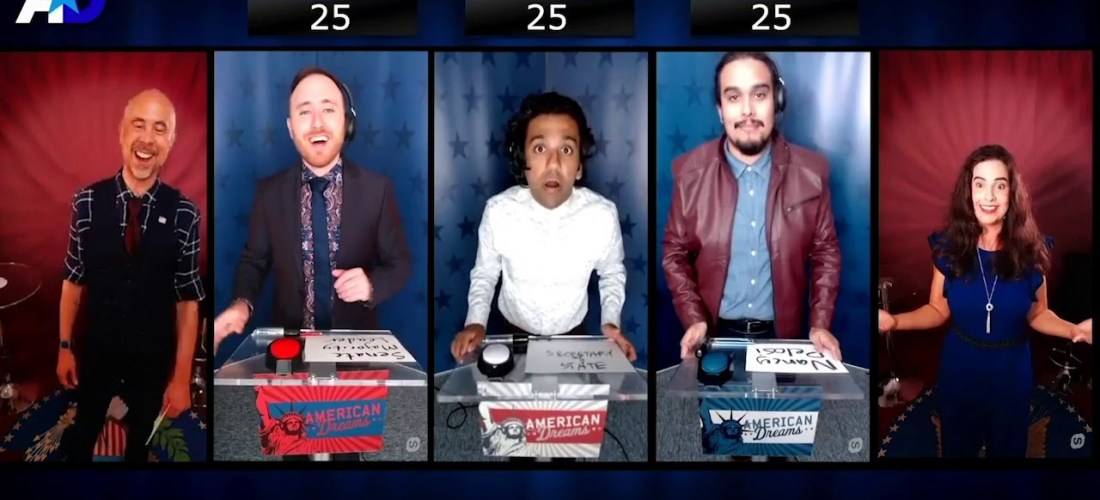

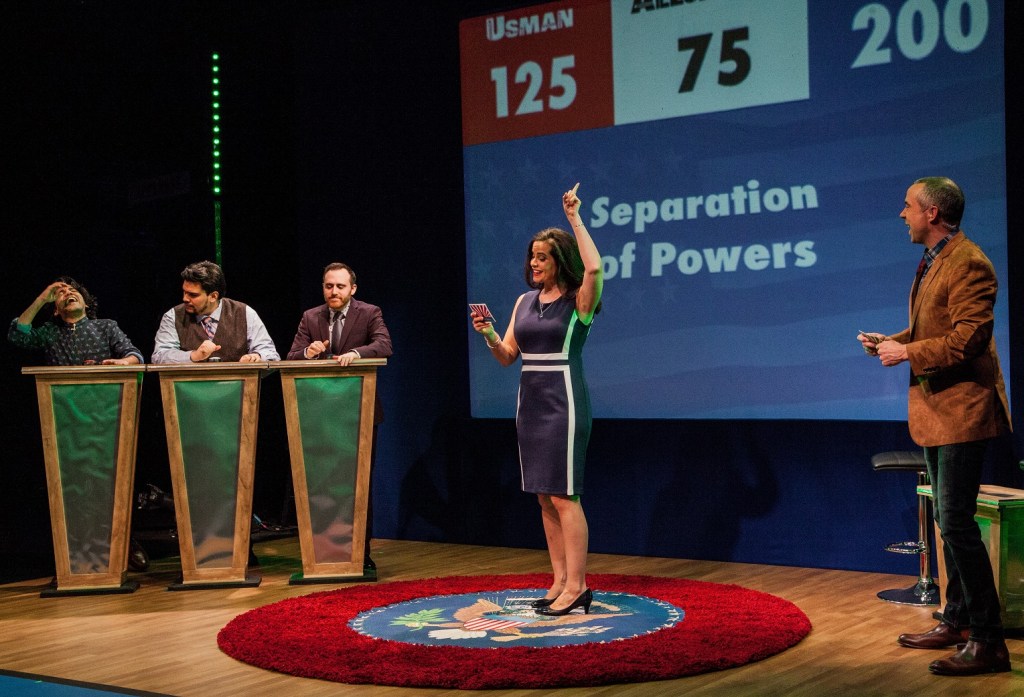
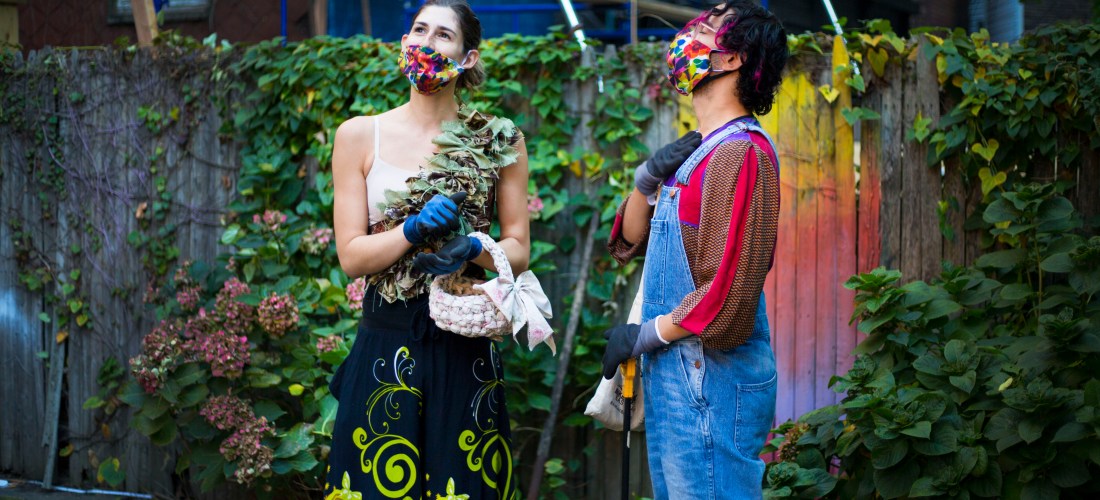


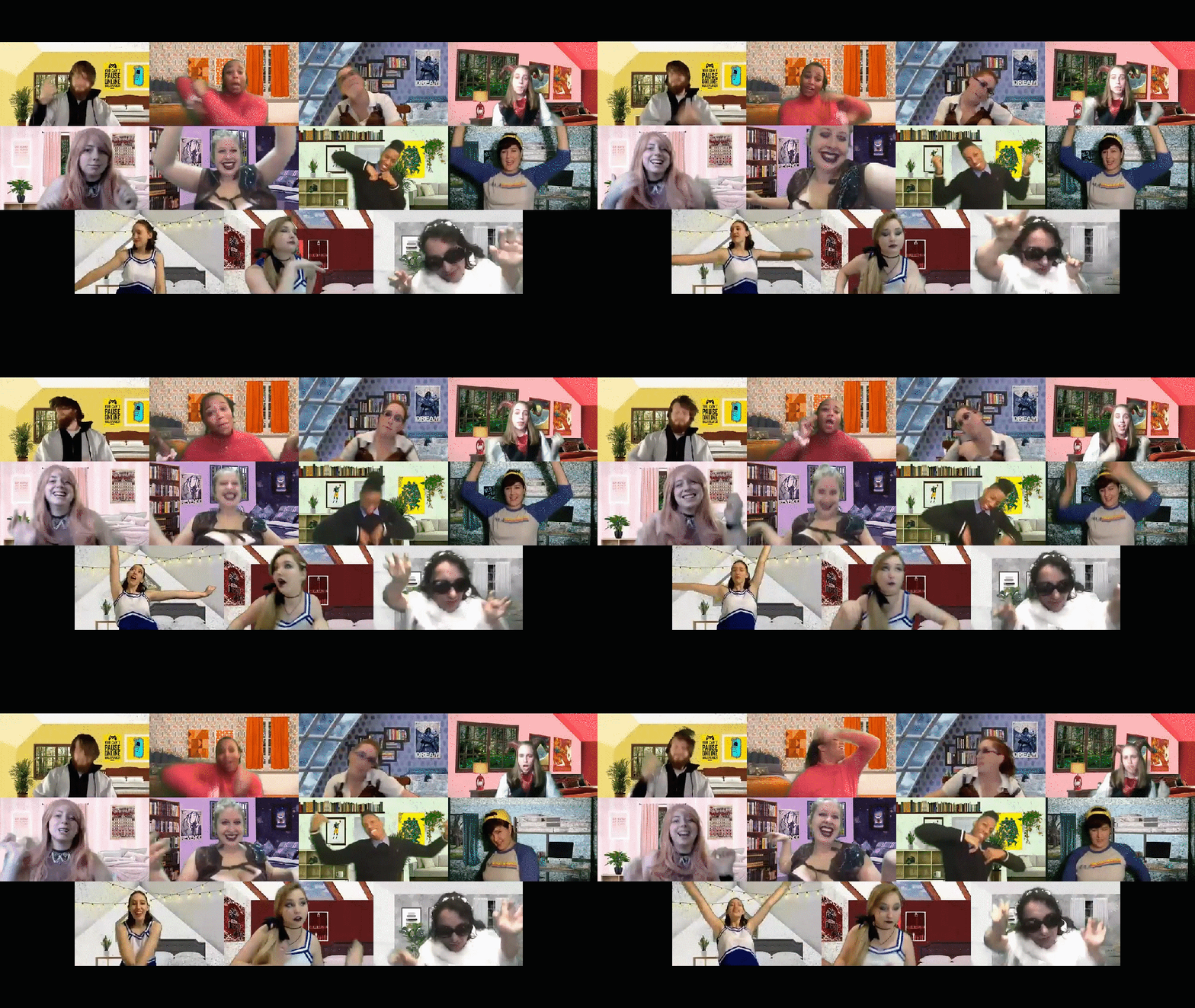
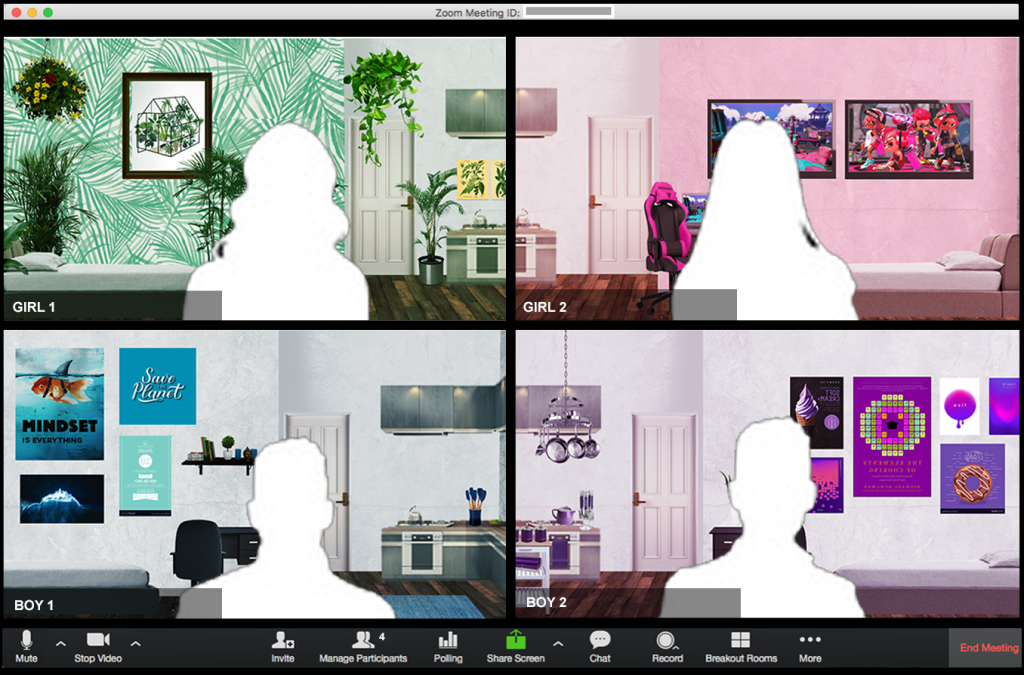




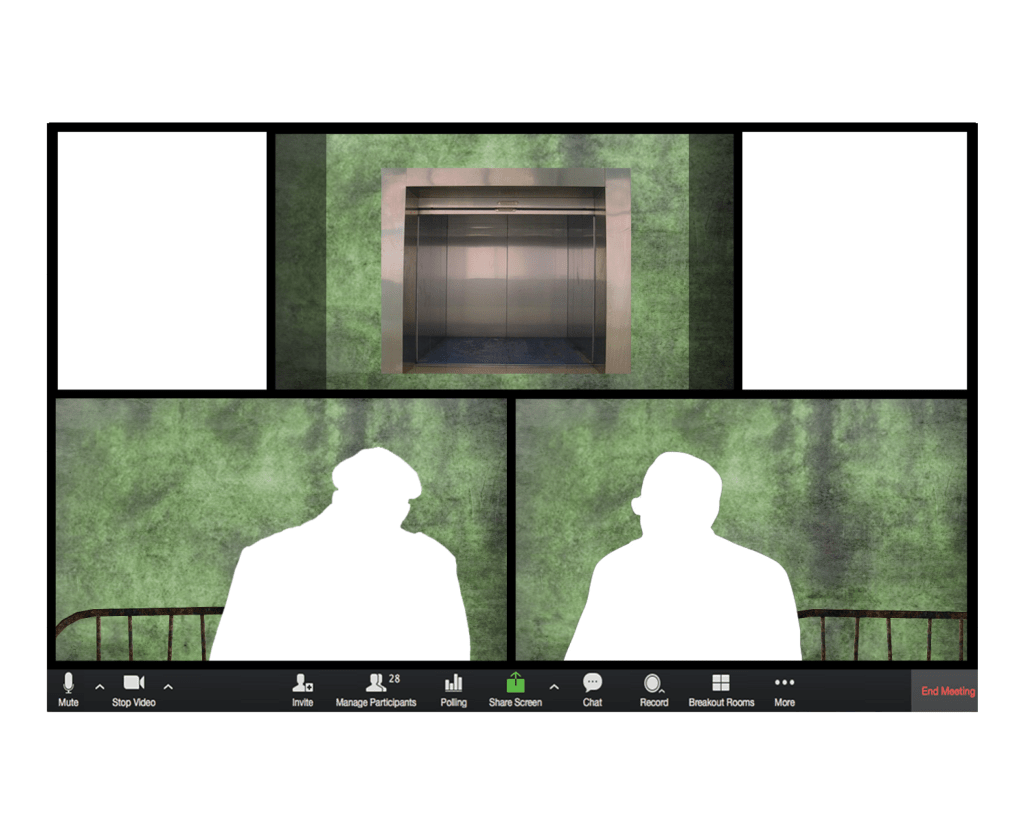
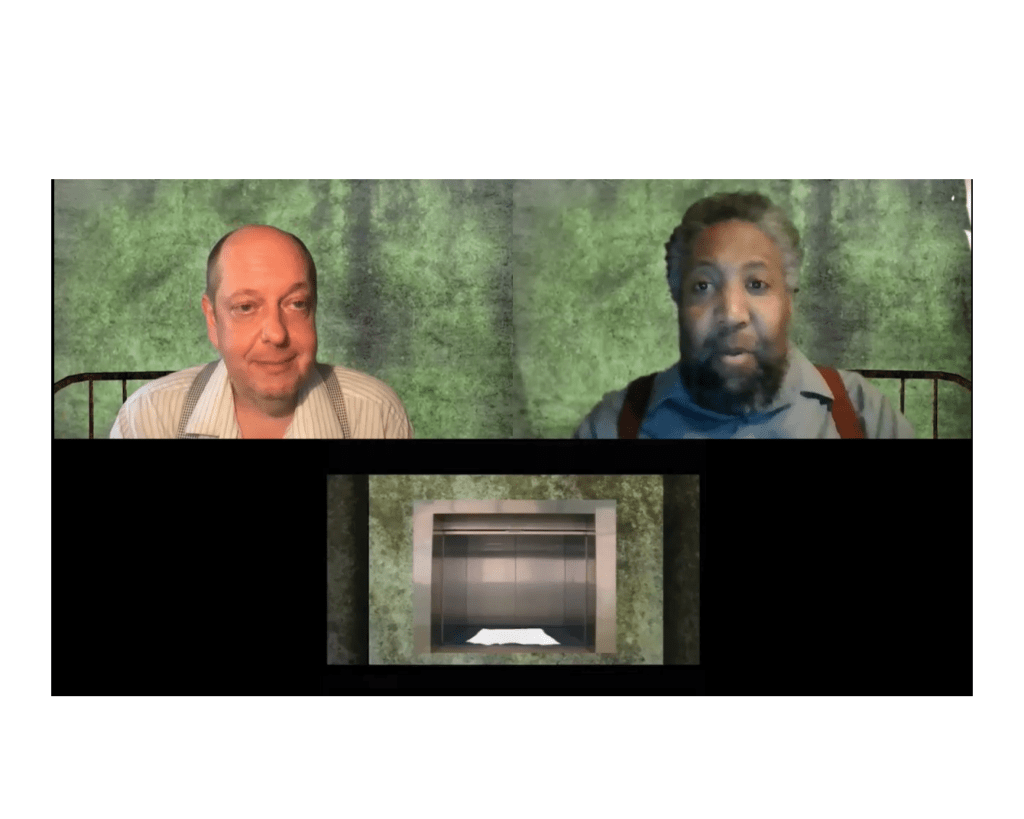
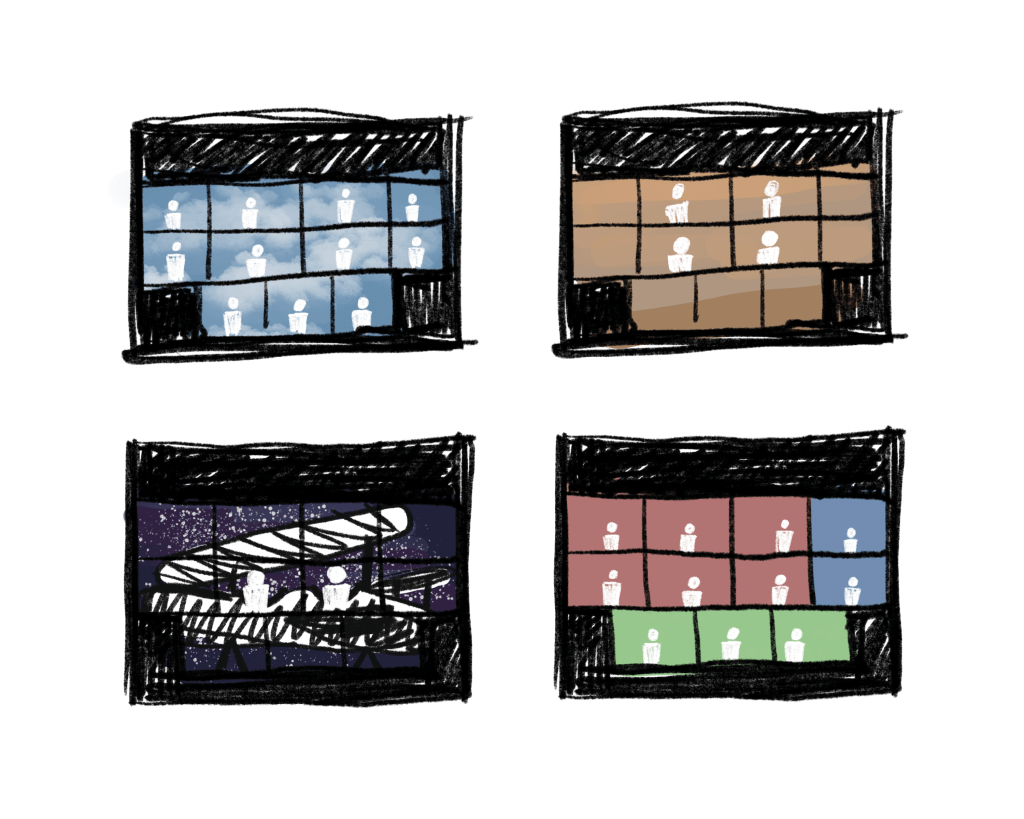


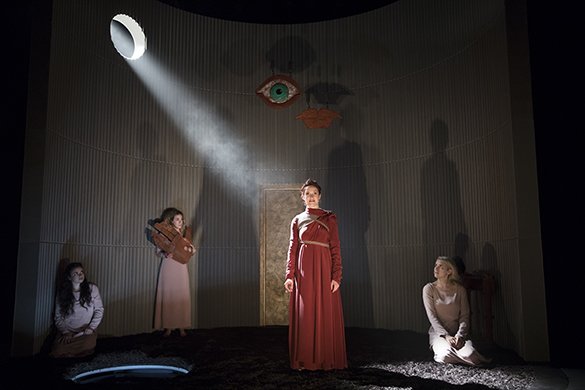
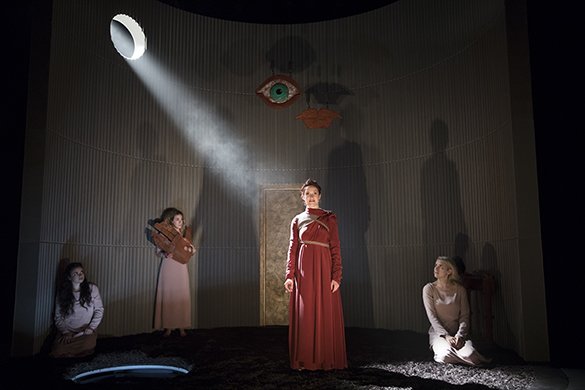
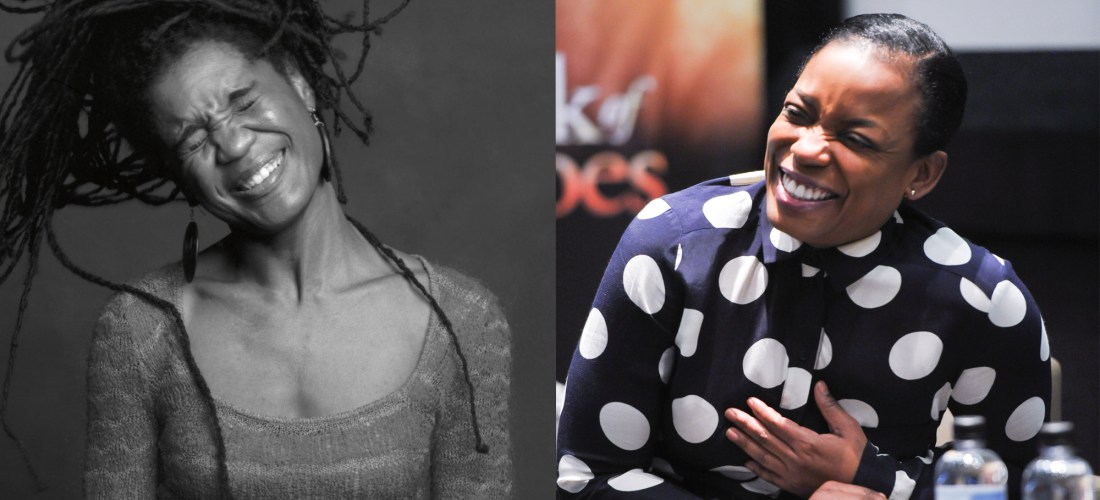
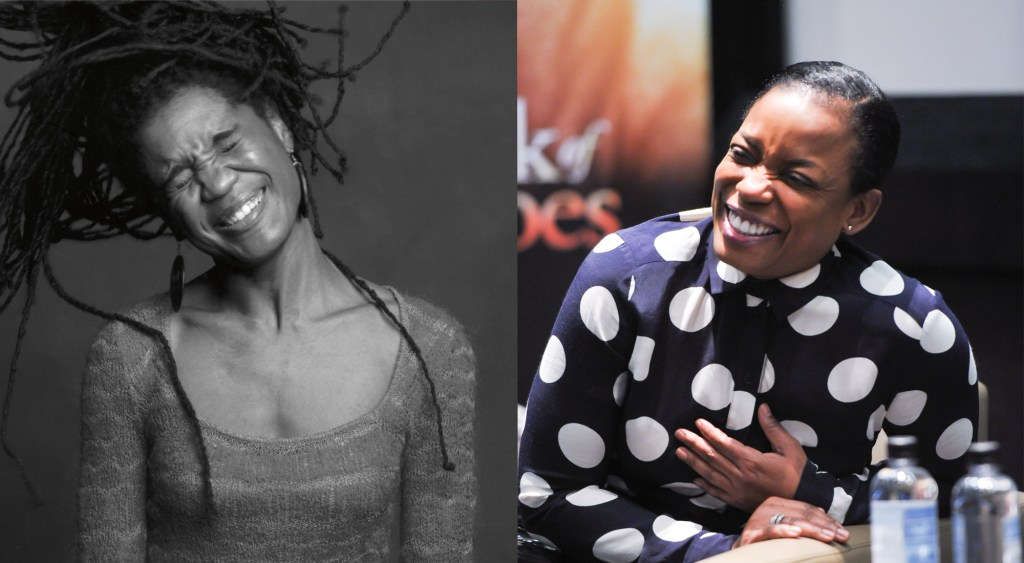




 Token Theatre Friends