If bad news has become the norm of 2020, the universe allowed an exemption for the young actor Sara Gutierrez, who in the midst of quarantine got the most significant call of her career. “Do you want to be the lead in the first outdoor show in New York City since the pandemic started?” asked director Ellpetha Tsivicos, and playwright Camilo Quiroz-Vazquez, the creative forces behind Quince, an immersive theatrical experience that subverts a traditional quinceañera by centering a queer heroine, Cynthia, a Mexican American girl divided between her culture and her future.
Gutierrez couldn’t hold her tears as she told Tsivicos and Quiroz-Vazquez how much she needed these news at that precise moment. The previous three months had been a nightmare, as NYC became the epicenter of a global pandemic that forced businesses and artistic institutions to close their doors, leaving New Yorkers perhaps for the first time without the possibility of overcoming grief by having their souls restored by art.
“We had a Cinderella moment,” says the director, her voice overcome with happiness as she describes Gutierrez’s habit of sending her pictures in which she’s memorizing her lines. The excitement of the ensemble fills the creators of the show with purpose, “they’re theatre warriors,” says Tsivicos.
Ellpetha Tsivicos and Camilo Quiroz-Vazquez. Credit: Lindsey Winkel
Quince was supposed to be a staged reading back in April. “We probably would have done it in a room in the Williamsburg Public Library,” says Quiroz-Vazquez. But as the pandemic became more unmanageable and total re-opening continued being elusive, the duo settled on two dates in August. Having done outside shows with Double Edge Theater, they were comfortable with the updated setting.
For years, they had wanted to stage a show at The People’s Garden. Located in the heart of Bushwick, the community-built, and volunteer-maintained space, provides a gathering space for the neighborhood that Tsivicos and Quiroz-Vazquez call home. “We know the owners of all the shops in our neighborhood, we’ve always tried to be local and create communities wherever we go,” says Tsivicos. The garden’s unassuming beauty was the perfect setting for Cynthia’s rite of passage, an oasis hidden in a bustling Brooklyn neighborhood.
For Tsivicos and Quiroz-Vazquez, doing the show was no longer just a matter of bringing their work to a stage, it became a way to thank a neighborhood that in years past gave them a home to return to after their daily dealing with the deep inequality New York artists face. The playwright explains everyone doing the show is working one or more jobs, which made scheduling difficult, but it also revealed the misconception that artists belong to the elite, “what could we all accomplish if we could focus on our art more specifically?” says Quiroz-Vazquez.
It’s a strange, but poignant coincidence that on the weekend Quince premieres, First Lady Melania Trump is reopening the Rose Garden at the White House, which she remodeled in the midst of the pandemic. As audience members in Bushwick attend a show created out of love, even tickets were distributed for free, in Washington D.C. a lavish garden will be revealed, meanwhile outside the White House has been barricaded to prevent peaceful protesters from disturbing the President’s day. Which one seems more like the people’s garden?
While most of New York live theatre remains dormant, and few commercial endeavors have risen to the challenge of what the time demands of them, the artists involved in Quince have been able to create a symbiosis of joyful creation and demands for social change. Friends of Tsivicos and Quiroz-Vazquez are contributing artwork to create the setting of the play. One of their friends, whose work is often political, is designing a crochet sculpture to be used as centerpiece, meanwhile every actor cast is from the Mexican or Chicano communities.
Art in New York City has become a luxury only reserved for those who can pay the highest prices, quite the contrast considering many of the performance arts started as folklore and community rituals. From the moment they met and decided to start working together, Tsivicos and Quiroz-Vazquez, have centered their work on the mission of rescuing and preserving cultural practices that are disappearing with the steamroll of globalization.
For Quiroz-Vazquez, the Mexico of his grandparents is something out of memories he will never get to experience. When he visited Cyprus, where Tsivicos’ family came from, he was surprised to realize how many traditions were preserved and practiced, to the point where the Cyprus he saw in the 21st century, has more in common with the Mexico of his ancestors.
Tsivicos had the opportunity to spend lots of time with her grandfather before he passed away, and captured moments of his daily life, so that even after his death, they can stay with her, they’re also memory tools so that she won’t forget where she came from. A land of farmers where her grandmother would still make her own bread and cheese. Tsivicos points out how in quarantine, many Americans who had never considered not buying their food in supermarkets, were suddenly baking bread, making cheese, desperately trying to secure themselves to any roots, as the world shape shifted overnight.
As New Yorkers, Tsivicos and Quiroz-Vazquez are performing a small miracle to remind the city of what it can be when it centers the interests of a community, over greed and indifference. “we need social activities, especially during everything that we’ve been through, it’s important to remind people there are more social activities than just eating out,” says Tsivicos. Quince of course will follow strict social distancing rules and masks will be enforced for the safety of the performers and audience members. It is totally safe, according to the director, who also expresses “a lot of our work goes back to catharsis either for us or for groups of people.”
As audience members leave Quince, they will have experienced a modern version of learning, embracing and loving culture through oral tradition. To eavesdrop on each of their conversations on their way home, as they take in the warmth of the Brooklyn summer night, the fragrance of the plants and flowers, and the power of the story they just saw unfold before their eyes, an honor and a pleasure almost too overwhelmingly beautiful to dream of.
Back in May, as COVID-19 shut down theaters around the country, Cha See, a lighting designer, was in a bind. Like many, she was also out-of-work. But unlike most theater artists, she could not apply for unemployment. As an immigrant designer from the Philippines, in America on an O1 visa, applying for government aid could put her visa in jeopardy.
And See was not alone, she noticed other immigrant designers who, like her, were wondering how they were going to make ends meet. Especially because unlike actors or playwrights, their work did not translate as well to Zoom. So See created a GoFundMe.
“It all started when I was having troubles financially,” she said. “So I started this GoFundMe. At that time, I was just talking to my friends who were also having the same problems because we couldn’t apply for unemployment, all of our shows have been postponed. It was the uncertainty with finances and with theater.”
The GoFundMe originally raised $32,969. But See soon realized that the need was greater than her immediate circle of immigrant designers. “Many people were contacting us from different disciplines and what we wanted to do was help as many people as we can,” said Kimie Nishikawa, a set designer from Tokyo; she helped See administer that original GoFundMe.
The two, along with costume designer Rodrigo Muñoz from Mexico City, then created the See Lighting Foundation, which has been raising funds and distributing them to immigrant theater artists in need.
“There’s no vetting process, there’s no application process, the only requirement is that you’re on an O1 or an OPT, and you work in theater,” said Nishikawa. OPT stands for Optional Practical Training, which allows students on an F1 visa to temporarily work in their area of study.
Originally, the idea of the See Lighting Foundation was to do a one-time-only payment to anyone who applied for it. But the group soon realized that theater was going to be shut down for at least the rest of 2020, which meant many artists were going to be without income for months. And artists on an O1 visa cannot find work outside of the jobs specified on their visa.
So the See Lighting Foundation is currently supporting 64 artists, giving them $500 a month. “We have a waiting list, which is about 15 people,” said Nishikawa. “Hopefully some people who have registered with the foundation, their financial situation might improve, and they will drop off. A few have already dropped off and then people on the waiting list come up.” Artists also usually drop off when they go back to their country of origin.
Adds See, “I wish we can help them all. But it’s also based on the number of donations and the amount of donations. We’re working hard.” The three administrators make sure the artists on their list have gotten their funds before they pay themselves.
Before they started the See Lighting Foundation, See, Nishikawa and Muñoz had never fundraised before. As Nisikawa puts it bluntly: “We’re fucking designers. We don’t know how to fundraise.”
It’s been a learning experience for the team, from finding a fiscal sponsor so that the donations can be tax-deductible (Ars Nova is their fiscal sponsor), to directly asking big potential donors for money. The funds are distributed to artists as personal gifts, so it doesn’t violate their visas. On the day of the interview, the team disclosed they had received a donation of $30,000, their biggest single donation yet (their average is usually $74).
“We just realized how really, really, really, really important it is to keep our voices out there,” said Muñoz. “We need to make ourselves present. And it’s been like an interesting and funny ride because we decided, for example, we should open a Twitter. And then it’s like, wait, how does Twitter works? None of us use those platforms!”
But they’ve been learning how to fundraise as they go. The most valuable thing they’ve learned about asking for money during this time is similar to getting theater work in the before times: persistence.
“Even if you don’t get a response, just keep emailing them back,” said Nishiwaka. “Always be polite. Just keep poking, keep poking.”
They’ve also learned that they can use social media to educate people. They realized that many people who worked in the industry assumed immigrants can apply for government assistance. So they’ve been doing a series of Instagram posts to dispel some myths about visa holders.
As for the future, the three artists at the head of See Lighting plan to stay in America, which they consider their home.
“We’ve already sacrificed a lot,” said Muñoz. “Giving up or going back is not an option for us. From my personal opinion, I just hope things change and the future has great opportunities for everyone, for the three of us, so we can just continue making theater in the United States.”
Nishikawa hopes that when theaters come back, they pay artists better so that artists are no longer living paycheck-to-paycheck with no savings, so that they’re better equipped to withstand hard times.
“I hope that people or institutions invest more in the people and not the product,” she said. “There are so many shows that I have done, where my fee is $2,000 for a whole set design, and my [production] budget is $30,000. And just the gap between how much the institution pays for their people and how much they care about advertising and the product itself is too big. We were all hanging on by a thread. When this pandemic hit, most of us were like, ‘Wow, I don’t even have enough money to pay rent for next month.’ And we’re all working on big Off-Broadway shows. We are supposedly the ones who made it but the industry cannot support their artists. And I think that really has to change.”
For her part, See hopes America as a whole learns to be less individualistic and less obsessed with one person bootstrapping themselves out of hardship.
“The idea of individualism, I hope it’s lessened,” she said. “ I hope that we all realize that we all need each other—whatever my neighbor does, whatever my coworker does, whatever my collaborator does, it’s all gonna affect me. Whatever I do, it’s all gonna affect you. We all need to help each other at the end of the day in times of crisis. It doesn’t matter where you’re from. It doesn’t matter what your background is. If you’re in need right now, we’re all here to support you and help you. That’s what I want to see more of when we go back to the new normal.”
Harriett D. Foy currently plays Patrice Woodbine on P-Valley, the new television show on Starz. It’s her first series regular role, and she plays the mother of Mercedes (played by Brandee Evans), one of the main characters on the show. Mercedes works at the Pynk, a Black-owned strip club in Mississippi, which throws her into conflict with her mother, who is ultra-religious and wants to lead her own church.
Foy knows Patrice isn’t the most likable character, which is why one of her pleasures these days is reading the Twitter comments after every episode. “There was one where they were just like, ‘I hate her. I wanted to jump through the television and beat her,'” said Foy. “And I was like, “Bring it, ‘cuz Patrice ain’t no punk.'”
She takes it all with good humor of course. “It doesn’t affect me. I just feel like I’m really doing my job then if this is how people are seeing her,” she said. In addition to her impactful performance in P-Valley, Foy’s stage resume is impressive: She’s been on Broadway in Mamma Mia! and Amelie, and Off-Broadway, she was a standout in the 2018 Off-Broadway play The House That Will Not Stand by Marcus Gardley. Plus she’s played the legendary Nina Simone on stage, twice(!), in the play Nina Simone: Four Women by Christina Ham.
On Aug. 18, Foy is going to play another historical figure: Suffragist Mary McLeod Bethune, as part of Finish the Fight, a new play by Ming Peiffer about the overlooked women of color who fought for the right to vote. The play will premiere of The New York Times’ YouTube channel.
Below, Foy talks about creating in quarantine, the joy of working on P-Valley and her pre-theater ritual.
You are going to be in Finish the Fight which is a play that Ming Peiffer wrote. I was like mind blown to think that a century ago women couldn’t vote and right now our voting rights are in so much danger. Can you talk us just a little bit about why you wanted to be part of this?
Well for me, it’s exactly like what you’re saying. It was like a history lesson. When I started looking up Dr. Mary McLeod Bethune, I was like, Wow, I didn’t know she did all of that. You get one little snippet [in school]. And then I thought, well, how important is that, that we’re still fighting for some of these same things [and] that 100 years ago, we couldn’t even do it. And yet Black women were still at the back and women of color. So I was like, man, I have to do this piece, because there’s a history lesson for people now that they need to know, the younger generation and some of the older generation.
What’s it been like rehearsing something remotely, especially if you’re rehearsing a new play remotely because we see a lot of classics being done. But this is a new piece.
I’ve done a couple of readings. So I kind of had a vibe for it. The New York Times sent the equipment. So there I am trying to unfold the background. I took over my mom’s basement. I was in Maryland for seven months just because of the corona and everything. So I do it, I set up the lights, and I’m all ready to go by the time they come on. I’m literally doing like the lights like what you would have your crew do.
It was really, it was really cool. And I felt actually more free in that way just to create and do it. I had a good time. Of course there’s nothing like being in a live theatre and getting that immediate response. But I think this will last a lifetime and you can always go back to it and use it in school as a tool to teach.
Did you ever think you were going to be doing a new play in the midst of a pandemic?
I did not. So when it came about, I was like, wait, we’re gonna do what? How? I’m down. Let’s see if it works. And it did. I think it’s gonna be a really great experience. I think people will be amazed at the look of the piece. And editing is key in this, which I want to learn more about. And it just makes me want to learn more about this medium, because it seems like that’s what we’re going to be using for some time. I think you can focus more on these women who are the unsung heroes. I think you can focus more on their story, because you’re going to be up close and personal.
I want to talk about you know about that moment in The House That Will Not Stand, you know which moment. It’s always electrifying. And after watching you on stage, I wondered, knowing that you did this part for five years, how do you do something like that every night? And how do you then cleanse and release yourself from a character like that? [Eds note: we’re not going to spoil it for you, but Foy gave an electric performance as Makeda, a slave in a Creole household in the 19th century.]
That’s a great question. Thank you. When we were doing it at New Dramatists, that particular monologue wasn’t in there. So we came to the rehearsal. And Marcus came in. He always called me diva. “Diva, I got something for you.” And I was like, What? So he gave it to me. It was a five-page monologue. And I read it. I connected immediately with the words. I had never looked at it, and people thought I had looked at it the night before. And it was because it was our history. It was like every ancestor spoke to me and I could connect to it in a grounding way. It was like I was in the pocket and it just came—the rhythms that you heard, that’s how I spoke it, because I could hear the drums and all that.
At New York Theatre Workshop, I would be exhausted after the show. And Joniece [Abbott-Pratt], who played Odette, we would walk home after the show from New York Theatre Workshop. I live in Midtown and she lives in Jersey. I needed that time to decompress. And I didn’t want to be like enclosed on a bus or enclosed on the train and we would just walk and gradually release it. Because you do have to release it, because it was such an emotional journey playing Makeda, from beginning to end, being enslaved and then getting that freedom, and then trying to take care of this whole house.
I would get to the theater early and warm up; always say a prayer before I start each show. And I always celebrated one of my ancestors, as if I imagined that they watch me every night. So I call a name particularly before I started a show, and say, “This one’s for you tonight.”
Harriett D. Foy, Joniece Abbott-Pratt, and Juliana Canfield in “The House That Will Not Stand” at New York Theatre Workshop. (Photo: Joan Marcus)
I think that a lot of people especially outside of New York, if people haven’t seen you on stage, are gonna get to meet you now that you’re a series regular in P-Valley. And I mean this as the utmost compliment, but Patrice is so terrifying.
Katori [Hall, the show runner and playwright] has given us the writers room, they gave us some really great lines. What I love the best about Patrice and how she’s resonating is that everybody hates her. [laughs] And Katori says, “I want you to dislike her. But I also want you to understand where she’s coming from.” I literally want to do a thing where I read mean tweets, or what they say on their reviews: “Honey, she would eat concrete. If it was me, I would have punched her dead in the face.” I’m like, what??? And so I’ll comment sometimes and they get a kick out of that. Listen, honey, Patrice is no joke.
You know, I was doing a show when the audition came, and I just really couldn’t focus the very first time it came through. I was doing Nina Simone. Then I was doing another Marcus Gardley play, A Wonder in My Soul at Baltimore Center Stage and it came around again. I said, Oh, you better pull this together. My cast mates helped me audition and stuff like that. Then I got the call: Come to New York, audition, call back.
I came to the callback. It was very emotional. I felt again, the ancestors were there with me, it was something like I’ve never felt before—I literally felt it all over. And in my mind, I was like, I think this is your part. I’ll start to cry if I think about it too much, because that’s how it felt in the moment. Katori got up and gave me a hug because I literally was overcome. And the fact that the song they asked me to sing was the same song I was singing in A Wonder in My Soul: “I Know I’ve Been Changed.”
I feel like all the roles that I played leading up to her—Princess Peyei in Amazing Grace [on Broadway], Dr. Nina Simone, Odessa [in The Young Man from Atlanta Off-Broadway], Makeda— were all forming me and shaping me to play Patrice, my first series regular.
GIF courtesy of Starz
Every time I see Patrice, I want her to come slap me and tell me that I should be ashamed of myself or something like that. I love the shows specificity. Everything feels so, like, someone showed up with a camera and just captured everyone and everything. Can you talk about what the environment is like and what it takes to create the kind of very lived-in experience, especially within the show.
That’s all due to Katori and the people that she brought on the team in terms of the crew, producers, and the cast. She was very specific about what she wanted, down to the directors being all female, which made for a very safe space that you knew you were going to be cared for, especially for our ladies who had to be in very skimpy clothing and really do some very intimate scenes. We had an intimacy coordinator—we were having problems, they would come and we’d have a conversation about it and how it was going to be shot. It was a very open space in terms of Katori listening to us and how we thought about our characters.
It was just a really wonderful time. Being at the Tyler Perry Studios was great. And the scripts, and the way [Katori] defined these characters is just like nothing else I’ve seen in a while, except for Marcus Gardley, of course, because you know, I’m partial.
There’s nothing like it. And everybody feels that way. Everybody in the cast feels that way. We talk about it all the time. We call ourselves family. We have our own little private group that we talk to each other constantly. We get along, we love hanging out with each other. So I’m just saying it was all love. So it makes your job easy. It wasn’t like work.
Since you live between both worlds of stage and television, I wonder what from the stage that you love would you bring to TV. And what from TV that you love would you bring to theater?
From stage to the TV, I think it’s the discipline. That is the key for me, this is how I live my life, in terms of a body, in terms of voice, in terms of how I prepare, and I think that helps with the amount of time that you have to spend setting up a shot. So you’re always ready every time they say, “action.” I think of it as that’s always the take. For me, that eight shows a week, every time is the take.
The last episode that you saw [Eds note: episode 5 where Patrice finds herself in prison and she starts sermonizing and singing], I specifically did not want to pre-record it. I want it to be in the moment. Even if she’s tired, even if we do it for the 12th take and that’s her voice, that’s her truth in that moment. Because it wasn’t gonna work if I’m trying to sing to a track, and I’m trying to take you through this emotion to give you the history of Patrice in P-Valley. Such an emotional episode.
From television to [theater], I think really focusing on that internal, just being in that moment—just real and not judging. And there’s a little more freedom in that. I mean, it’s the same work. It’s the same work and time: how you have to prepare, how you have to create a background for your character, create a book, you know, all that kind of stuff.
Every week, culture critics Diep Tran and Jose Solís bring a POC perspective to the performing arts with their Token Theatre Friends podcast. The show can be found on Spotify, iTunes and Stitcher. You can listen to episodes from the previous version of the podcast here but to get new episodes, you will need to resubscribe to our new podcast feed (look for the all-red logo).
This week, the Friends talk about Godspell at Berkshire Theatre Group, the first musical to be performed in from of a live audience using union actors. There’s a lot of plastic involved, and masks on stage, which is admirable but they can’t help but wonder: Who would want to risk their health to go see a show right now?
Then, the Friends review a show that is safe, the Zoom tarot readings currently being presented from Strange Bird Immersive, a Houston-based company that specializes in escape rooms. They can’t do escape rooms but their actors are doing tarot readings online which are actually quite unnerving and accurate.
This week’s guest is actor Harriett D. Foy, who is currently playing the ultra-religious Patrice in P-Valley on Starz, a new show written by playwright Katori Hall based on her play Pussy Valley. Foy talks about reading mean Tweets online and the upcoming virtual play she’s doing to celebrate the centennial of women’s suffrage: Finish the Fight by Ming Peiffer. It will premiere on Aug. 18 and is about the unsung women of color who helped win women the right to vote. It will be available after the 18th for you to view whenever.
Here are links to things the Friends talked about this episode:
P-Valley on Starz, about the people who work in and around a Black-owned strip club in the South
Diep:
Hi this Diep Tran
Jose:
And I’m Jose Solis.
Diep:
And we’re your Token Theatre Friends, people who love theater so much, but I don’t know about you Jose, I would not risk my life to go see “Godspell.”
Jose:
I would consider risking my life for like JLo or like Madonna or like Kylie maybe Audra maybe Kelli. I wouldn’t risk for life for, no I wouldn’t, no.
Diep:
Don’t tell Kelli O’Hara your fav that you would not risk getting COVID to go see her. Oh my god, what kind of fanboy are you?
Jose:
Well, definitely not that kind of fanboy. I would tell her that if I want to keep seeing her work. I don’t want to die this one time, so I can see her throughout her entire career. Cuz I need to see her in The Hours opera.
Diep:
Oh your favorite movie. And it’s like it’s so weird, is she going going through Julianne Moore’s entire catalog? Do you think she’s gonna do “The Hand That Rocks the Cradle” the musical?
Jose:
I mean, that’s like very early Julianne and I do not want to see Kelly O’Hara die because like the Rebecca Martin it kills her with like all the glass things in the glass house. So definitely not. But I cannot wait to see Kelli O’Hara in a Magnolia musical, in maybe “The End of the Affair” opera. I have plans for you, Kelli. Call me.
Diep:
We’ll make something happen. During quarantine, we’ll do a Zoom reading. So today we’re going to be talking about the first Equity musical to be presented to a live audience with live actors during a global pandemic in America. Awesome, I guess. And then we’re going to be talking about the show that we both experienced as part of from the company Strange Bird Immersive, we both got a tarot reading so we’re talking about that, we’ll talk about what is in our stars. And who are we talking to today, Jose?
Jose:
Today we’re gonna be talking to Harriett D. Foy, who is an actor in “Finish the Fight a play that one of her faves, Ming Peiffer, who we interviewed so go check out that episode, wrote to commemorate the 100th anniversary of women’s right to vote in the United States. It is so insane that women weren’t allowed to vote but that’s another podcast so we’re not gonna go into that.
Diep:
Yeah. And you can also see Harriett right now in “P Valley” on Starz written by our other theater favorite Katori Hall. See it all comes back. So what was your first reaction? When I sent you that article about how Berkshire Theatre Group is doing “Godspell” outside, the New York Times wrote the article, and it was about how they’re trying to make it safe for actors and the people watching by installing plastic partitions between every actor and separating the audience members by six feet, everyone’s required to wear a mask, the show’s outside in a tent. How was your first reaction? How did you feel?
Jose:
You know that Viola Davis gif from “How to Get Away With Murder” where she grabs her purse and just leaves? That’s my reactions to everything related to this “Godspell,” let me go find my purse.
Diep:
Like they didn’t invite us but if we if they did, we wouldn’t have gone
Jose:
Or we would politely decline.
Diep:
Yeah, cuz I’m not going on a bus or a train right now.
Jose:
Can you imagine being a bunch of strangers like when people barely wear their masks on a subway like being on the subway right now is one of the most terrifying things you’ll ever see. Like the other day, I had to go into the city and someone brushed my knee because I was wearing shorts. I don’t wear pants in the summer. So they’re brushing my knee with their bag and I just like grabbed my hand sanitizer, I’m scrubbing my knee. Like I’m freaking you know, Leonardo DiCaprio in “The Aviator.”
Diep:
Yes Howard Hughes. Yeah, I’m really torn. Because on the one hand, it is really important to try to figure out how we’re going to present live theater because they say you know, COVID is not going to go completely away even if we get a vaccine. So we should all, so the industry should figure out much better practices to make things more sanitary. Cuz even before, everyone’s just so close backstage, there’s not good circulation at a Broadway theater. Like everyone, everyone’s forced to work when they’re sick because they don’t feel like they can take the time off. And so I support any measures that really, you know, lets people not go to work if they feel sick or gives them better working conditions. But I don’t know if turning actors into lab rats right now is a good idea.
Jose:
It’s basically, it’s that and then it’s so ironic, I would say to quote, Alanis Morissette, that this is happening. And then during “Godspell,” which is a show about, you know, basically what people were supposed to learn from like Jesus I guess, and from the Bible which is just be freaking kind to each other, take care of each other. Do not put actors to work in the middle of a pandemic, just because they need work. Find ways to give them work that’s not endangering their lives.
Diep:
Yeah, like Zoom readings, like what’s stopping any of these companies from putting on, from signing a SAG a contract with the Screen Actors Guild and putting on like a virtual show? Like not in front of paid audiences like why don’t they do just like a virtual Zoom musical reading and try figure out a way to make that entertaining rather than spending like hundreds of thousands of dollars to install, install plastic partitions on an outdoor stage?
Jose:
Yeah, in fact, the very first thing that came to mind, I’m gonna read it. I haven’t memorized the lyrics of this but I thought about this song, ironically, from “Godspell” called “Learn Your Lessons Well.” And you know, the opening lines are “I can see a swatch of sinners sitting yonder and they’re acting like a pack of fools.” I hope the people sitting there without their masks, did you see the people who are wearing their masks like—
Diep:
Yes, there’s a photo in the New York Times where half of the people in the photos weren’t even covering their noses.
Jose:
Meanwhile to quote the show, “you better pay attention, build your comprehension.” Do better.
Diep:
Yeah. I wonder if this is like, you know, I think a lot of people are having a hard time accepting the fact. And I think it’s the same for the people who don’t wear a mask. Like they don’t want to accept the reality of the situation, which is we’re at 4 million people with COVID. And life will not go back to normal for a very, very long time. I was shopping and I ran into someone who works in the theater and they were telling me how like, certain Off Broadway theaters were talking about not coming back until fall of 2021. And I think it’s people not accepting that we need to have a new way of working for at least the next year and they want to go back to as much of before as humanly possible and not really thinking through, is that the smartest way to do this? Or can we? Or is there like a new way to do it that we haven’t comprehend it yet? Because this it was basically like, a musical except there’s plastic everywhere and people can’t talk to each other. Like, how is that satisfying?
Jose:
It sounds fugly AF.
Diep:
It’s like a lot about letting go, you know, like letting go of what you expect to 2020 and letting go of like all the plans that we all had, like letting go of what I expect theater to be and I feel like a lot of people aren’t willing to do that yet and the industry really needs to support people in like, giving them health insurance even if they’re not working, for example. Because some of the actors were doing the show because they needed health insurance.
Jose:
It’s heartbreaking that our field that prides itself in its imagination is showing such a lack of any creativity right now. And you know, like putting, I mean, people are complaining about having to see a play on their screens at home. How is seeing a play with people in boxes any better? You know, what are they willing to sacrifice? What are they willing to put up with? Like you know, it just defies the logic.
Diep:
Mm hmm. And as audience members I feel like we’re the safest because we don’t have to give up that much in order to go to a theater and put on a mask and you sit six feet away. Why are you not thinking of the fact that you’re you’re making these actors work to entertain you, and they have to quarantine themselves and they have to make sure they’re not sick and they have to, and like they’re risking their lives for what? You know, for what?
Jose:
Are we really the safest though? Like, it seems to me like one of the requirements for most audience members in New York of a certain age is do I have a horrible cough today. Yes, I do, that it’s time to go see every show this week.
Diep:
Oh my god. Imagine if we go back to the theater. And every time you hear a cough or sneeze in the audience, you’re just like, get me out of here.
Jose:
Yeah, it’s gonna be that and you know, you know that thing where like someone coughs, and then they give permission for everyone to cough. And then suddenly, you can’t freaking hear whatever Tracy Letts wrote about straight men onstage because all the people are coughing over that..
Diep:
What do you think theater should be doing right now instead of trying to put shows up on stage?
Jose:
Everything you said about you know, fair wages, in finding ways to compensate actors or artists for their work, and also they could do something as inventive and as fun as what we did with Madame Daphe, so we should just leave Godspell in the past and move on to the future. Like I wonder if Madame Daphne saw any Godspell for you in your future.
Diep:
So, so for some context, Madam Daphne’s tarot reading is this the 15-minute program that this company called Strange Bird Immersive, they do escape rooms, they’re doing tarot readings right now, because they cannot do escape rooms once again, because of COVID. And it’s really lovely. Like, you know, like I saw Madame Daphne on Friday. And I’ve gotten a tarot reading from you before Jose, and I felt really comforted because the thing about tarot reading is you got to go in with, like a question or concern or something that you’re really thinking about, and that, and that day, I had just been notified that, you know, I’ve been furloughed since April, but I’ve been notified that now I’m actually laid off from Broadway.com, which is what it is, you know, it is the times that we’re living in. So I just been like feeling really uncertain about everything and she actually asked me what I was thinking about. And I told her that and she was really compassionate about it, and she pulled some cards for me that really made me feel like I had a lot of a lot more options than I thought I did. You know, like the first card she pulled for me was like the money card, because I telling her like, I was feeling uncertain financially and the stars gave me the money card and saying, this is your issue. And she also said, I don’t know how she knew this, maybe she researched me or something. She also said that one of my issues is like I want to be of service to people in the world and I don’t really know how to do that right now. And my next step is figuring out how to and I felt really, that felt weirdly accurate. How about you?
Jose:
It felt weird because one of the things that I really loved about the show was I went into it with not preconceptions per se, but with a little bit of skepticism. And the reason why is because I am also a tarot reader. I have I have been doing this since I was 16 years old, which means for three years now. Okay, you know, over half my life, right? I’ve been doing this for 18 years, and I have developed my own technique and my own way which I read, and I thought that once I went into Madame Daphne’s booth, it was gonna be a little bit more about you know, the show, a bit more about you know, like, just general reading. Something cute right, something for fun, because we haven’t mentioned that also Strange Bird Immersive is doing this as a means of raising funds while they can’t do their escape rooms and the traditional things that they do. So also the readings are like $20 and I do believe it’s worth every cent. So anyway, I go into Daphne’s booth, and I’m thinking that, oh, she’s just gonna give me like a very generic reading right? And lo and behold, in like 15 minutes she did the Celtic cross for me, which is like one of the most complex, thorough spreads in tarot. And not only that, but she was really fabulous at it. She was a great tarot reader, and I was impressed because she did it all in character. So let me find the name of the actress.
Diep:
Oh yeah I have the name of my actress too.
Jose:
Is it the same one, who’s yours?
Diep:
My actress was Amanda Marie Parker. There’s a spider.
Jose:
There’s a spider where?
Diep:
There’s a spider on my wall I thought I thought it was like a fruit fly but it’s a spider. So I’ll just let her go. I’m not going to feed her to my plants. You will live another day spider.
Jose:
Are you also afraid of spiders?
Diep:
No, I’m not. No, I’m not afraid of insects. It’s more like it’s really annoying when you have plants and there’s fruit flies everywhere. So I’m very grateful for the plant I bought that eats the flies.
Jose:
Do you have a venus flytrap?
Diep:
No, I have a pitcher plant so the insects go into the pitcher and then they drown and then the plant digests them. I love my pitcher plant. Her name is Audrey II.
Jose:
Okay, I also got Amanda too. I was very impressed because the actor Amanda Marie Parker did it the entire time in character and she has this like really cool almost like Wizard of Oz accent where it’s like British.
Diep:
Like a Mid Atlantic accent right?
Jose:
Yeah, like a classic Hollywood like weird, you know, like really, really charming accent and she does that reading which is very accurate and she’s putting a lot of herself into it while improvising, you know being in character. What do you think about her bird?
Diep:
I love the bird, I love Walter. I’m really glad he was there the entire time. He seems very sleepy. So I hope he is more animated in future readings. But yeah, I feel like the thing about immersive experiences and you know people being character in front of you is sometimes it can take you out of it if they’re not. If you feel like they’re not actually responding to you in the room, if you feel like they’re sticking to a script. And what I find fascinating about having an actor do a tarot reading is the fact that, the point is, you as the audience have to ask them questions and they have to be able to respond. And she responded so authentically that I feel like she was a real person, and not playing a character because like I could see like her eyes like understanding me when I was saying I was having a really hard time and feeling really depressed, like there was compassion there. And so I’m wondering like, do they give these actors like a tarot class, did they come already with this experience? Like it was really interesting like just how authentic it seemed even if you knew she was an actor.
Jose:
Don’t try to go behind the magic. Like you’ll ruin for yourself. I don’t want to say how they do it because I don’t want people to steal their idea or whatever. But they do, you know what you said where you felt like she was looking into your eyes. This is the only I believe the only thing I’ve ever done on Zoom that made me completely forget I was on Zoom, that made me completely forget that I was sitting in front of a screen. And at the very beginning of the performance, she goes through a process, don’t give it away, she goes through a process that makes you go like, Okay, this is not Zoom anymore. You forget it’s Zoom. Maybe she was hypnotizing us. So if only for that, even if you don’t believe in tarot necessarily, or if you’re skeptical about that kind of thing, go so you’re kind of forget yourself for half an hour. I mean, it’s like 20 minutes, but you know what? I mean? Isn’t that thing at the beginning? Wasn’t that like mind blowing?
Diep:
I wish I wish I had the option of forgetting that I’m on zoom. I wish people used that Zoom functionality because it is a functionality. But I’m not gonna tell you because Jose told me not to.
Jose:
Yeah, cuz I mean, this company is doing such fun work that, yeah, we’re not gonna spoil it for people.
Diep:
Yeah. I also tipped my actress after. So, you know, I hope if you go and you see it, and it was a comforting experience for you that you know, you do the actor a solid and like tip them after for making us forget for a little while that, you know, we’re living in hard times. And it truly was comforting, though, she did say the devil card is in my future and I have to figure out a way to get myself out of that bind.
Jose:
I’m smiling because the devil card is the card of lust.
Diep:
Oh no, this is not a good time. You cannot be a hoe right now. This is not the time to be a hoe it is unsanitary.
Jose:
Yeah, I’ll send you a rabbit.
Diep:
Oh how sweet. They’re so expensive. Okay, but since you are also tarot card reader Jose, do you want to pull a card for us today and see how we’re going to do?
Jose:
Why not? I have my tarot deck next to me. Am I your Madame Daphne today?
Diep:
Yeah, yeah, you need beads though, you need beads and a robe and some candles?
Jose:
The card I got today is the ace of wands. Can you see it?
Diep:
The wand looks really phallic.
Jose:
That’s the devil talking. Daphne was right. This is really awesome because it means that amazing ideas creative ideas, exciting, interesting, it’s gonna literally pop from the heavens for us and we have to just make sure to grab it. So go for it.
Diep:
Okay, I guess that means we’re going to continue doing this podcast. Thank you universe.
Jose:
Yes. And if you see something falling from the sky, go for it unless it’s an AC, then just run away from it because you don’t want to get hit by that.
Diep:
Yeah. And if you want to get a tarot reading that’s not from someone who’s in character, Jose’s also started doing them. And is it okay if I plug?
Jose:
Am I our own Casper mattress?
Diep:
Use code TTF for a 10% discount on your reading. He’ll give you a card for free.
Jose:
I mean, plug me by all means if you think I’m worth it.
Diep:
Yeah, I do. I do. We’re all having to build up our side hustles and I feel like yours is like one of the most creative ones I’ve seen. And also one that’s bringing a lot of comfort and joy to people.
Jose:
That must be the sweetest thing you’ve ever said to me. And I’m glad you said on camera so that I can remind you when you’re being mean. Thank you, but yeah, hit me up, you know how to find me, email me. Happy to do a reading for you.
Diep:
Yeah. And if you just want a quick reading then Madame Daphne is also available at Strange Bird Immersive, so book them. Go. Go have a one on one theater experience with a stranger.
Jose:
Amen. Now let’s go talk to Harriett D Foy. Who I love so much. You didn’t see “The House That Will Not Stand” [Off Broadway] right? She was mindblowing in that and she’s also been incredible in “P-Valley.” We’re excited to be talking to her about this new project. So let’s go to Harriet. I am so excited to have Harriet D Foy joining us today, I love you so much. And I’m sorry that I’m kind of like fanboying all over you. But like every time I’ve seen you, and then I was like, you know, going through your credits, I was like, I have seen you so many times. And you blow my mind every time. I was watching “P-Valley,” and I didn’t know you were in it. And then I saw you know, and I even screen shot it, like she’s in this?! So anyway, sorry about that. Welcome, and thank you.
Harriett
I love all of that. I receive all of that good energy. Thank you.
Jose:
Thank you for joining us. You are going to be in “Finish the Fight” which is a play that Ming Peiffer wrote about, you know, I was like mind blown to think that a century ago women couldn’t vote and right now our voting rights are in so much danger. Like, can you talk us just a little bit about why you wanted to be part of this?
Harriett
Well, for me, it’s exactly like what you’re saying. It’s like, it was like a history lesson like we used to back in school get like a bit during Black History Month, like what was going on. And when I started looking up Dr. Mary McLeod Bethune, I was like, Wow, I didn’t know she did all of that. You get one little snippet. And then I thought, well, how important is that, that we’re still fighting for some of these same things that 100 years ago, we couldn’t even do it. And yet Black women were still at the back and women of color. So I was like, man, I have to do this piece, because there’s a history lesson for you know, people now that they need to know like the younger generation and some of the older generation.
Diep:
Yeah, and because the thing about like, women’s suffrage is, it’s kind of like, you know, the women’s liberation movement in the 60s like, women of color were a part of it but you never see it in any popular media most of the time. It’s centered on white women.
Harriett
Exactly. And I think too maybe if you’re not like the pretty one or the, you know, favorite, then you weren’t in the forefront. Like some of these women who were like, major badass is like the activism that they did. I was like, Are you kidding me? I had no idea. Like every page, like when we had like our read through together, I was like, Who is this lady? And why don’t I know her? So I felt bad. I had to go do some more research. You know what I mean? Like, how do we not know this? So that’s why I’m glad this piece is out in that The New York Times has commissioned it and directed by Whitney White, one of my favorite directors, and it’s an amazing cast. So yes, I’m sorry. I’m taking up all the time.
Diep:
You’re supposed to if we’re talking. Yeah, if we’re talking too much, we’re not doing our jobs right. What’s it been like rehearsing something remotely, especially if you’re rehearsing a new play remotely because we see a lot of classics being done. But this is a new piece.
Harriett
Well, here’s the thing. So I’ve done a couple of readings. So I kind of had a vibe for it. And they sent, the New York Times sent the equipment. So there I’m trying to unfold the background, it comes out, I took over my mom’s basement. I was in Maryland for like, literally seven months just because of the corona and everything. So I do it, I set up the lights, and I’m all ready to go by the time they come on. So my computer setup with the Zoom Room, they’re in the Zoom Room, and I’m literally doing like the lights like what you would have your crew do. I felt like I was like, Yes. Oh, so that’s what they’re doing when we’re standing there. And they’re, you know, trying to get the right light on you and everything. It was really, it was really cool. And I felt actually more free in that way just to create and do it. And some we would try to do it off the book. So some of the lines I had, because it was a lot of material in a short amount of time. But then I just turned on my, how you have to audition for a film, mind and it’s like boom, boom, boom, it was fun. And did my little marks it. I had a good time. Of course there’s nothing like being in a live theatre and getting that immediate response. But I think this will last a lifetime and you can always go back to it, you know and use it in school like as a tool to teach.
Jose:
Did you ever think you were going to be doing a new play in the midst of a pandemic?
Harriett
I did not. So when it came about, I was like, wait, we’re gonna do what? How? So wait, how’s this gonna work? Like, okay, I’m down. Let’s see if it works. And it did. You know, I think it’s gonna be a really great experience. I think people will be amazed at the look of the piece. And just editing is key in this which I want to learn more about. And it just makes me want to learn more about this medium, you know, because it seems like that’s what we’re going to be using for some time. So I think you can focus more on these women who are the unsung heroes. I think you can focus more on their story. Because you’re going to be up close and personal.
Diep:
And one of the things I’ve been really loving about this time, you know, I mean, we can’t gather in a room, but people are putting things up so quickly. I’m sure that the New York Times thing, I’m sure took like a week or two to do that entire thing. And you’ve got new plays, you did “The House That Will Not Stand, “On the Levee.” And those things take years and years to do. And so has this been refreshing to just you know, wham, bam, we’re done.
Harriett
It was a little unnerving. At the same time, too, I’m open to every experience now. There is something to taking that time like we did with “The House That Will Not Stand” by my bestie Marcus Gardley, who wrote that part for me, Makeda. Yes, because we worked on that. We did it at Yale. We did it at the theater lab in Berkeley Rep. So it was like at least five years maybe pulling that to bring it to New York. And even before that, we worked at New Dramatists. So when we were just doing it as a reading, so it took a minute. But yeah that that was a good piece. Oh child I forgot the question because you know I was talking I have five thoughts because I’m a Virgo, Gemini rising so the Virgo was real like, you know, here, and then the Gemini like damn, stay on point Harriett!
Diep:
What’s your horoscope telling you right now?
Harriett
Miss thing, focus! Child, you know this is like my second interview since we’ve been doing um “P-Valley” and for “Finish the Fight,” this is my first with finish the fight so you know. And then I didn’t know it was on camera I was like oh I gotta put a bead on, put some gel in my hair. I thought we was just gonna be talking
Diep:
You look gorgeous like I want to know what you’ve been doing with your skin during quarantine you know it’s just so glowy and dewy.
Harriett
I’m going to let you in on a secret girl rose water glycerin is key. And you have to wear sunscreen, I know people don’t want to but you have to do it every day. And you have to take your makeup off at night. Moisturize moisturize moisturizers, as Wendy Williams says honey. Because I’m 80. [laughs]
Jose:
And then you probably smell wonderful because of the rosewater all day long right?
Harriett
Listen, just a little vanilla mist. Just a little.
Jose:
Yeah. Oh my god. If you launch like a fragrance line, I’m buying everything.
Harriett
Oh, thank you. Yeah, I love those earthy scents that that make you feel real sexy. You know, just like, oh, what are you wearing? And you just like, mmm, you know?
Jose:
Yeah, we need to be best friends at some point.
Harriett
Yes. Wait, what are y’all signs?
Jose:
I’m an Aries.
Diep:
Yeah, I’m a Taurus with a Taurus rising
Harriett
Your house must be really nice.
Diep:
Now it’s nicer than ever because I have time to buy plants, water the plants, decorate.
Harriett
We just talked about those plants. We just talked didn’t we?
Jose:
She knows that I have the worst green thumb.
Harriett
You’re changing that energy you’re going to have new green thumb energy, change that. Yes. In fact, you should do you know, smudge a little bit, and just change that whole energy and get you a new plant. Start with maybe a, the aloe vera plant. You can’t go wrong with aloe vera.
Diep:
Get a pothos because you cannot kill those.
Harriett
Or snake plant. Oh, yeah. Yeah, very little, very little watering this, put them in a spot and just give it love.
Jose:
And I have a new energy thanks to you. So I’ll, I’ll remember that. I want to talk about you know, that moment in “The House That Will Not Stand,” that’s like, you know, you know which moment. And always like, electrifying, and after watching you on stage, I wondered, and now knowing that you did this part for five years, how do you do something like that every night? And how do you then cleanse and like release yourself from a character like that?
Harriett
That’s a great question. Thank you. So okay, when we were doing it at New Dramatists, that particular monologue wasn’t in there. So we came to the rehearsal. I think Patricia McGregor was our director at the time. And Marcus came in. He says, Oh, I have some new pages. He says he always called me diva. “Diva, I got something for you.” And I was like, What? So he gave it to me. It was like five pages because it was a five-page monologue. And I was like, okay, and I read it. And it was like, I connected immediately with the words. I had never looked at it and people thought I had looked at it the night before. And it was because it was our history. It was like every ancestor spoke to me and I could connect it to it in such you know, like a grounding way. It was like I was in the pocket and it just came, the rhythms that you heard it was, that’s how I spoke it, because I could hear the drums and all that. What would happen because we were at New York Theatre Workshop and it was a close, it was a great cast.
It’s like literally I would be exhausted after the show. And Joniece [Abbott-Pratt], who played Odette, we would walk home after the show from New York Theatre Workshop and I live in Midtown and she lives in Jersey, but I needed that time to decompress. And I didn’t want to be like enclosed on a bus or enclosed on the train and we would just walk and gradually release it. Because you do have to release it, because it was such an emotional journey playing Makeda you know, from beginning to end being enslaved and then getting that freedom and then trying to take care of this whole house. But yeah, that’s that’s true. I would warm up, get to the theater early and warm up. Always say a prayer before I start each show, you know, and I always celebrate one of my ancestors, as if I imagined that they watch me every night, so I call a name particularly before I started a show, say, this one’s for you tonight.
Diep:
What can you tell us about the movie version?
Harriett
I can’t say anything. I just don’t know. I don’t know who I’ll be, but I hope to be in it. But you know, because things change and film, you know,
Jose:
No one else can play your part, like, it’s yours.
Harriett
You know, thank you. I received that. Thank you. I did try to put my foot all the way in it. So you would always remember Harriett D Foy as Makeda. Yeah, Makeda and I are one. I will find that when I was doing other pieces, that particular monologue, phrases, words would come to me and I’m like, “Girl, you trying to play Nina Simone? How are you talking like Makeda?” Because she would just come to me. So I was like, okay, what’s happening now, I need to connect in some way with the ancestors with, you know, history or something. So yeah, she’s always around. I want to do it again. I want to play her again. You know, because there’s so many layers when you come back to a part, like coming back to it. After we had done it and we were away from it. It was just a whole ‘nother level for me. And the connection and the way that we were allowed to play in the cast and how we reacted with each other, it was powerful. And especially I think blackout night It was all I could do not to cry the whole time because I mean, just the way they were, everyone was so supportive that night, it was nothing like it. You can’t describe it. It’s nothing like it.
Jose:
Does it feel like slipping into like, your favorite pair of jeans when you get to play her again?
Harriett
Right literally like putting on yes, putting on her clothing. That was a different outfit and a different, I’m sorry, costume, different hair. But she was still the same, her energy. You know, it was fun. I was more relaxed. And you know, before we actually had, Oh Lord, what was his name? On the table? The father. We actually had an actor playing that part. But this time Marcus is like no, I want him to embody you and you become Lazaar, and I was like, okay, is this gonna work? Are people going to. because at first I was a little nervous about it, I was like, how is this going to work? But once I let go and just did it, it was like, there he was, you know.
Diep:
So I was looking through like what you’ve done and I’ve noticed that it’s like really deep, almost even split between period pieces like “The House That Will Not Stand,” was period versus like modern like “P-Valley” and lik as an actor, what’s like your favorite kind of genre to do and what’s like the different preparations you have to do in order to….
Harriett
Well, here’s the thing. I love doing comedy. I’m really a clown, but I don’t get to do as much as I would like to. Like I love pratfalls. I love anything like that. So I think “Mamma Mia!” [on Broadway] was as close as I could get to doing like a good comedy, when I did that on Broadway and played Rosie. That was one of my favorites. Yeah, I would love to do more of that. What was the piece where they’re all running around, it was on Broadway a few years back. “Noises Off,” that kind of crazy you know when you walk into doors, stuff is crazy, do it over like five times. Oh no no no the one with a whole set fell apart.
Diep:
“The Play That Goes Wrong.”
Harriett
Oh my god that was brilliant, that kind of stuff I want to do that because that’s the last, I love the drama, but comedy is everything you know.
Jose:
yeah I love that because I think that a lot of people especially outside of New York if people haven’t seen you on stage are gonna get to meet you now that you’re a series regular in “P-Valley.” And I mean this as like the utmost like compliment, but Patrice is so terrifying.
Diep:
And also funny, in a weird way.
Harriett
Katori has given us the writers room, they gave us some really great lines. Okay, Uncle Clifford gets the best lines. But Patrice has a few zingers that are good. Um, what I love the best about Patrice and how she’s resonating is that, I received that, when you just said, everybody hates her. [laughs] And Katori says, she said, I want you to dislike her. But I also want you to understand where she’s coming from. People, I literally want to do a thing where I read like the fans, like mean tweets, or like what they say on their reviews. “Honey, she would eat concrete, if it was me, I would have punched her dead in the face.” I’m like, what??? And so I’ll comment sometimes and they get a kick out of that. Listen, honey, Patrice is no joke. You know, I was doing a show, the audition came, and I just really couldn’t focus the very first time it came through because I don’t know, I was doing Nina Simone [“Nina Simone: Four Women”]. I don’t know. But whatever part I was doing, I just couldn’t do it.
I was doing another Marcus Gardley play, “A Wonder in My Soul” at Baltimore Center Stage and it came around again. I said, Oh, you better pull this together. So we got together. My cast mates helped me audition and stuff like that. Then I got the call. Come to New York, audition, then I went back and they were like, nope, gotta come back, call back. I was like, Oh, this is serious. So I really, really had to learn the lines honey. I came to the callback. It was very emotional. I felt again, the ancestors were there with me, it was something like I’ve never felt before. Like, I literally felt it all over. And in my mind, I was like, I think this is your part. And like, I’ll start to cry if I think about it too much, because that’s how it felt in the moment. Katori got up and gave me a hug because I literally was overcome. And the fact that the song that I sang, they asked me to sing, was the same song I was singing in, “A Wonder in My Soul,” “I Know I’ve Been Changed.” And I was like, oh my god. So girl, it was all. It was the audition. The callback was the episode one in the parking lot with Mercedes.
Diep:
Yeah, my God, that scene.
Harriett
Yeah, Patrice. I feel like all the roles that I played leading up to her, Princess Peyei in “Amazing Grace” [on Broadway], Dr. Nina Simone, Odessa [in “The Young Man from Atlanta” Off-Broadway], Makeda, were all forming me and shaping me to play Patrice, you know, my first series regular.
Diep:
Did Katori you at Baltimore Center Stage and that’s how she knew to put the song in?
Harriett
No, do you not know Katori? When she first came to New York and she used to do her plays at the Lark, you know, and it was like, we come in as actors and read and they give us a little you know, la dee da that kept you know, for transportation and stuff like that. And I remind her, I said, girl, remember when I was doing your plays back in the day. So no, there’s no way she would have known because she was busy casting “P-Valley” and writing and creating that whole thing. So yeah, it was just, that’s how it is sometimes. So when it’s meant to be you know.
Diep:
Okay, so I’ve never heard of anyone look up mean comments of themselves online, like someone, someone, someone who is in public like you are because I was on your Instagram and all of your comments were “Oh my god, how dare Patrice” and “she should not have done that.” Like how do you separate yourself from the character when you read that stuff? Because acting is so personal.
Harriett
Yes, it is. And I love playing Patrice. But I just think it’s all a compliment, because I guess I’m really into it and really, you know, giving it to the people. So sometimes I’ll come and say thank you darling. And they get so excited, like, Oh my god, you responded to my comment! I don’t think people think we read them. But I just scroll through every now and then to see what’s going on, how she’s resonating. Um, it doesn’t affect me. I just feel like I’m really doing my job then if this is people are, you know, seeing her so I’m good. I think there was no, there was one where they were just like, “I hate her. I wanted to jump through the television and beat her.” I was like, “ohhh.” Oh, one guy was like, “we’re going to drive up to the prison and we’re going to get Mercedes out and if you come out, we’re gonna fight!” And I was like, “Bring it, ‘cuz Patrice ain’t no punk.”
Diep:
She’s a God fearing woman but she doesn’t feel normal people.
Harriett
Listen, she will take you down. Mercedes came for her. She fought her. Like people gonna come in her face, what she gonna do? She’s not gonna back down!
Jose:
Every time I see Patrice, like, you know, like, if you’re going through my social media, you’re gonna see she’s my favorite character. Like, every time I see Patrice, I want her to come slap me and tell me that I should be ashamed of myself or something like that. Yes, Patrice. I love the shows specificity, and you know, everything feels so, you know, like all of the ensemble just, you know, someone showed up with a camera and just like captured everyone and everything. Can you talk about what the, you know, the environment is like and what it takes to create the kind of very lived-in experience, especially within the show.
Harriett
I’ll say that’s all due to Katori and the people that she brought on the team in terms of the crew, producers, and the cast. She was very specific about what she wanted, down to the directors being all female, which made for a very safe space that you knew you were going to be cared for, especially for our ladies who had to, you know, be in very skimpy clothing and really do some very intimate scenes. We had an intimacy coordinator, we were having problems, they would come and we’d have a conversation about it and how it was going to be shot. It was a very open space in terms of Katori listening to us and how we thought about our characters.
We all had a private session with her. I don’t know, from my first experience, I don’t know if other experiences are like that. But I’m like, if that’s how it really is, then I am here for television and all that because it felt, we felt loved we felt cared for. I mean, down to like Craftie. It was just, it was a great time. You know, like our support cast, our background actors. It was just a really wonderful time being at the Tyler Perry Studios was great. Even down to our drivers transport, you know, all you could do is just come in, do your part. And the scripts, and the way she’s defined these characters is just like nothing else I’ve seen in a while, except for Marcus Gardley, of course, because you know, I’m partial, And he writes for the child. I, you know, there’s nothing like it. And everybody feels that way. Our entire cast. Everybody in the cast feels that way. You know, we talk about it all the time. We call ourselves family. We have our own little private group that we talk to each other constantly. We get along, we love hanging out with each other. So I’m just saying it was all love. So it makes your job easy. You know what I mean? It wasn’t like work. It was like, Oh, I get to come to set today like yay, because sometimes I wouldn’t see them because Patrice was always at the church or something. So I wasn’t in the Pynk except for that first episode. So when I would get to come to that, I was shooting on you know, in the studios. I’d be like, Hey, y’all, I’m here, you know, so it was always, I was looking forward to that.
Diep:
Do you feel like removed from the party sometimes, like, oh, I have to hang out at church instead of the fun part of the set?
Harriett
Listen church was live honey, it was whooo, she was a whole thing! It was a beautiful church they found, like an hour away. So literally in that car like at 4 am, trying to be there. And it was like an al-day thing. And what I love about the lighting is that we were there and it was night and it looked like daytime the entire time. We came out and it was like, dark, we’re like, oh, oh, it’s night. Like we’ve been a whole day. No, no, it was great. I love working the church, but I’m just saying it was fun to see everybody, you know.
Jose:
Yeah. You were talking earlier about, you know, getting the equipment and having to like, light yourself and do all those things by yourself. So, out of all the new things that you have tried as an actor in quarantine, you know did any of those things you’re like, maybe I want to, you know, try a hand at, you know, directing or lighting or photography or something like that? Did you find any new skills in yourself?
Harriett
Well, you know, we got all of that at Howard University when I was in school, we had to do lighting, we had to build sets, we had to do it, as well as be the actress, my degree was in acting. I’m actually I keep hearing this from friends like Harriett, you should direct, you should direct, because that’s how I think in my mind, like the look of the piece as the actor, because we took directing as well, from Professor Vera Katz. And if anything, I would do that but I love being on the stage so much, I just can’t do it right now. And even people are like, you should teach as well. And I’m like, Okay, I will but I have to do this part first. You know, I’m actually, lighting was kind of cool. You know, getting that right. Look, I didn’t mind that at all. So I could put add that on my resume, take a little you know, refresher course. But yeah, yeah, I definitely want to be a better equipped at the technical aspects. I had to do an interview on Instagram and I hadn’t done one yet. So trying to figure out how to make me look right in that little square, I could, child… I need a course in that and they don’t tell you but it’s okay. I got it now.
Diep:
You’ll get TikTok by the time this is over.
Harriett
I am not TikTok-ing y’all listen. Instagram keeps you busy. The Twitter is a full time job because you have to respond. And I think you have to engage with the fans because they’re the reason that your show is a success. You know, I mean, aside from our beautiful queen Katori Hall, but I’m just saying that they’re there, they’re there for it. I love live tweeting. I love all of it. I wonder. I guess we can’t live tweet with “Finish the Fight” though. I guess because that’ll just be its own thing.
Diep:
There’s a live chat right?
Harriett
Yeah, maybe I’ll be in that because that would be cool. Yeah, but yeah, I love I love live tweeting. It’s everything. Like if someone says something bad about Patrice, I find a good picture of her and I respond. I see you and I put their name and then I put like a smiley face in a church, and money, a bag of money and they’re like, Oh my God Patrice! Like, sorry, Sister Woodbine, but you know, you mean. It’s hilarious!
Jose:
I love that. I want her also to hit me with her purse like, you know, I love her so much.
Diep:
So like speaking of Marcus and Katori. We’re not going to say how long you’ve been in the business, we’re not rude. But I just want to ask like, like, have you seen a change in terms of like the amount the number of playwrights of color or Black playwrights produced or like the style? Because there was all this conversation a couple years ago about how it’s so experimental. Now Black playwrights are experimenting with the form. Have you noticed that?
Harriett
Of course, I mean, more doors are opening but still not enough. I mean, everybody should be able to do their play, everybody should be produced. I mean, we should all, there should be just so many different varieties on Broadway, of color, Black, white, everybody. I don’t understand why it’s always a thing, you know, oh, we’re going to have the Black play and we’re going to have this play. I just think yeah, it’s um, especially, but what’s happening is a lot of our writers, our theater writers are moving towards television, because there is more opportunity. And this is a problem because they’re not going to want to do this theater, and not make as much money or just have to fight about casting and fight about this. I think our whole We See You movement is opening some eyes to that and just like, wow, how people have been, you know, acting and treating people that they didn’t realize. So, yeah, definitely, there is a change but always we could use more. More openness, more opportunity. Yeah, more.
Jose:
Since you live between both worlds of stage and television, I wonder what from the stage that you love would you bring to TV and what from TV that you love would you bring to theater?
Harriett
From stage to the TV, I think is the discipline. That is the key for me, this is how I live my life, in terms of a body, in terms of voice, in terms of how I prepare, and I think that helps with the amount of time that you have to spend setting up a shot and that so you’re always ready every time they say, “action.” I think of it, that’s always the take. For me, you know, that’s eight shows a week, every time is the take. The last episode that you saw. I specifically did not want to pre-record, I want it to be in the moment, so no, even if she’s tired, even if we do it for the 12th take and that’s her voice, I’m thinking that’s her truth in that moment, because it wasn’t gonna work if I’m trying to sing to a track and I’m trying to take you through this emotion to give you the history of Patrice in “P-Valley.” Such an emotional episode.
From television to film, I think really focusing on that internal, not judging, just being in that moment. So truthfully, and just so, what I want to say, just real and not judging. And there’s a little more freedom in that, maybe not as much as like, because you have to be in a specific spot or like land on your mark, but just it was more freedom, even more freedom, from television to that. Yeah. I mean, it’s the same work. It’s the same work and time: how you have to prepare, how you have to do your background, create a background for your character, create a book, you know, all that kind of stuff. So yeah, yeah. That’s a great question.
Jose:
And I could ask the questions for like, all of eternity, but we’re very mindful of your time and we are already over what we said.
Harriett
Oooh did we? I’m having such a good time. You have such great questions.
Diep:
So can we keep you here until like, 4 o’clock. Just kidding.
Harriett
Wait, I was listening because I was doing my research and you guys, there was one podcast, you guys started talking about the male anatomy. I was like, Ooh, this show, what are they doing? [laughs]
Diep:
Sometimes people like that and other times we get people writing and saying that’s offensive. So thank you.
Harriett
No, I love that.
Jose:
Yeah, it’s human nature. We should all talk about sex.
Harriett
That’s how you do when you have conversation, it goes everywhere. And something connects to this. Something connects to that and you just keep doing it. Yeah. I loved it.
Jose:
But you are fabulous. And right now, please plug everything you have going on right now. Like if you want to talk about, obviously the play and “P-Valley.” If you had the shows that are streaming, everything that you want people to see you in right now because we have a lot of free time on our hands.
Harriett
Oh, let’s see. Well now basically just watching “P-Valley.” Um, I do have a piece that is a opening, another theatrical piece based on the slave narratives, that my friend Dr. Melanie Joseph is putting together. I have to learn my lines, though. I’ve been so crazy, I haven’t had chance to learn it. And she asked us to choose different pieces from the slave narratives that’s in the Library of Congress. And then we’re going to film it and she’s going to put it together as an educational piece for schools. And I have my own one-woman piece on the slave narratives, “My Soul Looks Back in Wonder” which actually Marcus Gardley directed back in the day. So I’m feeling like I have time, I want to go back and investigate the piece and add some visuals and things like that. And maybe I’ll do it, maybe I should film it. And then it can also be done as an educational piece for you know, Black History Month or whenever. Other than that trying to put my apartment back together since I’ve been away for so long. I’m looking forward to season two you guys! We got season two of “P-Valley.” Thank you 10 episodes. And looking forward to the finished product of “Finish the Fight.” I really cannot wait to see what they’ve done with it. The editing and Whitney’s direction is just wonderful. I was very honored to be asked to do that. For the New York Times. I mean, just honored. It was so funny when we read the script. And I got to the part where I said Dr. McLeod’s name, like, literally I welled up because I felt like she was like, “Thank you. Thank you for telling my story. Thank you.” And I’m very connected like that. I don’t know if people understand that but, I don’t think you can navigate and not be connected to your history, to your ancestors. Just no way, you know?
Somebody Jones and Khadifa Wong. (Photo: Etian Almeida)
Playwright Somebody Jones grew up in Los Angeles but in her mid 20s, she moved to London to get her MFA in playwriting and dramaturgy. There she found herself doing something she never thought she would do: she started dating a white man. As a Black woman, she felt conflicted about it. She then wondered if any other Black women had the same experience.
“I had been dating my boyfriend at the time for four months, and I didn’t know any other Black or mixed woman who was dating a white man,” she said. “So I was like, it’s the perfect time for me to find community.” As part of a grad school assignment last year to create a documentary play, Jones found five Black women who were willing to speak frankly and honestly about their experiences in interracial relationships. The text of those interviews became Black Women Dating White Men, a frank and funny look at modern love.
Black Women Dating White Men was originally supposed to tour the UK this summer, but COVID changed those plans. The play will tour in 2021, assuming theaters reopen in the UK. In the meantime, Jones and her director Khadifa Wong wanted to keep the play alive. So they filmed it, recontextualizing it as a Zoom call between five girlfriends, wine glasses in hand. According to Wong, the script didn’t have to be changed at all.
“That was what was so brilliant about it, and why I love the script,” said Wong. “I think the beauty of the writing, it lends itself to whatever context you want to put it in.”
The team originally submitted Black Women Dating White Men to the Hollywood Fringe in Los Angeles, where it played earlier this summer as part of the festival’s all-virtual program. Then they submitted to the Fringe of Colour Festival in the UK. The play will stream online August 8-14 and again Aug 22-28.
When the show was at the Hollywood Fringe, the audiences were from America and the UK, as well as Europe and Trinidad. “We did better than we expected,” said Jones. “People saw it who would not have had the chance to see it, which I think was great.”
Alternatively probing, tender and funny, Black Women Dating White Men fits perfectly within today’s entertainment ecosystem, where television shows like Insecure or I May Destroy You are presenting a hyper-realistic look at contemporary, and cosmopolitan, Black life. In Black Women Dating White Men, the women are honest about the struggles of dating outside their race, such as one who says: “He’s never gonna know what it feels like to have this sense of otherness. It can also be very straining to continuously explain why I feel this way about this kind of thing.”
But they’re also honest about why they said yes to going on a date with a white man in the first place, such as one character who says, “I haven’t run into Black men who were ready to be in a relationship.” While they were creating the show, both Jones and Wong were dating white men (Wong’s relationship status now: “It’s complicated”). But what the artists both learned from the play was that it takes patience to make those relationships work, and a willingness to truly be open and communicative.
“I would say you have to obviously like the person, and then it’s all about patience,” said Jones, who is still dating the same man from last year. “Even in the play, one character talks about how tiring it is, and you really don’t understand how tiring it is until you’re in it. I just feel like it depends on the person. If you find somebody that you really like, and you want to invest time in, then yes, it’s worth it.”
What Wong loves about the play is that it features five different women, showing their different approaches to relationships, their differing opinions, and their individuality. In entertainment, it’s still rare to see multiple Black women given space to talk frankly about their lives.
“With any ethnic group that isn’t white, how we’re dealt with in the media is very monolithic,” said Wong. “And they never see that within our groups, there are layers and light and shade in the conversations that we’re having within ourselves. But we’re always expected to be one way and that’s just not true.” She then added, “The moment I realized I wasn’t alone in feeling guilty for dating a white man, it made me feel more comfortable in my choices of a partner because I was like, I’m not the only person that struggles and feels this way.”
A still from ‘Black Women Dating White Men’
When creating the video version of Black Women Dating White Men, Wong approached it like a film. The actors were asked to do two takes of every scene, and then Wong spent a week editing it together. “I really enjoyed dictating certain moments, and playing up certain moments,” said Wong. “I treated it like a film. I didn’t treat it like a play.”
The two friends are still in London, and still see each other regularly. Jones is currently working a day job, while Wong is currently furloughed from her job as a dresser on The Lion King on the West End. Though Wong was an active and healthy dancer before, she is still recovering from a bout of COVID-19.
“I will yell it from the rooftops anyone that thinks that this is just flew and a little bit of an inconvenience is completely wrong,” said Wong. “I was exhausted. I’m still exhausted. I still struggle going on, like, a 40-minute walk. My goal for this year was to be able to do the same gymnastics I could do as a 12 year old. And I was almost there before lockdown here. So that’s a sign of how my fitness and my health plummeted through COVID.”
Meanwhile Jones is at work on two other documentary theater plays: Present Black Fathers, where her dad is one of the subjects, and Black and Bi, about bisexuality in the Black community. She says that presenting Black Women Dating White Men while the Blacks Live Matter protests were happening in London made the play feel that much more essential for her, in how funny and hopeful it ends up being about how Black and white people can learn from each other, and in that, learn how to truly love each other.
“The quotes that sort of bookend the piece is from Tonya Ingram, about how love is a revolutionary act,” said Jones. “I actually found [the play] funnier. Because we are dealing with such heavy things, because it’s so much about love, I feel like you can feel that love from these performers. It’s added a level of lightness with that deepness.”
As for how we can all live in the world together, Jones believes change comes in two ways, on a societal level but also on an interpersonal level. “You might do your part in voting and trying to change legislation but also, it is important to change the people around you,” she said. “If you care about someone, influence them, and if it’s too much work then obviously, let that person go and hope that they find the light.”
“I miss New York, and I live here.” That’s the lyrics to one of the songs that BD Wong sings in Songs From an Unmade Bed. That show was first performed in 2005 Off-Broadway and it’s always been one of Wong’s favorites. So while he was bored and trying to be creative in quarantine, Wong realized that some of the lyrics in Songs From an Unmade Bed, about a lonely gay man living in New York City, were newly resonant in the time of COVID, such as the song “I Miss New York” which has the following lyrics: “I miss the nights of getting home at 5 a.m., and many friends, it’s true, I do miss them.”
During COVID times, that ennui and sense of being removed from the world is now universal. “I started to feel a sense of resonance in the songs, like, ‘Oh, wow, this song actually today, really applies—this song about wanting to go out and not being able to go out,'” said Wong.
The last time Wong, a Tony winner for M. Butterfly, did a Broadway musical was in Pacific Overtures in 2005. Songs From an Unmade Bed was a stretch for the performer in many ways. For one, Wong usually plays supporting roles, such as his Emmy-nominated turn in Mr. Robot or Awkwafina’s dryly hilarious father in Nora From Queens on Comedy Central (next week, Wong flies to the UK to film Jurassic World: Dominion).
Another stretch was how it’s produced: Songs From an Unmade Bed contains 18 songs, all of them filmed in Wong’s apartment and edited by his husband, videographer Richert Schnorr. It will be streamed at 8 pm on Aug. 10 to benefit Broadway Cares/Equity Fights AIDS’ Emergency COVID Assistance Fund. The video will be up until Aug. 14, though Wong hopes you’ll tune in on Monday and support relief for theater workers.
“The rug has been pulled out from under the theater,” Wong said. “So a lot of the performers and the artists—not just actors, not just people on stage, but people backstage (hair, makeup, wardrobe)—many of them are struggling.”
Below, Wong talks about how the project has stretched him creatively, and the state of gay POC representation.
What was the impetus for the project? We know that artists are trying to figure out ways to be creative right now. Meanwhile, you haven’t done a musical in a really long time.
I’d always love this particular song cycle [Songs From an Unmade Bed]. It was done at New York Theatre Workshop in 2005. It’s a one-man show or solo show with 18 songs, one lyricist and 18 composers. And it touches on a gay man, living in his apartment, and he’s kind of ruminating on his romantic life. But it doesn’t have a plot. It’s just all different songs about different guys or different situations or different emotional circumstances. One of my best friends was one of the 18 composers. I went to see it and I loved it. And some of the songs are very challenging and I’ve often used it as part of my vocal workout.
I was doing that during the beginning of March when we were starting to quarantine. And I started to feel a sense of resonance in the songs, like, Oh, wow, this song actually today really applies—this song about wanting to go out and not being able to go out. Song after song kind of had a double meaning. So I thought, I really would like to explore this material. And I had also been talking to the lyricist Mark Campbell, who’s the creator of the piece. I said, “I’d like to make a movie of this.” I had done this last year. And so I went back to him in March and said, “Hey, remember I said I wanted to make a movie of Songs From an Unmade Bed? What if we made videos in our apartment in quarantine, and then the goal would be to use the videos as a charity for something?” And he loved the idea of it.
And I played the songs for Richert, my husband, and he loved the idea. And we started to think, could we really make 18 videos in our house? And we started doing it. We started rearranging the furniture, and we bought some lights and we borrowed some sound equipment and we started recording the songs and then we started filming them. And the challenge became, as we went on, how to make them different and interesting and to have them have a point of view, or an aesthetic or a visual life that was different from the others.
So this is my version of theater made in my home. What else can we do right at this point in order to do an entertain people theatrically? There’s a theatricality to some of the songs. And that’s nice. I feel like artists were kind of struggling to figure out what to do next. And that one of the things that was happening was people were doing a lot of self-made content, playing instruments in their bathtub or whatever. And I thought, well, that’s not going to stay interesting that long.
It was wonderful when people doing it and the outpouring of content that has been happening. That’s really exciting and people are not accepting the fact that they’re having to stay home. They’re being them. I’m a musician, so I’m going to play. I’m a singer, so I’m going to sing. Nothing would stop them. But at the same time, there were limitations that were really strong and are really strong. And I think if this continues on, as we see that it’s going to, we’re going to see people pushing forward and changing the limitations that they have.
We’re all becoming self video makers. It’s self-produced a lot. And what I think is that through costume and things that are in your control, that you wouldn’t normally push to the next level, if people start doing that, the content can become really interesting. So this was our attempt. This is our attempt at that, like saying, “Okay, I’m not just gonna wear my regular clothes, I’m gonna put something on that goes with the song. And I’m going to do my hair to go with the song.”
And there’s a kind of poetic-ness to the the fact that we’re in quarantine making this thing about someone who’s trying to connect with the outside world with other people.
The last thing at the theater I saw you in was The Great Leap by Lauren Yee Off-Broadway at Atlantic Theatre Company, which you also directed the next year at Pasadena Playhouse. In that play, you played a character who felt like a follower and not a leader. And at the end of the play, he learns how to like speak up for what he believes in, not to spoil a play.
And to act for him on his own behalf, for his own wishes and for what he wants.
Just thinking about that play, have you been thinking about it, about The Great Leap, and about how something that you did in a year ago, it’s so relevant now to us, in people finding courage to speak up.
Yes. You know, I haven’t really concretely touched on the play with regards to current events or the way that people feel now. But it is absolutely a play about what’s happening now to people in the world. And does relate to that. And I do, I think that’s why the play’s such a good play, because these things are always threatening to be our plate. There’s a pendulum that swings, and we’re in a place in the pendulum where the pendulum is swinging to this place where people are speaking up and saying things that they did not say before. There’s more of a culture of it and there’s more of an understanding of it and an acceptance of it that actually raises consciousness.
People who were very numb, people that don’t understand, people that were closed down to the whole idea of what, for example, #MeToo was all about, now some of them kind of go, “Oh, I see. I see how that the math is added up, and how I play a role in that math. Or something that I observe is there that really needs to be spoken up about.” Rather than silence. Silence is actually complicity.
And for such a delightful play, because Lauren has written a lovely play, that’s a very deep thing just to witness the character go through. And I think that is one of the reasons why I did the play three times: I did it once in New York, once in San Francisco at American Conservatory Theater, and then I directed it at Pasadena Playhouse just last year.
I think that’s the reason why I keep coming back to it, is to talk about those themes of what it means to put yourself on the line, and how integral that is to being human. And in some ways, you’re robbing yourself of one of humanity’s greatest opportunity, or aspects of being human, by not speaking out. That’s a thing that humans can do. And if you turn out to be the kind of person who doesn’t do that, you’re not really experiencing your full humanity. And so a play like Lauren’s, that really always bring people in touch with that. And that’s really, really wonderful.
BD Wong in “The Great Leap” at Atlantic Theatre Company in NYC. (Photo: Ahron R. Foster)
It’s very hard to think about any art about queer Asian men that doesn’t involve BD Wong. And I wonder, since you’ve started, what has changed the most when it comes to queer representation that doesn’t involve gay white men?
Well, let me think about that for a second. There’s one song in Songs From an Unmade Bed, [“The Other Other Woman”] which was about a very specific kind of relationship, which is a relationship between a guy and another guy who has a partner. And how the guy that he’s messing around with takes on a third person. And so then he’s saying, “Well, I didn’t really mind being the second person, but I don’t want to be the third person.” There’s a drawing of the line.
And the reason why I’m telling you this is because I was adapting the song to us making a video of it. And I was trying to figure out how. The part of the thing about making these videos is that you don’t have other actors that you can interact with. If you are going to bring another actor in, you have to have used them remotely and figure out a way to use them remotely. And you may have them make a self tape and share it and you have to cut it together. It’s very complicated.
And so in interpreting the song, I was trying to figure out a way to say what I felt about that phenomenon of being grouped together with someone else, of being the third person. And what it reminded me of is the kind of racial profiling that happens in gay dating. And it’s great that people have their preferences, but when I find out that someone I’m dating only exclusively dates Asian people, it’s always disappointing to me. That’s all you see in me? The fact that I’m Asian? Like, what about the fact that I’m so…dot dot dot? Don’t you like that?
I’m not gonna say I don’t see color. But when I’m dating someone, that’s not really a salient aspect of what I’m looking for or I’m initially attracted to. It’s other things. So I find it personally for me a little off putting, that’s my own personal thing. So I took the song and I made the song about not a guy that has two other extracurricular relationships, but 16 and all of them are Asian guys, and I’m trying to, in a whimsical way, describe this phenomenon that happens. That only an Asian guy like me would really know understand. When I brought these gay Asian musical theater performers, from Broadway and TV, and put 16 of them together in this number, not one person said, “I don’t understand what that is.” Everybody knew the phenomenon that we’re talking about.
What I’m saying is a project like this, I wouldn’t have made it five years ago or 10 years ago. I’m in a place now where I’m self-generating material. And I’m actually using my own point of view and my own thoughts and not editing it. I mean, if I stopped for a split second, I might have thought, “Well, does anybody else care about this? Does anybody understand it?” And I didn’t care. I thought, this is something to share. I’ve realized that being very specific in my own work and expressing myself as a writer is essential.
I didn’t always feel that way. If you’re asking me what’s different about the queer point of view and what I’m doing with that and what I care about, it’s evolved. My coming out as a public person was clouded earlier on with doubt, or worry about what would be the outcome of it. And now there’s none of that at all. There’s just no fear about it or anything. In fact, there’s a liberation that will not be foreign to people. The coming out process is a liberating process, there’s no question about it. And I believe that strongly and I have seen the proof of it. And I love that.
And that is different. That is an evolution of my own sensibility that has happened over the years. So now what I’m saying is that it’s involving my actual expressive work. Because I am a writer who also acts or an actor who also writes, that usually means that as an actor, I’m just playing someone else’s part that they wrote for me, and I’m bringing to it whatever I can. But it doesn’t often allow me to be particularly specific. And something like this [Songs From an Unmade Bed], is a really good example of something really specific that is able to be mined from it.
Every week, culture critics Diep Tran and Jose Solís bring a POC perspective to the performing arts with their Token Theatre Friends podcast. The show can be found on Spotify, iTunes and Stitcher. You can listen to episodes from the previous version of the podcast here but to get new episodes, you will need to resubscribe to our new podcast feed (look for the all-red logo).
This week, the Friends open the show by talking about Black is King, Beyoncé’s new visual album, and folklore, the new album by Taylor Swift that was written and released during quarantine. They talk about how these albums use storytelling as their primary driver, and what other artists can learn about producing during quarantine. And why are the Friends talking about music?
That’s because their guest this week is Tony winner BD Wong, who is releasing a visual album of his own (his “gay Lemonade” if you will). Wong and his husband videographer Richert Schnorr have created 18 music videos, set to the theatrical song cycle Songs from an Unmade Bed. It is about the inner musings and romantic life of a gay man living in New York City. The videos will stream at 8 pm EST on Monday, August 10, as a benefit for Broadway Cares/Equity Fights AIDS.
Songs From an Unmade Bed first premiered in 2005 and was created by Pulitzer Prize and Grammy Award-winning lyricist and librettist Mark Campbell with 18 composers: Debra Barsha, Mark Bennett, Peter Foley, Jenny Giering, Peter Golub, Jake Heggie, Stephen Hoffman, Lance Horne, Gihieh Lee, Steven Lutvak, Steve Marzullo, Brendan Milburn, Chris Miller, Greg Pliska, Duncan Sheik, Kim D. Sherman, Jeffrey Stock and Joseph Thalken.
Below is the episode transcript.
Diep:
Hi, this is Diep Tran.
Jose:
I’m Jose Solis.
Diep:
And we’re your Token Theatre Friends. People who love theater so much that you know sometimes you just need a little break from theater. And, and this past week, we took a little bit of a breather. There’s not a lot of like theater theater that we saw together. So we’re just going to do like a potpourri, a variety pack episode of things, culture that we’ve consumed in the past week and you know, talk to each other about them, tell you about them and maybe you’ll want to consume them as well. And then who’s our guest for this week Jose?
Jose:
Today we’re going to be talking to Tony winner BD Wong who in quarantine did his own Beyonce and recorded a song cycle of music videos. It’s true though! Called “Songs From an Unmade Bed.” It’s a collection of music videos, and it’s set to benefit Broadway Cares/Equity Fights AIDS, so we’re going to be doing that. I’m so excited to talk to him, because it has been a cruel summer indeed.
Diep:
Oh my god, I love that. You said he did a Beyonce by releasing a visual album.
Jose:
Isn’t it? Did she, like, invent that, basically.
Diep:
Yeah, yeah, she did. And what I really love is like, you and I were both talking—we’realso both listening to Taylor Swift’s new album “folklore” last week. Where she also just dropped it, announced like 12 hours beforehand that this is going to happen, there’s going to be a new album coming out tonight and we’re just like, Whoa, no one needs publicists anymore. They can just go out into their social media spaces. And and just say, Hey, I’m doing a thing.
Jose:
But that’s not a visual album, which is very disappointing. I mean, she had time I guess. I mean, not that I want to ask Taylor to do even more because you know like I am wearing my Stella McCartney Taylor Swift shirt, cruel summer, for the first time and I was like, how can you be releasing a new album and new merch when I haven’t even worn the merch that I bought for “Lover” last summer? Like how but I mean, I guess also that Taylor, we have no money like stop putting out new stuff. When there’s so many people who aren’t employed, that’s not very thoughtful.
Diep:
Well, good thing it’s available on Spotify, if you want to listen to it, kind of like how Beyonce’s “Black is King” was released also in July and “Hamilton” was released at the beginning of July. And so if you got Disney+ for one for at least one month, you could have seen both you know, like we love a thrifty queen.
Jose:
I don’t think anyone has referred to Beyonce as a thrifty Queen in her life.
Diep:
Beyonce plans everything and so I don’t doubt that she, the releases coincided so nicely.
Jose:
Yeah, that’s a really good point. So what have you been watching?
Diep:
Well speaking of I mean, I was actually watching “Black is King,” like over the weekend. And what was really interesting to me about it, like in comparison to, you know, the other Beyonce visual albums because if you’re not a Beyonce fan, I am sorry for the next 15 minutes. What’s really fascinating about watching it and the thing is, I am not qualified to talk about any of the iconography in it, but it’s so interesting to see the the evolution of Beyonce’s visual aesthetic from Beyonce, the self-titled album, which is very much like, it was a collection of vignettes basically around a theme of her as a woman, her as a mother, you know, Beyonce the self. And then in “Lemonade,” it became Beyonce, the spurned woman, yes, but also like Beyonce, the daughter, like where Beyonce came from, which is New Orleans. And then for “Black is King,” what is Beyonce’s lineage, like looking back to where, you know, her ancestry and touching back on, you know, the legacies of kings and queens of Africa and how her, you know, present royal iconography that she’s been using quite a bit, actually, with Jay Z, how that’s tied into the ancient iconography of, you know, ancient Egypt and, all of those things. So it’s been interesting to see, to see her discover herself as a queen.
Jose:
I mean, that’s what people have been calling her for like over a decade now. So she might as well claim the throne. But you’re right about that. One of the reasons why I haven’t watched “Black is King” is because I was, as you know, slightly under the weather with my COVID scare last week, and I know by now that every time that Beyonce drops something, it’s something that I want to, like pay full attention to. And I didn’t want to have like “Black is King” playing in the background and miss out everything. So I’d be like typing right or like being on my phone or stuff, like I need to find the place to sit. It’s almost like sacred time. I think when an artist of that caliber put something that’s so thoughtful and so detailed out because I’ve been watching the photos and screencaps and stuff. And just like, I’m like, Holy fuck, there’s like so many different things going on just in one frame that I can, you know, my body because of the heat and being sick, was not ready for this jelly to say. But I’ll get to it very very very very soon. Meanwhile, poor Taylor, you know, like I laughed so hard because someone said that “folklore” was finally Taylor releasing her Starbucks album. Which accurate but you know it’s very soothing right? I mean, I needed to be like calm, I needed to not you know deal with anything too like big while I was trying to get over my weird allergy not COVID thing that I went through.
Diep:
Yeah. Jose’s COVID negative so yes. But talk about things I could play in the background. I feel like it’s so sad it really is. I don’t hate it. Taylor Swift released like a 16 track album that she created during quarantine and Beyonce’s “Black is King,” the soundtrack was released last year but I feel like with this, with “Black is King” in particular, the visuals enhance the music even more, and I feel, kind of like “Lemonade,” those two things are so interlinked. I feel like “Black is King” is like the completion of this African song cycle that she’s been exploring. And so I feel like right now, it’s, for me like being able to really sit with it for a long period of time in a way I haven’t been able to sit with art before, this has been a really rewarding time for me.
Jose:
One of the things that I really love about “Lemonade,” because in lieu of watching “Black is King,” I listened to “Lemonade” a lot over the weekend. And “Lemonade” is one of those albums that I cannot just like, listen to a song, like I have to listen to the entire album. So like, I love that Beyonce has rescued that idea of like, an album album, you know, like you start at the very beginning and you need to go the whole way through. And I can feel that for “folklore” that in a way you can’t just pick a song and like go there but I have to listen to the whole thing. And what’s so interesting to me about that you know, traditionally, I would say, the kind of history and kind of stories and kind of legacy that Beyonce is telling us visually with “Lemonade” and “Black is King.” It comes from like the oral tradition, right? So what’s so interesting to me right now is that seeing that, she knows that, you know, the people who are able to do that are dying and are no longer with us. So she’s reshaped the oral tradition by making it also visual. So I love that about her. Meanwhile, Taylor is back to like, you know, when she was a teenager with like her guitar, in front of a fire, which is also like oral tradition in a way you know, it’s like the stories, that country songs are based on like, you know, they’re always like storytelling, and they’re never about just like boy or like, “Shake It Off” or whatever like that. So they’re both very different takes on the same idea of like passing on stories to people which is we all crave right now that we have to be alone at home.
Diep:
I really love that and I love that idea that you’re just saying about oral traditions and I feel like with both of these albums, I was like joking to my friends, I was like wow, “Beyonce is going to Africa. Taylor’s going to the woods. They’re all just like rubbing it in our faces that we can’t go anywhere.”
Jose:
[laughs] Where the hell are we gonna go to? Like camp in Central Park and try to come up with poems and get like COVID from like a pigeon like no.
Diep:
But for me listening to both both of them, and I listened to, you know, one day I listened to “folklore” and one day listen to/watched “Black is King” and and for me, I just noticed that there’s like this. It’s not like going back to basics of this, “they’re going back to where they came from,” because like they both came, like I wouldn’t say “folklore”‘s the same sound as you know, self-titled “Taylor Swift” country, but I do feel like there’s like an earthiness to it, of going back to just like you were saying, like, telling stories. And “Black is King” in particular, it’s like, it’s kind of taking the story of “The Lion King,” but like transposing it to modern times, and also reaching back to like Biblical times to and tracing that African lineage that way. And like telling these stories so that the next generation will take them and learn from them and move forward. And so like there’s this there’s this, yes, there’s like bells and whistles within each of them. Like, you know, Taylor was like swimming with the piano in her music video and you know Beyonce’s wearing so many, a shit ton of outfits. But there’s this theme of like story like, of storytelling as at the root of it, and and also going back and looking deep down as an artist, and see what motivates you and the traditions that you came from, and trying to take what you’ve learned from your past, and bringing it into the future.
Jose:
Absolutely. Because you know, I have said this repeatedly on the show, I have never been a fan of plot but I’m a huge fan of story and projects like “folklore” or “Black is King” made me think about the many ways in which growing up, I was passed on what I later would learn were the plots of classic movies, were taught to me as stories. So yeah, plot can go screw itself, but stories and why we tell stories and why we keep passing them on to the people who are coming next, it’s so important, it’s so precious like I feel like we’re like an album away from you know, just going back to like the wilderness and like wearing furs and going hunting and living in caves.
Diep:
Yeah and and I feel like for these artists, we’re also an album away from like, really now really discovering like who they are. Because neither of these women have given a lot of press about these projects. It’s like this, you want to know more about me, like this is it. It’s like I’m not using anything else to filter my message.
Jose:
Which is so great. Because we expect too much from celebrities and like, yeah, you know, like Beyonce. What has she done? Like one interview in like the past, like five years or something like that?
Diep:
Yeah, I know. It’s mostly through their Instagram. Like if you want to know more about Beyonce, look her up on Instagram,
Jose:
And “Homecoming,” which is so incredible.
Diep:
On Netflix. Yeah, definitely. But yeah, if you’re, if you’re a fan of her Egyptian/Nefertiri outfit in “Homecoming,” you’re gonna have a great time with “Black is King.” No, she doesn’t wear that outfit, but she wears like a lot of like, outfits inspired by African tribes and hairstyles.
Jose:
Okay, this is the first time that anything related to “The Lion King” has sounded interesting to me because “The Lion King” is so boring. It is so boring.
Jose:
Yeah, so wait, you’re not a huge “Lion King” fan even when you were like a little girl?
Diep:
I know I know. That’s the only thing like, for me, that they use, “In Black is King,” they use quotes from “The Lion King” remake that Beyonce was in, and every time they did it, when it wasn’t James Earl Jones, I was just thinking, oh you don’t need to. You don’t need Disney in this, Beyonce doesn’t need Disney, Beyonce could just take out all those lines and the thing will stand on its own as just a piece of you know, cultural pride.
Diep:
I know. I love “The Lion King.” But you know, it was never like my favorite of the Disney’s. I understand, like its significance to people. I mean, “The Lion King” ran on Broadway for like 20 years and it employed like African performers from Africa who wouldn’t have had opportunities here otherwise, and so I appreciate the lineage. I don’t appreciate it Disney creating talking CGI cats. And “Cats” came out last year. It’s been a very unfortunate year for cats. CGI cats.
Jose:
I never made that connection like both Taylor and Beyonce played CGI cats. Is Beyonce a cat person cuz cuz Taylor is like the ultimate like cat lady.
Diep:
I don’t think Beyonce is an animal person.
Jose:
She probably have like a like, I don’t, like a pet cobra.
Diep:
Or like a lot like a lioness. Yeah, like a giant animal. I don’t think she—animals are, you know, they’re very unpredictable. And Beyonce likes to be in control.
Jose:
Yeah, I’m sure she could tame like a, like a really crazy wild animal. Like she would be like, I don’t know. It’s like the wild animal that they’re—
Diep:
Like an elephant?
Jose:
They’re so cute. Elephant is so gentle that you know, like a crazy like cobra, shark or something. I’m sure she’ll just be like, look at it and just be like, you’re mine now and the shark would just do what Beyonce said, like lady of the oceans and the heavens and all of that.
Diep:
What do you make of these artists like releasing these gigantic bodies of work right now though? I mean, because I feel like “Black is King” was in you know, production for like the past year and they could have delayed it, but they chose not to. And so do you think it’s, I think it’s one of those things where, oh, everyone’s at home, we need to this is the opportunity to really get the most attention.
Jose:
But more than that, they’re just giving people hope. You know, they’re reminding people that you know, they haven’t forgotten about it because that’s the thing you know, like perfectly, like we complain on the show often, like Broadway has decided that nothing is happening right and that everyone who does Broadway stuff, is like dead apparently. Or like, you know, frozen like that. Remember that “Passengers” movie with Jennifer Lawrence and—
Diep:
That rapey “Passengers” movie?
Jose:
Without that part, but yeah, everyone’s like frozen, right? And they’re not. So I like the fact that artists that are so important like Taylor and Beyonce are saying, you know, “No, like life is going on. It doesn’t look like what it looked like in the past. But life isn’t stopping. So here’s the present, you mortals.”
Diep:
The gift, I believe that’s what Beyonce called “The Lion King” album, “The Gift,” together. I’m like, yep, especially now. And what I love is because I think, and the reason we’re comparing both of them is because, you know, they both release new stuff, but, but for me, I like they’ve both artists who have control, who got started being controlled by men. And now they’ve taken control of their own production, because I don’t think if Taylor Swift was under her old production company, they would have let her do something like this so quickly. And I feel like it’s something that a lot of other artists in other disciplines can learn right now, of you don’t need, you can produce these things on your own, you don’t need a fancy producer to help you with this, you don’t need a publicity machine to promote this for you, you have your own following of your fans, and like you don’t need anyone to give you permission to make art right now. Like we’re all in front of a computer, we all have you know phones, we can all we can all buy an HD camera if we really want to, you can put this work out whenever you want to.
Jose:
A-fucking-men, which is why I’m very excited that we are going to be talking to BD Wong who “Lemonade”-ed us. Can you think of any other like, you know, theater person who’s done something like this, this Beyonce-like in quarantine?
Diep:
No, but I keep waiting for it. We’re recording this before we’ve seen videos but BD said he’ll send us the videos but what I really love is, I’ve been wanting someone to do a musical on Zoom, because I really love the play readings, but girl needs production value.
Jose:
Yes, yes, yes. Yes we do. So let’s go talk to BD about this very exciting, I promise not to call him Beyonce again.
Diep:
You think it’s the gay “Lemonade”?
Jose:
I mean, “Lemonade” is the gay “Lemonade.” No, I’m kidding. No, I don’t know. That’s like a very deep philosophical question. But yeah, let’s, let’s call this the gay “Lemonade” for now. So let’s go talk to BD. Hi, BD. Thank you so much for joining us. Ah, so “Songs From an Unmade Bed.” Diep and I have been referring to it as the gay “Lemonade” ’cause it’s just—
BD:
It’s my gay “Lemonade”! I’m glad that you said that because it looks like it’s always my fantasy. I mean I think she’s just the best right and it is my fantasy and Richert [Schnorr], my husband is really into her and really into her her video vocabulary and her video career. And and so that’s it’s actually not that passing a reference, but it is like that, you know it’s it’s it became this kind of expression of our feelings and our relationship and our collaboration and our sensibilities that we share as creative people. And we didn’t really get to know what those things were until we started working together. We’ve never worked together before and a lot of couples don’t ever get to have this experience and creative couples that do cross the line and work together. That can be real. It’s super interesting and, and and rather challenging, but also really, very, when you come out the other side, you really feel good about your relationship if you do it the right way.
Diep:
Oh my god, you’re like Beyonce and Jay Z. I mean, what was the impetus for the project? Was it one of those, like, kinda like, we’re talking about Taylor Swift earlier, me and Jose, like offline about, you know, artists are trying to figure out ways to be creative and and you you haven’t done a musical in a really long time.
BD
That’s right. Yeah. And it’s always part of my musical work and enjoying musicals is always a thing that I always have that I don’t get to really do very much at all. And there’s a lot of things that came together. One is that I’d always love to this particular song cycle this piece. It was done at New York Theatre Workshop in 2005, a great actor named Michael Winther, who’s also a friend of mine, performed in it at New York Theatre Workshop, a beautiful, lovely production. It’s a one man show or solo show with 18 songs, one lyricist and 18 composers. And it’s about kind of, it touches on the ruminations of a gay man, living in his, he’s in his apartment, and he’s kind of ruminating on his romantic life. That’s the basic kind of thing. But it doesn’t have a plot. It’s just all different songs about different guys or different situations or different emotional circumstances between people. And that thing, it stayed with me and one of my best friends was one of the 18 composers. So I, I knew it and I went to see it because my friend had written a song in it, and I loved it. And some of the songs are very challenging, the music is challenging, and I’ve often used it as part of my vocal workout. And I was doing that during the beginning of March when we were starting to quarantine.
And I started to feel a sense of resonance into songs that, Oh, wow, this song actually, today actually really applies, this song about wanting to go out and not being able to go out that kind of thing. And it’s song after song kind of had a double kind of meaning afterwards. So I thought, Oh, I really would like to, to explore this material. And I had also been talking to the lyricist Mark Campbell, who’s kind of the creator of the piece, and I said I’d like to make a movie of this. I had done this like last year. And so I went back to him in March and said, Hey, remember I said I want to make a movie of “Songs From an Unmade Bed”? You know, what if we made videos in our apartment in quarantine, and then the goal would be to use the videos and kind of try to use them as a charity for something. And he loved the idea of it.
And I played the songs for Richert my husband, and he loved the ideas and you know, when you bring a person like a videographer on an actor and videographer relationship, if the videographer is just doing it, because you are making them do it, that would just, it’s just a recipe for disaster. But if the person genuinely likes the material, which he did, then you have a chance to really do something together. That’s really great. And he did love them the songs and we started to think well, could we really make 18 videos in our house, and we started doing it, we started rearranging their furniture and we bought some lights and we borrowed some sound equipment and we started recording the songs and then we started filming them, we started making little, cute little videos of them. And the challenge became after video after video, as we went on to make them different and interesting and to have them have a point of view or an aesthetic or a visual life that was different from the others. And we just finished them like yesterday or the day before, we just really finished the last one.
We’re going to stream them next Monday on on August 10. And it’s going to benefit Broadway Cares Emergency COVID Assistance Fund for people in the theater, backstage and onstage. As you know the theaters completely. The rug has been pulled out from under the theater. So a lot of the performers and the artists, not just actors, not just people on stage, but people backstage—hair, makeup, wardrobe, all of these people are, many of them struggling. So this is a kind of an event, streaming event, to raise money for, for those that that fund. And what’s kind of nice is that the the fund kind of reflects the spirit of the of the show, the show is kind of presenting itself as music videos. And it’s kind of the only theater we have now. We don’t have a theater.
So this is my version of the theater made in my home that I can’t leave and without people there to really be able to watch it in the same room as me. But what else can we do right at this point in order to do an entertain people theatrical. There’s a theatricality to some of the songs. And that’s nice. So I thought that there was a—I feel like artists were kind of struggling to figure out what to do next. And that one of the things that was kind of happening with people were doing a lot of self-made content playing instruments in their, in their bathtub or whatever. And I thought, well, that’s not going to stay interesting that long. I think it was wonderful when you started seeing people doing it and the outpouring of content that started, as has been happening. You think that’s really exciting and people are not, are not accepting the fact that they’re, they’re having to stay home. They’re there. They’re doing, they’re being them. I’m a musician. So I’m going to play and I’m going to, I’m a singer, so I’m going to sing, they wouldn’t stop being themselves, right? Nothing would stop them. But at the same time, there were limitations that were really strong and are really strong. And I think we’re possibly, if this continues on as we see that it’s going to, we’re going to see people pushing forward and changing the written, changing the limitations that they have. We’re all becoming self video makers. You know, all actors started becoming self video makers for the last few years because the audition process as an actor has changed drastically. And and now we have a situation where a lot of actors know how to make videos of themselves have the equipment, have the lighting going on. And so we see a kind of a change in the, the content and where it’s coming from and who’s producing it. It’s self produced a lot. And what I think is that through costume and, and, and wardrobe and, and things that are in your control, but that you wouldn’t normally push to the next level, if people start doing that the content can become really interesting. So that was our attempt. This is our attempt at that is like saying, Okay, I’m not just gonna wear my regular clothes, I’m gonna put something on that goes with the song, or something. And not always but but a lot of times. And I’m going to do my hair to go with the song, you know, because my hair is really long, you know, it’s like getting really long. So that’s kind of it, and so I guess those are the main salient things is that that our relationship, really kind of was challenged and also kind of was forced to meet the challenge by working together and that there’s a kind of poetry or poetic-ness to the the fact that we’re in quarantine making this thing about someone who’s trying to connect with the outside world with other people.
Jose:
Speaking of costumes I was living for when I saw you getting ready to go to like a club that looked like the Eagle or something.
Yeah, that song that song is called “I want to go out tonight.” And it’s exactly you know, it actually mirrors the kind of way that we, the song was written in 2004. The show was originally done in 2005. It wasn’t about COVID, it wasn’t about people being relegated to their homes because of quarantine. But he was wanting to go out for other reasons. He wanted to be bad that night, the character in the song, and so it has a new rap. It has another layer to it. But you see that iconic kind of clothing right? And you think Gosh, when was the last time I was able to do that put on a harness and go dancing right? Or put on you know, go dancing with my shirt off. When was the last time we were even able to do something as what seems so simple as that? So the song cycle, and some of the videos, like the one that you mentioned, do touch on that and it’s surprisingly enough for something that was written in 2005 there are a lot of opportunities to touch on something that we’re feeling right now.
Jose:
And that song you sing about wanting to not-so-bright things. And what are some not very bright things that you missed doing the most?
BD:
Well in the song he’s saying, Oh gosh, I I feel so restricted right now that I would do just about anything like whatever you know, and he’s talking about like being with someone who’s probably not good for you or something you know, like bad boy kind of thing. I don’t know, what do I, what I’m, you know, the things that I’m doing that are bad are like over eating junk food. That’s kind of what, where it is for me right now.
But what do I miss? Oh, gosh, I don’t, I don’t know. I do miss. I just miss you know, I’m a tactile person. I miss touching people. I do. I do. I must admit that that is a thing that that I feel very weird about, like, actually the impulse to come towards—we had a picnic and a kind of social distance picnic for Richert. It was his birthday last week. And we had about 10 of our friends by the water outside in Battery Park. And we were all spaced out, but we didn’t touch each other. It was like, you know, you don’t we’re not we’re not really there yet where we’re comfortable touching each other or we feel like it’s it’s good to probably be better safe than sorry. And so, but the impetus is there right? Hi. And you see them and you haven’t seen, I know we haven’t been in the same room with these people that we have over for dinner every Saturday night because we have a dinner party every Saturday night. We haven’t seen them and so that impetus, it’s very strange to kind of not be able to follow through.
Diep:
Right. So the last thing at the theater I saw you in was “The Great Leap” by Lauren Yee. Which was, you also directed like the next year at Pasadena. And because I was thinking about that play actually well, because I’m friends with Lauren. And also because like, in that play, you played a character who did, who felt like a follower or not, and not a leader and not at the end of the play, like he learns how to like speak up what he believes in, not to spoil a play.
BD
And to act for him on his own behalf, for his own wishes and for what he wants. Yeah. Yeah. Yes, I did. And and, and was there a question?
Diep:
Yes, there was a question. I feel like, like just thinking about that play, like how have you been thinking about it, about “The Great Leap,” and about, like something that you did in two like two years ago, I feel I feel like that, it’s so relevant now to just like, us, people finding courage to speak up.
BD
Yes. You know, I haven’t really concretely touched on the play with regards to current events or the way that people feel now, but it is absolutely a play about what’s happening now to people in the world. And, and does relate to that. And I do, I think that’s why the plays such a good play, because these things are always threatening to be our plate. And and we either push them away as a society or we we get back to them, you know, there’s a pendulum that swings and we’re in a place in the pendulum where the pendulum is swinging to this place where people are speaking up and saying things that they did not say before that, there’s more of a culture of it and there’s more of an understanding of it and an acceptance of it. That actually raises consciousness.
People who were very numb, people that don’t understand, like people that were closed down to the whole idea of what #MeToo was all about, now some of them kind of go, “Oh, I see. I see actually, that’s, I see how that the math is added up, and how I play a role in that math or something that I observe is there that really needs to be spoken up about.” Rather than silence. Silence, it is actually complicit. You know, what’s the word that goes with complicit? Complicity? Yeah. And for such a delightful play, because Lauren has written a lovely play, that’s a very deep thing just to witness the character go through and I think that is one of the reasons why I did the play actually three times, I did it once in New York, once in San Francisco at American Conservatory Theater, and then I directed it at Pasadena Playhouse, just last year.
I think that’s the reason why I keep coming back to it or we enjoyed it so much or wanted to do it again, is to talk about those themes of, of what it means to put yourself on the line, and how integral that is to being human. And in some ways you’re kind of robbing yourself of one of human’s greatest opportunities or aspects of being human by not speaking out, by not, that’s a thing that humans can do. And if you turn out to be the kind of person who doesn’t do that, you’re not really experiencing your full humanity. And so a play’s like Lauren’s actually, really always bring people in touch with that, and that’s really, really wonderful.
Jose:
It’s very hard to think about any art about queer Asian men that doesn’t involve BD Wong. And I wonder, you know, since you since you started, you know, your career, you know, what has changed the most when it comes to, you know, queer representation that’s not like, you know, a gay white man.
BD
What has changed the most over my career?
Jose:
For better and for worse, I guess.
BD
Well, let me think about that for a second. Because, you know, one of the things that comes to mind, which is really great, is and to bring it back to this project, “Songs From an Unmade Bed.” There’s one songin “Songs From an Unmade Bed,” which was about a very specific kind of relationship, which is a relationship between a guy and another guy who has a partner, and how the guy that he’s messing around with or dating or whatever you want to call it takes on a third person. And so then he’s saying, “Well, I didn’t really mind being the second person, but I don’t want to be the third person.” Right? There’s a drawing of the line.
And the reason why I’m telling this is because I was adapting the, the song to us making a video of it. And I was trying to figure out how. And when you’re making, the part of the thing about making these videos is that you don’t have other actors necessarily that you can interact with. If you are going to bring another actor in, you have to have used them remotely and figure out a way to use them remotely. And you may have them make a self tape and share it and you have to cut it together. It’s very complicated. And so in interpreting the song, I was trying to figure out a way to say what I felt about that phenomenon of being grouped together with someone else being the third person.
And what it reminded me of is the kind of racial profiling that happens in gay dating and that people, it’s great that people have their preferences, but the irritation or the disappointment I always feel when I find out that someone I’m dating only exclusively dates Asian people is always disappointing to me like, that’s all they want is Oh, that’s, that’s all you see in me is the fact that I’m Asian. Like, what about the fact that I’m so dot dot dot? Don’t you like that? Well, of course they like that. But there’s always this consistency and it has to do with race. And as someone who doesn’t, I’m not gonna say I don’t see color, but I don’t want to when I’m dating someone, that’s not really a salient aspect of what I’m looking for, or I’m initially attracted to or anything, it’s, it’s other things. So I find it personally for me a little off putting, that’s my own personal thing. I’m sure we will get lots of letters. But so I I took the song and I made the song about not a guy that has two other extracurricular relationships, but, but 16 and they’re all of them are Asian guys, and I’m trying to in a whimsical way, describe this phenomenon that happens. Only an Asian guy like me would really know understand. When I brought these Asian musical theater performers, these all gay Asian musical theater, from Broadway and TV and all these different places, and put 16 of them together in this number, and not one person said, I don’t understand what that is. Everybody knew the phenomenon that we’re talking about.
And what I’m saying is a project like that, a video like this, wouldn’t I wouldn’t have made it five years ago or 10 years ago. I’m in a place now where I’m self-generating material. And I’m actually using my own point of view and my own thoughts and not editing it. I mean, if I stopped for a split second, I might have thought, Well, does anybody else care about this or does anybody understand it. And I didn’t care at the end of it. I thought, I think this is something to share. That was really delightful that others people when they see it will recognize it in another like, I think Jose, you would recognize it in your way. You know, from your point of view. We would all take from it something that is recognizable. And that comes from the universality comes from very specific, something very specific. And I’ve realized that being very specific in my own work and expressing myself as a writer, and all of that is essential.
And I didn’t always feel that way. And I think if you’re asking me what’s different about the point of the queer point of view, and what I’m doing with that, and what I care about it, it’s evolved my coming out as a, as a public person or being an actor was was clouded earlier on with doubt or worry about what would be the outcome of it. And now there’s none of that at all. There’s there’s just no fear about it or anything. In fact, there’s a liberation of course that will not be foreign to people, you know, the coming out process is a liberating process, there’s no question about it. And the further you come out and the more, the bigger you come out, the more liberating it can be. And I believe that strongly and I feel that and I have seen the proof of it. And I love that. And that is different. That is an evolution of my own sensibility that has happened over the years. And so now what I’m saying is that it’s involving my actual expressive work, because I am a writer who also acts or an actor who also writes and that usually means that as an actor, I’m just playing someone else’s part that they wrote for me, and that I’m bringing to it whatever I can, but it doesn’t often allow me to be particularly specific. And something like this, this is a really good example of something really specific that is able to be mined from it. I’m going to send you guys the link to that video because I really like it. Yes, it has really wonderful, you just, these these 16 guys all took this prompt, and they just ran with it and it was really great.
Diep:
Yeah, we just talked to Daniel K Isaac, and he told us he’s naked in it.
BD
He’s naked in it. He did? He told you? And I mean, you know, naked to the point where it’s obviously going to be able to be acceptable to people to all people. But you know, I tell, you know, I said, I need 16 sexy guys, you guys and I want lots of you to be shirtless. And I want to see who will do it and who won’t. And you know, it was really fun. And a lot of them showed up shirtless, and Daniel K Isaac he said, Well, how about if I’m in the bubble bath? And so yes, be in the bubble bath. I think I wrote in the script that he’s in a bathtub or something like that, but then he went to the bubble bath place, and that brings lots of cinematic opportunities that you will see when you see this video.
Diep:
Okay, so I want to ask you then is like, because you’re a writer, and you’ve written a book about like the birth of your son so do you ever think like you’ll write a play about like your life or about something that’s more reflective of who you are, since those opportunities to play that isn’t usually as readily available?
BD
Who knows? I think possible, very possible. I usually don’t think of myself as the kind of writer or actor or performer that would go right to the biographical place, like be literally biographical. And I’m so I’m not interested in that and more interested in taking things that I’ve experienced. And, you know, for example, like I did in the video, I mean, that’s not biographical. But that is an aspect of something that I know about, that I couldn’t write another character’s experience of. And that way, I think it would be more than that. More like that. It would be more of me saying, Okay, well, what is it that I want to say or share that I do know about, like, write from your own experience to and say, Okay, I know what to say about that particular thing. As opposed to naming the character with my name and having the character be an actor and, you know, that’s not interesting to me at all. But the experiences are all really interesting. The the point of view is the most interesting thing to me.
Jose:
Now I want to know who would play you? Oh, yeah, uh,
BD
Well, you know, I did I just did. I mean, this comes to mind it’s not really the answer to the question, but I just did in season four of “Mr. Robot.” I had this big flashback. And Ross Le played me at 24 something like that. And he was wonderful in it. And so, you know, either before Ross Le was announced that he was doing it, they told me that they had cast that part. I thought, well, nobody can. Nobody’s going to be able to do that. You just have to have me in it and just have to like give me some like, good makeup or something
Diep:
Like “The Irishman” it.
BD
Yeah, exactly. But it Turns out, yes, there are people and they can do that. And there will be wonderful and there’s lots of them. And I’m proud to say that as a member of this community, so I don’t know the answer. It might be Ross Le. Who knows.
Jose:
I’m really curious about which skill that you discovered that you had doing this video, doing this song cycle, you’re like, Huh, I’m actually pretty good at this. Maybe I’ll do this. Oh, interesting. Mmm hmm.
BD
Let me think. Well, one of if this is hard to describe, maybe but one maybe this will make people want to see these videos because they’re quite beautiful and what Richert as a videographer, he has always made videos of himself. He’s got a dance background. He has an Instagram channel, our Instagram feed. And the recurring visual theme of his videos is multiple manifestations of himself in different ways. Okay. He tiles himself or he makes himself, he has all different ways of doing that. And he is as the editor and as the technician, he understands how to do that technically, and he does it really very well. And so he, what was interesting for him is him doing that on another person, which was me for this. And when I was doing it, I realized that I had a way of storing the the vocabulary, physical vocabulary in my brain because I do a take of a song and that I would say, okay to do the take again, but not do exactly the same thing I did before, but it has to be kind of similar. So you know that that was the name of the video that Adele does when she’s in that beautiful floral dress and she’s kind of—
Diep:
“Send My Love to Your New Lover”?
BD
Yeah, you know, I’m actually not even sure that’s the name of it, but you know what I’m saying? And there’s been multiple manifestations of herself singing the same song. And so we do a lot of that, and it’s really fun and it’s really beautiful, but I find myself going, oh I remember what I did. I have a kind of computerized brain about how to make it interesting for Richert to cut, but also make it consistent with the style of the other tapes and stuff like that. It’s a very random kind of thing to be able to do.
Diep:
Do you have like a giant green screen in your apartment? Because like some of the footage, I was like, how is it so big?
BD
Yeah, we had, it’s not giant, really, we had a green screen and we use a green screen and we use a lot. And we use it in different ways. Um, many many, many different ways. Um, and, you know, we have a lot of strange that a lot of weird coincidences or, or kind of fortuitous events happen. One was that they abandoned the scandalously closed massage parlor that was below us. Okay, we live on the second floor and in the mezzanine level, there was a commercial space that was a massage parlor and it was unceremoniously closed by the New York, whatever, there was a big sign plastered on the door one day, and all the ladies inside were gone. And then it was abandoned.
And so we use the space. We went down there and we put furniture in there. And we made little sets and stuff like that. We did. Nobody kicked us out. Nobody care. We were just down there and it was completely unused space. We weren’t really trespassing, it didn’t really matter. And at one point, somebody actually was throwing out a bed. And so there was a bed there. And we needed a bed because it was “Songs From an Unmade Bed.” And so we took the bed and we moved it into one of the little rooms and we put it in there and it is the bed, you don’t you haven’t seen it in the preview videos we gave you but there is a little room that is the opening of the show. And that is a room that we made up with all of our own stuff that makes it make it look like this guy’s apartment. And the bed was there. And so it was like, wow, there’s a bed, there’s a TV that someone brought down, we needed a TV. So we had a TV. So that was one of the things that was fortuitous.
The other thing that was fortuitous, it was that that, it is a nuisance when when when your building is, they put scaffolding over the front of your, on the on the ground floor of your building, you’re under these like pipes and stuff like that. And you’re always worried about how long it will take for them to get rid of them because they’re such a nuisance. But in this case, as we live in the second floor, it allowed us to walk outside of our apartment and film our own window, which we could never have done. So the shots of the of the window, of me looking out the window are me with Richert on the scaffolding because there was a scaffolding there. For him to be able to stand on, we call it our deck now because we sit on it and it’s like our own, like, you know, private deck and a beach house. Things like that happened. And one of those things, you know, so there was a green screen inside the house to allow him to change the inside of the house. But the outside of the house is actually our house, our apartment. But we did use a lot of green screen and I bought a lot of different kinds of green screens like well, it’s medium-sized screens, bigger one and then one that pops open, you know, the cabinets. It’s got a little wire in it, and it pops open and it’s portable.
Diep:
Oh, I love it. Because like, I’ve been craving production value. You just like unlocked, like how to have production value when you’re stuck in your apartment.
BD
Yes, thanks. Well, that’s what I was trying to get out before. We just really hope people kind of push into this area. It’s not that hard to do. It’s not that hard to learn how to do. I was lucky that I had somebody who could do it in a big way. Like Richert really knows how to do it in a big way. And so he knows more how to do that than most people do, certainly more than I do. But we can go into this frontier. And it’s kind of fertile. And I encourage people to do it because I think it’s really fun. And it creates a lot you know, TikTok kind of created an opportunity for people to be really creative in a different way, I think is TikTok is gone now. I don’t even know there—
Diep:
It’s not banned yet.
BD:
But but it’s these kinds of platforms and opportunities. If people are really creative, they become a place for us to see new things. I thank you for saying that because that is kind of what I want people to be intrigued by is is that the the the fact that the videos look different, that they don’t look like I’m in my bathtub playing the ukulele.
Jose:
Yes, you have. You have made Beyonce very proud.
BD
Oh gosh. I didn’t get to I meant to kind of do a little baseball bat homage thing, but I didn’t, we never did it. So all the videos are done without me swinging a baseball bat down the street. Because I couldn’t go outside.
Diep:
Next time. Yeah. Next time next song cycle. Well, thank you so much BD for joining us. Will the videos be available online after Monday.
BD
I think so, I think the main livestream is Monday at 8:00 Eastern Standard Time. And then after that, I think we’ll announce that there will be like, in case you missed it kind of catch ups for this, but it’s very limited because there are real restrictions on the material, the licensing of the material and the other actors that are in it. And the actors unions and the musicians unions are really strict about these things. So we encourage people to watch them on Monday and if you miss it, you can look for it on Broadway Cares.org, it’s going to be on their YouTube channel. And when it’s available, it’ll be available like probably for the rest of the week. But it will go away really quick.
Diep:
It’s blink and you miss it. So don’t miss these videos.
BD
COVID days are so weird. They either feel really long or they feel really short. It’s very strange.
Diep:
I’m so glad that you’re using your COVID days to create art for us.
BD
Yes, we should all be doing that. It’s really I highly recommend it, really. And I really thank you guys for the conversation because I enjoy it. And I love what you guys do. So thanks.
Diep:
Oh, thank you so much. Yeah. Oh, quick question. Do you have any? Do you have anything else you want to plug into it? Because I know on Comedy Central you can watch “Nora From Queens,” is the anything else?
BD:
No, no, I mean, I mean, I could just tell you I mean, just like just curiosity sake, I’m going to go—finally, next week, actually to UK to shoot “Jurassic World Dominion,” it’s called, that’s the third “Jurassic World” movie, the last one, the last “Jurassic World,” “Jurassic Park” movie, probably ever, I would be really surprised if they went any further than this. And the third one, and that’s in London, I’ll be in London for one quick trip and then a longer trip in October. But that’s being shot now, one of the first movies to be in full production. And so next year, hopefully, when we’re actually able to go to movie theaters again in June, that movie will be one of the big movies that is able to open because it’s being made now. And that has been a huge discussion in the film industry about how to do that. And whatever it is, it’s a bunch of people, actors who have all quarantined and then a bunch of people on the crew in hazmat outfits, basically, like really strict guidelines for a while, at least face masks and face shields, you know, for a lot of people, so that’s a big thing and then “Nora From Queens” is going to shoot next January, I think. Season Two.
Diep:
It’s gonna be like “Love Island” where you’ll have to isolate on an island before you can start shooting.
BD
It might be right and then what? The naughtiness that might ensue as me and Bowen [Yang] are very inappropriate with one another. It’s terrible that he’s playing my nephew because we’re very, Bowen’s also playing a guest in one of the music videos. He’s in the video that I was telling you about with a group of Asian guy.
Diep:
Oh my god, Bowen Yang from SNL. So I feel like are you just fated to play people who are related to each other.
BD
Oh, no, no gosh. Oh, oh, no, I hope not. I have this idea actually for screenplay with that we would be in that would be really scandalous and really funny and, and weird. I won’t say any more about that than that.
Diep:
Oh, I would watch it. Yeah,
Jose:
Yeah, can’t wait.
Diep:
It’s like we need more representation of like hot, hot gay men. Asian gay men. So thank you, for you know, yes.
BD:
That’s what I wanted to do with the video, to actually, so you can see plenty of hot Asian gay men. A little side butt and some Daniel Isaac in the bathtub. If you tune in on Monday, that’s what that’s the best I can do to get you to watch it really. It’s really worth it. Thank you so much. Thank you guys.
If you know any children between the ages of 7-12, chances are you’ve heard them rave about Dog Man, he’s the half-man/half-dog hero of Dav Pilkey’s eponymous graphic novel series. Although he’s committed to fighting crime, Dog Man often tends to attract chaos in his pursuit of justice. His approach to cases being as messy as what happens when a dog’s head is transplanted to a police officer’s body.
Pilkey’s inventive series combines multiple genres and relies on simple illustrations to teach its young readers about the power of imagination and the importance of treating everyone with kindness, even those who sometimes fail us.
In 2019, TheaterWorksUSA produced a stage version called Dog Man: The Musical, featuring music by Brad Alexander, and book & lyrics by Kevin del Aguila. Although at first, I attended the show simply because I wanted to take a friend’s son – he’s a huge fan of the books – I found myself completely captivated by the production’s DIY aesthetics, the energy of the ensemble (so many BIPOC actors!), the references to classic Broadway shows (most of which most likely flew over kids’ heads), and the songs.
I went to the show once more last summer, downloaded the cast recording when it was released, and there hasn’t been a day since when I haven’t sung “Go! Dog Man is go!” at the top of my lungs.
This summer, TheaterWorksUSA is letting kids be part of the magic by hosting Dog Man: The Musical Camp, an immersive virtual summer program where children ages 8-12 can take part in the magic of the show. Participants take master classes with costume designers, set designers, and vocal coaches, leading to a digital opening night where parents can delight with a performance of highlights from the musical.
I have never resented being an adult as much as I did when I realized I was too old to attend Dog Man: The Musical Camp.
Continuing TheaterWorksUSA’s commitment to providing equal opportunities to BIPOC artists both on stage and behind the scenes, I was keen to learn more about the camp from musical director, Jarred Lee, the 25-year-old gay Black man, in charge of introducing children to how to sing on stage. We spoke while he spent quarantine in London.
What does a typical day at Dog Man: The Musical Camp look like for you?
This has been definitely a learning process for all of us, because I don’t think anyone expected to have to be running a virtual theater camp this summer. But we’ve made the absolute best of it and our students are such a pleasure to work with. My job is teaching the music and how to perform that music with an instrumental track. For an adult or seasoned performer, it may not be that difficult, but our younger students tend to have some issues singing with an instrumental track that doesn’ have a vocal guide, or someone else singing along with them.
Within that period of time, I’m also able to throw in some really cool vocal tidbits about singing and posture, and other cool things that they can just add on to their summer plate of knowledge throughout the camp.
Courtesy of Jarred Lee
How did you end up working in Dog Man: The Musical Camp?
I got the job with TheatreWorksUSA when they were looking for musical directors. I was recommended to them by my friend Rachel, who I’ve worked with at Pace University. We directed a production of Guys and Dolls this past fall. When I got the job, I have to be honest, I didn’t know what Dog Man was. I’d never heard the book, but I listened to the cast recording and I immediately fell in love.
It’s a kids’ show, but it’s honestly a lot of fun. Most of all, it was really cool seeing the kids interact with it and the connection that they have to this material. Seeing that alone definitely inspired me. I’m just having so much fun watching them love this material as much as they do.
I can not get enough of this musical. I sing “Dog Man is Go” 24/7!
The writing of it is so catchy! My roommates here have all been singing the songs as well, just from hearing me teaching it. It’s just so easy for it to get stuck in your head.
What’s a song that you particularly love teaching the kids?
I would have to say the opening number, and I know that sounds really cheesy because in your classic musical theater, the opening number is all about setting up the story. But I happen to love classic musical theater. I love that cheese, so that that song was definitely right up my alley.
Courtesy TheaterWorksUSA
You’re 25 right now, what were some shows like Dog Man that you loved when you were your students’ age?
I should preface this by saying that my musical theatre background started very, very late in my life. I was a freshman in high school and they were having auditions for the big drama, which was Oliver! At the time, I was a sports guy, I didn’t imagine myself ever doing a musical and I ended up loving it. I started by trying it out for fun and here I am all these years later in my career doing professional musical theatre.
I would have to say in terms of something similar to Dog Man, I think High School Musical might be that. High School Musical didn’t have the books that Dog Man has, but it had the movie which at the time was so relatable.
I loved High School Musical too, and I’m much older than you. I wonder if you ever felt the need to justify yourself when you went from sports to theatre? Kids can be quite cruel with their peers who show any interest in the arts.
Throughout high school for sure, I definitely was able to manage doing both sports and musical theater because the schedules didn’t really conflict that much. There was a point when I got to senior year, or end of junior year rather, where I was starting to look at colleges and where to apply. At that point, I kind of stepped back from sports so I could focus on music. Even though music was something I had started doing for fun, I just kind of wanted to stick with it and see how far I could go.
Do the kids call you Mr. Lee, or Mr. Jarred?
It is so strange being a teacher and also being young. I’ve worked in so many situations where the students call you by your first name, and it’s super chill. I never mind but I like to gauge it off of the vibe of the company. TheatreWorksUSA is a very professional company and right from day one, we were Mr. Jarred, Miss Lisa…every adult had a handle on it just because these are young kids and that’s what they’re used to. So for these kids I’m Mr. Jarred.
The other day a teenager called me sir and I clutched my pearls so hard I almost choked myself. Like you, I started doing what I love from a very early age so I want us to talk about mentors. As BIPOC people in the arts, we tend to grow up without any mentorship and especially without the mentorship of other BIPOC artists. People don’t expect a 34-year-old gay Latino to show up when they hear a theatre critic is coming and I’m sure when people think about musical directors they instantly assume it will be an elderly white man. To some of these kids, even at 25, you will be like Yoda! So when you were growing up did you have mentors? Or was mentorship, something that you craved?
At this moment, looking back, I don’t really think I had much of a mentor in my life when it comes to music and theater, just for the sheer fact that my family is not a musical family. They’re all about sports. So when I kind of found that I was good at music, I kind of carved my own way and path to get to where I am.
Obviously I’ve had help from several people, but I can’t say that there’s been one person that’s kind of been around that I looked up to through the entire process. I do take the position I hold very seriously being a gay person of color. I know for a fact that I am not what these kids are used to seeing, as a teacher, as someone working in musical theater, as someone playing a violin. That is not something they’re used to seeing. So it makes me feel so great to know that I might be the first person that this kid has ever seen, do what I do that looks like me.
Being able to change those stereotypes and what the norm is is great because this is the generation to do it with. It makes me really, really happy to know that I can have that effect on these young people. I think because of that, I definitely try to hold myself to a very high standard, not only when it comes to my own work and performance, but also just as a human, following rules and the law. I know eyes are on me so I want to try to be a good example for all these kids that I end up teaching.
I know for a fact that I am not what these kids are used to seeing, as a teacher, as someone working in musical theater, as someone playing a violin.
jarred lee
People never get to see the music director unless they’re working in the show. So giving visibility to positions like these, that again people never imagine anyone but a white man having is so exciting.
What I can tell you is that teaching was not something that I’d seen on my to do list as an adult. At this point in my life, I thought I’d be working a little bit more on Broadway full time playing in musicals. But a big chunk of my yearly income comes from teaching. I teach at an elementary school in Brooklyn, and also do short term projects at various elementary schools and high schools throughout the Tri State Area. I never saw myself as a teacher but knowing that I’m breaking those barriers for those kids is what keeps me in the career of teaching.
What is one thing about being a music director that people get wrong, that even probably you didn’t know was true until you started doing it?
I think a lot of people think the music director is just the guy who plays the piano. I’ve heard that quite a few times. I could go down the checklist of all the other things that we have to do [Laughs] There’s just so much more to it. At times I find myself being a life coach all of a sudden, because when you’re working with actors sometimes we’re in a one on one situation where you have that vulnerability with someone, and a lot of things can come up. All of a sudden, they’re talking about a home situation, because the song that they were singing really brought back a memory. So there’s just a lot of different hats that we have to wear while also being the guy playing the piano.
Because a lot of people assume that you’re kind of like a human karaoke track, right?
Oh, all the time. But what I’ve always loved about music directors is that I have seen them at work. They’re the people who sometimes convince the artists and the performers that this part, or this song, can be for them, and about them with a key change or with some tweaks and stuff.
I wonder if you have any particular experiences where you’ve maybe rediscovered something about a performer and about yourself because of a slight change in a key?
The key thing happens quite often and it gets really tricky when you’re dealing with licensed work with changing keys because nowadays you have to go through the licensing company to request the key change. They send you all the additional orchestra parts in the new key. It becomes a bit of an ordeal rather than just having someone that can just do it on their own that’s on your team. But legally we have to go through the licensing agencies.
I worked on a production of Guys and Dolls at Pace University this past year, and our Nathan had a lot of difficulty singing the songs in the original keys. It was really, really messing with him. It wasn’t like sitting right, but he was so right for the part. So what we were able to do was change all those keys to make it something that would make him feel very comfortable and really in his body singing it. The day when we changed the keys he couldn’t even stop crying, he was just so happy.
Luckily, because TheatreWorksUSA owns the rights to all of their shows, working in Dog Man has made life a lot easier for doing those types of edits. So far, we haven’t had to change any keys for the songs for our kids. But there have been several moments where a child is getting upset because they can’t hit a certain note. So I will do my best to coach them there. But sometimes it’s just out of their range, so what we do is we’ll create a track that’s in the same kind of range of what we’re going for. Watching these kids make that transition, they’re just so happy to know that we can modify the music to make them feel good and feel comfortable.
[Music directors are] the people who sometimes convince the artists and the performers that this part, or this song, can be for them, and about them with a key change or with some tweaks.
jarred lee
I wish I could be in this camp. Is there a piece of musical theater or a piece of music specifically that you wish that you could live in forever?
Okay, it’s gonna sound crazy, but I think it has to be my favorite musical, which is Wicked. That was the first show I ever saw on Broadway. It was the first Broadway album I ever listened to, right at the very introduction of musical theatre in my life. I’d read the book, but when I saw Wicked on stage, I’m sure a lot of people have a similar story, but it was just such an out of this world experience. They made Oz seem like such an amazing place.
Should parents and adults who might want to send their kids to the camp need to worry about their kids not being baby Audra? Is the camp welcoming to those of us who can’t sing to save their lives?
Oh, absolutely. I will say one of the things I’ve loved about this is the fact that we make every single child involved in our shows feel special. We find the place where they fit in perfectly, whether it be a little bit more singing, less speaking part, or more speaking parts with less singing. We’ve worked really hard to make sure that we can accommodate every child. We make sure they’re engaged the entire time during the camp process.
You know, a lot of us have had our first online teaching experiences. I know my first was this past spring when everything was moved online on teaching music at my elementary school via Google Classroom. There are times where you’re not being spoken to directly and it is so easy to lose focus, and kind of just be staring at a screen which is, as you know I’m sure, absolutely exhausting. With this camp, we make sure that every second these kids are engaged and that they’re doing something so that they’re not bored. And that they can truly, truly have fun with the material.
And the last thing I’ll ask you for now is: who’s your favorite character in Dog Man?
It’s got to be Petey. I love a good villain.
For more information on Dog Man: The Musical Camp go here.
For the past few years, one of my favorite pastimes has been to read the Money Diaries from Refinery29. In it, a millennial woman tracks her spending for one week. I’ve used it when I was making $40,000 a year in NYC as inspiration for how to make my dollar stretch in one of the most expensive cities in the world (hint: food prep ALL your meals). And I’ve also used it to judge people for the dumb things they spend money on (like being furloughed and using that stimulus money to buy… lingerie from Nordstrom).
But most of all, I love how frankly it talks about money. I tried to get something similar started when I was at American Theatre, when I found six different theater workers willing to give me their annual budgets: how much they made from their theater jobs and side hustles, and strategies they used to make that low income stretch. Through these budget breakdowns, I was hoping to make talking about money in the arts a little less taboo, and for people to talk more frankly, publicly, about how little theater jobs pay and how that leads to greater inequality along racial, gender and class lines.
That didn’t happen as much as I wanted it to. Because here we are during a pandemic, one that has put millions of arts workers out of work, and yet artists are still seen as un-essential, elitist members of society who don’t need federal help.
A recent New York Times article about the state of federal pandemic relief said this: “Hands are out as Congress is set to begin negotiating a new round of pandemic stimulus. Airlines, hotels and restaurants. Military contractors and banks. Even Broadway actors. These are just a few of the special interests already maneuvering to get a piece of the next coronavirus relief package about to be taken up by Congress, which is back in session this week.”
In response, Howard Sherman, an arts administrator and American theater thought leader, tweeted this:
“‘Hands out’? ‘Even Broadway actors’? These are people and families in distress. Live performing arts comprise a major industry brought to its knees. Do not dismiss what we do or our importance to the economy. This is shameful, @nytimes. Treating the performing arts, whether commercial or not-for-profit, as if they are a frivolity looking for a handout diminishes accomplished professionals around the country. Using the arts as a flip coda to a political lede is insulting, @nytimes.”
Sherman then tweeted out an update, saying, “@nytimes has removed the word ‘Even.’ But the sting lingers. People who work job to job, in a field that will be the last to come back from the pandemic, are hardly the same as banks.”
Yes those Broadway actors, who, if they’re lucky, will make $98,000 a year—a modest salary in a city like NYC (the true take-home pay is far lower considering fees to union and agents). And they’re at the top tier of the theater profession. Most actors in theater are lucky if they’re making a living wage.
Leslie Odom Jr spoke frankly to The Los Angeles Times about how in 2015, while working on Hamilton Off-Broadway and playing a leading role, he only took home $400 a week (for a show in a 299-seat house where the tickets cost $120 each). The cast got paid eventually, but it was only after years of little to no pay to help develop Hamilton—development time is an investment expected of any artist who wants to work regularly in the business.
Many Off-Broadway actors have told me they can make more on unemployment than acting (the maximum weekly amount for New York unemployment is $504 a week).
This past spring, backstage at her hit one-woman Off-Broadway show Dana H., I asked long-time, award-winning stage actor Deirdre O’Connell how she makes a life in the theater work. Here is what she told me:
“I have a rent-stabilized apartment and I live on my Screen Actors Guild pension. I had gone away for 6 years to do some TV series and TV movies and stuff like that. I didn’t want to do it, I was kicking and screaming, but I had no money. And I feel like every Off-Broadway actor, that you ask how they’re doing it, has some sort of secret sauce. If you have a great year where you work all year, that means you’re completely broke. Basically actors are giving a non-tax-deductible contribution to the theaters they’re working at.”
And that’s only the numbers for actors; those who work behind-the-scenes, either on Broadway or in Hollywood are not exactly living the champagne life. A mid-career TV writer will make $5,000 to $10,000 an episode but they still need to pay union fees and agent fees, and they don’t necessarily work all year. A life in entertainment will net you, if you’re lucky, a comfortable middle-class lifestyle.
When I was first hired as an editorial assistant at American Theatre magazine in 2011, I was paid $30,000 a year (and when I left 8 years later, my salary was $46,000). When I wanted to write a piece about income inequality in the arts, the part about my own meager salary, was cut from the final article.
I believe that one of the reasons that the arts are considered frivolous and elitist is because the industry itself promotes that image.
It’s hard to walk into a theater building that costs $400 million, and not think that those working in it must be paid extremely well. It’s also hard, when tickets to an Off-Broadway show can cost close to $100, not to assume that the actors must be rich if the tickets are that high.
Like in many other industries, theater workers are not encouraged to disclose their salaries, and in many cases are reprimanded for it. Salary transparency is so toxic that the only time theater workers want to disclose how much they make, they only feel safe doing so in a public, anonymous Google spreadsheet.
When talking about theater, the industry places its shiniest faces forward: the glittering buildings, the lead actors, the star-studded award shows. That’s normal, after all, fewer people click on articles about stagehands and front-of-house crew—all of the other people who help make the work happen and whose incomes aren’t as high. Kids who love theater usually want to be actors first, before they realize there’s a wider theater world than on stage.
At the same time, it helps maintain the illusion that the arts, and the people who work in it, are elite. Theater has leaned into the glamour, to the detriment of its workers being seen as human beings. That is why funders and rich people would rather pay for new buildings than better wages for the people working in those buildings. And why because of that low-pay and long hours and passion required for the job, many people burn out and leave the industry.
Or as one arts administrator told me:
“One BIG problem in non-profits is that funders very rarely want to fund overhead. They want to fund specific projects, not staff salaries. And websites like Charity Navigator make a percentage of money to salaries/overhead a part of their rating, which means even individual donors keep an eye on that and are turned off by companies that a) actually pay staff reasonable salaries, and b) prioritize staff health.”
The theater industry is a microcosm of the entire country at large: a country that for too long has divested resources away from people and into things—buildings, larger budget shows, bigger galas. And it has created an ecosystem where a majority of workers are on contract, going from job-to-job with little financial security.
And like many corporations, during a pandemic, many theaters have laid off their lower-level staff members while maintaining the employment and salary of those at the top. The Kennedy Center, despite receiving a $25-million bailout from the federal government, has laid of 30% of its staff, aka 64 employees, while its president Deborah Rutter is taking a 75% pay cut from $1.2 million, so she now earns $300,000.
That is why in the face of a global pandemic where the arts are shut down and artists are jobless, disaster is looming. Because these workers had been living paycheck-to-paycheck. Said set designer Kimie Nishikawa, who helped launch the See Lighting Foundation to help immigrant theater artists during this time (I’m writing an article about them that will come out soon):
“I hope that people or institutions invest more in the people and not the product. There are so many shows that I have done, where my fee is $2,000 for a whole set design, and my [production] budget is 30,000. And just the gap between how much the institution pays for their people and how much they care about advertising and the product itself is too big. We were all hanging on by a thread. When this pandemic hit, most of us were like, ‘Wow, I don’t even have enough money to pay rent for next month.’ And we’re all working on big Off-Broadway shows. We are supposedly the ones who made it but the industry cannot support their artists and I think that really has to change.”
Many are rightly concerned with the well-being of institutions. After all, if these large theaters fold, where will these artists work after COVID is through? For me, I am more concerned about immigrant artists who may have to go back to their home country, about individual artists who have no job security—people at risk of leaving the field and finding new employment, whose creativity and vision cannot be easily replaced. The death of institutions may be tragic but an exodus of artists and workers will be catastrophic.
I was recently asked by two different people about what I think will happen to the theater industry in the future, post-COVID. I answered that I’m not in the prediction business. But I can tell you all what my hopes are. What I hope for are more frank and honest conversations about how difficult it is to make a living in the arts. I hope more people follow the strategy of the #FairWageOnStage campaign and openly talk about how much a life in the arts pays, or doesn’t pay. I hope those who give money to the arts understand that funding personnel, payroll and overhead is just as important as funding a production or a building. I hope in the future, our society as a whole will value people more than products.
I hope there is a conversation around class, alongside the conversation around race and equity, and more strategies for eliminating the class barrier in the arts (aka pay your interns). If theater is truly for everyone, then everyone must be able to make a life in it, and everyone must be able to afford to go see it.
Let radical honesty be a regular artistic practice.
The arts are nothing without the people making it happen. So I hope for a humanity-driven artistic practice, even a slower artistic practice, that prioritizes the well-being of the people making the art happen. I hope for care and love that starts from the bottom up.
Already I see some change happening. Baltimore Center Stage in Maryland recently announced they were eliminating 10 out of 12s (which is 14-hour days for technicians and 12-hour days for actors, during tech rehearsals), and instituting a five-day rehearsal week instead of the typical six. Producers shouldn’t be announcing productions for the future, they should be figuring out how they can help artists survive right now.
And if in the near future, universal basic income and healthcare become a reality, then perhaps a life in the arts will seem less elitist and more normal. If we’re all more frank about how much money we make, then those who work in creative fields will be seen as part of society, instead of above it.
I hope when this is over, people will realize that while it was doctors and essential workers who saved our lives during COVID-19, it was the people in film, TV, theater who created work that nourished our souls.
And in the words of two-time Obie Award-winning actor April Matthis: “When the dust starts to settle—and I’m not talking about just theater, I’m talking about TV and film—let’s support small businesses. I’m a small business as an independent contractor.”
Clare Barron has been dating during quarantine, or at least trying to. “For a long time, it was all virtual,” she said. “It started with the fantasy, like, ‘Tell me what your fantasies are.'”
Dating is what inspired her newest play, What This Will Be Like When It’s Over. “Do you want to tell me what you’re thinking about?” is the first line of a new short play she just wrote, and it’s available now as part of issue one of The Flashpaper, a new theater journal that features theater artists writing original essays and plays. And for every issue of The Flashpaper sold, a portion goes to the contributors, including Barron.
Dating and writing has kept Barron occupied since quarantine started. Her adaptation of Three Sisters starring Greta Gerwig and Oscar Isaac was supposed to play at New York Theatre Workshop in the spring and it’s been postponed until further notice. Barron is also the playwright of the Pulitzer Prize finalist play Dance Nation and You Got Older.
Below Barron talks about how she’s able to get super personal in her plays, that time she was at the Javits Center during the 2016 election, and why she’ll never write nudity into her plays ever again. This conversation has been edited and condensed.
OK, Clare, I have to tell you, you’re responsible for the most uncomfortable I’ve ever felt in a theater, which was during I’ll Never Love Again at the Bushwick Starr. You were in that play and you get eaten out during the play and it’s a very uncomfortable experience for your character.
One of my best friends who is a playwright was like so mad at me. She saw the play and was just like, “I really did not want to like see you do that.” I feel like people have such different reactions to that scene. This is how early sex and sometimes late sex felt to me, and so they appreciate it. And then other people are like, I really did not want to watch that on stage.
When you work with the Bushwick Starr, at least when we did in 2016, you’re still self-producing. That’s why I cast myself in that role. I was just like, I hate fake sex on stage. And so I’m just going to cast myself with someone that I feel comfortable doing this for real. And he actually fisted me and he actually ate me out. And we did it every night and no one stopped us. That actually happened.
I have had sex in public before. So I have a high comfort level with that kind of thing. But it was very surreal. And in some ways, it’s the most fun I’ve ever had acting because I had such a clear physical task in front of me that I really wasn’t stressed. So in some ways it was like very liberating.
Intercourse itself is so performative, right? I feel like most human beings are always like trying to put on a show. I wonder if knowing how intercourse would play out because you wrote the scene made it empowering even more because you remove that whole performative aspect of intercourse.
Because the character is so young, she’s 15. I’m 34, I just had sex last night and you learn how to make those sounds and dirty talk. When I was 15, oh my gosh, I don’t think I could have made a sex noise to save my life. I wrote that whole play; it was made up of my actual 15-year-old diary.
I grew up like really Christian and wanted to save my virginity for my husband. I grew up with a lot of sexual shame and I ended up in this sexually abusive relationship with another playwright. And so I wrote that play because I was like, how did I go from this extremely virginal person—the story of the relationship in the play, the only thing they ever do is kiss. So the scene that we’re talking about, is what she does with her second boyfriend, which I feel like is so classic, where you keep your virginity safe for someone and then they break your heart, and you’re like, fucking anyone who comes in the door. Even though the scene was traumatic, it was therapeutic for me to go through it in a weird way.
I find men and male characters so boring and so stupid and predictable and I have always loved seeing empowered female characters on stage, on screen and reading about it. I felt so empowered by the pussy monologues in Dance Nation. And I was wondering if you can talk a little bit about that, because I feel that because your writing is so urgent, but also so funny and so human, and real.
I’m going to say something like about that pussy monologue at the end.
I feel like if you are a person who has a vagina, and you are penetrated by a penis or by an object or whatever it is, it’s extremely vulnerable. And I also think for a lot of women, it’s painful. In addition to losing my virginity late, I have something called vaginismus, which is essentially just painful sex. So when I waited like all these years to have that penis in my vagina, and then it fucking hurt so bad, it hurt for years, like excruciating pain. So for me, sex and pain have always been one, which I think is a very foreign concept for a lot of cis men, where it’s just like a pleasure experience.
Something that I would love for cis men is like, the emotional, spiritual experience of like being penetrated of like, knowing what it feels like to be penetrated. And this is where I start to sound a little crazy, but I love ass play on man. That’s something that whenever I have sex with cis men, I’m really into. Even if it’s just with a finger, having that vulnerable relationship with a cis man and being inside him and penetrating him—I think that maybe all of us, no matter our gender, and no matter our anatomy, if we all were penetrated in some way that it would actually make us all more empathetic or better sexual partners.
I don’t know if I sound crazy, but that’s my sexual dream for the world, is that everyone can experience being penetrated. And through that experience of being vulnerable, be more generous, giving and careful sexual partners. So yeah, I want men to celebrate their pussies is what I’m saying.
Clare Barron
When I was reading, What This Will Be Like When It’s Over, and your very first line, “Do you want to tell me what you’re thinking about?” How do you get in people’s heads like that, Clare? Do you have like a formula?
Something that’s been really interesting about, dating during COVID is that I’m now seeing people in person, but for a long time, it was all virtual. So you started with the head. It started with the fantasy, you know, like, “tell me what your fantasies are,” like back and forth, like over and over again.
The inspiration for this piece was this 42 year old playwright I met who, I just felt like he was so selfish. He expected me to just sort of give him pictures of my tits and my pussy and my ass but like, nothing came back. And he had initiated every single aspect of our encounter. He had looked me up, he had asked me out, he had initiated the texts, he initiated the calls.
And we get on a Zoom call to have zoom sex and the first thing he says to me is, “Hey, just so you know, just because we’re doing this virtual thing doesn’t mean I ever want to fuck you in real life.” That was like his opening line. And I was just like, “Fuck, you pretentious, presumptuous piece of shit.” It just made me so angry.
And yet there was something really beautiful about us sharing our fantasies over texts and sharing our fantasies over phone calls. Something that I’ve learned from COVID that I’ve forgotten about sex is just how much fun foreplay is—that like delay is actually so delicious and amazing. Those are some of the things I was thinking about when I was writing that piece.
When someone devalues you or someone, like that Zoom jerk, for instance—how do you then go, let me take this experience and see if I can turn it into art?
I think it’s so personal. My first playwriting teacher ever was Deb Margolin and she talks about the theater of desire and really writing from like what you need to say. She always said, “Say today what you need to say if you were to die tomorrow.” Like, anytime you write, really think about, what do I need to get out. That’s why all my plays that have ever existed are essentially about trauma.
But I think for me, it makes me feel better to write about it. It makes me feel like I’m taking back power. I think it’s related to that upbringing of being raised really Christian where I felt like I had to repress my dark thoughts. And I’m also bipolar, so I have a lot of dark thoughts. So there’s something about theater and playwriting, it gives me permission to say the things I’m afraid to say.
But you know, it’s interesting, I haven’t written a new play in four years. And so part of being a writer is that when I’m feeling it, I write, and if I’m not feeling it, I just don’t. I just don’t write, you know? I’ve been very lucky because essentially what happened is, in my late 20s, and when I was 30, I wrote a bunch of plays very quickly. And what’s happening is they’re slowly getting produced as I’m older. So people think that I’m writing but the reality is I wrote four plays within 18 months, and then haven’t written in four years. And I think that’s maybe my process. Like I sort of feel like maybe I’ll be 38 and write four more plays between 38 and 40. Every writer is different and so I never force myself to write or push myself to write. I write when I want to.
I wonder if going back and seeing productions or a play that you wrote four years ago, in any way serves like a time machine. When you’re sitting in the dark, maybe looking at the rehearsal, and you’re like, “Oh, that’s such you know, 29-year-old Clare.”
Yeah, for sure. There’s this play that was supposed to happen next year, and I don’t know if it’s gonna happen. It’s the last play I wrote. I wrote it in 2016. Before the #MeToo movement, and it’s about an experience of sexual assault inside of a dating relationship. It’s only 70 minutes, so it’s a really weird play. So many theaters passed on it because. I just want to make it so badly. Because it is about this really traumatic chapter in my life. And I just want to go through the catharsis of fucking making it. And I’m supposed to direct it too, which is a thing I’ve been wanting to do for a long time.
So I was diagnosed with bipolar when I was 30. It’s actually a funny story. I had a pretty serious mental breakdown a few days before the 2016 election. I was pretty incapacitated, and my friend who worked on the Hillary [Clinton] campaign knew about it. And so she came to my house and picked me up and was like, I have a surprise for you. We’re going to the Javits Center tonight, you’re going to see the first woman elected president.
So I was like barely functioning, like truly incapacitated and she took me to the Javits Center and then it was just like being on the Titanic when it was like the most depressing place in the entire world to be trapped that night! Like at the Javits Center, sitting on the convention floor and then they’d see us all sitting down like crying and they’d be like, “stand up, stand up, stand up, cheer.” Because they didn’t want images of us upset on the TV. I haven’t written a play since that breakdown. Which I think is related. But also this old play, I want to make it. But also as a human, I want to make it to move on, because I don’t feel like I’ll ever fully move on until I get to see it through. So we’ll see what happens.
Well, we both love your work so crossing my fingers even if it’s through Zoom and no one can touch each other, I’ll watch anything that you do. Since 2017, there has been a big conversation around intimacy directors and making sure people feel safe. And so when you’re in the room, what’s part of your process, in terms of just making sure people feel comfortable speaking up if they don’t want to do something?
To be honest with you, I feel like I’ve made some mistakes. There was nudity in Dance Nation, and I still wonder if that was like the right choice. When we did the production in London, I think it’s the biggest mistake of my professional career. I handled it really, really badly and I feel really bad about it.
It was like a breakdown of many things. Nudity is written into the script. So the actor should have been aware of it. But I think there was a breakdown in conversation with the agents, I don’t think the right conversations happened. And then the director in London, he didn’t really feel comfortable having this conversation with the women. So he kept asking me to have it—me asking them is a lot of pressure.
And then there was also a cultural problem where the women in [the New York productin], when we talked about the nudity in New York, they let us know very clearly how they felt about it. They were like, “Yes, no, we’ll do this. We’ll not do this.” But these British women, they didn’t say anything. Their silence was a no, it was an emphatic, “No, we are not doing this.” But I feel like I misread it and like didn’t understand. Or maybe I wasn’t listening. Well, I take full responsibility. I feel like majorly fucked up.
I’ll to be honest with you, I don’t think I will ever write nudity into a play again that I’m not personally performing. I don’t think I’ll ever ask another woman to get naked on stage. Again, even though the nudity in Dance Nation, it’s meant to be like subversive because it’s like multiple people getting naked at the same time as they’re changing [clothes]. It’s not sexualized. I wrote it into the play because I was interested in non-sexualized female nudity. But I don’t know, I just started to feel like it’s not worth it. The thought of making any actor who’s working with me uncomfortable makes me feel like shit. So I feel like I won’t do it again.

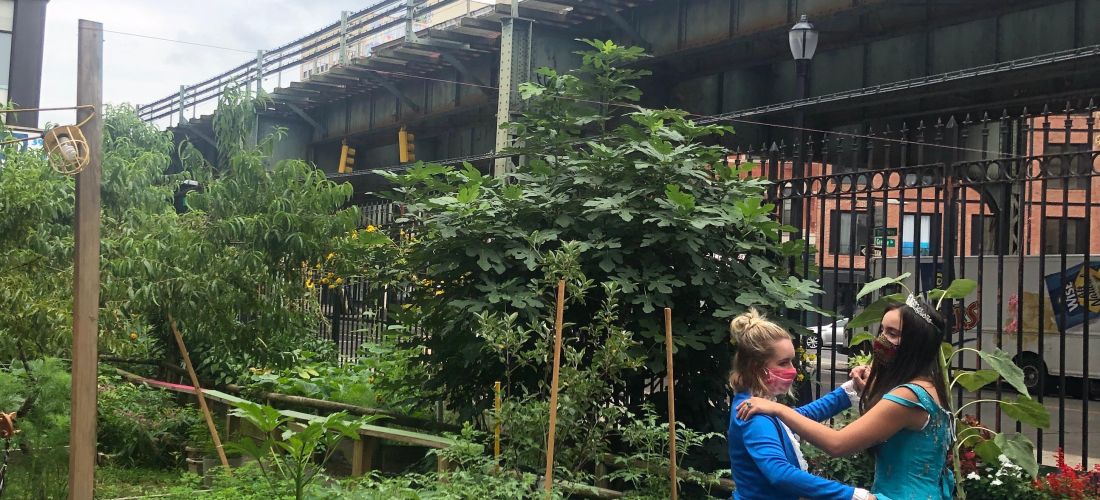

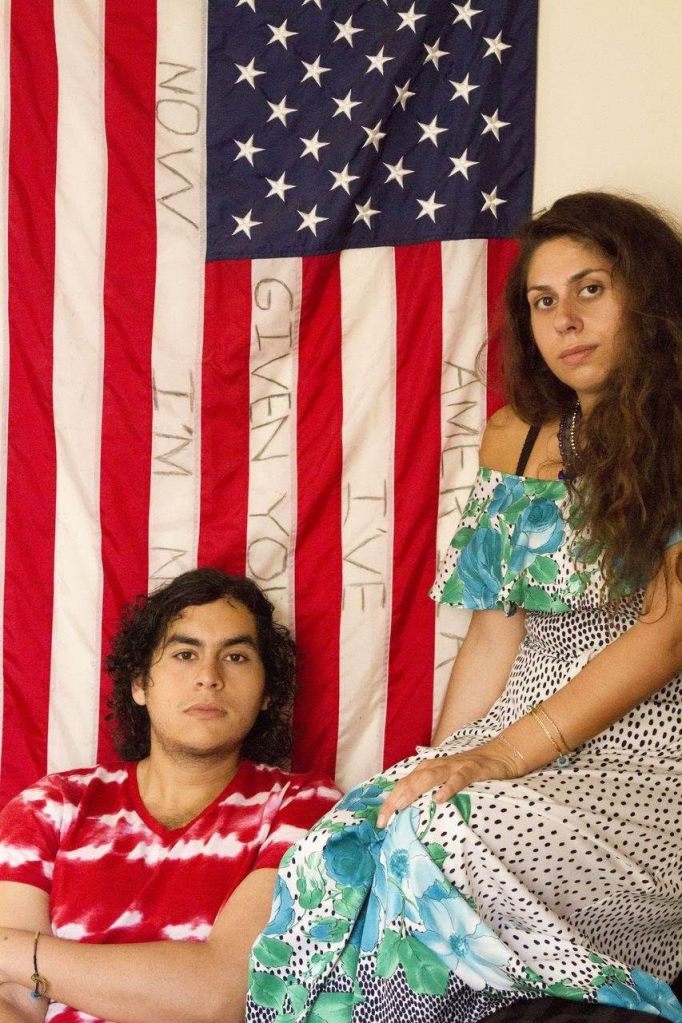

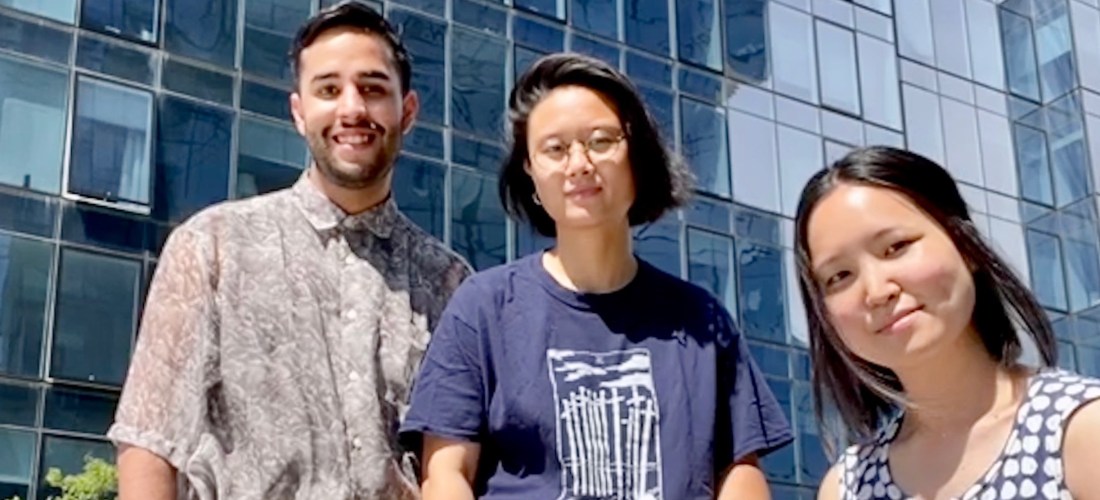
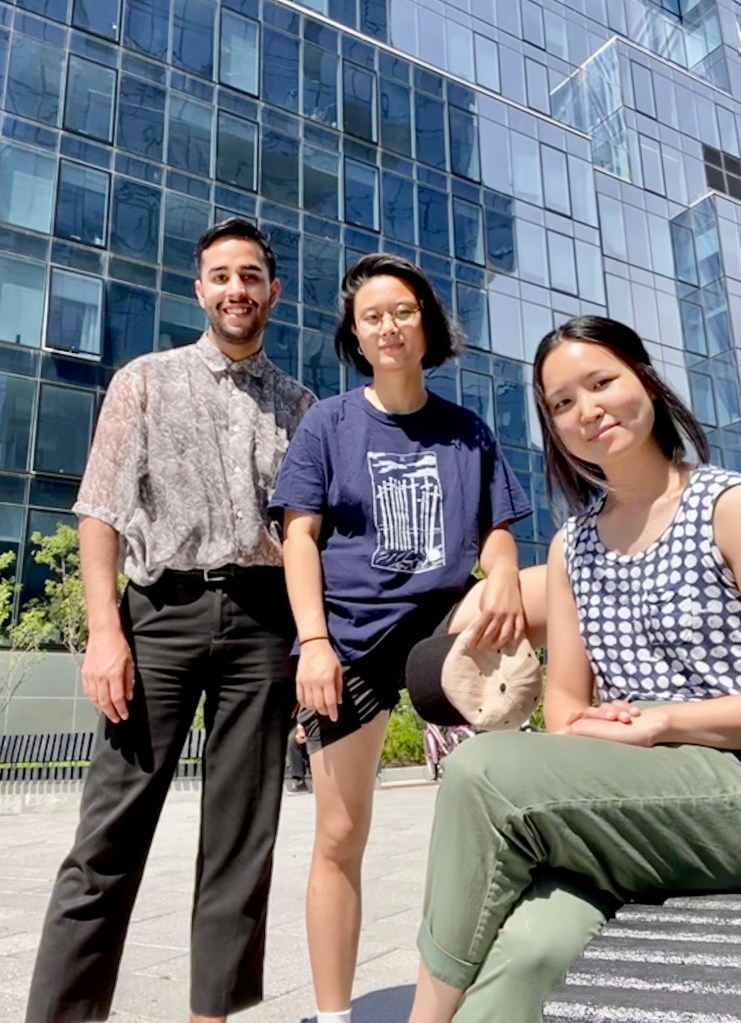





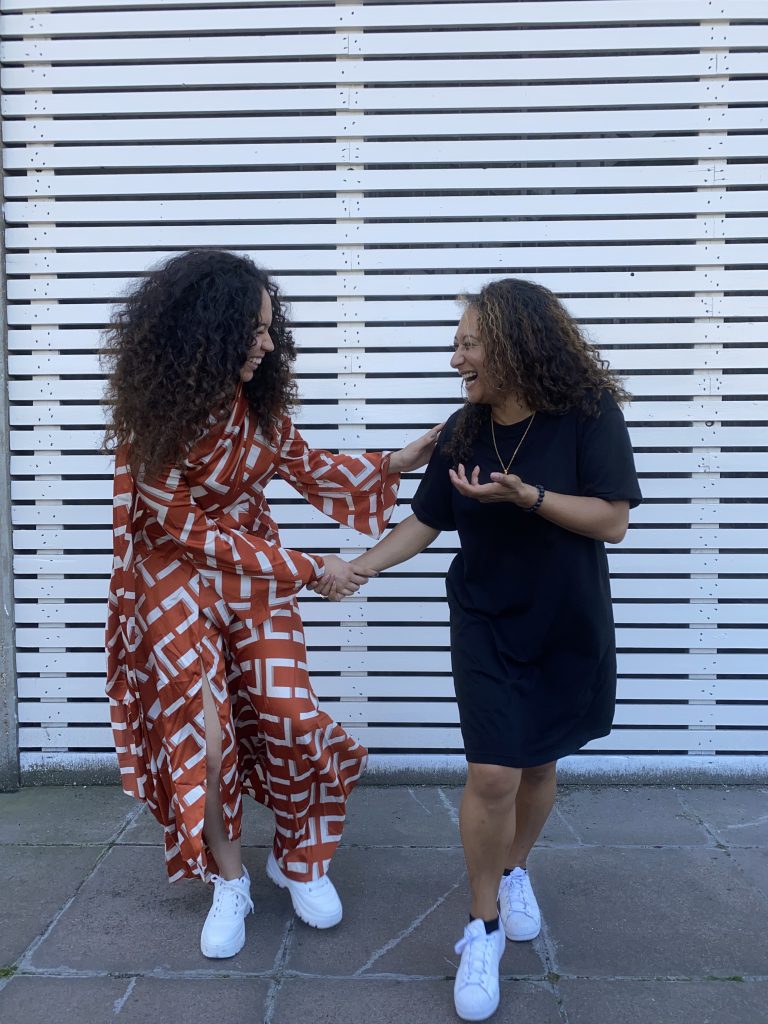


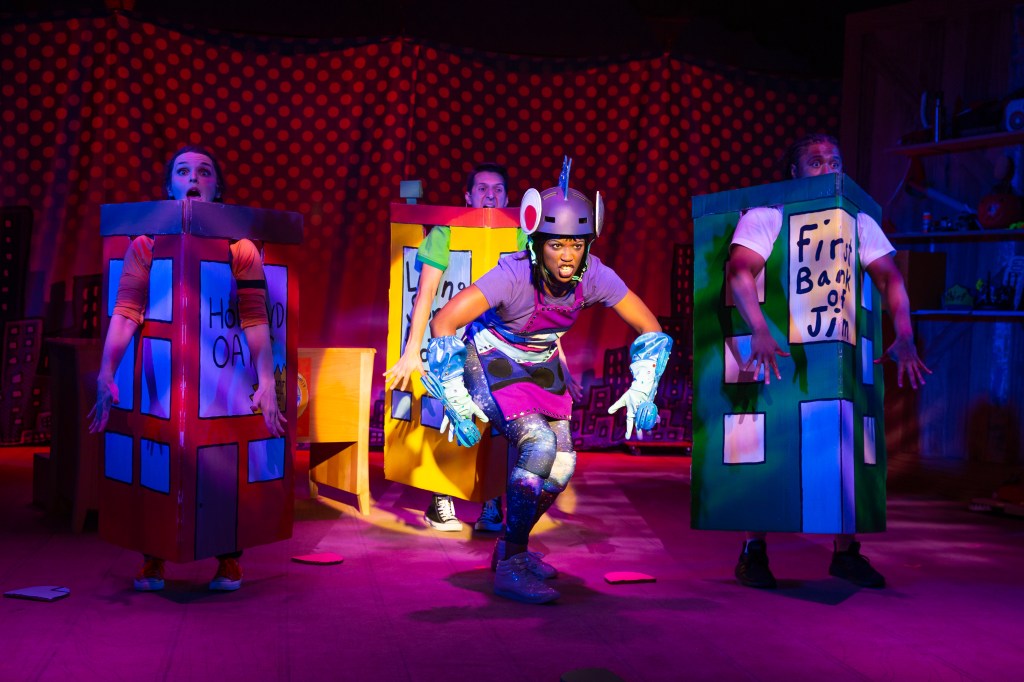





 Token Theatre Friends