The characters of “She KIlls Monsters.” Courtesy of Kelly Lin Hayes.
In Show Your Work, BIPOC theater-makers provide insight into their favorite creations. Think of it as a guided tour inside the artists’ minds, with the artists themselves as your tour guides. In this series you will see artists deconstructing scenes, elaborating on their designs, sharing acting techniques, and allowing us to see them at their creative best. We get out of their way and they show their work.
What captivated me about Kelly Lin Hayes work was its sincerity. Her characters’ expressive eyes simply disarm you. They wear their hearts on their sleeves; a refreshing trait, and a return to innocence in a world drenched in cynicism. Hayes’ characters convey their creator’s unabashed passion for theater, and to my delight, and the luck of theater-makers working digitally, she happens to be a polymath.
When Zoom plays and readings became ubiquitous, Hayes imagined a world beyond actors’ bookcases and living rooms. She brought back illusion through her custom set designs, which she meticulously creates using her keen eye for detail and knowledge that how the characters move in a space matters regardless of the nature of the stage. Here she talks about her life in the arts and shares some of her favorite designs, and the ideas behind them.
Courtesy of Kelly Lin Hayes.
What were you surprised to learn about your field?
I have two answers to this. Because technically I’m in two different fields. For virtual theater I would say it is so different then set design. It taught me a lot about design, and storytelling, technology and the creativity of multimedia production, which is its strength.
For physical set design, I was surprised to learn the details I have to go into as a designer. We are responsible for all of the design, going down to furniture, tile, all these smaller details. I was surprised how much we have to know about everything. This job is just constant learning.
How does being a BIPOC theatre maker influence the opportunities you have?
It’s hard to know how it influences the opportunities I get personally because I’ve only done virtual set design professionally. And all of the productions have been with friends. But it’s definitely been very hard to get people to give me the opportunity to talk and to take up space. I have all these ideas but it’s so hard to find professionals to listen to them seriously and consider, especially when all those ideas center BIPOC stories.
What is one thing you wish people knew more about your craft?
I wish people knew how much of a collaborative art it is. I don’t pretend to know everything but I do love learning about anything. So many people have helped me with set design, and my virtual set design journey and I just have a rolling list of people to thank for every show.
What was the show that made you want to do theatre?
I have three because my love of musical theatre was segmented.
The first show that brought me into theatre was Rent and I was obsessed with the show, I still am. But after some bad theatre experiences in high school I realized that while I was in love with theatre, theatre maybe didn’t like me back and I tried to stop liking theatre. But then Hamilton came about in my junior year of college, and I fell in love again. I’ve been here ever since.
A few years later Natasha, Pierre and the Great Comet of 1812 showed me a design that was both seemingly impossible and so interesting. So that show specifically is responsible for me changing careers from Architecture to Set Design.
Four Set Designs By Kelly Lin Hayes
She Kills Monsters by Qui Nyuyen
In process. Courtesy of Kelly Lin Hayes.
She Kills Monsters is a vast project. Making use of pixel art, collage, animations, backgrounds, and comics the show pushes beyond the bounds of traditional theatre, and approaches it with a new multimedia experience of theatre. This show won honorable mention in La Mama “Designfest” Competition.
(See it on November 6th 8PM EST/ Nov. 7th 8PM EST/ Nov.8th 3PM EST tickets are available here)
Marry Me a Little by Stephen Sondheim
In process. Courtesy of Kelly Lin Hayes.
Marry Me a Little is an example of a design that I came up with just for myself. The loose song cycle format, and the story of being lonely with other people was especially relevant to the current time. This was the first example of what I call “tiling” zoom panels that helps put people in scale, and diversifies the set.
Final version. Courtesy of Kelly Lin Hayes.
The Dumb Waiter by Harold Pinter
In process. Courtesy of Kelly Lin Hayes.
The Dumb Waiter was my first professional show. I worked with my friends Merle, Ona, Rolls and Tony. It was originally meant for a theatre, but when COVID happened we deferred to a virtual show. The “dumb waiter” itself was turned into its own character and I created animations of it being raised and lowered to add an element of surprise into the show.
Final version. Courtesy of Kelly Lin Hayes.
Night Witches by Rachel Bublitz
In process. Courtesy of Kelly Lin Hayes.
The Night Witches is the latest show I’ve taken on. A lot of the scenes take place in the sky so the “tiling” method mentioned earlier is helpful in portraying the vast skies. The careful ordering and positioning of entrances and exits help to line up the actors in the correct order to tile the scene.
Recently, the advocacy group Be An Arts Hero was trying to get a meeting with Alaska Senator Lisa Murkowski about why there needs to be a federal bailout for the arts. Suffice it to say, it was not going well. “Her person got back in touch with us and was like, ‘Oh, you know, it’s not a big deal up here.’” said Carson Elrod, one of the cofounders of Be An Arts Hero, an independent non-profit advocacy group.
But the group was undeterred. Said Elrod: “We wrote back and we said, ‘Well, it’s this many tens of thousands of jobs. It’s this many billions of dollars contributed to Alaska’s GSP. And these are organizations that are positioned to fail that are vulnerable. And this is what’s at stake.’ And her economic policy person got back in touch with us and said, ‘I’d like to talk to you guys right away.’”
The group was able to have an hour-long conversation with Murkowski’s senior policy counsel Anne McInerny who told them, as Elrod recalled: “Well, your argument is unimpeachable. What you’re saying is that 4.5% of the GDP has been left out of the relief conversation, and you want to be put into it.”
The fact that Murkowski was willing to listen to them proved a point that the group was making: “There is no state where arts and culture doesn’t employ tens of thousands people and provide billions of dollars of economic value,” said Elrod. And a way to get politicians to care about the arts is to lobby for it in those terms. Simple, right? Not really.
Be An Arts Hero was founded this past July, by three out-of-work theater actors (Brooke Ishibashi, Jenny Makholm, and Elrod) who were seeing their industry shut down before their eyes with no plan of re-opening. It was originally a social media campaign, to publicly advocate for an arts bailout in America.
According to the U.S. Bureau of Economic Analysis, the creative sector (this includes live performance, Hollywood, musicians, visual arts, artisans, etc.) is responsible for employing 5.1 million people, provides $877 billion value added to the economy, and makes up 4.5% of GDP. According to Be An Arts Hero, the arts “adds more value than transportation, agriculture, or tourism.”
The COVID-19 pandemic has led to a loss of 2.7 million arts jobs (and counting). And theater and live performance in particular was the first industry to shut down and will be the last industry to reopen.
Speaking as someone who lost her arts job because of this pandemic, I have been frustrated, along with other arts people, about the lack of attention this has been given by Congress and the public at large. Granted, that frustration is just the cherry on top of the multitude of debilitating feelings of anger and grief the Trump Administration has caused.
Meanwhile, countries like Germany and the United Kingdom have provided $50 billion and $1.5 billion, respectively, to their arts industries during the pandemic. Granted, these are countries that are also giving their residents monthly stipends during the pandemic because unlike the U.S., they don’t have a Republican party who would rather take away people’s healthcare during a pandemic than pass more federal relief.
This lack of attention to the arts sector can be seen as a lack of care overall from Congress. After all, restaurants are also in a similar dire state as the arts, and there’s no bailout coming for them anytime soon.
Recently, a number of lobbying groups from the Broadway League, and the recently created National Independent Venue Association, successfully lobbied the House of Representations to fold the Save Our Stages Act into its HEROES Act.
Save Our Stages would provide “grants to eligible live venue operators, producers, promoters, or talent representatives to address the economic effects of the COVID-19.” The grants can go up to $12 million and can be used for payroll costs, rent, utilities, and personal protective equipment.
Granted, SOS and HEROES is basically in stasis unless the Democrats successfully take back the Senate on Nov. 3.
Other lobbying groups, such as Theatre Communications Group (where I used to work) and Actors’ Equity Association, helped lobby for freelancers to be eligible for unemployment benefits as part of the CARES Act—a majority of arts workers are freelance. And a number of groups have been lobbying Congress for the HEROES Act, which would provide another stimulus check to Americans, and additional unemployment money.
It seems like in the Senate, these pleas are falling on deaf ears.
At the same time, given the dire state of the arts currently, there is a remarkable lack of urgency from artistic producers.
The head of the Broadway League, which contains around 800 members, Charlotte St. Martin told Broadway News that while the League was campaigning for SOS, the bill “certainly doesn’t save us, because we’re not going to die.” As Broadway News put it, “[Martin] said, it would help support the industry as it works to rebuild audiences.”
Those words seem very out-of-touch with the present moment when 2.7 million arts workers are unemployed, and tens of thousands are losing their health insurance. Even during a pandemic, the arts ecosystem is still divided between the haves and the have nots.
“There were portions of this business that are still operating under the same gatekeeper paradigm, as though it were business as usual,” said Makholm of Be An Arts Hero. “As though the house wasn’t literally on fire, and we’re just trying to pass buckets to each other of water.”
And it is because the people who control the industry are those with money, who do not feel this recession as deeply as the independent contractors, technicians, artisans, assistants, and other people whose earnings from the arts afford them a middle-class lifestyle.
Which means when producers go to Congress to lobby, they are only only lobbying for their sector. SOS mainly benefits producers and venue owners. They do not benefit the independent contractors who make up a majority of the industry. No wonder, as Washington Post critic Peter Marks puts it in one tweet, “The [Broadway] League has been told by its DC lobbyists—one Democratic, one Republican—not to mention Broadway in their efforts to secure help. Lawmakers hear it and think, rich people.”
Because the people lobbying for that relief are rich people looking to primarily bail out their relatively privileged friends.
“Everybody’s kind of only looking out for themselves,” said Makholm. “And I don’t blame them, because that’s born of decades of disenfranchisement and defunding. So it’s not as though they’re coming at it from a selfish impulse. It’s just that when you have been systemically defunded, over the course of multiple decades, you have to get into survival mode in order to survive.”
That’s why I’ve found the Be An Arts Hero team so inspiring, because they’re actively strategizing outside of the box. For one, they are rank-and-file arts workers who are independent contractors, who don’t belong to a theater or a Broadway show.
They are also super visible. Their Instagram has over 18,000 followers. They got a bunch of Broadway actors to perform a song from RENT in Times Square and the video got over 80,000 views.
And since their founding, they’ve met with around 60 Congressional senators. They are now a 501(c)(4) called Arts Workers United and can take donations. Not bad for a movement that’s not even six months old.
But more importantly, they’re trying to bring together the fragmented parts of the arts industry, different groups who are all lobbying for their own small piece of the pie, to come together and lobby for a large pie that will benefit everyone. It’s not just about getting a celebrity involved. It’s about everyone (especially those who work in the arts) shouting that the arts are not made by elites, that the arts are valuable, that the work is actually labor, and those that make it need help.
Or to use another corollary. When the airline industry was asking for a bailout, it wasn’t asking on behalf of its CEOs or executives. The airlines, along with the unions that represent workers, centered pilots, flight attendants, and other workers. It said that if Congress did not give them those funds, they would be forced to lay people off. And the industry got $25 billion bailout, and a majority of that money had to go to payroll.
While SOS is asking for $10 billion, Be An Arts Hero thinks the ask should be higher, in proportion to the need of the industry and the people in it, but also the economic value it has. Said Ishibashi:
“We’re asking for $43.85 billion dollars because we’re advocating for the entire arts and culture sector. I think it becomes a tricky conversation of divisiveness. I think everyone kind of silos off into different compartments and departments. And it seems to us that we may be the first ones who’ve come along to say: Hi, why don’t we rally the troops and provide a collective or a unified front, so that we’re mobilizing everyone under the arts and culture sector together? And wouldn’t that be so much more effective if we all go to Congress as a unit and say, give us a blanket amount that will cover everyone? Instead of these 16 different frickin’ bills that are just lying in a heap collecting dust in Congress right now, because they don’t know what to do with it.”
That model has some precedence. Over the summer, the Oregon Shakespeare Festival successfully lobbied to a $50 million arts relief package from the state of Oregon. And they didn’t do it alone. “This is not something that could have been accomplished without the coming together [of a] coalition of arts organizations around the state,” said OSF marketing manager CJ Martinez. “The responsibility and the relevance and the inherent connection between the Ashland community and OSF, and the responsibility for not just that community but the economics of the whole southern region of Oregon, I think, also played a role in the consideration that OSF was given.”
If the arts want to show that they are not for the elites and that arts workers are not part of the elites, then those workers need to be placed at the forefront of any campaign for support. And how much money arts workers make, what their lives are actually like, and how hard they are struggling right now, need to be part of the bailout narrative.
At the very least, all of these lobbying efforts need to be a lot more visible publicly. Those who do arts lobbying tend to work behind the scenes, and the process is invisible unless you’re in the literal rooms where they happen. But what it those conversations were also happening publicly?
If the arts sector can focus on getting out the vote in advance of the election, and fundraising for Joe Biden and Kamala Harris, and publicly announce all those events with clever PSAs and music videos, they can also do the same to get relief for their sector.
Where is the large marketing campaign showing how an average stage manager lives? Or the PSA about the playwright who is leaving the country because they cannot afford NYC and do not feel safe? Or the YouTube video about the working actor who brought joy to so many people, but got COVID and now cannot effectively do their job? Where are the Broadway celebrities and producers advocating for Medicare for All and a monthly basic stipend for all out-of-work Americans?
When the arts and culture sector wants to, they can market the hell out of their products. But why can’t they market for their livelihoods and for their industries?
In my estimation, as someone viewing it from the outside, it seems the leaders of the theater industry are taking the same approach to COVID as the federal government: don’t acknowledge how bad things are and hope it will one day just “disappear.”
Meanwhile those on the ground are getting sick, getting evicted, moving out of the country, leaving the industry, because they can’t afford to wait for a summer 2021 Broadway reopening. The longer the pandemic rages on, and there is no relief to arts workers, it means that when theaters reopen, the industry will be more elite, more white than before. As lower-income artists, artists of color, immigrant artists leave the industry because of economic uncertainty, only the wealthy will be able to afford to do theater or buy a theater ticket. Before the pandemic, white actors made $1.70 for every $1 an actor of color made, because works featuring people of color are seen as riskier and are given less funding. How bad will this inequality be after the pandemic, as producers tighten their purses even more?
The arts have touched the lives of every single person in America. And now is the time for those who make it to come out and publicly make a case for why their work is important, why they’re regular people who deserve relief—like every person in America who’s not rich. Just because the popular perception is that the arts, and the people in them, are for elites doesn’t mean that the industry shouldn’t try to change that perception.
If people don’t care, make them care.
“For us, infrastructure is the people,” said Ishibashi. “When Broadway picks up the phone and they’re like, ‘We’re back, everybody, let’s go.’ And the Costume Industry Coalition and all of their warehouses and all of their suppliers, and all of the audio companies, lighting companies, and sound companies—when all of those surrounding businesses have imploded because they haven’t gotten the support they needed to survive the crisis, then Broadway can’t come back.”
She then continued. “What we are trying to do is provide a more comprehensive, holistic, long-term solution. And spray a giant firehose of sunshine and money across the entire arts and culture sector—not just theater, not just Broadway, not just New York City.”
In Show Your Work, BIPOC theater-makers provide insight into their favorite creations. Think of it as a guided tour inside the artists’ minds, with the artists themselves as your tour guides. In this series you will see artists deconstructing scenes, elaborating on their designs, sharing acting techniques, and allowing us to see them at their creative best. We get out of their way and they show their work.
In this installment Gamal ElSawah, Conrado Falco III, and Sajda Waite introduce us to Wormholes, the sci-fi comedy they created, starred in, and produced during quarantine. The trio are roommates and the founders of the theatrical company Showdogs NYC Theater Collective who found themselves in need of a creative output when their first show was postponed due to the pandemic.
Although there are myriad series about the lives of zany NYC roommates, there are none like Wormholes, in which the artists combine their love for witty dialogue, the comedic sci-fi they grew up watching, and their endless need to create. ElSawah and Waite play roommates trying to declutter their apartments. Lucky for them, they have a handy wormhole through which they can dispose of the things that don’t spark joy anymore. But wormholes too can cause commotion in apartment buildings, and the one from the title gives constant headaches to their superintendent played by Falco.
The first two episodes are now available on their YouTube Channel, new episodes will be premiering each Wednesday. For their take on Show Your Work, they let us become flies on the proverbial wall as they have a chat about how they put together one of their favorite shots in the first episode.
Gamal: Alright y’all. We’re a trio of theatre artists. The pandemic hits, theatre shuts down, and what do we do?
Sajda: Make a web series about a couple of roommates living with an interdimensional wormhole in their closet, of course.
Conrado: That’s right, but you’re burying the lede. We were working on a play that was supposed to open in April. We were already in rehearsals when we were all called to stay inside.
Gamal: Don’t re-open those wounds, please. The important thing is we made a whole show that we can actually share with people. So let’s talk tentacles!
Sajda: Love suction!
Gamal: One of the crowning achievements of our show’s first episode was our tentacle choreo- we used the thing twice. The first time it showed up was in the fourth scene of our pilot. …How did we land on a tentacle again?
Conrado: Well, we wanted it to make it clear from the beginning that our show was as much sci-fi as it was a comedy. So we needed some weird shit to happen. But I don’t know… why tentacles?
Sajda: Cheapest thing on Ebay I believe.
Conrado: Ha, that sounds about right.
Sajda: But really I think it seemed like a proper visual gag that would be ridiculous enough to get a good laugh while also showing the side effects of having a wormhole in your apartment.
Conrado: Right. We really wanted to come out of the gate strong with all this wormhole stuff, but that ended up being a lot of work because it was the first episode and we had to set up so many other things – the premise, the characters. It was a lot.
The script of the shot discussed in this piece. Courtesy of Showdogs NYC Theater Collective.
Gamal: Writing is hard! Thank God we’re so good at it! But, yeah, we had a lot to convey especially in that first tentacle scene. We had to introduce Gazpacho, that he was the building’s super, that Salman didn’t like him, and that the wormhole was causing major problems for the whole building.
Sajda: Truly introducing one of our main characters and the central conflict of the episode in a matter of, I don’t know, seconds?!?! Genius, succinct!
Conrado: Not only that, we also wanted to establish that they were the only ones in the building with a wormhole in their apartment, so we came up with some subtle exposition in the line “you’re the only ones with a wormhole in your apartment.” Silly, I know, but it always gets a laugh.
Gamal: Writing the scene was easy compared to shooting it, though- should we dive into that?
Sajda: You get a water pun! And you get a water pun!
Gamal: I got wet.
Conrado: So, if I remember correctly the tentacle was a late addition to that scene. First it was going to be just water pouring onto Gamal to signify that the Wormhole was leaking, and then eventually we were like “well, we have this tentacle…”
Sajda: Might as well get our money’s worth and throw in a little foreshadowing here for Gazpacho’s impending mutation.
Gamal: Although, I’d like to say on the record that I originally wanted to use an actual octopus from the fish market.
Sajda: But I knew PETA would have a field day, so that was a no go. So Gamal’s second idea was to use tentacle fingers.
A rehearsal splash. Courtesy of Showdogs NYC Theater Collective.
Conrado: Oh, yeah! I remember that. He found these little wormy fingers – and I guess I was gonna wear them with a fingerless glove or something like that? Honestly, I’m happy we went with the green Cthulu arm. That way we could use it in both scenes.
Gamal: That’s cool, but back to me getting wet… Tell the class what you did to me.
Sajda: Well, as director of photography, I figured the best way to set up the shot was to get pretty tight on Gams so that Coco could hover directly behind the door and pour some nice NYC tap water over his head while stroking his cheek avec tentacle.
Conrado: The big problem was we had to get the shot right on the first try, because once Gamal’s shirt got wet we would have to wait for it to dry. We simply didn’t have the budget to buy multiple identical shirts. So there was a lot of pressure…and rehearsals!
Gamal: Yes. So to make sure we could get it in one take, we just… kept doing it. In other clothes. To be honest, I feel like Conrado kept missing on purpose just so he could keep dumping water on me.
Conrado: Listen, I couldn’t see you from behind the door. I was literally sticking out my hand and hoping for the best.
Gamal: Are you there, Hollywood? It’s me, Gamal. I do all my own stunts.
The final splash. Courtesy of Showdogs NYC Theater Collective.
Sajda: Bada bing bada boom! A little iMovie magic and some zap sounds to seal the deal!
Conrado: Zaps sounds – very important. We kept watching the scene in the edit and thinking something’s not quite there. Then I think Gamal came up with the idea of adding a little zap-wormhole sound when the tentacle pops in. It really ties the whole thing together.
Gamal: Never underestimate the power of post-production sound effects.
Sajda: Never underestimate the power of three theatre nerds with nothing but an iPhone and a dream!
Conrado: Yeah okay, I think we’re done here.
Gamal: Wanna see more wacky sci-fi practicals? Tune into Wormholes every Wednesday on IGTV (@wormholes.tv) and the ShowdogsNYC Youtube Channel starting October 14th! Buh-bye!
“Why have we only been producing dead white men?” That was the question that Mary Candler asked herself one day. Candler runs Hedgepig Ensemble Theatre, a Brooklyn-based company that specializes in classic plays and hiring women and non-binary individuals to star in and direct them. But there was a slight snag in their mission statement: the classical canon is white, male dominated.
According to a 2018 study by American Theatre, while men and women are almost evenly produced when it comes to plays written in the last 10 years, when it comes to classics (anything written before 1968), men are produced a whopping 88% of the time. That’s a whole lot of Shakespeare.
Hedgepig wants to change that.
“If we as a feminist theater company aren’t producing plays by women, how are other people across the country and around the world going to do that?” said Candler. “So we thought, let’s make this as easy as possible for the industry to get these amazing plays on stage.”
On Sept. 21, Hedgepig is unveiling their Expand the Canon initiatives. At the center of the initiative will be a list of notable plays by women, written before 1960. They include the Restoration comedy BoldStroke for a Wife (1718) by Susanna Centilivre, who is the most successful English playwright after William Shakespeare by number of performances before the twentieth century, though she has rarely been produced in modern times.
There’s also 20th-century works. Another play, Rachel by Angelina Welde Grimké (1916), was about a Black family in the early 20th century. The list also includes more well-known writers like Zora Neale Hurston, Mae West, and Alice Childress (who will be getting her much-belated Broadway playwriting debut in 2021).
“We were really intentional that we wanted this list to be diverse,” said Candler. “Going from just dead white men to dead white women is not the kind of step that we’re trying to take. In English, it’s much easier to find dead white ladies. And those also tend to be more of the names that got submitted that people knew.”
That’s why some of the plays on the list are English translations of international works: such as the 1693 play House of Desires by Sor Juana Inés de la Cruz, translated by Catherine Boyle, which is a comedy about two sisters.
Hedgepig was inspired by the Kilroys List of contemporary plays by women and non-binary individuals. The plays are gathered from industry recommendations and suggestions from academics. The initial list contained nearly 600 plays. A team of dramaturgs, professors, and artists then read nearly 200 plays. Then a team of four—Candler, Hedgepig associate artistic director Emily Lyon, actor/director Skye Pagon, and actor/director Shannon Corenthin—whittled it down to nine plays for the inaugural list.
Hedgepig artistic director Mary Candler and Hedgepig associate artistic director Emily Lyon.
In addition to the list, Hedgepig will also produce a series of readings from Sept 22 to Oct. 1. They’ve partnered with Ma-Yi Theater Company and The Classical Theatre of Harlem to produce the readings.
Florida State University professor Chari Arespacochaga will be directing two one-acts: RestlessNight in Late Spring and A Hell of Her Own by Fumiko Enchi, dating to 1928. One play is about two students who debate whether to give up their art to pursue political activism. The other play is about a woman who wants to rebel against the gender confines placed on her. Ayako Kano translated both plays and the reading will be the first time the plays will be presented in the English-speaking world.
“[Enchi] really navigates women’s place in Japanese society at that point, especially during the political upheaval that they were dealing with—the influx of Marxism, young student activism, and all of that changing the political landscape of Japan,” said Arespacochaga.
The director hadn’t been aware of Enchi’s work, or most of the works on the canon list, and it’s been a revelation. “Why have we never been told about this? Why are these plays not in the anthologies?” she exclaimed. “It’s also really humbling, like, oh my god, we silo so many things as sources of knowledge. And we just overlook so many places and so many things that we can learn from. I think that’s why work like this is important.”
Hedgepig plans to release a list every single year and part of their dream is to one day be able to commission original translations; many of the plays by women of color on the list were already translated. So there could literally be a whole world of work out there that has been overlooked.
“In our dreams, upon which people understand why this is so cool and important and then people give us tons of money and want to work with us, we get people translating plays from all over,” said Lyon. “It was very challenging to find plays from, like, India.”
Hedgepig is also making PDFs of some of the plays available to download, or they’ve linked to places where the plays can be purchased. They want other classic theater companies to look beyond Shakespeare, Chekhov, and other men when planning their seasons. Lorraine Hansberry wasn’t the only woman writing plays before 1960.
“I think that a lot of classical companies rest on what’s tried and true,” said Candler. She hopes the list will be a resource for these companies. “I think you take a risk anytime you produce a play that doesn’t have a writer attached or name attached that people know and recognize. We’ve got to get over that if we’re gonna change anything.”
Adds Lyon, “I feel like when it comes to these classic theater companies, in the diversity conversation, it always comes down to casting. And so I feel like this is an opportunity to really make it more holistic.”
Chari Arespacochaga
Arespacochaga also sees the list as an opportunity to educate not just professionals, but students. She wants to take the Expanding the Canon list and turn it into a course for her students at FSU, so that they know that there is more to the canon than dead white men, and that what is considered canonical has historically been based on the whims of other white men.
She believes one way to make change and to create more diversity is to educate the next generation.
“That part of building the theater landscape, which is educating the young people who are about to go into the industry, is failing us,” she said. “It’ll be harder to have change at the professional level, if at the training level, we have not changed the basic things. We have to recognize that the canon has been prescribed by white men. So I think this [list] is a great way to disrupt it.”
According to Lyon, “I didn’t know,” is no longer a viable excuse for exclusion. “Women have always been here, women have always been writing, women have always been amazing,” she said. “It’s just honoring what already exists.”
The full list of plays, with casting notices, and links to purchase, is available here.
Dharon E. Jones, Amar Ramasar, and the cast of “West Side Story.” (Photo: Jan Versweyveld)
West Side Story is a musical that wears its liberal heart on its sleeve. Created by Jerome Robbins, Arthur Laurents, Leonard Bernstein, and Stephen Sondheim, West Side Story took a play that was relatively apolitical, Romeo & Juliet, and turned it into a look at racism, gang warfare, assimilation, and poverty. The musical ends with its heroine Maria, a Puerto Rican woman who had tried to be a peacemaker, pointing a gun at a group of Latinx and white teens shouting, “You all killed him! And my brother, and Riff. Not with bullets, or guns, with hate. Well now I can kill, too, because now I have hate!”
When the musical first premiered, in 1957, it was inspired by both Romeo & Juliet but also by news headlines at the time about turf wars among teenage gang members. The Montagues and Capulets of R&J then became the Jets and the Sharks of West Side Story—a white gang versus a Puerto Rican gang, who hate each other not because of some “ancient grudge break to new mutiny,” but a very contemporary grudge: racism. In creating West Side Story, Robbins and co. were reviving Romeo & Juliet and making it relevant to a mid-20th-century audience.
Or at least, as white men, they tried. West Side Story has always had a fraught relationship with Latinx people. Said Hamilton creator Lin-Manuel Miranda in 2009, as he was working on that year’s West Side Story Broadway revival: “I think West Side Story for the Latino community has been our greatest blessing and our greatest curse…As a piece of art, I think it’s just about as good as it gets. It also represented our foot in the door as an artistic community on Broadway. At the same time, because it’s just about the only representation of Latinos on Broadway and it’s about gangs, that’s where it gets tricky.”
Which brings us to 2020, where two different versions of West Side Story are being released. One is the new film by Stephen Spielberg, scheduled for a December 18 release. Like the original musical, the film is set in the 1950s. Meanwhile on Broadway, Belgian director Ivo van Hove helmed a revival of the musical that began performances in December 2019. This version was set in the modern era, with the Sharks and Jets filming the action on their phones which is then projected onto a giant screen behind them. West Side Story on stage was shut down on March 12 when Broadway shuttered because of COVID-19. But once again, a musical about racism and the lives of people of color in America are directed by white men.
Despite its sometimes questionable qualities, I have always had a soft spot for West Side Story. I own a box set of the 1961 film that came with a bound script. The mambo scene, in all of the iterations I’ve seen of the show (I’ve seen three), never fails to make me breathless. It’s because even though West Side Story is a tragedy, it uses music and dance to remind all of us that there is still hope and beauty in the world, if we can only move past our racial differences to see it.
Which brings me to the 2020 Broadway revival of West Side Story, which I saw twice earlier this year (both times for work). I had come into this revival with misgivings (which I will discuss later), but I wanted to like it. And I left feeling like I’d been hollowed out.
“But What About Black-on-Black Crime?”
I’m not the kind of person who believes you should preserve theater in amber. I think if you’re going to revive a classic play or musical, you should have a reason for doing the show now. And creators shouldn’t be beholden to tradition when reviving a show; they should be allowed to re-imagine it. If Shakespeare can be recontextualized in seemingly unlimited ways, why can’t West Side Story?
This version of West Side Story wanted to be modern; van Hove said he wanted to set it after the 2016 election, when America is “a much rougher world…where people don’t listen to each other’s arguments, but just react to each other, and blame each other for what they are missing in life.” And he also made it multiracial: the Jets are now a Black and white gang, led by a Black teenager named Riff (Dharon E. Jones). If their hatred isn’t along racial lines, then what is it? Said choreographer Anne Teresa De Keersmaeker, “But I do think that both Jets and Sharks are young and are looking for identity. And it’s also about violence, poverty and exclusion.”
On the one hand, the violence should not make sense because hatred and violence is senseless. On the other hand…we’ll get to that momentarily.
The revival also cut out some elements of the original which, on the surface, seem innocuous. It cuts Maria’s only solo song “I Feel Pretty,” and the all-women scene preceding it. It also cuts the ballet that usually accompanies the song “Somewhere.” And it cuts this line from Maria (Shereen Pimentel) in the show: “You all killed him! And my brother, and Riff. Not with bullets, or guns, with hate. Well now I can kill, too, because now I have hate!”
These cuts may seem innocuous but what it does is remove any sense of lightness, joy, and hope from the musical. Maria is the sole voice in the musical who calls for the end of violence and for peace. What her song “I Feel Pretty” shows is a girl who looks at the world with optimism. In a world where Latinas are made to feel invisible and ugly, she chooses to feel pretty. Maria is hope personified. Cutting that song cuts a crucial character moment for her.
When at the end, Maria holds a gun and says “now I have hate,” that hope is seemingly broken and that is the true tragedy. But when Maria chooses not to use that gun, it’s supposed to be the triumph of love over hatred. In the movie, the final line is “Te adoro, Anton,” and the final shot is of Maria, resolute and moving forward. You get the sense that there will be a better world somewhere, and Maria will help build it.
The 2020 West Side Story revival sidelines Maria and the other women, in order to center the violence of the men. The men are also centered in the marketing campaign for the show as well as the images on the marquee. The women do not push back against the hate, or give a hopeful alternative to it. At the end, Maria doesn’t break away from the violence, she just stands on the stage, next to the Jets and Sharks, looking exhausted and depleted. Another Black woman whose lover was killed by gun violence (Pimentel is Afro-Latina). The revival took away what made Maria special.
And who is responsible for the violence? In the scene where Anita (Yesenia Ayala) is almost raped, we see a close-up camera shot of her jeans being unbuttoned, and then a Black man on top of her. During the song “Gee, Officer Krupke,” usually sung by white Jet members, it’s instead sung by mostly Black actors, who are then shown in a jail cell.
During the rumble, Bernardo (Amar Ramasar) kills Riff, who is Black in this production. Tony—played by Isaac Powell who is part Native American, Black and white—then kills Bernardo.
Van Hove may have made the Jets multiracial, but he also took out white supremacy and institutional racism as a source of violence in West Side Story. As theater director Schele Williams put it:
“It’s a very specific story about white people making Puerto Ricans other. The story changes considerably when you make it brown on brown…You put all brown people on stage to show danger and you took the whiteness out of a story that is about a group of people saying, ‘This is America and you don’t belong here.’ In a moment when America is having a whole conversation about putting children in cages on the border and saying, ‘you don’t belong here,’ but you’ve taken whiteness out of that story.”
Schele Williams
“In addition, you have cut, ‘I Feel Pretty’ away from a community that so desperately needs to say out loud, ‘I feel pretty and witty and bright.’ How often does that group of people, those women, those Latinx, Puerto Rican women, get to say something affirming about themselves on the American stage? And that song was cut. Who was behind the table for that conversation? And who thought that only brownness can be dangerous? Because I fear the white boy who comes into my kids’ school and shoots it up. I don’t fear the brown one.”
Schele Williams
Even before summer 2020, America was experiencing a reckoning around race. Black people were getting murdered with impunity by white police officers, the president called a group of white supremacists “very fine people,” Latinx children were being put in cages by white immigration officials. In the original West Side Story, the police officers treat the Puerto Rican Sharks much more harshly than they do the white Jets. That nuance is gone from the revival. Van Hove wanted to make his West Side Story relevant to American audiences today. But by taking away the race element in the musical, he made his version irrelevant, the theatrical version of “all lives matter.”
But this is how white supremacy wraps itself up as allyship. Because you can hire a group of Black and Latinx actors and have them act in a beloved Broadway musical about how hate and violence is destructive. But how you position them onstage matters. In this new West Side Story, young people of color are senselessly violent, and police intervention is justified, because otherwise, these mostly Black and brown youths would keep killing each other. It’s no different than the fear mongering on Fox News.
Said Williams: “That’s why cops shoot first and ask questions later, because brown is scary and white is fine. In this platform with all of these thoughtful, kind, liberal humans, we are reaffirming the prejudices of our nation on the American stage.”
And I’m not saying Van Hove and his predominantly white creative team meant for West Side Story to say those things. But they didn’t even assemble a team that could even ask the right questions.
The cast of ‘West Side Story.” (Photo: Jan Versweyveld)
The Ethics of Consumption
West Side Story is the first Broadway show in a long time to be met with protests on its opening night. That’s because it had cast Amar Ramasar, who was fired (along with a number of other male ballet dancers) from the New York City Ballet for sharing nude photos of female ballerinas. In all of the ensuing media coverage, Ramasar did not apologize. The West Side Story protests were organized by Paige Levy, a senior at LaGuardia High School in Manhattan. Ballet dancer Alexandra Waterbury, whose photos were also circulated, also joined the protests.
A member of the West Side Story cast also wrote anonymously to OnStage Blog, saying:
“I hate that I have to share the stage with him. I hate seeing him smile or laugh backstage. I hate seeing him reap rewards of adoration from audiences who don’t know or who haven’t bothered to look up what happened.
“But most of all, I hate that I can’t say the things I want to say freely. I’m young. I’m at the beginning of what I hope is a long career and as passionate as I am about wanting to scream from a soapbox about this, I’m just as passionate about wanting to continue to work on Broadway and I know people have been blacklisted for saying less.”
Those weren’t the only issues the West Side Story revival faced. Backstage, a number of actors were injured. Isaac Powell was out of commission for more than a month because of a knee injury he got while performing. Another principal cast member, Ben Cook, left the production due to an injury. Multiple actors getting injured within two months of a show’s life is not normal. So besides the sexual harassment issue, there also seemed to be a workplace safety issue.
Maybe that’s why the show rang hollow to me. It’s the equivalent of a corporation saying it supports diversity, but won’t take any actionable steps to make itself more diverse. For a show that seemed to condemn violence in the text, it had little consideration for the humanity and safety of its performers. There’s a difference between saying the words and actually putting those words into practice. A show can have pretty and progressive words, but when there are harmful practices backstage, what value do those words have?
There’s a meme that’s been around a few years now with the phrase, “there is no ethical consumption under capitalism.” If you’re a person living in a developed nation today, everything you consume was probably produced under the auspices of oppression: the people who make our iPhone or pick our vegetables are likely underpaid and overworked, the air conditioning we use or the planes we travel on is contributing to the harming of the planet, Jeff Bezos is the richest man in the world because he underpays his factory workers and doesn’t give them bathroom breaks. Oppression and harm is woven into the fabric of a capitalistic society.
For me, it’s become steadily harder to separate the artistic merits of the work with how the work was made. I haven’t been able to enjoy anything Harry Potter related after I found out that J.K. Rowling is a transphobe. That is because living in the now is a constant negotiation of how to put the things that I value—humane and safe working conditions, diversity in storytelling, anti-racism and justice—into active practice in an imperfect world.
That is why I didn’t want this essay to just be about, “I hated the new West Side Story and here’s why.” Because the artistic merits of a show is one thing, we can talk all day about that. But should the conditions in which a piece of art is made impact your enjoyment of that art? That’s the tougher question.
This is not to shame anyone who enjoyed the Broadway revival of West Side Story. Let me know what you liked about it. But when Broadway reopens again and if West Side Story comes back, I hope we will all be able to have a more open conversation about the way the art is made, in conjunction with talking about the work itself. And how inequitable artistic practices can damage the art itself.
There is a reason why the We See You, White American Theatre demand letter devotes just as much space to artistic practice as it does to the product. Because if we are serious about a better, more equitable environment for artists from marginalized backgrounds, then we need to have a frank discussion about how we treat those artists. And we need to have those discussions in conjunction with whether or not the work is “good.” What happens offstage is just as important as what’s onstage.
And if in the next decade you have to revive West Side Story again, give it to a Latinx person to direct.
If bad news has become the norm of 2020, the universe allowed an exemption for the young actor Sara Gutierrez, who in the midst of quarantine got the most significant call of her career. “Do you want to be the lead in the first outdoor show in New York City since the pandemic started?” asked director Ellpetha Tsivicos, and playwright Camilo Quiroz-Vazquez, the creative forces behind Quince, an immersive theatrical experience that subverts a traditional quinceañera by centering a queer heroine, Cynthia, a Mexican American girl divided between her culture and her future.
Gutierrez couldn’t hold her tears as she told Tsivicos and Quiroz-Vazquez how much she needed these news at that precise moment. The previous three months had been a nightmare, as NYC became the epicenter of a global pandemic that forced businesses and artistic institutions to close their doors, leaving New Yorkers perhaps for the first time without the possibility of overcoming grief by having their souls restored by art.
“We had a Cinderella moment,” says the director, her voice overcome with happiness as she describes Gutierrez’s habit of sending her pictures in which she’s memorizing her lines. The excitement of the ensemble fills the creators of the show with purpose, “they’re theatre warriors,” says Tsivicos.
Ellpetha Tsivicos and Camilo Quiroz-Vazquez. Credit: Lindsey Winkel
Quince was supposed to be a staged reading back in April. “We probably would have done it in a room in the Williamsburg Public Library,” says Quiroz-Vazquez. But as the pandemic became more unmanageable and total re-opening continued being elusive, the duo settled on two dates in August. Having done outside shows with Double Edge Theater, they were comfortable with the updated setting.
For years, they had wanted to stage a show at The People’s Garden. Located in the heart of Bushwick, the community-built, and volunteer-maintained space, provides a gathering space for the neighborhood that Tsivicos and Quiroz-Vazquez call home. “We know the owners of all the shops in our neighborhood, we’ve always tried to be local and create communities wherever we go,” says Tsivicos. The garden’s unassuming beauty was the perfect setting for Cynthia’s rite of passage, an oasis hidden in a bustling Brooklyn neighborhood.
For Tsivicos and Quiroz-Vazquez, doing the show was no longer just a matter of bringing their work to a stage, it became a way to thank a neighborhood that in years past gave them a home to return to after their daily dealing with the deep inequality New York artists face. The playwright explains everyone doing the show is working one or more jobs, which made scheduling difficult, but it also revealed the misconception that artists belong to the elite, “what could we all accomplish if we could focus on our art more specifically?” says Quiroz-Vazquez.
It’s a strange, but poignant coincidence that on the weekend Quince premieres, First Lady Melania Trump is reopening the Rose Garden at the White House, which she remodeled in the midst of the pandemic. As audience members in Bushwick attend a show created out of love, even tickets were distributed for free, in Washington D.C. a lavish garden will be revealed, meanwhile outside the White House has been barricaded to prevent peaceful protesters from disturbing the President’s day. Which one seems more like the people’s garden?
While most of New York live theatre remains dormant, and few commercial endeavors have risen to the challenge of what the time demands of them, the artists involved in Quince have been able to create a symbiosis of joyful creation and demands for social change. Friends of Tsivicos and Quiroz-Vazquez are contributing artwork to create the setting of the play. One of their friends, whose work is often political, is designing a crochet sculpture to be used as centerpiece, meanwhile every actor cast is from the Mexican or Chicano communities.
Art in New York City has become a luxury only reserved for those who can pay the highest prices, quite the contrast considering many of the performance arts started as folklore and community rituals. From the moment they met and decided to start working together, Tsivicos and Quiroz-Vazquez, have centered their work on the mission of rescuing and preserving cultural practices that are disappearing with the steamroll of globalization.
For Quiroz-Vazquez, the Mexico of his grandparents is something out of memories he will never get to experience. When he visited Cyprus, where Tsivicos’ family came from, he was surprised to realize how many traditions were preserved and practiced, to the point where the Cyprus he saw in the 21st century, has more in common with the Mexico of his ancestors.
Tsivicos had the opportunity to spend lots of time with her grandfather before he passed away, and captured moments of his daily life, so that even after his death, they can stay with her, they’re also memory tools so that she won’t forget where she came from. A land of farmers where her grandmother would still make her own bread and cheese. Tsivicos points out how in quarantine, many Americans who had never considered not buying their food in supermarkets, were suddenly baking bread, making cheese, desperately trying to secure themselves to any roots, as the world shape shifted overnight.
As New Yorkers, Tsivicos and Quiroz-Vazquez are performing a small miracle to remind the city of what it can be when it centers the interests of a community, over greed and indifference. “we need social activities, especially during everything that we’ve been through, it’s important to remind people there are more social activities than just eating out,” says Tsivicos. Quince of course will follow strict social distancing rules and masks will be enforced for the safety of the performers and audience members. It is totally safe, according to the director, who also expresses “a lot of our work goes back to catharsis either for us or for groups of people.”
As audience members leave Quince, they will have experienced a modern version of learning, embracing and loving culture through oral tradition. To eavesdrop on each of their conversations on their way home, as they take in the warmth of the Brooklyn summer night, the fragrance of the plants and flowers, and the power of the story they just saw unfold before their eyes, an honor and a pleasure almost too overwhelmingly beautiful to dream of.
Back in May, as COVID-19 shut down theaters around the country, Cha See, a lighting designer, was in a bind. Like many, she was also out-of-work. But unlike most theater artists, she could not apply for unemployment. As an immigrant designer from the Philippines, in America on an O1 visa, applying for government aid could put her visa in jeopardy.
And See was not alone, she noticed other immigrant designers who, like her, were wondering how they were going to make ends meet. Especially because unlike actors or playwrights, their work did not translate as well to Zoom. So See created a GoFundMe.
“It all started when I was having troubles financially,” she said. “So I started this GoFundMe. At that time, I was just talking to my friends who were also having the same problems because we couldn’t apply for unemployment, all of our shows have been postponed. It was the uncertainty with finances and with theater.”
The GoFundMe originally raised $32,969. But See soon realized that the need was greater than her immediate circle of immigrant designers. “Many people were contacting us from different disciplines and what we wanted to do was help as many people as we can,” said Kimie Nishikawa, a set designer from Tokyo; she helped See administer that original GoFundMe.
The two, along with costume designer Rodrigo Muñoz from Mexico City, then created the See Lighting Foundation, which has been raising funds and distributing them to immigrant theater artists in need.
“There’s no vetting process, there’s no application process, the only requirement is that you’re on an O1 or an OPT, and you work in theater,” said Nishikawa. OPT stands for Optional Practical Training, which allows students on an F1 visa to temporarily work in their area of study.
Originally, the idea of the See Lighting Foundation was to do a one-time-only payment to anyone who applied for it. But the group soon realized that theater was going to be shut down for at least the rest of 2020, which meant many artists were going to be without income for months. And artists on an O1 visa cannot find work outside of the jobs specified on their visa.
So the See Lighting Foundation is currently supporting 64 artists, giving them $500 a month. “We have a waiting list, which is about 15 people,” said Nishikawa. “Hopefully some people who have registered with the foundation, their financial situation might improve, and they will drop off. A few have already dropped off and then people on the waiting list come up.” Artists also usually drop off when they go back to their country of origin.
Adds See, “I wish we can help them all. But it’s also based on the number of donations and the amount of donations. We’re working hard.” The three administrators make sure the artists on their list have gotten their funds before they pay themselves.
Before they started the See Lighting Foundation, See, Nishikawa and Muñoz had never fundraised before. As Nisikawa puts it bluntly: “We’re fucking designers. We don’t know how to fundraise.”
It’s been a learning experience for the team, from finding a fiscal sponsor so that the donations can be tax-deductible (Ars Nova is their fiscal sponsor), to directly asking big potential donors for money. The funds are distributed to artists as personal gifts, so it doesn’t violate their visas. On the day of the interview, the team disclosed they had received a donation of $30,000, their biggest single donation yet (their average is usually $74).
“We just realized how really, really, really, really important it is to keep our voices out there,” said Muñoz. “We need to make ourselves present. And it’s been like an interesting and funny ride because we decided, for example, we should open a Twitter. And then it’s like, wait, how does Twitter works? None of us use those platforms!”
But they’ve been learning how to fundraise as they go. The most valuable thing they’ve learned about asking for money during this time is similar to getting theater work in the before times: persistence.
“Even if you don’t get a response, just keep emailing them back,” said Nishiwaka. “Always be polite. Just keep poking, keep poking.”
They’ve also learned that they can use social media to educate people. They realized that many people who worked in the industry assumed immigrants can apply for government assistance. So they’ve been doing a series of Instagram posts to dispel some myths about visa holders.
As for the future, the three artists at the head of See Lighting plan to stay in America, which they consider their home.
“We’ve already sacrificed a lot,” said Muñoz. “Giving up or going back is not an option for us. From my personal opinion, I just hope things change and the future has great opportunities for everyone, for the three of us, so we can just continue making theater in the United States.”
Nishikawa hopes that when theaters come back, they pay artists better so that artists are no longer living paycheck-to-paycheck with no savings, so that they’re better equipped to withstand hard times.
“I hope that people or institutions invest more in the people and not the product,” she said. “There are so many shows that I have done, where my fee is $2,000 for a whole set design, and my [production] budget is $30,000. And just the gap between how much the institution pays for their people and how much they care about advertising and the product itself is too big. We were all hanging on by a thread. When this pandemic hit, most of us were like, ‘Wow, I don’t even have enough money to pay rent for next month.’ And we’re all working on big Off-Broadway shows. We are supposedly the ones who made it but the industry cannot support their artists. And I think that really has to change.”
For her part, See hopes America as a whole learns to be less individualistic and less obsessed with one person bootstrapping themselves out of hardship.
“The idea of individualism, I hope it’s lessened,” she said. “ I hope that we all realize that we all need each other—whatever my neighbor does, whatever my coworker does, whatever my collaborator does, it’s all gonna affect me. Whatever I do, it’s all gonna affect you. We all need to help each other at the end of the day in times of crisis. It doesn’t matter where you’re from. It doesn’t matter what your background is. If you’re in need right now, we’re all here to support you and help you. That’s what I want to see more of when we go back to the new normal.”
Harriett D. Foy currently plays Patrice Woodbine on P-Valley, the new television show on Starz. It’s her first series regular role, and she plays the mother of Mercedes (played by Brandee Evans), one of the main characters on the show. Mercedes works at the Pynk, a Black-owned strip club in Mississippi, which throws her into conflict with her mother, who is ultra-religious and wants to lead her own church.
Foy knows Patrice isn’t the most likable character, which is why one of her pleasures these days is reading the Twitter comments after every episode. “There was one where they were just like, ‘I hate her. I wanted to jump through the television and beat her,'” said Foy. “And I was like, “Bring it, ‘cuz Patrice ain’t no punk.'”
She takes it all with good humor of course. “It doesn’t affect me. I just feel like I’m really doing my job then if this is how people are seeing her,” she said. In addition to her impactful performance in P-Valley, Foy’s stage resume is impressive: She’s been on Broadway in Mamma Mia! and Amelie, and Off-Broadway, she was a standout in the 2018 Off-Broadway play The House That Will Not Stand by Marcus Gardley. Plus she’s played the legendary Nina Simone on stage, twice(!), in the play Nina Simone: Four Women by Christina Ham.
On Aug. 18, Foy is going to play another historical figure: Suffragist Mary McLeod Bethune, as part of Finish the Fight, a new play by Ming Peiffer about the overlooked women of color who fought for the right to vote. The play will premiere of The New York Times’ YouTube channel.
Below, Foy talks about creating in quarantine, the joy of working on P-Valley and her pre-theater ritual.
You are going to be in Finish the Fight which is a play that Ming Peiffer wrote. I was like mind blown to think that a century ago women couldn’t vote and right now our voting rights are in so much danger. Can you talk us just a little bit about why you wanted to be part of this?
Well for me, it’s exactly like what you’re saying. It was like a history lesson. When I started looking up Dr. Mary McLeod Bethune, I was like, Wow, I didn’t know she did all of that. You get one little snippet [in school]. And then I thought, well, how important is that, that we’re still fighting for some of these same things [and] that 100 years ago, we couldn’t even do it. And yet Black women were still at the back and women of color. So I was like, man, I have to do this piece, because there’s a history lesson for people now that they need to know, the younger generation and some of the older generation.
What’s it been like rehearsing something remotely, especially if you’re rehearsing a new play remotely because we see a lot of classics being done. But this is a new piece.
I’ve done a couple of readings. So I kind of had a vibe for it. The New York Times sent the equipment. So there I am trying to unfold the background. I took over my mom’s basement. I was in Maryland for seven months just because of the corona and everything. So I do it, I set up the lights, and I’m all ready to go by the time they come on. I’m literally doing like the lights like what you would have your crew do.
It was really, it was really cool. And I felt actually more free in that way just to create and do it. I had a good time. Of course there’s nothing like being in a live theatre and getting that immediate response. But I think this will last a lifetime and you can always go back to it and use it in school as a tool to teach.
Did you ever think you were going to be doing a new play in the midst of a pandemic?
I did not. So when it came about, I was like, wait, we’re gonna do what? How? I’m down. Let’s see if it works. And it did. I think it’s gonna be a really great experience. I think people will be amazed at the look of the piece. And editing is key in this, which I want to learn more about. And it just makes me want to learn more about this medium, because it seems like that’s what we’re going to be using for some time. I think you can focus more on these women who are the unsung heroes. I think you can focus more on their story, because you’re going to be up close and personal.
I want to talk about you know about that moment in The House That Will Not Stand, you know which moment. It’s always electrifying. And after watching you on stage, I wondered, knowing that you did this part for five years, how do you do something like that every night? And how do you then cleanse and release yourself from a character like that? [Eds note: we’re not going to spoil it for you, but Foy gave an electric performance as Makeda, a slave in a Creole household in the 19th century.]
That’s a great question. Thank you. When we were doing it at New Dramatists, that particular monologue wasn’t in there. So we came to the rehearsal. And Marcus came in. He always called me diva. “Diva, I got something for you.” And I was like, What? So he gave it to me. It was a five-page monologue. And I read it. I connected immediately with the words. I had never looked at it, and people thought I had looked at it the night before. And it was because it was our history. It was like every ancestor spoke to me and I could connect to it in a grounding way. It was like I was in the pocket and it just came—the rhythms that you heard, that’s how I spoke it, because I could hear the drums and all that.
At New York Theatre Workshop, I would be exhausted after the show. And Joniece [Abbott-Pratt], who played Odette, we would walk home after the show from New York Theatre Workshop. I live in Midtown and she lives in Jersey. I needed that time to decompress. And I didn’t want to be like enclosed on a bus or enclosed on the train and we would just walk and gradually release it. Because you do have to release it, because it was such an emotional journey playing Makeda, from beginning to end, being enslaved and then getting that freedom, and then trying to take care of this whole house.
I would get to the theater early and warm up; always say a prayer before I start each show. And I always celebrated one of my ancestors, as if I imagined that they watch me every night. So I call a name particularly before I started a show, and say, “This one’s for you tonight.”
Harriett D. Foy, Joniece Abbott-Pratt, and Juliana Canfield in “The House That Will Not Stand” at New York Theatre Workshop. (Photo: Joan Marcus)
I think that a lot of people especially outside of New York, if people haven’t seen you on stage, are gonna get to meet you now that you’re a series regular in P-Valley. And I mean this as the utmost compliment, but Patrice is so terrifying.
Katori [Hall, the show runner and playwright] has given us the writers room, they gave us some really great lines. What I love the best about Patrice and how she’s resonating is that everybody hates her. [laughs] And Katori says, “I want you to dislike her. But I also want you to understand where she’s coming from.” I literally want to do a thing where I read mean tweets, or what they say on their reviews: “Honey, she would eat concrete. If it was me, I would have punched her dead in the face.” I’m like, what??? And so I’ll comment sometimes and they get a kick out of that. Listen, honey, Patrice is no joke.
You know, I was doing a show when the audition came, and I just really couldn’t focus the very first time it came through. I was doing Nina Simone. Then I was doing another Marcus Gardley play, A Wonder in My Soul at Baltimore Center Stage and it came around again. I said, Oh, you better pull this together. My cast mates helped me audition and stuff like that. Then I got the call: Come to New York, audition, call back.
I came to the callback. It was very emotional. I felt again, the ancestors were there with me, it was something like I’ve never felt before—I literally felt it all over. And in my mind, I was like, I think this is your part. I’ll start to cry if I think about it too much, because that’s how it felt in the moment. Katori got up and gave me a hug because I literally was overcome. And the fact that the song they asked me to sing was the same song I was singing in A Wonder in My Soul: “I Know I’ve Been Changed.”
I feel like all the roles that I played leading up to her—Princess Peyei in Amazing Grace [on Broadway], Dr. Nina Simone, Odessa [in The Young Man from Atlanta Off-Broadway], Makeda— were all forming me and shaping me to play Patrice, my first series regular.
GIF courtesy of Starz
Every time I see Patrice, I want her to come slap me and tell me that I should be ashamed of myself or something like that. I love the shows specificity. Everything feels so, like, someone showed up with a camera and just captured everyone and everything. Can you talk about what the environment is like and what it takes to create the kind of very lived-in experience, especially within the show.
That’s all due to Katori and the people that she brought on the team in terms of the crew, producers, and the cast. She was very specific about what she wanted, down to the directors being all female, which made for a very safe space that you knew you were going to be cared for, especially for our ladies who had to be in very skimpy clothing and really do some very intimate scenes. We had an intimacy coordinator—we were having problems, they would come and we’d have a conversation about it and how it was going to be shot. It was a very open space in terms of Katori listening to us and how we thought about our characters.
It was just a really wonderful time. Being at the Tyler Perry Studios was great. And the scripts, and the way [Katori] defined these characters is just like nothing else I’ve seen in a while, except for Marcus Gardley, of course, because you know, I’m partial.
There’s nothing like it. And everybody feels that way. Everybody in the cast feels that way. We talk about it all the time. We call ourselves family. We have our own little private group that we talk to each other constantly. We get along, we love hanging out with each other. So I’m just saying it was all love. So it makes your job easy. It wasn’t like work.
Since you live between both worlds of stage and television, I wonder what from the stage that you love would you bring to TV. And what from TV that you love would you bring to theater?
From stage to the TV, I think it’s the discipline. That is the key for me, this is how I live my life, in terms of a body, in terms of voice, in terms of how I prepare, and I think that helps with the amount of time that you have to spend setting up a shot. So you’re always ready every time they say, “action.” I think of it as that’s always the take. For me, that eight shows a week, every time is the take.
The last episode that you saw [Eds note: episode 5 where Patrice finds herself in prison and she starts sermonizing and singing], I specifically did not want to pre-record it. I want it to be in the moment. Even if she’s tired, even if we do it for the 12th take and that’s her voice, that’s her truth in that moment. Because it wasn’t gonna work if I’m trying to sing to a track, and I’m trying to take you through this emotion to give you the history of Patrice in P-Valley. Such an emotional episode.
From television to [theater], I think really focusing on that internal, just being in that moment—just real and not judging. And there’s a little more freedom in that. I mean, it’s the same work. It’s the same work and time: how you have to prepare, how you have to create a background for your character, create a book, you know, all that kind of stuff.
Somebody Jones and Khadifa Wong. (Photo: Etian Almeida)
Playwright Somebody Jones grew up in Los Angeles but in her mid 20s, she moved to London to get her MFA in playwriting and dramaturgy. There she found herself doing something she never thought she would do: she started dating a white man. As a Black woman, she felt conflicted about it. She then wondered if any other Black women had the same experience.
“I had been dating my boyfriend at the time for four months, and I didn’t know any other Black or mixed woman who was dating a white man,” she said. “So I was like, it’s the perfect time for me to find community.” As part of a grad school assignment last year to create a documentary play, Jones found five Black women who were willing to speak frankly and honestly about their experiences in interracial relationships. The text of those interviews became Black Women Dating White Men, a frank and funny look at modern love.
Black Women Dating White Men was originally supposed to tour the UK this summer, but COVID changed those plans. The play will tour in 2021, assuming theaters reopen in the UK. In the meantime, Jones and her director Khadifa Wong wanted to keep the play alive. So they filmed it, recontextualizing it as a Zoom call between five girlfriends, wine glasses in hand. According to Wong, the script didn’t have to be changed at all.
“That was what was so brilliant about it, and why I love the script,” said Wong. “I think the beauty of the writing, it lends itself to whatever context you want to put it in.”
The team originally submitted Black Women Dating White Men to the Hollywood Fringe in Los Angeles, where it played earlier this summer as part of the festival’s all-virtual program. Then they submitted to the Fringe of Colour Festival in the UK. The play will stream online August 8-14 and again Aug 22-28.
When the show was at the Hollywood Fringe, the audiences were from America and the UK, as well as Europe and Trinidad. “We did better than we expected,” said Jones. “People saw it who would not have had the chance to see it, which I think was great.”
Alternatively probing, tender and funny, Black Women Dating White Men fits perfectly within today’s entertainment ecosystem, where television shows like Insecure or I May Destroy You are presenting a hyper-realistic look at contemporary, and cosmopolitan, Black life. In Black Women Dating White Men, the women are honest about the struggles of dating outside their race, such as one who says: “He’s never gonna know what it feels like to have this sense of otherness. It can also be very straining to continuously explain why I feel this way about this kind of thing.”
But they’re also honest about why they said yes to going on a date with a white man in the first place, such as one character who says, “I haven’t run into Black men who were ready to be in a relationship.” While they were creating the show, both Jones and Wong were dating white men (Wong’s relationship status now: “It’s complicated”). But what the artists both learned from the play was that it takes patience to make those relationships work, and a willingness to truly be open and communicative.
“I would say you have to obviously like the person, and then it’s all about patience,” said Jones, who is still dating the same man from last year. “Even in the play, one character talks about how tiring it is, and you really don’t understand how tiring it is until you’re in it. I just feel like it depends on the person. If you find somebody that you really like, and you want to invest time in, then yes, it’s worth it.”
What Wong loves about the play is that it features five different women, showing their different approaches to relationships, their differing opinions, and their individuality. In entertainment, it’s still rare to see multiple Black women given space to talk frankly about their lives.
“With any ethnic group that isn’t white, how we’re dealt with in the media is very monolithic,” said Wong. “And they never see that within our groups, there are layers and light and shade in the conversations that we’re having within ourselves. But we’re always expected to be one way and that’s just not true.” She then added, “The moment I realized I wasn’t alone in feeling guilty for dating a white man, it made me feel more comfortable in my choices of a partner because I was like, I’m not the only person that struggles and feels this way.”
A still from ‘Black Women Dating White Men’
When creating the video version of Black Women Dating White Men, Wong approached it like a film. The actors were asked to do two takes of every scene, and then Wong spent a week editing it together. “I really enjoyed dictating certain moments, and playing up certain moments,” said Wong. “I treated it like a film. I didn’t treat it like a play.”
The two friends are still in London, and still see each other regularly. Jones is currently working a day job, while Wong is currently furloughed from her job as a dresser on The Lion King on the West End. Though Wong was an active and healthy dancer before, she is still recovering from a bout of COVID-19.
“I will yell it from the rooftops anyone that thinks that this is just flew and a little bit of an inconvenience is completely wrong,” said Wong. “I was exhausted. I’m still exhausted. I still struggle going on, like, a 40-minute walk. My goal for this year was to be able to do the same gymnastics I could do as a 12 year old. And I was almost there before lockdown here. So that’s a sign of how my fitness and my health plummeted through COVID.”
Meanwhile Jones is at work on two other documentary theater plays: Present Black Fathers, where her dad is one of the subjects, and Black and Bi, about bisexuality in the Black community. She says that presenting Black Women Dating White Men while the Blacks Live Matter protests were happening in London made the play feel that much more essential for her, in how funny and hopeful it ends up being about how Black and white people can learn from each other, and in that, learn how to truly love each other.
“The quotes that sort of bookend the piece is from Tonya Ingram, about how love is a revolutionary act,” said Jones. “I actually found [the play] funnier. Because we are dealing with such heavy things, because it’s so much about love, I feel like you can feel that love from these performers. It’s added a level of lightness with that deepness.”
As for how we can all live in the world together, Jones believes change comes in two ways, on a societal level but also on an interpersonal level. “You might do your part in voting and trying to change legislation but also, it is important to change the people around you,” she said. “If you care about someone, influence them, and if it’s too much work then obviously, let that person go and hope that they find the light.”
“I miss New York, and I live here.” That’s the lyrics to one of the songs that BD Wong sings in Songs From an Unmade Bed. That show was first performed in 2005 Off-Broadway and it’s always been one of Wong’s favorites. So while he was bored and trying to be creative in quarantine, Wong realized that some of the lyrics in Songs From an Unmade Bed, about a lonely gay man living in New York City, were newly resonant in the time of COVID, such as the song “I Miss New York” which has the following lyrics: “I miss the nights of getting home at 5 a.m., and many friends, it’s true, I do miss them.”
During COVID times, that ennui and sense of being removed from the world is now universal. “I started to feel a sense of resonance in the songs, like, ‘Oh, wow, this song actually today, really applies—this song about wanting to go out and not being able to go out,'” said Wong.
The last time Wong, a Tony winner for M. Butterfly, did a Broadway musical was in Pacific Overtures in 2005. Songs From an Unmade Bed was a stretch for the performer in many ways. For one, Wong usually plays supporting roles, such as his Emmy-nominated turn in Mr. Robot or Awkwafina’s dryly hilarious father in Nora From Queens on Comedy Central (next week, Wong flies to the UK to film Jurassic World: Dominion).
Another stretch was how it’s produced: Songs From an Unmade Bed contains 18 songs, all of them filmed in Wong’s apartment and edited by his husband, videographer Richert Schnorr. It will be streamed at 8 pm on Aug. 10 to benefit Broadway Cares/Equity Fights AIDS’ Emergency COVID Assistance Fund. The video will be up until Aug. 14, though Wong hopes you’ll tune in on Monday and support relief for theater workers.
“The rug has been pulled out from under the theater,” Wong said. “So a lot of the performers and the artists—not just actors, not just people on stage, but people backstage (hair, makeup, wardrobe)—many of them are struggling.”
Below, Wong talks about how the project has stretched him creatively, and the state of gay POC representation.
What was the impetus for the project? We know that artists are trying to figure out ways to be creative right now. Meanwhile, you haven’t done a musical in a really long time.
I’d always love this particular song cycle [Songs From an Unmade Bed]. It was done at New York Theatre Workshop in 2005. It’s a one-man show or solo show with 18 songs, one lyricist and 18 composers. And it touches on a gay man, living in his apartment, and he’s kind of ruminating on his romantic life. But it doesn’t have a plot. It’s just all different songs about different guys or different situations or different emotional circumstances. One of my best friends was one of the 18 composers. I went to see it and I loved it. And some of the songs are very challenging and I’ve often used it as part of my vocal workout.
I was doing that during the beginning of March when we were starting to quarantine. And I started to feel a sense of resonance in the songs, like, Oh, wow, this song actually today really applies—this song about wanting to go out and not being able to go out. Song after song kind of had a double meaning. So I thought, I really would like to explore this material. And I had also been talking to the lyricist Mark Campbell, who’s the creator of the piece. I said, “I’d like to make a movie of this.” I had done this last year. And so I went back to him in March and said, “Hey, remember I said I wanted to make a movie of Songs From an Unmade Bed? What if we made videos in our apartment in quarantine, and then the goal would be to use the videos as a charity for something?” And he loved the idea of it.
And I played the songs for Richert, my husband, and he loved the idea. And we started to think, could we really make 18 videos in our house? And we started doing it. We started rearranging the furniture, and we bought some lights and we borrowed some sound equipment and we started recording the songs and then we started filming them. And the challenge became, as we went on, how to make them different and interesting and to have them have a point of view, or an aesthetic or a visual life that was different from the others.
So this is my version of theater made in my home. What else can we do right at this point in order to do an entertain people theatrically? There’s a theatricality to some of the songs. And that’s nice. I feel like artists were kind of struggling to figure out what to do next. And that one of the things that was happening was people were doing a lot of self-made content, playing instruments in their bathtub or whatever. And I thought, well, that’s not going to stay interesting that long.
It was wonderful when people doing it and the outpouring of content that has been happening. That’s really exciting and people are not accepting the fact that they’re having to stay home. They’re being them. I’m a musician, so I’m going to play. I’m a singer, so I’m going to sing. Nothing would stop them. But at the same time, there were limitations that were really strong and are really strong. And I think if this continues on, as we see that it’s going to, we’re going to see people pushing forward and changing the limitations that they have.
We’re all becoming self video makers. It’s self-produced a lot. And what I think is that through costume and things that are in your control, that you wouldn’t normally push to the next level, if people start doing that, the content can become really interesting. So this was our attempt. This is our attempt at that, like saying, “Okay, I’m not just gonna wear my regular clothes, I’m gonna put something on that goes with the song. And I’m going to do my hair to go with the song.”
And there’s a kind of poetic-ness to the the fact that we’re in quarantine making this thing about someone who’s trying to connect with the outside world with other people.
The last thing at the theater I saw you in was The Great Leap by Lauren Yee Off-Broadway at Atlantic Theatre Company, which you also directed the next year at Pasadena Playhouse. In that play, you played a character who felt like a follower and not a leader. And at the end of the play, he learns how to like speak up for what he believes in, not to spoil a play.
And to act for him on his own behalf, for his own wishes and for what he wants.
Just thinking about that play, have you been thinking about it, about The Great Leap, and about how something that you did in a year ago, it’s so relevant now to us, in people finding courage to speak up.
Yes. You know, I haven’t really concretely touched on the play with regards to current events or the way that people feel now. But it is absolutely a play about what’s happening now to people in the world. And does relate to that. And I do, I think that’s why the play’s such a good play, because these things are always threatening to be our plate. There’s a pendulum that swings, and we’re in a place in the pendulum where the pendulum is swinging to this place where people are speaking up and saying things that they did not say before. There’s more of a culture of it and there’s more of an understanding of it and an acceptance of it that actually raises consciousness.
People who were very numb, people that don’t understand, people that were closed down to the whole idea of what, for example, #MeToo was all about, now some of them kind of go, “Oh, I see. I see how that the math is added up, and how I play a role in that math. Or something that I observe is there that really needs to be spoken up about.” Rather than silence. Silence is actually complicity.
And for such a delightful play, because Lauren has written a lovely play, that’s a very deep thing just to witness the character go through. And I think that is one of the reasons why I did the play three times: I did it once in New York, once in San Francisco at American Conservatory Theater, and then I directed it at Pasadena Playhouse just last year.
I think that’s the reason why I keep coming back to it, is to talk about those themes of what it means to put yourself on the line, and how integral that is to being human. And in some ways, you’re robbing yourself of one of humanity’s greatest opportunity, or aspects of being human, by not speaking out. That’s a thing that humans can do. And if you turn out to be the kind of person who doesn’t do that, you’re not really experiencing your full humanity. And so a play like Lauren’s, that really always bring people in touch with that. And that’s really, really wonderful.
BD Wong in “The Great Leap” at Atlantic Theatre Company in NYC. (Photo: Ahron R. Foster)
It’s very hard to think about any art about queer Asian men that doesn’t involve BD Wong. And I wonder, since you’ve started, what has changed the most when it comes to queer representation that doesn’t involve gay white men?
Well, let me think about that for a second. There’s one song in Songs From an Unmade Bed, [“The Other Other Woman”] which was about a very specific kind of relationship, which is a relationship between a guy and another guy who has a partner. And how the guy that he’s messing around with takes on a third person. And so then he’s saying, “Well, I didn’t really mind being the second person, but I don’t want to be the third person.” There’s a drawing of the line.
And the reason why I’m telling you this is because I was adapting the song to us making a video of it. And I was trying to figure out how. The part of the thing about making these videos is that you don’t have other actors that you can interact with. If you are going to bring another actor in, you have to have used them remotely and figure out a way to use them remotely. And you may have them make a self tape and share it and you have to cut it together. It’s very complicated.
And so in interpreting the song, I was trying to figure out a way to say what I felt about that phenomenon of being grouped together with someone else, of being the third person. And what it reminded me of is the kind of racial profiling that happens in gay dating. And it’s great that people have their preferences, but when I find out that someone I’m dating only exclusively dates Asian people, it’s always disappointing to me. That’s all you see in me? The fact that I’m Asian? Like, what about the fact that I’m so…dot dot dot? Don’t you like that?
I’m not gonna say I don’t see color. But when I’m dating someone, that’s not really a salient aspect of what I’m looking for or I’m initially attracted to. It’s other things. So I find it personally for me a little off putting, that’s my own personal thing. So I took the song and I made the song about not a guy that has two other extracurricular relationships, but 16 and all of them are Asian guys, and I’m trying to, in a whimsical way, describe this phenomenon that happens. That only an Asian guy like me would really know understand. When I brought these gay Asian musical theater performers, from Broadway and TV, and put 16 of them together in this number, not one person said, “I don’t understand what that is.” Everybody knew the phenomenon that we’re talking about.
What I’m saying is a project like this, I wouldn’t have made it five years ago or 10 years ago. I’m in a place now where I’m self-generating material. And I’m actually using my own point of view and my own thoughts and not editing it. I mean, if I stopped for a split second, I might have thought, “Well, does anybody else care about this? Does anybody understand it?” And I didn’t care. I thought, this is something to share. I’ve realized that being very specific in my own work and expressing myself as a writer is essential.
I didn’t always feel that way. If you’re asking me what’s different about the queer point of view and what I’m doing with that and what I care about, it’s evolved. My coming out as a public person was clouded earlier on with doubt, or worry about what would be the outcome of it. And now there’s none of that at all. There’s just no fear about it or anything. In fact, there’s a liberation that will not be foreign to people. The coming out process is a liberating process, there’s no question about it. And I believe that strongly and I have seen the proof of it. And I love that.
And that is different. That is an evolution of my own sensibility that has happened over the years. So now what I’m saying is that it’s involving my actual expressive work. Because I am a writer who also acts or an actor who also writes, that usually means that as an actor, I’m just playing someone else’s part that they wrote for me, and I’m bringing to it whatever I can. But it doesn’t often allow me to be particularly specific. And something like this [Songs From an Unmade Bed], is a really good example of something really specific that is able to be mined from it.


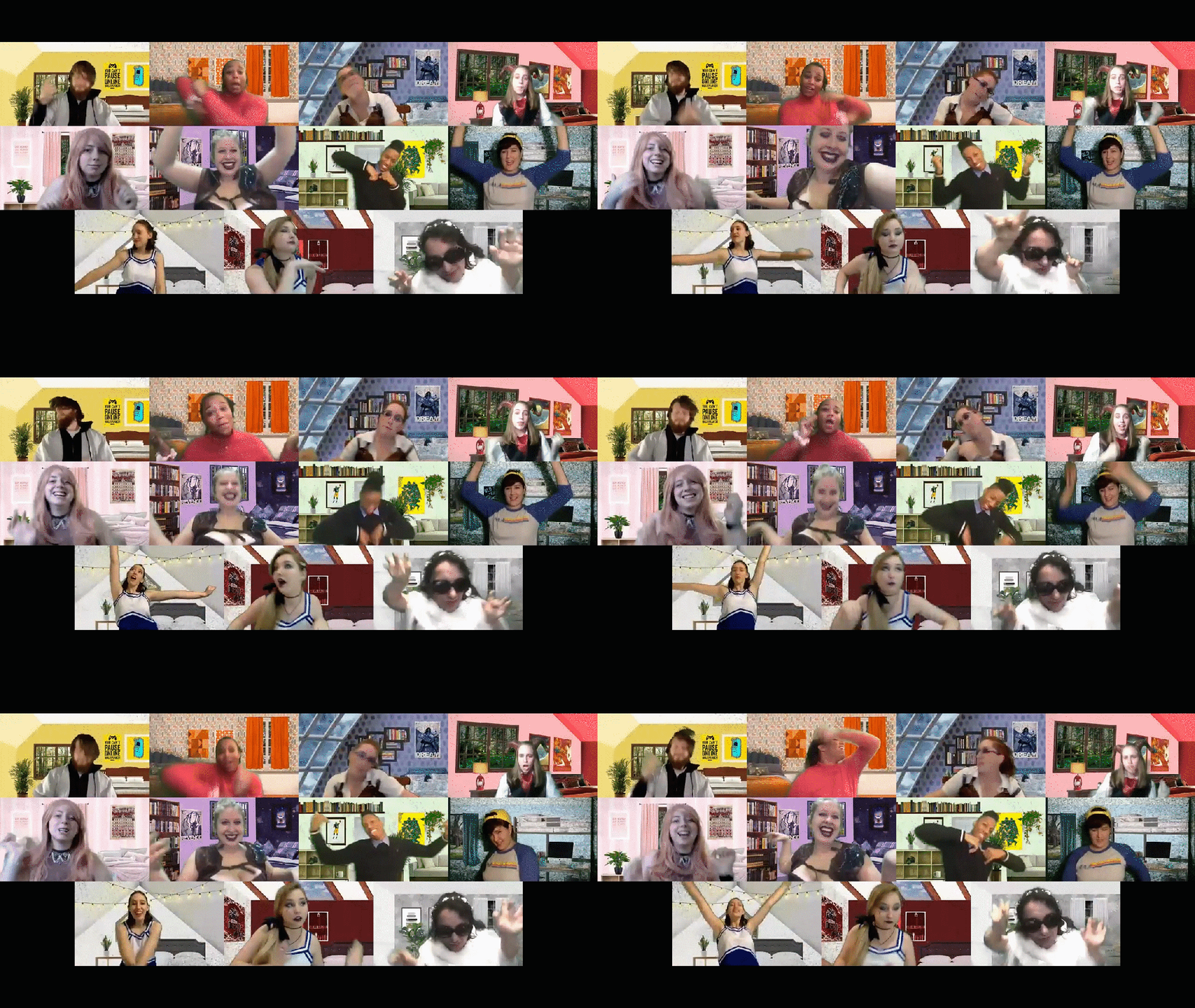
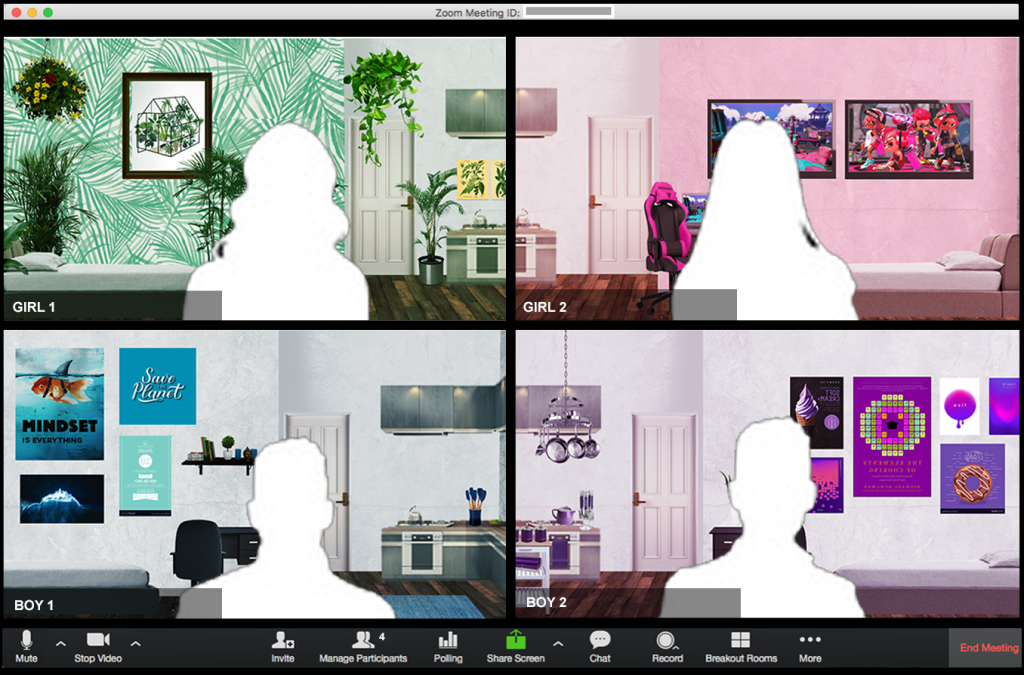




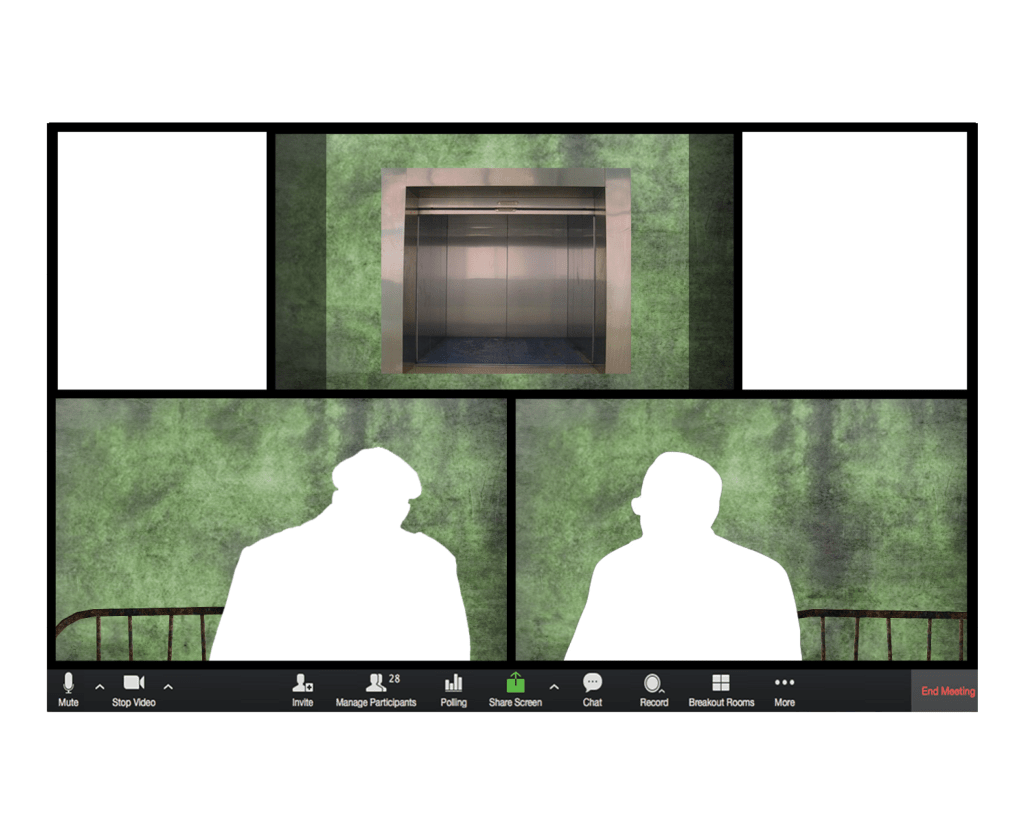
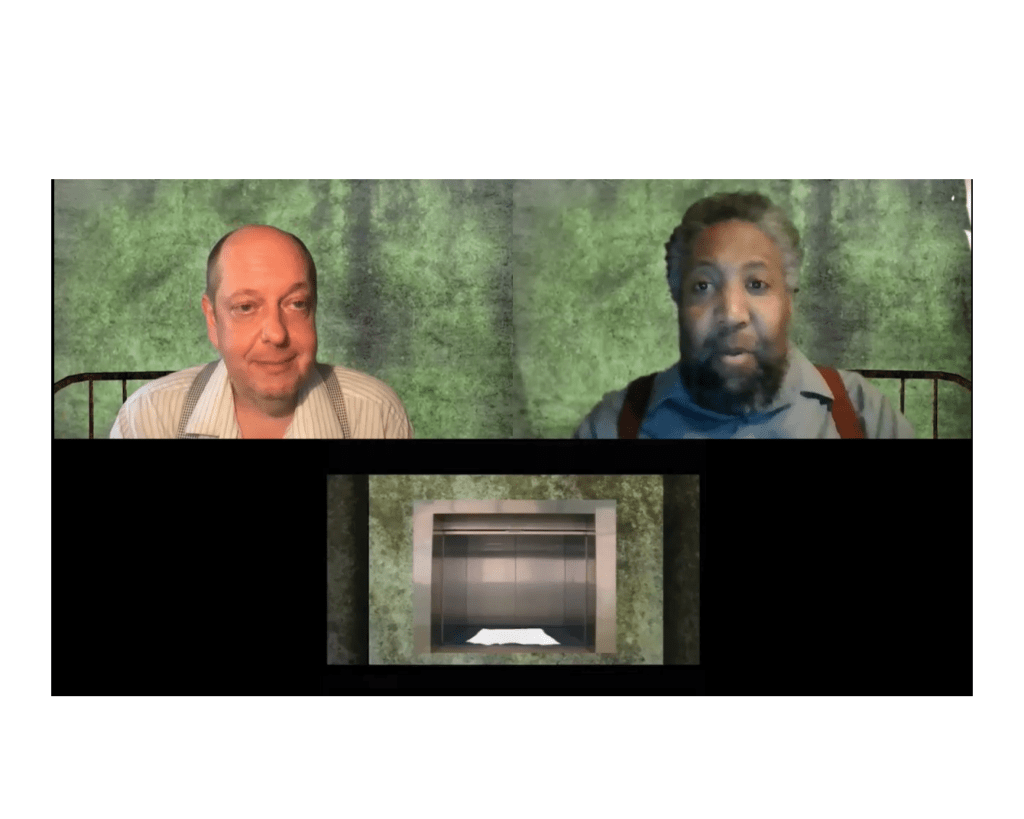
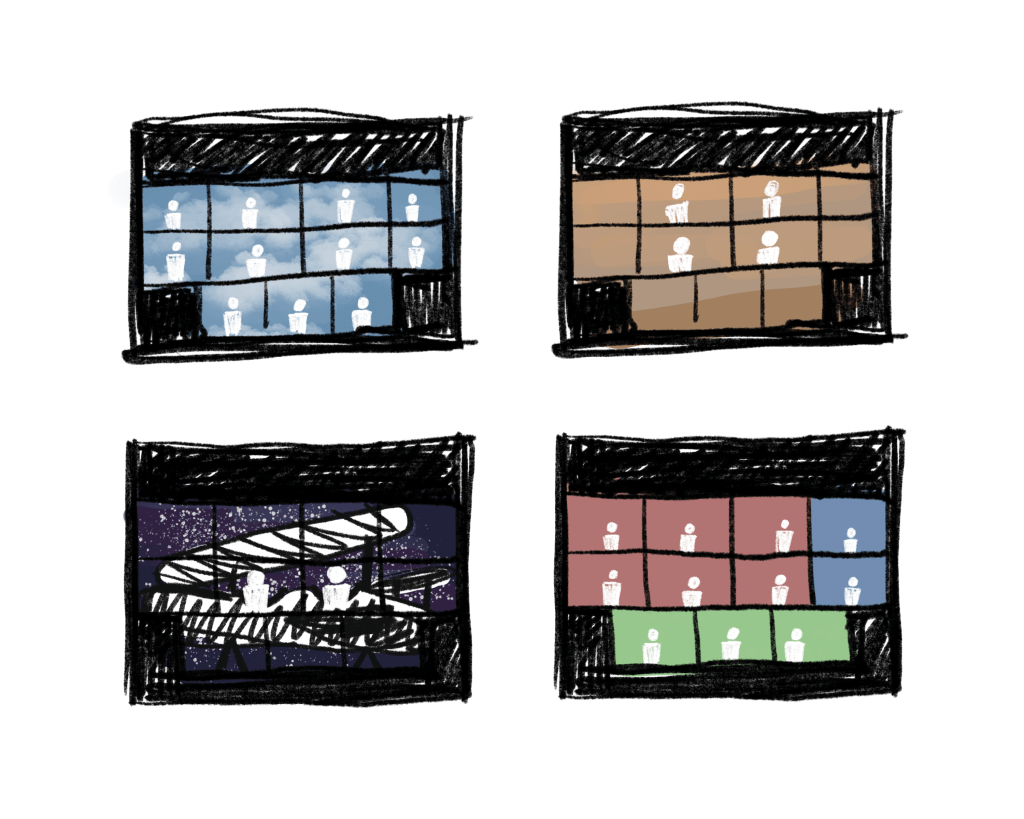


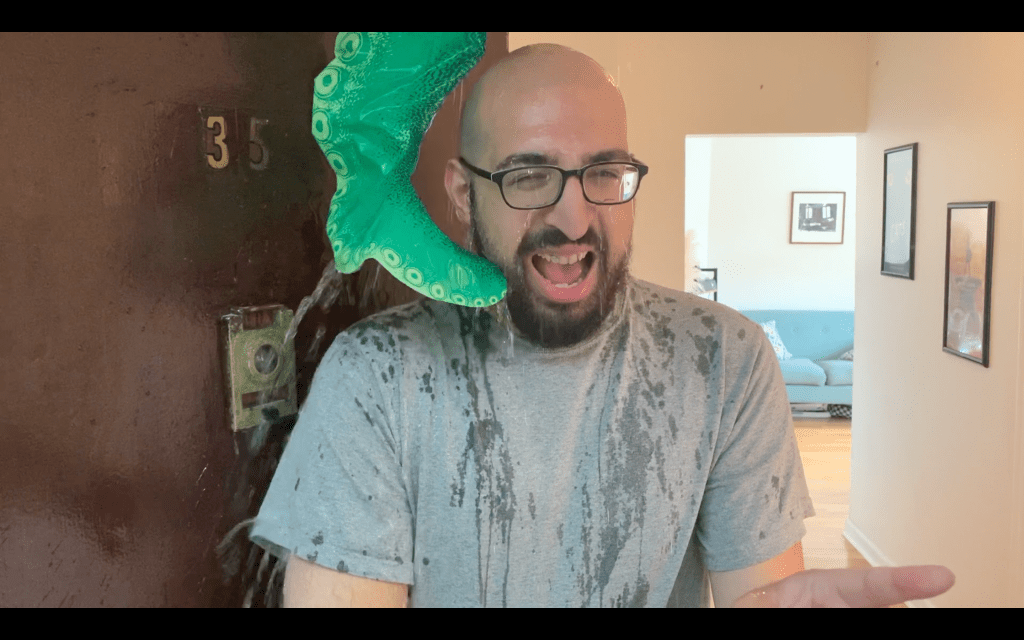

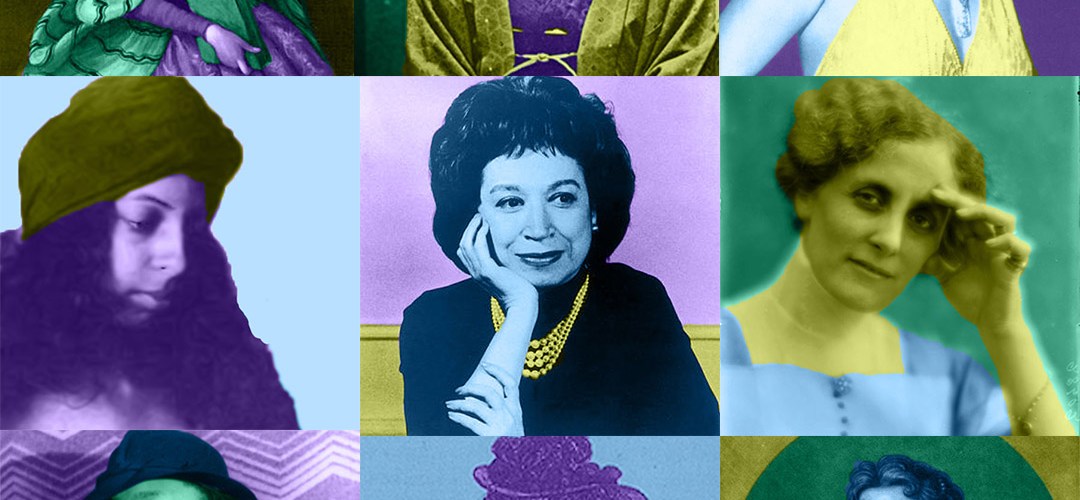


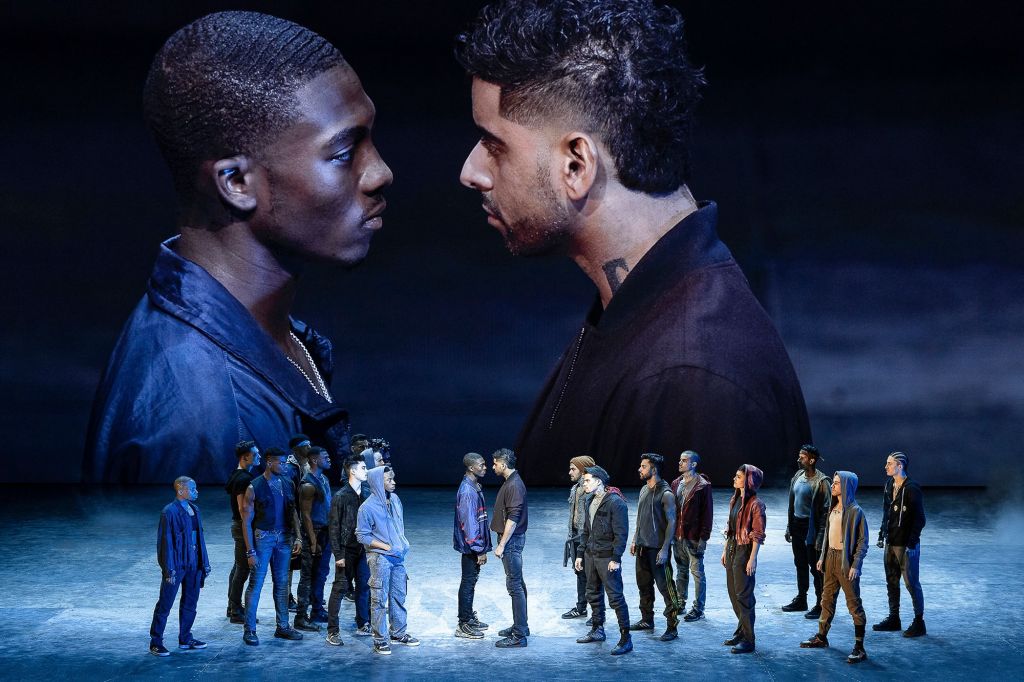

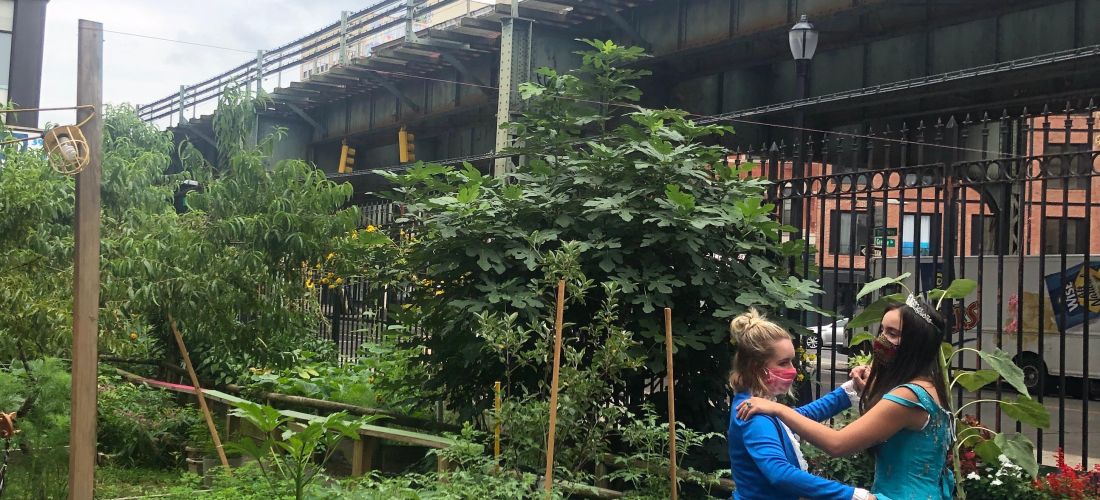

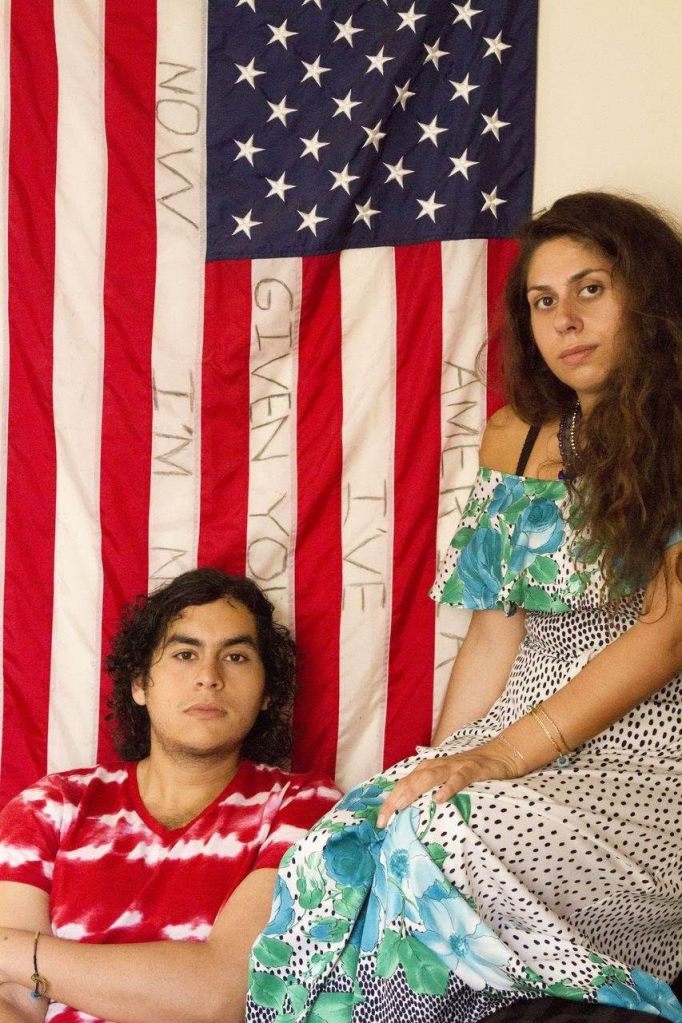

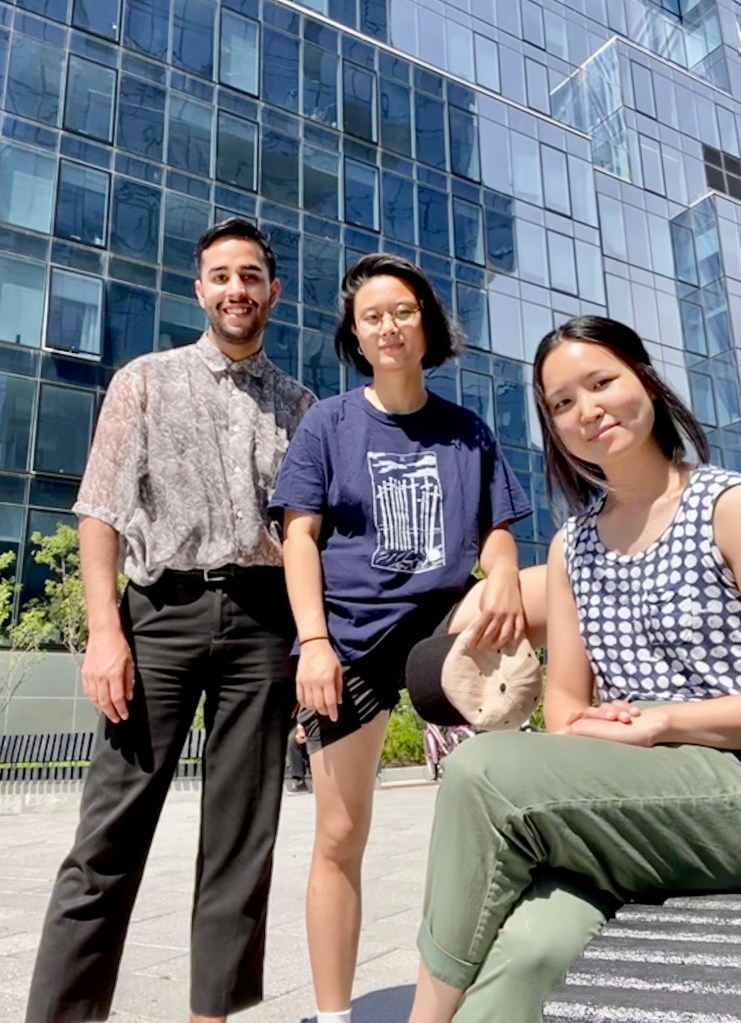



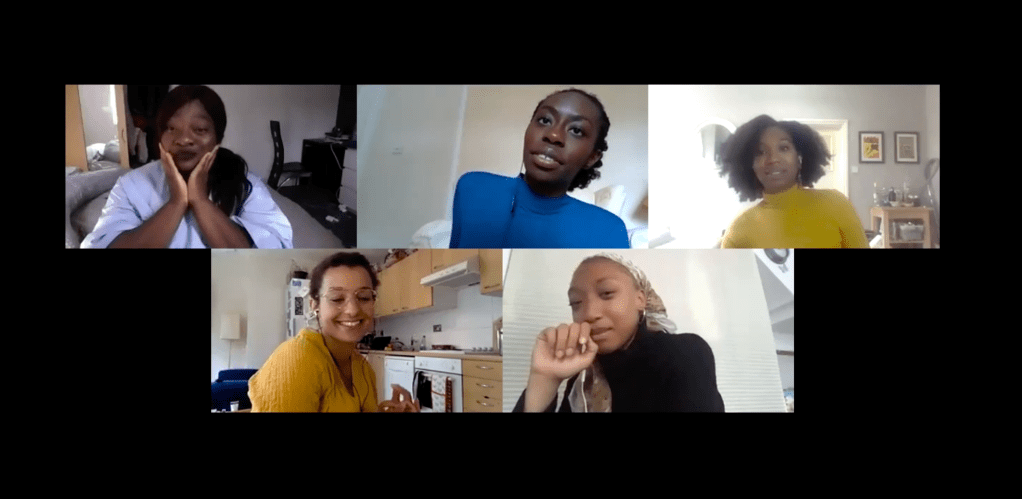


 Token Theatre Friends