Ep 4: “2666” and Going Beyond Latinx Stereotypes (Feat: Raúl Esparza)

Podcast

Every week, culture critics Diep Tran and Jose Solís bring a POC perspective to the performing arts with their Token Theatre Friends podcast. The show can be found on SpotifyiTunes and Stitcher. You can listen to episodes from the previous version of the podcast here but to get new episodes, you will need to resubscribe to our new podcast feed (look for the all-red logo).

The Friends recorded on June 23 where they discussed the news that Broadway will not be back until January 2021 (at least). They also went into a deep dive on 2666 by Seth Bockley and Robert Falls—a five-hour play adaptation of the Roberto Bolaño novel, that is currently available to stream for free at the Goodman Theatre’s website.

Then they hop on a Zoom call with Raúl Esparza, where Jose manages to hide his excitement and act like a professional. The four-time Tony nominee, and Law and Order: SVU cast member, has been doing a lot of virtual theatrical experiences, including hosting the Stephen Sondheim birthday special, Take Me to the World, and doing a monologue from his kitchen. Esparza talks about getting type-casted and how he hopes the theater of the future will be cheaper. This weekend, he will be doing a live reading of the comedy Tartuffe, produced by Molière in the Park.

Here are links to things that Friends talked about in this episode.

The episode transcript is below.

Diep: Hi, this is Diep Tran.

Jose:  And I’m Jose Solís.

Diep: And we’re your Token Theatre Friends. People who love theater so much that I actually had a dream about being in the theater last night and and it was just me and a bunch of actual plants. Oh no, it wasn’t a dream it was actual reality. Did you see that article about the classical music hall in Barcelona that just put actual plants in the audience while the musicians played. Oh my god, it’s so heartwarming. I will send it to you. Okay.

Jose: Did you see that thing? I think it was in Korea where they filled the stadium with little plush toys because there’s no audience. We’re probably gonna say the same thing, imagine like having like Beanie Babies instead of like angry old white people shushing us at theater.

Diep: Yeah. Oh my god or imagine when you go to the theater you also get a free houseplant.

Jose: Oh, that’s a big responsibility.

Diep: They’re very relaxing. I’ll send you a houseplant.

Jose: Okay, but it’d be like plastic cuz I was gonna die.

Diep: I didn’t have a green thumb either. And then quarantine happened. And then I realized, Oh, I get my coffee in the morning. And then I water my plants. And then I feed my cat. Maybe not necessarily in that order, cat usually comes first. And there are certain plants I’ve discovered where you can where you can not water them for like weeks and they’re still alive.

Jose: Are they plastic.

Diep: No, I wrote about it in the newsletter, which obviously you did not read Jose.

Jose: Oh, I read it. I just I’m forgetting my facts right now.

Diep: Okay, well, how are you feeling? What are you thinking about?

Jose: I’m sweaty, I’m exhausted. Oh, these fireworks are gonna kill us all, are this crazy in Astoria as they are in Brooklyn?

Diep: No. What are your theory about the fireworks because because I’ve been hearing some conspiracy theories.

Jose: It has to be someone in power cuz every time I hear them and just been like many instances where I feel like I’m going insane, like I feel like I’m being gaslit clearly because there’s some times when I’ll be like, you know, like just chilling at home and it’ll be like two in the morning and I hear this like explosions, all the fireworks and I go to my window and there’s nothing to be seen. And what I’ve seen, what I’ve heard and seen many times, when I hear the you know the sounds, but I don’t see anything. There’s like helicopters also. So I wonder if they have like one of those, machines they use when they invade other countries, and they just blast sounds to terrorize people and to keep them awake and keep them you know, angry, not even angry because I’m so tired. I can’t even be angry because I’m too tired.

Diep: Yeah, agitated. I mean, I feel like it’s no coincidence. And you know, we’re going into conspiracy theory land. We don’t have not have any proof of this. It’s more like anecdotal evidence of a shit ton of people having fireworks issues, people in New York are like, popping off fireworks all night into the early morning. And where are they getting these fireworks? They’re illegal in New York, and why are the cops not doing anything about this? Why aren’t they investigating this? And so it makes you think, Hmm, maybe it’s someone inside giving these these terrible people free fireworks so they can light them off so, that we’re all too tired to protest and to call and to, you know, do all the activism work that we’ve been doing.

Jose: Right? It’s also, they mostly happening in neighborhoods where a lot of the protests were happening, you know, why aren’t they happening like the super rich white neighborhoods.

Diep: Maybe if they happen in the rich white neighborhoods, things will actually stop because you know, when things affect white people, that’s when change happens, right?

Jose: And coming soon to podcast near you, Token Conspiracy Theorists.

Diep: You should hear my theories about ancient aliens.

Jose: Okay, I can’t wait.

Diep: You know we miss theater. But a firework show every night is not the kind of theater we want right now.

Jose: A friend was telling me just yesterday, and I’ve never read it so I don’t know what it’s called. But he says there’s a short story by Kurt Vonnegut that said in the future in a dystopia where the people who have thoughts outside of like the system have like some sort of chip in their brain and every time they start to think outside of the box, the chip triggers sounds of fireworks. So like, I don’t know, maybe get like Katy Perry to sue the cops or something like, baby you’re not a firework.

Diep: Speaking of theater, did you hear that news about from the Broadway League saying that theater might not return until January 2021?

Jose: I know. And that’s why we’re very, I don’t know if I’m grieving because like, I mean, we kind of knew that this was gonna happen, right?

Diep: Mm hmm. I think you and I are the same way about this. Like, we always prepare for the worst case scenario just so that we’re not surprised and, and heartbroken when it happens. But it’s just been so frustrating to me, like the lack of leadership from the Broadway League about this. Because I know financially, they’ve already sold tickets for you know, for the rest of 2020. And they don’t want to like cancel all 2020 right away because then you have to give all that money back and you know, money’s very tight, right? Except of course, if you’re a producer and you’re hanging out in the Hamptons. Yeah, that’s another thing. Yeah. Where are you, Jordan Roth? But, but anything would be better than what’s been going on right now, which is just nothing, which is just “okay, well, we may be come back in July. Oh, wait, we may be coming back in September, or we may be coming back in January 2021. We don’t know.” Like, isn’t the point of being an industry leader is to lead the industry towards a better future or vision for it and not just fly by the seat of your pants.

Jose: But I mean, just remember the way that Broadway just like pretended #MeToo never happened. So they’re kind of doing the same with COVID. And everything that’s happening right now, they’re pretending that you know, everything’s normal. And it’s just like a, I don’t know, a dark, very dark, you know, a very long dark night at the theater and I don’t know why because it’s clear that things are never going to be the same. So why are they doing this? Like, how do we get new leadership on Broadway? I mean, can we vote them out? Like we hope to with the Republicans in November?

Diep: It’s appointed by like a bunch of Broadway producers. I mean, granted the Broadway League, it’s not like they own a theater. It’s basically a conglomerate of our producers trying to come together to make a decision about something and I guess no one wants to make a decision about anything.

Jose: I mean, they can pay us and we can make the decision for them, right.

Diep: Yeah, right, right. Okay, So enough about that. Why are we talking about today?

Jose: We talked about the very sad thing, but now we’re going to talk about a very long show, which is a good thing, right? We watched the Goodman Theatre production of 2666. It’s an adaptation of the Roberto Bolaño novel, and the Goodman made it available for free, for people to stream and it’s split into very handy, like miniseries, vegetable sizes. And I think we both did it like over a few days, right?

Diep: Mm hmm. I did over two nights. Yeah.

Jose: And we’re gonna talk about that and how we both love marathon theater. And obviously this this made me think so much about that.

Diep: Mm hmm. And then after that we have an interview with Raúl Esparza. Jose is very excited to talk to Raúl in Spanish. And this Saturday Raúl Esparza are will be doing a reading of Tartuffe. Tartuffe is being produced by Moliere in the Park, and you can find the performance on their YouTube channel. They’re doing two performances on Saturday, June 27 at 2pm and 7pm. And the video of the performance will be online until July 1 At 2pm. So once again, actors acting in their own home, making themselves up.

But first, let’s talk about this five-hour play that we saw. Oh, and just for some background, the Goodman Theatre is one of the biggest theaters in Chicago. And they brought a number of productions to New York, including a four-hour production of The Iceman Cometh, starring Nathan Lane and Brian Dennehy, which was wonderful, like surprisingly wonderful. Yeah, so I was really excited to see 2666 because it’s adapted by Seth Barclay and director Robert Falls. And you know, it’s epic. It takes like this novel that’s very, it’s a very fragmented novel, like each section can basically stand on its own. And what the adaptation basically did is just make a full a five part show.

Jose: I was reading about all the, you know, other reviews from Chicago and people like saying how the breaks were structured and all that. And that made me really want to, you know, experience it in the theater, you know, with all the people. Because if we sat through 24 days of The Inheritance, I would certainly sit for five and a half hours.

Diep: I wasn’t the only one comparing this to The Inheritance! And if you follow us on Twitter, you know how we feel about The Inheritance. Did you like this Jose? I feel like you’re better equipped to speak on this production than I am because I haven’t read the book, which is 1000 pages, but you have so I want to hear your thoughts first.

Jose: Well, I mean, that I don’t think that makes me better equipped technically, because that book like Roberto Bolaño, like I love Roberto Bolaño so much, and it’s one of those authors that, so I can comfortably say that I love him, but I don’t get him. I mean, I don’t get him, he was so like, remarkably strange. And at times, like getting lost in his books feels like, okay, I don’t know where I’m going with this. But then like, it’s like been two hours and you’re still reading. And you’re like, I don’t know, I don’t know who any of these people are, what’s going on right now but the language is so rich, and the ideas are so wonderful that you keep going. And this production made me think about that, like, in a way when you get into one of our Roberto Bolaño books, it’s kind of like getting lost in a tree, where the things overall don’t necessarily connect to each other. But at the end, you know, the next morning when you remember everything you’re like, Oh, yeah, like you get some really profound, really wonderful insight. And there’s also like a richness of the way in which he, you know, craft something so epic out of this. It’s almost like a vestige of like Latin American history and like Chilean history, and he just like, I don’t know, it’s like this world building that makes me makes me very sad that he’s no longer here.

Diep: Yeah, it was his final novel. And well, I’m gonna try to sum this up the best that I can the plot because there’s really no plot

Jose: Break a leg.

Diep: You know, it’s very much in the modernist novel vein of a bunch of things happen. They may be connected by a theme, but you’re not in it for plot, you’re in it for language. The first part is about these European authors who are really obsessed with this German author named Archimboldi and they’re trying to find him because he’s a recluse. And they’re super fans. And they traveled to Mexico to try to find him because they heard that he was last seen in Mexico, and then they get to Mexico and then they get roped into this kind of mystery novel about how like 500 women are being murdered in the city in Mexico, which was based on a real life event. And the government and the police have done nothing about it. And these things kind of, they do come together. At one point, kind of The Inheritance, it’s kind of a meditation on, like the ability of literature to take us outside of ourselves and to help us escape and to help us find meaning in our chaotic lives. And on the other hand, it’s also a mystery slash a record of collective trauma. Is that, did I do okay?

Jose: Is this the first Bolaño adaptation you’ve seen?

Diep: Yeah.

Jose: Your summary made me think of a few years ago when there was a production of another adaptation of a Roberto Bolaño novel called Distant Star in New York, and I did it interviews with the people behind it. And I remember when I went to the rehearsal space where they were doing it, they had like, this table full of clippings, of like references and stuff that they use for the the show. And his novels and also like this show, that production Distant Star kind of feel like that where, you know, like, it’s like this, like wealth of things like spread all over that somehow they seem very overwhelming at first, but you’re always able to, like, you know, find something really, really valuable in it. Mm hmm. So, yes, it was a great, great, great summary.

Diep: Yes. Did you like it?

Jose: Yes, I mean, I was very impressed by how, again, this stuff was like, you know, it took me like, a decade to go through the whole thing because it’s so long. So I was like, I really admired the way that they, you know, made it make sense on the stage, especially like things like that that are super heady. Like after an hour or so you start getting exhausted so maybe it was the fact that it’s like perfectly split into several episodes that made it more manageable or digestible, I guess but yeah, I liked it. I mean, I was very I actually I was more impressed than—yeah, I have like more admiration and love for it. It’s like holy shit that people can do stuff like this right now.

Diep: Game recognizes game. Yeah. No, like I really—okay so I cannot say I enjoyed this experience. I can’t say like what I got from it the thematically resonated with me on, I can’t say it resonated with me on an emotional level. Which, I just have that feeling about most modernist literature because they’re just so written, the way they’re presented, it’s just so much at a remove and it’s so nihilistic about human behavior, and just so hopeless that it’s not an enjoyable experience to sit through. I do appreciate that I didn’t have to, like you know, spend 10 hours reading a novel. I only have to spend five hours with bathroom breaks. So I appreciate that. I appreciate how like every section was different stylistically. Because when the whole thing first started and they presented it like a panel discussion with a bunch of white people who are narrating the action, I was like, “Oh my God, if this is gonna be if it’s gonna be five hours of this, I’m gonna shoot myself. Like, I don’t know if I can do this. I don’t know. I don’t know if I’ll be able to get through to this experience.” But every single part had like a different set, had different styles. Like part three, which was my favorite part was was kind of like a movie—it was so much about silence and so much about the characters reacting and taking in this new city that’s very chaotic, and the music. So I appreciated the narrative diversity of the entire thing, it kept it really interesting to me and I appreciate all the actors were able to transform it to different characters and time periods very seamlessly. I just, I admire to thing, I did not like the thing.

Jose: I mean, that’s that’s not a bad thing. Right?

Diep: I don’t think it’s a bad thing. It’s more like what what what did I spend five hours doing? Like what was what was the point of that Jose? What is the point of this?

Jose: I dunno. I mean, at least you were you were entertained, right?

Diep: Yeah, there’s some parts where I was very much like, this needs to, we need to wrap this up. I don’t know where we’re going and now, oh, wait, there’s no point. I just sat through this boring ass scene for nothing. Why, why?

Jose: I’m just right now imagining you as Roberto Bolaño’s editor telling him, “stop writing after like the 400th page, like, stop, like, give us the ending right now.” I appreciate right now, you know, like something so heady and something so, because yeah, I do love that and I’m glad that you mentioned the styles because one of my favorite things about the different styles was that they’re not, I mean, they clearly like very specific and very different, but they’re not done in like a very showy way. It’s not production is congratulating itself, or like being like, you know, well done and well crafted and stuff. It’s very seamless. Um, and again, that reminds me also, like, Bolaño’s books, which are like, genre-defying. Someone might read this book, for instance, or Distant Star and call it a mystery like you did, or call it like, you know, like an intellectual brainy novel or, like a political piece, you know, and it’s like, I’m not that that something’s like so it’s a puzzlement. You know, so I don’t think the possibilities are so like, endless that I’m like, oh, okay, it’s exciting, you know, to have, it’s exciting when artists invite audience members to think a little bit, and not just like, give them like a bunch of like, you know, tiny suggested ideas for them to just like, learn a lesson, for instance. And that’s why I was like, so jealous of the people who got to see this in real life.

Diep: I’m wondering because what was really disturbing to me, the most disturbing moment for me was the fourth part, the part about where they, where they list all the crimes that happened to the women and, and, and it gets—it’s a lot rape happening, a lot of recounting of rape and strangulation and just generally, you know, trigger warnings everywhere if you’ve been a victim of, you know, of sexual violence, here’s a section for that, especially because there’s these terrible men in that section who make really, really, really disgusting jokes about women. And I hated the audience. Whoever recorded that audience. They were laughing, there’s some of them were laughing at the joke, and I hated all of that. And so maybe this was me, you know, taking on some of the nihilism of the novel where I was like, you all suck. The creators of this place just showed all of us how much you all suck, and it doesn’t make me feel good. I think that was part of it. It was just showcasing violence and showcasing like, how numb people are to it, especially men and how they’d rather laugh at it than do anything about it. But then it also started to troubled me that we don’t there’s no, I mean, in real life, there’s no resolution to this kind of violence. It still continues to happen, no one does anything about it. And there’s no resolution in the novel either instead, you just kind of take like the hard left in the next section, and you don’t really go back to that ever again. And I don’t know, I don’t know what to make of that.

Jose: Well, I guess that’s the whole point about it. Like, you know, it’s so frustrating because there’s nothing you can do about it. It’s just a little bit of existential dread for you take home. Well, I mean, you saw at home so to live with already. After five and a half hours. It’s, you know, it’s a it’s a place of complete discomfort. And I think about for instance, remember what we went to the theater in the past and someone laughs at like a gross joke right? I always wondered like, Who the hell was that person because I want to see who they were. So I can like know it was them, and that whole thing about the anonymity of you know, like sitting in the dark and being able to like let out like your most like basic impulses, almost like your basic instincts and like laugh at like gross jokes and like laugh at sexism and violence is, it’s disturbing. And do you think you would have felt differently about this show if you had seen it pre quarantine and pre right now?

Diep: Not really, only because, you know, we had the #MeToo movement in 2018, which is basically a compendium of women recounting their trauma hoping for change to happen. And my problem with these displays of violence on stage, or even on screen, is there’s a very fine line between between education and exploitation. And I feel like this experience, maybe the novel but I didn”t read the novel. But the theater experience, it veered a little bit closer to exploitation for me, just because you don’t say anything that a woman doesn’t already know about men’s capacity for violence. And so that nihilism is just like a fact of life that you know, women just live with. And it then becomes like, you’re not telling me anything I don’t already know. So that means you’re talking to the men in the audience. And I don’t really feel included in this conversation. So why, what am I doing here? Where are the women on the creative team? Where are the women?

Jose: I never thought about that. That’s so interesting. I mean, I guess that speaks to my male privilege. Like just last week. I was saying some things to a girlfriend of mine and she was like, I know everything you’re saying I know everything you’re saying because I’m a woman and we live with it every day. And yeah, you know, it makes me very sad because I think of myself as someone who is a little bit more in tune with women and, you know, non straight male people. Apparently lots of lots and lots of male privilege over here also, cuz I was like, my mind was like, even right now that you were saying that I’m like, which is sad.

Diep: I know, which is why we started the podcast so we can, this is an exchange of ideas. But then also, where are the women on this creative team? It’s two white man adapting a novel by a Chilean man and and there’s a casual rape on stage in the play, and we just never talked about it. Who okay-ed this? Why did you think it was okay to do that and just never acknowledge it, just have it be a throwaway moment like that is artistically irresponsible. It’s artistically irresponsible. And it’s morally irresponsible.

Jose: None of those things I thought about I’m like, I was mostly impressed that you know, a Chicago theater head adapted Latino writer and I was like, that’s where I focused my attention. And now I’m like, holy shit, like, I need to work on a lot of removing my maleness, wow. That’s a lot to process when it’s so hard, right now.

Diep: I know. Well, that’s I guess that’s why we talk about the male gaze. You know, and we talked about—this kids is a great conversation about biases and what you have more, and the things that you’re more sensitive to based on your, you know, lived experience, like I’m just more sensitive to these kinds of things because because I live in a different body than Jose does.

Jose: I’m just nodding because everything you’re saying is true. Yeah, it’s very revealing. Hmm. I feel like it’s therapy. Coming to a podcast near you. Token Therapy Friends.

Diep: At that point we really need to need to start charging people.

Jose: Yeah, see none of these things I thought about, that’s so fascinating cuz I was just so into like, admiring the craft and admiring the work of adaptation, I’m a huge, huge, huge like a lover of adaptations, not like Broadway, you know, musicals about movies and stuff like that. But like when you take like something that’s like, impenetrable, and heavy and so like, you know, like intellectual and stuff and like, you turn into something else that works in a different medium. I’m like, bravo. I never thought about any of these things, and I’m very well very ashamed of myself.

Diep: You don’t have to be ashamed. You didn’t see it. Yeah, you can’t apologize for things that you’re not able to see, you know? But, but I had a better time than I did The Inheritance.

Jose: I mean, there we can both agree.

Diep: Oh my god Matthew Lopez is just never gonna talk to us.

Jose: We have done nothing wrong. I mean, there’s plenty of plays that we don’t like, and we don’t know him. We don’t dislike him. We just don’t like his play.

Diep: What the other thing this made me think about was the you know, how it’s going to be so long until we can actually sit and do like these kind of five hour experiences. When the theaters reopen, I can’t imagine that producers will want to produce anything more than 90 minutes because COVID spreads in contained spaces so you should not be in contained spaces with a bunch of other people for very long. And so I wonder if, like, this video 2666 is just gonna be like, in five years time it’ll be like, “ooh, remember the before time when you could do these long ass plays and it was just safe to sit in an enclosed space with this many people, hundreds of people for so long. Remember that time?”

Jose: But I wondered actually because this made me think of The Irishman which I’ve never seen. I never saw it because I never got to see it at the movie theater. And then I was like, I’m never gonna watch it at home. But this made me think of The Irishman, remember when it came out at the end of last year? There was this like controversy because like some people were advocating when it came out on Netflix, some people were advocating to split it like a miniseries and someone even came up with the right places to split it. So it worked as a miniseries. And all this, like, you know, snobby cinephiles were like, this is murdering Martin Scorsese while he’s alive, how dare you do this to him? And with this, I think that the segments work really well, you know, split the way they are. And I wondered if theater comes back that way, if it’s gonna start trying to emulate television more, because right now television is what’s pulling everyone’s lives. And maybe it’s gonna be like trying to get people to feel like they’re watching TV when they go to the theater and splitting longer plays—I honestly don’t want to sit for another four hours of Long Day’s Journey Into Night ever again. If it was like, you know, split into four nights, and maybe different actors were playing the characters or there were different directors doing each part, you know, something exciting, you know, something that leaves you wanting to come back and not be afraid of dying.

Diep: Yeah, no, I always feel so proud of myself though, after I get out of a marathon theater experience. Because it’s a love hate relationship. It’s like going to the dentist, you know, like I dread. I dread the experience going in because I know like, that’s, that’s gonna be a huge chunk of my life just like taken up and I have relinquished that time. And I won’t be able to get it back. But at the same time, when I finish it, I always feel like very accomplished, like, ooh, I did something, I went on a journey today. I committed to something today. And I’m going to miss that feeling of satisfaction and exhaustion that comes after a six-hour play experience because it’s epic. People don’t do that anymore because our attention spans are so low that we can’t watch anything longer than 90 minutes. Not even film you know, a 2 hour film is so rare these days that you have to like, put up articles about this is where you can go pee.

Jose: I mean, maybe you can take some novocaine when you go to see the 90 minutes show, and you’re gonna feel like you’re at the dentist.

Diep: Oh, god. And I do want to say that the free online access to 2666 is made possible by the Roy Cochran Foundation. And so I’m assuming that they helped pay for all the artists so that we can all watch it and I hope this is a model in the future if we can’t all be back as soon as we want to where foundations, maybe the NEA can fund a bunch of grants so that people can film and then stream their shows.

Jose: Do you know when until when is this available? I didn’t see that on the site.

Diep: Oh, yeah, I emailed the Goodman. They said indefinitely.

Jose: That’s very generous. Thank you Goodman for you know, allowing us to see this theater should be accessible for everyone.

Diep: Mm hmm. Anything else, any closing thoughts about this experience?

Jose: No, I just have new things to think about but I would recommend it for people to check out, you know, it’s probably a little bit more idea rich than a lot of stuff on TV, and a lot of other stuff that you might be doing. So it’s, if you like heady stuff, like you know, like Novecento by Bertolucci and Martin’s novels, this is for you.

Diep: Yeah, and it’s filmed very well, there’s a lot of close ups. It’s like a multi camera setup you can get really great details of the set that you won’t be able to get otherwise. And so yeah, I did not like it. But that doesn’t mean you shouldn’t see it. It is worth is worth spending your time with it. And if you really like it, then give the Goodman some money.

Jose: Yes. Thank you Goodman.

Diep: Thank you Goodman. You want to intro our guest?

Jose: Yes. I’m gonna hug him also. So next we are going to talk to the just really wonderful, marvelous Raúl Esparza. I don’t even know what to say about him. I love him so much. He is a genius. He knows how to sing, dance, he knows how to act like a freakin God. And you know one of my favorite moments in quarantine so far was seeing him in the Sondheim tribute. He is, you know, he doesn’t need like a bunch of sets, he doesn’t need like a bunch of lights or anything to just like do like something incredibly compelling and, I’ll just stop gushing over him and let’s go talk to Raul.

Raúl: Hey there. How’s it going?

Diep: Have you voted today?

Raúl: Yes, I did. I did absentee ballot actually. Is that background too busy? I mean, it’s my apartment. I’m not gonna do a virtual one, I think. It is what it is.

Diep: It’s been months and we’re done being whimsical.

Raúl: Who cares?

Diep: We’ve all seen the inside of celebrity apartments at this point. So it really doesn’t matter.

Raúl: Sometimes I stand in the hallway and I’m like, I haven’t used this corner of my house yet.

Diep: Jose and I both watching your 24 Hour Monologue. And so we’re like ooh, Raúl’s kitchen is a very tight.

Raúl: It is crap. The kitchen, this apartment isn’t bad. But the kitchen is crap. crap crap crap. And I had to try it in the kitchen. I didn’t have to make the frijoles, but I went ahead and made my aunt’s frijoles. I wrote to Matthew [Barbot] and I was like, you gave me a great excuse to make the frijoles.

Diep: How was it? Does it taste like hers?

Raúl: It’s phenomenal? Yeah, it does taste like hers but I’ve been making those every every night.

Jose: Do you usually keep all that Goya in the house or was that just for the play?

Raúl: Ha, I had a bag. I had a bag of frijoles. Because also when we were working on Seared they gave me a bag of them. Have we started yet? You guys want to just film shit?

Diep: Yeah, let’s do it, doesn’t matter. Yeah.

Raúl: So when I was working on Seared, they gave me a whole bag of frijoles to learn, Seared was this play I did by Theresa Rebeck. I did last year at MCC and I played a chef and in order to learn to do all the like flipping of hot onions and things you practice with frijoles. So I have this like huge bag of them. Hmm. Anyway, so I just use that.

Jose: What were the scallops in Seared made out of because I was like—

Raúl: Plastic. They were made of plastic. That’s sad isn’t it? Nobody eats the scallops.

Diep: The sizzling sounded like it was real.

Raúl: The sizzling was real. There’s a lot of stuff that I cooked in Seared, a lot. But the scallops is the one thing we did not cook. You did heat the oil. And that that thing was incredible because Tim made it look like a real kitchen. And he made it look like the burners were gas from the audience. And I have friends who were set designers who would come up and go, I can’t believe you guys fooled me. But all of that was fake. The lighting was fake. They were basically like, you know, little electric like hot plates that your grandmother would take to the beach. You know to make cafe con leche. So that’s that like these little tiny hot plates. And that’s what we used. There were four of them, or six of them, sorry. And they would turn them on, stage management and control all of it, and everything was faked, but they would get hot enough when they started the play, or at any time that they would do the timing for it that it could sizzle. You could cook things, you could make a full meal. The salmon that I made in the play, everything was fresh and real. Plus, we had a separate kitchen, going backstage, doing all the prep. So we were actually running a restaurant, it’s nuts. And the food was good. Actually, the food was really really good. We were at the chef named Ben Lickett who created these recipes. They were sensational, but nobody ate it.

Diep: They’re theater people. Why is no one eating the food?

Raúl: I know it’s a good question. They composted everything. Nobody on stage actually ate it. It all would just get tossed into the prop bins.

Jose: Oh my god, mi mama Latina would not—

Raúl: I know, no way.

Diep: I was, at the time that I saw you in Seared, I was dating a chef and he would always talk about how anyone can cook. It’s not about ability, it’s just about practice and about learning technique. And so how would you compare your cooking at the beginning of it versus, you know—

Raúl: I would say that it got substantially better, substantially, substantially better., I’ve always liked to cook and I learned to cook actually, because after I went to NYU, for undergrad, and then I, when I graduated from Tisch, I got a job in Chicago not long afterwards. And I was living in Chicago and kind of on my own there. I couldn’t find any Cuban restaurants. And I really learned to cook for myself because I would call home and be like, “abuela, cómo lo haces whatever, the frijoles or the masitas puerco or whatever stuff that I grew up?” I just wanted to learn to cook the food that abuela would make. And at first I sucked at it, but then I got better and I really liked it. And I love to follow recipes. So I find it very calming to be like, take these 10 things and you end up with this, nothing in life worse like that. So I like that. It’s predictable. Seared changed things for me big time. One, I learned to cook a lot faster. And I learned to cook without recipes. I learned to cook like, open the refrigerator and go, what do I got in here? Okay, we’re okay for dinner. Because usually it would take me two hours to be like, what am I gonna make? I gotta get this dish. Seared took the stink off that idea. So I still make the Cuban stuff. But I’ve learned to just take it easy and not stress out so much. And you’re right. Practice, practice, practice, practice, I’m a faster chopper, I’m a faster everything. But it applies to a lot of stuff. You know, we, the more you do it, the the better you get at it. And the more and the more you do it, the not the easier it becomes but the less sort of second nature, things start to get. And that’s nice. You know, it was a great way to act. I’ll tell you that because doing a play where you have to accomplish something like that on stage is the definition of like, a secondary activity where they talk about in theater school where you take an acting class: always have something to do, always have something to accomplish on stage. This was, I have to make a meal for two hours. You stop acting. You just stop acting.

Jose: That scene at the top of the second act, it’s almost like a like a scene from a musical, it’s like a you’re like dancing.

Raúl: Yes, that’s right Jose. At a certain point, people said that I was dancing to the music, which I didn’t even notice that, the music they were using Palmer the sound designer had created a piece based on how I was moving using Tumbao No. 5 by Cachaito, which is a beautiful bass piece. So without my realizing it, halfway through, I’m like doing this. And I don’t think Harry is in any way Cuban so I don’t know where the, between Kristina and myself, we’re like, alright, we like the music. It’s the Latin production.

Diep: Goodness. Well, we’re here talking to you about doing Tartuffe, the Moliere in the Park production. And you’ve been doing a lot of these virtual acting experiences.

Raúl: That’s a great description for them! They are experiences. Look, you know, it’s been a couple of interesting months for all of us. And this is not the way to make theater necessarily, but it is a way to make theater. So it’s not the only way but it is a way to make theater. And, honestly, the first month, the first month of the pandemic was intensely hard for a lot of personal reasons. We had a very big loss in our family of relatives on Sunday, Santiago Miranda who, who died in in Madrid and he died by himself. Speaking of Nochebuena, we used to spend Nochebuena at his house when I was a little kid, you know, so he was like an uncle to me and a dear, dear, dear man. And then I had a teacher that died in Miami and then relatives who were getting sick. And so the beginning of this felt like, what’s the point in getting up in the morning, and I know I’m not the only one who felt that way. And I personally did not get sick, but so many friends were suddenly getting sick or colleagues who had died. So in the midst of all that, I had the idea to create the Take Me to the World concert for Steve’s birthday. And that ended up being a crazy project to put together but a really wonderful thing. And for a week or two, it felt like we were in a room together. And then friends kind of like would reach out and say, “Hey, you want to sing a little song here?” And then you say, okay, because it began to fill the days in a way that was really nice and I can say about Tartuffe right now, unexpectedly, it feels like we’re in a rehearsal hall. Of course we’re not. But we get on these Zoom calls, essentially, that we’re rehearsing and we come up with ideas, and everybody’s talking and you’re reading the play. And you know, you’re not moving around and you’re still in your apartment. But you are creating something with Lucie, with Samira, with Toccarra, with Jennifer Mudge, whatever scenes we’re doing, we’re actually working together for a moment. And that’s extraordinary. It’s a great feeling. So all of this is a long way of saying that all these experiences have helped to fill my days. And they have helped to make me feel like I own a little bit of my creativity, and can share it a little bit more. Because as actors, we’re always spending our time asking for permission to do the thing that we know how to do. And I’m not saying this is the way to do it. But I think our future and our future opportunities potentially may change, given that we have all had to come to terms with the fact that right now, if we don’t create something for ourselves, there’s nowhere to go. So, yeah, I didn’t realize how many doors I had opened to this. It’s not easy, but at least it’s filled the time and has alleviated some of the sadness.

Jose: Other things that you are have been doing, you know, because you’ve had to be, you’re an art director, you’re a makeup person. You’re your own director at times, are there things that you’ve learned from the art that you’ve made in quarantine that you think you’re going to carry. If we ever leave our apartments.

Raúl: I feel that for the longest time, I felt that putting myself on tape for anything was a challenge and just the hardest thing in the world. It would take me four days to get myself on tape for an audition and that that’s just gone. Like any sense of this has to be perfect in any sense of, I don’t know what I’m doing or it’s not as good as what I want it to be. It’s not a real audition. That’s gone. Like, I actually called my agents and my manager and apologized. “I’m sorry ever put you through this shit. Like, I’m really sorry.” So stupid. Who cares? You know? So there’s that. On the other side of it is. Yeah, I’ve learned how to light myself a little better. I’ve learned that I can do it. I’ve learned that I can pick up a camera and, and come up with ideas. There’s a project that I worked on two summers ago, a musical adaptation of Virginia Woolf novel, The Waves, which we did a production of at Vassar, at New York Stage and Film. And that production was gorgeous to work on. And so here’s this musical. And it occurred to me it’s a musical about about six friends who grew up together in England, and who end up very very alone in their lives and wish they could all come together again and I thought we should do something with this play in quarantine. Now what comes with it? I don’t know. But the fact that I feel like hey, we could maybe make something out of this, we can maybe create something, turn on our iPhones and see what happens. That’s entirely new for me. So think of something that I did in life that was kind of workshop or a creative theatrical event that’s like, who knows what’s going to happen with it? And to think I can do something with it without having to have a producer in place. So that is another thing I can take from this experience. And I hope more actors actually have that sense of like, why not? Why not? Take charge of my own ability to create this.

Diep: What was the appeal of doing Tartuffe for you right now? Is it because the comedic aspect of escapism or is it like the righteousness of taking down someone who was terrible?

Raúl: Yeah, there’s a little bit of that, I’ve always loved the play. I really liked Lucie very, very much and we have talked about working on a project together. So she asked me to do this and I thought it would be kind of a fun thing. My very first professional job as an actor in Miami was at the Coconut Grove Playhouse in a Cuban adaptation of Tartuffe called Mixed Blessings written by Luis Santeiro, who was a writer for Sesame Street for many years, and who wrote a series that was seminal in my life called ¿Qué Pasa, USA? which was a completely bilingual sitcom about a Cuban family. And so I’m very fond of this particular play because it was my first professional experience. And I was also excited by the theme of what the play is about, because we’re living through a time right now where everybody feels, at least in terms of positions of power, it feels like we’re being led by a lot of con artists. And I felt that had something to say, something to say about how people take it back and say, “Uh uh this is bullshit.” And also then the last thing is, I wanted to see how this could work. I’m curious about, it’s a little bit of an experiment of a way to do some theater in the interim. And I think that what Moliere in the Park is trying to do here is really, really creative. Who knows what it’s going to be. But I think it’s just a really creative and interesting way to try to make something out of the limitations that we’re living through right now. And they’re bursting with ideas. So I wanted to see how that works. Because this is all very new sort of technology and new world.

Jose: I think one of my favorite things that’s happening right now is that there’s people for instance who know you from Law and Order, but they’re like, wait, he can sing? And have never seen you on stage. And you know, what’s happening right now is giving access to Latinos, to people of color, to people that are often kept from theater—we can be like very classist. And I wonder if you’ve encountered that, people are suddenly discovering this, you know, like probably the most, one of the most famous Latinos on Broadway. And they’re like, oh, wow, like why didn’t he sing on Law and Order?

Raúl: I’ve always thought we should have done a musical episode of “Law and Order.” Benson hits her head and then we all end up in the courtroom singing and dancing. Mariska would totally go for it. I know she would. She was so obsessed with “Hamilton.” I think she saw 22 times. How could she get tickets is what I want to know.

Diep: How many times did you see it?

Raúl: Three. But I saw it at the Public, you know. I still remember with Hamilton that because Renee Elise had worked on SVU and I’ve known Brian D’Arcy James for so many years and and Leslie is a dear friend and people would come in or I would see friends and they would say, “Oh my God, this musical, this Hamilton musical, oh my god, the workshops are so great.” And I would say, yeah, I’m sure it’s good. Whatever. Yeah, I’m sure it’s nice. “No, no, you don’t understand.” I’m like, yeah, you guys, whatever. You guys are being nice, Lin’s talented. It’s nice. We went to go see it at the Public. The very first second Leslie walked on stage, I burst into tears. And then I cried to the entire first act. The people next to me were like, are you okay? I’m like, sobbing. So, in terms of like, you know, theater has always been my, my, my love because I love the relationship to the audience. And I never thought that I would necessarily be an actor who made a lot of film or TV because I never really felt like I cracked it. Law and Order came out of the fact that Warren Leight and I had worked on Leap of Faith, and it was supposed to be a couple of guest star episodes. And then it turned into a really wonderful thing. Because he wrote beautifully. I really hit it off with Mariska. And they are just a tremendous group of people over there. They’re just a beautiful crew. And the surprising thing about television fame, it doesn’t happen immediately. But as the show goes on and on, you’re suddenly recognized all over the world. And that opened doors to people who didn’t know my work before. And that comment about, “Oh, I didn’t know you could sing.” It was constant, you know, it’s constant.

But if the work on television brings people to my work on stage or any of the other things that I’ve done, then I think that that is extraordinarily good in terms of what’s going on now, for instance, in the world of being a Latin actor, you know, I can’t tell you guys the number of times I’ve been told to, “Change your name. You don’t look like what we expect you to look like. You’re not Cuban enough. You’re not.” And what they mean by that is you’re not, you don’t look right to play drug runner number three. Because auditions for that, going for movies in Miami would be like, No, no, you don’t look Cuban. What do people mean? Coming out of Hollywood to tell me what Latin means. So it was a very big deal to me to hang on to who I am. And where I come from and to own that over and over and over again. And the very first time I saw my name on the marquee on Broadway, not the very first time but when I saw it for “Company,” actually, because it was so huge, and it says Raúl Esparza, over the marquee. All I could think about was like, that’s my dad’s name. And that’s my grandfather’s name. And that’s my great grandfather’s name. Because we’re Cuban, and we all call each other Raúl. Like, we’re very creative, but we’re all but that’s, there’s a whole history there of, of have men who lived in Cuba who came to this country. And then the fact that I get to be up there. And carry their name forward was just a really big deal to me. And I hope that whatever little bit I did helped open doors to more Latin actors getting the opportunity to play whatever parts they want to, instead of being told you’re not enough of what we think the stereotype is. So it seems to me it’s very important. And it’s also really great to talk about it now and to own it and to not apologize for it. I mean, not to ever apologize for it, but to just really be loud about it, which is wonderful. Because I do feel a little bit like we’re still pretty underrepresented in the theater world and on television and film, but I hope that it’s getting, we’re gonna, we’re gonna be able to take that into our hands.

Diep: Right, right. I mean, when I first read the anecdote about you seeing your name on the marquee for the first time and realizing like, I didn’t have to change my name, it made me think of like Lindsey Mendez’s Tony Award speech in 2018, when she got the same advice to change her name. And so, do you think the industry has gotten better in terms of, like you said, people being more open with it because I feel like right now there’s like a floodgate of people being really honest about the darker more racist aspects.

Raúl: No, I don’t think the industry has gotten better about opening doors. I really don’t. I feel that we are taught to expect a certain look from people and definitions of race and ethnicity are created a lot of times in this industry, particularly by what comes out of Hollywood. Like people who are very ignorant about what they’re doing. And I feel that it’s imperative to keep making a lot of noise about it. I told you about that Mixed Blessings playwright. The woman who played my grandmother who was huge Cuban star, Velia Martinez, who was on ¿Qué Pasa, USA?, was given an outfit, a costume for Spanish dancer or something as a joke at the end of Act One, they put her in a flamenco outfit. And they also put a big basket of fruit on her head like she was Carmen Miranda. And they gave her a serape, like a wrap. And she was like, “The hell is this?” And she was insulted about it, actually, you know? And this was many, many years ago, but that kind of thing comes at you all the time.

I remember when I did Evita for the 20th anniversary tour, which was wonderful to get to do and to play Che which is a complicated role for a Cuban actor to play, especially son of exiles. They would say to me, o”h, well, you know, this is a very authentic production of Evita.” And I’d be like, “why?” And they said, “Well, you know, because you’re Cuban. And everybody’s Latin.” And I was like, “Okay, so I’m Cuban. You’re Eva’s Puerto Rican, and your Peron I think has Mexican heritage. How does that make any of us more Argentine? How does that make us more authentic?” So actually, just because we speak the same language, we do not share the same values. And we are very different people. It’s the same thing I always felt growing up in Miami, where there’d be like, “Put your name, you know, you’re white, you’re Black, you’re Latin.” And I’d be like, “well, I’m white. But I am also Latin. What am I?” So it’d be like, “put other.” Other isn’t an answer for anything. So I really feel like, yes, the floodgates are opening. And that’s fantastic. But I think we have to get louder instead of getting quieter. I think we have to make a hell of a lot more noise. And I think that people need to continuously educate themselves about the assumptions we make, or the stereotypes that we have about what, who people are. I mean, the number of times I’ve been asked like, “hey, do you speak Cuban?” Really? Well, that’s not a language. But I do speak Spanish. Or they say, “You don’t sound Cuban.” And what do you mean? What does that mean?

Diep: Yeah you don’t sound like Ricky Ricardo, right?

Raúl: Yes. [in a strong accent] “Hey, I’m Cuban now, that’s what I sound like if I’m Cuban.” Look, some of that’s funny and some of that is extraordinary. Speaking of Ricky Ricardo, did anybody transform television more than Desi Arnaz and Lucille Ball. If you think about that man being the genius that he was, understanding that his wife needed that platform, understanding how to build a studio audience and a three-camera shoot, and do all the things that we took for granted forever for sitcoms, Ricky, Ricky, Desi Arnaz, created that, you know, and then headed a studio. So all that joking led to a great deal of power. But it’s a struggle that has to constantly keep getting renewed. And I think it’s important to know that we need to own that for ourselves and decide, you know whether the joke’s on us or we’re the ones telling i.

Jose: Did you ever play the part where you were actually surprised that you got it, because you thought that the cards are stacked against you?

Raúl: That’s a good question. I was surprised I got cast in play George Surat in “Sunday in the Park with George,” remember that? But that was because I was so new here. I was so entirely new. And nobody, nobody, I had only done, I had done, “tick, tick….boom!” I had done “Rocky Horror.” And that was like a huge, starring role and that opened so many doors but that was very surprising to me. I have to say that, no, I have never, I have never felt, other than things like that where I’m not famous enough or I’m not sort of well-known enough for you know, I’m not really seriously in the running. I have never felt like the cards are stacked against me in any way because I’m Lat necessarily. Except when it comes to Latin parts and then I just simply don’t get cast. They just will not. Barba was a Cuban character because Warren made him a Cuban character and we decided to go for that. And that was a part of his story. But I think that’s about it for major things I’ve done professionally, where someone will see me as a Latin, as a Latin. So the cards are stacked against me in the opposite way for Latin parts. Again, I don’t look like what the the expected stereotypes and I’m not really even sure what they mean by that, to tell you the truth. I’m not sure they know what they’re looking for. I remember coming in for Capeman to audition, when I was still living in Chicago, and that amazing music, Paul Simon—coming in for audition with Paul Simon and singing for him. And he said, “That was really good. But you’re Cuban, so you can’t possibly play Puerto Rican.” And being like, “Okay.”

Diep: Do you think it’s also like, part of the—and Jose, tell me if I’m like using the right language for this—what’s stereotypically Latin versus like, what the population, what the people actually look like, which spans a whole range? The identity is very, it’s varied. And American culture not being able to recognize the fact that there’s of a diversity within Latinx culture.

Raúl: Yes, I think Latinx culture feels too varied and too multiple to be contained. And people in Hollywood, especially I feel a little bit less so with the theater because the theater is a physical place where talent can really blossom. And the talented people can come in the room and kind of blow you away and they’ll get hired, hopefully. With Hollywood at least I think that there are constant efforts to put people in boxes because it is easier, because you are casting personalities, types, and not necessarily I mean, sometimes glorious, glorious actors. Of course, filmmaking is brutally hard when it’s well done. But they’re also casting inside a container of an idea of so that no acting is necessary, so that you can simply look at the role. And that’s the definition. And I think that also, in American culture, there is such a constant interest in things being Black and white, yay or nay, A or B, and there’s no room for complexity. And that means there’s no room for complexity in human experience either. There’s no room for the difficult explanations. I think of Hillary Clinton who kept saying, “I can’t give you an answer that is a soundbite about these issues. That man can, but I can’t.” And then they attack her for that. Or anybody—Obama was too intelligence, he spoke to well, you know.

They don’t want to hear the clear, more complicated version of things, they want to hear the easy answer. And I think it does also apply to this, to what we’re talking about here, that that multitude, multitudes with many different colors and shapes and sizes and varieties of experience within something that they want to call Latin is uncomfortable. It’s very uncomfortable and not at all the way that is easy for decisions to be made, particularly in entertainment and also in politics. My experience as a Cuban American growing up in Miami is very different from someone who is Nuyorican. You know, we share many things. But there are others, there are other aspects. Or someone who grew up with a Mexican family say in Chicago, or in California—everybody, we bring, we carry our cultural heritage with us and we carry our families with us, our ancestors, and all of the history that shapes us. But the cities themselves take in a very different energy. In Miami to be Cuban was to be king of the world. At least I thought, until I left and I realized, oh, wait a minute, that was just my version of Miami in the 70s and 80s. There was a whole other thing going on that I didn’t know about. You know, a whole other concept of what was political. It was what was political power, and what was the focus of life in the city at the time. Whereas I had met other kids who were raised to feel almost ashamed of speaking Spanish, of being part of the culture and had to sort of rediscover it later. I wanted to be so American when I was growing up among all the Cuban kids in Miami, and then I left and all I wanted to do was be Cuban. But I didn’t know that. So I think that yeah, I feel that we all, we complicate things on a bigger scale, than people are comfortable with.

Jose: Let’s celebrate our culture then what’s your absolute favorite word in Spanish? And if it’s a curse word, then we’ll love you even more.

Raúl: Comemierda! That’s my favorite. I’m always trying to teach people how to curse in Spanish because I was like, come on. English is alright, but you got nothing on us.

Jose: It’s music.

Raúl: Yes, it is. It is it also because we could say it so fast and emphatically. And it’s code. It’s true. My favorite words are always like, the curse words, but I don’t know a Cuban who doesn’t curse every other minute.

Jose: When all of this is over, are you looking forward to being in a show? Or to see a show?

Raúl: I’m looking forward to seeing shows. I really am. I took it for granted that I could just kind of go see my friends do stuff. And now, I wish I hadn’t. First of all, theater’s too expensive. So I hope that one of the things that changes right now is that nobody could afford a $300 ticket or $400 ticket or $200. Like, hopefully, this will make some intrinsic changes in the structure of how we price theater and who theater is available to, I hope. But that being said, I took it for granted that I could go to see stuff and support stuff and then it was so expensive, so I didn’t always do it. But now I’m like, I want to go back. I want to be out there and see what people are creating. This is the greatest city in the world. I think it’s the capital of the world, New York, and I miss the energy of it. It’s so inspiring. And I want to get out there and because Joe Papp once said that, “The artists need an immediate environment to create. You get chipped away at like a block, you know a sculpture. Well, there’s no more immediate environment,” he said, “than New York City.” And I think it’s true. And I’ve been so aware of it in the silence for the last three months of, god we live here so that we can all shape each other. That’s how we get better. It’s amazing. Yeah, I’m really looking forward to that.
How To Fix New York Theatre Critics Awards?

Features
That time I was on television.

Recently I wrote about the dehumanization involved in being a POC who’s a member of critics’ organizations. I was overwhelmed by the warm response you all gave the piece, and for that I thank you. I also would like to point out that every time I write something like that, in which I detail abuse at the hands of xenophobes and racists, I pray that someone out there will tell me I’m being dramatic, blowing things out of proportion. Perhaps I am an isolated case. Instead, I receive countless emails, DMs, texts and calls from strangers and friends alike, who tell me how much my words, and pain, resonated with them.

Misery does not love company. I wish no one ever had to face aggression, and psychological and emotional violence. But knowing I am not alone has inspired me to write what might become a series of columns on my insider’s perspective as a member of a prestigious critics group.

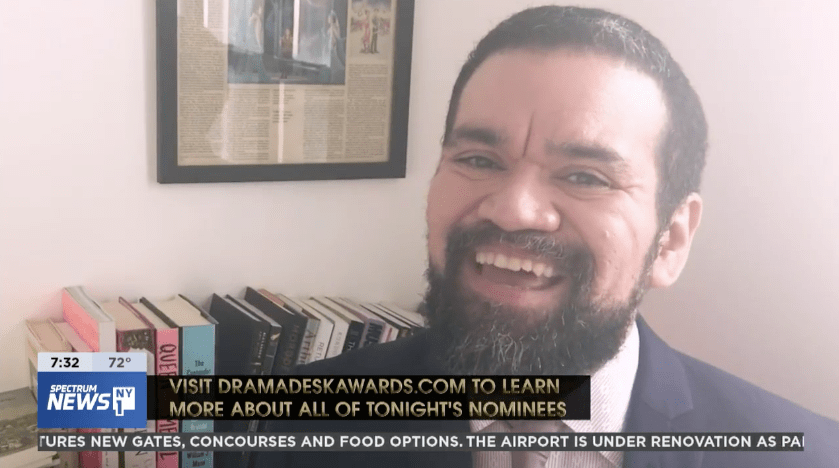
Full disclosure: I am a member of the Drama Desk, where I serve on the board and also on the nominating committee. I want to start by saying this, because you might even have seen me on TV a couple of weeks ago. I represented the organization on the Drama Desk Awards and spoke about the extraordinary situations that led to a streamlined, televised ceremony. 

Awards are what critics organizations are best known for. Three organizations completely composed of critics hand out annual awards in New York, honoring achievements in Broadway, Off-Broadway, and Off-Off-Broadway. These organizations are the Drama Desk, the Outer Critics Circle, and the New York Drama Critics’ Circle.

I bet you $5, most of the people who won Drama Desk Awards at the most recent ceremony have no idea what the Drama Desk is. In fact, at least year’s ceremony, I overheard an audience member confidently explain to his companion, that the organization was made up of “actors, producers, and Broadway professionals.” He was probably thinking of the Tonys, which (like the Oscars, Emmys and other industry awards) are the opposite of critics awards. For clarity’s sake, this will be the second to last time the Tonys will be mentioned here. 

Year after year, critics’ awards are criticized for the same reasons: the winners are too white, too old, too safe. 

This year, David Gordon who works as Senior Features Reporter for Theatermania and serves as President of the Outer Critics Circle, called out the Drama Desk Awards for rewarding too many Broadway shows, even though Off-Broadway and Off-Off are included in the nominations.

His organization can rarely be accused of the same problem, because their top honors are divided into Broadway and Off-Broadway, therefore saving themselves from the annual embarrassment of making their top selections seem too commercial.

But while Gordon suggests this is an issue of members not being invited to see as many shows as the nominators, the truth is something more simple but much more pervasive: the people voting for these awards are also too white, too old, too safe.

This is why progressive visions like having non-gendered awards seem like a sci-fi concept when voting bodies tend to celebrate nostalgia over risk-taking, money over ideas, and they value the work of men much more than the the work of women. I joke that if NY awards were to dispense of gendered categories, Bryan Cranston would somehow win Best Musical.

As an insider who still holds a little bit of hope about the possibility of change happening within these overly white spaces, I would like to propose some things the Drama Desk and the Outer Critics Circle can do to secure a more diverse membership, who in return will honor shows that defy conventions of what good theatre is, and who gets to make and star in it. Most of these things I’ve suggested to my fellow Drama Desk members in the past. 

Who Gets to Be a Broadway Journalist? 

At the center of the issue lies the notion of what a theatre critic looks like. In late 2018, around the time Mary Poppins Returns was released, Lin-Manuel Miranda broke my heart in one tweet:

If to the most famous and influential Latino in theatre, Broadway press looks like three white, cis-men, what hope do POC journalists have of being acknowledged by him, not to mention by white artists? Dear theatre artists, especially those of you on Broadway, it’s your job to amplify POC journalists as well. Make sure to include POC journalists in your press days and events. Tell your agents and publicists you won’t speak to two white journalists in a row. Take a stand!

How to Become a Theatre Journalist

If you’re a POC you need to start from when you’re little. Become devoted to August Wilson, Stephen Sondheim and William Shakespeare in pre-school. Start your own theatre company in high school. By freshman year of college you should have a Pulitzer. And right before graduation, you should’ve written two defining texts on criticism and art.

If you’re white, you just need to be in the right place at the right time. Maybe your editor will assign you a review even if you’ve only written about traffic in the past. Maybe a colleague will fall ill and you’ll be asked to take their place that night. Remind me someday to tell you about the offspring of a critic who assumed they would inherit their parent’s position after their death. If you’re white, it’s your birthright.

“I’m Trained! Can I Join Now?

Wait a second. Your education means nothing if you haven’t met the parameters of “objectivity,” “quality,” and “professionalism” these groups demand of you. Those words are often code for “too dark,” or “too loud,” or “too outspoken.”

If you have a blog, forget about it. In critics’ circles being called a “blogger” means you’re at the bottom of the food chain, in fact they might think you’re only good enough to deliver them their food. Watch them look at you wide-eyed and confused when you explain to them their very basic site is also a blog. Blogs are something millennials do, and everyone knows millennials are up to no good. 

Sitting Around the Table

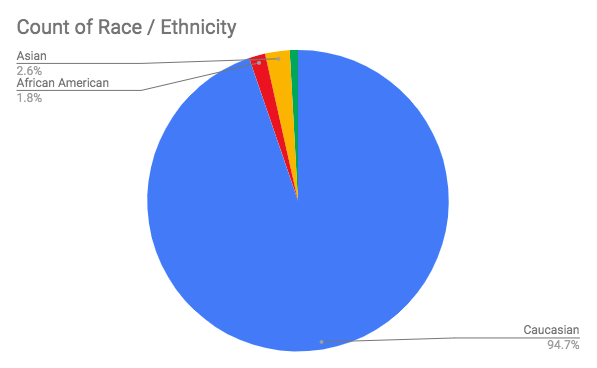
In 2019, I conducted an unofficial demographic survey of the Drama Desk which I presented at our annual membership meeting. Back then I realized, our membership was almost 95% white (I’m the tiny green slice of the pie).

When a member stood up defiantly and asked me how dare I say that, I merely invited them to look around the room we were in. Unless you’re working for the current presidential administration, it’s hard to deny facts when you can see them with your own eyes.

Encouraged by Drama Desk President Charles Wright, in whom I’ve found an exemplary ally, (every time I think I’ll say the thing that will finally get me booted from the organization, the lovely Charles offers me a smile and tells me to go ahead). So the Drama Desk will be conducting a more thorough demographics study within this calendar year. How can we change if we don’t know who we are? And so, while we work on that, I’d like to invite every theatre organization in the city to do the same: show us what you’re lacking, not out of fear of being “cancelled,” but out of a desire to change it.

How Many Seats Are at the Table?

Since the Drama Desk and the Outer Critics Circle are the two largest organizations in town, it’s important to clarify the difference between the two. The former is made up entirely by New York journalists, the latter includes New York journalists but also press who write for publications in other cities. Why then are there so many members that overlap in both organizations? Why are some of the members in both boards? How many seats do you need to take up? Is your voice really twice as important as someone else’s?

In 2018, when Gordon became president of the OCC and reached out to me to ask if I had any interest in joining, I replied that I wanted to learn more about why he thought I belonged in both organizations. Honestly, I find it slightly immoral to be in both, especially if you’re white and might be filling up a space that a POC or underrepresented journalist might occupy. I never heard back from him.

The Membership Process Is a Mystery

Neither organization has an open application process, meaning if you go to their websites, you can see who their members are, who they awarded that year, but zilch on how to join the organization. As a Drama Desk member, I can only speak for how our process works. Once a year for a few weeks, a select few people receive a link to submit their application and clips. The process is never available online for everyone to see—the invitations to apply comes straight from our membership department. I call it the Brigadoon application.

What does this mean? That unless you know someone who’s already inside, there’s no way you’ll ever get that link. This makes it extra hard for POC to join, because if a membership is almost 95% white, what are the chances their social circles include POC? 

Even when you know someone, this doesn’t mean they think you’re worthy of the precious link. During my years working at StageBuddy where I interviewed Broadway artists and reviewed shows, I shared an office from time to time with a Drama Desk member who year after year flat out refused to even let me know about this link, because in his words, I “wasn’t ready to join the group.”

I ended up receiving the elusive invitation when a Drama Desk member came to visit my class at the 2016 National Critics Institute. Being my usual loud-mouthed self, I asked them in public how diverse the organization was. I had an invitation by the end of the week.

Outreach to Members of Underrepresented Communities

If there are so few POC inside, how will we ever reach out to more? If you’ve followed me on social media, you know that for the past two years, I’ve offered mentorship and help to POC writers who want to join the Drama Desk (Diep’s Ed Note: That’s how I got into the Drama Desk because even though I had a full-time job as the editor at a national theatre magazine, until Jose, no Drama Desk member had ever invited me to join). But when there’s only one person doing the work of an entire organization, that person often ends up burnt out. 

Some ideas I’ve proposed in my organization is for us to become involved in the training of young critics of color, who might then become Drama Desk members. It’s crazy to think that New York City still doesn’t have a training program for young critics in the style of Rescripted’s The Key in Chicago, or the film criticism bootcamp that happens every year parallel to the New York Film Festival. If anyone has money and wants to make this happen with me, hit me up, I have an outline and syllabus ready.

I’m Finally a Member! Tell Me About the Awards

Great question! Unlike the Tonys (I told you there’d be one more mention), which specify their guidelines and how voting and nominating works, neither the OCC or the DD have public guidelines and rules. The nominating processes are more mysterious than electing a new Pope and I’ve gotten in trouble in the past for breaking what elderly members said was a sacred process, when all I tried to do was advocate for transparency. How can we claim to represent quality if people don’t know how we’re defining quality? Transparency above it all. And you guessed it, I’m working on creating those public guidelines for the Drama Desk as well. How else will I know how long do I stay on the nominating committee, or whether writing a piece like this is the thing that gets me kicked out?

So you see, in order for to prevent commercial works from obliterating independent, more adventurous pieces, theatre companies and producers don’t need to send out more invitations. They just need to send them out to different people. Fellow colleagues in every critics group, how are you helping our field achieve this equity?

In the Future, April Matthis Wants Less Tokenization in the Theater and Better Pay

Interviews
Photo: Christine Jean

If you miss seeing April Matthis on the stage, then you’re in luck, because this spring and fall, you’ll be able to hear her voice. Matthis is an Obie-winning stage actor whose star turn in Toni Stone (where she played the first Black female baseball player) by Lydia Diamond earned her an acting nomination from almost every single New York theater awards this spring. Her acting resume includes healthy doses of both weird experimental theater (like the six-hour Gatz from Elevator Repair Service and the Pulitzer-winning Fairview by Jackie Sibblies Drury) and classic plays like Shakespeare’s Measure for Measure at the Public Theater.

While in quarantine, Matthis has been doing some voice acting. She recorded two episodes for Playing on Air, a podcast where playwrights create original short plays. Matthis appeared in Night Vision by Dominique Morisseau, about a Black couple who witness a crime, and G.O.A.T by Ngozi Anyanwu, about tennis star Serena Williams. She says she’ll be doing more with the podcast in the fall. Below, Matthis called into the Token Theatre Friends podcast to talk about acting remotely, Zoom theater and why actors are undervalued in the American theater. The conversation has been edited and condensed.

We’re talking to you today because you just did two podcast episodes with Playing on Air: Night Vision by Dominique Morisseau and G.O.A.T by Ngozi Anyanwu. When did you record it? Because it just came out like right after we all got locked up, at the most convenient time.
We did it a while ago, maybe sometime last year. Because I think I was doing Toni Stone and would do these during the day. I hear Dominique Morisseau and I’m like, yep, here. Ngozi Anyanwu, yes please. It was just fun to do and to be in the room with them. These are really quick and dirty, like you might get a version of the script beforehand. Then you basically read it with the people you’re going to read it with that day and meet them that day if you don’t already know them. They’re just great to do. I like reading. I like reading plays and like doing readings, that’s kind of how I’ve gotten most of my theater jobs, not so much through auditioning, but through doing readings and workshops that turn into full productions.

Have you been consuming any like of the Zoom theater experiences? Do you think it’s a stop gap or you think that’s like a potential future for the art form?
I think it’s a stop gap. Of course, nobody wants that to be how it’s going to be—everybody wants to be back in space together. I haven’t been consuming a lot of them. I’ve watched some of the 24-Hour Plays because they’re a little easier to watch: look at this one person. The ones that I’ve been a part of, I feel like maybe it is more for us. You know, maybe it’s more for those of us participating. The act of doing it is satisfying, because you’re not scrolling, scrolling, scrolling on your phone. You’re not obsessing about the news. You’re not putting hazmat gear on to go buy some oat milk or whatever. You’re doing what you used to do, which is acting, saying words with folks in real time. So that’s something that I’m hanging on to in the meantime—the immediacy of theater that we can maybe approximate for the time being.

As someone who has lived for so long in the experimental theater world, are you seeing things right now that also excite you, things that you’ve learned in that kind of work that you want to see apply to streamed theater or to Zoom theater?
I have conceptual ideas, and I’m like, should I share them? With Elevator Repair Service, we work on things for years, you can see that in the work—it’s not just something that somebody threw on the wall. The dumbest little moment will be something that we have worked on for weeks to get perfect, to get the timing perfect. When somebody has been like, let’s make this perfect, because this dumb thing is essential. And it must be done this way to get the maximum perfect dumbness out of it. Like you have to be that nerd serious about it.

It’s interesting about this moment, about responsibility and safety. And how art, especially experimental art, is not always responsible or safe. And what does that look like right now? Can we be transgressive? Folks are going outside in large numbers in close proximity, because they must, but is it 100 percent safe? You can’t say it is but, I don’t know what to do with those thoughts right now. What do we say is essential? What in our work as artists is that essential that we say, I’m gonna risk it anyway? How do you do it in a way that’s not harmful? What does outdoor performance look like? What does performance that’s distanced look like? Do you ventilate the theater? My artist brain just has a lot of ideas and trying to find receptacles for those ideas and testing them out, while at the same time being where we all are, which is like: Where are you today? Where are you right this second? Do you need to take care of your body right now? Do you need to go lie down right now? Do you need to scream and make make some stuff happen? Those are questions that I feel like we’re all kind of asking.

April Matthis in “Toni Stone” at Roundabout Theatre Company

Lately, I’ve just been wondering, what does that look like in a new environment when we’re also trying to navigate like physical health safety? And we’re asking actors essentially to risk their health in the future in order to do the art form. How do you ask people to do that while trying to have these conversations that we’re having around around representation and diversity?
You pay them what they’re worth is a very easy answer. What I will say is, maybe week two or week three after we shut down, I got a lot of things coming into my inbox from institutions being like, will you do a Skype version of this or do a video version of that? And no mention of pay. And this was right when unemployment was crazy—I spent my full 72 hours calling the line non-stop just trying to get through. You’re asking me to perform out of the goodness of my heart and put on makeup and look good and be chipper and dive into characters. What? I don’t know where I’m going to get groceries. So I start with that because when the dust starts to settle—and I’m not talking about just theater, I’m talking about TV and film—let’s support small businesses. I’m a small business as an independent contractor. I think there’s this idea that because you love it, you’ll just do it. But we all have a bottom line and we all need to eat. And we can win awards. And those awards don’t come with monetary benefit, you know. So I would say that first and of course, health coverage.

And when I was dreaming beyond those things that should be basic, I was thinking: What would it look like if I could be in a show with five of my favorite Black actresses? Instead of us in the room, being nice to each other being like, “If I don’t get it, I hope you do.” What if there were room for all of us in the cast? I would like that more and more and more and more and more and more and more and more and more. There’s just so much talent out there and this idea that there can only be one or two. I have issue with the white institutional theater and the tokenism that’s in there. There can only be one or it becomes a Black play. Well let it be a Black play. And plus, can that be the default? Can that be the universal default story? Instead of just, “Okay, we’re going to do Raisin in the Sun or we’re going to do one of August [Wilson]’s plays.” There’s so many people writing out there. Kirsten Greenidge is one of my favorite playwrights on the planet. I would love to do a season of Kirsten Greenidge. That is what’s exciting to me.

Listen to the rest of the Token Theatre Friends podcast featuring April Matthis here.

Ep 3: “The King and I,” and the White American Theatre (Feat: April Matthis)

Podcast

Every week, culture critics Diep Tran and Jose Solís bring a POC perspective to the performing arts with their Token Theatre Friends podcast. The show can be found on SpotifyiTunes and Stitcher. You can listen to episodes from the previous version of the podcast here but to get new episodes, you will need to resubscribe to our new podcast feed (look for the all-red logo).

The Friends sat down and recorded over Skype on June 14 and talked about “We See You White American Theatre,” an open letter that got more than 50,000 signatures (including from a bunch of celebrities) and what can be done to solve racism in the American theater. Then they whistle a happy tune and discuss The King and I. They watched a video of the 2015 Broadway revival and talk about how it’s problematic but they love it anyway, and how they would improve The King and I. #YourFavesAreProblematic

Their guest this episode is actor April Matthis, who was the star of the play Toni Stone by Lydia Diamond, and who’s been up for every acting award in New York City for her performance. This Obie-winning star has also been in Gatz by Elevator Repair Service, and she called in to discuss Playing on Air, a theater podcast where she acted in short plays by Dominique Morisseau and Ngozi Anyanwu, and trying to create theater in the time of COVID-19.


Here are links to things that Friends talked about in this episode.

Below is the transcript from the episode.

Diep: Hi, this is Diep Tran.

Jose: And I’m Jose Solis.

Diep: And we’re your Token Theatre Friends. People who love theater so much that Jose was even thinking about it while he was out of town this past week. How was the nature Jose?

Jose: Well, all the world is a stage and I pretended that the wild animals that I saw were part of a play.

Diep: You’re like Rosalind going out into the Forest of Arden.

Jose: I love your background so much. I’m obsessed with it.

Diep: Yeah, you cannot see this on the podcast but I have changed the background of my screen to the toilet in “Parasite” because that is where my mind is at right now.

Jose: We do have a video version also so you can appreciate and worship and praise Diep for her very thoughtful very funny, funny, funny background.

Diep: Yes, the weirdest thing about this new venture that we have created is I have to be on camera for like an hour now. I’ve had a hard time like listening to myself but like watching myself, like I don’t know how you edit those videos and just not cringe every single time you see your own face.

Jose: Oh, I do constantly, which means I need to talk to my analyst more about more self love.

Diep: I guess there’s no such thing as self love when you’re a journalist and you have to listen and watch yourself.

Jose: On the bright side, you look flawless. Your skin looks flawless. What are we gonna be talking about this week?

Diep: This week is a little bit you know, we’re all over the place this week. First off, we’re going to be talking about a petition that’s been circling around the internet. It’s called, We See You White American Theater and over 50,000 people have signed it, including some very famous people like Sondra Oh.

Jose: Yes, that’s why we stan “Killing Eve.”

Diep: So we’ll be talking about that and what we hope to see from that. And then, this week, we wanted to do with something a little bit lighter, because last week’s discussion was quite, everything’s been heavy. Life is heavy, and we want to, we don’t want to talk about sad things. We want to talk about happy things, some happy talk. We’re going to be discussing “The King and I.” In the second segment of this episode, it does not make me happy, but it makes Jose very happy. So we will dive into that. And for the interview today, who are we talking to?

Jose: Today? Well, before we say that, I want to clarify that the reasons why it makes me happy are not the reasons why it makes you unhappy just to say that. Today we are going to be talking to the fantastic April Matthis who you have seen on stage in plays like “Toni Stone,” which was around about last season, for which, for which she was nominated for Drama Desk Award. So April, but today we’re going to be talking about work that a lot of actors have been doing in quarantine and April has been collaborating on a podcast called Playing on Air. So we’re going to be talking to her about that, about her career and it’s a fabulous interview. So stay tuned for that.

Diep: Yep. And for the first segment, Jose, do you want to run down the We See You WAT letter?

Jose: Okay, sure we are going to add a link to the actual letter. So let me just paraphrase what it was about. At some point last week, there was a letter that came out. I love the logo because it’s like an eye and it’s like, very tarot it’s like super cool.

Diep: It looked Egyptian to me, like, you know, the eye of Ra.

Jose: Oh, remind me to make do your tarot reading with my new Egyptian deck then. But yeah, it’s all seeing eye. That’s what that presents, basically. And it’s a wake up call to white theater. It’s called We See You White American Theatre, which kind of feels like I don’t know, like very redundant because white and American theater goes hand in hand, but whatever. That’s a whole other story. This letter, the people behind it, were basically saying, and I don’t want to like pat our backs, but they basically have been saying what we have been saying for two years while we’ve been doing this. And also what you have been saying your entire career when you wrote your op eds about “Miss Saigon,” and all those other things that are bullshit. They’re a little bit late, and I’m not gonna judge them for that. I’m proud and so happy that this is finally happening because there’s a reckoning coming and I don’t want to sound like Prospero or some crazy old man out of a Shakespeare play. But there will be a reckoning and we are at the beginning of what needs to be a revolution in the American theater of restarting and seeing that we have been doing very, very, very poorly, but especially white people have been responsible for that they have been keeping us down. They have been keeping Black artists excluded, you know, they face racism 24/seven. And One of the most heartbreaking things that I’ve seen recently was that testimonial that Montana Levi Blanco did. He’s one of my favorite designers. He’s a fucking genius. And when you hear him talking about something like that, when he would, you know, like, you think he’s so respected, and he’s so loved. And the thing is, when you see that something like that is happening to someone who you think is doing all right. Imagine all the people whose names you don’t know. Imagine all the stagehands and all the managers, imagine all the lighting people, all the tech people, you know, all the people who haven’t broken through to talk about that, because it’s really scary. I mean, I don’t know about you, but I’m always terrified before I click send to a draft to an editor or whenever I hit publish, when we’re working on self publication. I’m always terrified of how the words I write are going to land because I’m so tired of being angry, and I’m so tired of being sad. I’m tired of being disappointed in people. And I’m taking this like on another like, you know, like, a different road. But it totally relates to We See You. And the fact is that we have seen you for a long, long, long time, American theater. So I’m sad. But I’m also proud that we are finally seeing a lot of people and most importantly, famous people and celebrities because they are the ones who are heard. And they’re finally talking about this. So, you know, the letter is admirable, the design is beautiful. My only concern about this letter is that it’s coming off as a little bit too vague for my taste. And it’s like, you know, it’s like we see you, it kind of feels almost like the MTA saying, if you see something, say something. Well guess what? We have been!

Diep: Yeah. Oh my god so much stuff that just happened right there and everything you said. Okay, so first off, the We See You letter was originally created by 30 theater makers and then they released it and then it expanded to 50,000 signatures and then I’ve been told that they’re going to compile a list of demands for white theatre producers and institutions and so I’m really looking forward to seeing what those demands will be because—and I’m currently writing, figuring wrapping my mind around like writing about this—but I feel like it’s kind of like that Washington Post op ed that was about, “When black people are dying, white people join book clubs.” It’s about like how some people, a lot of people think saying, “Oh, I hear you, I understand you. I’ve done so much reading, let me know how I can help.” Like saying those things are enough when they’re not and the fact that that’s always a go to and it never gets to another part of the conversation, which is, “I will commit to doing this I will commit to not working with all white creative teams, I will commit to making sure my season, the plays that I finance are from diverse writers.” Like there’s no, there’s never any real big concrete commitment that you can see, that you can measure. And so I’m really hoping that there will be and that all of us, every one, white people, you know, Black people, all of us will, will keep them—the powers that be accountable—for know for making sure those demands are met. You know, we’re all in a pause right now. And we don’t know when theater is going to happen again. But I hope we don’t forget about our list of demands. When in 2021 when Tony season rolls around, we don’t all go back to pretending Oh, we’re one big happy family. And oh, such an honor to work in the arts, when it’s not sometimes.

Jose: Yeah, this is such a time of heartbreak. I think for all of us, it’s like we are all going through a period of mourning and grieving for the things that are going to be lost, which are great things. If If things go well, you know, these are things that are gonna be lost, white supremacy fucking sucks. And racism in theater fucking sucks also, but it’s just, I don’t know, it feels like a lot right now. And I do wish the best of you know, break a leg to that We See You people and if we can help in any way we want to help that we want to see more—

Diep: Email us at tips@tokentheatrefriends.com.

Jose: Or find us on Twitter or wherever we’re easy to find, we’re loud and we’re always there. But you know if we, I don’t know I want to see more than letters and I want to see more than Susan Collins reactions. I want to see more than people being concerned and I want to see people taking action. We need to take the figurative streets of Broadway and theater and go make those people listen to us.

Diep: You brought something up that I actually haven’t talked about with a lot of people, I want to talk about because I think it’s one of those like, like sticky little issues. Is is Montana Levi Blanco’s Instagram video. Montana Levi Blanco is an award winning costume designer and in 2018 he worked on this musical at Williamstown Theatre Festival called “Lempicka,” which I did see, which is which is coming to Broadway. And directed by Tony winner Rachel Chavkin, and he said that he was dismissed from the production because she said that his designs weren’t good enough basically, and they went back and forth on it, tensions rose and then she called her agent and said that he was threatening her. And then later Chavkin issued an apology and committed to doing better. What was really interesting is that I feel, because I love Rachel Chavkin as a director. And I love Montana as a costume designer. So it was one of those times where, wait, I thought these were two people who were on the right, who on the same side or on the right side, like Rachel’s always talking about diversity. And if you seen her work, she doesn’t tokenize people—it’s always a wide array people on that stage and behind the scenes and so how, how, how is this happening?

Jose: I don’t know. There’s such such anti-Black sentiment in this world that I by default, will believe the Black people, because Latinx people, Asian people, everyone who’s non-Black, but also a POC, we are raised on anti-Blackness. I was raised in Honduras, which is in Central America, where people who have very dark skin will make jokes about being Black. And I’m always like, Okay, look at yourself, you know, where do you think, who do you think your ancestors are? And all that. So by default, I’m always inclined to believing the Black person who is not accusing, but who is speaking out about the way they’ve been treated by someone. Because we have seen the way in which white women weaponize whiteness, but also hide themselves behind being a woman to Amy Cooper their way in the world. And sometimes this is done unconsciously. Sometimes it’s not like Amy Cooper, or that monster who, you know, accused Emmett Till of messing with her and the poor kid ended up beaten to death. But it’s, you know, I was, I was so sad to see all of that unfold. And so heartbreaking because yes, I love Rachel Chavkin’s work and I love Montana’s work. But I was very, I don’t know, I was very pleased, I would say, with the way in which Rachel’s apology came across as not as like, No wait, I didn’t do any of that. It came across as like, I will sit down, I will shut up, and I will listen. And that gave me hope.

Diep: Yeah, I think it’s definitely one of those times where even if you think like you’re doing everything, right, as a non-Black person, like there’s always some blind spots or some like some things that will come out of your mouth that you don’t intend to be racist. And you’ll treat people in a certain way that you don’t think is racist because you think you’re better than that. But we all live in a society. And unfortunately, I think these conversations wouldn’t be happening in a public platform like Instagram, if we somehow could figure out how to have it on a one-on-one basis that is productive. Unfortunate, and I don’t know either of them very intimately, but it just seems like there was just no way for it to happen productively just between the two of them, and it escalated to being on social. Which is to say, try to solve things amongst yourselves. Otherwise, it’s gonna erupt on social media and we’re gonna have to hear about it and feel very yucky about it.

Jose: Yeah, just listen to Black people, please. I guess it’s hard because we have anti-Blackness ingrained in us. Just hearing you say that right now made me, so I had the most shallow thought that I’ve had recently. Because when I was rewatching “The King and I,” the first thing that I thought was, “I will pray to God and every God in the world, that Kelli O’Hara doesn’t ever do something racist because how am I going to quit Kelli O’Hara.” And, you know, she’s a white woman. And we have seen white women weaponizing who they are to bring violence to Black men specifically. And oh my god, I just please Kelli, please, please, please, please never say something racist. I love you too much.

Diep: I’m sorry to say Jose, your faves are problematic.

Jose: Oh they always are always, always are problematic.

Diep: But you know, we’re all gonna learn from this experience, we’re all gonna figure out how to better, better talk to each other so that creative disputes doesn’t turn into racial disputes. I think now’s a good time to just like reassess, reassess language and just reassess how we treat each other on like a one-on-one level and to learn to not dismiss each other just because we’re busy or we’re overwhelmed or we think we’re right. To like just approach it all with just more generosity.

Jose: Yeah, it’s also the time to see color. Cuz even if theater prides itself in being colorblind, it’s time for you white men and women who have positions of power in the theater to acknowledge the color of your skin and acknowledge the privilege that whiteness brings to you, before you interact with a person of color, and whether it’s a Black person or a non Black POC, acknowledge that you are a white person, and acknowledge the optics of what you are doing in the moment the emails you’re sending, the texts are sending, how you’re reacting, what you’re writing, how you’re talking to people. Acknowledge that, and remember that you carry within you a legacy of violence, legacy of oppression and a legacy of hatred. You don’t necessarily have to be those people. We are not saying you’re your ancestors, but those things are in your blood. And I mean, you can block me and you can burn me later if you want. But it’s true. That something that none of us who are not Black can lie. You know, one of the most horrendous things that people in my home countries say for instance, when a Latina woman marries a white man, and they’re having kids, people say that this woman by marrying white men are improving our race. So think about that. Think about how insidious and how perverse and how dehumanizing. Trying to live up to whiteness is not only for us, but also for you people. You’re probably good people inside. Don’t let whiteness get the best of you.

Diep: That’s a great note to end on everyone. Listen to Jose. For our next segment, we’re gonna sing a different tune. Whistle a happy tune, they say. We’re going to be talking about “The King and I,” because Jose loves Kelli O’Hara and I have opinions about “The King and I,” and we think, you know what, it’s a fun time to just have a discussion about, you know, these quote unquote timeless musicals.

Jose: We picked this on purpose because we were so exhausted after “American Son” and “Pass Over” last week that we were like, let’s talk about something else.

Diep: Yeah, like racism! Racism against Asians, that’s much lighter. I mean, technically, it is. It’s fine. It’s fine. So okay, let me get my notes. “The King and I” is a 1951 Broadway musical written by Richard Rodgers and Oscar Hammerstein, who were kind of obsessed with Asians, because their other musical “South Pacific” and “Flower Drum Song” were also about Asians. “The King and I is about a white woman named Anna Llewellyn who travels to Siam in order to teach the children of the king there—King Mongkut. We watched the 2015 Broadway revivals, starring starring Jose’s inner white lady Kelli O’Hara and daddy with a capital D Ken Watanabe—who have a, they hate each other and at the end they kind of love each other. And Ruthie Ann Miles and Kelli O’Hara both won a Tony for their performance. So if you would like to watch the King and I, it is currently on BroadwayHD and PBS. I actually did an article a couple years ago for “American Theatre” about Broadway’s obsession with Asians. And I did some research and in his autobiography “Musical Stages,” Richard Rodgers wrote that quote, “Even though our view of Siam couldn’t be completely authentic, Oscar and I were determined to depict the Orientals in the story as characters, not caricature, which has all too often been the case in the musical theater. Our aim was to portray the king and his court with humanity and believability while avoiding the disease Oscar used to call research poison.” So whenever I think of “The King and I,” it’s one of my problematic favorites. It’s one of Jose’s problematic favorites. I love the songs. The Lincoln Center production I saw live. That boat came on stage, I was on it. Ruthie Ann Miles started singing and she hooked me. And when they start dancing, I’m spinning in that ballroom with them. I’m swept away by the romance and also really uncomfortable with the fact that everyone speaks pidgin English and they don’t know that the world is round or that snow is a thing, and they need a white lady to teach them how to be quote unquote civilized. And so when I think of “The King and I,” I’m always like, yes racist, but also they try.

Jose: Oh my god, they try to not be racist.

Diep: #yourfavesareproblematic.

Jose: That’s so funny. Sorry, I’m laughing but it’s so funny because you’re right. A few years ago I interviewed up Oscar Hammerstein grandchild, and he told me that his grandpa would spend hours and hours and hours and hours doing research on racism and race and why it was so wrong. Yeah. He tried. Why it was so wrong that white people discriminate it, you know, against Asian people, against Black people, against Hispanic people. I mean, hey, I mean every time I remember that Stephen Sondheim thought that “I Feel Pretty” was too smart a song for a Puerto Rican girl to sing. I want to burn everything down. So yeah, Sondheim you’re alive, you’re still problematic, sorry. But it’s this whole thing where it’s you know, the history of the Broadway musical is so fascinating to me, because it’s almost a history of well, obviously, of racism, but also of the people who think they’re trying to fix it, but then they end up with like, fucking “Oklahoma,” which like, there’s not a single like, Native American character in the show. It’s so good. The music is so wonderful about that. But you know, the question I think that this makes me think of is, if the people who were trying for so bad at it, holy fuck that people who aren’t are trying to unleash hell on all of us.

Diep: Compare it to Hollywood, like what kind of you know works featuring Asians was Hollywood putting out. Probably not very much right? Like Anna May Wong couldn’t even get work at that point.

Jose: Yeah and then like she’s like getting all this like, you know, recognition when she’s been dead for like 2000 years. So fuck that like recognize people when they’re alive.

Diep: Exactly I was thinking, the history of musical theater is a history of white people trying to be less racist, and just being two steps behind where it should be and then thinking like they’re supposed to get credit for it.

Jose: It’s that participation diploma. I don’t know. And so I don’t know. I don’t know. I thought even like “The King and I” was gonna uplift me, but not even, when Kelli O’Hara can’t uplift me it means that I’m in need of like more rosé.

Diep: Your failure was picking “The King and I” as a thing that’s gonna uplift you when I knew when you’re like, let’s talk about it, I was thinking, oh man, we’re gonna go far into a whole other thing. I hope you’re ready. Oh, fun fact this is just a side note. I was just doing more research when I was watching it. And apparently Yul Brenner who played the king, who’s not Asian, he played the king in the original 1951 musical, and then again in the 1956 movie, and then again in the 1977 and the 1985 Broadway revival. So it wasn’t until the 1996 Broadway revival that they finally had an Asian actor play the Siamese king.

Jose: Who was it?

Diep: Lou Diamond Phillips. He was opposite Donna Murphy. Yes

Jose: Who won a Tony. So Annas win Tonys so let’s all play Anna and get a Tony.

Diep: Ruthie Ann Miles won the Tony for playing Lady Tiang. So maybe in the future, that role also will get an Asian actress her Tony.

Jose: Yeah, and Ruthie is so fucking luminous in that performance. Oh my god, she’s like made out of like, Oh, I remember. I mean, now I’m talking about something else. But do you remember the Tonys that year? Remember the category for best future actress in a musical?

Diep: No.

Jose: So it was basically I’m gonna like out gay myself right now because I think I remember everyone who has not made it. I haven’t Googled it so let’s see how I do. It was basically the “Fun Home” women, Judy Kuhn, Sydney Lucas, the actor who played middle Allison, what’s her name? I’m sorry, I don’t remember your name. I love your performance. Then Ruthie. And I’m missing someone else. Everyone thought Sydney was going to get it, especially after “Ring of Keys,” and everything like that. And then Ruthie winning was very surprising to a lot of people. And then even though back then I was rooting not for Sydney, but I was rooting for Judy Kuhn, who’s magnificent in “Fun Home,” but when Ruthie won I was like holy shit, this is such a great win and then seeing her performance so many years later and seeing the power that it has and how she grounds that entire performance, Kelli I love you but Ruthie grounds it. It’s just like, this is like one of the best Tony wins, probably like ever.

Diep: And I don’t know if you know this but when—so the version that we watched, it was filmed at the London Palladium in 2017. And it was actually filmed a couple months after the death of Ruthie’s two children from a horrible driver, who just ran over her and her two kids basically and they died. I watched it I was like, god damn actors are magic because she’s able to—not six months after this terrible thing happens to her, she’s still able to go back on stage with a cane because she’s still injured, and do that performance and inhabit that character with just gravitas. And with no clue that all this is happening in the background. Give her more Tony’s just for that.

Jose: She’s so great. Okay, now we’re avoiding all the problematic stuff.

Diep: We’re gonna do it. We’re doing it. We’re doing it. Okay. Okay, my problem. So people position it as an East meets West kind of—Oh, these two people, they’re so different and then they learn from each other. But if you really think about it, does Anna really learn anything from the Siamese court at the end of this? No, it’s mostly her just showing these people what to do, and she has this whole song about how they all really piss her off, and how they’re like frogs. If you want to do a show about East meets West, like two different cultures, like there actually needs to be like an exchange of ideas. But you know, it was also 1951. What do you expect? But it was so interesting to me to watch it. Like really, really watch it because previous times I’ve watched it, it was very, I was in the theater, so it’s very much like, ooh, pretty. Everything’s so pretty. And now just like watching it with my hat on it occurred to me, everything that Anna criticizes the Siamese king for, like, you know, having a lot of wives, not believing in love, like seeing women as inferior. That was also a thing in Western culture. 1951, it was only 40 years after the woman had gotten the vote. And at that point, married women in America couldn’t have their own bank accounts. And so the musical kind of positions Western ideals as superior without realizing that Western people funny, Western people are just as messed up and you don’t get to go around the world and try to spread your ideals when your ideals are false.

Jose: Yeah, I mean, let’s not even go that far as to all the social hypocrisy that Anna has. Look at her fucking clothes. I mean, she has to wear this like giant thing, because like all those like Victorian assholes were too horny. And if they see an ankle, they would just like harass women and touch women, so women have to wear this like really uncomfortable looking giant hoops, and like metal things. Women have to wear freaking armor so men won’t touch them and how dare she comes and then she’s like judging at all the hot guys with their pecs out. And like all the women in their slim clothes and like, it’s the tropics it’s very hot and she’s judging these people cuz she wants to see them decked out in these ridiculous, horrendous stupid Victorian garb. I mean like no, come on, get a grip girl.

Diep: I love that point because you know, like those Thai dresses, unlike that fucking hoop skirt, like you can run in that, you can move, you can kick people. And they’re not wearing shoes. Which is, you know, like the whole thing like, why do white people like to wear shoes in the house. I have no, I

Jose: That’s how we got Corona.

Diep: I’m hoping that’s the thing that dies off in the COVID because it’s nasty. Stop doing it. It’s imperialism. It’s American wars and invading foreign places under the guise of spreading, you know, democracy. But it’s just trying to force other people to hold your values when you don’t when you don’t do it,you’re at home. No.

Jose: And probably Anna brought with her anti-Blackness and she taught the children of Siam about anti-Blackness.

Diep: how would we improve it?

Jose: Maybe just like skip to “Whistle a happy tune,” and “Getting to know you” and then stop it. And then we’re like, okay, or I know, I know, I know. I know. So we get a performance of “Whistle a happy tune,” and then we meet in the cold,

Diep: “We kiss in the shadows”

Jose: We do that and then went to “Getting to know you.” Do you have a problem with “Getting to know you?”

Diep: It’s cute. It’s the ideals what this musical wants to do.

Jose: Right? So they’re really getting to know you. And then we do, we do not do “A puzzlement” because no. We do not do the song of Anna complaining about people not being white. So then we do those three songs I guess. Wow.

Diep: And “Something wonderful”! Ruthie needs to have her song. Actually I don’t mind a puzzlement because it actually, and the musical doesn’t do this well at all but you know, hashtag it tries. It gives a king a song, which for the time, Asian characters did not have like their own songs where they had interiority and they had like concerns that was separate from whiteness. Like the song “A puzzlement” is the king trying to figure out how to be a better ruler and trying to figure out like how to be more modern and how to like, be a king and have authority while also taking in other people’s opinions. It’s very relatable if you’ve been in positions of power as a person of color. The only problem is the fact that he speaks in pidgin English. And the rest of time he’s just yelling at everybody. And so I think if you made the king, maybe just rewrite his lines so that it’s actually fluent English. He speaks in fluent English. And they actually have real conversations where he’s not just being like a brute to her and he actually teaches her things. Lauren Yee or Young Jean Lee, or like somebody just come in and just do a little bit of tweaking. You don’t need to change Anna’s stuff, like she can be problematic. You just need to change the Asians.

Jose: Right, give them agency because like, I guess my problem with “A Puzzlement” is that all these things that he’s dealing with are things that have been questioned by white people, you know, all the things all the way that he’s proving, for instance, it just doesn’t feel right to white people. So that’s my problem with the song. But yes, if they change it, they keep it. So we have “Getting to know you,” “Whistle a happy tune,” “We kiss in the shadows,” “Something wonderful,” “A puzzlement.” And then after those five songs, what about “Shall we dance”? Because it is so sexy. I love that song. I mean, not the song itself, but Kelli and Ken. Anyway, Kelli and Ken for “The 50 Shades of Grey” musical. So we keep those songs and after they sing those songs and the costumes and everything, we applaud the curtain closest and when the curtain rises, we get to see “Soft Power”!

Diep: Yes, boom, double feature. I love it. Yeah. Because what was always a cop out to me about “The King and I” was the ending. I feel like Rodgers and Hammtersin just couldn’t figure out how to end it. So they’re like, okay, he died. Kill him. Though he was completely fine, and if you have younger actors playing him, like Daniel Dae Kim played the King. He was a replacement for Ken Watanabe in like 2017. And who could believe that Daniel Dae Kim would just like die suddenly?

Jose: Not me. Unless he was in “Lost: and people dropped like flies all the time. So maybe he was like, the “Lost” monster took him.

Diep: Like this whole thing isn’t real. We’re just on an island. It’s just all a fantasy. Oh my god. oriental fantasy.

Jose: So now I’m wondering if I got any pleasure from rewatch.

Diep: I mean, I had fun.

Jose: Yeah, I mean, I have to say I guess what I wanted was to have Kelli and Ruthie’s voices just like fill my home and my ears with some beauty. There’s so much chaos and so much sadness and darkness going on everywhere right now. That those songs you know, they’re so beautiful. I guess I wasn’t paying too much attention to the rest of the show. I took what the musical could give me. And I excised everything else that it did wrong.

Diep: Yeah, I think it’s, I think it’s one of those things where I, and I think we both got used to just viewing entertainment that way where, oh, it’s this isn’t for me. So I’ll just take what I can get from this.

Jose: So depressing.

Diep: I know, but it’s like, it’s so such an instinct, because that’s what happens to me when I watched “The King and I,” was like, Okay, I know it’s kind of pissed me off if I think about this too hard. So I’ll just shut off my brain and just enjoy the pretty. Yeah, skip the book, just have a song except for “The House of Uncle Thomas,” which is fucking bullshit. Still doesn’t work. Stop trying to make it happen. It’s never going to happen

Jose: And it’s like 40 minutes long. I’ve never thought about that and what I what I said earlier, I was right that is teaching anti blackness. Anna how dare you.

Diep: I had this on my notes when I was watching “Uncle Thomas.” It’s like a racist sandwich. Because it’s Asian people as written by white people interpreting a story about Black people but written by a white woman. Like “Inception” layers of racism and appropriation and like none of it works.

Jose: It’s like Rachel’s trifle, remember Rachel’s trifle from “Friends” when she puts meat in her dessert. It is that gross. Gross, gross.

Diep: What I really want is, yes, we can revive it on Broadway with a gigantic budget and Asian actors. I just want community theaters and like low budget places just stop doing it because you cannot pull it off. It’s gonna be offensive, it’s just gonna be a bunch of white people in eyeliner. Just don’t do it. I know multiple white people who have done all white productions of “The King and I” when they were in grade school.

Jose: That’s horrifying. I want to go to April’s interview because I’m getting depressed.

Diep: Don’t be depressed. This conversation is something wonderful.

Jose: It’s nice getting to know you, “The King and I,” racist musical. I’m gonna repeat this to our listeners or viewers. What can I watch for some joy right now? Like I’m very sad right now and I’m going through a lot of stuff and we all are. But what can we watch for some joy, you know, something mindless, and not that we want to escape, but it’s important also, the reason why we wanted to talk about “The king and I” is that it’s one of those things that I grew up on and that I love because it makes me think of my grandma. And it makes me think of being a child. And now knowing everything that I know now about racism and about how xenophobia works and how it oppresses. So that’s what it makes me think about. And I’m not saying this in, in a romantic, like, Make America Great Again, you know, bullshit sense, but I’m saying it because it has, you know, it has some great memories for me. And see Kelli, for instance, I went to see the final performance, and I was just a wreck. So it has all those connotations for me. I don’t want to escape the world because I can’t escape the world. It’s important that we are in the world right now and that we are doing something, that we’re working. But it’s important for us to find ways to deal with self care and healing because if we’re depressed all the time, and we’re exhausted all the time, and we’re working all the time, and we’re just watching racism all the time, how are we going to be able to wake up the next day and wanted to go over again? It’s exhausting. So if you have any recommendations for something, I need some levity and I don’t want to think for a few hours and then I want to recharge while not thinking for a few hours and then come back.

Diep: And on a sad thing is BroadwayHD, the only other Kelli O’Hara musical they have on there is “Carousel.” So someone someone bootleg “Bridges of Madison County” and send it to Jose, he needs it.

Jose: Yes. It’s very sad. But yes, I can I can deal with that. That I don’t think has racism? I don’t want to think about it right now.

Diep: No, it doesn’t. It’s just about white people just singing to each other.

Jose: I do love about “The Bridges of Madison County.” The very first song specifically talks about Francesca realizing that she had to renounce her Italian culture to become white. So good for you, Jason Robert Brown and good for you, Kelli. You should have won a Tony for that.

Diep: Yeah, and feeling disillusioned by America. Mm hmm. It’s underrated. Where is the bootleg, people, where is the bootleg?

Jose: Yes. Jason Robert Brown. If you ever listen to this, please give us “Bridges.” Please, please, please.

Diep: Okay, let’s uh, let’s go to our interview with April Matthis of “Toni Stone,” which she was nominated for every single acting award this season for her performance, and Toni Stone was the first female baseball player in the Black league. She was fantastic in it. So we’re so happy to talk to her about that and about her newest project, Playing on Air, which is plays that you can listen in your ears. Wow. So let’s go to that interview now.

Welcome April Mathis, hello, thank you for talking to us. We’re talking to you today because you just did a podcast, two podcast episodes with playing on air: “Night Vision” by Dominique Morisseau and “G.O.A.T” by Ngozi Anyanwu. And can you tell us about that project? And when did you record it? Because it just came out like right after we all got locked up, at the most convenient time.

April Yeah, yeah. It’s really great. The roll out of audio right now when we can’t be in rooms together. We did it a while ago. I don’t even know, maybe sometime last year. Sounds about right. Because I think I was doing Toni Stone and would like do these during the day. I hear Dominique Morisseau and I’m like, yep, here. Ngozi Anyanwu, yes please. It was just fun to do and to be in the room with them. And you know, these are really quick and dirty, like you might get a version of the script beforehand. But then you basically read it with the people you’re going to read it with that day and meet them that day if you don’t already know them. They’re just great to do. I like reading. I like reading plays and like doing readings, that’s kind of like, how I’ve gotten most of my theater jobs is not so much through auditioning, but through doing readings and workshops that turn into full production. And I’m big podcast person. So of course, I was like, ooh, you guys have a podcast? Let me investigate. So that’s pretty cool. Listening to your guys’s archives a little bit.

Diep: Well, thank you for that.

April Oh, I’m just getting into it. But there’s so much more than I want to investigate.

Diep: Well this is a reboot of the podcast.

April Yeah you’re, out on your own.

Diep: Exactly. Yes. You’re the technically, you’re the second guest in the podcast lineup, but you’re the first guest that we’ve interviewed.

April Okay, so yeah. How’s it feeling?

Diep: Oh, scary.

Jose: Yeah, a little bit scary. It’s intimidating. But I would love to learn a little bit more about the difference for you. Because one of my favorite things when I was watching you play Toni Stone was how much she seemed to be so present in the moment. And that’s something that, you know, it’s so refreshing to see an actor who’s playing a character who’s also listening. And I felt that a lot of your line readings and a lot of the way that you interacted with your co stars depended on that and how you know, the way that you saw them move, the way that you saw them deliver a line, and I wonder when you’re recording a podcast on your own in a studio somewhere and you can’t see your co stars, how is that different? And how did that, I don’t know, challenge how you act onstage?

April: Well, we’ll see because I haven’t done it that way yet. These because we did them last year, we were all in the room together. So we could all see each other. We didn’t have that time to marinate as a cast as it were. But, you know, I could see and react to, you know, Denise, or Ngozi. What we’re talking about with Playing on Air is now maybe in the fall, doing some remote recordings, where it’s going to be me in my own little makeshift Sound Studio. That is what I did recently. Last week, I did kind of like a web series on Zoom. But it’s hard because my direction was to look like just below the camera so I couldn’t really see the people I was acting with. I could hear them of course, but I couldn’t see their faces. Like now I’m looking down at your guys’s faces. And you know, I missed that because I do get so much with the guys in Toni Stone, the best cast, you can imagine and like everybody just has their own school of performance and where they come from. And, you know, some people like Jonathan [Burke] has a really strong musical theater background. But then Eric Berryman has like this kind of avant garde background, which is kind of where I live. Philip [James Brannon] does it all and is a wonderful, really thoughtful, lived in actor and then Harvy Blanks, you know, has been around and does a lot of August Wilson, he was doing a tour of August Wilson right before this happened and you know, it’s just like a stage veteran and like, has his own particular way of interacting with the audience. So they all kind of kept me on my toes. So I had to, you know, flex to them as we say in kind of corporate speak. But that is what is so fun is acting with actors that come from totally different—we’re all kind of pulling from our different toolboxes and just seeing how we work together and it was exciting and different every night. Is that in the alchemy of like, what an audience brings? Which, that’s, that’s what’s really missing right now. Which we didn’t have in Playing on Air but like, yeah, that’s, that’s what I’m gonna like, how do you do these disembodied performances where you’re not in the same room? You might not even get to look at each other. And there’s no audience. There’s nobody. There’s no even real time direction of somebody being like, Okay next time can you try it like this? Or how about this?

Diep: And have you been consuming any like of the Zoom theater experiences? And do you think like, that’s good? Do you think it’s a stop gap or you think that’s like a potential future for the art form?

April I think it’s a stop gap. Of course, nobody wants that to be how it’s going to be, like everybody wants to be back in space together. And I’ve been kind of brainstorming with like, different theaters across the country, which that’s one thing that’s been cool about this. It’s like you don’t have that barrier of like, I can’t travel. It’s like now we’re gonna do we can we can meet now we can meet and plan and scheme now and do something that’s maybe for public consumption or not. I’ve been working with this theatre company in Austin, Texas with a couple friends of mine, Paper Chairs with Dustin wills and Elizabeth Doss. And we’ve been brainstorming about a piece, Eugene O’Neill piece “Skin of Our Teeth.” The ways that we’re thinking in and around like the medium of social media and digital media and what can be idioms, like theater stage idioms, for that is those are interesting ideas to think about, but they do feel like temporary. And me I haven’t been consuming a lot of them. I’ve watched some of the 24 hour plays because they’re a little easier to watch. Get this one person, look at this one. Crazy amazing actor. Ronald Peet did one recently that I was just like that, yes, yes to that. Um, but like, the ones that I’ve been a part of, I feel like maybe it is more for us. You know, maybe it’s more for those of us participating, like the act of doing it is satisfying. Because you’re not scrolling scrolling scrolling on your phone. You’re not obsessing about the news. You’re not like you know, putting hazmat gear to go buy, like, some old milk or whatever, like you’re doing what you used to do, which is like acting, saying words with folks in real time. And the only thing I can think of that is equivalent, as far as theater is, it’s in real time. And so I’m trying to keep that, like, Jose, you mentioned like being in the moment like, we can still keep that even if we’re not in space together, we can be in time together. So there’s something that I’m hanging on to In the meantime, about the immediacy of theater that we can maybe approximate for, for the time being.

Jose: This career you’ve been able to navigate, there’s a really wonderful balance between doing like super experimental work, you know, like “Gatz,” for instance, to work with Elevator Repair Service, but then you can go and do like “Streetcar” and you can do Tennessee Williams and something like that. But as a huge fan of your more experimental work, I wonder if there are elements about what’s going on right now in theater work to me. People think I’m crazy when I say this, but I’m so excited to see right now where theater can go because we don’t know. And instead of like letting that paralyze us, I feel that it’s the time for us to like experiment. And as someone, April, who has lived for so long in like the experimental world, are you seeing things right now that also excite you about you know, things that you’ve learned to be this kind of work that you want to see apply to stream theater, or to Zoom theater or to things that can happen right now because we don’t we don’t have a choice right now to to gather and to be in the same space together.

April: I have conceptual ideas, and I’m like, should I share them? I think it has something to do with like time and what are the idioms and then, but like I haven’t tried them, so I don’t know how long they stay interesting. And that’s the thing with Elevator Repair Service. We work on things for years, you can see that in the work, like it’s not just something that somebody throw on the wall—the dumbest little moment will be something that we have worked on for weeks to get perfect, to get the timing perfect. When this person does this, this person goes over here and picks this thing up and flashes it and puts it back down goes over there. And I’ve seen, like, directors try to like, do that in a rehearsal like, one time we’re going to like, do this kind of device moment, and it’s like no. Now, those things you can tell when somebody’s like, let’s come up with this thing right now. And when somebody has been like, let’s make this perfect, because this dumb thing is essential. And it must be done this way to get the maximum perfect dumbness out of it. Like you have to be that nerd serious about it. It’s interesting about like, this moment, and responsibility and safety and how art and especially experimental art is not always responsible or safe. And what does that look like right now? Can we be transgressive, like folks going outside in large numbers in close proximity, because they must, but is it 100% safe? You can’t say it is but like, I don’t know, I don’t know what to do with those thoughts right now. What do we say is essential? And what do we say? What? In our work as artists? Is that essential that we say I’m gonna risk it anyway, but without being harmful? How do you do it in a way that’s not harmful? So I don’t know. I mean, like, What does outdoor performance look like? What does performance that’s distance look like? Do you ventilate the theater? And I’m not talking about like institutionally because that’s a whole other question about, like, how are we going to retrofit, you know, spaces to accommodate social distance? And, you know, that’s what my artist brain just has a lot of ideas and, like, trying to find receptacles for those ideas and testing them out, while at the same time being where we all are, which is like, Where are you today? Where are you right this second? Do you need to like, take care of your body right now? Do you need to go lie down right now? Do you need to, like, scream and make make some stuff happen? Those are those are questions that I feel like we’re all kind of asking.

Diep: Yeah. And I don’t really know if you’ve seen the petition going around from all the Black and indigenous POC artists. Yeah, yeah. And, and I feel like additional dimension from from these protests have been happening is the theater industry looking at itself and figuring out like more equitable conditions for artists of color? And I lately, like, I’ve just been wondering, like, what does that look like in a new environment when we’re also trying to navigate like physical health safety and we’re asking actors essentially to risk their health in the future in order to do the art form and how do you ask people that people to do that while trying to have these conversations that we’re having around around representation and around—

April: You pay them what their worth is? Very easy answer. Hmm. Because what I will say is, like, oh, maybe week two or week three, after we shut down, I got a lot of things coming into my inbox from institutions being like, will you do a Skype version of this or do a video version of that? And no mention of pay.

Diep: What?

April: Yeah, no mention of pay. And this was right when unemployment was crazy. Like I spent my full 72 hours calling non stop the line just trying to get through. And, you know, that didn’t start kicking in for me until like, maybe like a few weeks ago. You know, so this was like, lost all your jobs, no prospects. And now you’re asking me to perform out of the goodness of my heart and like, put on makeup and look good and be chipper and like, dive into characters. What? Like, I don’t know, where I’m going to get groceries. So I start with that because when the dust started to settle, and I got things in my inbox, and I’m not talking about just theater, I’m talking about TV and film and all kinds of like, you know, hey, let’s support, you know, small businesses and like, and I’m a small business, you know, independent contractor. So when I got the first thing that was like, this is an audition for something that pays union rates. This is something that is not enough but will not negatively impact any benefits you’re receiving, or here’s just some money, because we know you’re having a hard time. Those meant more to me than any kind of like pat statement or expression of, “we understand going through and it’s hard.” It’s like currency is what makes a difference in a lot of these things, and a lot of movements and boycotts. And you know, like a few years ago, I was part of the Fair Wage OnStage campaign that fought for, and won like, historic wage increases Off Broadway and Off Broadway. There are lots of other contracts. But I think there’s this idea that because you love it, you’ll just do it. But, you know, we all have a bottom line and we all need to eat. And we can win awards. And those awards don’t come with monetary benefit, you know. So I would say that first, and, you know, yes, of course, health coverage. And when I was dreaming beyond like those things that should be basic. I was thinking, what would it look like, if I could be in a show with like, five of my favorite Black actresses, instead of like all of us in the room, being nice to each other being like, “if I don’t get it, I hope you do,: like, what if there were room for all of us in the cast? Like, I got a little bit of that with “Fairview.” But I would like that more and more and more and more and more and more and more and more and more. You know, there’s just so much talent out there and this idea there, there can only be one or two. I have issue with, like, the white institutional theater of like, you know, and the tokenism that’s in there. And there can only be one or it becomes like Black play. Well, let it be a Black play. And plus, can that be the default? Can that be the universal default story? Instead of just okay, we’re going to do “Raisin in the Sun” or we’re going to do one of August [Wilson]’s plays. Like there’s so many people writing out there. There’s so many new fresh writers. And there are people who’ve been writing for like 20 years, who, like, let’s bring back some of their work. Like, you know, what are they doing now? They they’re not early career writers, these people have been writing like, you know, Kirsten Greenidge is one of my favorite playwrights on the planet. I would love to do a season of Kirsten Greenidge. That is what’s exciting to me.

Jose: I love it so much. Well, thank you so much. April, you have been a delight. I’m sorry that we can’t meet in person, I hope someday we will be able to, but I’m a huge fan of yours. So can you, do you mind telling our listeners or viewers where they can find you and what projects you have? This is your moment for you to push all the projects that you want people to be aware of that you’re enjoying right now. So where can they find you on social media? What projects are coming up for you?

April: Instagram is where I put stuff. So I’m at April Matthis with two T’s. That’s where you would be able to find stuff. There’s the Playing on Air stuff. There’s other stuff percolating that I don’t know what will happen to it. But I feel like if you want to know, Google me.

Diep: Oh yeah, and I feel like because Jose and I are both on like different awards committees and we can’t spoil spoil anything because everything got postponed but I feel like we have to congratulate you for your performance in “Toni Stone” this season and all the accolades that are coming to you for that. How does it feel to know that this thing you did PC you know, pre-Covid is gaining recognition but like we can’t all be in the room to celebrate it.

April: It’s sweet because you know, if I had known then like, man, suck it up, enjoy every moment cuz this is it for a little while. And also like I lost a friend at the end of last year, Christine Chambers. She’s well known photographer and playwright in the community. “Toni Stone” was like the pinnacle of a great artistic moment firing on all cylinders, finally getting to work with Lydia Diamond and Pam McKinnon and being at the Roundabout. So all the nominations and virtual, like award ceremonies that have come up, have been just really sweet to say that like this, this is important, and they’re not just you, but there’s a whole world of people also in their homes, going through this that go, we value that, we value what you did. So it’s been really heartening and some of us from the “Toni Stone” cast and crew have been getting together. As these little celebrations pop up, we come up just to like, you know, watch the awards and like really just hang out together. Yeah, it’s been fun for that. And usually like, the announcements have come on, like, a terrible day. Like, it’ll be a day where I’m like, I don’t know, man. I don’t know how long I can do this and it’ll be like, it’s like, oh, oh, I remember you. It’s been nice. It’s all a whole lot. So, there’s a little bit of niceness, I’ll take a little bit niceness,

Jose: Congratulations and break a leg.

April: Thank you. Thank you, and all the best to you guys and everybody, and we’ll be all right.

What Are White People Risking?

Features
Photo by Life Matters on Pexels.com

This may be a controversial statement, but I’m grateful for COVID-19. Not because of the death toll or the economic instability for many. But because it’s given all of us something that we didn’t have before: time and focus. As I write this, in New York City, we’re on our 12th continuous day of protest. On June 14, over 15,000 people showed up to Brooklyn, dressed in white, for a protest in support of Black trans lives (Riah Milton and Dominique Fells were murdered last week). Would we still be protesting if we all had to get up and go to work? Or would the murders of George Floyd, Breonna Taylor, Rayshard Brooks barely register in the minds of non-Black people and then fall by the wayside due to the distractions of regular life?   

Last week, I was tuning into the New York Times’ Offstage broadcast on Youtube, where they were showcasing musical numbers from Broadway shows this season. The event opened up with a panel of Black artists talking about racism on Broadway. During one emotional moment, Adrienne Warren, the star of Tina: The Tina Turner Musical on Broadway, said this: 

“I’m not thinking about Broadway right now. I’m thinking about how I can help my people. And that is what I care about right now. I will not perform. I will not sing a song that does not mean anything. When I get back to my art, if my art doesn’t mean something, then what am I doing?”

Adrienne Warren

For so long, artists have been told to stay in their lane, that audiences want them to entertain, not be political. But with the pandemic and no way to create art, art has become activism. Last week, Beyoncé wrote a letter to Kentucky Attorney General Daniel Cameron calling him to press charges against the three police officers who murdered Breonna Taylor. Taylor Swift called for the take down of Confederate monuments. More than 50,000 theater artists (including Sandra Oh and Lin-Manuel Miranda) signed an open letter decrying racism in the theater industry in a letter that read, in part: 

“We have watched you program play after play, written, directed, cast, choreographed, designed, acted, dramaturged and produced by your rosters of white theatermakers for white audiences, while relegating a token, if any, slot for a BIPOC play. We see you.”

Last Friday, I was on a Zoom call with over 200 artists and we were phone banking, calling the New York City Council to tell them to cut the budget of the NYPD by $1 billion. At night, I signed onto the third night of the #BwayforBLM, a three-day virtual event organized by the Broadway Advocacy Coalition, to discuss racism in the American theater and what can be done to make change. Right now, artists are bringing their power to build community, and to sway hearts and minds, to bear. They are pushing for both societal transformation and a better theater industry. 

The lanes no longer exist, because systemic racism affects everyone. At the same time, maybe those lanes were a function of white supremacy to begin with, as a way to tell BIPOC artists that their lived personal experiences did not matter. And allowed white artists to live in blissful ignorance. These productions and institutions call themselves a family, and yet in the past two weeks, countless artists have spoken up about the painful racism they have encountered in those very spaces. Being an artist doesn’t render you immune from police brutality, sexual assault or income inequality. When your own body is political and the powers that be tell you to not be political, it is an erasure of the self.

BIPOC artists are creating change through first-hand accounts of their experience with racism in the theater industry. Day one and two of #BwayforBLM was for Black artists to tell their stories, first for each other, then for allies. “I and every speaker on this program is risking something in honor of honesty, humanity and restoring justice into our community,” said actor Britton Smith, who is also the president and cofounder of Broadway Advocacy Coalition. 

But for BIPOC artists, there is a cost to speaking out, whether that’s an emotional cost that comes from reliving trauma, or financial one that comes from the blacklisting that inevitably happens. Black pain once again being put on a platter for white consumption. At #BwayforBLM, Tony-nominated director Liesl Tommy spoke frankly about how she’s blacklisted from multiple theaters because she’s spoken up against racism in theater. 

While Black artists are telling their own stories as part of a call to action, white people need to ask themselves: What am I risking? As Tre Johnson writes in the Washington Post, “When black people are in pain, white people join book clubs.” On Friday, a bunch of white Hollywood celebrities released a video where they said variations of “I see you” and “I take responsibility” to a camera. They were rightly criticized for their superficial display. Because what good are these phrases of solidarity when Black people are still being lynched? As author Adrienne Lawson wrote on Twitter

“I encourage each of these actors to hire a team of BIPOC feminists knowledgeable on intersectionality to review and advise them on script choices. No more white savior films, racially tokenized roles, and stereotype-perpetuating shenanigans. Take responsibility AND take action.”

Adrienne Lawson

Last week, chef Sohla El-Waylly took to Instagram to call for the resignation of Bon Appetit editor-in-chief Adam Rapoport, because the magazine underpaid staffers of color in comparison to its white staffers. El-Waylly’s white co-workers joined her in that call, refusing to appear in any more Bon Appetit videos. Rapoport stepped down from the magazine a day later, something that wouldn’t have happened had El-Waylly not bravely put herself on the line, and had her white colleagues not supported her.

In order for change to happen, it’s going to take every single person, BiPOC and white, risking something. Black artists are risking their careers and future employment. The activists on the streets are risking their health. What are white people risking? Are they able to call out the most powerful, and the most inequitable, among them?

During #BwayforBLM, Broadway Advocacy Coalition board member Richard Gray said: “In these moments, it forces you to rethink whether you actually are a good white person—you shouldn’t be thinking that. You should be thinking, how can I become a better one. You live in a place of change. If you just dwell on what you think you’ve done well in the past, you are never going to change because you are going to be satisfied.” He said that white people need to think about what they’re “not doing.” 

The creators of the We See You White American Theatre campaign said in a statement that they are currently gathering a list of demands for the white powers-that-be in theater. Meanwhile, #BwayforBLM is collecting signatures for a Public Accountability Pledge that reads, in part, “I pledge to use my social, cultural, and financial capital to amplify institutions and productions led by people of color, and to call out those that do not involve this leadership.”

The letter ends with: “Hold me accountable.” But as we move forward, I hope it’s not just BIPOC artists holding white people accountable. I hope white people continue to hold each other, and themselves, accountable. 

empty seats

Always the Quota, Never the Norm

Features
empty seats
Photo by Tuur Tisseghem on Pexels.com

“I don’t want to be a quota, I want to be the norm.”

At first I didn’t recognize those words, although I wrote them almost three years ago. They were the opening statement in an unfinished draft I titled “Why I Left the American Theatre Critics Association,” back in the fall of 2017. After a honeymoon period during which I felt welcome into an organization of my peers, it didn’t take me long to realize the feeling wasn’t mutual. 

To the elderly white members who congratulated me for learning their language (I’m fluent in two languages and can read and understand two more), who joked around asking me if I was with the catering when I wore a suit, who advised me not to wear jeans to a cocktail party (although most of them were also wearing denim), and who told me “I didn’t know racism,” I wasn’t a peer, I was an invader.  

The exoticism of someone with a darker skin tone, a different accent, and life experiences based not in all-white suburbia but a developing country with inhuman amounts of poverty, wore off pretty quickly. Suddenly I became the person who knew more about technology than most of their members, but couldn’t be trusted to take the reins of their social media (in a volunteer position), because how dare I know more than them? How dare I know how to schedule a tweet, and how dare I know it without asking their permission?

The microaggressions (which are often macro, but POC are also told to minimize their pain in order to show gratefulness) continued to escalate and by the time we held a conference in New York I’d had enough. Elderly white members announced to an Asian colleague that they wouldn’t even try pronouncing their name right, someone else said I stole their dinner roll during a luncheon (insert me singing “What Have I Done?” from Les Mis), and during one of the most humiliating moments I’ve encountered as a professional critic, staff at an event had to set up a table for me to sit on my own, because none of my peers welcomed me at their tables.

As a person of color in America I’m often bound to make a compromise with myself: I will endure x number of indignities in order to fit in. After I met my x number, I left the organization. 

The systematic racism they were encouraging and refusing to acknowledge (“you don’t know racism, kid”) was too much for my soul to bear, too exhausting for my body to engage with. And yet, everytime I join a predominantly white organization, I go in with the purpose of opening doors for my fellow journalists of color, who most of the time don’t even know they’re allowed to enter.

By the time I left ATCA, I had become a member of the Drama Desk Awards. As a journalist based in New York, it presented me with more benefits, and less of the constant justifying of my existence I encountered in the national organization. I was welcomed with open arms for the most part, but even surrounded by fellow New York journalists, the so-called “liberal elites,” so feared by the xenophobic commander in chief, I’ve faced an uphill battle when it comes to the decolonization of white spaces.

I’m the only POC who’s on the board of the organization, and the only POC who serves in their nominating committee, which means I spend a lot of time surrounded by white men and women whose backgrounds could not be more different from mine.

This also means I’ve had to be in rooms where I’m the only person asked to separate their “politics” from their “profession.” I’ve had to sit and listen to white men and women question whether works by playwrights like Aleshea Harris and Jeremy O. Harris are “even theatre to begin with,” but delight themselves in the umpteenth Chekhov adaptation they saw that week. I’ve sat appalled in silence as white men and women choose to abstain from selecting from lineups comprised of POC, because they didn’t believe they met their standards of what quality theatre was. 

When I’ve spoken out, I’ve been silenced. When I rose my objections about a work that actively erased POC and humanized white supremacists, white men told me “this is not the room to have those discussions,” and that I was making things “awkward,” when I explained I couldn’t easily divorce the way the world saw me from who I was. Without wanting to or asking to, POC become banners for their “politics,” because every single day in the United States we’re reminded of the slogans, ideals, and threats we represent for the status quo.   

Although in an ideal world these would serve as the perfect “teachable moments” white allies constantly crave in fiction, in real life they despise them. These moments remind them that things are rotten even in the progressive apple they call home. 

And so I’ve often left those rooms where “objectivity” is placed above “humanity” with weeks of material to discuss with my analyst. But it’s not fair I’m the only one who ends up taking the traumas of their “profession” home with them. 

It’s also not fair that I spend so much time trying to convince my POC colleagues to join me in these organizations. When they ask me “why should I join?” I can’t tell them lies. I tell them the pros and the cons; the latter of which often outweigh the former.

When I was a kid I loved spy stories, I spent hours imagining myself as a James Bond-type conducting secret missions behind our couch or under the kitchen table. As a teenager I dreamt of being Sydney Bristow, the fabulous CIA agent played by Jennifer Garner on Alias. As an adult theatre critic trying to convince POC to join all-white organizations I feel like the villain those spies battled.

Why would I want POC to deal with aggressions and have folks question their professionalism, temper or civility? I tell myself it’s to make change happen. Only if we infiltrate (I’ve even appropriated the language of spies) these organizations can we change them from inside. Only if we work twice as hard, hide our emotions, and gently place our tushies on the seats we’re constantly reminded to take, will we be able to see tangible progress.

I’ve never fashioned myself as a martyr, for starters I don’t suffer fools gladly. Secondly, self-immolation doesn’t suit me when I have such a fire already burning inside. 

Three years ago I couldn’t finish the post I began. After sitting with it for a while, I smiled and told myself that by the next year, things would have improved. I would have accomplished something.

Year after year, I’ve been working too hard, choosing to put myself in a drawer, overanalyzing how each of my reactions might get me kicked out of places where I can work for change.

So now, rather than making a plea for other POC to deal with my emails, texts, DMs and coffee chats and hear me out, I will finish this post because I want to ask my white colleagues to take a seat and listen.

Why is it OK to tell me theatre in my language proves too hard to sit through when I’ve sat through your art for 34 years? 

Why is it objective to ask me to forget myself as you tell me your perspective is infallible?

Why is it OK to let your male white colleagues scream at a queer, immigrant of color who escaped persecution from two developing world countries when they’re trying to explain their worldview? (If I’m asked to pull my diversity cards and guilt you I will, it should provide me with a few seconds of silence during which I can finish my sentences)

Why do you claim to defend art when at its core art is the weapon we use against injustice?

Why can you only look at yourselves and refuse to look at the rest of us?

Why are you universal and I’m not?

Why am I still a quota?

When will you see me as good enough to be the norm?


Jasmine Batchelor on How “The Surrogate” Asks Tough Questions Around Disability and Pregnancy

Interviews
Sullivan Jones, Jasmine Batchelor and Chris Perfetti in “The Surrogate.”

In one emotional scene in the new film The Surrogate, the main character Jess is having an argument with her mother, Karen. Jess (played by Jasmine Batchelor) is pregnant and discovers that the fetus has Down syndrome. She wants to keep the baby, but Karen (played by Tony winner Tonya Pinkins) advises against it. “Honey, think practically. You don’t have the time. you don’t have the resources,” she tells Jess.

Jess responds with: “That’s eugenics.” And suddenly, The Surrogate becomes a film not just about one woman deciding whether or not to keep a baby, it also hearkens back to America’s racist history and how it connects to the present day and intersects with other communities, such as the disabled community. As Jose of Token Theatre Friends put it on a recent podcast episode: “The movie then turns into this moral study and this very adult film, in the way that movies were being made in the 1970s—where you went to see philosophical argument and existential things, with characters who are also very human and very alive.”

The Surrogate, which was supposed to open at South by Southwest, is receiving a “virtual theatrical release” on June 12, a new invention in the time of COVID-19. Patrons can buy virtual tickets to stream the film and support their local indie film theaters in the process. Below, Batchelor talks about casting mostly theater actors in The Surrogate, and how the movie has opened her eyes to the struggles of the disabled community. The interview has been edited and condensed.

Can you tell us a little bit about The Surrogate and who you play, and also you’re an executive producer. So tell us a little bit about that.

The Surrogate was written by Jeremy Hersh and also directed by Jeremy Hersh. And it is about a 29-year-old woman named Jess who decides to be a surrogate for her two best friends. And they are played by Sullivan Jones and Chris Perfetti. They are fantastic actors. And about a couple of weeks into their pregnancy, they discovered that the fetus has Down Syndrome. And  from there on, it’s a dilemma between them and everyone that would be impacted by the birth of this child—to figure out if they’re going to continue with the surrogacy. And if they do, how can they be the best parents to the child, learning about the Down Syndrome community, learning about parenting community, and in that learning, learning about each other.  I like to think of it as an odd coming of age story for Jess. Because sometimes, it’s not until you run into something that is so SO challenging that you get to figure out who you are. And so I think that in this movie, she gets to figure out who she is.

I am also a producer on the film. I am an associate producer, and it’s my first time producing anything and yeah, I feel so weird. My job was partly helping throw ideas in for casting. Erica Hart, who is an incredible casting director, got everyone on board from the New York theater scene, and really did her job so well.

Can you tell me about the virtual theatrical release that’s happening June 12 for the film because that’s unprecedented in terms of how these things are distributed.

We were supposed to premiere at South by Southwest this year, but in light of the coronavirus, obviously South by Southwest was canceled. And so for a while, we did not know what was happening. And so about a month ago, Jeremy told me that we’re doing this thing where they are now putting tickets on pre order for actual theaters throughout the United States—indie theaters, that are actually reaching out to independent artists and cultivating a library of incredible and nuanced art. Those kinds of theaters, the mom and pop theaters, the theaters that you go to to see the movies that fellow theater artists really want to see. A lot of those theaters are going to be showcasing the film on Friday. So you can pre-order tickets, and you can order them through those theaters. And I think they’re like $18 each, and you get to watch it from home. But you also get to support your local theater, which is a big plus and a big reason why Jeremy decided to do it that way. So not only are you getting to watch us and support theater artists making films, and support Jeremy’s movie, but you also get to support your local theaters and they need it right now.

Tonya Pinkins, Jasmine Batchelor and Leon Addision Brown

So Tonya Pinkins plays your mom in this movie, and I’m sorry to say this, but the scene where Tonya Pinkins is yelling at your character Jess were some of my favorites.

When they said she’s gonna be my mom, I was like, shut up! She’s incredible. And she has such a political voice and she’s so outspoken about the things that she believes in, and she’s not afraid to say what she feels and say what she thinks. And that, as I guess the world is realizing now, for Black women can be a dangerous thing and an unwelcome thing. So the fact that she is so unafraid—who knows if she is afraid, but she is so bold in her approach and her words, as well as her talent is something, it’s something to be recognized. And, you know, obviously Jeremy was like, “Well, that kind of person should be Karen. Because the woman who plays Jess’s mom is unapologetic in how she feels and is very direct, so it makes sense.”

I actually wanted to ask you about just the morality question in this. As really woke liberals, I feel like we really haven’t reached the complex parts of the disability conversation. And so in doing this, did it open your own mind to how inaccessible the world is?

Oh my god. Yeah. If I’m being honest with you, I started thinking about that when Jeremy and I were going through the script. When we would have weekly meetings, every Saturday we would go to like a park or something and talk about the movie or talk about our lives and get to know each other. And he started opening my eyes a lot to the simple things. Like there’s a scene in the movie where Jess walks by a bar and notices that the only way that you can come in are stairs. And I live my life and I am an “able bodied person” as they say, and I never have to worry about that. And the only times that I’ve actually been woken up to things like that are when I’m coming up in the subway (side note, I really missed the subway at this point) with a huge bag or my suitcase. Or I see a mom and her stroller, or I see someone with the wheelchair on the train and they can’t get off at the stop. They have to take another, the longer route perhaps, or take a bus or go out of their way when the shortest route should be accessible to them. That stuff that if you don’t see it, if you don’t experience it, maybe you haven’t really thought about it before. 

So I’m really thankful to this movie for just opening my eyes to that and understanding that. Right now a lot of people are opening their eyes to the Black Lives Matter movement, right? And because a lot of them have not ever had to consider the way that Black people look at the world. And now they have to. And so now there’s this great awakening of people reading books and people asking their Black friends what’s going on—people please stop doing that. But in this movie, I had to check myself and kind of do the same thing. I care about this community. So in what way can I use the privilege that I have?

So Leon [Lewis] in the movie, I love that kid so much. There are people and situations, they’re going to be obviously against Leon because of the way he was born. And obviously that is not fair. He has no control over those things because he did not ask for this. And none of us did. We didn’t ask to be born so why do we have to put up with the shit that comes our way? But in thinking about that, I was like, what can I do? He’s a kid right now. He’s a child. He doesn’t know about half of the things the stupid shit that’s gonna happen. But I think maybe get a head start on that. And helping that not happen. Like in some way, he can be equipped to know that he is loved, that he is unique, is special, that he is valued, so that shit doesn’t hurt so much. In the same way that I try to do that for like, my little brother.

Leon Lewis, Brooke Bloom and Jasmine Batchelor

Can you talk about that incredible column that you wrote for Talkhouse, “Say Her Name“?

Thank you for reading that. And I gotta be honest, it’s very nerve wracking to publish it. Because pre COVID I might have been like, Oh, what will future employers gonna say? And I also struggled with, is it selfish to publish how I feel in this moment? Because honestly, it’s not about me. But then I reread it and I was like, No, this is important because I might be speaking for someone else who had a similar, or is having similar experience. And I also think it’s important that people realize that it’s not just about one time. And it’s not just about the past, it is also about our future. And it’s also about what’s happening in our lives daily.

I try to balance being an active protester with writing and researching because I think the two for me go hand in hand. And I realized that I protest best with my words and with my brain. And I support the protesters and I also think that people are more important than things. So if you are really concerned with things more than you are concerned with lives, then you need to take a second look at your priorities. That’s all.

Listen to the rest of the conversation at the Token Theatre Friends podcast.

https://www.buzzsprout.com/1124636/4123046-ep-2-jasmine-batchelor-talks-the-surrogate-and-why-theater-should-be-streamable.js?container_id=buzzsprout-player-4123046&player=small

Ep 2: Jasmine Batchelor Talks “The Surrogate” and Why Theater Should Be Streamable

Podcast

Every week, culture critics Diep Tran and Jose Solís bring a POC perspective to the performing arts with their Token Theatre Friends podcast. The show can be found on Spotify, iTunes and Stitcher. You can listen to previous episodes from the previous version of the podcast here but if you’ve been a subscriber to Token Theatre Friends, you will need to resubscribe to our new podcast feed (look for the all-red logo).

On the second episode of the Token Theatre Friends podcast, the Friends sat down and recorded over Skype on June 8. They discuss the recent discovery that Broadway theater owners the Nederlanders gave over $150,000 to the 2016 Trump presidential campaign and why we should care. Plus, they talk about two theater productions that were filmed: Pass Over by Antoinette Nwandu (available on Amazon Prime) and American Son by Christopher Demos-Brown (available on Netflix). They compare and contrast police brutality as portrayed by a Black playwright versus a white playwright.

Their guest this episode is Jasmine Batchelor, whose film The Surrogate is out for virtual release starting June 12. Batchelor discusses how the film opened her eyes to inequality for disabled people and what’s it like for your mom to be played on screen by Tony winner Tonya Pinkins.

Here are links to things that Friends talked about in this episode.

The transcript of the conversation is below. If you would like to support the Friends and their work, click here to donate to their Patreon.

Tonya Pinkins, Jasmine Batchelor and Leon Addison Brown in “The Surrogate.”

Diep: Hi, this is Diep Tran.

Jose: And I’m Jose Solis.

Diep: And we’re your Token Theatre Friends, people who love theater so much, that even after a week of protesting and collective action, we still found time to watch two plays at home. We’re not just doing this for all protesters. We’re also doing this for arts lovers. And for you listeners who, for some odd reason, are giving us money to do this. What are you thinking?

Jose: We’re so grateful, we were so excited about how supportive—it’s like such a beautiful counterpoint to all the anger and heartbreak and soul crushing-ness last week, so thank you so much for supporting us like it. It means the world to us. We’re so happy. I could cry. But I put on mascara, you don’t want to see that.

Diep:  Yeah, after the inaugural episode, we realized that we both, it’s not just the female presenting part of this duo. Jose also needs to put on mascara. So thank you for doing that for our fans today. And at the end of the episode, we’ll read all the names of the people who have given us money. Out of all of the places that you can give money to and there are many really worthy causes right now the fact that you all are contributing to get this project off the ground like I am just overwhelmed and I would cry, except, except I don’t really cry in front of other people. But I’m crying on the inside. But we have a great show for you today. First off, we are going to be talking about this past week in theater news. There were some very interesting discoveries that were that we was going around Twitter about certain Broadway theaters, and who they contributed to in the 2016 election. Hint, it was not to Hillary.

Jose: Sad.

Diep: And then we’re going to be talking about two shows that we saw this week in our homes. We are going to be talking about Pass Over by Antoinette Nwandu and American Son by Christopher Demos-Brown. And we’ll talk about their portrayals of police brutality, and which play gets to go to Broadway and which doesn’t. Hint: it was not the one written by a black woman. Surprise! And Jose, do you want to talk to us about our guests for today?

Jose:  I am delighted that we’re going to be talking to Jasmine Batchelor, who I have seen on stage a couple times. But I absolutely fell in love with her work. And I saw her as Isabella last year at the Mobile Unit’s production Measure for Measure, where she did things with her face and her eyes that you know, Shakespeare, sorry, but Jasmine doesn’t meet your words to convey all of the things that she can convey. So we’re going to be talking to Jasmine about her new film, The Surrogate, directed by Jeremy Hersh, and one of my favorite movies that I have seen in years.

Diep:  So before we get to the interview, let’s talk about what happened on Broadway this week. But first off, Jose, can you explain to us how Broadway works in terms of who owns the theaters?

Jose:  Okay, certainly I can. So basically, there’s a three organizations, I wanna say corporation and I keep correcting myself but are they that different from corporations? Not that much really. There’s three organizations that own every theater basically on Broadway, The Nederlanders, the Shubert and the Jujamcyn, who own altogether, you know, one of them owns like nine theaters and other owns like seven or whatever and then five. It’s so interesting because one of the first things that you learn when you’re learning about film history, for instance, is that when movie studios started in Hollywood, movie studios owned theaters, so they own each theater chain. One of the first things that needed to happen in the industry, for it to work in a more democratic way—the government had to intervene and break up these monopolies. It’s never happened for Broadway, though. Broadway’s a monopoly, it’s run by three companies. Most of them lead and started, not most, all of them and started by white men. So this week, we saw that, thanks to, I don’t even know how all of like access to information things works. And I don’t even know how people are inspired to, you know, go look for very specific things. But we found out this week that four years ago, the Nederlanders made an obscene amount of contributions to the—

Diep: $150,000

Jose: —to the campaign of a certain man whose name I don’t say out loud because I break into hives. But he’s 45. He’s the president right now. So imagine this back in 2016, as all of Broadway was patting themselves on the back with like, love is love and everything’s wonderful and we love everyone and bye inequality The people who were saying all these things were celebrating love and how we were all the same. We’re performing in theaters owned by people who were supporting racism, sexism, homophobia, that disregard of human rights, etc, etc, etc. The problem is that, as with most things that matter to the rest of us, Broadway doesn’t talk about any of this. So people this week were shocked when they saw those numbers. And what’s appalling to me that a lot of people are saying that they have changed, you know, the man who has doing all that has changed. But if you look at the amount of contributions and the amount of money they’re now giving to Democratic candidates, for instance, it doesn’t even come close to all the money that went to support this man who is now trying to kill all of us.

Diep: And I know if you saw this but Karen Olivo, who’s a Tony winner and whose musical Moulin Rouge was on Broadway this season, but it wasn’t at a Nederlander Theater, right? It was at Jujamcyn, well she posted up of commitment saying and in quotes, “If the money I’ve helped the Nederlanders make is going to causes that directly and negatively impact our well-being, I vow to stop. I’ll need to see receipts from here on out.” And I feel like, and so far like, that’s the first person I’ve seen make, big Broadway star, make that kind of commitment to not be supporting the system because that’s where all this ticket money goes to. That’s like when you’re buying a ticket to a Nederlander show. And they own how many theaters on Broadway do they own? Nine, nine. Yeah, when you go see one of those nine shows plus any of the shows in theaters that they own around the country, you are contributing in some way to these political causes that you may not agree with. And so that’s why, that’s what we mean when we talk about theater can be political because we don’t operate in a vacuum of, “Oh, these people just make art.” No, at the very top, these producers get millions upon millions of dollars every year and what are they doing with that money? Well, you can go online at fec.gov and see what they’re doing with that money. What has the conversations been like online from people in the community besides Karen Olivo? Have you noticed anyone making that kind of stand?

Jose: Not yet but, I love that Karen came out and was like, show me the receipts. And it’s time for people to talk about it. It’s one of the things that I even mentioned to you. We were texting about this, but I was so horrified. It’s like, does Cher know, Cher’s one of the biggest like anti, you know, 45 people in the industry, she’s always talking about what a moron he is. And how do you like horrible he is, what a monster he is. Does Cher know, her show, The Cher Show, that told the story of her life was, you know, happening, at the theater where four years ago, all their money was going to the Republicans. Does she know that? Like, I kind of want to be like Cher, you need to know this. I wonder if she would be like, “If I could turn back time. I would not let my show happen.”

Diep: Though I do have to say I was on the FEC website last night. And I did notice that Jujamcyn, which is owned by Jordan Roth, they’ve been contributing to Act Blue campaigns and Democratic campaigns and such, but they own fewer theaters on Broadway.

Jose: Good for them. And also, it’s I don’t think it’s coincidence that they usually have the most humane and the best lines for when you’re lining up to go into the theater, it’s so efficient and you don’t have to stand in line like you do at the other theater, so good for them. That’s good karma.

Diep: And we’re hoping, you know, we know like Patti LuPone, Barbra Streisand. There’s so many people, Lin-Manuel Miranda, there’s so many people in the industry who have been very vocal against this president. And I would love to see them be as vocal about the fact that the people who own Broadway have helped contribute to the state that we’re in. Because it’s easy to criticize things that you know, happen out there. But is it as easy when it’s in your own backyard? Like I feel like that’s when the rubber meets the road? You know? Yes, Jose is nodding with me very vigorously. But did you see the the petition going around to try to make the Apollo Theater which is located in Harlem, which has like more than 1000 seats into a Broadway theater?

Jose: That would be incredible, that that needs to happen. I mean, they need to, it’s not  fair for instance, that the Vivian Beaumont at Lincoln Center which like, what, like 10, 15, 20 blocks almost further from Midtown, right, which is supposed to be Broadway. It’s a Broadway theater. So let’s fucking make the Apollo a Broadway theater and let’s have Broadway theaters in Brooklyn and Queens. Let’s break the monopoly of real estate because that is what all of this is in the end. You can’t win a Tony if you’re not a Broadway theater. So yes, I would love to make that, to see that happen. You know, I would love to see the Apollo become a Broadway theater. Yeah. And yeah, even just by, you know, by geography by itself, it can become accessible, it can give access to people who don’t feel welcome at the current Broadway theaters. Yeah.

Diep: And you know, why is Broadway important? Broadway is important because of the Tony Awards and the fact that every single year CBS broadcasts this award around the country to show people this is what theater in America looks like. And most of the time the shows that get put on Broadway, most of the time, are shows written by white people, performed by white people. Like this season there are only three shows written or directed by Black people that were on Broadway in an industry that’s very much patting yourself on the back for its you know, quote unquote diversity. Like how many pitches have you and I received about these shows being like, Look, here’s the first Black what, you know lead for, you know, Chicago on Broadway, for example. Like there’s always like these like, oh, here’s the, this is the first of this demographic. And, Aren’t you proud of us for doing this? But what’s interesting with this time is I feel like people are saying, no, that’s not enough anymore.

Jose: We’re not proud of you for doing the bare minimum. We’re not proud of you. Do more.

Diep: Yeah, exactly. Like tear down a monopoly. And we’ll link to the Change.org, that petition to make the Apollo a Broadway theater. And once we figure out how to how to make other institutions a Broadway theater, we will get back to you about that.

Jose: Now we’re gonna be talking about, we were wondering about what shows we could see that were available to stream that had something to do with what was going on right now. And we both thought about Pass Over, which is streaming on Amazon Prime. And it’s this production directed by Spike Lee. But it was important also to show like the contrast with something else. And we thought about American Son, which is streaming on Netflix, and how both shows are about white supremacy, police brutality and the effect that it has on Black Americans and Black men and women living all over the world, basically also. So one of them is written by a Black, female playwright, the other by a white male playwright. So we’re going be digging into how two things that on the surface looked like they’re dealing with the same subjects and issues, but are not necessarily doing that. So do you want to get started with summaries of what Pass Over and American Son are?

Diep: Do you want to discuss each individually, like give a summary the thing, and then discuss that thing and then we bring them all together at the end. Yeah. Okay. So Pass Over, it’s a play by Antoinette Nwandu. It was first performed in Chicago at the Steppenwolf Theatre, and that’s where it was filmed by Spike Lee. And it was inspired in part by Samuel Beckett’s Waiting for Godot, which was about two men who are just stuck in purgatory and they try to get out but they can’t. But instead of being about two white man, it’s about two young black teams who are stuck on a very poor block. In the version we saw it was a poor block in Chicago and they’re trying to get out. But there are different forces that are keeping them there, from like poverty to, to over aggressive police presence who tells them that they’re useless or they’re violent every single time, bringing them down. And they’re sleeping in the streets. So it seems like they also lack you know, parental guidance or educational guidance. And it’s all of these things that prevent them from leaving this block. And the only way they can leave unfortunately is through violence.  We’re not going to spoil it for you but I was really sad about it.

I knew this play from reputation when it was in Chicago because It was very controversial and then I saw at Lincoln Center and just and what’s really sad is even before even before I saw it, I knew this was not going to end well, I knew that they were not going to get out and I hate the fact that that is my assumption going in and I am not wrong. And what was really interesting to me about seeing it is like the biggest. So when I was reading the reviews for the play, a lot of it talked about the overuse of the N word in the play. And one of the negative reviews use that as a criticism of the characters. And it just made me think oh like by discounting these young people because their vocabulary isn’t as advanced as yours, you’re kind of proving the point of the play, because society keeps telling these young people that they’re not smart enough and they don’t have potential and so it becomes, this play shows like how it becomes a self perpetuating cycle. And what was really interesting to me is, is like, the playwright Antoinette Nwandu, like she shows us like, the different nuances behind the very repetitive vocabulary. Yes, they say the N word a lot. And they also use the word brother a lot, but it means a different thing, depending on how they say it. And like giving them the room to just not be like, you know, a Christian Cooper, an upstanding Black person who has really great vocabulary and who went to Harvard. So obviously, he doesn’t deserve to get called on by the cops by Amy Cooper. But by saying, just because like they don’t look the way that you want them to look or sound the way that you want them to sound, it doesn’t mean that they’re, they’re not deserving of humanity and of consideration and of love. Because like, that’s always the excuse. And so by putting these kind of presences on stage, I feel like that is the radical thing. Especially when they’re doing in some cases, I saw it Lincoln Center. So it was a lot of white people in that audience. So if you’re forcing white people to see that, to face that, to be comfortable with that, like that’s a radical act to me.

Jose: Right. I have noticed that a lot. A lot of the time, I would say, probably like, 90% of the time, or more. I don’t know. I don’t know what I’m talking about when I talk about numbers. But most of the time when I see white people, especially if white journalists and white critics obsess so much, but something like the N word, they’re forgetting that when we have that word in plays by black artists, they’re reappropriating a word that had been used against them through the entire history of Black people living in America. So what bothers those people that they would focus so much on the language of the characters in this way? It that they wish they could say that word as often as they think it. And it bothers them that these characters are allowed to say that because they know it’s not a word that they can drop themselves in public for their pieces. Of course, they’re going to be obsessed with civility and proper language. Of course, that’s what’s going to happen. So it says so much more about the critic, when they talk about something like that, than it says about the play.  I love that Antoinette Nwandu does so much with this, like you said, this white frame that Beckett. And also the play might be inspired by that by that setup, and by that storytelling device, the world that she opens up, through magical characters, and through spiritual connection. It’s more heartbreaking and much more effective than anything that Beckett ever accomplished. Because it doesn’t just stay within the limitations of what aesthetics and symbolisms does. It’s a play that’s like almost crying out, that the pain of its characters is so strong, that the only way for the playwright to be even able to convey it and to be able to speak about it in a way that doesn’t destroy her in the process is through this almost magical setting. And I did not get to see this play when Lincoln Center did it. Thank you for not inviting me Lincoln Center. I will never forget that. I forgive you, just invite me to see plays at LCT3. Anyway, you know, I cannot imagine what it must have been like to be there and after a we talk about American Son, I do want to talk about the different audiences that we sat in. When we went to this place. You didn’t go to American Son on Broadway, right? Okay. Do you want to go into American Son?

Diep: Yeah, yeah. American Son is a play that was on Broadway in 2018. It’s by Christopher Demos-Brown. It was directed on Broadway by Kenny Leon, a Black man. Christopher is a white man. And in it, Emmy Award winning actress Kerry Washington plays a concerned mother whose son goes missing. She’s at a police station and no one’s giving her any information about what happened to him. And her husband comes in and and the drama of being in a multiracial household comes up. And it’s once again, I don’t have to spoil it for you tonight to tell you what you think has happened, has happened. What’s fascinating about this play is unlike Pass Over, which concentrates on the two young men who are the recipients of violence, this play concentrates on the parents and how they react. And through that it tries to humanize a son. It also becomes a conversation among Black and white people about race in this country and about whether respectability politics, whether if you look a certain, if you change yourself, and you look a certain way, and you talk more like a white person, and you’re more, you know, deferential to police officers, does that prevent you from being attacked and do people who look, the way that the young people look in Pass Over, and the way that they sound in Pass Over, do they deserve the violence? And it’s a 90 minute debate that doesn’t really go anywhere. And if you’re the type of person who consumes this a lot in media, it feels exhausting. And what’s interesting to me is it feels exhausting, in a way that Pass Over did it.

Jose: I agree with you on that point like it, you know, again, they’re visiting the same topics and touching the same themes and stuff. For instance, something out that American Son does is that it frames the action also on the three men we see on stage, as well as the son that we never see. And it’s almost also again about how gender comes into play in because you know, the son in question was a mixed-race son. The mother is Kerry Washington’s character Kendra, but the father is played by Steven Pasquale. So one of the most grossest moments in the play is when there’s a police officer who’s been talking to Kendra, played by Jeremy Jordan. And he’s been talking to her about, you know, he’s not giving her any information, he’s not helping her. He’s being condescending and horrible. And when he sees this white man, Steven Pasquale, come in, he instantly assumes that this man is siding with him. He starts talking about how ghetto she is, and about how she went from zero to ghetto. And then the guy’s like, “Well, actually, he’s my son and you’re talking about my wife.” 

One of the most effective moments in the play, it’s the look in Kerry Washington’s face, the look of disbelief and what the fuck is going on, when she sees her husband who’s an FBI agent, giving this cop, who has been treating her like crap, his business card because he says, “Hey, if you need help at the FBI, don’t hesitate to reach out to me, right?” And we see the way in which whiteness comes into play for this guy. This guy for instance, he doesn’t even think about the fact that he would have never been able to the same thing for his son, because his son is mixed-race. My favorite thing about this play was Kerry Washington, I have not really been—I’ve not seen her work on TV as much. But I remember sitting at a theater that night on Broadway, I couldn’t take my look off of her. Because as the play trivializes almost everything that’s happening to this character, she’s always above the action and she’s always above the fray. That’s incredible. It’s soul-draining and heartbreaking, just horrible. I felt her fury and I felt her grief. And it’s one of those performances that I know I’m never going to be able to forget. But it’s so interesting to hearing you talk about how white critics were, you know, policing the use of the N word in Pass Over. The reviews for American Son were interesting because all this like woke white critics and journalists were criticizing that the play was written by a white person. And they’re absolutely right. That is something that needs to be criticized. But my point is that if you’re telling stories about Black characters, white journalists, always find a way to tell you that you’re doing it wrong, even if it’s being written by someone like them, they’re gonna criticize it because it’s not the way that Black characters are. And if it’s written by a Black playwright, they’re gonna be criticizing it because it’s not up to their white standards. So can Black characters in fiction ever be, you know, criticized by critics and judged on their own terms?

Diep: Not within the current ecosystem where it’s white people judging the work. I was trained as a journalist and so you’re always told that you need to be objective. But there is always an assumption when you look at somebody who is not like you. Unfortunately that is the society we live in and the media that we consume, it helps feed our assumptions about people and there’s always, especially when it comes to, and you and I have noticed this, like whenever it comes to the works by playwrights of color that don’t conform to a very hyper realistic aesthetic—most people who criticize it in the media, don’t know how to talk about it and don’t know how to engage with it because it is foreign to them. And unfortunately, when you’re reading a lot of criticisms by white, white writers of Black work, it is from the viewpoint of someone from the outside trying to engage with this foreign thing. And so the play has to do a double thing of, you got to teach the person who’s not like you to do the thing. And you have to also hold space for your community. And unfortunately, it’s really hard to do both at once. And they shouldn’t have to do both at once.

Jose: I’m nodding, ah. I want to talk about the audience reaction. So I remember one of the things that spoke to about American Son with the white journalist, who was so angry that this was written by a white person—

Diep: Why because most of the most of the reviews I read by white people, they were very complimentary of it because it was just so, you know, it was like a procedural, right? They know know what that looks like.

Jose: Yeah, but you know, a couple of people were complaining about that. Anyway, I went out with this person. It is so rare to see a predominantly Black audience on Broadway, or a predominantly anything that’s not white audience on Broadway. I’m never gonna forget, the audience felt almost like it’s given them a chance to grieve. And I have never seen so many people cry. And I’ve never heard so many people cry and be as vocal as they were at American Son on Broadway. And you know, people would shout, “What the fuck? Don’t touch her.” People were very vocal. That’s the kind of thing that you don’t get to see on Broadway. Because there’s always going to be a white person shushing you, who’s going to be telling you not to talk. So the amount of liberty that the play even with its limitations, and even when it’s like a very safe procedural in a way, and it also sometimes exploits the pain of the Black mom for its on benefit. Even with all of these things, I had never seen a play that gave people color, and Black people in particular, the space to cry and to call for justice on Broadway. And that’s something that I was, it moved me incredibly. I was not expecting that, I was expecting people to stick to these respectability policies that Broadway, just by its very nature, evokes and imposes on people. But at American Son, no one gave a fuck about respectability on Broadway, people were yelling at the characters, people were crying, you know, this woman wailed. And it shocked me. And I love that so much. So even when this colleague of ours, saying that, you know, it should have been written by a Black playwright, I completely agree. I don’t think a Black playwright would have written that, you know, at all. It would not look like that. But I was very happy that audiences who are not always welcome on Broadway, were given this space, and that no one was trying to tell them how to feel and how to express their feelings. So I’m really curious to know, what it was like, usually at LCT3, they have a younger, like more hip, like more diverse audience. So I really want to talk to you about that and know what the audience was like at Pass Over when you saw it.

Diep: It’s pretty diverse because LCT3, the reason they have younger audiences is because the tickets are like $25. It’s so affordable. But the other problem is most of the stuff sells out really, really quickly because their subscriber base is mostly older and white. These plays are performing to multiple kinds of audiences depending on the night. But I got the feeling like from, you know, watching them both in the same day that they’re made for people who—if you are unfamiliar with the conversation around police brutality in this country, and the gaslighting that Black people go through, I think American Son is a very educational experience for you because it gives you a first hand look at what that might be like. And if you’re more further along on the conversation and want to talk about more insidious forms of structural racism, then Pass Over is a great gateway to that. And so for someone who is so exhausted because we know all the names of the people who have died because of police brutality, something like American Son was very much like Racism 101 to me. And so watching it, I was just like, “Oh my god, how long am I supposed to watch this poor woman suffer while all these men tell her that she’s wrong when and she’s not wrong?” Why am I? Why am I putting myself through?

And I didn’t have that feeling with Pass Over because it was just so refreshing to be able to see  the presence of those two young men on stage because that is the radical thing, it’s not the fact that they’re in pain, it’s the fact that tragic things happen to them but they’re also able to find joy, they are able to have a build a relationship with each other. That was the most refreshing thing to me about it. Which one did you like more? Or like, how did you feel emotionally watching it?

Jose: American Son is manipulative, it’s racism for white people, racism 101 as you said. But with with all that said, I do think that Kerry Washington’s performance is worth watching, even if you already know, the gaslighting that that Black women especially have to deal with in this country. So that’s my take on American Son. But Pass Over artistically and aesthetically and everything is light-years ahead of anything that American Son does so if you’re ready to engage with that kind of conversation, and that kind of viewpoint. I mean, Pass Over is infinitely better. But American Son, like you said, it’s a good intro. But yeah, I mean, it’s not even a choice. Pass Over is a much better play.

Diep: Yeah. But what does it say that it was American Son that was the one that got to Broadway? And Pass Over was done in a theater that wasn’t even 100 seats.

Jose: Yeah, it was limited run. It says everything that we already know about about theater and why  we were yelling at the real estate of theater before this. Pass Over belongs at the Vivian Beaumont in a way that many other shows that have happened there, you know, Act One remember that play?

Diep: The Moss Hart play, ueah,

Jose: And fucking Oslo, it even won a Tony, no, no. Plays like Pass Over are what should be on the mainstage. I want everyone to do better, you can do better, especially if you’re a nonprofit, to better to much, much, much better. And didn’t even like get into the fact that this production of Pass Over has Spike Lee’s signature all over it. And can you imagine what it would have been like to be in that live audience, he was a control of what was happening with the cameras and the shots and everything. Spike Lee, you are a god, and if you’ve ever listened to our podcast know that you have my eternal devotion.

Diep: I would have been so afraid to sit in that audience knowing Spike Lee was gonna capture my face. Because all of those close ups, how do you even act naturally when you know Spike Lee’s filming your face. But what I really want these theaters to do is just stop putting these plays by people of color, who are trying to do something new, stop putting them in the tiniest spaces and giving them the tiniest budget. Like when we’re talking about LCT3 and a 90 seat theater versus  the Vivian Beaumont, a 500 seat theater, like, Antoinette’s play should be in a 500 seat Broadway theater. And the fact that it’s not, that artists of color are always seen as you know, upcoming. They still have a lot to learn. They still have you know, years ago before they deserve to be in a 500 seat theater, whereas Christopher Demos-Brown, this is his first fucking play. Because the first play that he’s ever written somehow gets to Broadway. What is that? Like Antoinette Nwandu’s been around, she’s had other plays before this and this is her big break but still like it can only go in the teeniest space that you have like. That is the marginal marginalization of voices that we are talking about, like they are not deserving of resources.

Jose: Absolutely. And with that said, I can’t believe I’m even gonna say this out loud. But I’m grateful to both Netflix and Amazon for putting them out there. So at least we can have this conversation. So that’s also something that’s really important. If there’s a play by a person of color, Black, Asian, Latino playwright, please at least give it production somewhere, you know, so people can stream it. I didn’t get to go to Pass Over. And if it wasn’t for Amazon, I would have never been able to see it. If you’re not going to give them the Broadway space, at least, film them and make them available to people.

Diep: Yeah. And I think those artists want them to be available. Can I tell you something that’s really interesting about Pass Over. Yes? Okay. Spoiler alert. If you don’t want to be spoiled by Pass Over, please fast forward five minutes. So at the end of Pass Over, when the white character is going, “we’re taking our country back.” So at the Lincoln Center production, like Antoinette actually change the ending monologue. And so instead of him saying that, it becomes like, “Oh, it was an accident. I didn’t mean to. I didn’t mean to do that. I felt threatened for my life.”  Instead of coming from a Trump supporter, that white person became Amy Cooper.

Jose: Which potato potAto right? There’s no difference in Amy Cooper and a 45 supporter.

Diep: Do you think it’s a different interpretation of a play? Or do you think it’s all of a piece?

Jose: That version that you just shared with me is speaking directly to them, Lincoln Center subscribers. I love it. Love it. Cuz like we often, you know, especially non-Black liberals, we often, like you mentioned in your column, we don’t do enough and we pat ourselves on the back constantly that constantly. So to be read like that, to be read to filth like that at Lincoln Center. Antoinette, you have you know, you have even more my respect.

Diep: Thank you for calling out the Nederlanders, Antoinette, all the Amy Coopers of American theater.

Jose: Ready to go to the interview? So next we’re going to be talking to Jasmine Batcelor, who is the lead in The Surrogate, a film by Jeremy Hersh, where she plays Jess Harris, a web designer who works at a nonprofit in Brooklyn, who has two very close, gay best friends. It’s a mixed-race couple. One is called Josh and the other Aaron, who is the incredible Sullivan Jones from Slave Play [by Jeremy O. Harris that was on Broadway in 2019]. He’s hot and super tall and also a really great actor. So kudos anyway. So they want to be parents and they asked Jess if she is willing to be their surrogate.  The movie then turns into this moral study and this very adult film, in the way that movies were being made in the 1970s, where, you know, like you went to see things about philosophical argument and about like existential things, with characters who are also very human and very alive.

So I love this movie so much. And we have to mention that, your like Token Theatre Friends, why are you talking about movies? Well, like I said, Jasmine does incredible work on stage. But also, there are so many theater people in this movie. And right now while we are in quarantine, if you’ve watched The Surrogate you can get to see Jasmine and Sullivan, but you can also see Tonya Pinkins, who plays her mom. I don’t wanna spoil all the people who we’ve seen on stage who are in this movie, but it’s worth it. We are in quarantine, if you’re watching zoom readings, you can go watch The Surrogate and pretend it’s a play. Okay, so we’re going to talk to Jasmine. 

Jasmine Batchelor, thank you so much for joining us today. I am such a huge fan of your work. And I’ve seen you on stage. And it’s so funny because like when I went back to do more research on you, I saw her in this and I saw her in this I was like, oh, wow, she’s the same actor!  She’s like, so mind blowing. It’s such a treat to have you on our show today to talk about The Surrogate, which is one of my favorite movies that I’ve watched in years and years. And can you tell us a little bit about The Surrogate and who you play, and also you’re an executive producer. So tell us a little bit about that.

Jasmine: Yeah, um, first off, I want to say thank you so much for having me. This is both like, such a dream to be talking about a movie I was in, to be talking about it with you two is fantastic. And I’m like, how did I get here? So thank you so much. So yeah, The Surrogate was written by Jeremy Hersh and also directed by Jeremy Hersh. And it is about a 29-year-old woman named Jess who decides to be a surrogate for her two best friends. And they are played by Sullivan Jones. And Chris Perfetti—as you can tell, by the way I say their names, I love them dearly. They are fantastic actors. And along the way, about a couple of weeks in to their pregnancy, you know, because it is all their child, they discovered that the fetus has Down Syndrome. And  from there on, it’s the kind of dilemma between them and everyone that would be impacted by the birth of this child to figure out, you know, if they’re going to continue with the surrogacy. And if they do, how can they be the best parents to the child, learning about the Down Syndrome community, learning about parenting community, and in that learning, learning about each other, and if I can speak just from the person who play Jess, really learning about Jessica Harris.  I like to think of it as a an odd coming of age story for myself. Because sometimes, it’s not until you run into something that is so SO challenging in a way that you get to figure out who you are. And so I think that in this movie, she gets to figure out who she is. And yes. I am also a producer on the film. I am an associate producer, and it’s my first time producing anything and yeah, I feel so weird. Someone’s like, Oh, yeah. Jasmine Batchelor is an actress and associate producer of a film. Like, I’m not saying that’s me. Really, I did that? My job was partly helping to figure out, throw ideas in for casting. Erica Hart, who is an incredible casting director, got everyone on board from the New York theater scene, and really did her job so well.

Diep: And I love it when things are filmed in New York because then it becomes like a Who’s Who of New York theater actors and and everyone’s usually in bit roles. So film people may not know who these people are, but oh my gosh, us theater nerds, we know who these people are. Give them more lines. So can you tell me about the virtual theatrical release that’s happening on Friday for the film because you know, that’s unprecedented in terms of how these things are distributed.

Jasmine: Hi, y’all, I can’t I’ve never seen anything like this. But I mean, we’ve never seen anything like COVID. So we were supposed to premiere at South by Southwest this year, but in light of the Coronavirus, doing what it did and is doing, obviously South by Southwest was canceled. And so for a while, we did not know what was happening. And so about a month ago or so here, he told me that we’re now doing this thing where they are now putting tickets on pre order for actual theaters throughout the United States. Theaters like I can’t think of an indie theater—

Diep: Film Forum?

Jasmine: There’s one. Yeah, yes. Or like there’s one theater in Dayton, Ohio that I used to go to all the time when I was an undergrad. And I was like, Oh, I’m a cool person. Because I see the real movies. They’re like theaters like that, that are actually reaching out to independent artists and and cultivating a library of incredible and nuanced art. Those kinds of theaters, the mom and pop theaters, the theaters that you go to to see the movies that fellow theater artists really want to see. A lot of those theaters are going to be showcasing the film on Friday. So you can pre-order tickets, and you can order them through those theaters. And I think they’re like $18 each and you get to watch it from home. But you also get to support your local theater, which is a big plus and a big reason why Jeremy decided to do it that way. So not only are you getting to watch us and support theater artists making films and support Jeremy’s movie, but you also get to support your local theaters and they need it right now. So yeah.

Jose: Okay, so Tonya Pinkins plays your mom in this movie, and it is like it, I’m sorry to say this. But the scene where Tonya Pinkins is yelling at your character Jess were some of my favorites. I would like her to tell me what a bad offspring I am, I want that. So if you don’t mind taking a second to brag about the cast, everyone who we know from the New York stage because it’s mind blowing. So can you get us started with that?

Jasmine: Yes. And I don’t. So please forgive me. I don’t want to leave anyone out. Because you know, my brain is in a million different places. But we can start with Tonya. Because whenever like, yeah, we’re thinking about getting someone to play your mom and I went through like a long list of like, these incredible Black actresses that I have spent so many years watching on stage or reading about and being like, who, oh my god, how are they doing that? Like, that’s what I want to do. That’s who I want to be. And when they said she’s gonna be my mom, I was like, shut up! She’s incredible. And she has such a political voice and she’s so outspoken about the things that she believes in, and she’s not afraid to say what she feels and say what she thinks And that, as I guess the world is realizing now, for Black women can be a dangerous thing and an unwelcome thing. So the fact that she is so unafraid and who knows if she is afraid, but she is so bold in her approach and her words, as well as her talent is something, it’s something to be recognized. And, you know, obviously Jeremy was like, well, that kind of person should be Karen, because you know, the woman who plays Jess’s mom is unapologetic in how she feels and very direct, so it makes sense. 

And Leon Addison Brown plays my father, and Leon and I were in a play at Baltimore Center Stage together. We met and we played love interests, and that was like such a weird first, that was my first play that I did out of Juilliard and he was so kind. I was just so lucky to have him as my father. He does a wonderful job. I think there’s a scene that got cut of him like, consoling me after Tonya yells at me. But that that was cut, but it’s one of my like, most favorite moments. 

And let’s see, we got Brooke Bloom, who is, Oh, she’s so good. I have no words like, She’s so good. She’s so incredible. I think she was on set for maybe like, three days, but we have some very intense scenes together. And we just fell into a rhythm and seemed to really understand each other and she’s just, one of the talents that I’m really glad I got introduced to in this film. And, I mean, there are not enough good words to say about Brooke and I’m probably going to say this about everybody because I love everyone.  Let’s see, I got to work with my classmate and my best friend, one of the most beautiful people in the world Brandon Micheal Hall, who is more of a TV guy now but he is from theater. He’s raised in the theater. He was going to be in Blue [at the Apollo Theatre] which is now postponed because of Coronavirus with Phylicia Rashad. He’s incredible. It was really great to have a best friend in that kind of situation because that was my first love scene on camera. So really glad that my really good friend and someone that I trusted is there for that. 

Let’s see Chris Perfetti, Sullivan Jones, so good, which people remember from Slave Play [by Jeremy O. Harris on Broadway] and Chris from his Moscow six times [Moscow Moscow Moscow Moscow Moscow Moscow by Halley Feiffer at MCC Theater]. Did you guys see that? He was brilliant. Absolutely brilliant. There are so many. I mean, everyone is a theater person. Literally every person in this endless project, with the exception of Leon [Lewis], who plays a little boy, is from theater. And the performances are astounding. I mean, taking myself out of it, I can watch everyone else and be like, these performances are so nuanced and layered and beautiful, and really taken from the text in a way that a theater artist can do. It’s, it’s incredible. I’m in awe of all of them. I sound like such a fangirl, you guys.

Diep: I’m in awe of how like seamlessly you and the cast were able to, because we’ve all seen you on stage so we know that you can do like big vocal moments because that’s required for the theater. But to do these like really quiet, I feel like I’m just watching your face and your eyes most of the time in this which is so just so refreshing because you never get to. But I actually wanted to ask you about just the morality question in this, because it was just something that you never consider as really woke liberals as we are like. I feel like we really haven’t reached the complex parts of the disability conversation. And so in doing this, did it open your own mind to those, like how inaccessible the world is?

Jasmine: Oh yeah. Oh my god. Yeah. If I’m being honest with you, I started thinking about that when Jeremy and I were going through the scripts. When we would have weekly meetings, almost weekly meetings, like every Saturday we would go to like a park or something and talk about the movie or talk about our lives and get to know each other. And he started opening my eyes a lot to the simple things. Like there’s a scene in the movie where Jess walks by a bar and notices that the only way that you can come in are stairs. And, you know, like I live my life and I am an able bodied person as they say, quote unquote, and I never have to worry about that. And the only time that I’ve actually been woken up to things like that or are like, when I’m coming up in the subway side note, I really missed the subway at this point. So to say, like, I’m coming up from the subway with a huge bag or my suitcase or I see a mom and her stroller, or I see someone with the wheelchair on the train, and I’m like, they can’t get off at the stop. They have to take another, the longer route perhaps, or take a bus or go out of their way when the shortest route should be accessible to them. That stuff that if you don’t see it, if you don’t experience it, maybe you haven’t really thought about it before. 

So I’m really thankful to this movie for just opening my eyes to that and understanding that, you know, right now a lot of people are opening their eyes to the Black Lives Matter movement, right? And because a lot of them have not ever had to consider the way that black people look at the world, much less the way that people of any color other than identifying as white look at the world. And now they have to. And so now there’s this great awakening of people reading books and people asking their black friends what’s going on, which please, I mean, people please stop doing that, or like sending emails. But in this movie, I had to check myself and kind of do the same thing and be like, I do, I care about these people. I care about this community. So in what way can I use the privilege that I have, which is you know, a person that’s just operating without having to question, and what good can I do for them? And that also applies to like the Down syndrome community. 

So Leon in the movie, I love that kid so much he is, he’s honestly the star, I think his name should be replacing mine, he’s like the most adorable. When he was on set everybody was like zoom, like looking. Cuz he just, he has a light and so smart and so just like he’s very opinionated in the way that little kids give me. But we also took a shine to each other and I love him so much but in my relationship with him, and like hanging out with him and Jeremy outside of the film, I was like, there are things that are going to get there. There are people and situations, they’re going to be obviously against Leon because of the way he was born. And obviously that is not fair. And obviously, there’s going to be hard and he has no control over those things being there because he did not ask for this. Do you know? And like none, like none of us did. Like we didn’t ask you to to be born so why do we have to, you know, put up with the shit that comes our way. But in thinking about that, I was like, what I can do. He’s a kid right now. He’s a child. He doesn’t know about half of the things the stupid shit that’s gonna happen. But I think maybe get a head start on that. And helping that not happen. And helping, like in some way, he can be equipped to know that he is loved, that he is unique, is special, that he is valued so that shit doesn’t hurt so much. In the same way that I try to do that for like, my little brother, or, you know, anyone that would have to deal with that bullshit. Or even myself. That was a very long answer to your question. Yeah, the movie had a big impact on me. I mean, I’ve been sitting with this script since 2017. So I’ve been thinking about it a lot.

Jose: I want to talk a little bit for, you know, for this generation, I would say, of actors, your generation, specifically Jasmine, where there’s gonna be a world you know, pre COVID and post COVID. And one of the things that I sound you know, I feel horrible even say this, but one of the silver linings—and COVID has been that, it has revealed how much bullshit there is surrounding the way in which we have access to art. For instance, right now, suddenly everyone can stream their plays. And suddenly everyone’s just doing digital theater. When before they were telling us that we had to pay upwards stuff like $100 to go see an Off-Broadway show, for instance. And, you know, Diep and I, for instance, if we were not theater journalists, we would not be able to afford to go see any shows, actors wouldn’t be able to afford to go see theater. Theater would be only for like, super rich, Upper East Side and Upper West Side people, right? And right now everyone’s having theater delivered to their homes. 

But also, the same happens with movies, you know, an independent film like this, for instance, would first have to go through the process for its release at Film Forum or the IFC center. And it runs there for months, fingers crossed. And then fingers crossed a campaign, an awards campaign, you know, backs it up, and then fingers crossed again, maybe you get like a Spirit Award now. Maybe you get Oscar nominations. But it’s always like waiting for something more to happen rather than just like valuing the work for what it is. So right now, as an actor, Jasmine, you’re given this opportunity to have both your stage work, if you were doing anything on stage that could be streamed or live cast. And also your movie, instead of having been in one theater, which coast, people all over the world maybe can get to watch your film right now. Yeah, yeah. Fingers crossed. I’m gonna yell at everyone I know to go see this movie. So what is that like for you, as an artist, you know, to know that you’re at this crossroads. Are you hoping that things are going to open in a way that this is just like, you know, the floodgates is like bursting, and we won’t be able to go back to what it was like before COVID because it’s not fair. Now that we know that it’s possible. They cannot take us back to what it was like before.

Jasmine: I really love that you brought that up because that is the theme I think 2020 right, is that we can’t go back to the way that things were before any of this and in literally anything that we’re dealing with. And so we’re seeing that in our little community of theater and entertainment. You know, I’m so I want to bring up someone that is with one of my heroes and I miss dearly. Jim Houghton was the artist. Yes, I heard that. Yes. He is a big reason why I was even at Juilliard in the first place. And I’ve never seen someone with that much power treat my family with such respect, and love and treat me with respect, and love and to see every single person as a singular person of value, but that’s a tangent, I’m just telling you how much I love him and I missed him and but he had a really great mission for the Signature, he wanted to make it more accessible. He wanted to make sure that everyone could see what was happening there. He didn’t want to make sure that the tickets were like $100, you know, to $300 per ticket because theater is not made just for the people who are of a certain tax bracket. And if it is, what the fuck are we doing? Do you know? Because we don’t do that. But like you said, I couldn’t see if I didn’t go to Juilliard. If I didn’t know the people in the shows 75% of those shows, I couldn’t see. I wouldn’t be able to even understand what an audition was for because I wouldn’t be able to see the play. And so his mission really is, when I was in school, opened my eyes to like, you’re right. This isn’t a fancy thing. This is a lot of work for us. You know, everyone who’s behind the scenes who’s on that stage, who programs. It’s a lot of work, but that doesn’t mean that it should just be for people who make over $100,000 annually here, you know, just to come in and chill and go home and not learn anything. It’s for the people, and it always has been for the people. 

So now that we have experienced, like, oh, well, you know, we’re all at home, let’s just stream it now, which, I’m very thankful for. But I’m also like, so you guys could have been doing this the whole time? Like, like, I taught high schoolers, and I showed them this play that I was telling them about. For the longest time, they could have had access to this instead of me fighting for, for a blessing that we couldn’t afford, and fighting for transportation and fighting for parental slips. But like I could have actually given them the gift of this. Interesting. So now that we know this, we can’t go back. It has to be for everyone because theater is so often how we learn and so often how we express ourselves, but it’s so often how we learn about different views. It’s so often that we get to see ourselves represented. Like, I’ll never forget. I will never ever forget. And this is not a theater. This is a movie, but I’ll never forget. I was way too young to be watching this, but I saw What’s Love Got to Do With It with my grandparents. I think I was like, five. I was way too young to be seeing it. But I saw Angela Bassett. And I was like, Oh, that’s that’s what I’m doing. That’s that’s what, that’s what that is. That’s what that feeling inside. That’s what this story of Tina Turner and her life—it changed my little life. It changed my life. But it was only because I was able to see that I could. We couldn’t afford theater when I was little, I was living in North Philadelphia. We didn’t, I mean, we couldn’t do that. And I think about it. If I could have gone, if I could have seen theater sooner, I mean we’re robbing our communities, we’re robbing our children or robbing our neighbors and our friends and our parents of the opportunity of learning, of the opportunity of changing if we restrict theater. So yeah, we can’t go back and you saw that recent letter. That’s like, we see you white American theater. We’re not going back.

Diep: Did you see the Tina Turner musical on Broadway?

Jasmine: I haven’t seen it. And I was waiting. And now I’m slapping myself because I have friends in it. And I’m like, I should have seen it. I should have seen it before. But if and when Broadway comes back, please. Y’all come back because the clips I have seen, holy shit. That’s enough.

Diep: Yeah, yeah, I know. We wish we had Adrienne Warren’s energy.

Jasmine: I wish I had Adrienne Warren’s everything. She is a force. Oh my goodness.

Jose: Are you also trained as a singer Jasmine, do you have a good singing voice?

Jasmine: I do, but not that musical theater voice. So I always say if I were to quit acting to do anything, I would want to be like an R&B singer or singing in a jazz club. I wish I had a dream. I wish I was, right, I mean, that girl. If she hears this, know that I’m stanning very hard.

Jose: I wanna ask you a very technical question for a second. And this is, you know, based on what what you mentioned Diep also about, like, how much work you do with your eyes. One of the things that I’m always like so mystified about you is that you, you know, the stage isn’t very friendly for people to like focus on people’s faces, right. That’s why a lot of theater ends up being a lot of people. shouting, basically, people yelling at each other so everyone can hear. But the work of yours that I’ve seen, and I’m so excited that people can, you know, get to see your work, they’ve seen you on stage, and they’re going to be able to see your work in The Surrogate. Because you’re doing the same thing. I mean, not the same thing. That’s not what I mean. But you’re doing the same thing that you do on stage, which is so magical. It’s almost like you’re almost convinced audience members sitting, you know, in a theater that we have the ability to zoom into you. And that’s not something that any actor can do. And how do you do that? How do you pull it off? What kind of magic Are you working on stage?

Diep: We don’t like cameras here. So I don’t know how you can have a camera that close to your face.

Jasmine: Oh, I don’t actually know either. I don’t, I gotta be honest with you guys. I didn’t know I was doing that. So I’m very flattered. I literally am just trying to live. I just try to live in the moment and so often I will leave the stage and be like that I wish it was like, or like, I tried. But I really honestly I’m just trying to be, you know what, I’m actually trying to do—let me stop bullshitting and tell you like the truth. And I’m actually just trying to connect with my partner and make them look really good. That’s what I’m trying to do. I mean, that’s one of the first things that I learned as an actor and something that I keep coming back to, is that it’s not about me, and it is about the other person. And so whatever I can do to get them involved in the conversation or give them back, you know, the same energy or more that they’re giving me, the better this thing will be as a whole. So whatever you see coming from like me, whatever that is, that is literally just me trying to make the other person look or feel as much like they’re in the same world as I am. Or I am really trying to do justice to the life that I’m living at that moment. Which is why, which is why and this is gonna be a little weird tangent, which is why I think that we got to give actors, we got to give good actors the opportunity to do that with words and words that that the writers believe in. So we have to give writers, we have to give writers power, because they’re the ones that are going to take us there. I mean, it all comes back to them. So to tell my writers out there, you know, we hear you, we believe in you. But they’re the reason why I can do good work because of them.

Jose: Can you talk about that incredible column that you wrote for Talkhouse, “Say Her Name”? Just like, oh God, she can write this well also, like what can’t you do?

Jasmine: I can’t whistle.

Jose: You can, anyone can whistle.

Jasmine: Yeah, thank you for reading that. And I gotta be honest, it’s very nerve wracking to publish it. Because I guess pre COVID I might have been like, Oh, you know what will future employers gonna say. Or maybe I might not have. I got into quite a bit of trouble with Juilliard for that very reason. But I also struggled with like, is this selfish to publish how I feel in this moment? And because honestly, it’s not about me. But then I reread it and I was like, No, this is important because I might be speaking for someone else who had a similar, or is having similar experience. And I also think it’s important that people realize realize that it’s not just about one time. And it’s not just about the past, even though this one time and the past are so huge and so disturbing, and it should be a movement. It is also about our future. And it’s also about what’s happening in our lives daily. And so I’m just really grateful to Talkhouse for letting me write about it and for donating the money to a charity, which I want to thank you guys for that. Yeah, and for Jeremy for introducing me, to Talkhouse, for letting me write it. So thank you for reading it. I appreciate that.

Diep: And will you be protesting again this week?

Jasmine: Oh, fuck Yes. Yes. Yeah, yes. I try to balance being an active protester with writing and researching because I think the two for me go hand in hand. And I realized that I protest best with my words and with my brain. But sometimes the anger is, it’s in there and it needs to be exercised in a physical way. Um, so yeah, yeah. And I support the protesters and I think, fucking whoever hears this is going to hear the truth. I also think that people are more important than things. So if you are really concerned, yes, if you are concerned with things more than you are concerned with lives, then you need to take a second look at your priorities. That’s all.

Jose: Yep, yep. Okay, Jasmine, this is your time to plug your projects and let us know if you have any upcoming Zoom performances  and tell people, also our viewers and our listeners were right. Where can they find The Surrogate on Friday?

Jasmine: Okay, so, um, I am in a Zoom project, it’s written by Emily Hannon. And I’m not sure when it’s going to come out. So as soon as I figure that out, I will let you guys know. Um, let’s see, I also am just living and protesting. So the thing you could do for me right now is to support Black Lives, either by protesting or by sending your donations to the various bail funds that are taking care of our peaceful protesters out there, whether they’re peaceful or not shouldn’t matter to you. And you can also educate yourself and and take care of yourself. And for me, this is such a preachy moment but um, for me, if I can shout out to other Black women, the thing you can do for me right now is to take care of yourself. That’s it, is love yourself and take care of yourself. If you’re looking for The Surrogate, you can find us at The Surrogate movie on Instagram. And there’s a link there to see where you can purchase tickets for any of the theaters in America. It’s right there. I know everybody’s on the ground. So hop in there. And, and yeah, I think I think that’s all the things I had to say for that. Yeah.

Jose: Thank you so much Jasmine, you are a queen among actors. So I salute you and thank you for joining us. It has been a true pleasure. And please give Jeremy my love also, and my love to you. And I hope we can grab a drink at some point even if it’s like with straws under our masks.

Jasmine: Six feet away.

Diep: And please take care of yourself too

Jasmine: Thank you. Thank you both as well.

How We Bear Witness

Features
The Public Theater, which has opened its lobby this week to protestors. (Photo: Diep Tran)

“Do you all know the definition of that word witness? I’m not talking about being a passive observer…I’m talking about being a witness in the Black American tradition. Which means you take responsibility for what you see, you’re willing to shoulder that load and put your back into it.”

Daniel Alexander Jones, Black Light

America has ended its second week of protests, which was sparked by the murder of George Floyd by Minneapolis police officer Derek Chauvin but has since grown into a worldwide cry for transformation. In just a week, defunding the police has gone from a farfetched talking point to a rallying cry for millions of people across America, who are calling for an end to police brutality, repercussions for law enforcement who break the law, and defunding the police—taking the billions of dollars allocated to the police and redirecting it towards social services and education. It’s been, to put it mildly, a week

But last night, I came home from a protest in Washington Square Park in Manhattan. While I was resting my feet after a week of marching, I noticed that the Joe’s Pub YouTube channel had posted a show by the artist Daniel Alexander Jones called Black Light. I had seen Black Light in 2018 and I was so moved by it that I saw it twice. It was one of the best shows I saw that year. The play is a series of stories and ruminations by Jones—with original songs performed by Jones and an on stage band interspersed throughout. In the work, Jones references segregation and racial violence, but also family, Prince and change (or as he calls it, “the crossroads”). It’s a work both sobering and beautiful, melancholy and joyful. And it creates hope by telling the audience that a better world is possible if we can imagine it and we can act.

One of the main themes is witnessing, but not in the sense of being a passive observer. It’s what Jones calls in Black Light, “a living witness.” It’s “taking responsibility for what you see.” Millions of people around the world witnessed, through a video, George Floyd being murdered in broad daylight. And instead of brushing it off, like so many have done so many times before, it drove people to act, to shout enough is enough.

And I don’t just mean taking to the streets, though those actions have been the most visible and wildly effective in leading to the arrest of Chauvin. I was talking with a friend, a theater producer who lives in Chicago, and they were telling me that they were on police scanner duty, so they could tell those on the ground protesting if there were SWAT teams nearby. That is being a living witness. So many people have donated to the Minneapolis Freedom Fund and the Brooklyn Community Bail Fund that they were redirecting donations to other organizations. That is being a living witness. The citizens of Los Angeles called in so much that Mayor Eric Garcetti has committed to cutting $150 million from the Los Angeles Police Department budget. That is being a living witness. KPOP fans flooded racist hashtags on Twitter, such as #WhiteLivesMatter, with fancams, drowning out the voices of white supremacists. That is being a living witness, with dance moves.

Here’s my favorite example of living witnesses this week. On June 1, Off-Broadway theater New York Theatre Workshop opened their building for the first time since March (when NYC went dark because of COVID-19). They gave out free water and snacks, gave protestors a place to charge their phones, and allowed people to use their bathroom. Within a day, a Twitter campaign was born: #OpenYourLobby, which was used to persuade other theaters around the country (whose buildings were closed and empty) to follow NYTW’s example. In just four days, 64 theaters around the country are committed to opening their lobbies daily for protestors. And those who couldn’t, like Roundabout Theatre Company, donated water and supplies to the Public Theater, whose lobby in the East Village has been opened since June 3. When I visited the Public, a woman came up and thanked one of the staff members who were there, saying, “You’re doing the right thing.”

The lobby of New York Theatre Workshop. In the background there is a sign: “Stonewall Riots were started by Black & Brown trans folx! Black Lives Matter. Trans Lives Matter.” (Photo: Diep Tran)

I contacted the organizers at the Open Your Lobby Twitter account. They requested anonymity but explained that the campaign was inspired by their own experience as protestors. “This initiative started because we were on the ground during the initial weekend of protests, and we saw people struggling to find refuge in a largely boarded up city,” they said. “Theater spaces came to mind because they are centrally located with bathrooms and resources which haven’t been used for weeks.” Not to mention that New York Theatre Workshop is in a high-traffic area for protestors, being within 10 minutes walking of Washington Square Park and Union Square.

With help from Open Your Lobby, playwright and actor Carolina Do has petitioned Second Stage Theatre (located next to Times Square) to open. She, and two other artists, gathered over 300 signatures for a petition within a day, which they then sent to the theater’s management. Second Stage then gave Do permission to use their space starting June 6 and contributed to buying supplies. For the last two days, Do and a group of volunteers have been greeting protestors whenever they come by. Do sees this as an opportunity for theaters, who have recently been vocal about their support for Black Lives Matter, to take concrete action—not just wait until next year when the industry starts up again and we have all become distracted by other headlines. “It definitely was a lot of work of us going, ‘You put out a BLM statement but what are you really doing?’” she told me.

Though Do noted that she tried petition Broadway theaters to open their doors, especially because there have been multiple large protests around Times Square, but so far none have committed. “My contacts at [Ambassador Theatre Group] and commercial theaters are using the excuse of unions staying in the way/having cut off utilities,” she says. “I personally call BS but haven’t seen any Broadway people take action/initiatives on petitioning them, aside from Jeremy O. Harris calling some theaters out on Twitter.”

As someone who worked at a non-profit theater organization for eight years, I will tell you that those institutions are notoriously slow to respond to any time-sensitive proposal—due to the need to get approval from, usually, at least, three levels of management. And yet, in just a week, what started as one theater opening their doors to 64 theaters around the country opening their doors goes to show how easy you can change an industry. Not by waiting for them to do the right thing, but by artists pressuring them to do so (and in some cases, writing Black Lives Matter messages on their boarded up buildings). As we head into another week of protesting, here is a list from Open Your Lobby, which is updated frequently, of current theaters that are available to protestors.

Opening a lobby, it doesn’t seem like a big action. But like how an avalanche starts with one rolling pebble, if all of us decided to not just be a passive observer, but a living witness, to take an action—to quote one of the speakers I heard yesterday in Washington Square Park, “we will win.” Meanwhile, we can take note of those who are just talk and those who say nothing at all

In the words of Jones in Black Light:

“I come from a long line of people with radical imagination. Stretching back form my grandmother, my aunt Cleotha, across generations, through slavery time—when people imagined a freedom that they themselves have not experienced. But they held it in their mind’s eye, and they prayed and they shouted and they acted and they chose….”

Daniel Alexander Jones, Black Light

What will you choose to do today? How will you be a witness to this time?

The June 6 protest in Washington Square Park. (Photo: Diep Tran)

*This post has been updated throughout.

We Are Not Doing Enough

Features
Photo by Rahul on Pexels.com

In the past week, as protests have raged across the country in reaction to the murder of George Floyd and rampant police brutality, we’ve heard the following things from many non-Black friends and colleagues: “I don’t feel like I’m doing enough.” This is usually accompanied by a heavy sigh and a discussion of what they’ve been doing. Have you been donating to Black Lives Matter, bail funds and other social justice organizations? Have you called your elected representatives to tell them to defund their police department and pass laws demanding accountability for police officers? Have you been speaking up when you encounter racist or insensitive remarks by the people in your life? “Yes, but I still feel so depressed.”

To which we say, good. As Jose said in our recent Token Theatre Friends podcast: “I feel powerless. I feel like I’m not doing enough right now. I wouldn’t want people to tell me, ‘Oh, you’re doing so well,’ this is not what this is about. I think I would be very unhappy with myself if I thought that I was doing enough. So the fact that I’m wondering if I’m too, you know, I take it as a very good sign.”

Here at Token Theatre Friends, we feel like we haven’t done enough. Because if we had, if everyone who has shown support the past week has done enough, George Floyd and Breonna Taylor might still be alive. Our discomfort, our rage, our depression, is overdue. It’s a minor taste of what Black people in America feel every day. Meanwhile, too many people have felt comfortable for way too long. 

That statement applies to both socio-political issues, as well as to our own backyard. We love the arts and we love theater. But recent events have made the industry’s shortcomings, and its hypocrisy, even clearer. On June 1, Dear White People actor Griffin Matthews posted a powerful Facebook video detailing his experience working on his musical Invisible Thread, which was presented Off Broadway at Second Stage Theater in 2005. He started the video saying, “Amy Coopers are alive and well in the American theater,” referencing the white woman who called the police on a Black bird watcher, Christian Cooper, in Central Park.

Matthews then listed the racism he experienced while working on Invisible Thread, including an instance in the rehearsal room: “A song in Act One mentioned the fact that I was the son of slaves, our producers in the middle of a creative team meeting said, ‘Slavery is over, nobody wants to hear about that,’” Matthews recalled. “Not one single person put him in check.” Second Stage also promised to donate money to Matthews’ charity in exchange for him and the cast of Invisible Thread performing at their annual gala; “their donation never came.”

“That is why Broadway is racist,” he said. Second Stage has not commented on the video, which as of press time has been shared more than 5,000 times. But the company did post a statement of solidarity with Black Lives Matter. (Update: Invisible Thread director Diane Paulus also put out a statement.)

Matthews’ experience is not unusual. Because while the industry prides itself on diversity, behind closed doors it’s a different story. Award-winning actor/composer/playwright Daniel Alexander Jones wrote in a Facebook post that he’s been told by: “white artistic directors that: my work had no relevance to the contemporary American theatre, and told that I needed to write a white male into my play because it didn’t make sense that there wasn’t one in it, and being told that no-one would ever want to produce my work, ever, so is there something else I could do?” (We pity any producer who doesn’t understand the beauty of Black Light.)

Actor Cooper Howell wrote, in devastating detail on Facebook, the sexual and racial harassment he experienced at the hands of a white director while acting in Frozen at Disneyland. The first-hand accounts are too numerous to describe, as Black artists have taken to social media to voice their dissatisfaction with the industry, speaking up about negative work environments, microaggressions and outright racism that they’ve experienced while working in the theater. This stands in stark contrast to the many Broadway shows and theaters that have posted up statements supporting Black Lives Matter and vowing to be anti-racist. The Metropolitan Opera posted up a statement, yet it’s never produced an opera by a Black composer. A Black playwright has not won a Tony Award for Best Play since 1987. White actors and playwrights are overrepresented on New York City stages.

A public statement may be heartwarming, but it lets companies pull the curtain on their own hypocrisy. Like a black square on Instagram, the performance can be a substitute for meaningful action. Some of the companies who have released statements have produced primarily white writers at their theaters. They’ve contributed to an erasure of Black and POC voices. They’ve fostered negative work environments for Black artists and hostile viewing experiences for Black audiences. And they punish those who speak up. “I may never make it to Broadway for speaking out against the horrific treatment that I received, and all of the Amy Coopers will be fine,” said Matthews in his video. It echoes what Star Wars actor John Boyega said during a protest in London on June 3: “Look I don’t know if I’m going to have a career after this but, f**k that.” By blacklisting artists who dare to speak up, these so-called liberal institutions contribute to the systemic racism that they disavow.

As COVID-19 has shut down the entertainment industry, we are left with two options: we can either build back better than before or we can continue the status quo, where artists of color are forced to swallow their discomfort for the sake of the white people around them. Theaters and producers who have put out these Black Lives Matter statements need to take this time to listen to the voices of Black artists around them and on social media, who all have important suggestions for change. Director/actor Schele Williams posted a poetic, detailed statement on Facebook with the following suggestion:

Broadway is white.
And white is not bad
But White is not Black

If you mean the words in your statements
Show us your values
Live up to your mission statements
Give us space to breathe and speak without fear of reprisal.
Look around the room and if you only see yourself replicated – CHANGE IT.

Schele Williams

When people are risking their lives to march on the street, a social media statement is not enough. Now is the time to act. Now is the time to look not just outward, and inward. The calls are coming from inside the house.

What do theater companies and producers commit to doing to make sure what happened to Griffin Matthews and countless Black artists does not happen again? Will these companies cater to Black audiences as faithfully as they do white ones? Will they make their work accessible and affordable to the Black community? Will they make sure to spotlight Black voices regularly, and not just once a year and as side characters? Will they help support the Black-led business and theaters in their communities? If their Black artists get criticized by the New York Times, will they stand by their artists? Will they prioritize fair wages so that Black artists can afford to be artists? Will they defend their socio political stances to angry subscribers who just want them to “shut up and sing”? 

To our Black friends and readers: we stand with you and we are sorry for not having done enough, and commit to continue to advocate for justice and anti-racism.

To our non-Black readers: Right now, if you’re feeling comfortable, it means you’re not doing enough. Your discomfort is overdue. Sit with it. Let the discomfort propel you to act and fight for a better world for everyone.