Paula Vogel’s Advice to All of Us Right Now: “Follow Your Joy”

Interviews
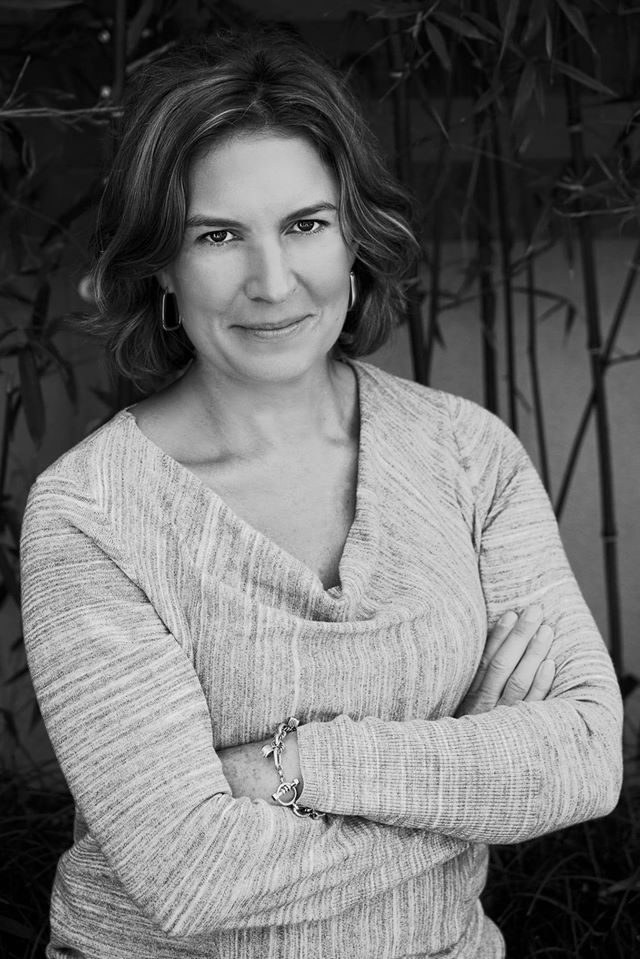
Paula Vogel

If you think Paula Vogel is upset that the Broadway premiere of her Pulitzer-winning play How I Learned to Drive was delayed because of COVID-19, think again. “I’m just figuring it’s gone,” she said of the revival, that was supposed to open in April and star Golden Globe winner Mary Louise Parker. The actor also starred in the play when it premiered Off-Broadway in 1997.

“[The play’s] given me one million times back. And if it gets done on Broadway, all right. So I’m fine about that part,” said Vogel on a video call from her home in Wellfleet, MA.

The esteemed playwright is not sitting idle. After getting sick in March, she’s since recovered, Vogel decided to produce the plays she’s always wanted to see. She has started a series of play readings called Bard at the Gate, of plays that have been overlooked in the American theater. The first play, Kernel of Sanity by Kermit Frazier, written in 1978 and has never been produced, is about the marginalization of Black actors in entertainment. The reading of the play that was done last month had more than 2,000 viewers.

The next reading, The Droll {Or, a Stage-Play about the END of Theatre} will be on July 15 at 7 pm EST (if you want a free preview, the play is available to read on Vogel’s website). The next three will be Bulrusher by Eisa Davis (Sept. 17), Origin Story by Dan LeFranc (Oct. 7) and Good Goods by Christina Anderson (Oct. 29). Every reading will benefit a different charity.

Vogel sees this moment as a time to get back to basics. “It’s almost like we had to burn the entire country down in order to see how terribly broken and morally bankrupt America has been,” said Vogel. “I’m feeling some hope. I’m still in love with the art form because of the writers I’ve worked with.”

Vogel likes to speak in pages, so instead of truncating her words in a through-written piece, below is our conversation with her, with only a little editing. Read below to see how she’s finding joy in this time, how she always wanted to be an artistic director and her advice for all of us.

Jose: Every day in 2020 seems to be getting even more preposterous and there are things happening, that sometimes I see them and I laugh. If God or the universe or whatever, is writing this script, it is the most cliche script of all time. So what would your advice be to this universe or this God, that has given us this script that really looks like one of the trashiest disaster movies ever made?

This is history. This is a hysterical and historical period. And they will pass. I’ve been thinking about Elizabethan drama a lot. And the notion that when there is moral corruption on the human scale, it actually triggers natural disasters. It’s tied to the natural world. And if we think about it, actually, I think that everything has been reflected in the trailers for what we would call high-concept movies for a long time. I do believe that studio films are actually a very good mirror of cultural anxiety. Whether it’s aliens bursting out of Sigourney Weaver’s stomach. Just look at the films in the last five years, there’s something in the very high-budget disaster film that I think was an awareness of how morally corrupt our government is.

I think at some point, the trailers will change, there will be different movies. We may go back to low-concept films, which means character-based—everything that I feel great playwrights give us, which is not necessarily high budget, epic Broadway musicals. It is the listening and the empathy and the character. So, I’m thinking that’s going to flip. But for now, it’s like a car crash that you can’t not watch.

This is the first time that I haven’t been able physically to protest. So I feel very indebted to people who are marching and obviously, there’s a lot that I can do—writing the letters, barraging the representatives. But I have to watch as much as I can on every news program, just to witness because if I see something, even if it’s by the phone or through my computer, I have to respond to that. I actually am feeling so much better, to see the bodies on the streets, to see Black Lives Matter in neon letters outside the White House, to know that now that’s going to be on Fifth Avenue in front of the Trump Tower. But the other thing that’s really touching for me is: this is a fishing village and I see BLM in letters posted on the pine trees here. That’s how much this movement has changed the DNA of small towns. We did have a protest, there were 300 people in front of our tiny little town hall.

The reason that I started Bard at the Gate is because I have asthma and diabetes. I was actually in rehearsal in New York, and all of us got tremendously sick and we thought, Oh, no. And I came back home to Wellfleet. And then I thought, “Well, it’s possible that the virus has my number.”

I don’t want to die before I see the play that I quit my job over in 1978, Kernel of Sanity [Vogel read the play when she was a 27-year-old assistant to the artistic director of American Place Theatre in NYC]. So I started with that. And now I actually have about four seasons worth [of potential plays].

So starting with Kernel of Sanity, The Droll—which is looking in a critical way at the whiteness of theater in the period of time that the theaters were shuttered, and looking at theater and authoritarianism in a really interesting way. Bulrusher, which has been done, but they’ve been done in smaller theaters. Origin Story by Dan LeFranc, which has never been produced and a lot of people think it can’t be produced—it’s a mind-blowing look on gender and looks at suburban whiteness in a way that could only be done in a graphic novel.

And Christina Anderson’s Good Goods, I thought, you know, I should see if we can put the Zoom together right before the election. It’s an extraordinary play. I think it’s only been produced once or twice. But it is an exorcism of racism, a literal exorcism. That is one of the most exciting things I’ve seen.

Apart from this, I would love to do Dipika Guha’s work. I think she’s a genius. But I’m also thinking that if this increased, what would be wonderful is that we have different curators. Like David Henry Hwang, all of the work he’s mentored, and say to him, “Can you show us four writers, four plays, where it just tugs at you?” And then he would tap the next curator and on and on we go. 

I think the blessing of COVID is that we can take this moment, that everybody takes this moment and say, “It’s not about returning to the status quo. It’s about redefining what brings us joy.”

“It’s not about returning to the status quo. It’s about redefining what brings us joy.”

Paula Vogel

Diep: You’re self-producing Bard at the Gate. As a playwright who’s always dependent on other people saying yes to your work, you’re the producer now. Has that given you another lens into the theater? Has it given you some of your autonomy back?

I’m really happy. I have enough money to get Netflix. I’ve got everything I need. I’ve got a senior shellfishing license so I can pick up my own oysters. I’m living high. But when I was working the three jobs in New York, I was so frustrated that I started a theater company called Theatre with Tea. And realized I’m not good at asking for money. It lasted two shows. Then in Providence, I started something called Theatre Eleanor Roosevelt. I just like starting theater companies because I loved coming up to friends saying, let’s come up with a name. And that lasted a year. So for a very long time, I thought about being an artistic director because of the lack of autonomy.

And then the last go round, I was a finalist for artistic director at American Repertory Theater [in Boston]. And I knew that if I got that job, it would end my writing forever. But I also thought, what an opportunity because I still think that theater is actually about community and community education. And I thought, what an opportunity to take down the gate around Harvard. So I basically pitched and started making up seasons of new plays and playwrights, and matching them to classes and workshops. And opening up the classical canon. I could see the Provost going, “Oh man, this is a money loser” [laughs]

I made it in front of the hiring committee, and they were like, thank you. And then Diane Paulus got that gig. So that was the last time that I actually went for it. But what I actually do believe is that every 10 years, we need to be able to change over artistic directors, we need to be able to change over university faculty to be able to keep up and push the field forward. And that push is very important.

“I think it’s very, very hard for us to believe in ourselves. We are our first worst critics.”

Paula Vogel

Jose: I want to talk a little bit more about joy, especially because we’re all writers here. And sometimes the process of writing is something that we have a hard time finding joy in. And I would love it if you could share how you find joy in the process.

I need to put it on my wall: “Follow your joy.” Because what you’re saying so resonates with me. I think that’s right. And I think that the difficulties is that we internalize the gatekeepers, and we sit down and we’re hearing the gatekeepers—I’m still hearing people who literally said to my face when I gave them And Baby Makes Seven, “You’re a sick woman.” One agent called me up and said, “I wouldn’t pay $20 to see this, I wouldn’t see it for free.”

Once somebody says something like that, how do you get rid of the poison? Because what I think what we are all fighting against as writers is that there’s an exposure that’s necessary for the theatrical form. And you have to put up the breastplates. But when you find the remarkable artists, when you’re in a room with an actor or a director, it’s our obligation to quickly dismantle the breastplate and take it in and be absolutely visible. So the question is for me being visible, and getting rid of the poison when I write. I have to say, the poison accumulates, it takes me longer and longer and longer.

But what I do is, I literally take scenes and lines and characters, and not until it’s written do I tell people. There was a stage direction in Indecent [Vogel’s Broadway debut in 2017], when I wrote: “Lemml shows them America.” I felt that was a Sarah Ruhl line, here’s a Valentine for her, you know. Sometimes I’ll think about Quiara Alegría Hudes and the amazing things she’s told me about music and theater. She’s really changed the way I look at it. And sometimes I’ll try a scene where I actually try to do just a rhythm. You know what I mean? And then I’ll say, this is my love poem. This is for her.

Always in my plays, always, always, I put something in for my brother Carl [who died of AIDS in 1988]. And I think no matter what I’m living through, what I’m experiencing isn’t anywhere near the experience he felt being an out activist in the ’60s and ’70s. And so I’m trying to find ways that even as a kind of insider fun game to myself, that I bring in the positive energy.

The other thing that helps is really being very careful to accumulate your fellow travelers. To accumulate the first readers around you, to accumulate people who will do you no harm, but actually believe in you more than you do. I think it’s very, very hard for us to believe in ourselves. We are our first worst critics. And so I asked my friends, “Will you hold me to a deadline where I have to send you 20 pages?”

And all they have to say back is, “I read it, keep going.” I don’t need them to critique, I don’t want a critique. I just want someone saying, “Come on. Keep it going. Keep it up.”

And then likewise, when the thing is finished, I have first readers. The other thing that I feel that we do accrue, which is wonderful, is that we accrue actors and directors. Now we need to have at least five accrued, that’s all we need—that will tell us the truth. So five mentors who will invest that emotional commitment. And that’s it. I mean, that’s basically the lifetime. All of those things I think we all can do and not wait for the permission.

Andre Bishop is a remarkable artistic director, but I’m not sitting around waiting for permission to get into Lincoln Center. And the truth of the matter is, is that Andre did me a favor, he’s like, “I’m not your mentor.” And that’s so much better than pretending to be. And a lot of theaters do that. And they do it as tokenism. And then they’re not there. They’re not there. They’re not giving an emotional investment. Quiara had the courage to write about that. And to say, “I need to take care of myself.” Because if they’re not true mentors, you’re getting poisoned. So that’s about it, I think.

And I’m so glad you’re feeling joy. And the thing that I really am wishing is that both of you are taking this positive, incredible energizing step and then using this as the fuel when you sit at the computer—this is what you have to put into your own writing, that you are giving others that energy.

Karen Zacarías on “The Copper Children” and How History Keeps Repeating Itself

Interviews
Karen Zacarías

Throughout her career, Karen Zacarías has tackled a myriad of genres to create an oeuvre that speaks to the ways in which nothing is more quintessentially American than reinvention. From children’s plays to sumptuous telenovela-inspired melodramas, the Mexican-American playwright has married her cultural and intellectual sensibilities in a way that satisfies audience members, challenges what artistic directors deem works worthy of being produced, and has turned her into one of the most popular writers in the country.

Currently, Oregon Shakespeare Festival is streaming The Copper Children, a play inspired by what was once called “the Trial of the Century,” in which the custody battle for a child unveiled the ways in which class, religion and immigration intersected in people’s journeys to become American. The copper children in the show title were orphans, mostly Irish, who were put on trains as toddlers in 1904, to be adopted by families out West. In the play, one of those families is a Mexican couple, who is at risk of their adopted child being taken away from them.

I spoke to Zacarías about Copper Children, how she found her mission as a writer, writing during a pandemic, and telenovelas.

Is this the first play of yours that’s a premiere that’s happening not on stage but rather that was filmed and that’s going to be streamed? 

I had a Destiny of Desire which had already had a life day and it got canceled. It was going to be at the Guthrie [in Minneapolis], Cincinnati Playhouse [in Ohio] and Milwaukee Rep [in Wisconsin] and that got a stream. It had two weeks of performances [in Ohio], and right when they cancelled, they kept all the actors one more day to film it. And this one [Copper Children], we had two previews an opening night, and then it closed and they had just taped it for the understudy actors, which is what they do.

Destiny was filmed on purpose, knowing that it would be streamed, but this is taking the video that they already had and trying to make something out of it. So, we did have an opening, we had the two previews, opening and then I left and I think there was one more performance and then it closed. You always have a very weird schedule. As you know, you do previews and you go back to the rehearsal hall for two days. Because the other plays that are in rep are having previews and then you go back for another preview and you know. So anyway, it’s early in the process. These are before the play opens basically.

So there were three audiences that got to see the play live?

Yes, there were paying audiences that got to see it. Those audiences you see in it, were real paying audiences. My last normal day was opening night of this play, and I flew home and then we went to hell in a hand basket. 

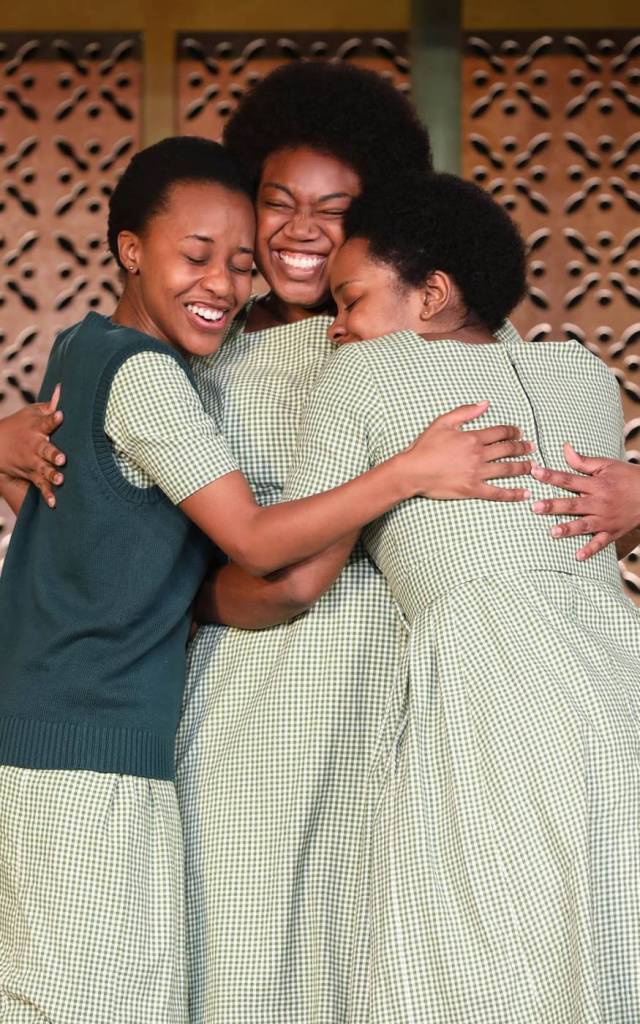
Armando Durán, Carla Pantoja, Sarita Ocón and Eddie Lopez in “The Copper Children.” Photo by Jenny Graham, Oregon Shakespeare Festival.

You called it your last normal day, what have your non-normal days been since while you’re in quarantine?

Well in quarantine, I have three children and a husband and a dog, so I’m trying to keep a house joyful and safe. My husband got COVID early on in it, we didn’t know till afterwards. We’ve had lingering issues here, and my former agent died of COVID and his husband died of COVID and my best friend died, so there’s been a lot of loss. This was the biggest year of my career with The Copper Children opening and Destiny of Desire being in three theaters. I was doing a bilingual Romeo and Juliet so it’s weird to work for 25 years in the theater and have your best year and then of course it never happened.

In other ways we were lucky—we live in a house with windows that we can look outside and my children are not fighting with each other. We watched My Brilliant Friend and my parents are helping, so it’s that kind of thing—of taking pleasure in the small things, and from an hour to hour basis. I feel lucky. You are living by yourself, meanwhile I have a whole menagerie of people in my house and there’s other challenges, but it’s a different kind of challenge for sure. It’s a weird process, a weird way to both try to grieve and survive and move forward and be positive all at the same time. 

You mentioned finding pleasure in the small things. Maybe because I spend so much time by myself, I have come to realize that those small things are the big things. I wonder if your writing ritual, if you have one, has changed, or have you found a new way to connect with your pen and paper, or hand in keyboard, that you hadn’t or that you weren’t aware you could before quarantine? 

As a writer you always want more time. I travel a lot for my work and all of that, and so suddenly there’s all of this time, but it’s also a little bit like running through water, so it doesn’t really feel real, it’s a little disconnected. I know some people have been really productive. I’ve been productive but mostly in other genres. I’ve been doing genres that aren’t theater per se, like a little bit of TV, a little bit of novel writing, just to try to find the words to connect.

“As a writer you always want more time.”

Karen Zacarías

I started writing The Copper Children five years ago and it ended up becoming such a story of our time that I don’t know what the story of this time is exactly just yet, because we’re all living it. So I find that going back to the past is really, really interesting. I’ve been writing a lot about my family, which I always meant to do years ago. And now finally, I’m writing all of these short stories based on years and years of coming from a very large, very crazy, very complicated family. So kind of capturing that has been a delight. There’s just really no deadline. I work well with deadlines, there’s no pressure, which is good and bad.

Your grandfather, film director Miguel Zacarías, who inspired The Copper Children spiritually, lived over a century. I was heartbroken to read his wife passed away decades before he did. I’ve wondered what it was like for you to have someone in your life whose life had spanned a whole century because in a way when I was reading The Copper Children, it felt like a century’s worth of history in a single play.

My grandfather is a complicated character. He was a movie director in Mexico and part of the reason why I’m writing this book is because he was bigger than life, but not always the kindest person in the world. He was very charismatic, but also kind of self involved in ways, and he was an artist in a very different way than I wanted to be an artist. I think in many ways he’s inspired in my work, but the reason why I write and the reason why he did are very, very different.

The idea of play is that when you see it’s set in 1905 you think, “Oh, that is so long ago, that’s so crazy.” And then when you find out at the end that people were dying in the ’80s that were alive through this century, you realize that’s part of our current situation. Those children [in the play] lived in my grandfather’s age, so that made them more real. These are not just characters in history, but we actually found the grave of one of the kids about 90 miles from Crescent City, and these were ordinary people, some good and bad, with good and bad ideas, but all their stories have been lost.

Kate Hurster, Rex Young, Gabriela Fernandez-Coffey, Caro Zeller and Christopher Salazar in “The Copper Children.” Photo by Jenny Graham, Oregon Shakespeare Festival.

You have this complex relationship with the legacy of your grandpa. In a way, I find it very poetic that this play that is in a way about him, ended up being almost a movie without you wanting it to be a movie. 

Yeah.

Growing up, I remember the elderly women in my house saying “ahí viene Martín Corona,” which is a reference to one of the most famous films your grandfather directed. I never knew what that was and then I ended up watching the movie. So I guess we were connected, Karen, even before we lived in the same country.

Wow, yes, this is a very challenging story to tell. And so finding a theatrical way that is authentic is what led to the Brechtian style.

Once I read that every movie, in a way, is about making movies. I was very touched with the fact that in The Copper Children, you establish that Katie’s a puppet and that everyone helped Katie move and work and come to life, which in a way makes this theater about making theater.  

Yeah, and she has no voice, she never speaks. But she’s present during the whole play. She doesn’t even have red hair. She’s completely bald. But by the end, I think hopefully what happens, is that the audience sees her with red hair and she’s transformed from a prop into a person—from a Catholic, Irish immigrant to an American Protestant in the scope of the play. That transformation happens and she goes back to being a prop, because children are used as props a lot in politics. It was fascinating because we didn’t have a puppeteer, everyone learned to puppeteer and everyone manipulated Katie at some point in the play. 

None of your plays are like the other, and usually if critics and audiences can’t put you and your work in a box, they don’t know what to do with you. Which for me makes you quintessentially American, because you defy genres and you defy what people expect from you. I think that’s more American than being able to say, Karen Zacarías does this one thing. With that in mind, how do you define being an American?

It’s so interesting, I became a US citizen two years ago, and it took me a long time to get a green card. But I held on to my Mexican citizenship, because it’s something that made me proud, I wasn’t ready to let go of it. But when Trump became president, and I live in DC, where, you know, voting is…anyway, I learned a lot in the last election. I finally said this is the time to actually go for citizenship.

When I moved to this country, we were going to be here for nine months. My dad had gotten a scholarship to work on socialized medicine at Harvard, and we came here. And there’s political reasons why his work was controversial, because he was helping prostitutes and men in prison and he dealt with sexually transmitted diseases. And that was the year AIDS started popping up, and it completely changed the course of our immigration story. We stayed and my dad became part of the CDC and worked in public health and changed people’s ideas and attitudes—putting the health of young gay men as essential to the health of this country and that the marginalized are part of it.

So we grew up in this environment where my dad told us, don’t worry about being happy, worry about being useful. And that’s really hard when you’re an artist, right? Because it’s self indulgent for me to sit down and write. And so part of the idea was that writing for me became a weird, different public health thing where you hold up ideas to examine, about what that means in different ways. And hopefully, ways for me to heal or other people to heal.

“My dad told us don’t worry about being happy, worry about being useful.”

Karen Zacarías

So on purpose, I never wanted to be boxed in. I wrote for children. I wrote comedy, I wrote drama. I didn’t want anyone to ever just say, “Oh, I know who this person is. What they do, this is their thing.” In some places, I think it might have hurt me, and in some places, it helped me because of how I navigate the world. I see things and can relate to them because I’m Mexican or because my great grandfather was born in Lebanon. I grew up in a very multicultural home and actually found ways to connect with people on a lot of different levels. If you don’t learn, if you don’t grow every time you write, then there’s no point, no matter what happens on the other end.

Adriana Gaviria, Fidel Gomez, Ruth Livier, Cynthia Bastidas, Mary Bacon and Yunuen Pardo in the Denver Center Theatre Company’s world premiere production of “Just Like Us.” Photo by Jennifer M. Koskinen.

How do you know when you have learned something after you finish writing, are you your harshest critic? 

Yes, of course I am my harshest critic. I think over and over again of the audience and when you start writing a lot of theater for young people, young people are very, very honest in their response. They will let you know if they’re bored, they will laugh at something you did and adult audiences tend to be much more cagey for that. But a lot of what I’ve written, why I enjoy comedy, or breaking the fourth wall, is that I am not interested in writing the perfect play. I’m interested in having a connection with the audience. So it’s very exciting to me, that the audience starts talking about the play or where people gasp or something like that. Going to a play where everyone is quiet, unless it’s because they’re on the edge of their seat, is very weird to me.

Is there a sound that once you recognize it from the audience, you take a breath of relief? Like, OK, someone got it.

Yeah, it’s different for every play every and every time. There’s a moment where an audience is sitting there with crossed arms, saying, “Entertain me, show me what you’ve got.” And then there’s a moment you almost don’t even hear, it’s a shift in the seat. They’re starting to understand the language or you can even feel confusion. What’s happening? And I see it in myself. I feel like that. I feel that way with Shakespeare, where in the first five minutes I don’t understand anything. Then something clicks and you need to trust the storytellers here and there’s a moment where that happens.

And I’ve learned that talkbacks aren’t that helpful to me anymore. What’s helpful is sitting at the back of a theater and seeing how the audience kind of moves like an ocean. There’s a moment of surrender that happens. And you have to be patient because people give up the ghost at different times, and you can’t just write for the one person who doesn’t want to get it. 

When I was reading about your childhood and growing up with your dad and his work on HIV and AIDS, I wondered what it was like to talk about COVID with him. It’s the same all over again, the failure of a government to act has led to disaster. Are we doomed to be repeating the same mistakes over and over again?

When I started writing The Copper Children, the policy of child separation had just started. It just was originally a story about the trial of the century that dominated newspapers, and it isn’t even a memory in any of us because none of us were taught about this. And then all of a sudden history caught up with the play. That moment where the kid is ripped out [from her adopted parents], that’s exactly what’s happening at our borders now 115 years later. We see the importance of history repeating itself and the idea that just because we want something not to be that way that it will go away.

“It’s really, really weird how many people are committed to an attitude that denies other people their truth.”

Karen Zacarías

I see with the pandemic that not talking about something is the worst thing you can do for this type of thing.  That relentless examination and reckoning is something that’s important. I don’t even know if Ronald Reagan brought up AIDS during his lifetime. I think it wasn’t until Bush, that the word AIDS came out of the mouth of a president. The politics of pandemics, racism and viruses and all those are actually solvable by the idea of public health—all that needs to change in attitudes, and we can find solutions. But it’s really, really weird how many people are committed to an attitude that denies other people their truth.

And speaking of that, now we can talk about New York theater.

[Laughs]  

One of the things that gives me the most hope about being in quarantine right now is that I hope that the country and the world are going to realize that NYC is not the theater capital in any way. This idea that Broadway is the ultimate goal and that New York is very hip and avant garde is a lie. New York is, in fact, very provincial, it’s very commercial. Meanwhile in quarantine, I’m able to see one of your plays for the very first time! I’ve been seeing theater from all over the world, from all over the country, and that makes me very excited. Is the idea of decentralizing NYC something you hope we’ll be able to maintain as an industry?

It’s so interesting, because you look at me or Lauren Gunderson, some of the most produced playwrights in the country, we actually don’t have a presence in New York. And part of it is because we don’t live in New York City. I don’t know a lot of the people who are involved in making decisions. I loved going to New York when I was younger but my work was working in the community here in DC and I built a theater company that works for young people and in community, and that’s how I did work.

During the Obama years, we saw young people running for office, realizing that we have to work on our garden at home—from the bottom up, change things at the top which I think is really exciting. And I think you’re right, it’s happening in the theater. People ask me why I was allowing the video of the play to be seen, when the play is on the dock and might be done next year, and I said, well because this way my family in Mexico can see it, people who never had access can see it. Considering that it was not meant to be presented around the world, I think it’s a really good quality video and because it’s so theatrical and so presentational, it works well as a video. I am hoping it makes people want to be in the theater.

New York is not the center of my theatrical world. Would I love to get New York’s stamp of approval? I would be a liar to say no. Because in some ways it feels like a weird rejection. But I had such a healthy, lovely, robust career doing what I believe in, working with people that I do like and having relationships with different theaters around the country. In some ways it took the pressure off to just do what you want.

So, yes, I’m so excited that people now have a choice. Whether they want to see one of my plays or not. Luckily we’re all going to have to figure out how we create theater, hopefully in open spaces. We’re going have open things up, both in a metaphorical way and in a literal way to make sure to let a lot of infectious and problematic behaviors out of the room. 

The word telenovela is something that we have discussed before on Twitter, because of the way in which white critics attach it to anything in Spanish without any of the knowledge of having actually watched a telenovela. But we actually have never talked about telenovelas, so my last question for now is: What’s the ultimate telenovela for you?

Oh, my goodness, I saw so many. I will tell you my favorite one was the first one I ever saw as a little girl, in Mexico, because it made such an impression on me. I don’t know if it was the best, it was called Viviana and it had Lucía Méndez and Héctor Bonilla who were both theater actors. It involved a woman running down the beach in this torn up dress and she suddenly sees one lover on a horse. It was awesome! He was on a horse and then the other lover is in the ocean and she can’t decide. My cousins and I, whenever we go on the beach, we do the Viviana run.

I have this delightful memory of being eight or nine years old, and my sister and I would do telenovelas, we pretended to slap each other and it was just so much emotion. It was so delightful to do. And then as we grew older we had to look down upon them—we have this whole complicated relationship with melodrama. Playing with and testing and also honoring the genre was really an interesting exercise of coming to terms with so many issues and both the poetry and the problems of the political life of being a Latinx person who was born in Latin American who came here. Telenovelas are such an interesting avenue for that.

The title sequence for “Viviana.”

I agree and you blew my mind right now. Lucía Méndez started in theater?

Si and Héctor Bonilla too, I saw him in a musical about a Noah’s Ark that was out of control. Telenovelas are such a disparaging form in so many ways. And yet it’s one of the things that kind of hold and defined us, it’s an interesting paradigm. And it’s been really interesting to see people’s response to it, both to delight in it, but also to use it as a subversive way to talk about important things. Not everything needs to be a straightforward drama or a tragedy like The Copper Children. It’s been fun to be a Latina that writes things that are important to our culture, but also are not necessarily just about being on the outside, being the other in a society.

The Copper Children is now available to stream at the Oregon Shakespeare Festival through July 22.

Review: Why We “Binge”

Reviews
Courtesy of La Jolla Playhouse

It seems that in quarantine, the act of binging has become a no-brainer. Indulging in any activity to the point of excess is the way in which many of us cope with boredom (binge that TV show you love or haven’t had time to watch in the past), anxiety (binge on chocolate or vodka to make the pain more palatable) or the uncertainty brought on by the COVID-19 pandemic (binge on natural supplements and home remedies in hopes that the virus will pass you by). 

And yet, binging is also accompanied by an insidious side effect: numbness. If we spend days in a row watching the same television show we might stop caring about the plot twists, the characters’ emotional journeys, or find ourselves scrolling on our phones because eventually, we need an escape from the escape. Too much chocolate can lead to indigestion, and there are few things as painful as a hangover brought on by drinking alone. 

It’s no surprise to realize that even binging must be done responsibly. Enter the ironically titled Binge, a one-on-one performance created by Brian Lobel (I loved, and wrote about, his You Have to Forgive Me, You Have to Forgive Me, You Have to Forgive Me here) commissioned and produced by La Jolla Playhouse, in which Lobel and friends (nine other multidisciplinary artists) become your TV doctors, creating a tailor-made performance for one, which ends with a soulful prescription: the right television episode for you right now.

Before your Zoom session, you must answer a thorough questionnaire meant to pair you with the performer you need. Filling out the survey, like anything else in the show, requires a commitment to mindfulness and a profound examination of self. Don’t approach this Binge, if you’re not ready to look at yourself with the same level of attention you give your favorite TV characters.

Leslie Knope-types, the optimistic lead of Parks & Recreation, will be ready to answer questions about how they’re treating themselves, or how workplace inequality has affected their mind, body, and heart, but might need a little bit more time (and research if they’re very Knope) to answer questions inspired by The Flavor of Love franchise. I aced the Sex and the City portion of the survey but spent more time than I’d like to admit pondering the answers to questions inspired by Star Trek: The Next Generation, Deep Space 9, and Voyager. 

Although you don’t have to answer every single question, and you certainly are allowed to skip the survey altogether, I found the pre-show portion to be essential to my enjoyment of the experience. Thinking how my life relates to Gilmore Girls, which I love, and The Real Housewives franchise, which I have sworn never to watch, made for an interesting exercise in which I meditated on the ways in which pop culture, even in the iterations we haven’t experienced or that are more foreign to us, have seeped into every aspect of our lives. 

I can’t tell a Star Trek: Voyage apart from a Star Trek: Deep Space 9, but I know about Dr. Spock’s over intellectualization of emotions, and how it relates to my inner Miranda (that’s Cynthia Nixon’s character from Sex and the City for the uninitiated).

Although you’re not told how your performer is assigned to you (I crossed my fingers I wouldn’t get a reality show recommendation) based on the care with which Lobel approaches his work, I knew I could trust him and his friends to provide me with precisely what I needed. And boy, did they do just that.

On a muggy Brooklyn afternoon, I connected via Zoom with the Berlin-based artist Season Butler, whose warmth instantly made me feel like I was talking to a lifelong friend. Like Blanche DuBois I find that the kindness of strangers is sometimes more dependable than the weary ears of those closest to us, who perhaps expect us to grow faster than we do, but don’t always have the heart to tell us so.

Within minutes I was telling Butler about my childhood, sharing stories about my father and grandmother, and showing them my apartment. What surprised me was to see Butler distill the essence of what I shared into a couple of phrases, written in a small blackboard, that took my breath away. How a stranger so far removed from my life and history had come up with what I announced would become a new mantra is the power of Binge.

Live performances usually hold a mirror to show us who we are as a society, but rarely do they look directly into our souls at such a personal level. Rather than hiding my discomfort as when I feel a character in a stage show has “read me,” Butler’s kind wisdom disarmed me. 

This is why I find Binge’s title to be ironic. Binging requires a certain level of disassociation from self and from others, to become so immersed in something that we forget ourselves. At this Binge, I was affirmed. 

When Butler reached the portion of the performance when I was to be prescribed TV episodes to soothe me, I took their recommendations of The Simpsons, as the bonus to what had already been a spiritual experience. That my episodes were so fitting to my favorite character in the show (I’m a total Lisa) wasn’t as surprising as the fact that Butler also mentioned keywords that had come into play in a conversation I’d recently had with my Homer Simpson.

Rather than dwelling on the coincidence and mystery of it all, after saying our goodbyes, I sat on my couch grateful for the spiritual connection I had made with someone I wouldn’t have been able to share with were it not for where I am in the world today. In Binge I also found the unthinkable: a Zoom call I wanted to last forever.

To have one’s soul touched by a stranger through a screen is after all the reason why time after time we revisit our favorite TV shows when we’re aching. To overcome the numbness and revel in our humanity. This is truly why we binge.  

Binge runs through July 12.

Ep 7: Our “Hamilton” Congress! (Feat: Kelundra Smith and Heath Saunders)

Podcast

Every week, culture critics Diep Tran and Jose Solís bring a POC perspective to the performing arts with their Token Theatre Friends podcast. The show can be found on SpotifyiTunes and Stitcher. You can listen to episodes from the previous version of the podcast here but to get new episodes, you will need to resubscribe to our new podcast feed (look for the all-red logo).

Hamilton, Lin-Manuel Miranda’s epic (and very expensive) musical has moved from the stage to screen thanks to Disney+. A musical as big as Hamilton deserves a big discussion, a cabinet battle, if you will. The Friends are joined by actor and composer Heath Saunders, and theater critic Kelundra Smith. They discuss how Hamilton hits differently in 2020 than it did in 2015 when it premiered, how it’s OK for art to be problematic, and whether Hamilton could win the Oscar. This episode was recorded on June 6.

Here are links to things the Friends talked about in this episode.

Below is the episode transcript.

Diep: Hi this is Diep Tran.

Jose: And I’m Jose Solis.

Diep: And we’re your Token Theatre Friends people who love theater so much that Jose owns not one but two Judy face mask that you could see if you are watching this on YouTube instead of listening to it.

Jose: And I’m wearing my mask for a very special reason. I’m so excited that today we have like a really extra super special—is that even a word? Probably not. We have a special very special episode because it was so big and so long. That Diep even called us Infinity Wars, which is like a straight thing, right?

Diep: Yes, it is very straight. It’s Token Theatre Friends: Infinity War, Part One.

Jose: We have a very long episode and we want to share all the good stuff that we have for you. So we ended up deciding to instead of like, super editing our episode, we are going to give you two pods instead of one this week. We have part one, which is going to be an interview with George Salazar, who you know from Be More Chill and if you were lucky enough to see him in Little Shop of Horrors in California, which is why I’m also wearing this.

Diep: Which you also cannot see if this is the podcast.

Jose: I’m very nerdy today. I’m sorry. But George is doing Night of a Thousand Judys on July 14, so we’re going to be talking to him about that and what he’s been doing in quarantine. And in a part two Diep, what are we doing?

Diep: During part two, we have our Hamilton Congress, where we have two very special guests come in to talk to us about wait for it, Hamilton, because we’ve noticed that just like in 2015 right now, most of the people critiquing Hamilton are white people, which is pretty problematic because the show is written by a person of color and is starring people of color. So why are there very few people of color who are not named Soraya McDonald writing about it? Who knows, but we decided to do something about it by bringing in two amazing guests to talk about it. First we have Heath Saunders, who is an amazing actor and composer and you may remember them from Natasha, Pierre & The Great Comet of 1812 on Broadway. And our second guest is Kelundra Smith, who is an arts journalist and friend to me and Jose. And she critiques theater and Atlanta for ArtsATL and the Atlanta Journal-Constitution. It’s a really long discussion, but we promise you it is worth it because we go in, we’re going far, we almost didn’t come out.

Jose: Will that be satisfied?

Diep: We hope you’ll be satisfied. But you know, we will never be satisfied with our Hamiltondiscussion because we could have gone for longer.

Jose: Oh, my God, we could have, yeah. And we put in a lot of work, work.

Diep: Who’s Angelica in this relationship?

Jose: I guess we can both be Angelica and Peggy. None of us want to be—Eliza’s so boring, right?

Diep: Eliza? Eliza is really good at her job, just being a wife.

Jose: God bless her. I want a revolution. Not a revelation. Okay. Welcome to part two. This is our Hamilton Congress. The house is now in session.

Diep: Okay, we are here for our cabinet battle number one with our very special guests, Heath Saunders and Kelundra Smith. Can someone introduce themselves and tell us who you are what you do. When interesting, Hamilton?

Heath: Hi, I’m Heath Saunders. I’m a composer, writer and an actor. I saw Hamilton on Broadway in previews, and then I didn’t see it again until the Disney+ film. So I have a long standing relationship. It’s also been very interesting to me because Hamilton was one of those things that people told me I had to see because they were like, “You can be the next Lin-Manuel Miranda because when you act and you write, and you act in the things you write.”

There’s a very limited context for what you can do when you’re a person of color. You’re a person of color, you write, you act, you must be a Lin-Manuel Miranda. And I was like, Lin and I do very different things. But you know, what can be done? So I have a long a long history with the Lin-Manuel Miranda world, deeply impressed by him as a general rule.

Kelundra: Cool. I’m Kelundra Smith. I am a theatre critic and arts journalist based in Atlanta. I freelance for a number of publications around the country, including the New York Times, Food and Wine magazine, American Theatre and Arts ATL. I saw Hamilton in fall of 2018 in Charlotte, NC when it was on the first round Equity tour. And funny story, actually, the reason I saw it in Charlotte is because I was unable to get press tickets to see it in Atlanta and raised a stink about it on Twitter and had a lot of support and raising a stink about it on Twitter, which led to me getting a call from the national press agent for Hamilton, who then said, “you know, we have been trying to get more critics of color in the room where it happens. And we are deeply sorry.”

That is how I ended up seeing it in Charlotte. So that’s an interesting tidbit there and so seeing it on Disney+ was a different kind of experience because that’s not the cast I saw. And so I’m not only comparing the live experience to the on-screen experience, but also the cast I saw compared to the original cast, which I have to say there are some performances I liked better from the tour cast.

Diep: Jose, did you see it at the Public?

Jose: No. By the time that I wanted to go see it, it was too popular and I never won the lottery. So I saw it for the first time on Broadway in January 2017.

Diep: I saw it at the Public. And then I saw I saw it again on Broadway. And it’s funny that they were talking about trying to get critics of color in there because I fucking had to, like, practically sell my firstborn in order to get a ticket. I’m actually writing about this. I’m not freeloading.

Jose: The first bill that we’re going to introduce to the session today is, let’s talk about the difference between seeing the show on stage live, you know, back when we were allowed to see other people in public and brush against them. And seeing it on television or your iPad or your iPhone or wherever you saw.

Heath: Yeah, I will offer that of the pro-shot musicals that I have seen, the Hamilton film is very effective, if not translating the exact experience of seeing the show live, it does translate the sort of thrust of a live performed show, which I found really nice. Because as a person who like, you know, adores musical theater, it is interesting the ways that it’s shot often make it seem significantly worse than it is.

And I didn’t really feel that way with the Hamilton film, which I sort of liked. But one of the things that I thought it lost is, is actually it’s both a criticism of the original show and the sort of thing that I liked about the original show, which is that the original show was so much information constantly. Act One especially is just like an assault of visual information and aural information that makes it quite difficult to follow at certain points, and it actually makes it so the parts of it which I think are expertly crafted, we all love the “Helpless” into “Satisfied” and moments. I can’t actually technically speak for you, but for me that moment of stage craft was so impressive, and so just like stunning, I knew exactly where to look. I knew what was happening over. And where my eye was going. Everything about that moment was so thrilling to me.

And while in the film, it captures the sort of story moment of it, the aggressive shifts of camera made it so I wasn’t able to appreciate what I consider the stage craft of that moment. And so it ended up being a little bit like, Oh, yeah, that happened. And, like what happened for me in the show when I saw it, when I was like, out of my seat, like this is this is expertly crafted. Anx, you know, that’s a little bit disappointing. But again, it’s sort of a double edged sword here that we’re talking about, which is like, it is not meant to be a film. So this version of it, I think, was a really effective capturing of it in this new medium. And also, I lost some of the things about theater that I love.

Diep: That’s a good point. I actually don’t think the choreography was best served through it because most of the time, the camera wasn’t on the ensemble who was doing the brunt of the movement. It was on the main performers because yes, that’s who we want to see. But like there’s the moment where Hamilton gets shot and Ariana DeBose plays the bullet and you barely even see her do that epic slow walk across the platform because you’re constantly on Lin-Manuel and so like I feel like that’s the thing about film, the camera tells you who is important. But in theater you’re allowed to look wherever you want to look and take in the entire stage picture. And so I kind of missed a lot of the wider shots I remember in the theater, because Tommy Kael was telling me I need to look that right here at Lin while he’s talking. I’m like, No, I want to like Ariana. I love what she was doing right there.

Heath: As a general rule I always want to look at Ariana DeBose.

Kelundra: Yeah, I would agree, I think that if anything, I think the focus of the camera helped to clarify story in some ways, if you had missed it when you saw it live. And then of course, there’s closed captioning on your TVs, so then you know, you’re like, Oh, okay. So I think there’s some clarity there. But what I really missed, in addition to I think one of the strengths of Lin-Manuel’s musicals in general is all the stuff happening, the background, he loves a street scene that looks very realistic. So we’re now going to be on a street sidewalk in New York, and there will noww be people going by in the background. And some folks are going to be holding umbrellas, and maybe it’s raining.

And so that’s some of the stuff that you didn’t get by watching it through the screen on Disney+. And then I think the other thing that I miss too, is the energy of the music doesn’t come across through the screen because there’s something about that live orchestra, that sound is all around you and you’re swallowed up by it. Now the numbers that did come across like the room where it happens, is still, it was amazing in person, is amazing on screen like you’re just like, it’s in your head, you’re jazzy, you’re singing. But then there are other musical numbers that I really liked in person, but the energy of that live instrumentation is what boosted them, but you didn’t get on screen.

Jose: The movie version I feel is a great example of what you’re saying which is you know, movies are like a director’s medium right? And yeah, like choosing what to focus on is I mean, I really admired this first one because it must have been like hell because like, yeah, Lin loves all his Eaaster eggs, which are usually happening all over. And I thought that this would be a great example of a movie that—remember back when DVDs had this like, multi-angle option where you can choose where to look? This would benefit from that. Because if we had gotten, you know, that standard shot that we get when shows are recorded to preserve them at the Lincoln Center library, you know, those are terrible. Like, we don’t want to look at the whole thing all the time. So I was really impressed, actually. And I went, did you hear that people were talking about whether this movie was gonna be eligible for Oscars or not? Because like Oscars are bending the rules this year to let, no it’s true, to let movies that were ỏiginally—

Kelundra: No.

Diep: Wow, controversial opinion. Kelundra. Tell us more.

Kelundra: No, because there’s going to be a film adaptation of Hamilton that is not the Broadway show.

Jose: But I mean, right now, this is the movie that we have. So

Kelundra: I’m all about genre-busting media, right? Like I want media to be multi multimedia. I love that we sort of blur and blur the lines. I think the challenge that I have with the idea of this particular I mean, I even have a hard time calling it the Hamilton film. I’m like, it’s not really a film. I know. I appraise it. It’s funny because as soon as I go into the like, do you want me to appraise this as a movie?

Then I go into a little bit of the like, there’s camera things I’m like, it’s not like cinematically an extraordinary work beyond the idea that the job is to convey what’s happening on stage. So, I mean, I think about like, you know, Lars von Trier does some movies that are like staged. But to me, what he’s doing is a film, like they’re not meant to be watched live. Hamilton remains a show. It feels to me, the Hamilton film feels like a really, really great archival recording. More than a piece of art on its own. Now that it’s coming out of my mouth, do I really think thaht? But I think, you know what, I’m gonna stand by it. I’m gonna stand by it.

Diep: That’s art criticism. You don’t know until it comes out.

Jose: I’m glad you brought up Lars here because that’s gonna challenge this notion, Manderlay and Dogville are shot on a soundstage. Have you seen those movies?

Diep: No, but I remember the Anna Karenina, the Joel Wright, the one with Keira Knightley. That was done like a play because there was a stage and that was like a metaphor.

Jose: And Lars Von Trier films, basically shoots them in a completely empty soundstage. And it’s very Brechtian. And that he shoots from above, you can see, like, the outlines of what the buildings are, for instance, telling you what’s there. So it’s a movie without sets, without objects, without props, and you have to imagine things and there’s a few sound effects. They’re like fucking fantastic. I was not the Academy when I was talking about this, but this is a real conversation that people are having and if the Academy deems that this is right and that the movie can be eligible for Academy Awards, it will be eligible for Academy Awards.

Heath: Even if it is, there ain’t nothing we can do that about.

Kelundra: Yeah, I will I will not be happy about this. I think it is its own product. Because I mean, unless it’s creating a new genre of film like what category does this go under? Is it documentary? Is it feature what is it? I mean, I’m okay if we’re saying we’re going to make a new category of film for Broadway or theatrical, you know, shows shot? What is that? Like? I need somebody to tell me what category it falls under. Because to me it is not a feature film. And I don’t know that it’s fair that you would put Hamilton in the same category as something that had a bigger budget, and CGI, like I just don’t, I don’t know, what do you do with that? I’m curious, I’m genuinely asking I’m not, you know.

Jose: Kelundra, since you’re saying that, isn’t categorization precisely what keeps people of color from participating in all these things, you know, are they even making real theater if it’s not this or that, you know? And if we go and like, try to categorize even something like this for a year, where, you know, a lot of movies aren’t being released at all, it would give, you know, actors of color the opportunity to compete in the Oscars race, which is usually extremely white. Why this need for categorization, when being classified is how racism started, how we are kept from participating.

Kelundra: Our desire to remove categories from the Oscars doesn’t remove categories from the Oscars, they’re gonna put this movie in a category. I’m not saying what Kelundra wants, I mean, the Academy of Motion Picture Arts and Sciences is going to put this movie in a category whether we like it or not. My question is what category does it go in? And does that category set this film up for success? Is it fair or is this something that we need to channel into like a Golden Globes or an Emmys if we want to award it with something, to give it its best opportunity for a win?

Because I can foresee the moment where there’s all this hype around, oh my god Hamilton recording is nominated for an Oscar and then all of these people of color are like ready with their accepted speeches. And then all of a sudden, it’s like, and the Oscar goes to insert name of Russell Crowe film or whatever, you know. So I think that I want us, I mean, if we’re gonna dismantle, dismantle but I don’t think the academy will dismantle just by letting this be eligible. I think they’re going to put this in a category and be like, well, if it’s good enough, it’ll stand up. And it’s like, actually, if the category itself is discriminatory, then it’s not gonna stand up.

Jose: Yeah, I mean, there’s only two categories. Basically nonfiction, which is documentaries, and then everything else

Kelundra: This would be like a documentary, right? Why? Maybe I don’t know.

Jose: For instance, the movies that Keath and I were talking about, the Lars Von Trier movies, which were shot on a soundstage with chalk outlines, were movies you know, they’re not like documentaries. That’s different.

Heath: But for me, but what for me is really important to differentiate between the Lars Von Trier movie and the Hamilton film is that the Hamilton film I mean, if we want to talk about like the flow of money and the way that things happen and why the Hamilton film was made when other shows that are put on stage are not made into movies in this way. Hamilton was not designed, they did not direct this musical to be the thing that it is—that is literally a capturing of a different category of media. And that for me is where I’m like Lars von Trier was making a film, he was making a film using a set of techniques that were based on the art, the direction of the actors was directing them toward the idea that this thing was meant to be a film. It was the whole creation of the soundstage was designed, it wasn’t like people were meant to be in watching the thing. He was making a film. And that’s not to say that this piece of art, the Hamilton film, is not a film unto itself.

It feels like we’re having more and more steps of removal from what the thing is, right? We’ve created a musical and then you like film it, and it’s like if I took the recording of the movie, the Hamilton film and then I like recut it myself, would I be making a new piece of art? It’s a valid thing to do as an artist. And then for me, what becomes most disingenuous about that in the context of like giving bodies of color opportunity to compete in these spaces is that these actors are not performing as though they’re—for me as an actor I get really worked up because I do believe that performing on film is different than performing on stage. And I would argue in the Hamilton film, there are performances that are served by this new media in a way that other performances are not, and it is not one to one. There are performances on the stage that I think are really solid musical theater or Broadway performances that I think and again, this is not to be disparaging, saying that one is better than the other, it’s just they’re different. And I feel like I’m a little bit with Kelundra where I’m like, are we setting this up for success? Because who actually wins out of this. We’re not giving these actors of color, this opportunity to compete in this new space that they otherwise wouldn’t, we’re giving a bunch of white people who in fact budgeted and funded the entire thing, the opportunity for clout within their white system.

Kelundra: Right and to your point, the Schuyler Sisters performance is a musical theater performance. When they come out on that stage and the vocal prowess that those singers have, I mean, it’s chills up your spine, I mean, the notes that they’re hitting, but that performance would not be the same if this was shot to be a film. Then you also I wonder what that does to folks like Anthony Ramos, right? He is a formidable film and television actor, he’s going to be in the In the Heights movie, not the film of the musical, but the actual Universal Pictures movie. And so then, I mean, his performance that he’s giving you in the musical Hamilton is different than what he’s already proven he can do in other films, and in other television shows because I mean, he’s been working, you know. So I think that there’s something to be said there too.

Jose: Yeah, I want to say that right now, I’m so happy right now, because I’m imagining white people, if you’re watching this, or if you’re listening to this, can you imagine if this was like the actual House of Representatives, and the Senate looked like, I’m sorry, like, like, holy shit, like what a world we would be in. I am very happy with this conversation. So thank you for being here. The second bill that we want to introduce is the difference between you know, 2015 and 2020. You know, it’s been five years since the musical first showed up. I’m wrong. It showed up as that at that press dinner first. Yeah, but even since like the stage version, the final version was presented, it’s been five years. Let’s talk about the difference between how it was received back then. by us, and by people, and what it feels like to be seeing the show in 2020. Let’s go first.

Diep: We’ve switch president since then. This is a very much an Obama, the only musical that could be written in an Obama administration, where we’re all feeling very positive about—relatively positive. I mean, generally, I’m not speaking for Native Americans or immigrants in cages, but we’re all feeling, I know in 2015 like, I was feeling pretty good about the country. This musical made me feel so patriotic, and so represented, because here’s two things I love. I love period dramas. And it just makes me so sad that POCs are never in period dramas because they’re usually with white people. And I’m just like, oh my god, there’s this gorgeous Black woman and she’s wearing a Regency gown. Like that is everything I have ever wanted.

And I love reading about history and being able to—in 2015, I thought the musical did successfully what in was trying to do, which is to reclaim history in our image using these figures that we were taught in school as Americans to revere. And I think what Hamilton did was like, make them seem more human. Like at the time, it was like, Oh my god, how dare you portray, you know, Thomas Jefferson as someone with an actual personality? And I th I ink, right now, this is what’s interesting about art. In just five years, it became something that was so revolutionary to something that’s so problematic, and the thing hasn’t changed, but we have. Watching it for me, it’s different now because I don’t really feel particularly proud to be an American. I do feel like things hit differently for me this time around. Like the theme of cultural revolution. And the notion that it was only ever okay for white people to be revolutionaries, but this musical showed that the people who are on the streets right now, people who look like us, like we are the revolutionaries. But at the same time you can’t disagree with the fact that it is still about white people, and so, what is the next step towards representation?

Jose: I might be the only person who migrated, who was born outside the US who came here as an adult. It’s really interesting to me, because when I saw it even, you know, it is very Obama. But Obama was disastrous to the rest of the world. Obama was putting kids in cages except the media didn’t care that much. Obama was bombing Syria constantly, Obama was creating a lot of war and chaos in the Middle East. And as I’ve talked to you about before Obama is in many ways, the reason why I’m here—he and Hillary Clinton backed up a military dictatorship and a coup that led to the Honduran president to be removed from power, and established a military dictatorship.

And that’s how I ended up here eventually, you know, because I can’t live in my home country because the number of LGBTQ murders and you know, the violence that was caused because of that Obama, Hillary-backed coup was disastrous. So to me, even seeing this musical and seeing how happy everyone was, I was like, well, maybe, you know, we should be more open to listen to all the damage that Obama caused in 2016. It’s so heartbroken, because, you know, I saw how people had to decide between voting for this monster that’s currently the White House or voting for the women who was helped by the government to destroy my own country. So America, for me, has always been a very complex, very heartbreaking concept. So I never had this hope, even Hamilton, because I knew, you know, it was very much about what America sells itself, like what America says that it wants to be. And in 2020, it is the reality of America where, you know, this is the musical that whitewashes history by using colorblind casting.

It’s been so eye-opening to me. I’ve been telling this for a lot of people. How so many of the things that are happening right now with police brutality, with corruption in government, with immigration, obviously, with the military, and the cops unleashing their violence on people. I never thought that I would see that in America because those are the things that America does to the rest of the world. And it is really terrifying for me to be here and recognizing some of the things that I’m seeing, you know, the fireworks and the sound torture they’re using right now. The way in which this President’s family is like, you know, disregarding the Constitution completely, just like emptying their pockets and so much corruption, the disaster that there is right now with COVID-19. Those are things that I never thought in a million years that I would see in America. Those are the things that America helps cause in the world. So right now, every day, I’m thinking, Okay, if I went to the place where I was going to be safe from these things, but now I’m seeing the government do these same things to its citizens, where the fuck am I going to migrate next? Right? Like is outer space the place for me to be in?

Heath: One of the things that’s really interesting with Blackness in America is that the thing that you’re describing about the things that America would never do to its own citizens, that story has never been true for the Black body. And that for me, I have a little bit of a reactivity to the notion that America would never do this to its own citizens because that’s just a difficult thing as a concept for me. And one of the things that I think is very interesting about Hamilton, and this is sort of, for me specifically, what’s different about Hamilton in 2015 versus Hamilton now is for me, I have better contextualized the American relationship to the Black body in a way that makes it so when I saw Hamilton before, what I was witnessing, as a Black person was looking at the possibility of achievement given to the Black body. So I was witnessing Black bodies achieve things and I was, like this is a glorious coup. This is amazing.

I am so thrilled to see Renee Elise Goldsberry on stage being a complicated and interesting character in a way that Black bodies are not afforded that space. I think Leslie Odom Jr. delivers a performance of a lifetime in the show. This is an exciting thing for me. For me, within my own understanding of Blackness and America, when I now look at, with the sort of newly opened reopened eyes about the way that this country treats the Black body, and I put that story on top of the story of Hamilton and I go, Oh, so what has happened in Hamilton is not a celebration of the Black body. It feels like the use of the Black body to better make a story about whiteness, more palatable to us. And that, for me is the thing that’s like, very different. And again, as a person who loves the musical theater, and I love well-executed musical theater, I’m like huzzah musical theater. I love this thing.

But then when I sort of think about the context of what I’m seeing, which the show does very little to actually acknowledge, or sort of point out to us, when I think about the context of using Black bodies, and I mean, specifically Black bodies in this context, there are spaces in which the BIPOC experience is in fact, a holistic and a gathered experience. But within an experience of America, the experience of the Black body is unique and the way that this show specifically erases the experience of the Black body at that time, the cognitive dissonance that I have to put into the watching of the show to buy into the story to say that, “Yes, I as a black body can be concerned with my own legacy, beyond my concern with my literal survival” is a is a really hard it’s a hard space to carry those two stories together. Which to me has nothing to do with historicity of the show. An article came out today that was talking about how it’s a fanfiction, but it’s a it’s a deliberate reclamation of history. The thing about fanfiction is that fanfiction is taking an established story that we know and we culturally understand as a story and then reclaiming a story. The problem that I have with the history in Hamilton is that we’re only just now I feel reckoning in a real way with the fact that history is in fact a fiction. So the relationship between the story that is Hamilton and the story—that is the fictional history. I love that people are like, Yay, this is wonderful, people get to sort of take apart and reclaim pieces. And like, I love that. Like if you tell me Harry Potter rewritten with Black people, I’m like, oh, sorry, not Harry Potter. We cancelled that. I don’t want to deal with Harry Potter. Oh, everything is not safe.

Diep: Everything is canceled.

Heath: No, but if we take if we take a story, like, you know, let’s let’s take any fictional story. Cinderella, like Cinderella, right? And we reclaim Cinderella. We’re reclaiming a fairy tale. And the power in reclaiming fairy tales is about the open power of changing the myth. And for me, we’re not explicitly doing that with American history, or at least it doesn’t feel like everyone is doing that. And I’m very interested in shattering the myth of American history right now. So for me, Hamilton in 2020 doesn’t actually actively work to shatter the myth of America.

And in fact, it continues to reassert the story of American exceptionalism, the story that there are individual men, always men, who impacted the change of the world in great and inspiring ways. And Hamilton does not confront that version of history. The thing that Hamilton confronts is that you can put a different body on stage and a different story can be told, and that for me is the thing that’s like, deeply Obama era, which is like, yeah, we have a Black president, and therefore, we have worked to dismantle these things. Yeah, we have a Black person playing Burr, therefore, we have sort of moved beyond this thing.

And I think right now we’re in this wonderful and terrifying moment, where we’re able to look more deeply at that relationship and actually say to ourselves, wow, I don’t know that history went like this. I don’t know that it’s the story of these extraordinary white men who did things. I think they might have had blind spots to. And again, it’s not to say that Hamilton doesn’t say that these people have blind spots, that they’re not people. It is a great story, right? The story of Hamilton is great. But my question is, how does it contribute to what our culture is saying about ourselves, about our relationship between the bodies in our country right now, about life? And that, for me, is where the sort of difference really lies, which is like, I don’t want to I don’t want to talk about whether Hamilton is good or bad. Hamilton’s great. Like it’s just so well done. Like, the craft on display is extraordinary. But but the insidious thing, what we’re actually saying, which is you know, that America is amazing, specificly that America is a genius project is like, ahhhh, white people love that story.

Kelundra: But I wonder if the way that Hamilton has been received is so much because of who had access to see it. So I will say that I saw Hamilton in October I believe of 2018. But I think earlier that year, I had already seen John Leguizamo’s Latin History for Moronswas almost Latin history for . So actually seeing Latin History for Morons, before you see Hamilton, I feel like totally changes the way you see Hamilton! It’s on Netflix, too. But I saw it in New York on stage at, what was it, Studio 54 I think it was. And I will say that that theater experience, at Latin History for Morons, was the kind of theater experience I wanted to have at Hamilton. Because the audience at John Leguizamo’s show was all brown all around, to quote Sandra Cisneros. It was the first time I’ve ever sat in an audience on Broadway that was all brown all around like that. And then it’s like John was almost giving you this context and his history inside of his own personal story. So I definitely had the experience of carrying that with me before seeing Hamilton.

Now, when we talk about the world of 2015, versus the world of 2020, I think that all of you have made salient points. I will say that when I saw the musical the first time, I was impressed by the stage craft, I mean, the technique. I mean, it’s Western musical theater done exquisitely. But it was always a fiction to me. In the way that the Schuyler Sisters story was handled, the misogyny was just more than I could stomach for one sitting. And the first time I saw it, and I felt the same way when I watched it on Disney+, even with the woman who he has an affair with—comedian Katherine Ryan does an excellent bit in her stand up comedy special Glitter Room where she talks about how, this woman went to her representative because her husband was abusing her and he ends up sleeping with her. It’s like yes, this is only the way a man would write this. Like what do you mean, say no to this? Like she’s desperate! Say no! So that was always like problematic to me.

And then the handling of the three fifths compromise and the way it’s kind of like glossed over, but you know, Eliza redeems the legacy by being an abolitionist. And it’s like, no, the three fifths compromise is literally what we are dealing with in the streets of everything in America right today. So when we talk about 2015 versus now, um, I think that the only difference for me and how I view it, is that looking at the Revolutionary War scenes in 2020 versus the Revolutionary War that’s happening on the streets of America right now. The war scenes struck me differently because it seems as if we are on the verge of another sort of revolutionary war, and we don’t know what our Constitution and what will the Federalist Papers right of 2020 be, versus what they were in 1776. I think that’s where it’s a little different for me because the issues have not changed for people of color in this country between 2015 and 2020. The issue was still higher unemployment rates and equitable access to health care, ICE and immigration detention and deportation being absolutely out of control, police brutality being out of control. I mean, we have to remember that during I mean, police brutality against Black folks has been an issue since the beginning of this country, you know what I mean? Right? I mean, it’s one of those things where it’s like, we had killings of unarmed Black people happening in 2015, and in 2016, and 2017, and they were happening in 2000. And they were happening in ’95. And they were happening to ’85. And they were happening and, you know, I think that we have to reconcile that. Another thing that I will say is different though, is I think that we have critical mass behind ideas today that we didn’t have in 2015. I think generally speaking, we have more critical mass around the idea that ICE needs to be abolished.

More critical mass behind the idea that the way policing currently works in this country doesn’t work, and that stand your ground laws in this country enables white people to kill people of color without consequences. I think we have more critical mass behind that. I think we have more critical mass behind women’s bodies and how women have never had full agency over their own bodies in this country. So I think we have more critical mass behind the ideas that the founding of this country didn’t honor today, than we did 2015. But I don’t see Hamilton I guess for me any differently today than I did in 2018, because it was always a fiction to me. And it was never something where it was like—it all felt like a metaphor. It all felt like satire. It all felt like comedy of manners. To me, it doesn’t take away the brilliance of the stage craft. It was always a work that was flawed.

Heath: I love everything you just said. I want to underline something that I or rather, I’m interested in making sure that, as I look at Hamilton, that in all of the spaces in which Hamilton is problematic, I also think that Hamilton also happenedou know, in 2015, and I think it represented a shift in a conversation that I think it was absolutely, that cannot be taken away. The importance of the shift that Hamilton did, which was about divorcing character from body, which was a defense of white American theater. That for decades, right, as long as as white American theater has been around, they’ve been defending the fact that these characters would never look like XYZ thing.

So Hamilton did an amazing scalpel-like attack on that particular institution of white supremacy. And I think that we would not be in this conversation, this beautiful conversation between the four of us wouldn’t exist without the existence of these sorts of things, right? The critical mass that you’re referring to, it’s like Hamilton contributed to that move if nothing else, even if it’s still problematic. Even if it’s an all in, in the face of all of those sort of, it’s problematic spaces. I think we got to just keep moving forward, we got to keep thinking about the things that we can change rather than being like, no Hamilton was it. Because I think that it’s just obvious that Hamilton wasn’t it. It was just a really great moment.

Kelundra: Absolutely. I think that you’re 100% correct. And I think that like I said, there are things that Hamilton to me and Lin-Manuel Miranda, I would argue did this within In the Heights as well. I still love the book of In the Heights more because I think Quiara Alegria Hudes gave it a nice balance that is missing from Hamilton and she’s just a bangin’ playwright. But yeah, um, you know, I think that Hamilton raised the bar, as people of color immigrants in particular always do, like shocker, that as soon as you give a Black and brown cast a bunch of money and investment they raise the standard for all musical theater for the end of time.

We can sing? Shut up. You know what I mean? You should go to a church on a Sunday. We could dance? Stop it. Um, you know what I mean? So I think that, you know, it showed off what we are capable of when invested in 100%. And I think that’s something that Hamilton does well, and I think also providing jobs is something that has done well. I mean, we can’t deny the fact that when you have three touring cast going simultaneously, how many hundreds of people is that employing that otherwise would not have been employed? So I think we have to give that credit, but also acknowledge you know, the spaces in which there are plot holes, and a hero has been made of someone who did horrible things as a result of having a musical named after him. Again, though, that goes back to the point I made earlier of, I’m not sure if a hero would have been made of him as much, had the audience that had access to see it early on been more reflective of this country, as opposed to the elites who could afford the ticket.

Jose: I want to say Kelundra that I love that you brought up, it’s not unique. It’s like immediately after going to that show, I remember saying, Hamilton is, for me, at least, the most boring, dull character in the show. And I’m like, how are all of these super cool, interesting, complex women in love with this guy that’s so bland? I was like, I couldn’t get it from the beginning. So it still doesn’t work. I still don’t know how, you know, I still don’t get it, but whatever. So we were talking about how Hamilton is the perfect musical, you know, to have come out of the Obama era.

So in many ways, Lin-Manuel also is very much like Obama and that you know, for people of color, for people who are Black and non-Black people of color also, we have so you know such few number of people that we can look up to, that it is very difficult for us to then acknowledge that they have a bad side, that they have that problematic side. And I mean, I’ve told Diep many, many times how much I have a problem with Hamilton. And it’s been refreshing for me to see now that the musical is available for everyone to see, Oh, God, I wasn’t alone, all of this time. And it’s important that we address what is our third and final bill for today’s session. And it’s the burden of representation. How when we have a person who’s not white, become, you know, be under the spotlight. By default, they end up having to represent everyone, and we are not giving them the liberty to be human beings, to be complex, to have both negative and very positive sides, like we just want them to be perfect.

And this leads to poor Lin, for instance, or even poor Obama to become holy cows. Were we to question their choices, we feel sometimes like we are betraying ourselves and that we are siding with the people who have oppressed us for so long. It was very heartbreaking for me to see over the weekend, when I am sure, for the very first time ever, Lin-Manuel Miranda was reading people react negatively to a show that was received with universal acclaim—Kelundra, like you pointed out, by mostly white press. And I wonder now even if those critics would have felt comfortable saying if they had any problems with the show? Not that I want more, you know, reviews by white critics. And it’s very heartbreaking because, you know, this man for the first time over the weekend saw, oh, wow, that people maybe don’t have only 100% positive feedback to say about my musical. And I don’t know if all of you saw that for a few hours over the weekend, he made his Twitter account private.

And, you know, as a human being, you can’t help but be heartbroken for someone to read bad things about themselves. And I realized that, you know, it’s impossible to be a holy cow, it’s impossible to be a saint. And why we are not giving artists who aren’t white, and people who aren’t white, basically, the same opportunity that we give, you know, other people where we’re like, okay, like, let’s separate the art from the artists, from the Roman Polanski and like Woody Allen, all that stuff. And instead we want, no one’s saying that about Woody Allen and Roman Polanski for instance, or Harvey Weinstein or like, enter like X number of problematic men—white men and women, right? But we expect our people to be perfect. And that is not fair. So, I wonder, you know, for the sake of transparency, if all of you would be okay with maybe answering the following question. How are we, in our own way problematic because we are Lin, we are Obama, we are every person who’s not white, who has had to carry that weight. And first of all, I was presumptuous, do all of you feel that you have to represent everyone, from your community and everyone from—like, if I fail at my job, they’re never going to hire a Latino again, in my case. Like, I feel that, if I fail at my job, they’re never gonna hire an immigrant again. And I wonder for artists, if that’s true for all of you, and if it is, would you be comfortable talking about what makes you problematic? Should I go first?

Diep: Yeah.

Jose: Okay. I’ve extremely problematic in the many ways in which I have refused to see that I am not wanted, perhaps in white institutions and white organizations and instead, I have tried to bring in more people of color to join me. In part because I want to see more people of color and non-white people join me in those places, right. But also I’ve been wondering, as I’ve been thinking about this question, is it also because I’m just tired of being alone and I want to share my misery with these people, like why should I be the only one suffering?

One of the things that led me to, I’m in the process of creating a theatre critic institution, you know, organization for critics of color. And I said to myself, stop bringing, you know, your people in to share the pain with you and instead just like create something new. I have been very problematic and not learning that I don’t need to please white people, that I can please myself and I can please the people who need to be pleased, actually, instead of like, imposing the same rules of whiteness. And obviously, you know, these are things that are ingrained in us. I was trying to explain to someone over the weekend that Latinos are extremely problematic, because we are raised on anti-Blackness and, you know, we only get to see movies and TV made in the United States, where we see ourselves as drug dealers, Middle Eastern people as terrorists and we see Black people as you know, criminals and like they’re always the person who’s really bad. And because we’ve become brainwashed by all that media that America is exporting, we aspire to be white. And I am very grateful to have come to the United States because I can see that how we’re being taught to not fight with our brothers and sisters, instead to fight for whiteness when we are at work. So, thank you for listening.

Kelundra: I will say that for me, I don’t know that I’ve ever felt the need to represent my entire community and carry my own whole community on my back. But I also don’t know what it’s like to not have been taught that I am doing that at all times. Anyway, so I can’t even distinguish between my own feeling versus what I was brought up to know and believe, which is that you know, you are are always a representative of X of your community, of the Black community and you have to make sure not to come off as like unintelligent or angry or what have you. You’re busting up stereotypes every door you knock down. So I don’t know, like I can’t even distinguish between my own feeling about that versus what I was taught my whole life to be honest with you.

And then as far as where am I problematic? I would say that, I think that I am have been problematic in, I think I can agree with you in some ways Jose, in and trying to integrate spaces that claim to want integration, but actually weren’t willing to do the work of integration, right. So I think that there’s definitely some of that there. And I also think, in maybe not pushing harder for art created by people of color to get the same type of coverage as work created by white folks.

Because I think one of the sinister things about trying to come up in media in particular, and as you all may know, you as the writer of color, have to prove that you can critique the white work before you’re allowed to only critique the work created by people of color, right? It’s usually one of two experiences: either you get your way in the door by developing your voice, critiquing work and writing about people of color, or you have to prove that you have a knowledge of this white canon because your canon isn’t enough, right? To be able to be taken seriously by certain publications. And so it’s like, Okay, if I can see my byline in as many places as possible, to prove that I’m able to write about these things better than my white peers, because you can’t be just as good, you have to be better. Then I can start to write about Asian stuff, the Black stuff, the Latin stuff, the Indigenous stuff and start to pull more of that in there. And I think buying into the idea that like, those were the steps to being able to do that. This may be a place where I have been problematic. Now I will say, today right now, I think I’m just like, I’m with the rest of the world. I’m like F it all, and there’s no more censoring, there’s no more playing nice, there’s no more just like, whatever. But I can honestly say, especially throughout my 20s feeling like okay, if I can get in here and get them comfortable with this, then I can be able to do this. When it’s like, instead of going from point C to point A to M to K, just straight shot it. I don’t know anything I just said make any sense.

Jose: I hear you. It was great. Thank you for following me. I was like, oh god, no one’s gonna say anything.

We’re gonna leave having Jose be like, I’m problematic. Thank you. Bye.

Kelundra: We’re not canceling, I’m not in favor of cancellation unless you don’t want forgiveness or to do better. People who want to do better can be redeemed. if you don’t want to do better then you’re cancelled.

Heath: Yeah, I would connect the two questions you’ve asked. I’m going to answer the second by answering the first, which is, I think I hadn’t really felt a responsibility toward my identity. And I believe that that’s actually one of my most problematic traits. I am very loath to lead with my identity in any context. So much so that I aggressively will not lead—for many years, I actually actively didn’t tell people my race, because in theater, what I look like is the thing that mattered. I never get to play—as an actor, I very rarely if ever play my ethnicity tonicity on stage, because people see me and they see something else.

And so I get called in for, and cast as things that I am not, which has made me very interested in the authenticity question for many years. Because if the question is that, if the statement is that people can only play the thing that they are, I basically have no career as an actor because nobody sees the thing I am as what I am, which becomes this whole complicated thing, which actually results in my presentation being very much interested in—I’ve always been really interested in fluidity and fluidity is it for me, I use a trick that I call slippage, which is that I let somebody else define me and then I explained to them how I’m not that thing, which is very different than me stepping forward and defining myself. And the thing is, what I’ve sort of recognized in the last month or two especially, the ways in which that story that I tell myself is actually a tool of the white patriarchy, that my ability to defer, to sort of dodge questions of who I am is actually about my proximity to whiteness, that because I believe that whiteness is a thing that allows people to define themselves for other people. So if you have the privilege to define yourself by whatever you want to say you are, rather than by what people see you as—I think that that’s a real profound space of privilege that people have and people don’t question. And it has only been very recently that I’ve actually been reckoning with the fact that I have played into that story by actively trying to dodge questions of my own identity.

And that’s, I mean, it’s a really tough concept because on one hand, I don’t want to. It’s really easy for me to sort of be in a space and see myself as in the space because of my body of color or because of my sexuality or because of my gender identity or because of my neuro divergence. I can basically take all these things about myself and be like, the reason I’m in this space is this thing. But what I have tended towards doing is basically pretending like those things don’t matter. And pretending like those things don’t matter, I think is, again, a tool of the ruling class, the ruling class keeps itself in power by pretending like these things don’t matter. So that if you don’t get a job, it’s not that you’re a Black person. It’s that you didn’t work hard enough. That story, that’s the illusion. That’s the story of white supremacy that I’ve been told, and reckoning with the ways in which my own sense of exceptionalism, like the ways in which I am different or better than another person is tied to that story as told by the ruling class. And that’s a deeply difficult thing to reckon with. And I like talking about it in terms of theater because it gives me a nice structure that has language that I can use to talk about the system of theater. It is much harder to talk about that in terms of my own self, my experience of self in the world.

I don’t know if any of that made sense. It’s a challenge to be alive.

Diep: Yeah. It’s like the difference between what you want and what you’re willing to settle for. And I think in terms of like, you know, all of us working in white spaces and working within this industry, and you know, to take you back to the Hamilton conversation, I think the reason the musical was so impactful was because we had never seen that kind of complexity from bodies of color on the stage. And so at the time, it felt like something revolutionary when maybe I think—that kind of ties in what makes me problematic, was the fact that for so long, I’ve accepted incrementalism in exchange for progress. And we all thought, oh, Hamilton happened.

So therefore, we will get to the next phase. And then now in 2020, we’re realizing, oh, no, there’s mainly only white people being produced in 2021 on Broadway right now. We are never going to get to get to the next phase. Maybe it’s time to actually burn it all down. And I feel like for me, especially I’ve been really late to that part—having to turn my brain onto that part. Because I had been so obsessed for a long time with getting approval from white power structures and thinking I can fix things within those white power structures. And that’s the only way to do it. And now I’m wonder, and now I’m thinking perhaps Hamilton wasn’t enough. Like these small steps were not enough. And we need to be asking for more. And by we, I mean me, I’m not really telling you, I don’t wanna tell you guys what to do.

Kelundra: No, I think you’re absolutely right. I always say I want my mansion in the sky. The cabin in the sky is not enough. I want the mansion I was promised. I’m with you 100%.

Jose: Well, thank you all. I know it sounds crazy. But my idea of a perfect world that I guess, like a perfect America would be one in which all of us are, you know, whether white or not white are allowed to be problematic and complex and we are so far away from that. Thank you Lin-Manuel Miranda, Obama and Hamilton, for giving us an opportunity to have a conversation like this. It’s been very moving. Thank you all for sharing. And I’m sorry that I dropped that on you.

Kelundra: Thank you all for having us on and sharing your platform. I’m very proud of you and what you all have done over the last few years, you have shaken up the conversation. And I think, given some artists, even the inspiration to shake up the conversation where they can, so kudos to you.

Heath: Yes. Thank you. Thank you for having me on. This has been an inspiring 90 minutes.

Diep: Yeah, I cannot believe it took 90 minutes. I have so many thoughts that—

Heath: I have a whole list of things that we didn’t even talk about.

Jose: Yeah, we have four bills originally, but I was like, let’s skip to the last one because that I feel it’s very important.

Kelundra: Can you tell us in this last two minutes before you hang up, what was the bill we missed?

Diep: Like talking about the backlash, talking about what the musical didn’t address, and how it could address it Or maybe not. Because do you expect Lin-Manuel Miranda to talk about slavery in the nuanced way that was asked by everybody?

Kelundra: Oh, no.

Heath: Absolutely not. But I also want to clarify, one of the things that we have done is we have done a slippage point where we talk about Lin-Manuel Miranda, as though he’s the primary creator of this show. Lin-Manuel Miranda is in fact a body of color. So go him, but the four creators of that show are in fact, for cis men, or white. So it’s really important for me that in all of our conversations about how great Lin Manuel Miranda is, we recognize that the structure that Lin represents is that a group of white men have basically put him at the forefront of the story. Within the context of this genius narrative, to allow him to be the unique and exceptional person of color, in a system that serves a set of white bodies, a set of white male body, a set of cis white male bodies, a set of straight cis white male bodies,

Kelundra: And as a caveat to that, I think it’s worth saying that within the Latinx community, right, Lin-Manuel is a white Puerto Rican. He’s not Afro Latino. He does not identify as Afro Latino, okay. The reason he was cast as the chimney sweeper in Mary Poppins is because he’s not Afro Latino. I think that is also just an important thing to note is that he is a person of color, he does speak from a specific lens, I like I said, not discounting the inclusion of what he’s done with like Freestyle Love Supreme, In the Heights and Hamilton and, blah blah blah.

But he has proximity to privilege, by virtue of not being Afro Latino and is educated in you know, in the way that many of us that most of us on this call, with the exception of Jose you know, educated in PWIs and learned the way to navigate them. You know, there’s a set of tips and tricks, that code switching gives you a toolbox. You know what I mean? That everybody doesn’t have access to, where you know how to get things out of people, because you’ve learned how, because you studied them,

Heath: And there are bodies that can codeswitch with different effect than other bodies.

Jose: Yeah, you wouldn’t be surprised because I went to the American school in the Honduras and I know everything about the American Revolution, and I don’t know who the Honduran national heroes are. We’re not taught anything about the indigenous tribes over there. And I lived in Costa Rica when I was an adult, in fact, I had someone who lives in Costa Rica who told me blank-faced that there are no Black people in Costa Rica and my mouth just like, you know, my jaw fell like that. Yeah, you wouldn’t be surprised with how much America influences the way the rest of us all over the world are educated and what we are taught and what we are allowed to think and not think about so. Thank you both. Again, for this. It was such a pleasure. It was such a joy.

Diep: Oh, thank you. Thank you all like this is longer than we thought and so I am so appreciative that you both took the time to do this with us.

Ep 6: Why George Salazar Prefers to Call In, Instead of Call Out

Podcast

Every week, culture critics Diep Tran and Jose Solís bring a POC perspective to the performing arts with their Token Theatre Friends podcast. The show can be found on SpotifyiTunes and Stitcher. You can listen to episodes from the previous version of the podcast here but to get new episodes, you will need to resubscribe to our new podcast feed (look for the all-red logo).

The Friends recorded on June 7. This week is a very special episode because there’s not one, but TWO, podcast episodes. In the planning for this week, Diep and Jose realized that they had too much content and they didn’t want to cut any of it. So this week will be a two-parter. Part one is an interview with George Salazar and part two will be a discussion of Hamilton on Disney+.

George Salazar is the beloved actor behind Be More Chill on Broadway. He also starred in a buzzy revival of Little Shop of Horrors in 2019, opposite MJ Rodriguez. Salazar has been doing a lot during his COVID: he sang in a Pride virtual concert in June and hosted his own weekly talk show (which he’s currently revamping and planning on bringing back). He came onto the podcast to talk about the upcoming Night of a Thousand Judys concert and his late-in-life love for Judy Garland. Plus, Salazar also talks about why he criticized the Tony Awards on Twitter.

Here are links to things that Friends talked about in this episode.

Diep: Hi this is Diep Tran.

Jose: And I’m Jose Solis.

Diep: And we’re your Token Theatre Friends people who love theater so much that Jose owns not one but two Judy face mask that you could see if you are watching this on YouTube instead of listening to it.

Jose: And I’m wearing my mask for a very special reason. I’m so excited that today we have like a really extra super special—is that even a word? Probably not. We have a special very special episode because it was so big and so long. That Diep even called us Infinity Wars, which is like a straight thing, right?

Diep: Yes, it is very straight. It’s Token Theatre Friends: Infinity War, Part One.

Jose: We have a very long episode and we want to share all the good stuff that we have for you. So we ended up deciding to instead of like, super editing our episode, we are going to give you two pods instead of one this week. We have part one, which is going to be an interview with George Salazar, who you know from Be More Chill and if you were lucky enough to see him in Little Shop of Horrors in California, which is why I’m also wearing this.

Diep: Which you also cannot see if this is the podcast.

Jose: I’m very nerdy today. I’m sorry. But George is doing Night of a Thousand Judys on July 14, so we’re going to be talking to him about that and what he’s been doing in quarantine. And in a part two Diep, what are we doing?

Diep: During part two, we have our Hamilton Congress, where we have two very special guests come in to talk to us about wait for it, Hamilton, because we’ve noticed that just like in 2015 right now, most of the people critiquing Hamilton are white people, which is pretty problematic because the show is written by a person of color and is starring people of color. So why are there very few people of color who are not named Soraya McDonald writing about it? Who knows, but we decided to do something about it by bringing in two amazing guests to talk about it. First we have Heath Saunders, who is an amazing actor and composer and you may remember them from Natasha, Pierre & The Great Comet of 1812 on Broadway. And our second guest is Kelundra Smith, who is an arts journalist and friend to me and Jose. And she critiques theater and Atlanta for ArtsATL and the Atlanta Journal-Constitution. It’s a really long discussion, but we promise you it is worth it because we go in, we’re going far, we almost didn’t come out.

Jose: Will that be satisfied?

Diep: We hope you’ll be satisfied. But you know, we will never be satisfied with our Hamilton discussion because we could have gone for longer.

Jose: Oh, my God, we could have, yeah. And we put in a lot of work, work.

Diep: Who’s Angelica in this relationship?

Jose: I guess we can both be Angelica and Peggy. None of us want to be—Eliza’s so boring, right?

Diep: Eliza? Eliza is really good at her job, just being a wife.

Jose: God bless her. I want a revolution. Not a revelation.

Diep: Okay, so first off let’s go to the George Salazar interview and then in the in the next episode which will be dropping on Friday, we’ll have the Hamilton Congress. So welcome to part one, this is the George Salazar interview, enjoy.

Jose: Hi George thank you for joining us

George: Oh my God, thank you guys for having me. It’s so nice to see new faces, not the same faces that I’ve seen for months.

Jose: Yeah I’m also talking to myself in the mirror so yeah. I am so excited. I’m maybe, not the biggest, because I have a lot of competition, but I’m such a huge Judy fan. And Night of a Thousand Judys is like one of my favorite things in the world. When I first found out that it existed. I was like, Justin [Sayre] is like, you know, Glenda, like bringing magic to my humdrum Dorothy life. So, can you talk a little bit about what’s your personal Judy experience and why you want it to be a part of this?

George: We’re all like super bored, first and foremost, and so having something to do is really nice. But on top of that, my Judy story started kind of late in my life, I was introduced to her work you know, outside of course, The Wizard of Oz, but I was introduced to her work probably back in 2015 and and fell hard very fast. And just knowing what she means to the gay community And then also this this evening of Judy songs, the eighth annual Night of a Thousand Judys, money will be raised to benefit the Ali Forney Center. And so it’s just a good cause, it’s a good time and I just honored to be a part of that lineup too. We have Lena Hall, Adam Pascal, Alice Ripley, Ann Harada, you know what I mean? So it’s a good group, and I’m really excited to be a part of that.

Diep: And how did you pick your song? Can you tell us what your song is?

George: I’m not allowed to tell you my song. I got that in an email. I will say I really wanted to sing Smile. We had a couple roadblocks with getting the music rights clearance. Which has been a whole ‘nother obstacle in the age of corona of like, you know, we want to like do a livestream so that we can give our audiences you know, something to watch something to maybe, you know, distract them from from the pandemic. But music rights are such a thing and and so we couldn’t get Smile. So I will be singing a different song that I didn’t know. And I learned for the show and I’m really excited to sing.

Diep: It’s OK, tell us a little bit about performing virtually just because like, what was the logistic like—do you have a track you’re singing to, do they send you a piano accompaniment? How’s that work?

George: Yeah, you know, I think there was there was so, there were so many attempts done at the beginning of this that we as a community have figured out like the best way to do this. Obviously, duets don’t work because of a delay, which I have like a whole—I was hosting a talk show at the beginning of quarantine, and every episode ended with a delayed duet where we sang a duet. I sang a duet with a guest. And it was a train wreck, but it was like, you commit to the train wreck, people really enjoy it. But we figured out a great system. Basically what happens is we get a track that is, you know, put together by the MD Tracy’s [Stark] for the concert, but they’ll record a track, they’ll send you the track. And there are kind of two ways to do it logistically. One is to sing live, which can be tricky with a track because you know, Tracy was playing something without me, without my vocals, so you kind of really have to figure out when the tracks slows down, it gets a little tricky. The other option is to record just a track of me singing to that track and then we can edit that over, almost make like a music video, you know, where you’re kind of lip synching. So there’s two ways to do it. It does get kind of tricky because in addition to performing, we also have to be like our lighting people and we have to be like the camera crew and you have to be hair and makeup and all that stuff. So it actually is more involved than say, go into 54 below and singing a song there.

Jose: I can’t imagine like well actually Diep and I do not believe in that delay and we prepared a performance Get Happy/Happy Days Are here again for you. So ready Diep? Kidding.

Diep: Jesus.

Jose: Obviously you would be Barbara cuz I’m a little bit slightly older but you know, we could talk about all the things that you could have been doing George, if there wasn’t like a crazy virus killing everyone, but instead, I want to talk about the things that you have picked up. Have you picked up any new skills in quarantine? Or have you learned anything new about your craft or your art that you’re like, I really want to use this if we ever go back to touching people again.

George: So my show, that was a skill of a huge scale that I conquered. This show we did, we raised about $10,000 in I think about eight weeks, eight or nine weeks. I had people like Nico Santos on, I had MJ Rodriguez, I had Joe Iconis. And so initially that show was built as like I said, a distraction from COVID. And then George Floyd’s murder happened and the Black Lives Matter movement, really I mean, I, it, it gives me so much hope to see how truly how huge that movement exploded. And so I decided that this show that was like light and fun was not the appropriate use of space and time.

So, so I put a hold on that show, but in the months that we did that, I learned how to livestream, I learned how to host a show, I was working with a producer, Sam Pasternack who, who’s typically a segment producer on various talk shows, he did like The Meredith Vieira Show. He’s working on Drew Barrymore’s upcoming talk show. And so I really kind of got to hone in on that side of things that I would like to do someday. And we’re revamping our show Sundays on the Couch in the coming weeks to be less of a fun time, hour and more of a conversation about personal experiences, I’m really interested in bringing all of my friends who are a part of various marginalized communities—my trans friends, my gay friends, my black friends, my Asian friends, my mixed race friends.

I have a really great following of young people. And they’re at an age now where they are their most flexible, right, they’re impressionable. And it’s an important opportunity, I feel, to have conversations with people that they don’t get to see on TV, to have conversations that they don’t typically get to hear if they are surrounded by you know, mostly white people. And so I’m really excited to share so many individual journeys and stories and experiences, you know, issues of race and trans-ness and gayness and all those things because I feel like I have a really, really great opportunity to, to kind of further the conversation and, and teach them a little bit, you know, teach them without them knowing that I’m teaching.

Diep: Wow the concept for your revamped Sundays on the Couch sounds like the concept for our show too. I don’t think we’re ready for the competition right now George.

George: We’re all doing it together. Right?

Jose: So so then we can come on your show and do our Get Happy/Happy days Are Here Again.

George: I think the delayed duets aspect of our show will stay. I love the idea of sharing so many people’s stories and trials and tribulations and struggles. Sharing two different stories. And then watching those two people, through all of their differences sing the same song. And yeah, it might be bumpy and yeah, the delay might be wonky. And yeah, it might be sloppy and messy. But it’s two people seeing through their differences and singing the same song together. So I would love to have you guys on it. Yeah, no pressure. I expect performance ready costumes, makeup, everything.

Diep: Oh, shit I gotta get a right light. So speaking of like, real conversations, I’m sure you saw the We See You, White American Theater letter and then what happened in June with George Floyd. Was that what inspired you to to tweet very frankly, about last year’s Tony Awards and the exclusionary environment?

George: Yeah, yeah. You know, I’ve been having a lot of really incredible conversations. And the most recent one was the day that I that I tweeted about my Tony’s experience last year. I was talking to an old classmate, who went to the University of Florida with me, about racism within that institution. And we were trying to get the ball rolling on, on issuing some sort of call to action to the university to, you know, to fix some issues that have been around in that school for quite some time. You know, I graduated there in 2008. And it seems like not much has changed since I was there.

And so in the process of having that conversation, and kind of for weeks leading up to that, every time I had a conversation about race, somehow the Tonys experience kept coming up in conversation. It was a really difficult, a painful experience for me, like really painful, and it was kind of a huge factor in my decision to move to LA. It just didn’t feel good, it didn’t feel good to have experienced that. And what also didn’t feel good was that I kept having these conversations about it. And it kept bringing up all of these feelings that I had worked really hard over the last year to kind of like, you know, process and deal with, and confront. And then say goodbye to. But I kept having these conversations, and it just kept working me up. And I felt like it was, you know, people are listening and people are watching.

I issued like a follow up that was like, “I’m not asking for an honorary Tony Award. I’m not asking for a performance slot in the next Tonys, in 2030.” I’m asking that these kinds of things don’t happen again. You know, it takes a little bit of thought. And I think the biggest issue in our industry is that there there aren’t very many people of color in leadership and power positions within the industry. So if there were, I don’t think something like that would have happened, because there would have been another kind of perspective to clock that and say, you know, maybe this is a bad idea, you know, maybe we shouldn’t have four white people singing a song that a mixed-race, gay Latino Asian sang. Especially if we told him from the beginning that there wasn’t going to be any time.

So, you know, I needed to get that off my chest more for my own mental health in the middle of like a pandemic and being trapped at home. But I also wanted to, like I said earlier, like, Be More Chill, has a really incredibly supportive community of young fans, and I’ve never taken that lightly and I’ve never taken that for granted. And it’s important to me that I be someone that I didn’t have growing up, you know, so even if there’s like one Brown kid out there who’s watched a bootleg video of me singing Michael in the Bathroom and felt empowered and emboldened to pursue a career in the arts, then it doesn’t matter how many Broadway shows I get, how many chances I have to perform on some big stage. That’s what it’s all about for me. And that’s what keeps me going. Especially in a time when it’s really hard to find the motivation and to find the hope and optimism sometimes to say to myself, ya know, we’ll be back on stage soon.

Of course, the Black Lives Matter Movement and the We See You letter had a lot to do with that. But really what it was was as a result of all those things happening, I couldn’t keep reliving that. And so I just needed to say that once in a public way. And you know, those feelings were something that I held inside for a full year, and my closest friends knew my feelings about it. But you don’t want to ruffle feathers, you don’t want to upset people, you don’t want to point fingers at people. You want to, especially as a person of color in this industry, you really want to play it as safe as possible because you don’t want to screw up your opportunity to continue to do work that is at a caliber that you’ve grown accustomed to. So you know yeah, that was the thought process behind behind sharing my feelings about that.

Jose: Yeah if we miss it, you know, we usually don’t get another one. But you know, it’s so perverse in a way like you know, the universe, destiny. Whatever. Because it seemed that pre COVID and pre quarantine things were kind of looking very good for people of color. You did a Little Shop and you know that cast was like, Diep got to see, I didn’t—

Diep: I’m very sad Jose didn’t get to see.

George: I’m sad Jose didn’t get to see it. I really really hope that there’s a there’s a possibility of a future for that show in New York. We sold really well at the Pasadena Playhouse but you know, during the stage door after every performance and seeing more color people of color in the audience here in California than I did the entire run of Be More Chill. I think it also speaks volumes about the inaccessibility of Broadway. The high ticket prices, how a lot of people just can’t. I know growing up, I’m in my mixed race household, we could never afford airfare to New York, hotel accommodations and Broadway show tickets on top of food and all that, you know, I heart New York t-shirts and stuff like that. There’s no way there was just no way we could have done that. And so having that show live in Pasadena, where the you know, the average ticket price was maybe like $40-$50 bucks. It was such a great opportunity to reach little kids who look like me. And it was a really powerful you know, Be More Chill, it means so much to me, but in a huge way, that production of Little Shop was was such a career highlight for me, because I got to tell a story that so many people know and love through a different lens. And it was moving to be a part of, and yeah, I mean just meeting all those brown kids at the stage door. It wrecked me in the best way possible.

Jose: You and MJ, sang in one of the late night shows right?

George: The James Corden Show.

Jose: And around that time my 12 year old niece, for the first time she realized that she wanted to go into a performing arts high school. So she wanted to audition with a song from Little Shop. And she was like, she had only seen, apparently high schools really like doing that show. So she had only seen, you know, white kids do it. And she had only seen you know, her sister had been in it and she wasn’t like, she had just been a prop person. And then I was like, No, no, wait a second. The week that she was applying for schools, you sang it with MJ in the James Corden Show, and she got to see it for the first time and that sparkle in her eyes, and like her mouth was like—she had no idea that that people with her skin color. And people who look like her could do that. And I was like, thank you for that. Although, you know, you weren’t there, George, but you were. And she got into the high school that she wanted to go to.

George: Yes! Work! Please send her my love and congratulations. I don’t even know her, but I’m proud of her. But that’s such a great point. I think this is a moment where people are people are free to—and by free, I mean, the pandemic has really allowed everyone to kind of sit at home, and think about what it’s like to be in someone else’s shoes. And so how many opportunities do we get to do that as like a nation, you know, marches and protests and in all 50 states—when was the last time something like that happen? It’s a moment where people are really amping up their compassion and empathy levels to understand other people. I hope that there are, you know, non Latino, non Asians who can watch that performance and understand what it must feel like to be a little brown kid seeing that on national television.

I mean, it was a huge honor to get to, you know, be on that show and to get to sing that number with MJ. And just knowing that that video is still circulating on YouTube and it’s still getting likes and views. Yeah, I mean, the sky’s the limit. It really it’s. It is such a simple idea to give a platform to people of all skin colors and backgrounds. The impact that that can have, we see with your niece, it’s important and it does make a difference and for as long as I can remember, there’s always been this conversation happening in the Broadway community about how the importance of the arts, right? We want to save the arts. We want to save arts education. And that’s all fantastic. But also there’s something really educating in a young brown person seeing someone that looks like them on stage. And that there is something to leading by example, in our industry and taking as many opportunities to teach and encourage young people as possible. And this is such a great way to do that.

Diep: And the thing is like, if you do something like that Little Shop of Horrors that you did with MJ on Broadway, then it sets a precedent for how that show can be cast because, what was really frustrating to me because I saw the New York production after I saw your production. And what was frustrating to me was the fact that it was cast exactly the way it was done in the 1980s. And the first production always sets the precedent for it. And so, the 1980s there was a lack of imagination in terms of diversity and so that precedent just perpetuates itself today, I watched Pasadena’s Little Shop and then I and then I watched Parasite, the Bong Joon Ho film.

George: I really loved your write up.

Diep: Really? Thank you. Cuz that’s what made the connection for me about modern income inequality that I did not see in the in the movie version or the version I saw in New York. And so like what’s your perception when it comes to revivals?

George: Well, in college, I was taking an intro to theater class and this was in freshman year. One of the assignments was: You are the artistic director of a regional theater and what is your mission statement and I really appreciated being asked that question as a freshman in college, because I realized that you don’t have to be an artistic director or a community theater or a regional theater to have a mission statement. So I have adopted my own personal artistic mission statement, but in the context of that assignment, my approach to it was, we reimagine classics. And we try to find new ways to tell the same story and that became kind of an obsession for me, dating back to, what was that, 2004 at the University of Florida. I remember, you know, trying to come up with a concept for a production of Gypsy I don’t remember what my concept was. I’ll have to find the essay somewhere and I believe that there are, you know, revival can serve two purposes right? It can give someone the the nostalgia that they’re craving, right? Um, but it can also be an opportunity, as we saw with Little Shop, to do a little more work. Sometimes for me a revival is just kind of lazy. There’s so many talented musical theater writers and playwrights, there’s no shortage of stories. But it’s just so much easier to say, well, people like The Music Man. I didn’t mean to—

Diep: Its OK, we can diss Scott Rudin on this podcast.

George: People love The Music Man, we should do The Music Man again, and we’ll do it exactly like it’s always been done. Then there are risk-takers, right? There are people who try to reinvent the concept of a musical, maybe maybe go too far with it. But what I think would Little Shop and this is such a testament to the Pasadena Playhouse, which I mean, I fell in love with the theater itself and the administration, Danny Feldman, the artistic director, and this is a testament to Mike Donahue as a director. On day one of rehearsal, he pulled me aside and he was like, “I want to make this with you, I want to make this together. And if you have any ideas or thoughts or concerns or questions or anything, please, please, please, please tell me, let’s do this together.” And it was the first time in my career that I was kind of in the passenger seat instead of, you know, in a trailer somewhere. So it was, I mean, it was awesome and we got to it. We had really, really great conversations.

Right now I’m with my friends Nico Santos, from Superstore and Zeke Smith, survivor and trans icon. We were talking about the decision. Zeke was asking, “What was the decision to change the key of ‘Suddenly Seymour’?” And I told him, I was like, you know, it’s actually, because we all agree that it was very powerful to see MJ kind of drop into that part of her voice. And especially after singing, you know, so high for the entire thing and then the sing lyrics like, ‘the girl that’s inside me’ and suddenly it’s this moment where Audrey feels like she can just be herself. And you know, Zeke was like, “It just felt like it should have been a trans woman the entire time, like it should have it should always have been a trans actors playing that part.”

And so we talked about specifically about the key and I told him I was like, it was a happy accident. The vocal part for Audrey gets super high. So then the question was presented like, you know, is this sustainable to do eight times a week And MJ, of course is like, “I got this.” And I was like, “You know, it’s actually kind of low in my voice because the original key I think would start with like, “Lift up your head, wash off your mascara.” I don’t have those notes. I don’t have a low voice. And so we played for about like an hour and a half. We sat with Darryl [Archibald], our MD and we sang through it and we raised the key, we lowered the key, we tried to find the sweet spot. We found that spot that was actually comfortable vocally for me, comfortable vocally for MJ, and then what happened as a result of that happy accident was this really powerful, almost like first time we’ve ever seen “Suddenly Seymour” performed. It felt so fresh, and it felt so new and vibrant and honest. If we’re going to revive old works, we really need to be doing the work right. We really need to be bringing a bring a fresh eye. And a Little Shop, fortunately, it worked. We didn’t change any of the lines. There was no mentioning of Audrey in our show being trans. We did the show as it was written. And it worked, you know? Sure our plant was pink.

Diep: I love the pink plant!

George: I love the pink plant too! I just I always felt like it was problematic to sing “Somewhere That’s Green” at the end and not have a green plant. But I wonder though if we do it again, if we do a green plant.

Diep: Hmm, or it can be two colors. The thing about that plant was I kept waiting to get you know, like, just steadily better and I know it was like a metaphorical thing. But the same time I was just like, I just want a giant plant.

George: That’s all of our, our nostalgia kind of creeps in in different ways. So you know, you wanted a big plant. I know a Kevin Chamberlin, who played Mushnik, there was one day and I still give him a hard time about this, but there was one day where they were showing us the plant. He turned to me and he goes, “I really hope someone comes in here on the weekend spray paints that shit green.” Everyone’s nostalgia kind of works in a different way. For me it felt so—I was like, so relieved to be doing a show that, it felt like we were doing the first world premiere of Little Shop, you know, we weren’t holding on to any of the precedent established by the first production back in the ’80s. It was it felt fresh and new and, and as an artist that was really satisfying to be a part of.

Jose: I love that. I was trying to tell someone the other day, usually, a lot of this Music Man, Scott Rudin revivals, people say they have no POV but I’m like yes, they do. They have like a make America retrograde again POV. That’s a POV also like, the white vision is a POV. So I’m glad that you mentioned Parasite because what I was saying is, you know, like, Little Shop and Parasite wins the Oscar and then we get hit by this thing. And it seems to be like stopping progress in a way, but instead you know Diep thinks I’m delusional but I have never been as excited about the future of theater as I am right now. Is there one thing right now that’s like giving you a lot of hope that you’ve seen? Because I actually am loving all the you know, the Zoom and all that the radio plays. Have you seen the Animal Crossing theater?

George: No.

Jose: Yeah, I am like so mind blown by what people are doing right now because you know, theater makers are, I don’t know.

George: Jose, people are bored. That is what that is. Animal Crossing theater. Wow, I mean that is basically like I mean, I guess it’s kind of like if you were—during quarantine decided to pick up like, you know shadow puppets. I guess that’s kind of along the same lines, it’s just a little more digital. Wow I’m gonna look that up. I can’t. I’m so intrigued. I don’t think I’m gonna like.

Jose: I was gonna say why don’t you do your Gypsy Animal Crossing crossing?

George: Maybe maybe. I find a lot of hope in actors who are so used to waiting by the phone for permission to work and permission to create, waiting to book an audition in order to do work. I find a lot of hope in seeing people create on their own, whether it’s like, you know, a group of four friends singing songs for new world or something like that, you know. And editing things together that I feel immense hope for. But then that hope you know, not to be a buzzkill, but then that hope is shattered by people who refuse to wear masks in public and are gathering and going to parties. The longer that this thing exists because of people not taking it seriously, the longer it takes for all of us to get back to doing and watching what we love. And so, yeah, you know, I try every day to find hope in one place. And then try not to invest any of my mental you know, brain space and bandwidth on like, you know, the harsh realities of the situation. But if I’m going to be completely honest with you, I’m not feeling totally hopeful right now.

I will say outside of the arts, I find a lot of hope in conversations with my parents. My mother is from the Philippines. Growing up, there was such an obsession and love of white beauty. There was such a, that idea of white beauty was just put on such a pedestal in my family—obsession with white Hollywood, obsession with what they’re wearing, obsession with their light skin, obsession with staying out of the sun so that they as Filipinos can have light skin. And then, you know, my father, who is you know, a macho Latino guy. When I came out to him a couple years ago, he slammed the door my face, we’ve fixed our relationship and, and he has become, like so accepting in such a beautiful way.

But I find hope in having conversations with my parents about race, about racism that I experienced growing up, that they were a part of, that I was a part of. Having conversations where we kind of clock all of our wrongdoings, we admit that we were wrong. And then we actively work to correct that and not repeat those same behaviors and actions. I find a lot of hope in having conversations with my parents, because they’re old, they’re old and stubborn, and they’re locked in their ways. It was kind of a struggle to get them to stay inside at the beginning of this. And so to see that my parents are capable of change and growth gives me hope that everyone, that we are all capable of changing. The message has to just resonate and ring in a certain way for people to catch it. I think it’s kind of like a dog whistle. You can blow and blow and blow. But the frequency is in such a way that it takes some time. It takes more time for others to really pick up on what they’re hearing.

And so, you know, for me going forward, it’s been less about blocking and canceling and calling people out. And I mean, this is so lame, because I feel like, I just read a controversial YouTuber use this, but like calling people in instead of calling people out and trying to have discussions, especially with my fan base that are so young, you know. I realized that they may not know what’s happening, they may not understand it fully, because they may be quarantined and trapped in an unaccepting home. And so I’m having the opportunity to bridge the gap and speak my mind directly to them has been a real treat. These conversations that we’re having now that, you know, I’m 34, it took 30 years for me to have any of these conversations with my parents, and they’re my parents, like the easiest people to talk to, you know, but it took years. I feel a lot of hope that we are heading in the right direction. We just need to get Trump out.

Diep: Tell your fans to vote.

George: Yes. Don’t worry. I’ve adopted the state of Florida to phone bank, to get people registered, truly seriously.

Diep: Oh my god, you’re adopted to state with Pod Save America?

George: Yeah, yeah.

Diep: Wait. So I’m part of this Facebook group with other Vietnamese-Americans about strategies to talk to your parents who are usually more conservative. And so like, what’s your strategy?

George: You know, this is an interesting thing. And a subject that I am really passionate about is the mixed-race experience in America. And I mean, being a first-generation mixed-race person, because the whole like, my parents are still married. They’re still, you know, madly in love. But our whole family unit was built on this idea of two people from very different backgrounds seeing pass all their differences and working together to create a family. So I find that the conversations I’m having with my parents specifically, they’re more understanding. They’re more understanding than I think some other other parents would be because they’ve dealt with racism from their own families. You know, when my family, when my mom’s side met my dad for the first time, the first question they asked was how much money he made. And, you know, there was a thing of like, find a Filipino guy or a white guy, and it was, you know, wow, you’re dating a Latino guy, and he’s a maintenance guy at the nursing home. Are you sure? So having conversations with my parents has been actually quite easy. All things considered.

It’s the conversations I’ve been having with other family members. I got into a really heated Facebook debate with a cousin of mine, who is a doctor who has been on the frontlines through this entire pandemic and he, as a response to the Black Lives Matter protests, he wrote this post that really he should have just stopped it after the first sentence where he said, “You know, I’ve spent all my time in the ER. I’ve been I’ve been saving people’s lives. I’ve been watching people die from this. And now as you know, now is probably not the best time to go out protesting.” But then he went off on this whole other thing that was like this model minority approach of like, you know, I have a millionaire neighbor who’s Indian and I’m Filipino. And, you know, we came from nothing, but we came here, we worked hard. If you just work hard and you’re not lazy, you can make things happen for yourself, implying that people who are not doctors or millionaires or business owners are lazy. It was just the wrong thing to say about it. And we started this whole dialogue that I was like, my hands were shaking as I was typing, because I couldn’t believe that a person of color—who is a doctor, you know, you’re supposed to have compassion in that field—couldn’t understand, or was refusing to understand. Days later, he deleted the post, which I took as an admission of wrongdoing. And so I was victorious in that conversation.

But, you know, I was trying to take a breath before I hit send. That’s been a thing you know, most recently with the Tony tweet was like, let’s take a breath. Let’s revisit this and then let’s put it out into the universe. Because I think we’re all feeling such heightened emotions because we’re locked up in our homes and because the world is in such disarray. And so that breath is so important. So my advice to people who are confronting stubborn family members is to just take a deep breath and try to frame your responses in as neutral way as possible. And it works. It does work even if they don’t admit it out loud. It works. I can share that from personal experience. Just take a deep breath.

Jose: I love that, like a Judy breath.

George: A Judy breath, exactly.

Jose: I was thinking about my favorite, I was telling Diep my favorite thing about Night of a Thousand Judys is the end, you know, when at a performance, everyone sings “Somewhere Over the Rainbow” together. And I’m like, wouldn’t that be like amazing like if we could replace the national anthem with “Somewhere Over the Rainbow,” that’s where we all want to go right? That place where if little birds fly, why the fuck can’t we?

George: And we can! We can. That’s the thing is like, we can. That’s what’s so frustrating is like we can. We can live in that world. It just, I said earlier when I was talking about revivals, it just takes work, we just have to do the work. And now is such an incredible opportunity because we have the time to do the work and I find hope in my white friends and white allies who are doing the work, you know. And so that’s it. I mean, you know, we have to do the work and we have to do it together.

Jose: So, George, thank you so much for spending some time with us. I love the fact that this year Night of Thousand Judys is on Bastille Day because that is like a good omen. I’d say, you know, Judy’s death in many ways, propelled you know, the Stonewall Riots and I’m like, you know, go Judy. So it’s your moment to plug everything that you’re doing and everything that you want our viewers and our listeners to check out that yourself and so, go.

George: July 14 at 8 p.m. that’s next Tuesday is a Night of a Thousand Judys, the eighth annual. Watch and donate, donate, donate, donate, if you can. All of those proceeds will go to the Ali Forney Center. They’re the largest organization dedicated to homeless LGBTQ youth in the United States. What else? Keep an eye out for Sundays on the couch. I think we’re going to try to get a show, our first new show up, not this Sunday, but the following Sunday. What else am I doing? Catch me hanging out on my couch or going from the couch to the fridge, and then from the fridge to my room, and then back to the fridge, seven days a week. Between the hours of, what time am I normally waking up, 3pm to 7am in the morning.

Diep: And from your room to the pool.

George: This week oh yes.

Jose: I want to give you two assignments and like homework if you want: either my Gypsy Animal Crossing crossover. Or, what I want is to see I Know What You Did Last Summer the musical, written by you and starring you as every character.

George: Honey, you do not want a musical written by me. I write the worst music. I would be rhyming rhyming a word with the same word. You know what I mean? It would be like serial killer, rhymed with serial killer.

Diep: Let me know if the album’s ever coming, the Little Shop album.

George: Ah, yeah, I will. When I find out you’ll find out I’m sure. I’m sure you’re gonna find out before I find out.

Diep: Yeah, I got Danny Feldman on speed dial. Yeah.

George: I just spoke to him this morning. We are trying to work on shooting a cabaret act on stage at the Playhouse. So stay tuned for that. We just had like a preliminary discussions about it, but it would be the band, we wouldn’t have any woodwind. It would just be kind of a guitar, bass, piano, drums situation. They’d be on stage six feet apart. And then I would potentially be singing from the house. An empty theater.

Diep: But they can still they can livestream it or something.

George: But it is very early, early brainstorming, I have to get a song list in by Friday. I think that’s gonna be a lot of fun.

Diep: Oh my God, if you can pull it off, that’s like a new thing that people can try out.

George: Yeah, I mean, we wouldn’t have an audience, it would be just the empty livestream situation but yeah, I mean, I can’t wait to go back. He told me, he was like, “Drive by the theater. There’s someone there every day. Tell him that you just want to go stand on stage and just go stand on stage.” I really think I’m gonna do it.

Diep: Oh my god, actors are junkies.

George: Give me my theater! Thank much for having me. You guys. You’re both the best. I really love this conversation.

Taylor Reynolds on Creating Work Outside of the White Gaze

Interviews
Taylor Reynolds
(Photo: Brandon Nick; Creative Director: David Mendizábal; Hair: Jeffrey Bautista; Makeup: Natalie Lageyere / Glamsquad; Photographer Asst: Malik Childs)

This spring was supposed to be a busy time for director Taylor Reynolds. On March 12, the day that New York City shut down because of COVID-19, Reynolds had directed Noah Diaz’s Richard & Jane & Dick & Sally, which had just closed at Baltimore Center Stage and was getting ready to open in New York City at the Playwrights Realm.

Reynolds (who blew many minds last year when she directed Will Arbury’s Plano) also helps run the Movement Theatre Company. The theater was getting ready to remount their hit play What to Send Up When It Goes Down Off-Broadway in the summer (which would have been so much more relevant since it’s about anti-Blackness and collective healing). But then the call came. “I was like, in Columbus Circle, and everybody’s walking around. I was like, ‘Everybody, theater just shut down, what is happening!?” Reynolds exclaimed.

But since being at home, Reynolds hasn’t been idle. The Obie-winning Movement Theatre has started a new initiative: 1MOVE: DES19NED BY…, where they commission designers who then present their work digitally (since if there’s no live theater, designers aren’t getting work). They’re also currently presenting a new online work by What to Send Up… playwright Aleshea Harris called soft light.

Below, Reynolds talks about why she considers art a form of activism, and why we might need to burn everything down. This conversation has been edited and condensed.

Can you tell us a little bit about how the Movement Theatre was founded? Because from what I know, it’s not hierarchical. It’s very consensus building and it was founded by young people of color.

So in 2007, a group of recent NYU grads and NYU students of color met in the Astor Place Starbucks—it’s such folklore. And they essentially formed a collective. In 2007 it was really like, you can play the drug dealer in a movie or you can write the text for the drug dealer. So it was founded on the idea that artists of color could come together and create their own spaces and allow for the exploration of various artistrys. And then about five years into the company’s existence, they were doing strategic planning sessions where they were like, “Well, this model of hierarchy doesn’t really work for us.”

And so the model that we’ve had since then is the producing artistic leadership model. So there are currently five of us who run the company collaboratively. So that means we’re making all of the decisions collectively, from big, top-tier decisions (like what artists to support, what plays to produce, all of that down), to me making an e-blast and sending it to everybody and be like, “read this.” Over the last like two years, we’ve started to expand our staff positions or more specific, task-oriented positions, so that we can step away from doing so much of the every day that takes our energy and capacity away from being able to dream bigger and focus more on the leadership part of our title, rather than the line-producing part of it.

Right now, with Movement Theatre Company, you’re commissioning pieces from designers, and you’re gonna do several movements like this. I love seeing how adventurous, how original, and how inventive all the work that so many people are doing right now. And I would love for you to talk a little bit about this movement and how this came about.

When the theater first shut down, we had a meeting that first Monday. One of the first things that we talked about was really just, how we were doing as people because that’s the most important, and then also just a weekly check in about how we wanted to use our voice and use our platform during the pandemic. The first week after theater shut down, there were artists individually putting things out. There were theater companies just throwing things out and making digital content. But we didn’t have the emotional, physical, or mental capacity to really do any of that. And we didn’t want to just put things out into the space, out into the digital space, unless we knew that it was going to have a purpose, and that it was going to fulfill us in some kind of way, or fulfill the artists that we were working with.

We noticed that a lot of the content was either playwright-driven or actor-driven, which makes sense, because you can write a thing, e-mail it, somebody can say it, put a camera up and then you made art, which is awesome. But there was not really a public representation for the other aspects of theater workers—directors, stage managers, producers, and designers.

And just through our check ins, reaching out to folks seeing how they’re doing, we were hearing a lot specifically that immigrant designers were having many issues. Because they’re on F1 or O1 visas that are work based, where you have to prove consistently that you’re an extraordinary artist that deserve to be working in the United States of America. So the entire industry shut down, and suddenly there’s nothing that you can do, because it’s also not like you can go out and get a different job—it has to be specific to the work that you stated that you were coming to the US to do. And so what we really wanted to do is just give the designers a platform just to work to prove that they were still working.

We also paid them and gave them a budget. And also making sure that the weight of finding or providing their own kind of like creative materials wasn’t just on them. Because if you want to buy a certain light that costs $25, but like you don’t even have $25, then you’re not gonna be able to make the art that you were hoping to make. So we did all that. And we also were introduced to a lot of new designer through co-curators Clint Ramos and Cha See. They’re all so incredible. And so now we’re gearing up for the second round of 1Move, which is going to be focused on all Black designers, which is really exciting. And our co curators for that are Dede Ayite, Stacey Derosier, and Paul Tazewell, so it’s like a dope ass group! And so those videos will be launched in mid July. And then past that the Movement is taking a sabbatical in August, which I suggested because I’m exhausted at being alive.

The producing leadership team of the Movement Theatre: Taylor Reynolds, David Mendizábal, Eric Lockley, Deadria Harrington.
(Photo: Brandon Nick; Creative Director: David Mendizábal; Hair: Jeffrey Bautista; Makeup: Natalie Lageyere / Glamsquad; Photographer Asst: Malik Childs)

Thinking about what you’re doing right now with the designers, where you are literally using art to save people’s lives, you’re giving them the opportunity to keep their visas and save their lives in a way. As an artist, who’s also by default I would say an activist, I wonder if you could talk a little bit about where those two meet and how they intersect.

I think for us at the Movement, we are very much identifying as a social justice organization just as much as we identify as a theater company. We’re just more focused on creating change and transformation with the work we’re doing. And that doesn’t mean that it can’t just be a two-person play where people are talking on a park bench, but it just means that, you know, there’s something underlying or overt that is going to push and engage audiences to start conversations, but also hopefully to just take action. Even if that action is like Googling, “racism.”

Even with our production of And She Would Stand Like This by Harrison David Rivers—that production featured Black trans women on stage and put them in lead roles. And even with Look Upon Our Lowliness, which was also written by Harrison, putting nine gay men, most of whom are of color, on stage and just letting them live their fullest, most emotional lives. And representation without pandering to white people. Honestly, I think a lot of our work is successful because it’s not really pandering to anyone—it’s not made for the white gaze, it’s not made for an audience that would feel great under a white supremacist structure.

And that’s not necessarily just white people. There are plenty of people of all intersecting identities who just want to go and see a play or a musical, you know? They just want to see The Music Man (The Music Man shouldn’t be on Broadway and it’s upsetting). Our acknowledgement that we are both a social justice organization and a theater company is really our guiding light when we’re talking to artists. I think it’s part of the reason why we operate the way that we do. It’s not just about one person going out and being like, “This is my voice. These are my ideas.” It’s about uplifting the community and uplifting all of us so that we can destroy these terrible systems that we all exist within.

That’s the thing I’ve always loved about the Movement and your work. It’s the fact that you all created something because what you needed wasn’t within the systems that were present. I have a lot of conversations with leaders of theaters for people of identities that aren’t white, there’s always a common theme that comes up of, why are we trying to change these white institutions instead of supporting the institutions that have been doing the work in these communities? And so when you think about the future of the American theater, do you think right now we’ve been focusing on the wrong thing and trying to fix it, rather than just destroying everything and starting a new thing?

I think it’s a little bit of both. That question makes me think about when all of these like different theaters were putting out their like, “We love Black people” statement. I’m sorry, I don’t mean to phrase it like that. Although it’s like, cool—some theaters that I know and support put out really heartfelt statements. Some theaters put out like what I thought were well-written statements where I was like, “Yeah, but I didn’t like expect you to say this. You’re not like overtly against Black people but also you don’t support them. And that’s chill, you do what you do, you know? I honestly don’t want you to produce this Black person’s play ’cause you’ll just ruin it and then I’ll just be mad so like, it’s fine.”

My personal hot take is like, yes, destroy everything, unseat all the Gregorian mammoths. But if they want to keep existing—honestly, there are some audience members who I don’t want to come see my work ’cause like it’s not for you, you’re not gonna have a good time. It’s fine, there’s a lot of stuff that I don’t go see it because that’s not for me. So why would I go and spend this money and take a seat from somebody who wanted to be there?

I think that there needs to be systemic change, absolutely. If the traditional sense of theater is to continue at all. But I’m also not interested in that. Like, I don’t really care. I don’t really honestly care what Broadway does. Just don’t actively hurt people, stop taking money from smaller organizations that could really use it. And produce The Music Man if you want. I’m not going.

I think that where I’m interested is in the sort mid-range smaller companies, that are already making the change, that are already more flexible because they likely have smaller staff. But the goal is not like, “Oh, I hope people enjoy this. I hope people like remember this forever.” No, the goal is to come and engage with what’s happening on stage. The goal is to come and be transformed in some way—whether that’s the planting of a seed, and then a year later, a global uprising happens and they’re like, “I remember when I saw What to Send Up When It Goes Down because it was in the New York Times. And at the time, I thought, ‘What a nice play.’ And now I’m like, ‘Oh shit, what they were saying in the play was correct!'”

Listen to the rest of the conversation with Taylor Reynolds on the Token Theatre Friends podcast.

What Happens When Artists Stop Being Afraid

Features
Black Lives Matter protestors march past The Flea Theater on Juneteenth. (Photo: Diep Tran)

An artistic director resigns after allegations of sexual harassment. The entire staff of a theater is let go following public testimonies of racist behavior. A theater commits to finally paying its actors after a public outcry. Around the country, as people have taken to the streets to support the Black Lives Matter Movement, and to speak up against police brutality and institutional racism, theater artists have not been sitting on the sidelines. Far from it. Many artists are taking this time, while live theater around the country is at a standstill and its workers are jobless, to speak up against the injustice they have witnessed and experienced. They are demanding that the industry, when it does come back, will change. 

Recently, more than 60,000 theater artists (including Lin-Manuel Miranda and Sandra Oh) signed a petition called We See You, White American Theatre, which called out racism and sexism in the theater industry. According to their website, they are currently drafting up a list of demands. 

But separate from the We See You WAT letter, groups of artists—first in Chicago, and then New York City, Atlanta, and Washington, D.C.—have come forward with their own stories of misconduct at particular institutions, and with lightning-fast speed, have pushed those theaters to respond to their demands. Stephanie Peyton is an Atlanta-based actor, and she and a group of other freelance theater artists were instrumental in getting the entire staff of Georgia’s Serenbe Playhouse laid off. Said Peyton:

“We’re all stuck with this whole COVID thing. And so we have nothing better to do than to be on our social media and see these new videos every day of Black men being shot, and women disappearing and children not being found. Not only are we seeing this every day, but we’re experiencing it every day. And it’s not just with police but it’s with our bosses, it’s with our schools, it’s with our housing, it’s everywhere. And so for us, it was getting to a point of being like, we’re gonna call this stuff out.”

What happened at Serenbe can be traced back to a public Facebook post on June 8 by actor Lilliangina Quiñones, in which she detailed incidents of racism at Serenbe, including former artistic director Brian Clowdus, saying, “’just because you’re Black doesn’t make you the owner of your story,’ and ‘The Color Purple at Actor’s Express was just a carbon copy of a show directed by a white cracker’ and so many other overtly racist statements.” 

Serenbe Playhouse, whose work has received national attention in The New York Times, has an annual operating budget of around $2.5 million. Soon, other former artists who had worked at Serenbe were coming forward with public Facebook posts, detailing their own experience with racism, as well as unsafe working conditions (including an actor who was injured after almost falling off a 12-foot-high platform). Peyton said that when she was an acting apprentice at the Playhouse, she was also told to build sets and wrangle animals. “We did A Midsummer Night’s Dream, and we had to wrangle a live donkey that was not trained,” she said.

People also began commenting on Serenbe Playhouse’s Facebook page, including one that said, “You should be ashamed. You have A LOT of work to do. How dare you. How dare.” 

Then on June 15, the Serenbe Institute, the parent company of the Serenbe Playhouse, announced that they had laid off the entire staff of the theater, have suspended operations and will rebuild the theater from the ground up, with new staff and board members. Clowdus had left the theater in 2019 to run his own production company: Brian Clowdus Experiences. Clowdus and his company have taken themselves off of Facebook, and have not addressed the allegations publicly. 

I sent an email to Deborah Griffin, chair of the Serenbe Institute board of directors. The Institute has a different board than the Playhouse and I asked if the latter’s board members would be replaced as well—because of the way nonprofits are set up, the board can sometimes have as much say in how a theater is run as its staff.

This was her answer: “We are looking into the role the Playhouse board served in keeping complaints unheard, and if we find the board was part of that culture, we will work to replace those individuals with new leadership.” 

Serenbe Institute is also working with a consultant named Dr. Tiffany Russell, who Griffin says, “specializes in Equity, Inclusion, and Diversity. With her help we will build a better, safer, more equitable and diverse playhouse. This will start from the ground up as we hire individuals who have proven experience leading theatres to be safer and more equitable.”

Serenbe Playhouse’s 2019 production of “Hair.” (Photo: Serenbe Playhouse’s Facebook page)

Meanwhile, while things were coming to a head at Serenbe, on June 21, actor Thomas Keegan alleged on Facebook that in 2018, Eric Schaeffer (the artistic director of the Tony-winning Signature Theatre in Washington, D.C.) had “grabb[ed] or fond[led] my genitals through my pants [at least] three times over the course of a bewildering five minute exchange, including at least twice after I made it clear that I wanted him to stop.”

In 2018, Keegan reported what happened to the board of the Signature. On June 24, the theater released a statement on their website that said, in part: “May 2018 was the first and only time Signature received any complaints regarding inappropriate behavior by Mr. Schaeffer during his 30-year tenure at Signature. Within hours of receiving the first complaint the Board was notified and soon after Mr. Schaeffer was placed on Administrative leave.” The subsequent investigation from Thatcher Law Firm, according to the theater, revealed that Keegan’s claims were “unfounded.” 

Meanwhile, Keegan’s Facebook post circulated on social media, with other artists expressing their support and sharing. One of them was actor Joe Carlson, who also posted his own story about Schaeffer on Facebook.

Then on June 24, Schaeffer announced he was retiring from the Signature after 30 years of leading the company, effective June 30. He made no mention of the allegations. 

That same day, a story published by WAMU, D.C.’s NPR station, detailed numerous instances of Schaeffer behaving inappropriately to artists and former staff members, including an instance where, “during a 2013 run of the musical Miss Saigon, Schaeffer allegedly pulled his pants down and pantomimed receiving fellatio from a prop statue of Ho Chi Minh.” According to WAMU, the Signature responded to the accounts with: “If complaints are made to Signature, we will investigate according to the balanced and fair policies of the organization.”

“Why did he step down after a bunch of people accuse him of sexual assault?” said Keegan rhetorically. “Well, I don’t know. I can tell you that if a bunch of people did that to me, I would gather all of my many friends and have them testify to my character. Why aren’t you defending yourself?”

The Signature Theatre (Photo: SignatureTheatre.org)

Finally, earlier in the month on June 4, in response to a statement from the Flea Theater in New York City about their support for Black Lives Matter, actor Bryn Carter posted on Instagram: “This is BULLSHIT. You do not pay your actors and the racist things witnessed under your roof is ridiculous.” She then detailed her experiences further in a public Facebook post

Even though the Flea has a million-dollar budget and has its own $21-million-dollar building, its resident acting company the Bats, are not paid Actors Equity union wages. The non-union Bats are paid a small stipend when they perform but they otherwise need to log in volunteer work hours at the theater in order to maintain their membership with the Flea. 

After Carter’s post, other former Flea artists were coming forward with their own stories of “racism, sexism, gaslighting, disrespect and abuse.” After a public letter from the current Bats was posted on social media, the Flea announced that it would pay all of the artists who work at the theater.

Aleesha Nash is a former staff member of the Flea and she thinks the issues of the theater go beyond unpaid labor. In an Instagram post, she explained (as the only other Black person on staff aside from Smith) how the Flea was “a toxic space for Black people.” At the end of her post, she detailed ways that the theater can improve, which included, “hire POC and learn from them by listening with compassion and respect. White staff, if your organization has one POC on payroll, speak up and work towards diversifying your staff.”

According to Vulture, Niegel Smith, the artistic director of the Flea, said he was “grateful to have been called out and called in.’” Smith promised that the next phase of the Flea will look like this: “artists are going to be included at all levels of leadership.”

Nash said that these criticisms of the theater are coming from a place of care, and of wanting to see the institution live up to the values it espouses. “That is why people are taking the time to write these statements about the Flea, it’s not because we want to throw them under the bus,” she said. “Just change so that we can actually benefit from the great stuff that you’re trying to do. If you get out of your own way, then you can actually make the impact that you want to make.”


“now we get to practice using our voices.”


Why am I writing a story about these three seemingly different circumstances? Not because I see them as interchangeable. I see them all as profoundly connected: to each other and to the current climate of this country where regular people are standing up against institutional power to demand social and racial justice, and a viral pandemic has brought into sharp focus what truly matters. 

The reckoning for the American theater has been long overdue in many areas: around racial justice, around #MeToo, around labor exploitation. In June, as Black Lives Matter protests were spilling out onto streets around the country, many theaters released statements in support of the movement. For instance, the Signature’s statement said: “Signature is reflecting on the role our theater plays in our community, and on how we can do more to be anti-racist—as people and as a company. We want to do more. We must do more.”

These artists are showing these producers how they can do more. Said Lilliangina Quiñones, one of the artists who spoke out against Serenbe:

“I think this moment is about truth. And it’s about really seeing things as they are, so that we can make some critical decisions about how we’re going to move forward as a healthy community of artists and as individuals. And I think another part of it is just that simple act of practicing using our voices. Having been in primarily white institutions, we’ve been practicing how to be silent. So now we get to practice using our voices.”

It’s no coincidence that these movements have been led by actors and other freelance artists. One of the great lies of capitalism is that it is the bosses, the highest paid people at the top, who have power. And the workers, those who are paid the least, are lucky to be working. For all of its ideals, the American theater has followed a similar hierarchical setup, where the producer who runs the theater will make $500,000 a year while the actors onstage bring in $1,000 a week.

Within that hierarchy, independent artists are arguably one of the most exploited groups in the industry. Because they roam to different theaters for work, they lack job security. That top-down structure ensures that those artists will not feel empowered to speak up for themselves if anything goes wrong, for fear of their jobs. This fear leaves them particularly vulnerable to abuses of power. 

It is that pyramid structure, and that fear that has allowed racism, sexism and white supremacy to flourish, even in spaces that claim to be equitable. Tara Moses is one of the people who spoke in the Serenbe situation. She said that one of the reasons she posted on Facebook was because her word as a director would be taken more seriously.

“There are way more actors than there are directors than there are playwrights than there are artistic directors, and so there’s increased risk,” she said. “So as an individual actor, if you decide to push back against these rigid power systems, you’re easily replaceable. And actors are taught that from the very beginning. I actually started my career as an actor. And that power imbalance became very clear, very quickly.”

And if actors are at the bottom, then BiPOC actors have arguably the hardest struggle. That is why Thomas Keegan came forward publicly. Since he posted his story online, “at least one person who came to me is a person of color who felt targeted and afraid to come forward,” he said. “And as a white ally, I do have privilege in this moment—it is safer for me to stand forward in this moment. And my word is taken more seriously.”

For Nash, this moment isn’t just about calling out one theater. Every theater needs to have its own reckoning. “This is not just in the Flea, it’s in all spaces—and the theater [industry]  is one of the biggest spaces that are perpetuating these issues,” she said. “The theater has really neglected people of color in a big, big way.” The Flea has not contacted Nash about her Instagram post.

Around the country, it is the artists who are forcing these theaters to face their skeletons. A theater’s most valuable resource is not its building, but its people. You can make theater without a building but you cannot make theater without artists. Likewise, prior to this, Peyton had encouraged artists to not work at Serenbe. 

“They can’t do a show without us,” said Peyton. “If they don’t respect us, if they don’t treat us well, if they don’t honor us, then we don’t work. It’s a transference of power. We’ve willingly given the power to these people because they’ve made us believe that they have it, but they don’t have anything without us.”

And during this time where live performance has been paused, now is the time for dreaming and for action. To dream of a theater that is truly equitable and safe, and to take action to put that into being—whether that is to call out institutions that have fallen short, or to support BIPOC-led theaters that have been doing the work. One thing is clear: silence is no longer an option.

Keegan believes that the Signature hasn’t gone far enough. On a public Facebook post, he has called for the resignation of the theater’s staff and board.

“The entire hierarchy of Signature Theatre, to include the board and people I once called friends and colleagues, has aided and abetted a sacrilegious abuse of power, criminal activity, and depraved behavior, in a theatre that good, hardworking artists call home. They have betrayed their patrons, their employees, and the artistic community. They should be removed and replaced by the next generation of theatremakers, honestly and transparently committed to creating safe spaces, free of sexual abuse and harrassment, so they may continue pursuing our most pressing matter: racial justice and equity.”

Even Tony winning costume designer Clint Ramos has called on the Signature to acknowledge what’s happened.

This story is currently still open-ended, like many stories around racial and social justice are in the American theater—an ellipses until the industry gets back to work in 2021 (hopefully) and audiences can see if these producers have lived up to their commitment to change. 

But what is clear in this moment is if change comes, it will not be from those at the top, who have more to gain by maintaining the status quo and a culture of silence. After all, this week, Broadway producer Scott Rudin announced a revival of Thorton Wilder’s Our Town for the Great White Way in 2021, starring Dustin Hoffman, who has been accused by multiple women of sexual misconduct. In the American theater, with its short memory, it’s easy for people with whispers around them to work again.

The status quo will want to reassert itself. Change will only come from individual artists forcing the issue and banding together to protect each other. That is why open letters representing many people are a popular form of activism right now. As I write this article, artists in the Bay Area have been sharing their own racist experiences in theater on a public Google Doc.

For her part, Quiñones is cautiously optimistic about the future, though she admits she has to be in order to move forward: “I don’t know how many theaters are really going to step up to the plate and really make the needed changes. But I do think that we set some really wonderful things in motion.” 

Ep 5: Why Zoom Theater is Giving Us Life! (Feat: Taylor Reynolds)

Podcast

Every week, culture critics Diep Tran and Jose Solís bring a POC perspective to the performing arts with their Token Theatre Friends podcast. The show can be found on SpotifyiTunes and Stitcher. You can listen to episodes from the previous version of the podcast here but to get new episodes, you will need to resubscribe to our new podcast feed (look for the all-red logo).

The Friends recorded on June 29. They open the show by talking about Zoom plays, what’s been working about them, what hasn’t been working, and things they’ve seen on Zoom that they love. Then they talk about two shows they’ve seen. First, To My Distant Love from On Site Opera, an opera done over the telephone (remember those?). Then they talk about a play they watched on BroadwayHD: Pipeline by Dominique Morisseau, about a Black mother who is worried about how her son is doing in school, and how the play really benefitted from multiple viewings.

This week’s guest is Taylor Reynolds, who is one of the artistic leaders of the Obie-winning Movement Theatre Company in New York City. She talks about how the company was created, to provide opportunities for young artists of color and what they’re doing now: giving love to designers who are out of work, and don’t have Zoom plays to keep them creative. Reynolds is also a director, whose work on Plano by Will Arbury blew both of the Friends’ minds when it played Off-Off Broadway last year. She also talks about how she wraps her head around super-weird theater.

Here are links to things that Friends talked about in this episode.

The episode transcript is below.

Diep: Hi, this is Diep Tran.

Jose: And I’m Jose Solis.

Diep: And we’re your Token Theatre friends. People who love theater so much that you know, it’s the only thing really keeping me positive these days. How and how are you feeling this week?

Jose: This week? Lemon, it’s Tuesday.

Diep: The reason I asked is because, you know, I feel like compared to other people responding to the news that Broadway’s not coming back until 2021, I feel like I’m taking it pretty well. You know, I feel like Kirsten Dunst in Melancholia, where everyone’s like, fucking freaking out and I’m just like, it’ll be okay.

Jose: It’ll be okay. Neither of us are like the biggest Broadway people.

Diep: Yeah. Today, we’re gonna start the top of the show talking about Zoom plays and in response to a poll that we put on our Patreon site. We asked if people wanted us to cover more one night only stuff and they said they do. And they also want us to comment on the trends in theater right now. So we are going to do that. And what is the biggest trend in theater? Zoom plays, and we’re talking about what we see has been working for us artistically. What doesn’t work, things that we’ve seen that we really love? So that’s the top of the show, and then what are we reviewing today?

Jose: Today we’re going to be discussing two shows. One’s a new quarantine show. We’re going to talk to you about a new show and a recorded show that’s being streamed. The new show It’s called To My Distant Love. It’s a very appropriate telephone opera. And then we’re going to be discussing Dominique Morisseau’s Pipeline, which is currently streaming for free on BroadwayHD.

Diep: Yes. And I don’t know how it’s still streaming for free because they said it was only gonna be up for a week. But you know what, I hope they don’t listen to this podcast and be like, Oh, shit, we gotta put this behind the the paywall again. And who are we interviewing today?

Jose: We’re going to be talking to director/theatre maker, Taylor Reynolds, who is one of the founders of the Movement Theatre Company, they are also doing really interesting work in quarantine. So basically, this show is about disproving all those people who say that theater is dead during the pandemic, because it’s not.

Diep: Mm hmm, exactly. And I think, you know, since we’re gonna start talking about zoom plays, I feel like there’s still a lot of skepticism around zoom plays, and I feel like it’s part of people’s—they assume the theater is going to come back within a reasonable amount of time. And everyone, we’re just gonna rip the band aid off for you right now, it’s not gonna happen until 2021. It’s not gonna happen until there’s a vaccine so that people can actually be backstage in close quarters without infecting each other. So until that happens—who knows when that’s going to happen because no one wants to wear a mask, and infection’s everywhere right now—we’re going to have to learn how to be happy with virtual theater. And Jose and I will teach you how to be happy with virtual theater because I feel like in the past few months, I’ve been really impressed with how quickly it’s developed. What are the things that you’ve seen that you loved artistically?

Jose: My favorite things that’s happening right now, for instance, is the New York Neo Futurists’ Hit Play podcast that they do twice a week on the weekends. And they’re doing this like really interesting combination of like, I’m gonna call them seismic radio plays, although they aren’t that but they’re the combination of like radio essays. One of my favorites was when one of the artists did a walking tour, listening to an Alabama Shakes album. I love that podcast because they’re doing so much. It’s adventurous. And although it’s very hard to listen to podcasts when we’re stuck home because there’s such a commuting thing, I listened to that podcast, I would say quasi-religiously because sometimes I forget, but then I binge it. It’s pretty short. And I mean, last week we had Raul Esparza and wasn’t his Tartuffe just like mind blowing?

Diep: Yes, it was. What I do with the Tartuffe was they had the same background for every—I don’t know how to like, it was like a set. It looks like a cartoon set. And then the screen look like a cartoon set. And then they had just people’s faces just plopped on top of the set. So it kind of looked like they were like, on top of the furniture. It looks like a video game, but like a really fun way.

Jose: It kind of looks like those, did you ever watch Futurama. Remember that people who only were like floating heads? But it was so cool, because at least we didn’t have to see people home in their sweatpants reading from a script. It was so inventive. And it was so bonkers, it made me think of like Australian movies like Moulin Rouge and like Mad Max, which are so bonkers that you’re like, how did anyone even dream of this? How that these people at Moliere in the Park, and the French Alliance of New York, like, what were they thinking? I would have loved to be in this meeting with her like, Raul, Samira [Wiley], you are going to be floating heads on top of like digital furniture. Can you imagine that?

Diep: Yeah, and at some point you gotta get you’re gonna have to take off your pants and moon the camera and hopefully we get the angle right. We’re sorry you can’t watch it anymore, but it was an event.

Jose: Do we know if the Raul fans, which by the way, welcome to Token Theater Friends, Raul Esparza fans. We hope you stay for a while because we do more fun stuff for all of you Maybe we’ll have Raul back.

Diep: Yeah. exactly exactly like push him to come back to our show. I felt he could have talked to us for hours. Yeah, we’re just looking for connections right now, you know, connections in unexpected places. But what I really loved about the Moliere also was the fact that, like we said in the interview, people who could never have afforded to see Raul on stage because like you said, theater is expensive—it was a free show and all they have to do is like make a small donation to the theater company. And what’s been really reassuring about this time was people finally getting access to it. And I saw this wonderful tweet from someone who follows me on Twitter about how seeing these zoom performances is kind of keeping her mentally afloat, because it’s inspiring to see people still making work. The live theater may have gone elsewhere, but we are still here making stuff.

Jose: And the theater makers haven’t gone anywhere. It’s just so interesting because, like we’re also seeing right now, something that we kind of have been saying all for the time that we’ve been doing our show—which is that Broadway continues being the least adventurous. Yeah, inventive creative, like Broadway is such a dinosaur. It’s like such a dinosaur. Where are the Broadway stars? Like, why aren’t they coming up with things to do? I mean, I also don’t want to sound like I’m judging them because like, we’re all scared and it’s like a terrible time right now to, you know, to be a human in planet Earth. But, you know, how is it that Off Broadway and Off Broadway and experimental artists are doing so much? And the people that people pay the big bucks for, artists, you know, where are they?

Diep: I will say that Sing Street the musical, which did not get to open, they did do a concert version, at home concert version of Sing Street. And so you know, applause to everyone on that team for getting that music out there so people could see it. I do wish that it was still online so that we can link people to it. But we cannot. So maybe, you know, we will give you money, we will give you money if you keep the video up. But I do think it’s because you know, like off off Broadway, when you’re smaller, you’re more nimble and you’re able to just, you know, take an idea and just run with it instead of like having to go through like five different levels of producorial approval. I’m glad you mentioned that because one of the most inventive things I’ve seen and we were both working on it because we were closed captioning it for people, but it was this event from the Bronx Academy of Arts and dance called Desire: A Sankofa Dream by by by a black choreographer named Maria Bauman-Morales. And it was like a choreo-poem where people were actually dancing in front of the cameras, but also, like, there are times where you could just like it, this is probably the first time I saw the whole, like, zoom Breakout Room function where if you wanted you can go out into into another part of the play, and you’ll meet another character and she was like in a completely different setting. And so I really appreciated the ability to kind of try to have like that ambulatory immersive experience, even if we could actually move.

Jose: Why isn’t like Sleep No More doing something? It’s also like so refreshing. One of the things that I find really hard about having to watch a digital theater is that some you know, if I’m doing my computer or my iPad, I get distracted. And I want to check my email or Twitter. But if we’re like actually like, being asked to like, go to different rooms. And remember also, like, it was so cool that the dancers had, I think almost all the dancers had two camera angles. Mm hmm. And I was like, This is so cool.

Diep: Kinda like film, multiple camera angles, very important. But you can do dance, like you can use up space around you to actually perform. You’re not just limited to, you know, sitting in front of a screen. So I’m really excited to see how else people play with this. And I’m also really excited to see the just how quick everything’s getting put up like these, like, it think allows for like messier work to to be put up right now because it’s just such a low, low barrier at the moment. Mm hmm.

Jose: So my only complaint about it is not to the artists obviously, but to the people who, marketers basically, let us know far in advance when these things are happening because everything is announced, like, two hours before it starts.

Diep: Yeah, like I’m learning about this shit like, two days beforehand. And I’m sorry, Jose and I are creatures of, we’re regimented creatures. And so we plan our episodes a few days in advance and we’ve committed to that idea. And so it is very stressful to have to change things at the last minute and to text your partner and be like, hey, never mind, we’re not doing the show. We’re not talking about the show anymore. We’re gonna talk about this other show that you have to catch tonight. We don’t need any more stress in our lives right now. You know, we’re all stressed out. And this should be a fun thing that brings you all joy. But last minute invites do not spark joy.

Jose: Yeah, between fireworks, the cops running rampant. The government sucking and COVID. We certainly do not need any more stress.

Diep: Yeah. Oh, and I want to give a shout out to a play I saw that was un-produced before and it was like a world premiere. It was by Diana Oh, like one of our former guests. It was called My H8 Letter To The Gr8 American Theatre and it was a series of monologues or dialogues about how sucky the American theater is and it would have never gotten produced before this because the world was not ready and I’m hoping it comes back because I so wish you could have seen it Jose. It was really up your alley and really part of this conversation that we’re all having about how these institutions need to change and how they don’t. They don’t welcome people who want to be want to work outside the boxes.

Jose: And coincidentally, it sounds like we’re plugging this story. Coincidentally Mirirai Sithole’s Aye Defy organization that she launched, produced it and they were behind it, and we have an interview, a profile of her. She is so incredible. She’s in so much work right now. And hi Mirirai! We love you.

Diep: Yes, we have an interview with her on our website, Jose did it. And we’ll link to all the things that we talked about on the show notes on our website and on iTunes. My entreaty to people right now is just put up your plays, it’s not very hard right now. You know, go find me some money to pay the actors, but now’s the time to just try it out and see what happens. And then you might and then by time we come back, like you might have discovered like, this new medium of theater that’s more accessible to everyone, but just do it. Just do it. Just do the play now. Just do the play now and then figure out how to do musicals.

Jose: Watch some stuff and stop saying theater’s paused ’cause it’s not, because it makes me very angry. Very sad.

Diep: Mm hmm. People are trying shit so fucking support that. Yes. Wow, we’re like cursing this one. I think it’s because I haven’t finished my coffee. I’m gonna have another sip while you intro To My Distant Love.

Jose: Okay, so our first review we experienced a phone opera called To My Distant Love and I wonder if me saying the following does anything to you? I miss you terribly, each day without you is like a day without breathing. I want to see your face. Oh my god, I can’t but okay. Okay, so.

Diep: Shit I’m single.

Jose: Let me try to like explain what this was because it’s very easy but I don’t why it’s it sounds like more complicated so anyway, To My Distant Love is an opera that happens over the phone and thing is, you’ve set up your ticket, you pay your ticket, you pick a date, and then your appointment date, you get a phone call. But before that you get some emails like telling you, you know what number they’re coming from and all that. And in this opera, you play a character, which is the most exciting part. So you are this person’s distant love. And when they call you, they give you this like, beautiful, like romantic speech. And then they sing Beethoven songs for you for about 30 minutes. And then you swoon and it’s over. So, so interesting to me, because we did it the same day, but we both had different singers, right? Mm hmm. Like I got a male opera singer, and I have this thing where I’m sure that I’ve talked about it here before, where I become like Meryl Streep when it’s like some immersive show. And when the man said like, how are you might love and I said, Why haven’t you called me? I was like, sold. I was like sold. I don’t know who this person is. I don’t know what they look like. And I haven’t been like really interested in seeing what they look like. But I was so impressed. He was talking about like taking me, remember that day that we went to the park and you drank all the wine. So apparently, every opera, I was a lush.

Diep: I mean, that’s not far from real life.

Jose: Unfortunately. But I was like, Yes, I remember. And I was like, remember how it fell on me? I was such a ham. But I was having so much fun.

Diep: Did they make you feel less single.

Jose: It made me feel more insane.

Diep: Oh my goodness. Well, so it’s only 20 minutes. It doesn’t take up too much of your time. And it’s produced by On Site Opera and they’ve actually extended it to August 9. And tickets are going fast. So you know, buy them now because it is a literal one on one experience and you will be asked to participate. If it makes you uncomfortable. Well, now’s the time to try things that make you uncomfortable. What I really love is that it feels like it’s kind of the living embodiment of that meme that was going around about what online dating is going to be like during COVID, which is like, there’s nothing, there’s gonna be nothing physical. So you’re gonna have to write me a love letter. And we’re going to go back to Jane Austen times, where we’re just trying to try to woo each other with our words. And so I felt like. And I had a female singer, so I felt like I was, she was wooing me with songs and asking me about my day. And you know what? I haven’t had anyone romantically asked me about my day for so long. I really miss it. You know?

Jose: I mean, if you pay me, I’ll call you every day and be like, how are you my love? Remember that night in Berlin? I’m gonna send you songs from Phantom of the Opera and from Cats.

Diep: I’ll take it but yeah, it feels like and, and the weird thing about it is even though it’s not like a live experience, like I felt like I was I was experiencing what theater is supposed to be, which is, you know, you’re making connections, across space through performance. And that’s why right now, like, you know, immersive experience like this is a great time to just try stuff out and see what happens because like, we’re all so isolated that anyone who wants to come and have a conversation with us and connect with us like it feels it feels like it feels like you haven’t eaten like in 1000 years like it just feels particular delicious right now.

Jose: Mm hmm. I also want to commend them because opera is one of those things that I have never been—

Diep: —in love with?

Jose: I haven’t like really experienced that much opera. And one of my favorite things about it was like you know, one of the reasons that opera still seems like so classist in a way is because it’s, you know, in Italian or German basically right? And I love that before the show starts they sent you, your distant love sent you translations of what he was kind of thinking, what what she was kind of thinking. I should have been, now that I think about it, I should have been like, liar Beethoven wrote that!

Diep: Thank you for not ruining the fantasy.

Jose: Yeah, no, but I mean, they sent you the translation. So it’s not like you can be like listening to this incredible singers perform and cleaning your kitchen, right? Assume that you have to be present and the fact that they send you the translations, and you are reading along well, the person singing German was so exciting. Like, I felt like I was, you know, I couldn’t like, I didn’t want to do anything. I wanted this to last the whole day, basically, although probably those singers can’t sing to me the whole day.

Diep: I mean, they’re professional, so probably they can. I will say the book was written by Monet Hurst-Mendoza. So yes, representing.

Jose: I don’t think I knew that. I love her. Wow.

Diep: Did you see how much research we put into before we go into these things?

Jose: But you know, I never read about shows. I always experienced them. We don’t have like programs anymore basically, I’ve never, you know, I usually read the programs in the way back home. So oh my God, that’s a lovely surprise. Hi, Monet.

Diep: Yeah, yeah, that time that you that you drank all the wine in the park. Those were her lines. That’s it. That’s the thing she thought that Jose would totally do. But what I will say is there’s a little moment where my recollection, the story that happened to us was you know, the time that we went to Scotland and I was wearing an outfit that she really loved and I was thinking you know what though I would really take this to the next level is if they send like a little questionnaire beforehand like an ad libs of like, you know, put in an outfit that you really like or put in like, like your favorite city in the world or something like really, really personalize it, like really draw me into the things that I love.

Jose: The exciting part about it also was that, it’s not like a full production of an opera. No one died, so.

Diep: Yeah, exactly. No one died and it was joyful. And not too long, because my thing my operas are always way too long.

Jose: Except the fact that our distant love left.

Diep: Yeah, yeah, she was trying to get off the phone. I felt like, wait, come back. Come back sing to me some more please. It’s like I’m so lonely.

Jose: It was a treat. I love that so much. So much fun.

Diep: So go get some tickets. They’re doing this until August 9, maybe they’ll do it further because we all need a love connection right now. The next show that we’re going to be talking about is Pipeline by Dominique Morisseau and you can watch it on Broadway HD. It was done at Lincoln Center. So this is a version that was, so this version that was filmed and actually when I saw it at Lincoln Center they actually had like multiple cameras set up. So this is why you need to watch shows multiple times. And I wish that we were able to because and theater wasn’t like so expensive or inaccessible because I got more out of this now than I did when I saw it two years ago. The story is about this mother named Nya. She’s a public school teacher in New York, I want to say New York City, and I think it’s New York City. And her son goes to private school, Upstate, and he’s gotten into a fight, and he might get expelled, and there might be charges pressed against him by the school because he pushed his teacher. And so it’s about the school-to-prison pipeline, but it’s also about the societal question of like, what do we do with young black men who have a lot of trauma and who the system doesn’t know how to handle it, and it reacts to it with violence and how do we, you know, save them? How do we talk to them, treat them, that kind of thing. And it’s one of those things where it’s not like an issue play where it bangs you over the head with, you know, the issue. It’s very much like a look at this specific circumstance and what it says about our system. Yes, it’s a circumstance but it’s also you’re also watching a story about how this family comes together and deals with, with this problem in their family. Like, that’s drama, that’s the American theater.

Jose: Absolutely. And also it’s about, you know, something that you and I have experienced. And we are very familiar with—it’s what happens when people of color are thrown into predominantly white spaces, where they’re probably, you know, like, desperate and harassed, and they deal with microaggressions. So, you know, it’s that whole thing about how are these institutions you know, like schools versus private institutions, ready to have, you know, students of color. But they’re predominantly white, and therefore white supremacists, and what that does to mental health of people of color because we’re both a little bit traumatized from our own experiences in predominantly white institutions.

Diep: Yeah, yeah. And that’s why like, I love watching the play now because even like two years ago, I didn’t really the language or just the distance to really see how being in predominantly white spaces, what affects you mentally and so you know, Dominique is like, she’s a truth teller. She’s a prophet. She sees things that none of us are able to see and gives us language that we don’t have. But like now that I’ve interrogated some of like, my own experiences like this, that’s what made the play like just more potent to me this time around. And we’re also having a conversation around, you know—

Jose: It’s so interesting. I was thinking about American Son and the contrast that we see and how this play, you know, Dominique’s writing is so humane. Yeah, the characters feel like real people, they don’t feel like they’re just like, you know, an after school special because they’re obviously not. Having seen the two, you know, in such close proximity, the contrast is like so like incredible, right? Like American Son is such a morality play basically and you know what happens. And Pipeline is one of those plays where you can imagine those characters like living before we get to the theater, after we leave the theater, or after return our streaming device. So I mean, not that we don’t know this already about Dominique because we love her. And we are also going to link to our episode that we did last year. But yeah, I would say you know, I didn’t remember this play as well, as I thought I did, and I was very happy that I got to experience it again.

Diep: It takes them micro, which is this family and what their personalities are like, the things that they love, the things that they dislike, their like bad habits and good habits and it uses that scenario to talk about bigger societal issues of how being in white society affects this Black family. So it’s not like a play about race, so to say, but it’s a play about how race affects this family. Which is like, there’s a difference because you know, we’re past the whole race, you know, I don’t see color part of our history. We’re now in a part where we talk about how and how over policing or how under resourced, how all of these things affects different communities differently and the play and what really blows our mind is like it’s 90 minutes but is so complex. Thankfully, it doesn’t give us answers for any of this because these issues are just so much more complex. And we’re trying to solve them right now via different steps. But the fact that she’s able to tackle all of those things, but not let it weigh down the play and let it keep us focused on these interpersonal dynamics is—that’s what makes this play like so good basically.

Jose: Yeah, and it’s so refreshing also to see how moving—oh my god the final scene. It’s so moving also, cuz we don’t often get to see, you know, Black mothers and sons together because usually in most plays that we get, the son’s dead or is in prison? So getting to see the dynamic, you know, oh, my God, that final scene, I’m thinking about it right now. Getting to see that dynamic is so refreshing. And it was so moving that I wish, obviously this show didn’t make it upstairs to the Vivian Beaumont. It should have been there.

Diep: Yeah, yeah. It goes back to, you just put people of color in the basement with, you know, 100 seats, but you don’t put them up where there’s actually Wi Fi with 500 people. No, no and this. Can we talk about Karen Pittman?

Jose: Oh, yes.

Diep: Yes, yes. Yes. What I really love is and you know, contrasts with American Son is like, she’s allowed to have dimensions that goes just beyond like, anger and pain. She jokes like she, she likes Jack Daniels. Like she’s actually given a personality. She’s not a symbol of anything. She’s an actual person. And what Karen does, and what I love about seeing this on film is the fact that I could see, I could I could see her reacting and I could see her the muscles in her face move, very minutely, depending on like, what she’s feeling or what she’s reacting to at the time in the way like, I couldn’t see that on stage, the changing of the medium actually enhanced the play for me. She comes across even more sensitive than she did on stage. And like she broke my heart on stage.

Jose: She’s phenomenal. I remember when I saw it. Ah, at Lincoln Center. And I remember thinking, and again I don’t read about the plays before I go see it. And when I started, I thought it was gonna be about you know, kind of like her being like this powerful like, you know, Dangerous Mind type woman. And it’s such a lovely family drama and I mean, yeah, that is American theater. I want that, I want to more plays about families, that don’t look like Arthur Miller families, Eugene O’Neill families. I want this, I want to have like, just more Pipeline.

Diep: Yeah. Yeah. And I really love like how it ends on a note of how we, I’m not gonna spoil it but ends on a note of like the son saying, like you can just treat me differently, to be more compassionate towards me. I don’t know if this is what Dominique is saying. But it’s kind of saying, for me, it’s kind of saying like how we create change, we just need to treat each other differently on a one-on-one level first, like change yourself before you can change the world. And that’s what’s so beautiful.

Jose: I like rewinded that scene like five times at least.

Diep: I’m taking notes about like, Oh my God, Dominique the language is so beautiful. And she compares people to like solar eclipses and things like that. And what I love is like, I can rewind this and be like, Okay, what exactly did they say? So I can write this down. ‘Cause it’s so beautiful.

Jose: It’s also such an economical thing. I mean, it’s not like, again, it doesn’t have like a bunch of like rotating sets and all that fancy stuff that people seem to like. It’s very simple. Like, I mean, I want to see this as a Zoom play.

Diep: Yeah, it could totally be a Zoom play because it’s mostly monologues and dialogue scenes. It’s it’s so stripped down, it could be performed anywhere.

Jose: I don’t want Pipeline done Moliere-style though.

Diep: We’re not doing cartoons. No floating heads.

Jose: No, give me all the raw drama.

Diep: Anyway, any closing thoughts on Pipeline?

Jose: See it if it’s still free. If it’s not free, sorry.

Diep: Yeah, if it’s not free Broadway HD has a seven day free trial. So go see it, support Dominique’s work. We need to see more of it after this is all over. Do you want to intro our guest?

Jose: So next up we’re going to talk to director Taylor Reynolds who is also one of the founders of the Movement Theatre, which a couple of years ago produced Aleshea Harris’s What to Send Up When It Goes Down, which again was like, that’s almost also like a could be a Zoom play right?

Diep: Any play can be a Zoom play. Yeah, y’all creative, just figure it out.

Jose: Alright, Taylor directed Plano and she’s just like, altogether, a freaking genius. So let’s go talk to her right now. Taylor, welcome to our show.

Taylor: Thank you. I’m very excited. I feel like we’re kind of in communication like pretty consistently cuz I just like you two are the main like, tweets that I read every day. I feel like I know like what’s going on a little bit, or at least like, what we’re all like yelling at on any given day.

Jose: Now you’re just going to make us blush. I’m so happy to have you on our show. And I want to ask like a million things at once. And I don’t even know where to start. So let’s just start with, what are you doing in quarantine? You’re always like working on so many things. Would you be comfortable talking about, you know, how that transition was, from having so many projects to then, you know, being home?

Taylor: So the transition was both very, actually very simple, because it was sort of, it was the kind of thing where it was like, Oh, right, well, there’s a pandemic, and like, yes, of course, you shut down whatever you need to do so that like, we don’t all die. I was having a very busy, busy March that was supposed to transition into a very busy rest of March and kind of into April. But it’s actually really interesting because I didn’t really have anything specifically lined up through the rest of the spring after Richard and Jane and Dick and Sally was supposed to open anyway. So the time leading up to everything shutting down the first week of March, I was doing an internal reading at P73 of one of Emma Goidel plays. And every day we were coming into the rehearsal room and we were a little bit like, Okay, well like maybe we’ll see, you know. Kind of waking up everyday and just expecting the “school is canceled don’t come” email. And so we managed to get through the like four or five days that we had of that and then I went straight into the Ars Nova reading for John J. Caswell, Jr’s play Wet Brain. John and i were like really excited to be working on this play. Like it was the first time that he was hearing it out loud with actors, I was really excited to be back at Ars Nova. But by that point, we were really feeling like, every day John was like, “I don’t know.” “John, we just need to make it to Friday and people like 20 people are gonna come like that’s fine, right? Like, we just need to get this reading done.” And then the Thursday of the 12th when everything shut down was a big day, because we came in the morning, and there was just a clear air of like something is going to happen. But I was just determined to be in my like, positive space because I was like, I’m supposed to start rehearsals for a show on Monday.

I had like tickets to see Endlings on Sunday. I was supposed to go to the Six opening night that night. It was like a whole thing. So like, we had rehearsal in the morning, I was like getting texts, but I wasn’t really looking at them because I was like I’m, you know, in rehearsal for this play. So like, do your job while you can. And then we went on our lunch break. And then I got a call from Playwrights Realm. And they were like, you know, we’re gonna have to cancel the production. And then I came back and then Ars Nova was like, “we’re going to finish rehearsal today, but that’s going to be it. We’re not going to do the reading tomorrow.” And so, you know, we were in the like, last two hours of our rehearsal, all theater people suddenly knowing that this was the last thing we were going to be doing for who knew how long. I left the Ars Nova building and I was like, in Columbus Circle, you know, and everybody’s like, walking around. I was like, “Everybody theater just shut down, what is happening?” And then I went home, and I’ve pretty much been home ever since.

Diep: I think we were all looking forward to the remounting of What to Send Up When It goes Down. It was supposed to happen. Like right now. Y’all did it in here and then in DC and Boston. For those for people who don’t know about about the Movement Theatre Company, can you tell us a little bit about how it was founded? Because from what I know, it’s not hierarchical. It’s very consensus building and it was founded by young people of color.

Taylor: Yeah. So in 2007, a group of recent NYU grads and NYU students of color met in the Astor Place Starbucks, It’s such folklore. And essentially formed a collective because there are people who were identifying, “I’m really more like multidisciplinary artist.” You know, so they were like, “Oh, well, I have a degree in acting, but I really want to explore writing.” But you know, in 2007 it was, I mean, it’s kind of the same but also like a little better now. But you know, in 2007 it’s really like, you can play the drug dealer online order or you can like write the text for the drug dealer. So it was founded on the idea that artists of color could come together and create their own spaces and allow for the exploration of various artistrys. And the company went through at different different producing models in its first few years. I think when they initially started, there was more of a traditional model of you know, artistic director and marketing director and all these various titles, and then about five years into the company’s existence.

And they were doing like strategic planning sessions where they were like, well, this model of, you know, hierarchy doesn’t really work for us or we were looking for something different. And then essentially, the person was like, Well, why don’t you just make your own model? Like, Oh, right, you can just do that, because there are no rules in theatre. And so the model that we’ve had since then is the producing artistic leadership model. So there are currently five of us who run the company, collaboratively. So that means we’re making all of the decisions collectively, you know, from like, big top tier decisions, like what artists to support, what plays to produce, all of that down to like me making an e-blast and sending it to everybody and be like, read this. Over the last like two years, we’ve started to expand our staff positions or more specific, like task-oriented positions so that we can separate or like step away a little bit from doing so much of the every day that takes our energy and capacity away from being able to kind of dream bigger and focus more on the leadership part of our title, rather than the line-producing part of it.

Diep: And I’m sure the Obie Awards helped with capacity building.

Taylor: It did. But also we’re still, we I mean, at least I am still like, Oh, right. Like we won it. We got an Obie that’s so cool. I think it’s still, we have to like when we’re updating our bio and everything, we still have to be like, no put Obie in there. Like that’s the first thing people should see. Like, that’s the point of it. But you know, I have the certificate in my apartment. And you know, take care of it. But it’s just like in my closet.

Jose: One of the things that we were talking about earlier was how angry like almost like irrationally I’ve been getting that people who keep saying that theater is dead or theater is past. And I’m like, No, you’re just not looking outside of Broadway. I see you and I see so many artists and you haven’t stopped working. And right now, with Movement Theatre Company, you have, it’s Move Design by, right?

Taylor: It’s 1Move: Designed By. Yeah, I know. It’s o long, all of our titles for the entire 13 years we’ve existed, all of our titles are just always so long.

Jose: You’re commissioning pieces from designers, and you’re gonna do several movements like this, and you have one right now, right? And I was like, these are all so freaking brilliant and like crazy in a really good way. They’re so bonkers. And I love seeing how you know, how adventurous and how original and how inventive all the work that so many people are doing right now. And I would love for you to talk a little bit about this movement. And then there’s going to be another movement later and how this came about.

Diep: And designers aren’t getting a lot of love right now.

Taylor: When the when theater first shut down. The Movement, we had a meeting that first Monday, one of the first things that we talked about was really just like how we were doing as people because that’s the most important and then also just a weekly check in about how we wanted to use our voice and use our platform during the pandemic, because, you know, the first week after theater shut down, there were artists individually putting things out. There were theater companies were just like throwing things out and like making digital content. But we really just didn’t have the emotional, physical or like mental capacity to really do any of that. And we didn’t want to just put things out into the space, out into the digital space, unless we knew that it was going to have a purpose, and that it was going to fulfill us in some kind of way or fulfill the artists that we were working with. So as our conversations were progressing, we were starting to feel like we wanted to do something.

And we noticed that a lot of the content was either playwright driven or actor driven, which like makes sense, because you know, you can write a thing, email it, somebody can say it, put a camera up and then like you did it, you made art, which is awesome. But, you know, there was not really a public representation for the other aspects of theater workers, you know, of like, directors, stage managers, producers, and designers, and also just through our check ins of, you know, reaching out to folks seeing how they’re doing. We were hearing a lot specifically that immigrant designers were having many issues with, just kind of are at a standstill, you know, because they’re on F1 or O1 visas visas that are work based and you know, that you have to prove consistently that you’re like an extraordinary artist that deserve to be working in the United States of America. So the entire industry shut down. And suddenly there’s nothing that you can do, because it’s also not necessarily just like, Oh, well, I’ll go out and get a different job. You know, it has to be specific to the work that you stated that you were coming to the US to do. And also, so what we really wanted to do is just give the designers a platform just to work to prove that they were still working.

And on top of that, we also just wanted to provide a space for designers to process the pandemic through their art and through their work. And then we also paid them and gave them a budget, because we wanted to make sure that you know, again, all human people needing money, who don’t have jobs. And also making sure that the weight of finding or providing their own kind of like creative materials wasn’t just on them. Because like, if you want to buy, you know, like certain light that costs $25, but like you don’t even have $25, then you’re not gonna be able to make the art that you were hoping to make. So we did all that. And we also were introduced to a lot of new designer through co-curators, Clint Ramos and Cha See, who were like, super passionate and helpful in just getting the word out about the first round of 1Move. And some of the designers were designers we’d work with either individually or together at the Movement, but they’re all so incredible. And so now we’re gearing up for the second round of 1Move, which is going to be focused on all Black designers, which is really exciting. And our co curators for that are Dede Ayite, Stacey Derosier and Paul Tazewell, so it’s like a dope ass group! And so those videos will be launched in mid July. And then past that the Movement is taking a sabbatical in August, which I suggested because I’m exhausted at being alive.

Diep: Quote of the century right there.

Taylor: I just I’m grateful for it like but I’m just also exhausted. So then once we come back from that, we’ll see where the world is, where designers are. And just consider if we want to continue 1Move. But we also are interested in expanding it, like the initial idea for 1Move actually came a few years ago. So the first time that we did it, we put together a musician, a poet and a singer in a room for like, three, three hours or something like that. And it was, we gave them a prompt in response to it. It was like in 2016. So it was like right after Trump was elected. And so we were like, respond to that. And so that translated really well and to be able, being able to give designers this sort of platform to just respond to whatever is happening in our world, that is effective. Whether that’s, you know, COVID-19 or the like global uprising against anti-Blackness and racism, or, you know, like murder hornets, like 2020’s really giving, like artistic fodder.

Jose: I’ve been thinking a lot lately about you know, when the Black Lives Matter protest started, and I was about the fact that, and I’m not kidding, that after going to What to Send Up, was actually the very first time, and granted it’s so late, but it was the very first time then I was aware that you know, I am a part of this also, like, I am involved in this also like, what am I doing, like, you know, why am I not doing anything? And I was very grateful to that experience because it opened my eyes in a way that I feel that, for many people, you know, they’re opening their eyes right now. So I was very grateful to, to that show specifically. And now thinking about what you’re doing right now with the designers, for your companies to where you are literally using art to save people’s lives. And I don’t know where I’m going with this. But it’s something that I keep thinking about, you know, after, after going through the 15 shorts that you have right now. And you know, it’s people who are using creativity, and you’re giving them the opportunity to spend their visas and all that and save their lives in a way and the effect also that what Send Up has had everywhere that it’s been, you’re saving lives and when you sit around, you’re not going, “Oh we’re gonna teach people something and we’re gonna save lives.” And yet you are and I wonder how as an artist, who’s also by default I would say an activist, I wonder if you could talk a little bit about where those two meet and how they intersect.

Taylor: Yeah, thank you. Thank you so much. That’s like a nice reminder to hear it from other people. Because I think like, we talked about it a lot, but we’re always like, “we’re not doing enough.” You know, we’re like, oh, no, we don’t want to do it like wrong, because there’s always this, I think, there’s like a thing of like, hoping that the intent matches the impact. So I think for us at the Movement, we are very much identifying as a social justice organization just as much as we identify as a theater company. And we’re, of course, still figuring out like, what that means and what that balance is and what the representation of our voices just out in the world. Which I think is a continuous you know, like company-long, life-long experiment and journey. But we just realized that it, just in the things that like we, as people are passionate about, and the things that we were interested in, and artists we were interested in working with as part of our company, we’re just more focused on creating change and transformation with the work they were doing. And like, that doesn’t mean that it you know, can’t just be a two person play where like people are talking on a park bench, but it just means that, you know, there’s something underlying or overt that is going to push and engage audiences to start conversations, but also hopefully to just take action.

Even if that action is like Googling racism, you know, not doing the work of like if you know, just find out a little bit, you know, like figure out what pronouns are, what the different pronouns are, and why people use them and don’t put that work on anybody other than Google because so many people have done it. With What to Send Up, even with our previous production of And She Would Stand Like This by Harrison David Rivers—that production featured Black trans women on stage and putting them in lead roles. And even with Look Upon Our Lowliness, which was also written by Harrison, putting, you know, like nine gay men, most of whom are of color on stage and just letting them live their fullest, most emotional lives, just like creating these statements that are like, if you’re paying attention. And like representation without it being like, pandering to white people. Honestly, I think a lot of our work is successful because it’s not really pandering to anyone, but it’s not made for the white gaze, it’s not made for an audience that would like, feel great under like a white supremacist structure, you know?

And that’s not necessarily just white people that’s like, there are plenty of people of all intersecting identities who just want to go and see a play, or like a musical, you know, they just want to see The Music Man. Like The Music Man shouldn’t be on Broadway and it’s upsetting. But, so I think like our work and like our acknowledgement that we are both a social justice organization and a theater company is really our guiding light when we’re talking to artists. I think it’s part of the reason why we operate in the way that we do because so many social justice organizations, you know, they may have like an executive director or like one specific leader who’s like handling fundraising, mostly, you know, but a lot of that work is community based, and communally based. And it’s not just about one person going out and being like, this is my voice. These are my ideas, you know, but it’s about like, uplifting the community and like, honestly, like, uplifting all of us so that we can, like, destroy these terrible systems that we all exist within.

Diep: And that’s the thing I’ve always loved about the Movement and the work. It’s the fact that you all created something because what you needed wasn’t within the systems that were present. I have a lot of conversations with leaders of theaters for people of identities that aren’t white, there’s always a common theme that comes up of why are we trying to change these white institutions instead of supporting the institutions that have been doing the work in these communities that already exist? And so when you think about the future of the American theater, if you’re able to think about it, do you think right now we’ve been focusing on the wrong thing and trying to fix it, rather than just like let’s just destroy everything and start a new thing?

Taylor: I think it’s a little bit of both. That question makes me think about when all of these like different theaters were putting out their like “we love Black people” statement. I’m sorry, I don’t mean to phrase it like that. Although it’s like just like cool you know, like some theaters that I know and support put out really heartfelt statements. Some theaters put out like really, what I thought were like well written statements where I was like, Yeah, but I didn’t like expect you to say this, like honestly like you’re, you know, you know you’re not like overtly against like, Black people but also like you don’t support them. And like that’s chill, you do what you do, you know? I honestly like don’t want you to produce this Black person’s play cuz you’ll just ruin it and then I’ll just be mad so like, it’s fine.

My personal hot take is like, yes, destroy everything. Unseat all of the like Gregorian mammoths but I’m like you know if they want to keep existing, if there is a space because honestly, there are some audience members who I don’t want to come see my work cuz like it’s not for you, you’re not gonna have a good time. It’s fine, like there’s a lot of stuff that like I don’t go see it because I’m like that’s not for me. So like why would I go and then I spent this money and took a seat from somebody who wanted to be there. I think that there needs to be systemic change. Absolutely. If the traditional sense of theater is to continue at all. But I’m also like, not interested in that. Like, I don’t really care. I don’t really honestly care what Broadway does. Just like stop taking money. That’s what I care about that they do. Other than that, I’m like, just don’t like actively hurt people. So stop taking money from smaller organizations that could really use it. And like produce, you know, produce The Music Man if you want. I’m not going but I think that where I’m interested is in the sort of like, mid-range smaller companies, that are already, like making the change, that are already more flexible because they likely have smaller staff. So I think that in becoming more like radicalized or at least just more openly anti racist and anti transphobic and like, anti homophobic, there is space to welcome emerging artists of like all identities, ages, whatever, and like to give the opportunity of like, we don’t know if this is gonna work, and that’s okay.

But the goal is not like, Oh, I hope people like enjoy this or like, I hope people like remember this forever. It’s like, no, the goal is to come and engage with what’s happening on stage, the goal is to come and be transformed in some way, whether that’s the planting of a seed, and then like a year later, you know, a global uprising happens and they’re like, I remember when I saw What to Send Up When It Goes Down because it was in the New York Times. And at the time, I thought, What a nice play and now I’m like, Oh shit, what they were saying in the play was correct!

I’m really more interested and invested in the, like, middle layer and like lower layers of small theaters and artists who are interested in producing their work individually or on their own. Just because I think there’s more space for actual conversation, you know, bringing the artists into the conversation of what is it that you’re looking to do with this piece? What do you need in order to make this piece what you truly envision. Whereas like, I think it’s just like I as an artist, thinking about like, going into a larger institution would hope for that and want that. But also as producer, I fully understand that you know, if you have a budget of like, Playwrights Horizons and like the Public, you can want to talk all you want, but it’s a different structure because they’re just so many different people. Whereas if you have five people running in your company who are all present in the room, whether you want them there or not, we’re just like, what’s up? What do you need? We got it. Okay. Let’s go.

Jose: I want to ask you something that I asked you last year: Plano, how? How? I was like, this is the most like mind-blowing thing in the world. And, you know, you read the script. And then how, like, how?

Taylor: Yeah, well, I mean, you know, it helps when you have a brilliant, beautiful, wonderful human person. Pulitzer Prize finalist playwright, Will Arbury. Who is just one of my favorite people of all time forever. And so, um, yeah, I still like honestly have no idea. Like I have a very specific idea of how it happened and also like no idea, you know. I think it really helped that when we started, Will and I started collaborating on it together—or like we were paired together when I was doing the Clubbed Thumb Directing Fellowship in 2017. And so I think like through this kind of low stakes, high stakes fellowship, we got to know each other really well. And we got to just kind of like, dive into the world of this play. And then at the time, it was only like a 45 minute version, it hadn’t been developed into the full length play yet. And so when Clubbed Thumb said they were going to produce the full play for SummerWorks, we already had this great foundation from the fellowship. And we had like brilliant actors like Ryan King, Crystal Finn and Miriam Silverman all came over from the fellowship into the productions. And they’re also just like brilliant, like every person we had in the show was also just like, brilliant. So that was also really helpful.

It was having like a bunch of like, smart people who loved this play so freakin much. We were just like, okay, it takes nine brains to put together these two lines, and we still don’t quite know what’s happening. But we’re just gonna say that this is what’s happening. And then if it feels crazy, we’ll go back and try something else. It was just really useful to have a team that was like, willing to do the impossible work of trying to make any sense out of a thing that is designed to not make sense. And then also, like my favorite phrase just became like, “it is what it is, you know, like, there’s a, there’s a faceless ghost on stage. I don’t know why he’s there. I don’t know what he represents, maybe something, maybe nothing, but he’s there.” And having a team that was just most of the time willing to be like, Okay. And our design team was just like, so incredible. You know, we made a man disappear in the floor, like we made like, like the passage of time just like appear and disappear—nothing made any sense. And so we were just like, okay, the more the lean into things not making any sense, the better off we’ll all be. And it’s the only way we were able to sleep at night.

I’m very much a collaborative director. You know, there are some directors who walk in and are like, “this is my vision, everybody stand there, go over there, shut up, say the line just like this.” That’s not how I work. And so I think it’s for, really directing—and this is probably why, like, also love working at the Movement so much is like—because it’s about the collective. There is the, you know, like, selfish, independent part of me that likes being able to make the final decision based on what I’m seeing on stage or hearing or what have you. My opinion and taste because I don’t like anything, but also I love everything, you know—I’m like, if I’m feeling good, or if I’m having questions, or if I’m like, understanding what’s happening, then I know that like, I’m a good, I’m a good gauge. I trust my compass more than I trust other people’s compass. So that’s why I have to be the director. But I’m also like, everybody’s saying what they have to say. And I’m like, Cool, thank you for your comments.

Jose: I love that. Can you let our wiewers and our listeners know where to find everything you’re doing right now?

Taylor: Yeah, so you can go to the MovementTheatreCompany.org. And you can find out, you can see all the round one, 1Move videos there and round two will be posted there in mid to late July. And then my website which doesn’t have much on it right now, other than like a link to Black Lives Matter. But my website is IamTaylorReynolds.com. And if you want to follow me on Twitter, you can find me @ReynaldoTaylor.

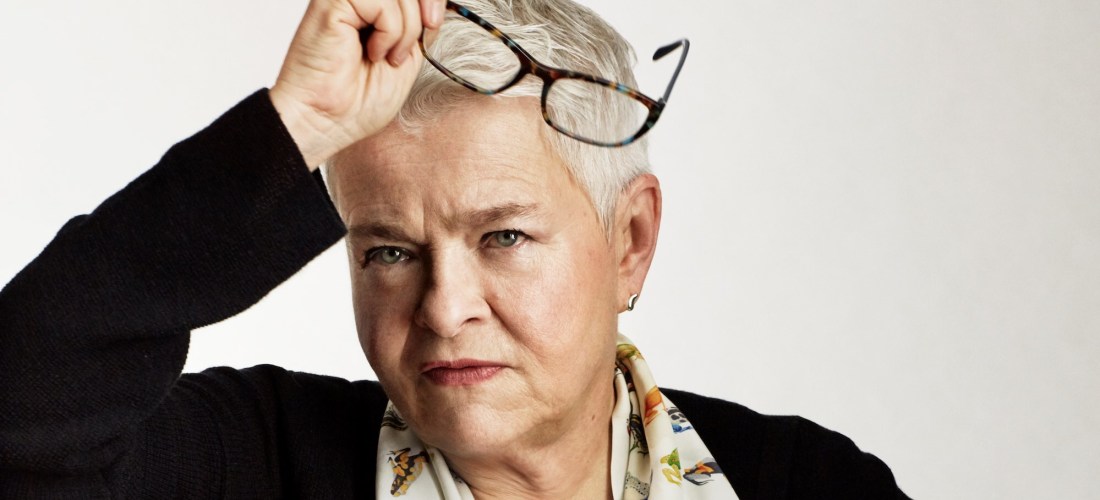
Mirirai Sithole on Being an Artist, a Citizen, and Building a Future World

Interviews
Credit: Gabriela Della Corna

If silence can be eloquent, few actors deliver wordless soliloquies with the precision and grace of Mirirai Sithole. In stage productions of Tori Sampson’s If Pretty Hurts Ugly Must Be a Muhfucka, Ngozi Anyanwu’s The Homecoming Queen, and Jocelyn Bioh’s School Girls; Or, the African Mean Girls Play, she painted lush emotional landscapes in the moments where all she did was listen to other actors. Her alert, expressive eyes, often uncover new layers in the dialogues of the bold playwrights whose works she favors, her body language is always ethereal but grounded.

It turns out that Sithole’s empathetic listening goes beyond the stage, as an activist she has shown to be deeply in tune with the requests and pleas of her community, and throughout her career has worked to create opportunities for those who aren’t always given the chance to be heard. This led her to create Aye Defy, an organization that advocates for inclusion, equity and empowerment through art.

Mirirai Sithole in “Mother Courage”

I first encountered Sithole’s work as Kattrin, the tragic mute daughter in Bertol Brecht’s Mother Courage, and I was impressed by the way in which she made moments from one of my favorite plays feel completely new. Seeing her work in Kattrin’s last scene, knowing what was about to happen to her, was one of the few moments where I can recall wanting to jump off my seat to intervene in the play. I knew then that I would follow Sithole’s career wherever she went next. Having seen her act in several mediums, it’s a joy to follow her as she puts on a new hat. I spoke to her about acting, streaming and always defying expectations.

Was Mother Courage your big break into the New York theatre scene?

Mother Courage was a major part of my break into the industry as an actress. And then I feel after that it was a steady stream of things Off-Broadway, Off-Off-Broadway, and then School Girls; Or, the African Mean Girls Play happened and it was like “oh, this person, right! I either remember her, or I never knew her. Who is she?” Those two feel like major turning points in my career as an actress. 

Before that I weaseled my way in through internships. It recently was the 10th year anniversary of my first internship at New York Stage and Film. I didn’t know anything about theatre. I did it in high school and then I went to college to study theatre, but I learned everything that I know either through internships or on the job as an actor. Before coming back to the city, proper New York City, I spent time at the Actors Theatre of Louisville. So it was just a steady stream of interning and apprenticeships, and learning the different ways in which to be an artist. And then getting the privilege to be an artist in New York City, which is magical and confusing, very confusing.

Why did you want to become an actor?

That question? [Laughs] It’s one that eludes me. I’m trying to figure out the concise answer. I don’t think I knew why I wanted to become an actor or be an actor until recently, quite honestly. I do believe and understand that I’ve always wanted to be a theatre artist because it’s perhaps the first place that I found community. It’s where I was able to, I don’t know what the word is, whether it’s access or utilize all parts of myself. 

I definitely was not the person that was like, “I’m three years old and I know I’m going to be on Broadway.” I didn’t know any of that. I was a Zimbabwean growing up in Massachusetts with two parents who worked very hard and was just figuring out how to keep myself occupied as the youngest of three. 

Now I say I’m an actor because I love to embody different stories and learn about myself and various characters. At the end of the day, storytelling is one of the most healing and transformative experiences we can have, whether that’s on the design side of things or the performative side of things. It brings me so much joy to be with people telling the story, which feels so basic, but it’s indigenous, you’re around a fire telling the story. And the fact that I’ve just realized that at my big age of 29, made me realize this is inherent in my DNA as an African. We tell stories of our various lineages, and it could be as simple as just orating that to a young child or adding the elements of design and sound and projections. 

I can tell you for instance about the feelings that you ignite in me as a journalist, as a critic, and as a human being. But I’ve always been curious about what actors go through on stage, would you be able to describe what it is that you feel when you’re onstage telling those stories?

[Laughs] A metaphor to describe the alchemical experience of my inside?

I’m sorry!

No, I love that. I’m smiling. You can’t see me, but I’m smiling because I don’t think I’ve ever been asked that. Wow, it’s purely magic. And I feel comfortable saying that and knowing that that’s true for me. The memories that I immediately thought of as you were asking that question was performing School Girls while rehearsing The Homecoming Queen in the winter and being so sick that at one point I didn’t have a voice, I was overworked. I definitely didn’t do self care practices or tools to release one show and enter into a rehearsal space for a different show.

And yet I remember doing this one show where I got to the Lucille Lortel Theater, from rehearsal from the Atlantic, and I was a mess. Of course we don’t have understudies, so I’m thinking, “Here I am, $700 a week, super grateful, thankful that the show’s only 60 minutes.” I had to sing at one point in that show, and I had no idea what was going to happen, but this is what I did know: I had all these beautiful Black women around me who trusted and supported me and I can only do my best.

In certain rehearsal rooms we say, “You bring yourself to the character,” and if an actor is sick that day, then your character is sick that day. We’re not going to pretend, but we’re going to trust that for all the other times that we’ve done this in rehearsal that we can do it that night as well. So you trust and you believe, and I don’t know how I got through that show, but I did, we did. It was just as powerful and just as magical because the audience had no idea [laughs] and we’re truly so powerful and magical when we lean into the trust of our instruments.

It’s this magical combination of practice, which is rehearsal trust, and also honoring where you are at in the present moment. The lines will come out when they’re supposed to come out, and if they don’t, someone else knows the script well enough that they will jump to the next part. That’s what’s so magical about a live theatrical experience and being able to be a part of it as an actor: we know this story and we know that anything can happen. 

I always get nervous, I wrote in my journal a while ago that the day that I stop being nervous before a performance, before a self-tape, before being on set, is the day that I have to reevaluate if this is what I want to do. It’s those healthy nerves of knowing: who knows, you might choke on an orange today! But putting yourself out there is the joy and is the practice.

I often tell myself that the night that I go to the theater and I feel tired of being there, not because I’m sick or because the subway sucks or whatever, but because I just feel tired, I’m quitting and I’m finding a new career.

Yes!

School Girls was recorded and has aired on PBS and streamed during quarantine. During the run of the play you got feedback from audience members, critics and from friends and family who came to see you. But then when you have a show that’s recorded and people can see it beyond NYC, have you been getting feedback from people who found School Girls for the first time when it was streamed?

The short answer is yes. That one’s been difficult though, because as far as I know, it’s only released to the Tri-state area, so it hasn’t had the global reach of the Goodman production that got cut short, that people were able to buy tickets to. The response to the PBS recording of School Girls has been varied in the sense that some people don’t know that it exists and when they realize it exists, they get sad if they’re not in the Tri-state. I wish I knew how to help them access this thing. 

Mirirai Sithole in “School Girls; Or, the African Mean Girls Play”

For those people who have access to it, it’s this beautiful reminder of the legacy of that piece and the legacy that Jocelyn Bioh put into the world and the gifts that she gave us that keep on giving truthfully. Despite me wanting to be able to share that with my friends in Brazil and my family in Zimbabwe, I know that the energy of that piece has ripples beyond what I think any of us could have ever imagined, so it’s always nice when you have this kind of living document that something existed. So no matter when people discover it I forever get to go back into that memory box that makes theatre feel less ephemeral.

The part of me that is an artist who got paid one time for that day of recording is like, “darn, I wish we had residuals on that.” Or what would happen if we could move it out of the Tri-state area and what does that look like contractually. My castmates and I talk about that sometimes, what is the reach? We’re not getting those numbers. We don’t really know. So it’s interesting because it’s both really great that it’s out there but also we don’t know why it can’t be shared even to a wider audience, you know?

I didn’t know that, it shows my New York privilege, doesn’t it?

It’s accessibility. I had a friend of mine who’s in Massachusetts, but was living in Long Island before quarantine and she was so excited to watch it but she can’t access it. It’s so sad and I can’t really help. Not because I don’t want to, but because I don’t know what to do. Should I reach out to PBS? Do I let it go because I have other things to worry about? I know there are DVDs, but it’s accessibility, and the conversations that we have about how to make things more accessible are having them in a holistic way and who experiences something and who doesn’t. It goes back to bureaucracy and contracts and asking why are they allowed to watch this? If we allow everybody in the United States to watch it then what does that say for the artists that originally made this who got X amount of money for it? So it’s definitely a weird position to be in: I want everyone to see it, and I don’t necessarily want to get paid for this, but why are we not making this accessible? What is the holdup?

It’s so scary to me, even just as an audience member, to think that once the pandemic is under control, and things become more flexible, that the theatre community specifically is just waiting for things to just go back to like they were before March 12th. And that is insane to me, because the world is already so different, so let me have a Barbara Walters moment and ask you: what have you discovered about yourself as an artist in quarantine that you are not willing to forget or put behind when this is over?

I love this question, Barbara Walters Jose. It’s so many things. I’ll start with how transparent I believe things have been. I started quarantine on March 14th and delved into the live-streamed readings world, where I realized pretty quickly that this is really beautiful because the barriers to access, whether that’s for artists, actors, or playwrights, are gone. Brick and mortar theatre, as I’ve been calling it, does not exist. So how do we bring some of the things that were working in the old world to this new world? 

It’s shifted so drastically and I love how open many artists have been to doing a reading or putting their words towards the developmental work. They have been honoring their status or social currencies to give back to vulnerable communities, artistic spaces that they believe in and want to make sure survive. 

When I started reaching out to folks to do work it was never a question to me that this was for the love of the art but that they would also be paid. I’m definitely not going to pretend that we’re going to pay you the hundreds of dollars you probably deserve, but you will be paid and you will be paid this transparent amount. Full transparency as much as possible. That’s what we ask of our people in power, whether it’s in government or other businesses and a lot of times you don’t get it and I think it creates this fear.

When I was working on If Pretty Hurts Ugly Must Be a Muhfucka, it was the first time that a company of Black actors were talking publicly about money and about our contracts. Maechi Aharanwa, one of the artists involved who in my eyes is veteran and so vocal about artist’s rights, was just so adamant that we had to start talking about these things. She’d say, “This is what’s in my rider, what’s in yours?” And I’d be like “Oh, I can ask for that? I didn’t know I could ask for that.” And I’ve been doing this for how many years? 

Even on Twitter, I think it started with the #PublishingPaidMe hashtag, and that’s not my world, I’m not a playwright, but I like seeing it, because I think that’s love. I think truth is love, transparency is love. When you can say “Hey, y’all, this is what they said I’m worth. I think you’re worth that as much as well. So that should be your starting rate.” Sharing what you get with other people that you believe should be getting that amount, or should be getting more allows us to actually be equitable. 

Another thing that I had to reframe for myself when we were dealing with casting for readings was a phrase that I realized was really problematic, the phrase, “We want a name.” I told all my collaborators, “Everybody has a name actually.” So what you’re asking for is you want someone with status. We know it’s business, but the way in which we frame these things and say these things is really important because I don’t want anyone to feel some type of way if I say, “Okay, let’s ask this actor who ‘isn’t a name.'” Does that mean they’re not as important that they shouldn’t be treated as well as we treat Tessa Thompson? No, it’s just that someone like Tessa Thompson, who we are grateful for and who is so badass, and who we were able to have on a reading, has this different social status and that’s okay. Because what we’re trying to do is raise money.

I’m not willing to sacrifice this sort of equitable playing field that we had during quarantine, and this autonomy of we don’t want people to feel used.That has to be across the board for everybody, no matter what systemic list they’re on, we must respect their time and really realize that doing work of any kind is work and that the rules of the old world no longer apply. I don’t feel comfortable asking people to spend 29 hours on a reading knowing that they probably have other job things or time that they’re trying to spend with their family or friends and happy hours. We’re creating these new digital lives for ourselves, and yes, things are starting to reopen and you can balance that now with a little bit of outside time, but there’s a new, emotional map to the world that I think is being built, which is a future world.

One of the things also that I don’t think I knew about you before quarantine is that now you’re a producer. When you started developing Aye Defy, was this the first time you took on creating work for others?

Credit: Gabriela Della Corna

I’ve always had my hands in something. In high school I was theatre kid, but also on the newspaper and on the dance team. In college I was part of the student government, student activities and a member of the performing arts community. I had friends in the music department and the dance department and I think I just really took to heart a phrase that was a part of my college experience that we would say before shows three times: first I honor life and with it my life in the theatre. And for me in order to honor life, I needed to be outside of the insular theatre walls. I needed to be experiencing life in other perspectives.

Like my acting career, I never wanted to be a producer, but I took a class in college for a credit and to learn about that side of things, and it all felt like it was serving the larger purpose of me as an artist and figuring out the system from the inside. So before Aye Defy, which honestly started as a blog and a place for me to heal a romantic relationship, I had executive produced a short film with Níke Kadri, who’s also a multi hyphenate artist who I’d been in multiple plays with. 

Before that, when I first moved to the city after college I started a theatre company called Rooftop Theatre Productions. I was living in Brooklyn in Bed-Stuy and wanted something to do and had a bunch of friends that wanted something to do, and we had this beautiful roof. So we had a night of 10 minute plays. We held auditions and we did them on our roof and it was a party. That was the only thing we did, Rooftop Theatre Productions was that one night, but I still have a few collaborators from that time. I was 21 years old about to turn 22 and I just wanted to do stuff.

Of course alongside that I was proving to my dad that four years as a theatre maker was worth it. [Laughs] I was trying every single way in. I had to make it work. I moved here, cliché or otherwise, with a duffle bag, a backpack and a job that was $200 a week, and I didn’t know where I was living. I think we’re all storytellers and we’re all producing our lives, figuring out what is the best way to tell this story of my life, which includes art and theatre and business. I also have a minor in business and human resources, which is a thing that I forget and a lot of people don’t know about me truly.

How did Aye Defy happen?

At first I thought this was a blog, then I thought this was about how to be an artist and a citizen in relationship to the crap that’s going on in our country. And what is this country? Because actually my home country is something else, but now I’m a citizen of America and an artist. And now it’s a pseudo production company that’s in the digital realm. I did not plan this out, and I think in relation to how I feel about being an actor: that this whole life that we are gifted is a mystery and it’s magic, sometimes it’s painful and confusing.

Trusting our innate personal power is something that I’m learning. Impossible truly is nothing. Yes, there are barriers and yes, there are systems that really want to tear down Black people, women, other POC, those are true things. And what’s beautiful is moving past those blockages and understanding that we can do anything. I truly believe that. Whether the label is producer or actor, or CEO, it’s really fascinating watching people realize that we have so many tools to help us create the life that we want to honor.

Something you just said right now resonated with me so much: my very first review that I ever wrote was in my journal when I was 10 years old. And here you are talking about how you turned your journal, something that was so precious to you, and so personal, and so private, and you transformed it into Aye Defy. But then you called it a pseudo production company, which is what I call myself often, not the production part, but the pseudo part. How do we get over imposter syndrome? How do we tell ourselves: you matter, you’re not pseudo, you’re the real thing?

[Laughs] Oh my gosh, how do you get over imposter syndrome? Well, we’re going to have to help each other on this.

I hope so.

I don’t know the thing that’s coming to me right now is that I believe that I am in this position that I’m in, whatever it is, where I’m stepping into all that I am capable of and all that I know of myself, because I was able to sit with my failures, and able to acknowledge when I didn’t get something right, or when I did hurt someone unintentionally. 

I say that because I think it’s something that I think a lot of leaders, the people in positions of power are not comfortable doing. And it’s what we’re seeing reflected in our community, in the larger theatre community where it’s like, “yo, y’all like, I didn’t get here by having the money by having parents who are like, ‘Oh yeah, let’s get you into this program’.” They were like “all right, we’re still co-signed on those loans sis.” I had support but there were mistakes, and failures, and roadblocks, and things that I did wrong. 

But there were also things that I did right. So not to be masochistic or mean to myself, but I sit with myself and acknowledge that I am both perfect and imperfect. I am not my flaws, but I am flawed. And that’s okay. As a leader that allows other people beside me, “under me,” I’m trying to figure out how to be a leader in a non-hierarchical set up, which is really hard because people are looking to me. But I think what I try to give my friends and colleagues, especially the ones that are working on Aye Defy right now, is to be empowered, to tell them “you know what you’re doing, and if you need help ask for it.” Which is something that I had to learn for myself too, I can ask for help. I can ask for someone to help me figure out a way to do this better.

I don’t know that this answers fully the imposter syndrome thing, but I feel like I get it right, when I tell myself “I know, I know I can do it. I know I can do it. I know it.” And yet sometimes I can’t and that doesn’t mean that I’m an imposter. Sometimes you just need to reset and ask for help. Do I need to spend five hours on Google? Or do I just like call that friend that’s been doing this for three years? I don’t know everything and yet me having the humility to say that out loud is what makes it possible for us to be the badasses that we know we are.

Where do you want to take Aye Defy and what can we let audience members know they can do to help? How can we help your production company grow?

I spent a lot of time in our soul work, figuring out the best way to do this. I actually launched this before quarantine and it was for the brick and mortar theatre, and eventually for film and TV. We have a mission, we have a philosophy, we have the pillars of the work that we want to do. And there is a GoFundMe campaign that will help us do this work with the understanding that these tools are needed because we are building tools and we’re building programming that allows for dramaturgs, directors, artistic directors, to see where the future is.

It’s really interesting that there are different communities, factions, organizations, whatever you want to call them coming out that are getting ready to lay out demands for what we want the theatre to look like. And I think for me, my team has been doing that work actively. We’re not a theatre company. I want to be very on the record about that. We are helping create tools for more streamlined intersectionality in terms of marketing and artistic advocacy and community building. 

So we would love some folks on the mailing list so that we can tell you all of our programming which for the foreseeable future will be digital. I’m interested in what people want to see in a digital platform. I had a conversation yesterday with an actor friend that was more in the veins of artistic advocacy, because as people are starting to call people out, which I will not say my opinions on, we need tools for healing. Aye Defy started as a blog for me healing from a relationship, and I think of people’s relationship to the theatre and the interconnectedness of that.

Aye Defy is a space for everyone where you can come and pitch your projects and we’re there to support it in any way, shape or form that we can. And it’s also to help heal the processes that happen in a rehearsal space. We’re doing our first workshop, which will lead into a one night only benefit reading, so now I’m watching my friend and collaborator start a rehearsal process for a workshop that’s not 29 hours, and that’s in house, that has a black dramaturg and a black director, which was the goal and the mission of the playwright. My karmic lesson right now is to really amplify writers and their mission, and making sure that whoever they want to see their work, we reach out to them and we do our due diligence on marketing, not just being a word, but a way of being, a way of connecting, a way of creating the world beyond just logging into a link or stepping into a theatre space and letting whatever information transpires for 90 minutes to three hours. 

Actually you inspired a different interview that I had about a month ago when I was thinking about your experience at Second Stage, and I said what makes an experience to me theatrical or otherwise is when it’s holistic. It’s not just when Jose sits in his seat, but what is the experience when you enter the space at the box office. I’m someone who works in merchandise, so I see all the different types of beings that have entered these spaces and it hit me when I was reading about your experience, because that’s crazy. We’re not taking care of people from the minute that they enter our spaces, and now they are digital spaces and we don’t know what’s happening on the other side.

For me it’s not just: this is the play that we’re presenting. It’s also: were we available to you? Was it clear that this is starting at 7:30, but we’re opening the doors at 7:15? All of it feels like a part of the process. I’m very much interested in changing the process of creating through Aye Defy and making it as joyful and holistic as possible so that people feel listened to. I know that I’ve been in spaces where people didn’t feel like they could talk to me openly and I didn’t know that until I asked you that information.

I want people to feel whether they’re the playwright or the actor or the person reading stage directions, that they can ask their questions and that no one’s gonna feel harmed. So, join our mailing list and support us as we figure out how to start companies and our businesses in a quarantine where there are so many causes that totally need our energy and time and resources. I want people to understand that Aye Defy is a resource, a space for people to come and gather and get what they need out of it more than anything.

Raúl Esparza is Tired of Being Told He’s Not Latino Enough

Interviews
Raul Esparza

Raúl Esparza has been very productive while in quarantine. He admits that at the beginning of the COVID-19 shutdown in New York City, he was sad, like everybody else. And then he helped produce the Take Me to the World concert special for composer Stephen Sondheim’s 90th birthday (which, despite some tech mishaps the night of, was joyously received by theater fans). Esparza soon realized that making art was a way to make himself feel better. “It began to fill the days in a way that was really nice,” he said.

That’s why on Saturday, June 27, the four-time Tony nominee will perform opposite Samira Wiley and a full cast in two livestreamed performances of Tartuffe, produced by Moliere in the Park, at 2 p.m. and 7 p.m. EST. The video of the performance will be up on YouTube until July 12. Below, Esparza talked to the Friends about how the hardest parts for him to get casted in are Latino parts, and his favorite Spanish curse word. The conversation has been edited and condensed.

We’re here talking to you about doing Tartuffe, the Moliere in the Park production. You’ve been doing a lot of these virtual acting experiences.

That’s a great description for them! They are experiences. It’s been a couple of interesting months for all of us. And this is not the way to make theater necessarily, but it is a way to make theater. Honestly, the first month of the pandemic was intensely hard for a lot of personal reasons. We had a very big loss in our family: Santiago Miranda, who died in Madrid and he died by himself—he was like an uncle to me and a dear, dear, dear man. And then I had a teacher that died in Miami and then relatives who were getting sick. So the beginning of this felt like, what’s the point in getting up in the morning?

So in the midst of all that, I had the idea to create the Take Me to the World concert for Steve’s birthday. For a week or two, it felt like we were in a room together. And then friends would reach out and say, “Hey, you want to sing a little song here?” And then you say, “Okay.” Because it began to fill the days in a way that was really nice. And I can say about Tartuffe right now, it feels like we’re in a rehearsal hall. Of course we’re not. But we get on these Zoom calls, essentially, and we’re rehearsing and we come up with ideas. You’re not moving around, you’re still in your apartment. But you are creating something. And that’s extraordinary. It’s a great feeling. So all of this is a long way of saying that all these experiences have helped to fill my days. And they have helped to make me feel like I own a little bit of my creativity, and can share it a little bit more.

Because as actors, we’re always spending our time asking for permission to do the thing that we know how to do. And I’m not saying this is the way to do it. But I think our future opportunities potentially may change, given that we have all had to come to terms with the fact that right now, if we don’t create something for ourselves, there’s nowhere to go. So yeah, I didn’t realize how many doors I had opened to this. It’s not easy, but at least it’s filled the time and has alleviated some of the sadness.

There’s people who know you from Law and Order: SVU, but they’re like, wait, he can sing? And they have never seen you on stage. And what’s happening right now is giving access to Latinos, to people of color, to people that are often kept from theater. I wonder if you’ve encountered that.

I’ve always thought we should have done a musical episode of Law and Order. Benson hits her head and then we all end up in the courtroom singing and dancing. Mariska [Hargitay] would totally go for it. I know she would. She was so obsessed with Hamilton. I think she saw it 22 times. How could she get tickets is what I want to know!

Theater has always been my love because I love the relationship to the audience. And I never thought that I would be an actor who made a lot of film or TV because I never really felt like I cracked it. Law and Order came out of the fact that [show-runner] Warren Leight and I had worked on Leap of Faith, and it was supposed to be a couple of guest star episodes. And then it turned into a really wonderful thing. Because he wrote beautifully and I really hit it off with Mariska. As the show goes on and on, you’re suddenly recognized all over the world. And that opened doors to people who didn’t know my work before. And that comment about, “Oh, I didn’t know you could sing,” it was constant, you know, it’s constant.

But if the work on television brings people to my work on stage or any of the other things that I’ve done, then I think that that is extraordinarily good in terms of what’s going on now. In the world of being a Latin actor, I can’t tell you guys the number of times I’ve been told, “Change your name. You don’t look like what we expect you to look like. You’re not Cuban enough.” And what they mean by that is, “You don’t look right to play drug runner number three.” It was a very big deal to me to hang on to who I am and where I come from, and to own that over and over and over again.

When I saw [the marquee] for Company, it said Raúl Esparza, over the marquee. All I could think about was: That’s my dad’s name. And that’s my grandfather’s name. And that’s my great grandfather’s name. Because we’re Cuban, and we all call each other Raúl. There’s a whole history there of men who lived in Cuba, who came to this country. And then the fact that I get to be up there and carry their name forward was just a really big deal to me. And I hope that whatever little bit I did helped open doors to more Latin actors getting the opportunity to play whatever parts they want to, instead of being told you’re not enough of what we think the stereotype is. So it seems to me that it’s very important. And it’s also really great to talk about it now and to own it and to not apologize for it. Because I do feel like we’re still pretty underrepresented in the theater world and on television and film, but I hope that we’re gonna be able to take that into our hands.

Did you ever play a part where you were actually surprised that you got it, because you thought that the cards were stacked against you?

That’s a good question. I was surprised I got cast to play George Seurat in Sunday in the Park with George. But that was because I was so new here. I have never felt like the cards are stacked against me in any way because I’m Lat necessarily. Except when it comes to Latin parts and then I just simply don’t get cast. Barba [on Law and Order] was a Cuban character because Warren made him a Cuban character and we decided to go for that. And that was a part of his story. But I think that’s about it for major things I’ve done professionally, where someone will see me as a Latin. So the cards are stacked against me in the opposite way for Latin parts. Again, I don’t look like the expected stereotypes and I’m not really even sure what they mean by that, to tell you the truth.

The last time Esparza was on stage, “Seared” by Theresa Rebeck at MCC Theater, where he played a chef. (Photo: Joan Marcus)

Do you think it’s because of what’s stereotypically Latin versus what the people actually look like, which spans a whole range? The identity is varied. And American culture not being able to recognize the fact that there’s a diversity within Latinx culture.

Yes, I think Latinx culture feels too varied and too multiple to be contained. And people in Hollywood especially—I feel a little bit less so with the theater because the theater is a physical place where talent can really blossom, talented people can come in the room and kind of blow you away and they’ll get hired, hopefully. With Hollywood I think that there are constant efforts to put people in boxes because it is easier, because you are casting personalities, types. And I think that also, in American culture, there is such a constant interest in things being Black and white, yay or nay, A or B, and there’s no room for complexity. And that means there’s no room for complexity in human experience either. There’s no room for the difficult explanations. I think of Hillary Clinton who kept saying, “I can’t give you an answer that is a soundbite about these issues. That man can, but I can’t.” And then they attack her for that. Or anybody—Obama was too intelligence, he spoke to well, you know. They don’t want to hear the clear, more complicated version of things, they want to hear the easy answer.

And I think it also applies to what we’re talking about here, that multitude with many different colors and shapes and sizes and varieties of experience, within something that they want to call “Latin” is uncomfortable. It’s very uncomfortable and not at all the way that is easy for decisions to be made, particularly in entertainment and also in politics. My experience as a Cuban American growing up in Miami is very different from someone who is Nuyorican. We carry our cultural heritage with us and we carry our families with us, our ancestors, and all of the history that shapes us. In Miami, to be Cuban was to be king of the world. Whereas I had met other kids who were raised to feel almost ashamed of speaking Spanish, of being part of the culture and had to rediscover it later. I wanted to be so American when I was growing up among all the Cuban kids in Miami, and then I left and all I wanted to do was be Cuban. So I think that yeah, I feel that we complicate things on a bigger scale than people are comfortable with.

Let’s celebrate the culture then, what’s your absolute favorite word in Spanish? And if it’s a curse word, then we’ll love you even more.

Comemierda! That’s my favorite. I’m always trying to teach people how to curse in Spanish. English is alright, but you got nothing on us.

It’s music.

Yes it is. Also because we can say it so fast and emphatically. My favorite words are always curse words, but I don’t know a Cuban who doesn’t curse every other minute.

When all of this is over, are you looking forward to being in a show or seeing a show?

I’m looking forward to seeing shows. I really am. I took it for granted that I could just kind of go see my friends do stuff. And now I wish I hadn’t. First of all, theater’s too expensive. So I hope that one of the things that changes right now is—nobody can afford a $300 ticket or $400 ticket or $200. Hopefully this will make some intrinsic changes in the structure of how we price theater and who theater is available to. But that being said, I took it for granted that I could go see stuff and support stuff. But now I’m like, I want to go back. I want to be out there and see what people are creating. This is the greatest city in the world. I think it’s the capital of the world, New York, and I miss the energy of it. It’s so inspiring. And I want to get out there. Joe Papp once said that, “The artists need an immediate environment to create.” You get chipped away at, like a block, a sculpture. “Well, there’s no more immediate environment,” he said, “than New York City.” And I think it’s true. And I’ve been so aware of it in the silence for the last three months of, God, we live here so that we can all shape each other. That’s how we get better. I’m really looking forward to that.

Listen to the rest of Esparza’s interview on the Token Theatre Friends podcast.